How we make this list: we compare pricing pages, product documentation and public user reviews. Rankite is independent; if a vendor ever pays for a featured spot, that listing is clearly labeled Partner.
Key takeaways
- The two largest platforms, HackerOne and Bugcrowd, offer the deepest researcher pools, but European alternatives like Intigriti and YesWeHack match them on triage quality with stronger GDPR positioning.
- You pay for valid findings, not for effort: every commercial platform here works on a pay-for-results model, with a platform fee on top of the bounties you award.
- None of the commercial platforms publish pricing, so expect a sales conversation; Open Bug Bounty is the only genuinely free option, though it covers disclosure rather than managed bounties.
- If you need compliance evidence (SOC 2, ISO 27001), pentest-oriented options like Cobalt and Synack produce audit-ready reports more naturally than pure bounty programs.
- Start with a private program or a vulnerability disclosure policy before going public; opening your scope to the whole internet on day one is how teams drown in low-quality reports.
Quick comparison
| Tool | Best for | Starting price | Free plan |
|---|
 HackerOne HackerOne | Large companies wanting the biggest researcher community | See website | No |
 Bugcrowd Bugcrowd | Teams wanting bounty, disclosure, and pentesting in one place | See website | No |
 Intigriti Intigriti | European companies needing GDPR-compliant testing | See website | No |
 YesWeHack YesWeHack | Pay-for-results bounty with EU data hosting | See website | No |
 Synack Synack | Continuous pentesting by vetted researchers | See website | No |
 Cobalt Cobalt | Agile pentesting with real-time collaboration | See website | No |
 HackenProof HackenProof | Web3 and blockchain projects | See website | No |
 Zerocopter Zerocopter | EU companies wanting disclosure-to-bounty in one shop | See website | No |
 Open Bug Bounty Open Bug Bounty | Free coordinated vulnerability disclosure | Free | Yes |
Is your product missing or out of date?
We review this list regularly. Vendors can request a listing, send updated pricing or ask about featured placement.
#1
HackerOne
Best for: Large companies wanting the biggest researcher community
Visit hackerone.com
Starting priceSee website
Free planNo
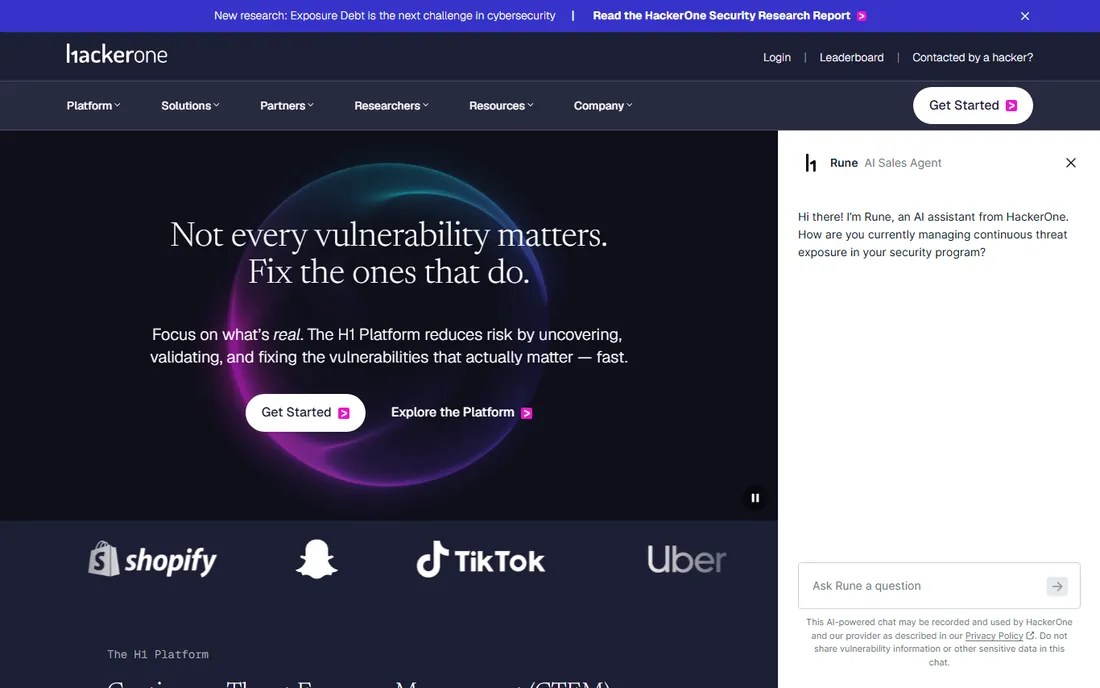
HackerOne is the default answer in this category, and defaults exist for a reason. Its community of security researchers is the largest anywhere, which means niche technologies and unusual stacks still get expert eyes. The platform has grown well past simple bounties into continuous threat exposure management, with an AI agent that helps validate and prioritize findings before your team sees them.
The honest catch is that HackerOne is built for companies with real security teams. Pricing is not published and the engagement model assumes you can triage, remediate, and retest at pace. A small company can absolutely run a program here, but you should go in with a tightly defined scope and a private program first. Used well, it is the deepest bench of offensive talent money can buy.
What we like- Largest ethical hacker community in the industry
- AI-assisted triage and validation
- Mature program options from disclosure to live hacking events
Watch out for- Pricing is quote-only and aimed at enterprise budgets
- Sheer report volume needs internal capacity to handle
#2
Bugcrowd
Best for: Teams wanting bounty, disclosure, and pentesting in one place
Visit bugcrowd.com
Starting priceSee website
Free planNo
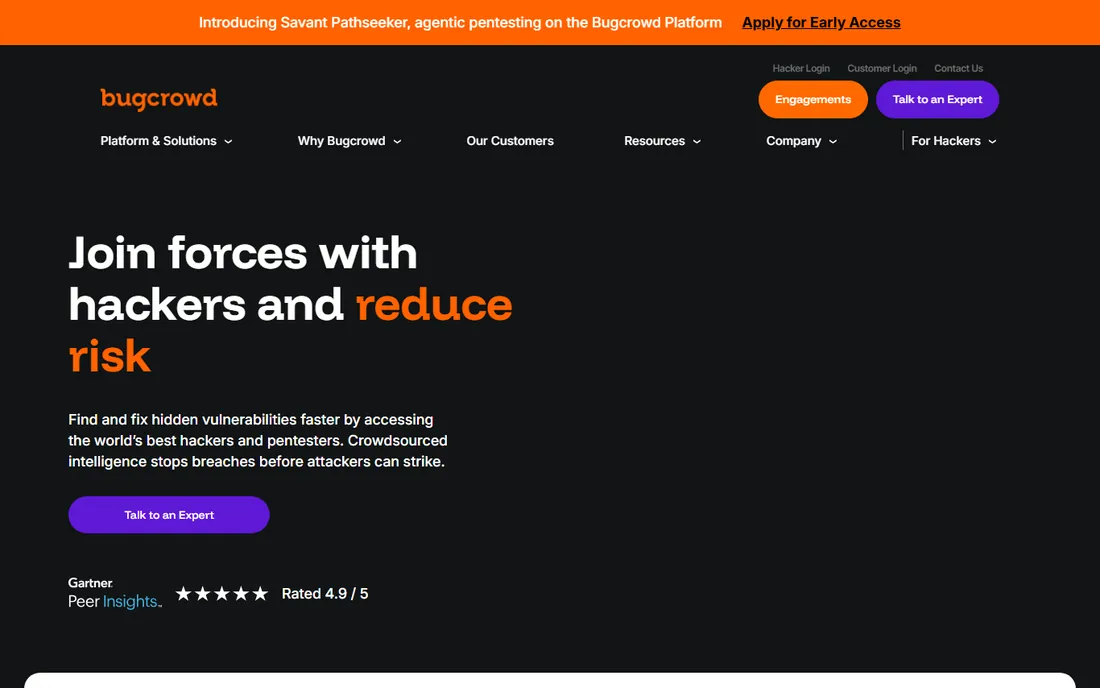
Bugcrowd was HackerOne's original rival and has grown into the broadest crowdsourced security platform of the two. Beyond classic bug bounties, it offers vulnerability disclosure programs, penetration testing as a service, and red teaming, all drawing from the same researcher crowd. Its matching technology assigns hackers based on skills relevant to your technology, rather than letting anyone pile onto your program.
What customers consistently praise is the triage layer. Reports arrive validated and rated against Bugcrowd's vulnerability taxonomy, which cuts the noise your internal team has to wade through. Like HackerOne, pricing lives behind a sales call and the platform assumes a serious commitment. If you want one vendor covering everything from disclosure policy to full red team exercises, Bugcrowd makes a strong case.
What we like- Bug bounty, VDP, pentesting, and red teaming on one platform
- Researcher matching technology pairs the right hackers to your stack
- Strong triage before reports reach you
Watch out for- No public pricing
- The breadth of offerings takes guidance to navigate
Starting priceSee website
Free planNo
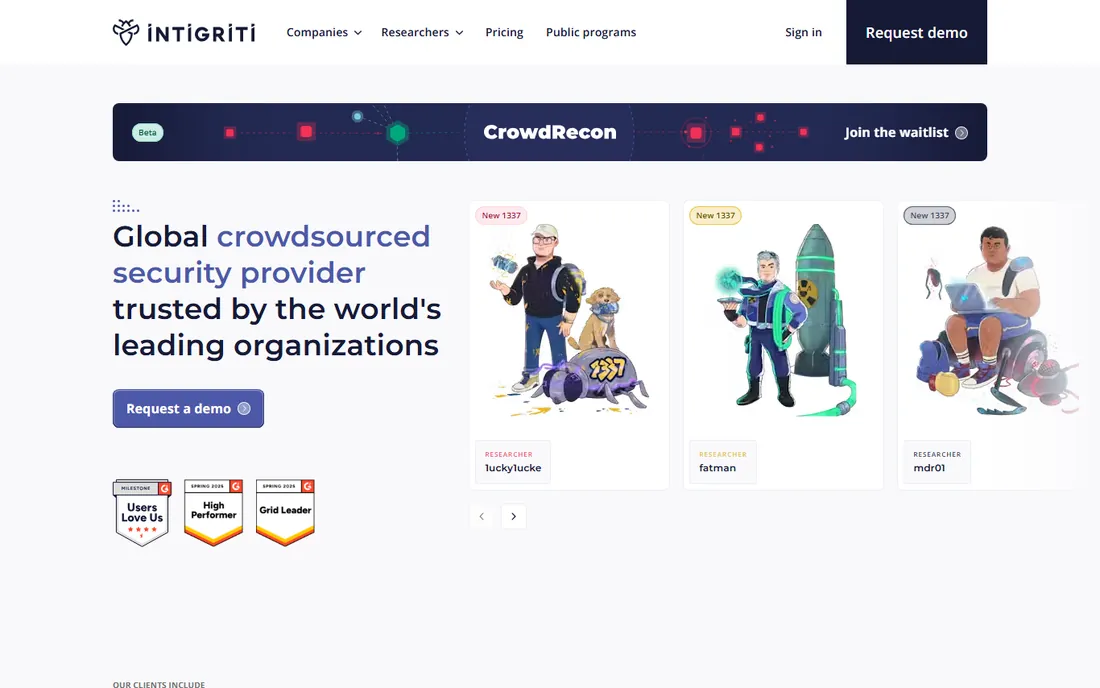
If your data needs to stay in Europe, start here. Intigriti is the Belgian platform that turned GDPR compliance and EU data sovereignty into a competitive advantage, hosting all customer data exclusively in Europe. Beyond the compliance story, it has earned a genuine reputation for triage speed and accuracy, which is the thing that determines whether your team loves or dreads the program.
The platform reports more than 150,000 vetted researchers and over 400 active programs, with upwards of 60 million euros paid in bounties. You can run bug bounties alongside managed disclosure programs and on-demand pentesting from one subscription. The community is smaller than HackerOne's, but for most companies the quality of the first fifty researchers matters more than the size of the crowd behind them.
What we like- Data hosted exclusively in Europe with strong GDPR positioning
- Expert triage with a reputation for speed and accuracy
- Flexible mix of bounty, VDP, and pentesting
Watch out for- Researcher community is smaller than the two US giants
- Pricing is quote-only
Starting priceSee website
Free planNo
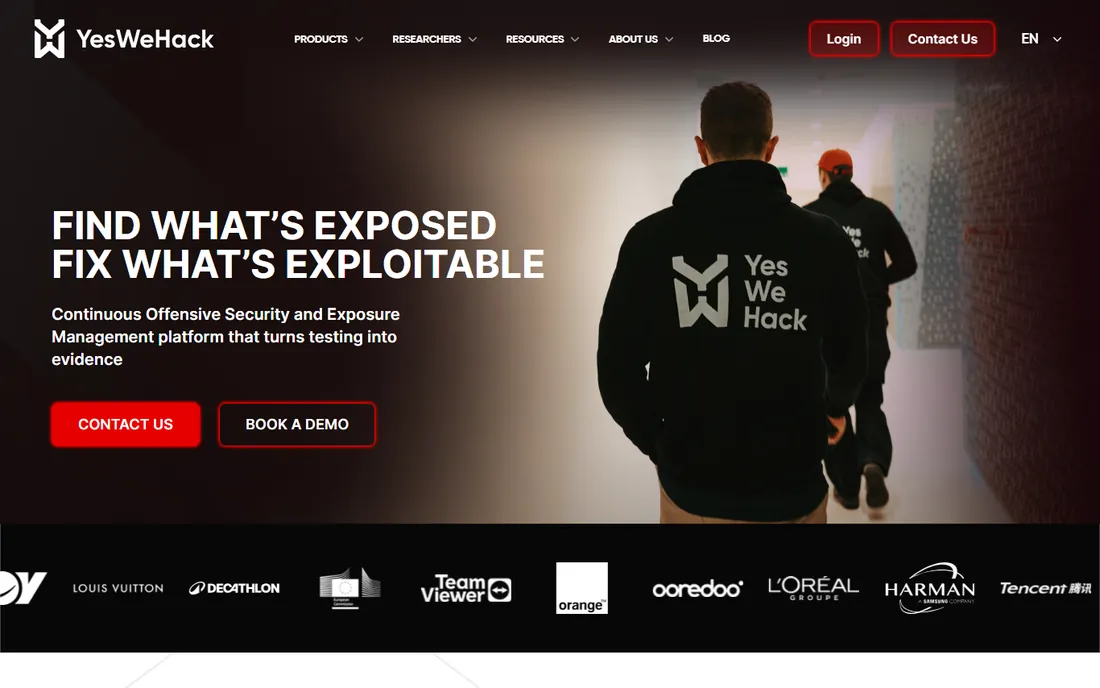
YesWeHack is Europe's other heavyweight, headquartered in Paris and built around a simple promise: you pay for valid vulnerabilities, not for the time spent looking. Its triage team filters submissions before they reach you, and the platform has expanded into a full exposure management suite covering bug bounty, pentest management, and attack surface mapping.
The company is ISO 27001 certified and hosts data in the EU, which matters for regulated industries and public sector work. Customers include names in luxury, telecom, and government. The tradeoff versus the US giants is ecosystem size and brand familiarity, which matters if your goal includes impressing enterprise buyers with a recognizable program. On pure value per valid finding, it is hard to beat.
What we like- Strict pay-for-results model with no payment for noise
- EU-hosted and compliance-friendly
- Unified exposure management across bounty, pentest, and attack surface
Watch out for- Brand recognition is weaker outside Europe
- Pricing requires a discovery call
Starting priceSee website
Free planNo
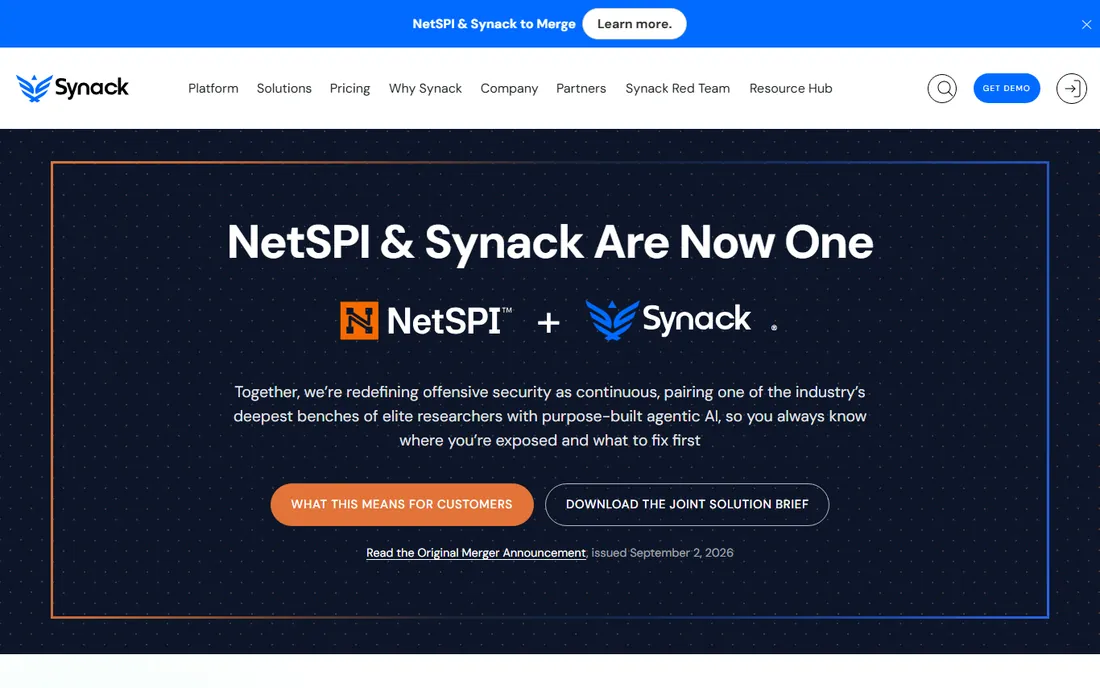
Synack does not run open bug bounties at all, and that is the point. Instead of inviting the internet to test you, it gives you continuous penetration testing from a private, vetted community of researchers, now combined with AI pentesting agents. Every finding is verified by humans before it reaches your dashboard, which keeps the signal quality extremely high.
One thing to know: Synack announced a merger with NetSPI in September 2026, combining two of the biggest names in offensive security. The Synack platform and brand continue to operate. For a mid-size company that wants pentesting as an ongoing discipline rather than an annual event, and values verified findings over raw volume, Synack is the premium option. Expect premium pricing to match.
What we like- Elite vetted Red Team rather than an open crowd
- Continuous testing model instead of point-in-time
- AI-assisted pentesting with human validation
Watch out for- Premium pricing aimed at larger organizations
- Private researcher pool means less crowd diversity than open platforms
#6
Cobalt
Best for: Agile pentesting with real-time collaboration
Visit cobalt.io
Starting priceSee website
Free planNo
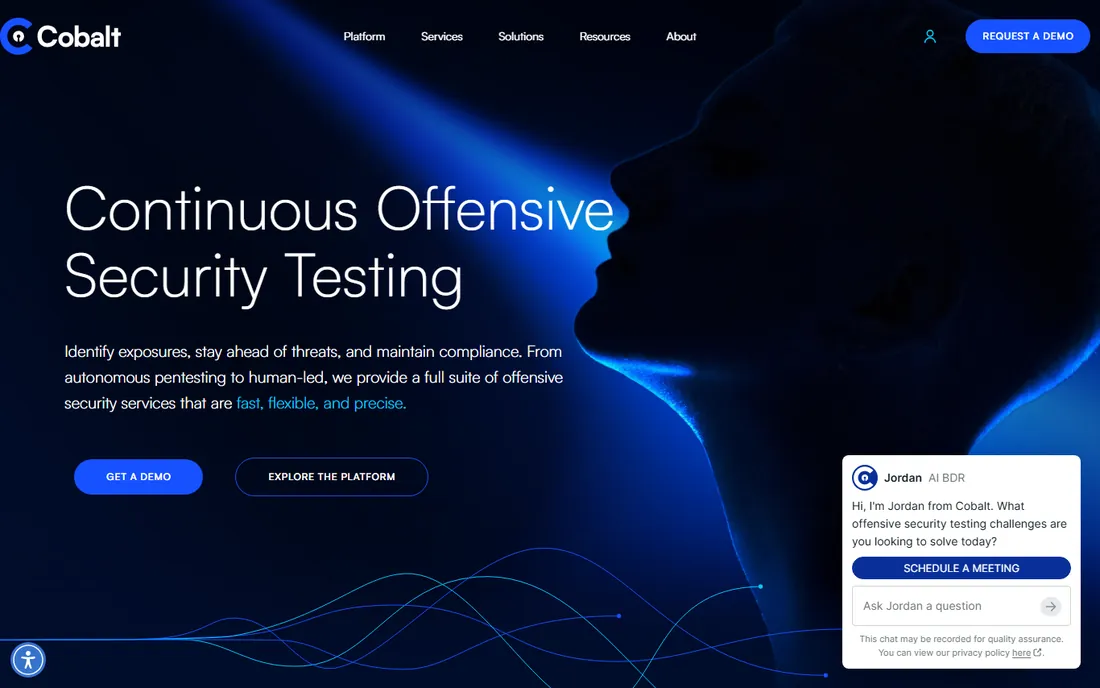
Cobalt started as pentesting-as-a-service before the term was fashionable, and its platform still feels like the most mature in that niche. You define scope, testing type, and cadence; Cobalt assembles vetted testers from its core community; findings stream in in real time and you can message the testers directly. The reports are structured to satisfy SOC 2 and ISO 27001 auditors, which is often the real reason a growing company buys a pentest.
The distinction matters: Cobalt is primarily scheduled, expert-led testing rather than an always-on bounty crowd. It recently added autonomous pentesting for continuous coverage across a portfolio, but its heart is high-quality human testing. If your board or your biggest customer is asking for a pentest report, start here.
What we like- Pioneer of pentesting as a service with a polished platform
- Real-time collaboration directly with testers
- Reports structured for compliance audits
Watch out for- More pentest than bug bounty, so less continuous crowd coverage
- Quote-based pricing
Starting priceSee website
Free planNo
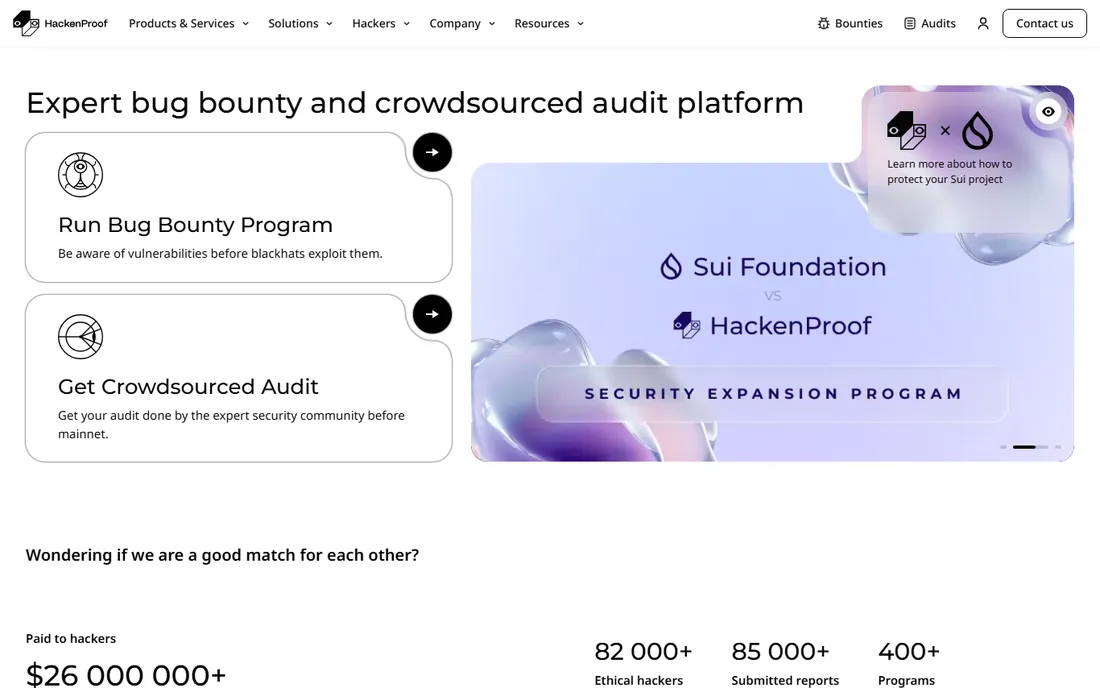
If you are building in Web3, this list narrows fast, and HackenProof is where it lands. The platform specializes in crowdsourced security for blockchain protocols and smart contracts, with a researcher community that actually understands the failure modes of on-chain code. It reports tens of millions paid to hackers across hundreds of programs, with clients across major blockchain ecosystems.
Generalist platforms can run a smart contract program, but their triage teams and researcher pools are spread thin across every technology. HackenProof's entire operation is tuned for this niche, from severity scoring to researcher reputation. If your product is a web app with no blockchain component, look elsewhere. If it touches a chain, this specialization is worth more than a bigger generic crowd.
What we like- Deep specialization in smart contracts and blockchain
- Large Web3-native researcher community
- Triage team experienced in crypto-specific vulnerabilities
Watch out for- Niche focus means less depth outside Web3
- Pricing is quote-based
Starting priceSee website
Free planNo
Zerocopter is the quiet Dutch option for companies that want to grow into crowdsourced security gradually. You can start with a coordinated vulnerability disclosure channel, add continuous recon scanning, and step up to pentesting or a full bug bounty with vetted hackers when ready. That ladder matters because most companies are not ready for a public bounty on day one.
The operation is Netherlands-based with a vetted researcher pool, which suits European companies with data residency concerns. It lacks the marketing volume of the giants, and you will do more of the evaluation work yourself. But as a guided path from zero to a mature program, it is one of the most sensible offerings on this list.
What we like- Full journey from free disclosure channel to managed bounty
- Dutch/EU operation with vetted hackers
- Recon and pentesting available alongside bounty
Watch out for- Smaller international profile than the big platforms
- Website and materials lean Dutch-first
Starting priceFree
Free planYes
Open Bug Bounty is not really a commercial platform, and understanding that is key to using it well. It is a non-profit project that coordinates responsible disclosure: researchers report vulnerabilities, the project verifies them, and site operators get notified free of charge. The community claims over 1.5 million vulnerabilities helped fixed, mostly cross-site scripting and similar web flaws.
There are no bounties, no triage guarantees, and no way to control scope, so it cannot replace a managed program. What it gives you, for free, is a standing intake channel for the vulnerabilities the internet finds in your sites anyway. Every company with a public website should be listed here or run an equivalent disclosure policy. It costs nothing and closes the most embarrassing gap of all: researchers who find flaws and have nowhere to report them.
What we like- Completely free with no contracts or intermediaries
- ISO 29147 compatible disclosure process
- Large community of researchers reporting web vulnerabilities
Watch out for- No bounties, triage SLAs, or scope control by design
- Focused mainly on web vulnerabilities like XSS
How we chose
We mapped the market from vendor documentation, platform directories, and public program listings, then cross-checked against community discussion on Reddit and reviews on G2 and Capterra. We favored platforms with verifiable track records and live programs, which is why every entry above has an active homepage we confirmed. We did not run test programs or submit vulnerabilities ourselves, so nothing here reflects hands-on testing. Pricing in this category is almost never published, so where vendors keep numbers behind sales calls we say so rather than guessing.
The sticker shock in this category comes from the platform fee, not the bounties. Bounties are yours to set, and most companies start smaller than they think. The platform fee is what vendors negotiate, and it varies enormously with your scope and expected volume. Get quotes from at least three vendors, and make sure you are comparing the same thing: triage included or not, private or public program, and how many assets are in scope.
Start private, then go public
Every major platform lets you run an invitation-only program with a small group of vetted researchers. Do that first. You will find the obvious vulnerabilities quickly, fix your intake process, and learn what good reports look like before the full crowd arrives. Going public on day one is how teams drown in duplicates and low-effort submissions.
Triage quality beats crowd size
The difference between a good platform and a painful one is what lands in your inbox. Ask each vendor exactly who validates submissions, what their duplicate detection looks like, and what happens to invalid reports. A smaller crowd with excellent triage will cost your team less time than a giant crowd with none.
Match the platform to your compliance needs
If you are buying security testing to satisfy SOC 2, ISO 27001, or customer questionnaires, say so upfront. Pentest-oriented vendors like Cobalt and Synack produce audit-ready reports as a matter of course. Pure bounty platforms can support compliance too, but you may need to ask for the right report formats.
Budget for the bounties, not just the platform
A useful rule of thumb: set aside at least as much for bounty payouts as you pay in platform fees in year one. Underfunded bounties attract little attention from top researchers, and a quiet program teaches you nothing. It is better to run a small scope with attractive rewards than a large scope nobody bothers to test.
Bug bounty or penetration testing: which do you need first?
They solve different problems. A penetration test is a scheduled, scoped engagement by experts that produces a formal report, which is what auditors and enterprise customers ask for. A bug bounty is continuous, open-ended testing where you pay per finding, which is better at catching the weird vulnerabilities that only emerge over time.
Most growing companies need the pentest first, because compliance and customer trust come with paperwork. Once the basics are covered, a bug bounty keeps the pressure on between tests. Several platforms on this list now sell both, which is convenient, but do not let a bundle talk you into buying continuous testing before you have fixed the findings from a single good pentest.
Frequently asked questions
How much does a bug bounty program cost?
Two parts: the platform fee, which vendors quote based on scope and is rarely published, and the bounties you pay researchers per valid finding, which you control. Small private programs can run on modest bounty budgets, while public programs at large companies pay out hundreds of thousands annually. Open Bug Bounty is free but offers disclosure coordination rather than managed bounties.
How is a bug bounty different from a penetration test?
A pentest is a time-boxed engagement by assigned experts producing a formal report, ideal for compliance. A bounty is ongoing and open to a crowd, paying per valid vulnerability found. Pentests give you a point-in-time assurance artifact; bounties give you continuous coverage. Many companies run both.
Do I need a security team to run a bug bounty program?
You need someone who can receive reports, decide what to fix, and pay researchers. The platform handles triage on most commercial options, but remediation is always yours. Companies without any engineering capacity to fix findings should start with a vulnerability disclosure policy, which simply gives researchers a way to contact you.
What is a vulnerability disclosure policy (VDP)?
A VDP is a public statement telling security researchers how to report vulnerabilities to you and promising not to pursue legal action for good-faith reports. It costs nothing to publish and is the minimum responsible step for any company with internet-facing systems. Most platforms on this list will host and manage one for you.
Can small startups afford bug bounty platforms?
The commercial platforms are priced for companies with real security budgets, though private programs with modest bounties are more accessible than the enterprise marketing suggests. Startups on tight budgets should begin with a free disclosure policy, consider Open Bug Bounty, and graduate to a paid platform when they have findings worth paying for and engineers to fix them.
Sources we checked (10)
- https://hackerone.com/
- https://www.bugcrowd.com
- https://www.intigriti.com
- https://yeswehack.com/
- https://synack.com/
- https://cobalt.io/
- https://hackenproof.com/
- https://zerocopter.com
- https://openbugbounty.org/
- https://github.com/disclose/bug-bounty-platforms
Is your product missing or out of date?
We review this list regularly. Vendors can request a listing, send updated pricing or ask about featured placement.

Shihab Mia · Founder, Rankite
Shihab has spent more than a decade helping SaaS and e-commerce brands grow through search. He writes Rankite's software buying guides from pricing pages, documentation and public user reviews. More about Shihab.