How we make this list: we compare pricing pages, product documentation and public user reviews. Rankite is independent; if a vendor ever pays for a featured spot, that listing is clearly labeled Partner.
Key takeaways
- YNAB is the strictest and most effective for people who want every dollar assigned a job, at $109 per year with a 34-day trial.
- Monarch is the best all-rounder for households that want budgeting plus investing and net worth in one dashboard, at $99.99 per year.
- EveryDollar and Goodbudget cover the free end well; EveryDollar's free version handles zero-based budgeting at no cost.
- Honeydue is the only tool here built specifically for couples managing money together, and it is free.
Quick comparison
| Tool | Best for | Starting price | Free plan |
|---|
 Monarch Monarch | all-round budgeting plus investing and net worth | $99.99/year | Free trial (7 days) |
 YNAB YNAB | zero-based budgeting with strict rules | $109/year | Free trial (34 days) |
 Quicken Simplifi Quicken Simplifi | automatic spending tracking with minimal effort | $3.99/month, billed annually | Free trial |
 EveryDollar EveryDollar | free zero-based budgeting | $79.99/year for Premium | Yes |
 PocketGuard PocketGuard | seeing what is safe to spend right now | $74.99/year | Yes |
 Goodbudget Goodbudget | digital envelope budgeting | See website | Yes |
 Honeydue Honeydue | couples managing money together | See website | Yes |
 Rocket Money Rocket Money | budgeting plus subscription management | See website | Yes |
 Wallet by BudgetBakers Wallet by BudgetBakers | detailed manual budgeting with bank sync options | See website | Free trial |
 Copilot Money Copilot Money | clean automatic tracking, especially for Apple users | $95/year | Free trial |
Is your product missing or out of date?
We review this list regularly. Vendors can request a listing, send updated pricing or ask about featured placement.
The best budget planning software for 2026
Starting price$99.99/year
Free planFree trial (7 days)

Monarch is what many former Mint users migrated to, and it shows in the breadth. Budgeting, transaction tracking, investment accounts, and net worth live in one dashboard, with customization that lets cash-flow planners and category nerds each set it up their way. Partner collaboration is built in rather than bolted on.
The price is the filter. At $99.99 per year with only a 7-day trial, you are committing before you have built much history. The $14.99 month-to-month option exists but is expensive as a long-term choice. If you want one financial home rather than a pure budgeting tool, Monarch justifies it.
What we like- Budgeting, investing, and net worth in one dashboard
- Strong customization
- Good collaboration for partners
Watch out for- No free tier beyond the trial
- $14.99 monthly option is pricey if paid month to month
#2
YNAB
Best for: zero-based budgeting with strict rules
Visit ynab.com
Starting price$109/year
Free planFree trial (34 days)
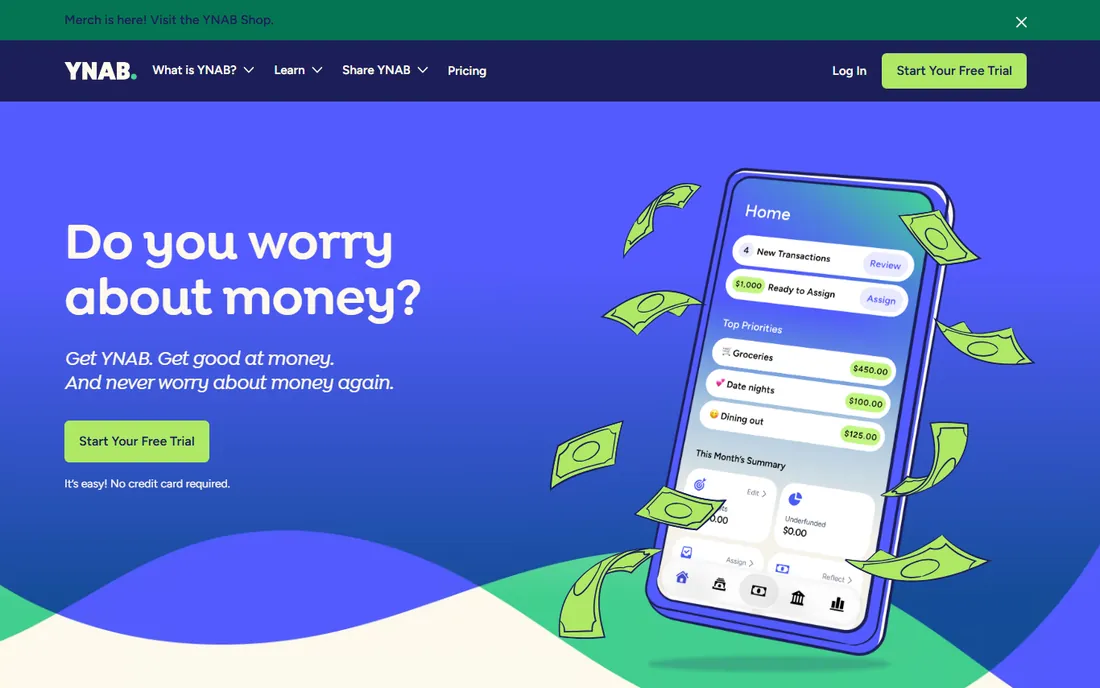
YNAB, short for You Need A Budget, is less an app than a method with software attached. Every dollar gets a job, you budget only money you have, and you roll with the punches when plans change. People who stick with it report genuine behavior change, which is the only metric that matters in this category.
The method demands effort. Setup takes real thought, the rules feel rigid for the first month, and $109 per year stings if you bounce off. The 34-day trial with no card required is the honest way to test it: a full month is exactly what you need to know if the discipline fits your life.
What we like- Proven zero-based method that changes habits
- Generous 34-day trial with no card required
- Strong education content
Watch out for- Highest learning curve here
- $109 per year is steep if you do not commit to the method
#3
Quicken Simplifi
Best for: automatic spending tracking with minimal effort
Visit quicken.com
Starting price$3.99/month, billed annually
Free planFree trial
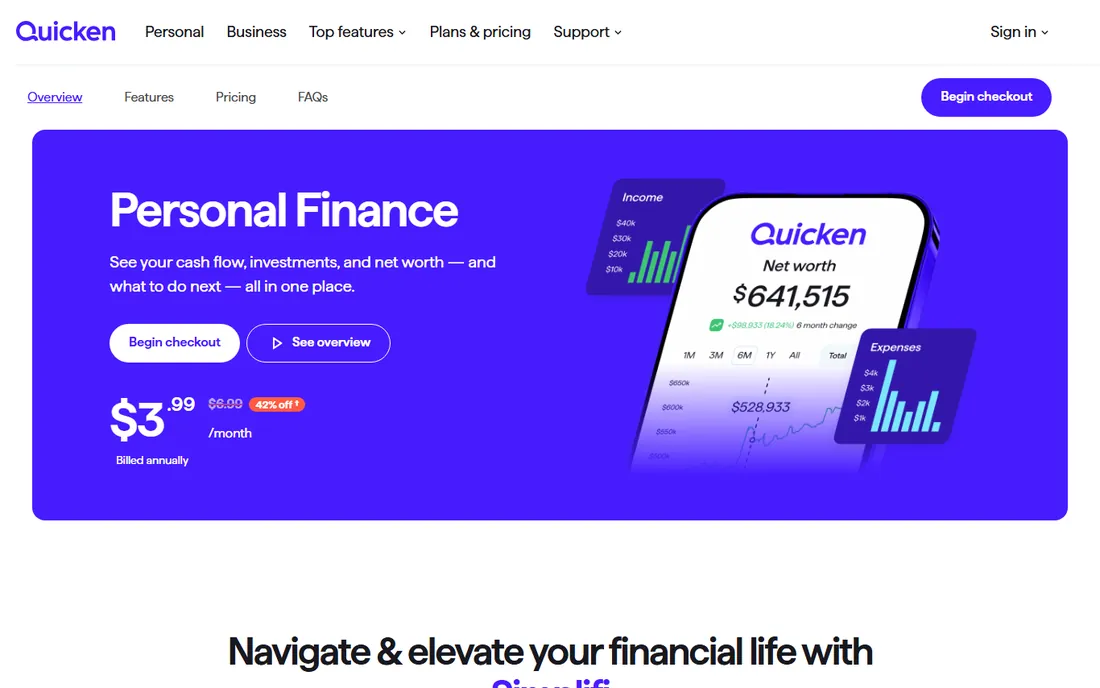
Simplifi is Quicken's modern answer to budgeting: connect accounts, let it categorize, and watch the spending plan. At $3.99 per month billed annually, it is one of the cheapest paid options here, and the automatic tracking means the weekly effort is minutes rather than an evening with a spreadsheet.
It is deliberately simpler than Monarch or YNAB. Power budgeters will miss the depth, and the Quicken name reminds some buyers of clunky desktop software. But as a low-cost, low-effort tracker that keeps you honest, Simplifi is easy to recommend.
What we like- Low annual cost
- Automatic categorization
- Spending plan shows what is safe to spend
Watch out for- Fewer advanced features than Monarch
- Quicken brand carries legacy baggage
Starting price$79.99/year for Premium
Free planYes
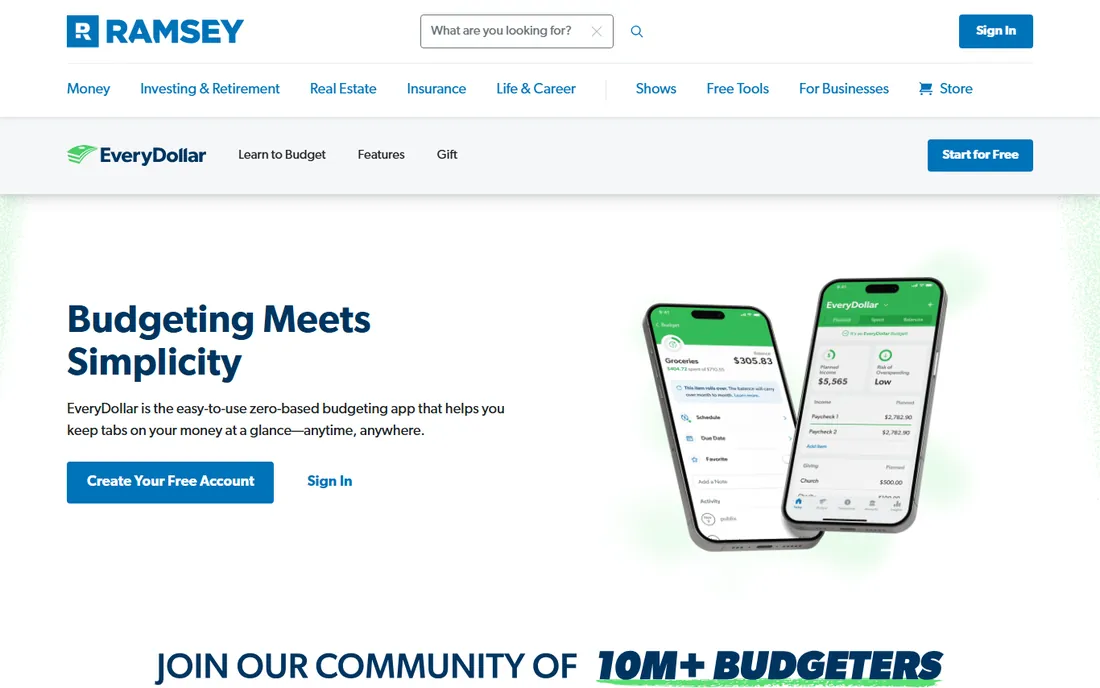
EveryDollar is Dave Ramsey's zero-based budgeting app, and its free version is the real deal: full manual zero-based budgeting at no cost. The interface is about as simple as this category gets, which is a feature when the alternative is a spreadsheet you never open.
Manual entry is the trade. The free version means typing transactions yourself, which builds awareness but takes discipline. Premium at $79.99 per year adds automatic bank connections, putting it in the same price conversation as more capable tools. Start free; upgrade only if manual entry is what kills the habit.
What we like- Free version covers real zero-based budgeting
- Simple and fast to use
- Premium adds bank connections
Watch out for- Free version needs manual entry
- Premium at $79.99 per year competes with deeper tools
Starting price$74.99/year
Free planYes
PocketGuard answers one question better than anyone: after bills, goals, and necessities, what can I actually spend? The "In My Pocket" figure is the headline, and everything else serves it. The free tier covers the core, the $74.99 annual plan is mid-range, and the $149.99 lifetime option is rare in this category and worth doing the math on.
Depth is the trade. If you want granular category control and custom rules, YNAB or Monarch go further. PocketGuard is for people who want a clear daily number without becoming budgeting hobbyists.
What we like- "In My Pocket" shows spendable cash clearly
- Lifetime plan option at $149.99
- Free tier is useful
Watch out for- Budgeting depth is lighter than YNAB
- Interface prioritizes simplicity over control
Starting priceSee website
Free planYes
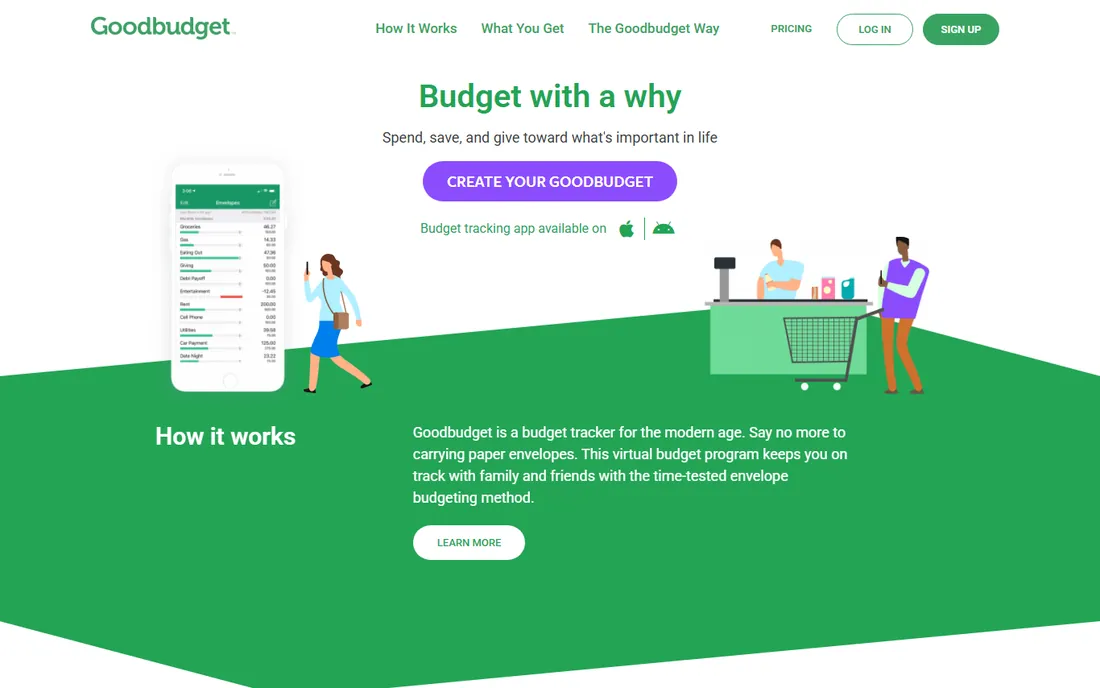
Goodbudget digitizes the envelope method: divide income into virtual envelopes for groceries, rent, fun, and spend from each. It is the most faithful translation of the cash-envelope discipline, and the free plan covers the essentials with syncing across devices so partners share the same envelopes.
The free plan means manual entry, and the design shows its age next to Monarch or Copilot. But the method works, the price is right, and couples who budget together often find shared envelopes clearer than shared dashboards.
What we like- Faithful digital version of envelope budgeting
- Good free plan
- Syncs across devices and partners
Watch out for- Manual entry on the free plan
- Design feels dated next to newer apps
Starting priceSee website
Free planYes
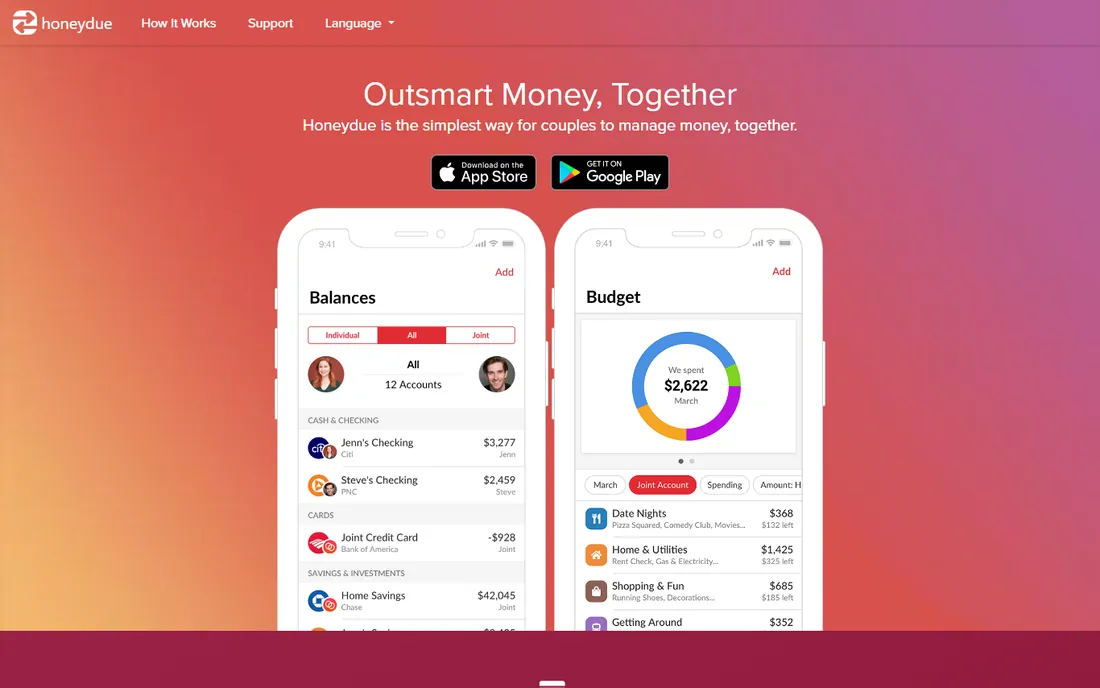
Honeydue is the only tool here designed for couples first. Both partners connect accounts, categorize together, get bill reminders, and can even chat about spending in context. It handles the social reality most budgeting apps ignore: money arguments are usually communication problems wearing a math costume.
As a solo budgeting tool it is thinner than the competition, and it is a smaller company than the bank-backed alternatives. But for couples, the joint-first design beats adapting a single-user app, and free is the right price for the experiment.
What we like- Built for two people from the ground up
- Free
- Chat and bill reminders for couples
Watch out for- Less depth for solo budgeting
- Smaller company than big-bank alternatives
Starting priceSee website
Free planYes
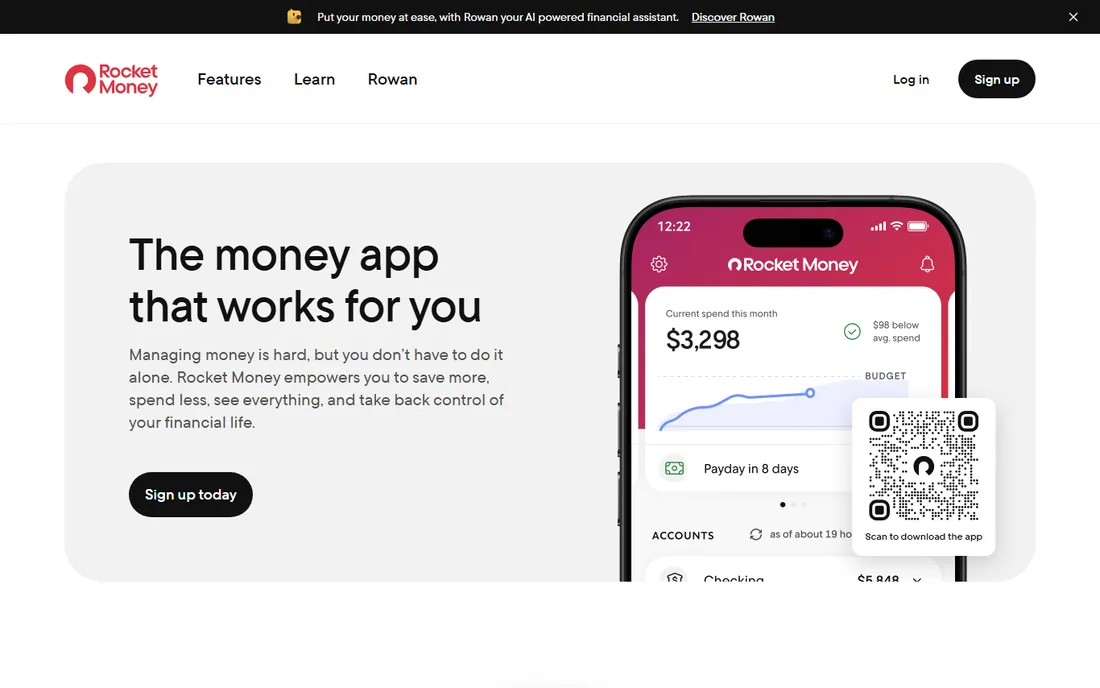
Rocket Money earned its audience by finding forgotten subscriptions and canceling them, then kept users with competent budgeting on top. The free tier is genuinely useful, and the subscription audit alone can pay for years of any budgeting app by killing charges you forgot existed.
Premium pricing uses a choose-your-price model that some buyers find confusing rather than generous, and the app promotes its own bill-negotiation services. Take the free subscription audit regardless; adopt the budgeting if the interface clicks.
What we like- Finds and cancels subscriptions
- Useful free tier
- Premium adds deeper budgeting
Watch out for- Pricing is "pay what you think is fair" for Premium, which confuses some buyers
- Upsells its own services
Starting priceSee website
Free planFree trial
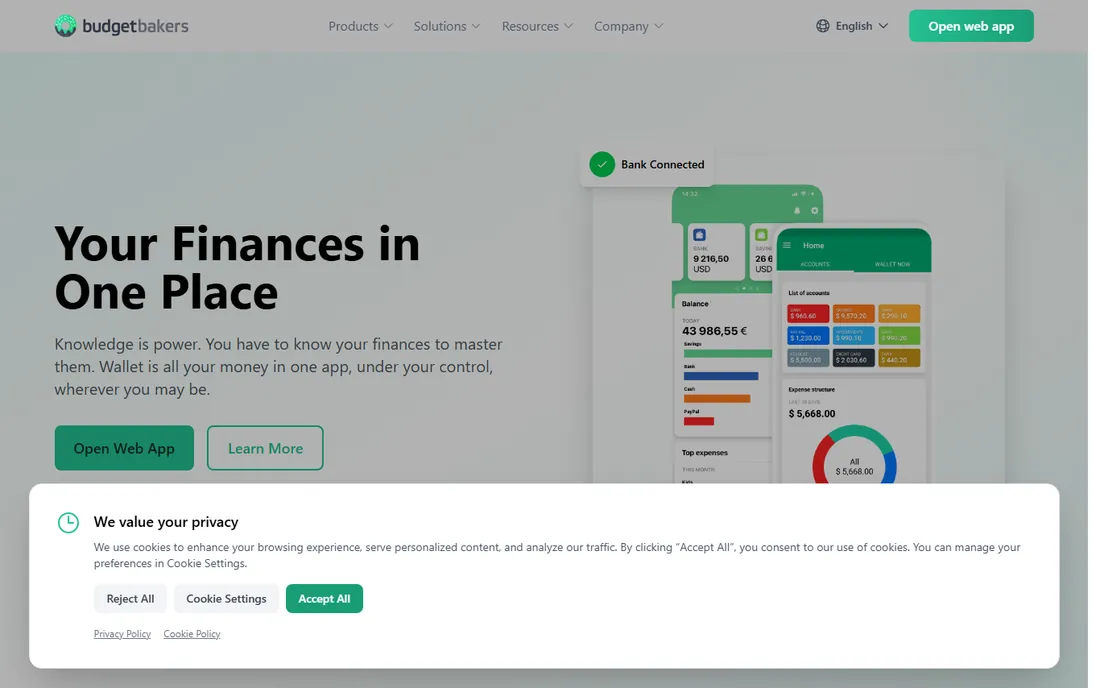
Wallet by BudgetBakers is the detail-lover's choice. Manual budgeting goes deep, with planning, tracking, and reporting that reward users who want full control, and bank connections cover many regions outside the US-centric norm. The free trial gives you room to test the workflow.
That depth overwhelms beginners, and pricing varies by region so check your local terms. It sits between YNAB's method and Monarch's dashboard: for budgeters who want precision without a prescribed philosophy.
What we like- Deep manual budgeting features
- Bank connections in many regions
- Strong reporting
Watch out for- Interface can overwhelm beginners
- Pricing varies by region
#10
Copilot Money
Best for: clean automatic tracking, especially for Apple users
Visit copilot.money
Starting price$95/year
Free planFree trial
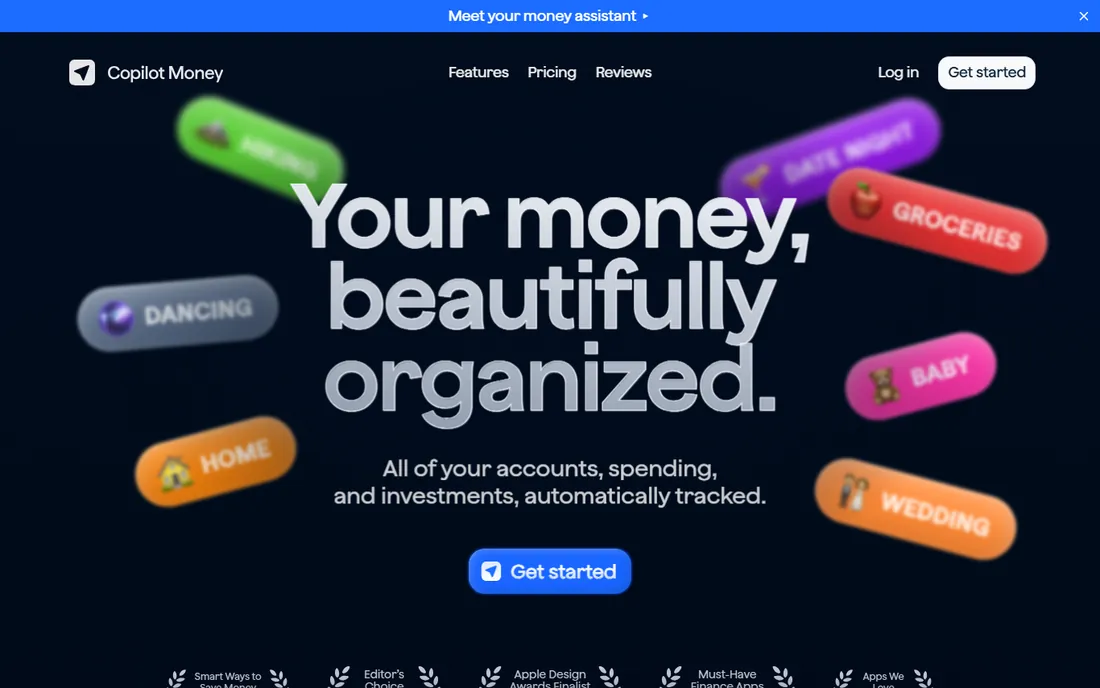
Copilot Money is the design-forward tracker: connect accounts and get clean, smart categorization in an interface that makes the weekly review almost pleasant. At $95 per year it undercuts Monarch and YNAB while delivering the automatic-tracking experience most people actually want.
The catch is platform. It is built Apple-first, which leaves Android users and heavy web users underserved. There is no free tier beyond the trial. If you live in the Apple ecosystem and want tracking without homework, it is the most polished option at this price.
What we like- Beautiful, fast interface
- Smart automatic categorization
- $95 per year undercuts some rivals
Watch out for- Apple-ecosystem focus limits Android and web
- No free tier beyond trial
Why most budgets fail in February
January budgets die for predictable reasons, and no app fixes these on its own. The first is over-restriction: a budget with zero fun money is a diet with zero dessert, and it fails the same way. Build in guilt-free spending or the budget becomes a document you avoid.
The second is the missing buffer. Irregular expenses like car repairs and annual subscriptions ambush every neat monthly plan. Budget a monthly amount for the irregular stuff or it will read as failure when it arrives.
The third is review neglect. A budget you set once and never revisit is a wish. Ten minutes weekly, reconciling and adjusting, beats two hours monthly. The apps above differ mostly in how pleasant they make those ten minutes.
The fourth is partner misalignment. If two people share money but only one budgets, the plan is fiction. This is the entire argument for Honeydue, Monarch's collaboration, or Goodbudget's shared envelopes: the system has to include everyone who spends.
How we chose
We reviewed vendor pricing pages and documentation, capturing the actual prices shown above in October 2026, then checked real usage against public reviews on G2 and Capterra and against personal finance discussions on Reddit. We weighted budgeting method fit, bank connection reliability, price and free tier honesty, couples features, and the likelihood a normal person maintains the habit. We favored tools with active development and real users in 2026. We did not claim hands-on testing of any product.
How to choose a budgeting app you will actually use
Match the app to your temperament, not to a feature list.
Zero-based versus tracking
Zero-based budgeting, YNAB and EveryDollar, assigns every dollar a job before the month starts. It is powerful and demanding. Automatic tracking, Simplifi, Copilot, and Rocket Money, categorizes what you spent with minimal effort. It is easier and less transformative. Be honest about which camp you are in.
Bank connections and manual entry
Automatic syncing saves time but can breed passivity; manual entry builds awareness but dies under tedium. EveryDollar's free manual plan versus its Premium sync is the perfect experiment: try manual for a month and see which one you are.
Budgeting as a couple
If you share finances, the app must work for both people. Shared envelopes, joint dashboards, or Honeydue's couples-first design all beat one partner budgeting alone while the other spends blind.
Price versus free
Free tools like EveryDollar, Goodbudget, Honeydue, and PocketGuard's free tier handle the fundamentals. Paid tools buy automation, depth, and polish. A useful rule: pay for the app only after the free version proves you will keep the habit for two months.
Frequently asked questions
Are budgeting apps safe to connect to my bank accounts?
Reputable apps use established aggregation services with read-only access and bank-level encryption, and none of the tools above can move your money. The realistic risks are data breaches and credential handling, so use a strong unique password, enable two-factor authentication, and check the vendor's security page before connecting.
Should I pay for a budgeting app or use a free one?
Start free. EveryDollar, Goodbudget, Honeydue, and PocketGuard all cover real budgeting at no cost. Pay when a specific paid feature, automatic syncing, couples collaboration, or investment tracking, solves the exact problem that kills your free habit. Never pay to motivate yourself; the app cannot do that part.
What is the difference between YNAB and EveryDollar?
Both do zero-based budgeting, but YNAB is a strict method with deep features at $109 per year, while EveryDollar is simpler with a genuinely free manual version and a $79.99 Premium tier. YNAB suits people who want the full discipline; EveryDollar suits people who want zero-based budgeting without the learning curve or the price.
Can my partner and I use one account?
Yes, and you should if you share expenses. Monarch and Goodbudget support shared access, and Honeydue is built for couples from the start. Sharing one budgeting system prevents the classic failure where one partner plans and the other spends unaware.
How long until budgeting shows results?
Expect awareness in the first month and behavior change by month three. The first month's data usually surprises people; the second month is where adjustments happen. Give any app at least two full months before judging it, which is also why free trials and free tiers matter.
Sources we checked (10)
- https://www.monarchmoney.com
- https://www.ynab.com
- https://www.quicken.com/products/simplifi
- https://www.ramseysolutions.com/ramseyplus/everydollar
- https://pocketguard.com
- https://goodbudget.com
- https://honeydue.com
- https://www.rocketmoney.com
- https://budgetbakers.com
- https://copilot.money
Is your product missing or out of date?
We review this list regularly. Vendors can request a listing, send updated pricing or ask about featured placement.

Shihab Mia · Founder, Rankite
Shihab has spent more than a decade helping SaaS and e-commerce brands grow through search. He writes Rankite's software buying guides from pricing pages, documentation and public user reviews. More about Shihab.