How we make this list: we compare pricing pages, product documentation and public user reviews. Ratings come from G2, Capterra or Trustpilot, with the date we checked them.
Key takeaways
- Breach and attack simulation runs safe, controlled attack techniques against your live defences, so you find the gaps before a real attacker does.
- Cymulate is the best overall pick, with the broadest coverage across endpoints, email, web gateway, WAF and cloud, plus a free trial.
- AttackIQ Flex is the only free tier in this list, at $0, with pay-as-you-go credits from $300 and an unlimited 30 day testing plan at $4,995 per month.
- Almost every vendor in this list sells by quote only, so expect an enterprise sales process and a five figure annual contract.
- Picus and Pentera publish no pricing page at all, so a sales call is the only way to compare prices.
What is breach and attack simulation software?
Breach and attack simulation software, often called BAS, safely runs the techniques real attackers use against your production defences and reports which ones succeeded. A scenario might send a phishing email, try to run a known malware sample on an endpoint, or attempt to move laterally from one host to another, all in a controlled way that causes no damage. The platform then maps each result to the MITRE ATT&CK framework and tells you which control failed, whether that is the email gateway, the endpoint agent, the firewall rule or the identity policy. The point is evidence: you see a test result for each control instead of assuming it works.
How much does breach and attack simulation software cost?
Almost every vendor in this list sells by quote only, and third-party estimates put annual contracts in the five figure range. AttackIQ is the exception, with a published free Flex tier at $0, pay-as-you-go credits from $300, and an unlimited 30 day testing plan at $4,995 per month, while its annual tier is custom. Third-party estimates put Cymulate near $7,000 per month for up to 1,000 endpoints, SafeBreach near $50,000 or more per year, AttackIQ near $40,000 or more per year, and Picus near $30,000 or more per year. Scythe sells by quote. Budget for an annual contract, not a monthly subscription.
Should you buy BAS or rely on penetration testing?
Buy BAS when you want continuous testing, and keep penetration testing for the deep, human-led work it does best. A penetration test happens once or twice a year, takes weeks, and gives you a snapshot. BAS runs every day, retests the same techniques after every change, and tells you within hours whether a new control actually works. The two are not substitutes: BAS finds the known gaps, while a penetration tester finds the unknown gaps, the logic flaws and the chained exploits that no automated scenario covers. Most mature teams run both, with BAS as the daily check and penetration testing as the annual deep dive.
How do you run BAS without disrupting production?
Start with non-destructive scenarios, a small test group, and a maintenance window. The first run should use safe simulations only, such as a phishing email to a test mailbox or a malware sample that writes to a scratch folder, and never a credential dumping or lateral movement test against a live server. Tell the security operations team the test is running, or they will treat it as a real incident. Review the first results with the vendor, tune out the false positives, and only then expand to production endpoints. A good vendor will guide this onboarding, so ask for it in the trial.
Quick comparison
| Tool | Best for | Starting price | Free plan |
|---|
 Cymulate | Teams that want the broadest BAS coverage across endpoints, email, web and cloud | Quote only; third-party estimates put it near $7,000 per month for up to 1,000 endpoints | No free tier, but a free trial is available |
 AttackIQ | Teams that want a free tier and the clearest published pricing in BAS | Flex free tier $0; pay-as-you-go credits from $300; Flex unlimited 30 day testing $4,995 per month; annual tier custom | Yes, AttackIQ Flex is free, with a limited set of scenarios and assessments |
 Picus Security | Teams that want automated validation of every security control, mapped to MITRE ATT&CK | Quote only; Picus publishes no pricing page at all, and third-party estimates put it near $30,000 or more per year | No free tier, but a demo is available |
 SafeBreach | Enterprises that want the original BAS platform with the deepest scenario library | Quote only; third-party estimates put it near $50,000 or more per year | No free tier, but a demo is available |
 XM Cyber | Teams that want attack path management, showing how an attacker could reach a critical asset | Quote only, XM Cyber publishes no list price | No free tier, but a demo is available |
 Pentera | Teams that want credentialed exploitation testing that proves an attack path really works | Quote only; Pentera publishes no pricing page at all | No free tier, but a demo is available |
 Mandiant Security Validation | Teams that already use Google Cloud or Mandiant threat intelligence and want validation from the same source | Quote only, Mandiant publishes no list price | No free tier, but a demo is available |
 Scythe | Red teams and security teams that want to build custom adversary emulation campaigns | Quote only, Scythe publishes no list price | No free tier, but a community edition is available |
Is your product missing or out of date?
We review this list regularly. Vendors can request a listing, send updated pricing or ask about featured placement.
#1
Cymulate
Best for: Teams that want the broadest BAS coverage across endpoints, email, web and cloud
Visit cymulate.com
Starting priceQuote only; third-party estimates put it near $7,000 per month for up to 1,000 endpoints
Free planNo free tier, but a free trial is available
Cymulate is the largest BAS platform in this list and the best overall pick for a team that wants one tool to test every layer. It runs attack simulations against endpoints, email gateways, web gateways, WAFs, data exfiltration paths and cloud workloads, and it maps every result to the MITRE ATT&CK framework so you can see exactly which technique got through and which control failed. The platform also scores your security posture, prioritises the gaps by risk, and gives remediation guidance for each one. Pricing is quote only, and third-party estimates put it near $7,000 per month for up to 1,000 endpoints, so expect an enterprise sales process.
What we like- Broadest attack library in this list, covers endpoints, email, web gateway, WAF and cloud, maps results to MITRE ATT&CK, strong remediation guidance
Watch out for- No public price, the platform is broad enough to need a dedicated owner, some customers report the interface is dense for new users
#2
AttackIQ
Best for: Teams that want a free tier and the clearest published pricing in BAS
Visit attackiq.com
Starting priceFlex free tier $0; pay-as-you-go credits from $300; Flex unlimited 30 day testing $4,995 per month; annual tier custom
Free planYes, AttackIQ Flex is free, with a limited set of scenarios and assessments
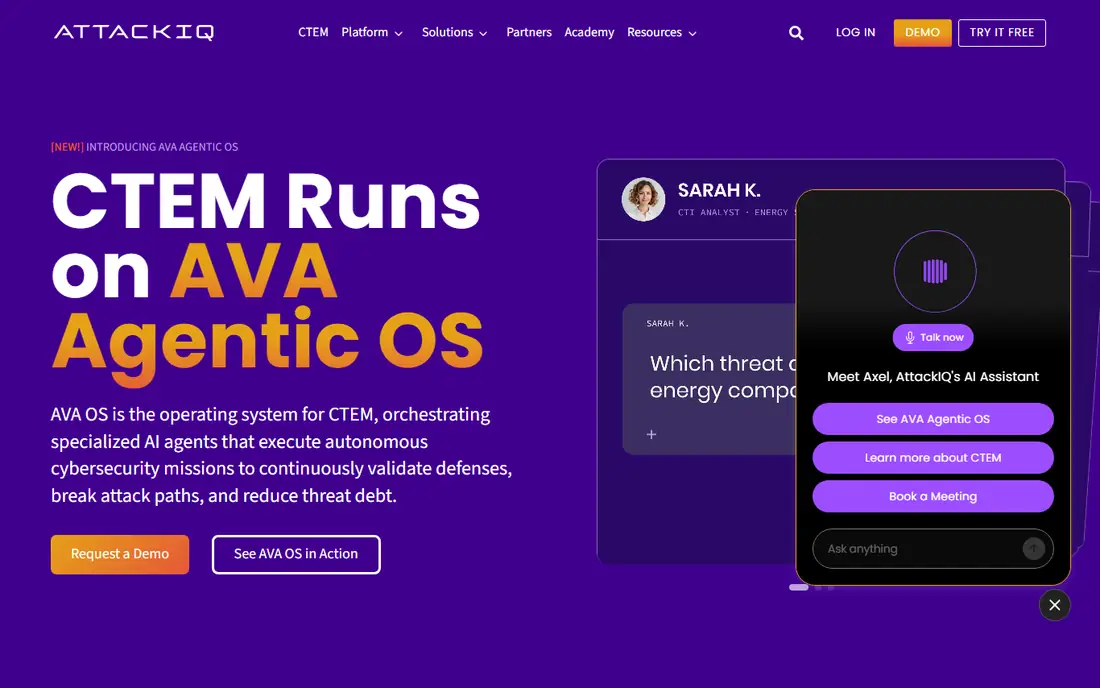
AttackIQ is the best starting point for a team that wants to try BAS without a sales call, because its Flex tier is free and its pay-as-you-go pricing is published. Flex at $0 gives a limited set of scenarios and assessments, pay-as-you-go credits start from $300, and the unlimited 30 day testing plan costs $4,995 per month, while the annual tier is custom. The platform is built on the MITRE ATT&CK framework, with a large library of adversary emulation scenarios, and it integrates with major EDR, SIEM and SOAR platforms. Third-party estimates put the annual contract near $40,000 or more per year.
What we like- Only free tier in this list, clearest published pricing, large scenario library built on MITRE ATT&CK, strong integrations with EDR and SIEM platforms
Watch out for- Annual tier is quote only, the free tier is limited in scenarios and users, full value needs integration work with your existing tools
#3
Picus Security
Best for: Teams that want automated validation of every security control, mapped to MITRE ATT&CK
Visit picussecurity.com
Starting priceQuote only; Picus publishes no pricing page at all, and third-party estimates put it near $30,000 or more per year
Free planNo free tier, but a demo is available
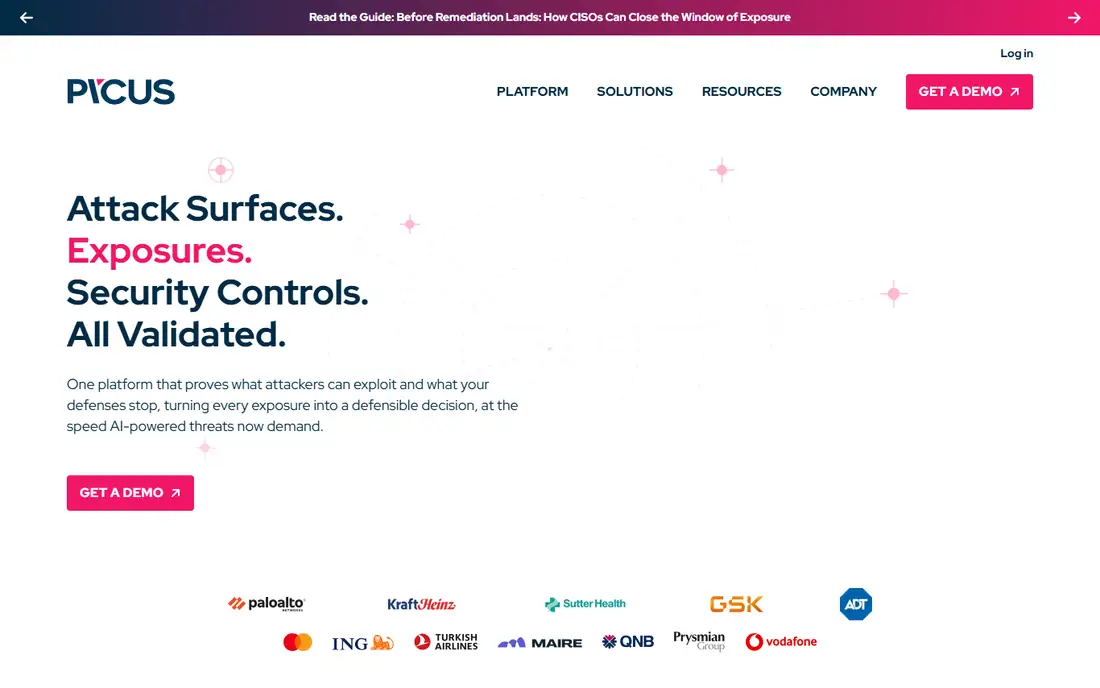
Picus Security is a continuous security validation platform that tests whether your existing controls actually block the attacks they are supposed to block. It runs thousands of simulated attacks against your email gateway, endpoint protection, network firewall, web gateway and cloud workloads, then shows which controls failed and why, with remediation steps for each gap. Every result is mapped to MITRE ATT&CK, and the platform retests automatically after you apply a fix. Picus publishes no pricing page at all, so the only way to get a number is a sales call, and third-party estimates put it near $30,000 or more per year.
What we like- Continuous automated control validation, maps every result to MITRE ATT&CK, strong coverage of email, endpoint, network and cloud controls, clear remediation steps
Watch out for- No pricing page at all, so a sales call is the only way to get a number, the platform assumes you already have controls to validate
#4
SafeBreach
Best for: Enterprises that want the original BAS platform with the deepest scenario library
Visit safebreach.com
Starting priceQuote only; third-party estimates put it near $50,000 or more per year
Free planNo free tier, but a demo is available
SafeBreach is one of the original breach and attack simulation platforms, and it suits an enterprise that wants the deepest scenario library and the most mature platform in the category. It runs simulated attacks across endpoints, email, network and cloud, validates whether each control blocked the attack, and retests automatically after remediation so you can prove the fix worked. The platform is built for teams with a mature security operations function, with role based access and scheduling. Pricing is quote only, and third-party estimates put it near $50,000 or more per year, so it is priced for enterprises rather than small teams.
What we like- One of the first BAS platforms, very deep scenario library, strong enterprise references, validates controls continuously and retests after fixes
Watch out for- No public price, enterprise scale pricing and minimums, the platform is built for teams with a mature security operations function
#5
XM Cyber
Best for: Teams that want attack path management, showing how an attacker could reach a critical asset
Visit xmcyber.com
Starting priceQuote only, XM Cyber publishes no list price
Free planNo free tier, but a demo is available
XM Cyber takes a different angle from classic BAS: instead of testing whether a single control blocks a single attack, it maps the full attack paths an attacker could take from any entry point to your critical assets, across on premises systems, cloud workloads and identity. It then shows which choke points matter most, so you can fix the one misconfiguration that breaks dozens of attack paths at once. That makes it the best pick for a team that wants to prioritise remediation by impact. Pricing is quote only, and the platform is aimed at enterprises, so a small team should compare Cymulate or AttackIQ first.
What we like- Maps attack paths across on premises, cloud and identity, shows which choke points matter most, strong remediation prioritisation, acquired by Schwarz Group in 2021
Watch out for- No public price, attack path management is a different model from classic BAS, so it needs a different evaluation, enterprise pricing
#6
Pentera
Best for: Teams that want credentialed exploitation testing that proves an attack path really works
Visit pentera.io
Starting priceQuote only; Pentera publishes no pricing page at all
Free planNo free tier, but a demo is available
Pentera is the strongest choice when you want proof rather than simulation, because it runs real, safe exploitation against your environment and shows which attack paths are genuinely exploitable. Its modules cover the main surfaces: Core for internal network exploitation, Surface for external attack surface testing, Cloud for cloud workload testing, and Resolve for remediation prioritisation. That credentialed approach finds the gaps simulation alone can miss, such as a credential that really does work or a misconfiguration that allows lateral movement. Pentera publishes no pricing page at all, so a sales call is the only way to get a number, and the platform is priced for enterprises.
What we like- Runs real, safe exploitation rather than simulation alone, proves which attack paths are genuinely exploitable, modules cover Core, Surface, Cloud and Resolve, strong reporting for executives
Watch out for- No pricing page at all, exploitation testing needs careful scoping and change control, enterprise pricing
#7
Mandiant Security Validation
Best for: Teams that already use Google Cloud or Mandiant threat intelligence and want validation from the same source
Visit mandiant.com
Starting priceQuote only, Mandiant publishes no list price
Free planNo free tier, but a demo is available
Mandiant Security Validation, formerly Verodin, is the BAS platform from Mandiant, now part of Google Cloud, and it is built on the same frontline threat intelligence that Mandiant gathers from incident response work. That means the scenarios it runs reflect the techniques real attackers are using right now, not a generic library, and the validation results tell you whether your controls would block the specific groups that target your industry. It integrates with Google Cloud and with the major EDR, SIEM and firewall platforms. Pricing is quote only, and the platform is aimed at large enterprises and government buyers.
What we like- Built on Mandiant frontline threat intelligence, validates controls against real attacker behaviour, strong integration with Google Cloud, trusted by large enterprises and governments
Watch out for- No public price, the platform is enterprise focused, full value depends on Mandiant threat intelligence subscriptions
#8
Scythe
Best for: Red teams and security teams that want to build custom adversary emulation campaigns
Visit scythe.io
Starting priceQuote only, Scythe publishes no list price
Free planNo free tier, but a community edition is available
Scythe is the BAS platform built for red teams, and it suits a security team that wants to build custom adversary emulation campaigns rather than run a fixed library of scenarios. It lets operators chain together techniques from the MITRE ATT&CK framework into a campaign that mirrors a specific threat actor, run it against production defences, and see exactly where it got through and where it was stopped. That flexibility is its strength: a team that knows its threat model can test it directly. Pricing is quote only, and the platform assumes a skilled operator, so a team without a red team function should start with Cymulate or AttackIQ.
What we like- Built for red teams, lets you build custom adversary emulation campaigns, strong MITRE ATT&CK mapping, community edition for learning
Watch out for- No public price, built for skilled operators rather than beginners, smaller vendor than the enterprise platforms in this list
Breach and attack simulation software compared
| Tool |
Starting price |
Free plan |
Best for |
| Cymulate |
Quote only |
Trial only |
Broadest coverage |
| AttackIQ |
$0 Flex free tier |
Yes |
Only free tier |
| Picus Security |
Quote only |
No |
Control validation |
| SafeBreach |
Quote only |
No |
Deepest scenario library |
| XM Cyber |
Quote only |
No |
Attack path management |
| Pentera |
Quote only |
No |
Credentialed exploitation |
| Mandiant Security Validation |
Quote only |
No |
Mandiant intelligence |
| Scythe |
Quote only |
No |
Custom red team campaigns |
Frequently asked questions
What is the difference between BAS and penetration testing?
Breach and attack simulation runs automated, safe attack scenarios continuously against your live defences and reports which controls failed. Penetration testing is a human-led engagement, once or twice a year, that finds unknown gaps, logic flaws and chained exploits no automated scenario covers. Most mature teams run both, with BAS as the daily check and penetration testing as the annual deep dive.
How much does BAS software cost?
Almost every vendor in this list sells by quote only, and third-party estimates put annual contracts in the five figure range, from near $30,000 a year for Picus to near $50,000 or more for SafeBreach. AttackIQ is the exception, with a free Flex tier at $0, pay-as-you-go credits from $300, and an unlimited 30 day testing plan at $4,995 per month. Budget for an annual contract, and treat third-party estimates as a guide only.
Is BAS safe to run in production?
Yes, when it is run properly. BAS platforms use safe simulations that cause no damage, such as sending a test phishing email or running a malware sample in a scratch folder. The risk comes from running aggressive scenarios, such as credential dumping or lateral movement, against live servers without a maintenance window or without telling the security operations team. Start with safe scenarios and a small test group, and expand only after the first results are reviewed.
What is MITRE ATT&CK and why does it matter for BAS?
MITRE ATT&CK is a public framework that lists the tactics and techniques real attackers use, from initial access through to exfiltration, with a name and ID for each one. BAS platforms map every test result to ATT&CK, so you can see exactly which technique got through and which control failed, in a language your whole team understands. It also lets you compare vendors, because broader ATT&CK coverage means broader test coverage.
Do I need BAS if I already have a penetration test?
Yes, because a penetration test is a snapshot and BAS is continuous. A penetration test tells you what was vulnerable on the day it ran, but your controls change every week as you update rules, add users and deploy new systems. BAS retests the same techniques after every change and tells you within hours whether a new control works or a fix closed a gap. It does not replace penetration testing, but it stops you waiting a year to find out a control failed.
How we picked
We compared eight breach and attack simulation tools that cover the main ways to buy in this category: the broadest platform, the only free tier, the best control validation, the deepest scenario library, attack path management, credentialed exploitation, threat intelligence led validation, and red team emulation. Prices were checked against vendor pricing pages and current third-party reads on 20 November 2026. Where a vendor publishes no price, we say so and label any third-party estimate as an estimate. Prices are search-verified; homepages were not individually opened, so confirm the price on the vendor pricing page before you buy.
Last verified: 20 November 2026
Sources we checked (8)
- https://www.cymulate.com
- https://www.attackiq.com
- https://www.picussecurity.com
- https://www.safebreach.com
- https://www.xmcyber.com
- https://www.pentera.io
- https://www.mandiant.com
- https://www.scythe.io
Is your product missing or out of date?
We review this list regularly. Vendors can request a listing, send updated pricing or ask about featured placement.

Shihab Mia · Founder, Rankite
Shihab has 5+ years in B2B and SaaS SEO. He writes Rankite's software buying guides from pricing pages, documentation and public user reviews. More about Shihab.