How we make this list: we compare pricing pages, product documentation and public user reviews. Rankite is independent; if a vendor ever pays for a featured spot, that listing is clearly labeled Partner.
Key takeaways
- Construction teams choosing between BuildingConnected, Procore Bid Management and ConstructConnect SmartBid should decide on network first: BuildingConnected's crowdsourced network of over 1.5 million construction professionals is the largest, while SmartBid bundles bid management with project lead data.
- Sales and proposal teams drowning in RFPs should shortlist Loopio and Responsive (both custom-quoted) against self-serve options: Qwilr (from $35/user/month), Proposify (from $19/user/month) and PandaDoc (from $19/seat/month with a free eSign plan).
- The cheapest credible starting point is Better Proposals at $13/user/month billed annually, with a 14-day trial that needs no credit card.
- Four of the nine tools publish no prices at all: get a written quote before comparing, and ask what the per-user or per-project fees look like at your volume.
Quick comparison
| Tool | Best for | Starting price | Free plan |
|---|
 BuildingConnected BuildingConnected | General contractors and owners soliciting subcontractor bids at scale | See website (custom quote) | Yes (free account signup; paid plans custom-quoted) |
 Procore Bid Management Procore Bid Management | Construction companies already running Procore as their platform | See website (volume-based custom quote) | Yes (free account lets subcontractors view and track bid invitations) |
 ConstructConnect SmartBid ConstructConnect SmartBid | General contractors who want bidding plus project lead data in one vendor | See website (custom quote) | No (no free plan advertised) |
 Loopio Loopio | Proposal and sales teams answering constant RFPs, RFIs and security questionnaires | See website (custom quote; Foundations tier for smaller teams) | No (no free trial advertised) |
 Responsive Responsive | Large enterprises running high-volume, compliance-heavy RFP responses | See website (custom quote) | No (no free trial advertised) |
 Qwilr Qwilr | Sales teams that want proposals as interactive web pages, not PDFs | $35/user/month (Starter, billed annually; $49 month-to-month) | Free trial (14 days, no credit card required) |
 Proposify Proposify | SMBs that need brand control and approval workflows on every proposal | $19/user/month (Basic, billed annually; $29 month-to-month) | Free trial (14 days, no credit card required) |
 PandaDoc PandaDoc | Teams that want proposals, contracts, e-signatures and payments in one tool | $19/seat/month (Starter, billed annually; $35 month-to-month) | Yes (free eSign plan with monthly document caps; 14-day trial of paid plans) |
 Better Proposals Better Proposals | Freelancers and small businesses that want professional proposals cheaply | $13/user/month (Starter, billed annually; $19 month-to-month) | Free trial (14 days, no credit card required) |
Is your product missing or out of date?
We review this list regularly. Vendors can request a listing, send updated pricing or ask about featured placement.
The best bidding software
Most buyers overpay for bidding software because they shop features instead of shopping their workflow. A general contractor soliciting fifty subcontractor bids and a SaaS sales team answering security questionnaires both "manage bids," but they need completely different tools. The nine below split into two camps: construction bid management (BuildingConnected, Procore, SmartBid) and proposal and RFP response (Loopio, Responsive, Qwilr, Proposify, PandaDoc, Better Proposals). Pick your camp first, then compare inside it.
Starting priceSee website (custom quote)
Free planYes (free account signup; paid plans custom-quoted)
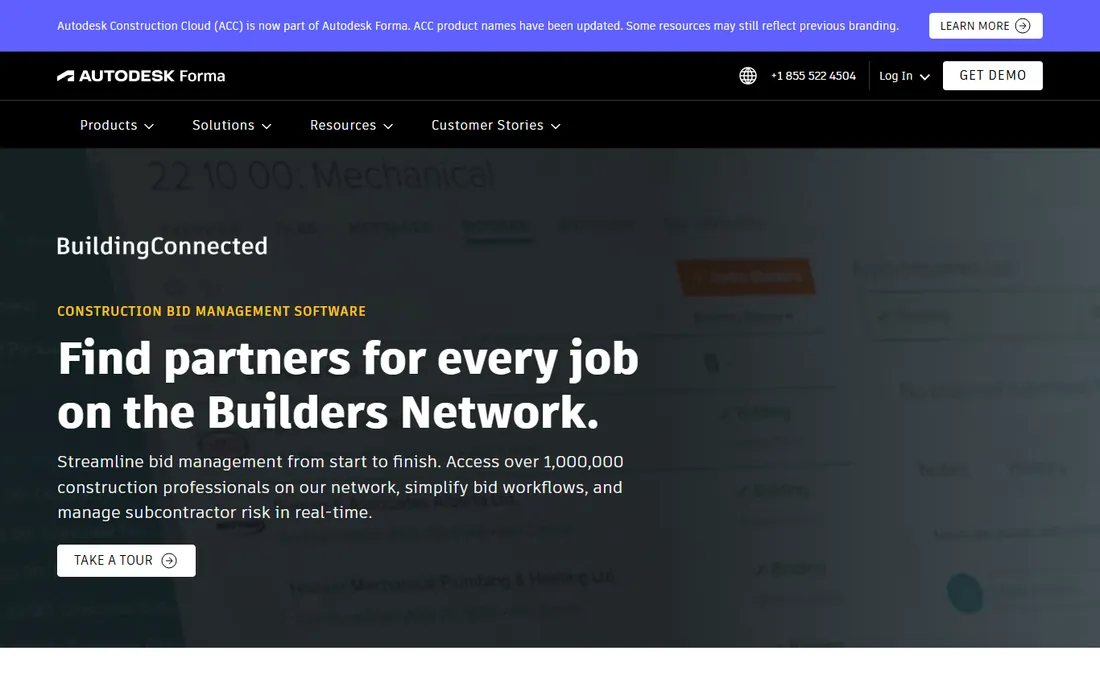
BuildingConnected is the default bid solicitation network for US commercial general contractors, now part of Autodesk (Autodesk Construction Cloud, currently transitioning under the Autodesk Forma brand). The concrete advantage is the network itself: when coverage on a trade is thin, the recommendation engine suggests bidders by location, trade and past performance instead of leaving you to cold-call. Bid invitations go out in minutes, responses level out apples to apples, and TradeTapp handles subcontractor qualification and financial risk review.
The honest catch is the commercial model. Everything beyond basic signup runs through Autodesk's sales process, with subscription management moving to Autodesk cloud licensing. Small GCs and specialty subs should confirm which tier they actually need before signing, because the full Pro suite is priced for firms running serious bid volume. If your team already lives in Autodesk tools, the integration argument is strong; if not, it is still the biggest room in the industry.
What we like- Largest crowdsourced construction network (1.5M+ professionals per Autodesk)
- Bid leveling and side-by-side comparison built for GC workflows
- Bid Board Pro gives subcontractors a single place to track invites and deadlines
Watch out for- Pricing is entirely quote-based, so budgeting takes a sales call
- The platform is construction-only, useless outside the trades
#2
Procore Bid Management
Best for: Construction companies already running Procore as their platform
Visit procore.com
Starting priceSee website (volume-based custom quote)
Free planYes (free account lets subcontractors view and track bid invitations)
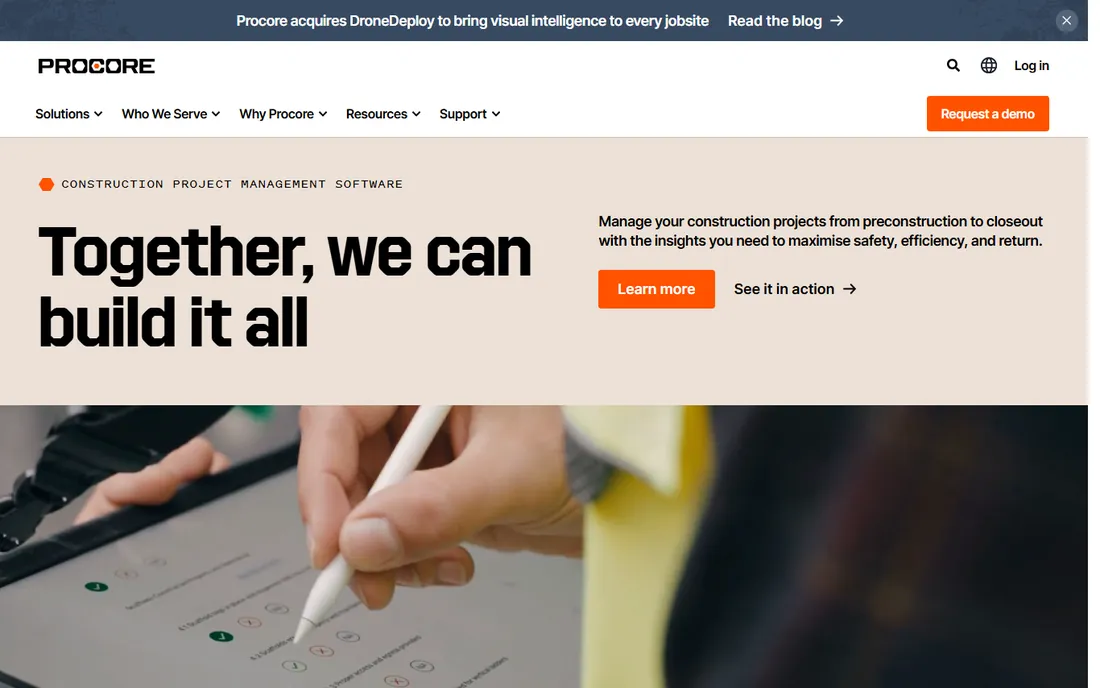
Procore sells bidding as one module of a connected construction platform rather than a standalone tool. That is the whole pitch: estimates, bid packages, contracts and financials share one system of record, so a winning bid flows into a contract without re-entry. Bid packages carry drawings, specs and communications together, and the Procore Construction Network lets subs search public bid opportunities and submit requests to bid.
The catch is scope. Procore prices on annual construction volume with unlimited users, which favors mid-size and large firms and prices out small contractors who just need bid solicitation. Implementation is a real project, not a signup form. If your company already runs Procore for project management, adding Bid Management is close to a no-brainer. If it does not, evaluate it as a platform decision, not a bidding tool decision.
What we like- Bidding lives inside the same platform as project management, documents and financials
- Unlimited users with no per-seat licensing
- Free Procore account for subs keeps invited bidders in the loop at no cost to them
Watch out for- Pricing is volume-based and quote-only, so small firms cannot self-serve
- Buying bid management alone makes little sense outside the Procore ecosystem
#3
ConstructConnect SmartBid
Best for: General contractors who want bidding plus project lead data in one vendor
Visit constructconnect.com
Starting priceSee website (custom quote)
Free planNo (no free plan advertised)
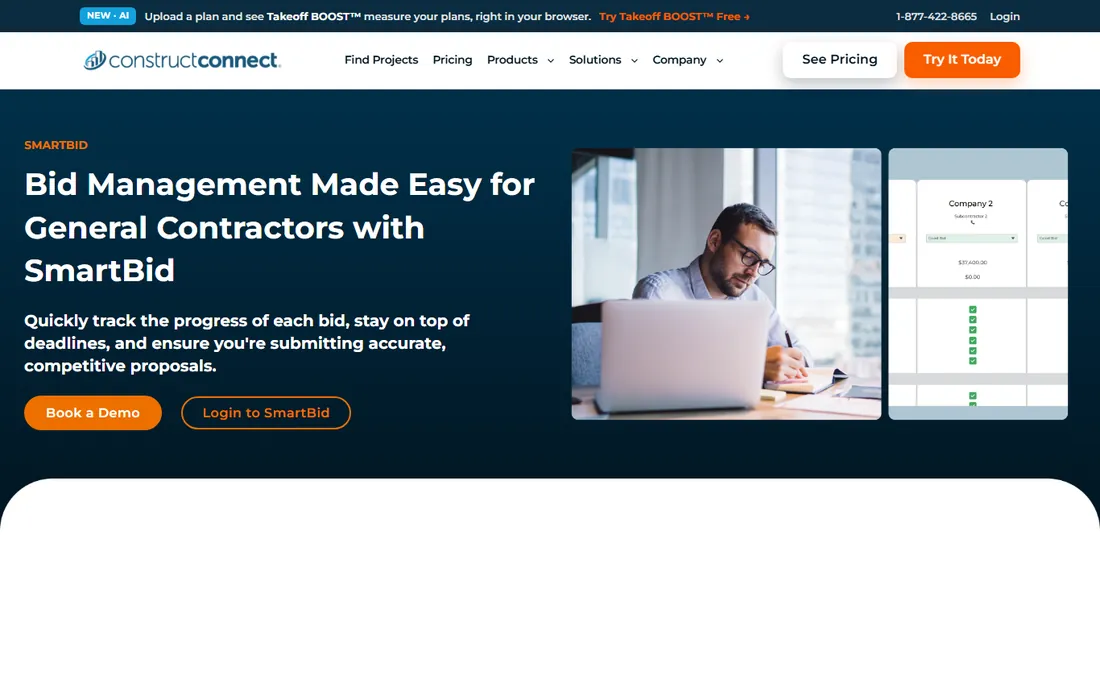
SmartBid is ConstructConnect's dedicated bid management product for prime, commercial and residential general contractors: customizable invitations to bid, bid status tracking, document sharing and a secure subcontractor contact database. The differentiator is what sits next to it. ConstructConnect also sells project lead data, takeoff tools (PlanSwift, On-Screen Takeoff) and analytics, so a GC can find projects, invite bidders and estimate without leaving the vendor's ecosystem. Note that BidClerk, once a standalone competitor, is now folded into ConstructConnect Project Intelligence.
The honest catch is packaging confusion. ConstructConnect sells several overlapping preconstruction products, and figuring out whether you need SmartBid, Bid Management or the full platform takes a sales conversation. Pricing is quote-only across the board. Firms that already buy ConstructConnect project data get the most value; firms starting from zero should compare it head to head with BuildingConnected on network coverage in their trades and regions.
What we like- Bundles bid management with ConstructConnect's project intelligence data (825,000+ active commercial projects per the vendor)
- Prequalification questionnaires and a centralized subcontractor database
- Integrates with Procore and Autodesk BIM 360
Watch out for- Quote-only pricing with no public numbers
- The product lineup is confusing (SmartBid, Bid Management, iSqFt, Project Intelligence overlap)
#4
Loopio
Best for: Proposal and sales teams answering constant RFPs, RFIs and security questionnaires
Visit loopio.com
Starting priceSee website (custom quote; Foundations tier for smaller teams)
Free planNo (no free trial advertised)
Loopio attacks the most painful part of bidding for SaaS and services companies: answering the same questions over and over across RFPs, DDQs and security questionnaires. The platform centers on a shared content library where approved answers live, get reviewed on schedule and get pulled into new responses with AI-assisted drafting. Project workflows assign questions to subject-matter experts with automated nudges, and integrations cover Salesforce, HubSpot, Slack, Teams and major SSO providers.
The honest catch is that Loopio manages responses, not documents. You still need a proposal tool (like the ones below) to produce the final client-facing bid. Pricing starts with a Foundations tier of 10 seats for smaller sales-led teams and scales to Enhanced and Enterprise packages, all custom-quoted. If your team spends its weeks in questionnaires, Loopio pays for itself in reclaimed hours; if you send a few proposals a month, it is overkill.
What we like- Purpose-built content library with review cycles keeps answers current
- AI-assisted drafting and strong collaboration workflows for subject-matter experts
- 15 to 30 day onboarding is fast for the category
Watch out for- No published pricing, so every evaluation starts with a sales call
- Built for response teams, not for creating the proposal document itself
#5
Responsive
Best for: Large enterprises running high-volume, compliance-heavy RFP responses
Visit responsive.io
Starting priceSee website (custom quote)
Free planNo (no free trial advertised)
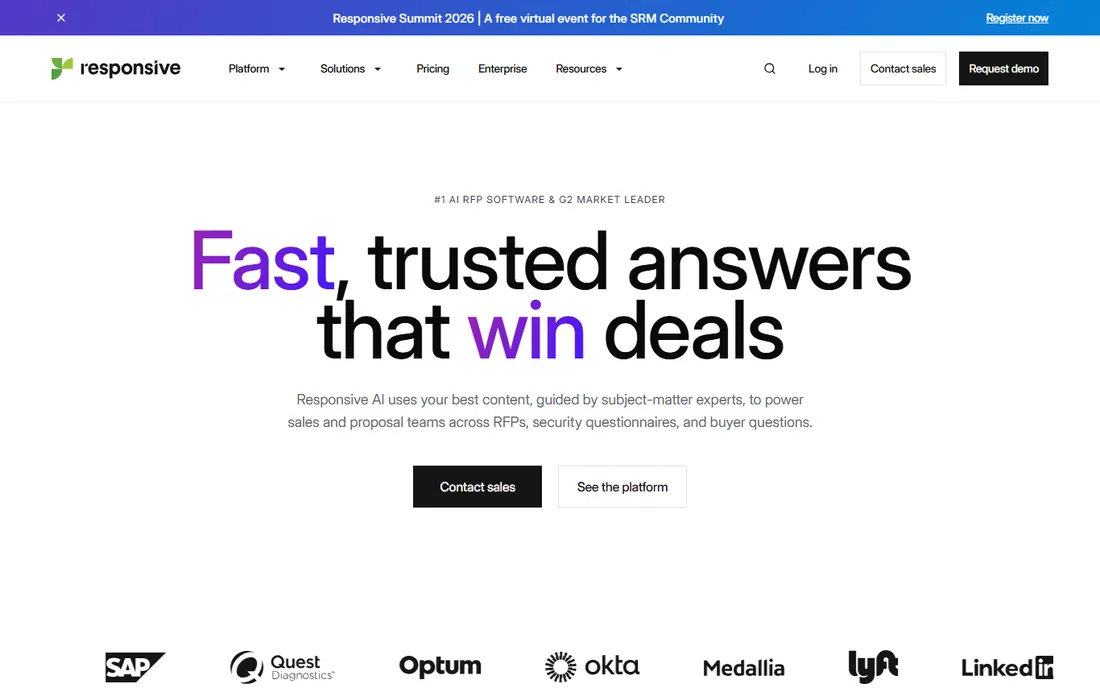
Responsive, formerly RFPIO, is the enterprise leader in what it calls strategic response management. The platform's strength is scale: AI drafts answers from a governed content library with source citations, TRACE scoring checks whether responses actually address each question part, and workflows route RFPs, security questionnaires and due diligence requests through the right process. It claims over $1 trillion in managed opportunities and adoption across the Fortune 100.
The catch is who it is for. This is an enterprise platform with enterprise pricing and an implementation to match; small teams will drown in it. The content library only pays off once you feed it, so expect a real onboarding investment before the AI drafting earns its keep. If your company answers hundreds of complex questionnaires a year with compliance stakes, Responsive is the benchmark. Everyone else should look at Loopio or the proposal tools below.
What we like- Market-leading RFP platform (formerly RFPIO) with deep AI drafting grounded in your content library
- Handles RFPs, RFIs, DDQs, security questionnaires and ESG requests in one place
- Trust Center for sharing validated security content with buyers
Watch out for- Enterprise pricing with no public numbers puts it out of SMB reach
- Implementation and content library setup demand real effort up front
#6
Qwilr
Best for: Sales teams that want proposals as interactive web pages, not PDFs
Visit qwilr.com
Starting price$35/user/month (Starter, billed annually; $49 month-to-month)
Free planFree trial (14 days, no credit card required)
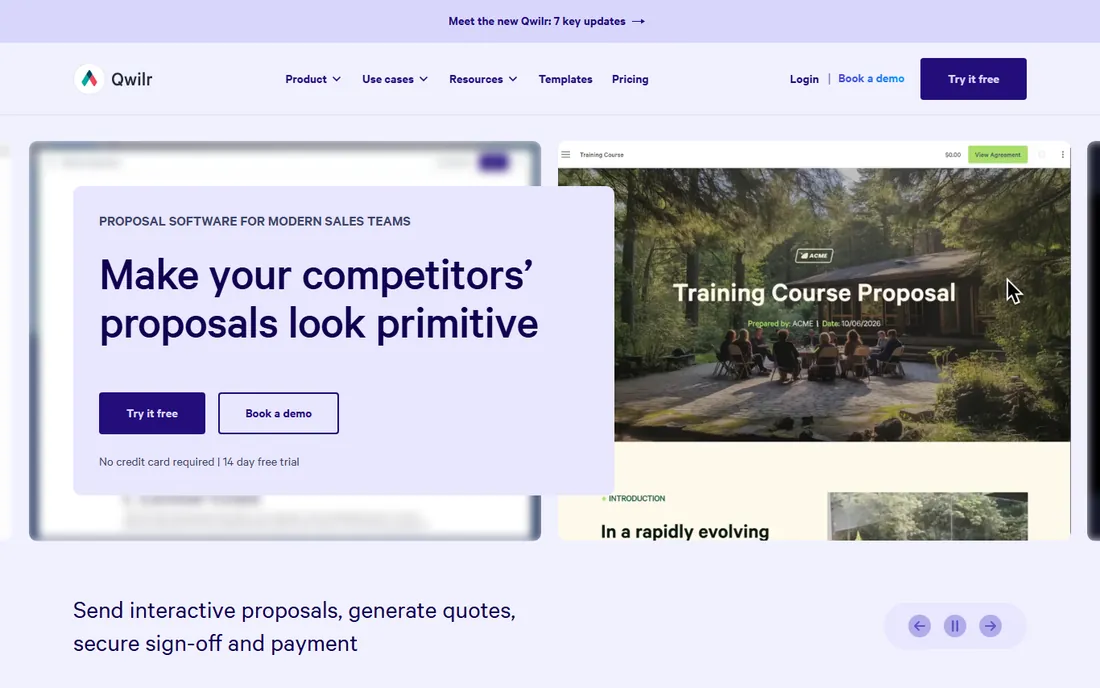
Qwilr replaces the PDF proposal with a live web page. Buyers get an interactive experience with embedded videos, calendars and spreadsheets, dynamic quote tables and one-click acceptance with payment collection through QwilrPay. Sellers get analytics on which sections prospects viewed and for how long, which makes follow-up calls dramatically better informed. Integrations cover HubSpot, Salesforce, Pipedrive, Zoho and Slack.
The honest catch is the pricing structure. Starter at $35 per user per month (annual) suits individuals and small teams, but Growth jumps to $55 with a 5-user annual minimum and Scale to $75 with a 10-user minimum, both annual-only. A 10-person sales team on Scale pays $750 per month before any document automation credits. If your proposals need to impress and your deal sizes justify it, Qwilr is the most polished option here; if you send simple quotes, it is more tool than you need.
What we like- Interactive proposals with embedded video, ROI calculators and dynamic pricing tables
- Page-level analytics show what prospects actually read
- Payments and e-signatures built into the page
Watch out for- Growth ($55/user/month) and Scale ($75/user/month) require annual billing with 5 and 10 user minimums
- Per-user pricing adds up fast for large sales teams
#7
Proposify
Best for: SMBs that need brand control and approval workflows on every proposal
Visit proposify.com
Starting price$19/user/month (Basic, billed annually; $29 month-to-month)
Free planFree trial (14 days, no credit card required)
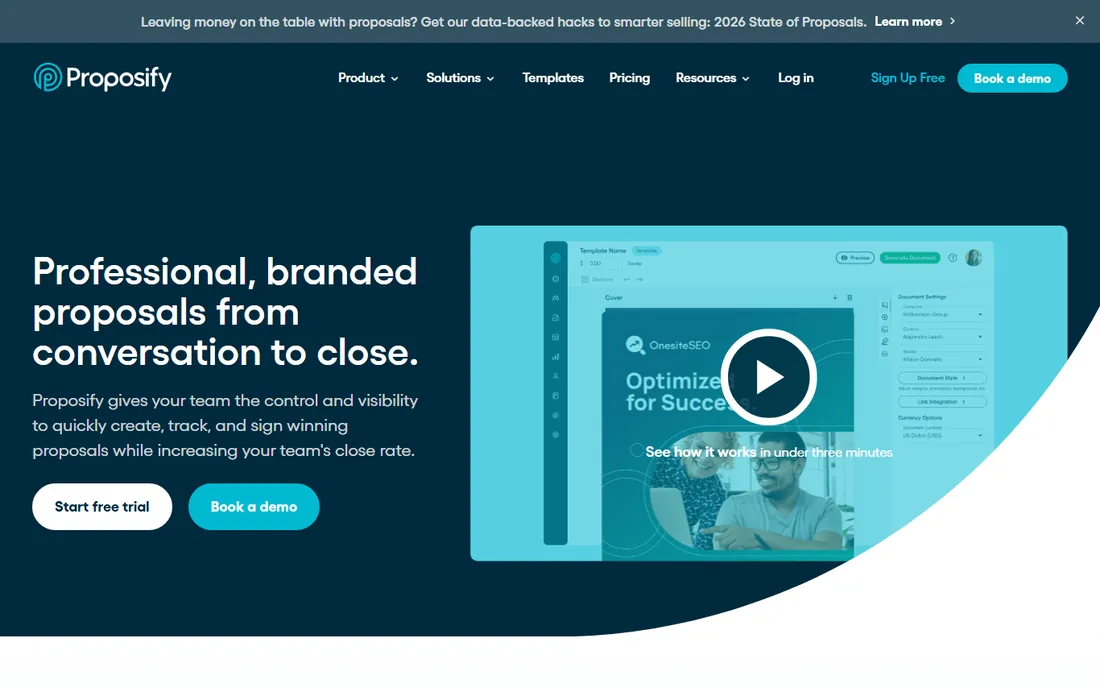
Proposify is built for the sales manager who has seen one too many off-brand proposals with wrong pricing. Reps build from locked, pre-approved templates and content libraries, managers approve through structured workflows, and engagement analytics show exactly when a prospect opens the document and what they read. Native Salesforce and HubSpot integrations (Team and up) pull deal data straight into the proposal, and electronic signatures close the loop.
The honest catch is the send limits. Basic at $19 per user per month (annual) allows only a handful of document sends per month, so any team with real volume lands on Team at $41 per user per month (annual). Business at $65 adds approval workflows, roles and API access with a 10-user minimum. Price it against your monthly send volume, not the headline number, and Proposify is a fair deal for teams that need control more than flash.
What we like- Strong content locking and approval workflows keep reps from going rogue
- CRM integrations pull accurate data into proposals automatically
- Detailed engagement analytics on opens and section views
Watch out for- Basic caps document sends (5 per month), pushing active teams to Team at $41/user/month
- Business tier requires a 10-user annual minimum at $65/user/month
#8
PandaDoc
Best for: Teams that want proposals, contracts, e-signatures and payments in one tool
Visit pandadoc.com
Starting price$19/seat/month (Starter, billed annually; $35 month-to-month)
Free planYes (free eSign plan with monthly document caps; 14-day trial of paid plans)
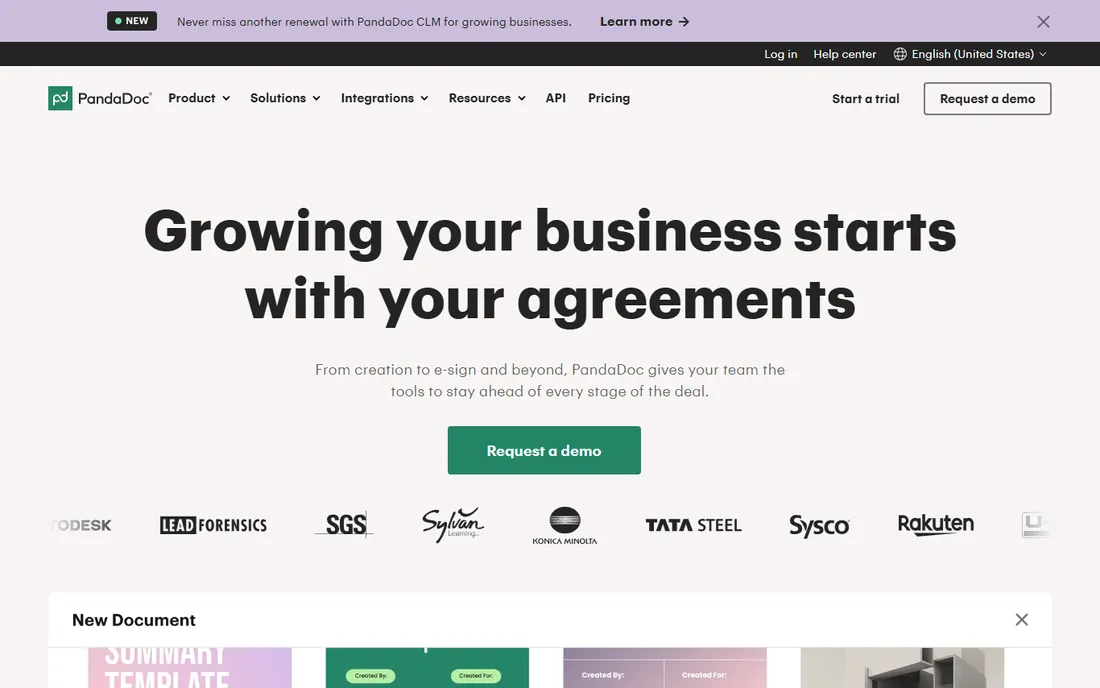
PandaDoc covers the widest surface of any tool here: proposals, quotes, contracts, forms, e-signatures and payment collection in one platform, now with contract lifecycle management added. The free eSign plan handles occasional signing needs at no cost, Starter at $19 per seat per month (annual) adds the document editor with unlimited documents and e-signatures, and Business at $49 adds CRM integrations, automation and approval workflows.
The honest catch is the tier jump. Starter lacks the CRM integrations most sales teams need, so the real price for a working sales workflow is Business at $49 per seat per month (annual), more than double the headline. PandaDoc is also the broadest tool here, which means proposal-specific polish trails Qwilr and control trails Proposify. Buy it when you want one platform for the whole agreement process; buy a specialist when the proposal itself is the product.
What we like- Genuine free eSign plan for light users
- Full document lifecycle from proposal to contract to payment
- Deep CRM integrations and a mature template library
Watch out for- Business tier ($49/seat/month annual) is where CRM sync and automation live, doubling the entry price
- Per-seat pricing compounds quickly as teams grow
#9
Better Proposals
Best for: Freelancers and small businesses that want professional proposals cheaply
Visit betterproposals.io
Starting price$13/user/month (Starter, billed annually; $19 month-to-month)
Free planFree trial (14 days, no credit card required)
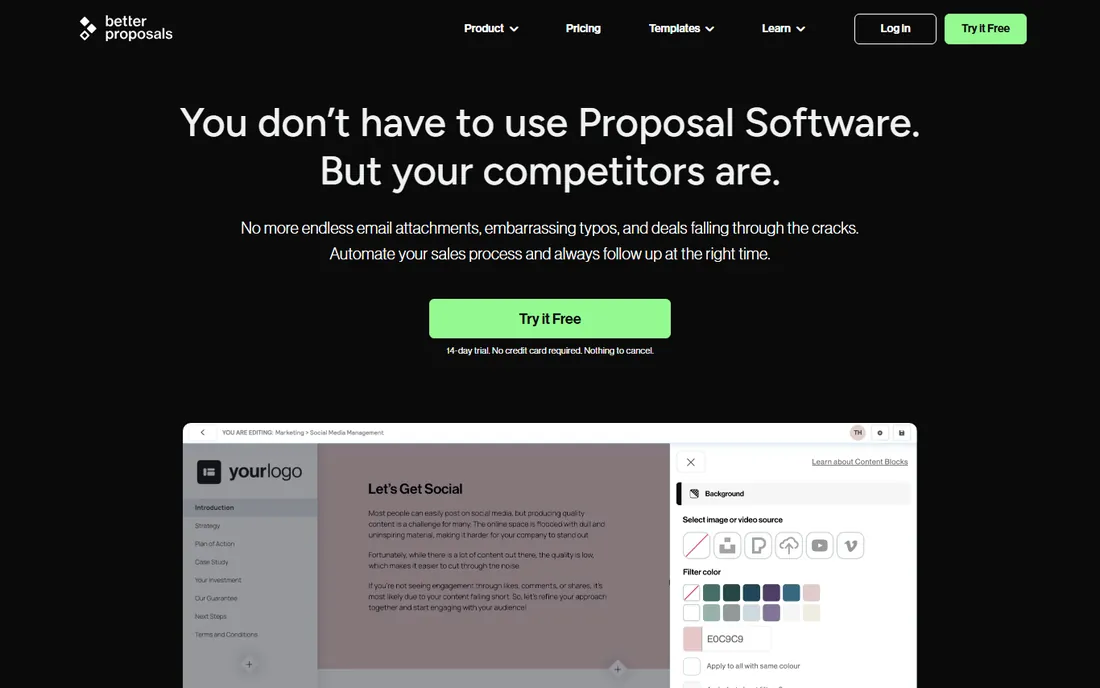
Better Proposals is the budget pick that does not feel like a budget tool. Starter at $13 per user per month (annual) includes legally binding signatures, interactive pricing tables, payment integrations (Stripe, PayPal, GoCardless), a content library and analytics. Premium at $21 annual adds custom domains, CRM integrations and API access, while Enterprise at $42 annual adds approvals and advanced permissions. The company is bootstrapped and famously anti-hype, and support is human and fast.
The honest catch is ceiling, not floor. Teams that need granular roles, multi-level approvals or deep Salesforce customization will outgrow it and land at Proposify or PandaDoc. But for freelancers, agencies and small businesses sending proposals every week, Better Proposals delivers the essentials at a price the others cannot touch. Start here unless you have a specific reason not to.
What we like- Lowest entry price of any credible tool here
- E-signatures, payment integrations and analytics included even on Starter
- Refreshingly human support with fast response times
Watch out for- Fewer advanced workflow and permission features than Proposify or PandaDoc
- Smaller integration ecosystem than the bigger platforms
How we chose
We split the category the way buyers actually shop: construction bid management versus proposal and RFP response. For each candidate we opened the vendor's own site and pricing page, checked plan details and free tiers against what the vendor publishes, and cross-checked positioning against public reviews on G2 and Capterra and practitioner discussion on Reddit. Where a vendor publishes no prices, we wrote "See website" instead of inventing numbers. BidClerk was dropped during research because the brand has been absorbed into ConstructConnect Project Intelligence; Better Proposals took its slot.
Construction bids vs. sales proposals: buy for your workflow
The single most expensive mistake in this category is buying the wrong type of tool. Work through these before shortlisting.
If you solicit bids from subcontractors
You need a bid solicitation network, not a document editor. BuildingConnected, Procore and SmartBid all manage invitations, track responses and level bids, but their networks differ: BuildingConnected's crowdsourced network is the largest, Procore's strength is the unified platform around it, and SmartBid's edge is bundled project lead data. Ask each vendor how many subcontractors in your trades and regions are active on their network, because a bid tool with no bidders is just an expensive spreadsheet.
If you respond to RFPs and questionnaires
You need response management, and the right tier depends on volume. Enterprises answering hundreds of complex questionnaires a year should evaluate Loopio and Responsive, accepting the custom pricing and implementation effort. Teams answering a few dozen RFPs a year get more value from a proposal tool with a content library than from a dedicated response platform.
If you create and send proposals
You need a proposal tool, and the decision is control versus polish versus price. Proposify wins on brand control and approvals, Qwilr wins on interactive polish and buyer experience, PandaDoc wins on breadth (proposals through contracts and payments), and Better Proposals wins on price. Map your monthly send volume and your must-have integrations before comparing, because send caps and missing CRM sync are what force upgrades.
The real cost of bidding software
Headline prices lie in this category, so model the total before you buy. Per-user pricing compounds: a 10-person team on Qwilr Scale pays $750 per month, on Proposify Team $410 per month (annual), on PandaDoc Business $490 per month (annual). Annual billing saves 20 to 35 percent at most vendors here, so the monthly price is rarely the price you should budget.
Watch the tier gates. Proposify Basic caps document sends, PandaDoc Starter omits CRM integrations, and Qwilr's Growth and Scale plans carry user minimums on annual-only billing. Four tools (BuildingConnected, Procore, SmartBid, Loopio, Responsive) publish no prices at all: treat every number you see about them online as an estimate and get the quote in writing, including implementation and onboarding fees. Finally, factor in the content setup cost for RFP tools: Loopio and Responsive only pay off after you build the content library, so budget staff time, not just subscription fees.
Frequently asked questions
What is bidding software?
Bidding software covers two related jobs. Construction bid management tools (BuildingConnected, Procore, SmartBid) help general contractors invite subcontractor bids, track responses and compare them. Proposal and RFP tools (Loopio, Responsive, Qwilr, Proposify, PandaDoc, Better Proposals) help vendors respond to RFPs and create client-facing proposals and quotes. Decide which job you are hiring for before comparing tools.
How much does bidding software cost?
Self-serve proposal tools run $13 to $75 per user per month: Better Proposals ($13), Proposify ($19), PandaDoc ($19), Qwilr ($35) at the entry tier, all billed annually. Construction bid management and enterprise RFP platforms (BuildingConnected, Procore, SmartBid, Loopio, Responsive) are custom-quoted, so budget for a sales process and ask about implementation fees.
Is there free bidding software?
Partly. PandaDoc offers a free eSign plan with document caps, BuildingConnected offers free account signup, and Procore lets subcontractors view bid invitations with a free account. Qwilr, Proposify and Better Proposals offer 14-day free trials but no permanent free plans. Loopio, Responsive and SmartBid have no free tier.
Which bidding software is best for general contractors?
BuildingConnected has the largest subcontractor network, which matters most when you need bid coverage across trades. Procore Bid Management fits firms already running Procore as their construction platform. ConstructConnect SmartBid suits GCs who also want project lead data from the same vendor. Compare network coverage in your specific trades and regions before deciding.
What is the difference between RFP software and proposal software?
RFP software (Loopio, Responsive) manages the response process: content libraries, question assignment, AI-assisted drafting and collaboration across subject-matter experts. Proposal software (Qwilr, Proposify, PandaDoc, Better Proposals) creates the client-facing document: design, pricing tables, e-signatures and engagement analytics. High-volume teams often need both.
Can bidding software integrate with my CRM?
The proposal tools can: Qwilr, Proposify (Team and up), PandaDoc (Business and up) and Better Proposals (Premium and up) all integrate with Salesforce, HubSpot and Pipedrive at various tiers. Loopio and Responsive integrate with CRMs as part of their response workflows. Construction tools integrate within their own ecosystems (Procore, Autodesk) rather than with sales CRMs.
Sources we checked (10)
- https://buildingconnected.com/
- https://www.procore.com
- https://www.constructconnect.com/products/smartbid
- https://loopio.com/
- https://responsive.io/
- https://qwilr.com/pricing/
- https://www.proposify.com/blog/better-proposals-pricing
- https://www.pandadoc.com/pricing
- https://betterproposals.io/alternatives/nifty-quoter
- https://betterproposals.io
Is your product missing or out of date?
We review this list regularly. Vendors can request a listing, send updated pricing or ask about featured placement.

Shihab Mia · Founder, Rankite
Shihab has spent more than a decade helping SaaS and e-commerce brands grow through search. He writes Rankite's software buying guides from pricing pages, documentation and public user reviews. More about Shihab.