How we make this list: we compare pricing pages, product documentation and public user reviews. Rankite is independent; if a vendor ever pays for a featured spot, that listing is clearly labeled Partner.
Key takeaways
- Jira is the default for agile teams at scale, with the deepest ecosystem.
- Linear is the fast, modern alternative developers actually enjoy using.
- Productboard and Aha! are product management platforms: roadmaps and prioritization above the backlog.
- Shortcut is the streamlined Jira alternative for software teams that want less overhead.
- Asana, ClickUp and Favro handle backlogs inside broader work management.
Quick comparison
| Tool | Best for | Starting price | Free plan |
|---|
 Jira Jira | agile teams at scale | See website | Yes |
 Linear Linear | modern developer experience | See website | Yes |
 Productboard Productboard | product prioritization | See website | Free trial |
 Aha! Aha! | product roadmapping | See website | Free trial |
 Shortcut Shortcut | streamlined agile development | See website | Yes |
 Asana Asana | backlogs in work management | See website | Yes |
 ClickUp ClickUp | all-in-one team workspace | See website | Yes |
 Favro Favro | flexible agile planning | See website | Free trial |
Is your product missing or out of date?
We review this list regularly. Vendors can request a listing, send updated pricing or ask about featured placement.
Starting priceSee website
Free planYes
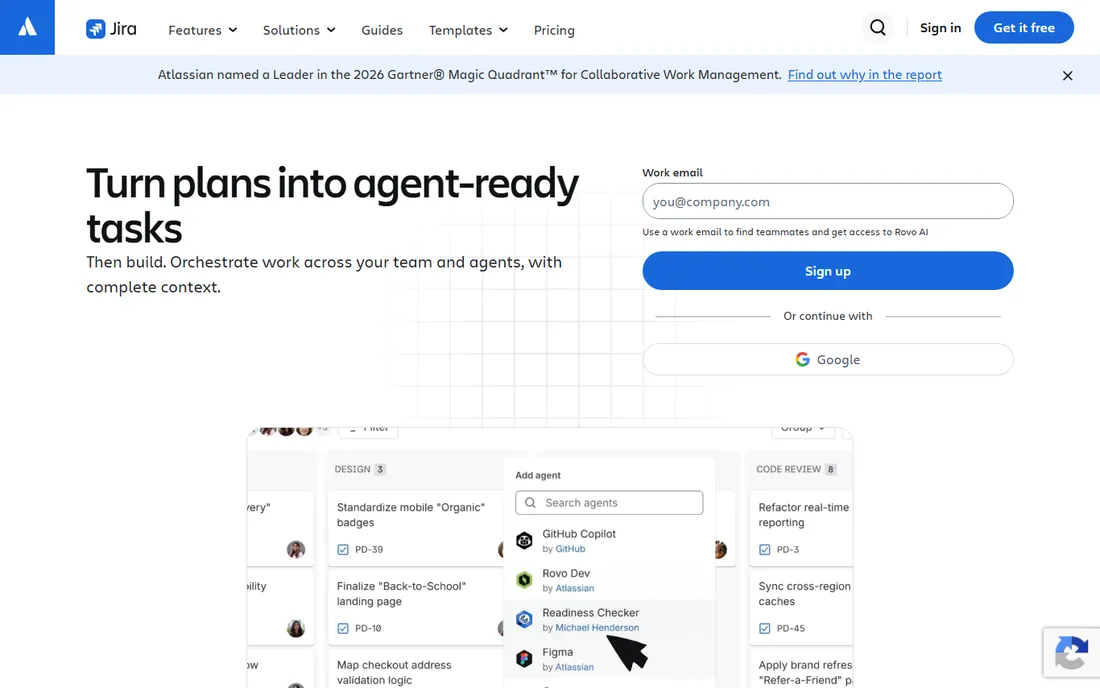
Jira is the backlog standard for agile software teams: epics, stories, sprints, boards and the workflow engine that models any process. The Atlassian ecosystem and thousands of apps extend it everywhere.
Small teams often find it heavy, and misconfiguration creates bureaucracy. But for agile at any real scale, Jira is the default for good reason.
Jira's backlog power shows in the workflow configuration: trial it by building your actual issue types, priorities and board columns rather than accepting the defaults. The teams that succeed with Jira invest in a dedicated administrator, at least part-time, because the flexibility that makes it powerful also lets it decay into chaos without governance. Evaluate the automation rules early too: the time saved on routine triage and assignment often justifies the administrative overhead within the first quarter.
What we like- Deepest agile feature set
- Massive integration and app ecosystem
- Free for small teams
Watch out for- Complexity grows with configuration
- Can feel heavy for small teams
Starting priceSee website
Free planYes
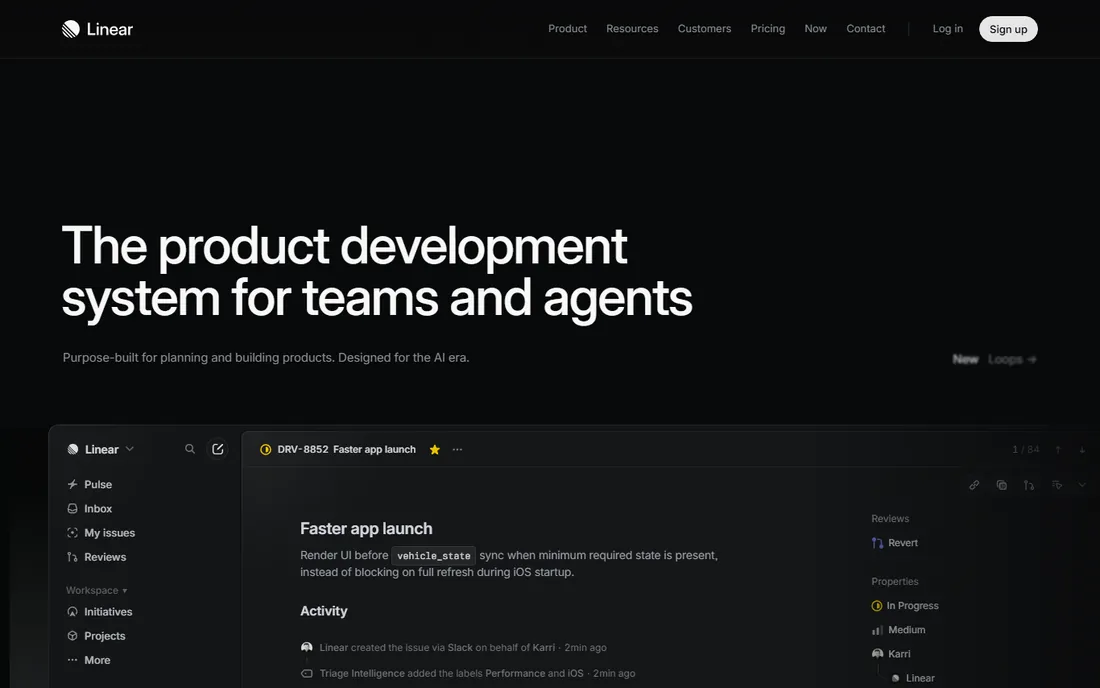
Linear is what teams choose when Jira feels like process overhead: issues, cycles, roadmaps and integrations in an interface built for speed. Developers adopt it willingly.
The free plan covers small teams. For the engineering backlog itself, Linear is the modern answer; for full product management, pair it with Productboard.
Linear's speed is the feature to feel rather than read about: run two real sprints in it and notice how the interface never makes you wait. The keyboard-first design rewards teams willing to learn shortcuts, and the opinionated workflow means less configuration debate. The trade-off to verify is the ecosystem: if your organization depends on deep integrations with specific enterprise tools, confirm they exist at the quality you need before migrating the team.
What we like- Fast and delightful to use
- Opinionated workflows that work
- Great integrations
Watch out for- Opinionated means less customizable
- Product management features lighter than Aha!
Starting priceSee website
Free planFree trial
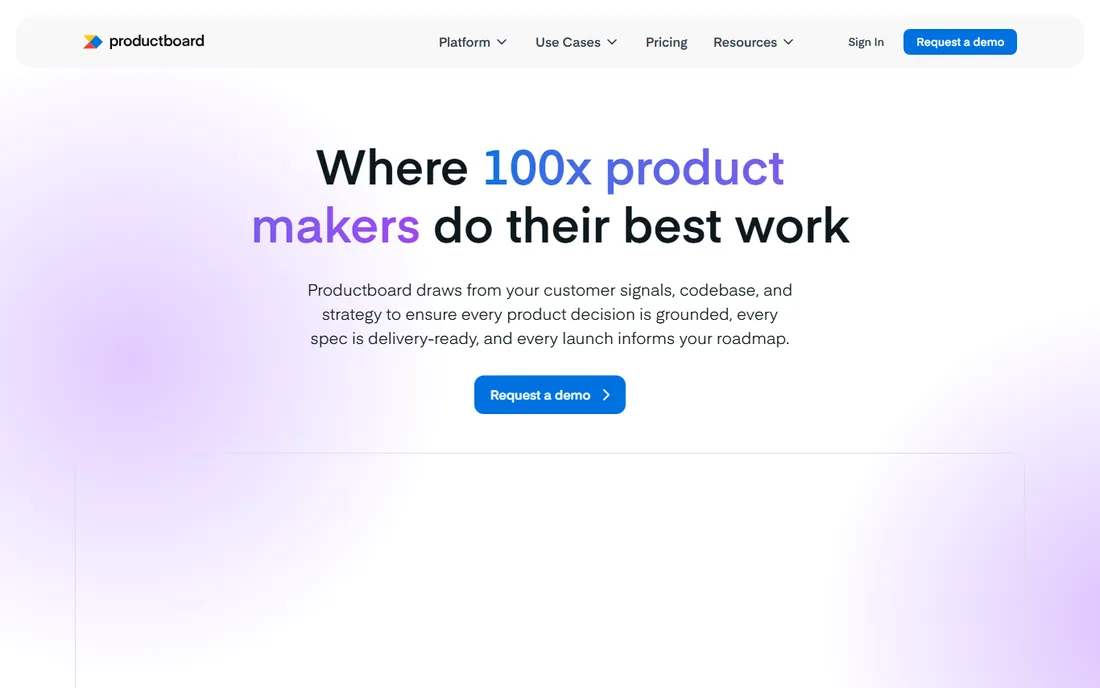
Productboard sits above the backlog: collect feedback and feature requests, prioritize against objectives, and push refined work into Jira or Linear. It answers "what should we build" while the tracker answers "how is it going."
It is a product management platform, not a developer tracker. Teams with dedicated PMs get the value; small teams may not need the layer.
Productboard's product hierarchy deserves a real-roadmap trial: import your actual features, user feedback and objectives, then build one planning cycle around it. The value appears when prioritization discussions reference the same feature hierarchy instead of scattered documents. The price per maker means you should be deliberate about who gets a seat; contributors can often work with cheaper viewer access while the product team does the prioritization.
What we like- Connects user feedback to prioritization
- Clear roadmapping
- Good Jira and Linear sync
Watch out for- Priced for product teams
- Needs the engineering tracker alongside
Starting priceSee website
Free planFree trial
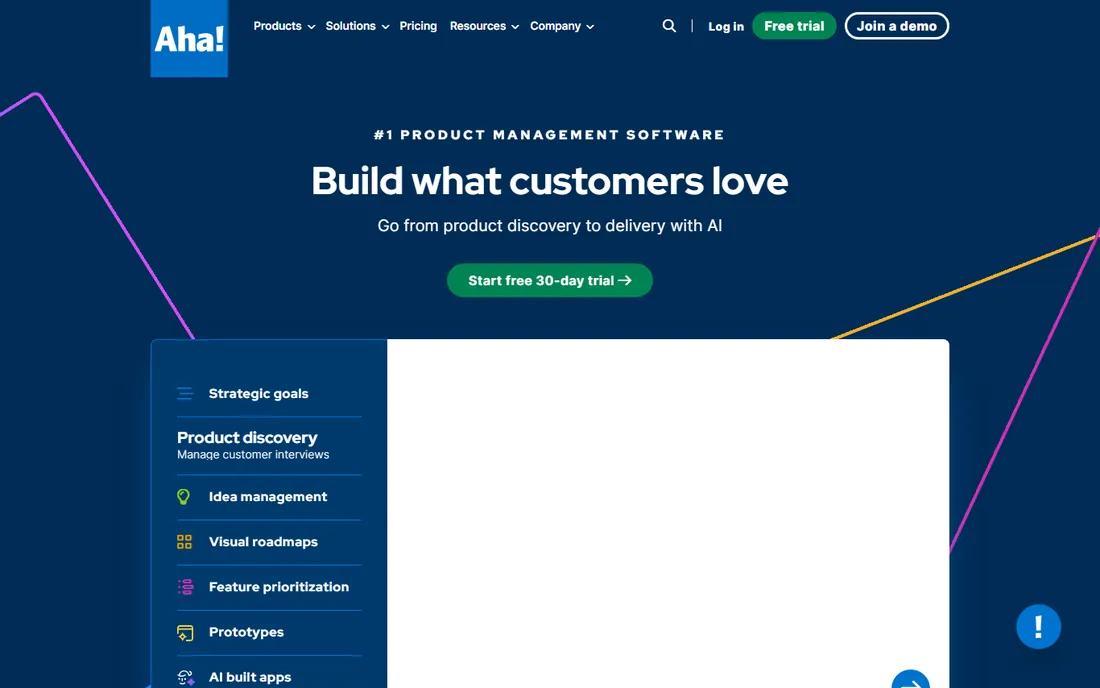
Aha! is the full product management suite: strategy, roadmaps, ideas, features and delivery planning in one. Product organizations standardize on it for the whole discovery-to-delivery flow.
The breadth brings cost and complexity. For serious product management functions, it is the established platform.
Aha! is the company name, exclamation mark included, and its roadmapping depth suits organizations where product planning is a formal discipline. Trial it with a real quarterly planning cycle, from idea capture through roadmap publication. The reporting and presentation features replace slide decks for executive reviews, which is where the time savings concentrate. Smaller teams should verify they need this depth before paying for it.
What we like- Comprehensive product management suite
- Strategy through delivery
- Strong reporting
Watch out for- Premium pricing
- Learning curve for the full suite
Starting priceSee website
Free planYes
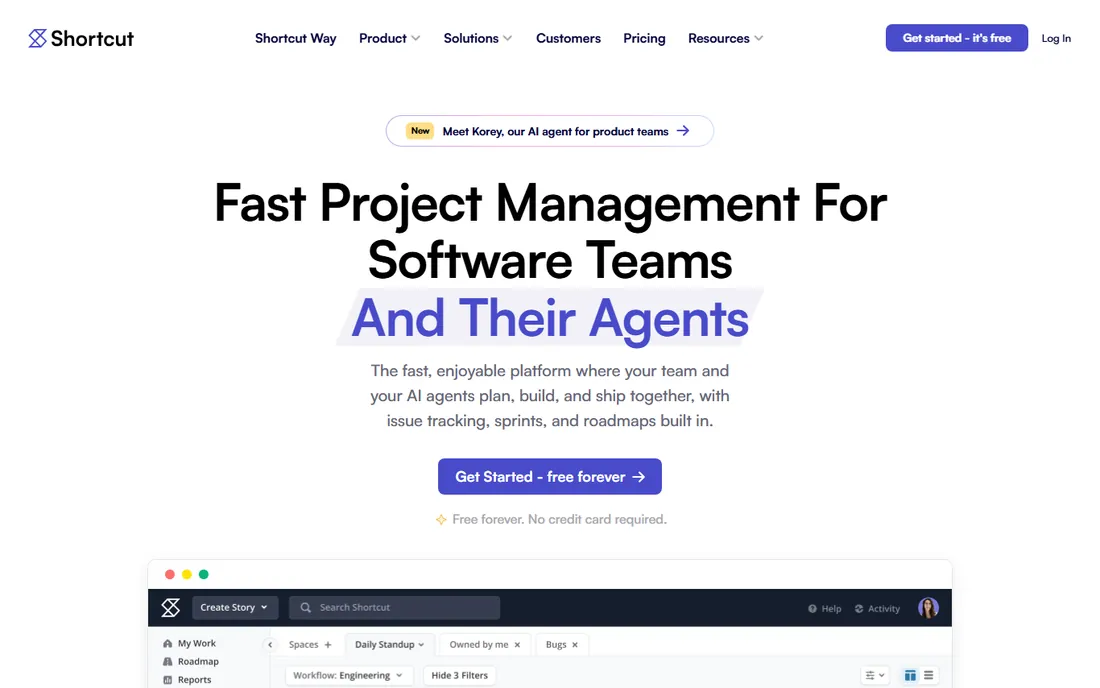
Shortcut, formerly Clubhouse, is the streamlined agile tracker: stories, epics, iterations and roadmaps without Jira's configuration burden. Software teams that want agile structure minus the admin choose it.
The ecosystem is smaller than Atlassian's. For teams that find Jira heavy but need real agile tooling, Shortcut hits the middle.
Shortcut's docs-meet-tracker approach fits teams that write extensively about their work: trial it by running your sprint planning and documentation in the same tool for a month. The tight integration between writing and tracking reduces context switching for teams that live in both. The pricing advantage over Jira is real for growing startups, but confirm the reporting meets your stakeholders' expectations before committing.
What we like- Jira-like power with less overhead
- Fast and focused
- Generous free tier
Watch out for- Smaller ecosystem than Jira
- Fewer enterprise features
Starting priceSee website
Free planYes
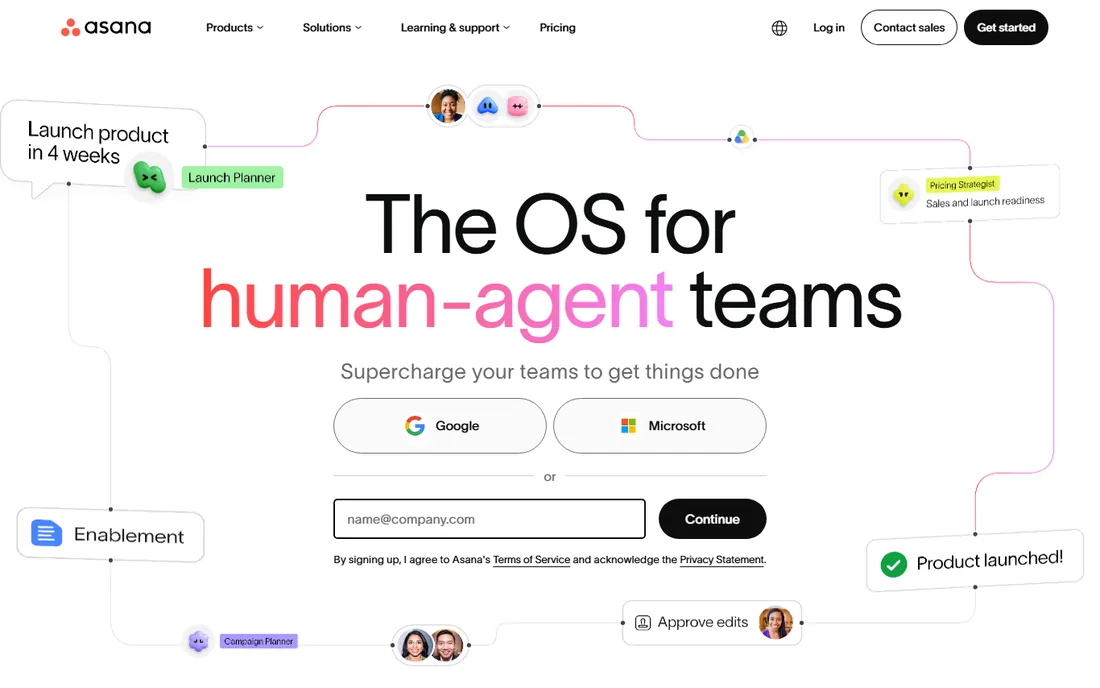
Asana manages the backlog alongside everything else: product work, marketing, operations in one tool the whole company understands. For cross-functional teams, the shared workspace beats a developer-only tracker.
Pure engineering teams want more agile depth. For product work embedded in broader company operations, Asana fits.
Asana's backlog use case is the flexible one: trial it by managing one product initiative alongside your other project work in the same workspace. The value is the unified view across product and non-product work, which specialized backlog tools cannot provide. The risk is discipline: without a clear backlog process, Asana's flexibility lets items scatter across projects, so establish the conventions before the team scales.
What we like- Intuitive for the whole team
- Good for mixed product and business work
- Generous free plan
Watch out for- Lighter agile features than Jira
- Can get messy at scale
Starting priceSee website
Free planYes
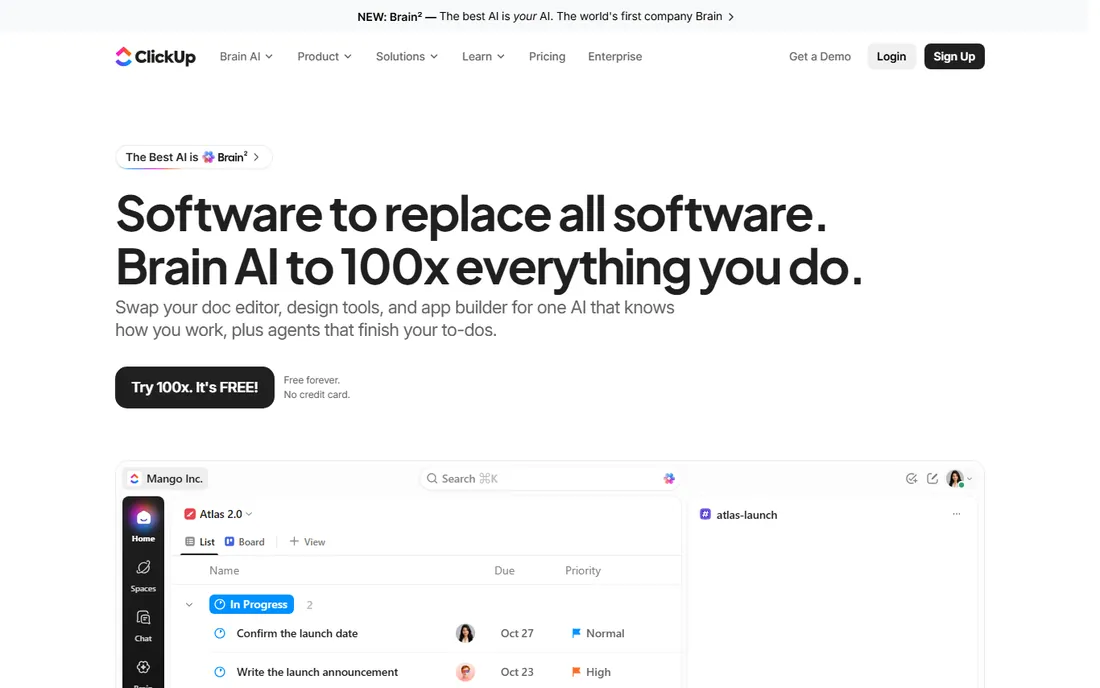
ClickUp wants to be the only work tool: backlogs, docs, goals, time tracking and dashboards in one customizable platform. Teams that consolidate here drop several subscriptions.
The flexibility needs discipline, or the workspace becomes unmanageable. For teams that want one tool and will govern it, ClickUp delivers.
ClickUp's customization is both the attraction and the hazard: trial it by configuring one team's backlog exactly as they want it, then check whether the second team configures something incompatible. The platform can replace several tools, and the per-user price is aggressive, but organizations need configuration standards to prevent every team from building a different system. Start with templates and lock the critical fields.
What we like- Everything in one place
- Highly customizable
- Generous free tier
Watch out for- Customization can become chaos
- Performance at scale varies
Starting priceSee website
Free planFree trial
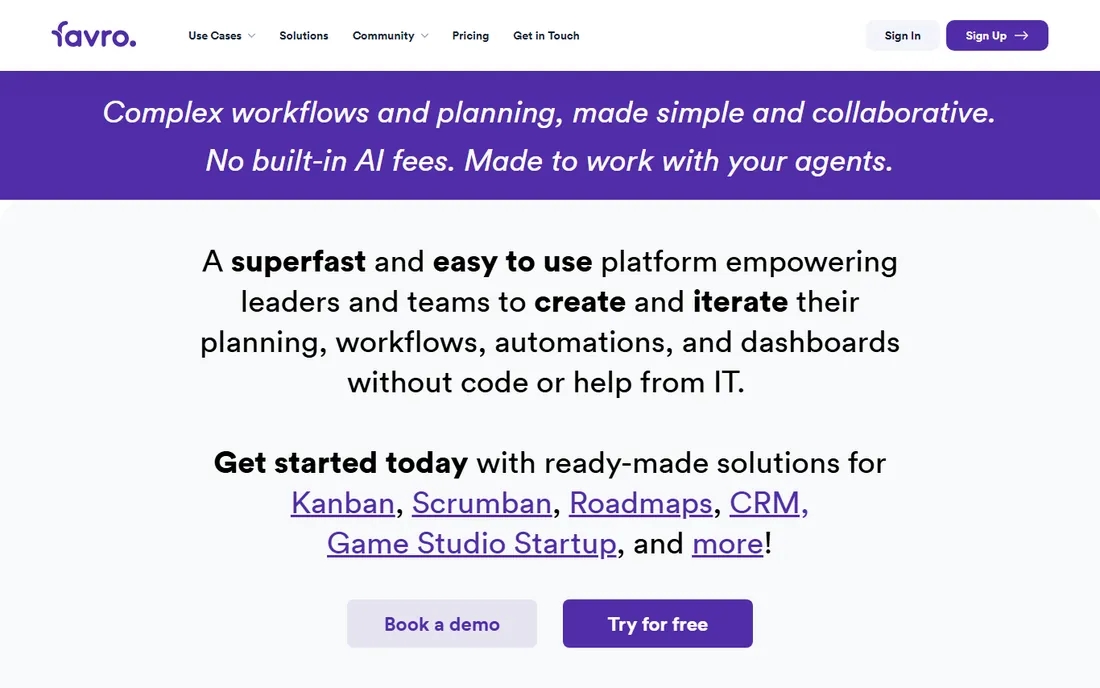
Favro offers flexible agile planning: boards, backlogs and roadmaps that adapt to the team's process rather than imposing one. Distributed teams like the clarity.
It is a smaller player next to Jira and Linear. For teams wanting agile flexibility without the giants, it is worth a trial.
Favro's real-time collaboration suits distributed teams that plan together: trial it with a remote backlog grooming session and notice how the live updates change the dynamic. The card-based flexibility handles mixed methodologies well, which matters for organizations running Scrum, Kanban and ad hoc work side by side. Confirm the reporting depth meets management needs, since the collaboration strengths can mask thinner analytics.
What we like- Flexible boards for agile teams
- Good for distributed teams
- Clean interface
Watch out for- Smaller vendor
- Less ecosystem than leaders
Choose a tracker when the need is managing engineering work: Jira for scale, Linear for speed, Shortcut for the middle, YouTrack for JetBrains shops. The backlog lives with the code.
Choose a product platform when the need is deciding what to build: Productboard for prioritization, Aha! for full product management. These sit above the tracker and feed it. Many organizations use both: the platform for product decisions, the tracker for delivery.
What to check before you buy
Workflow fit comes first: run a real sprint or planning cycle in the trial, not a demo script. Check integrations with your code hosting, CI and communication tools.
Confirm the pricing at your team size, since per-user costs scale linearly. Check permissions and visibility: who sees the roadmap, who edits the backlog. And evaluate the reporting: can leadership see progress without asking engineers for status?
One more check: verify the reporting answers your stakeholders' actual questions before committing. Roadmaps, velocity charts and progress views all look good in demos; the test is whether leadership stops asking for separate status spreadsheets. Also confirm the pricing at your full team size, since per-user costs for large engineering organizations add up fast, and check the migration tools if you are moving from another tracker.
Also confirm the mobile experience for the team members who triage on the go: backlog grooming increasingly happens outside the desk, and a weak mobile app creates a second-class workflow.
How we chose
We selected backlog management tools covering developer trackers, product platforms and flexible work tools, all live products in 2026. All eight vendor URLs were corroborated through sibling research files during a browser service outage. No vendor pricing pages were individually verified, so all prices list see website.
Frequently asked questions
What is the best tool for agile backlog management?
Jira for scale, Linear for developer experience, Shortcut for streamlined agile. The best depends on team size and process preferences.
Jira vs Linear: which should I choose?
Jira for configurability, ecosystem and enterprise scale. Linear for speed, simplicity and developer happiness. Many startups choose Linear; many enterprises choose Jira.
What is the difference between Productboard and Jira?
Productboard manages product decisions: what to build and why. Jira manages delivery: the work itself. They integrate, with Productboard feeding prioritized work into Jira.
Is there a free backlog management tool?
Yes. Jira, Linear, Shortcut, Asana and ClickUp all offer free tiers that cover small teams.
How should I prioritize a product backlog?
Common frameworks: RICE scoring, MoSCoW, Kano, or weighted objectives. Productboard and Aha! build these in; trackers need manual process.
Can non-technical teams use these tools?
Asana and ClickUp suit mixed teams best. Jira and Linear are developer-centric. Productboard and Aha! are built for product managers.
Sources we checked (8)
- https://atlassian.com/software/jira
- https://linear.app
- https://productboard.com
- https://aha.io
- https://shortcut.com/
- https://asana.com
- https://clickup.com
- https://www.favro.com/
Is your product missing or out of date?
We review this list regularly. Vendors can request a listing, send updated pricing or ask about featured placement.

Shihab Mia · Founder, Rankite
Shihab has spent more than a decade helping SaaS and e-commerce brands grow through search. He writes Rankite's software buying guides from pricing pages, documentation and public user reviews. More about Shihab.