How we make this list: we compare pricing pages, product documentation and public user reviews. Rankite is independent; if a vendor ever pays for a featured spot, that listing is clearly labeled Partner.
Key takeaways
- Independent shops get the most value from Autel and Launch: near-dealer coverage without dealer pricing, though both charge for yearly software updates.
- DIY drivers should start with a phone-based tool. BlueDriver and Innova translate raw codes into plain-English fixes, which is what most people actually need.
- Snap-on remains the premium shop standard with its Fast-Track guided diagnostics, but you pay for it through the franchise network and ongoing software plans.
- European car owners get more from Carly than from any generic scanner, thanks to coding and battery registration features built for BMW, VW, Audi and Mercedes.
- Cheap no-name Amazon scanners cost less upfront but miss manufacturer-specific codes, which is exactly where expensive mistakes hide.
Quick comparison
| Tool | Best for | Starting price | Free plan |
|---|
 Autel Autel | Professional repair shops | From $479 (MaxiCOM MK808Z, one-time hardware purchase) | No |
 Launch X431 Launch X431 | Independent shops watching their budget | See website | No |
 Snap-on Diagnostics Snap-on Diagnostics | High-volume professional shops | See website | No |
 BlueDriver BlueDriver | DIY drivers and used-car buyers | $139.95 (BlueDriver Pro sensor, one-time purchase) | No |
 Innova Innova | Parts-store DIY diagnostics | $99.99 (Innova 1000, one-time purchase) | No |
 TOPDON TOPDON | Phone-first scanning with pro features | See website | No |
 THINKCAR THINKCAR | Multi-brand phone diagnostics | See website | No |
 Carly Carly | European car owners | From $90 (scanner) plus annual plan | Free trial |
 FIXD FIXD | Everyday drivers who want plain English | From $19.99 (sensor, promotional pricing; retail $59) | No |
Is your product missing or out of date?
We review this list regularly. Vendors can request a listing, send updated pricing or ask about featured placement.
The best automotive diagnostic software
Starting priceFrom $479 (MaxiCOM MK808Z, one-time hardware purchase)
Free planNo
Walk into almost any independent repair shop in the US and you will find an Autel tablet on the bench. The MaxiSys and MaxiCOM lines cover everything from basic code reading to ECU coding, active tests, key programming and ADAS calibration on the high-end models. Coverage spans domestic, Asian and European makes, and the interface is fast enough that techs actually reach for it first instead of the dealer tool.
The honest catch is the long-term cost. The first year of software updates is included, but staying current costs a yearly fee that runs into the hundreds depending on the model. That is fair for a working shop, since outdated coverage on a 2025 model year car is a real liability. For a home user, though, the math rarely works, and the cheaper MaxiCOM tablets still overlap awkwardly with each other, so comparing models takes real effort.
Setup is quick: charge the tablet, connect to Wi-Fi, register the serial number and download the vehicle software for the makes you service. Most shops are scanning cars within an hour of unboxing.
What we like- Widest vehicle coverage in its class
- Strong bidirectional controls and service functions
- Tablets work standalone without a phone
Watch out for- Yearly software updates cost extra after the first year
- Flagship MaxiSys models run into the thousands
- Advanced functions sometimes need extra adapters
#2
Launch X431
Best for: Independent shops watching their budget
Visit dbscar.com
Starting priceSee website
Free planNo
Launch built its reputation as the value alternative to dealer-level tools, and the X431 line still owns that position. A mid-range X431 tablet reads all systems, runs active tests, resets service lights, codes injectors and handles the security-gateway logins (AutoAuth) that lock generic scanners out of newer FCA/Stellantis vehicles. For a two or three-bay shop, one X431 often replaces a shelf of single-brand tools.
What to watch is the naming. Launch sells the X431 V+, PRO series, PAD series and several regional variants that overlap heavily, and picking the wrong one means paying for coverage you do not need or missing functions you do. Factor in the yearly update subscription too. Without it, the tool still works, but new model-year coverage stops, which matters the moment a 2026 vehicle rolls in.
Where Launch quietly wins is the community around it. Because so many shops run X431 tablets, finding a walkthrough for an odd procedure on YouTube or a tech forum takes minutes. The trade-off is build quality a notch below Snap-on and Autel at similar prices, with screens and cases that show shop wear faster.
What we like- Near-dealer capability at a fraction of dealer-tool cost
- Online coding and bidirectional tests included
- Huge installed base means strong community support
Watch out for- Annual update fees after the included period
- The model lineup is confusing, with overlapping V, Pro and Pad series
- Some advanced functions need paid add-on modules
Starting priceSee website
Free planNo
The Snap-on truck rolling up to your bay every week is both the sales pitch and the warning. Snap-on diagnostic platforms like APOLLO and TRITON pair the scanner with something no one else has: a guided workflow that filters technical service bulletins, wiring diagrams and confirmed fixes down to the exact vehicle and code in front of you. In a busy shop, that shaves real minutes off every ticket, and the training library keeps junior techs productive.
You pay for all of it. Hardware prices sit far above Autel and Launch, and the software agreement that keeps coverage current is an ongoing cost, not a one-time purchase. Buying also means going through a franchisee rather than clicking "add to cart." For a high-volume shop the ROI math can still work. For everyone else, it is overkill.
There is also a lock-in factor worth naming. Snap-on platforms, software and training form one ecosystem, and leaving it means replacing everything at once. Shops that standardize on Snap-on tend to stay for a decade. That loyalty is earned, but go in with open eyes about the total cost.
What we like- Fast-Track Intelligent Diagnostics guides techs from code to verified fix
- SureTrack draws on millions of real repair orders
- Deep US domestic coverage and training resources
Watch out for- The most expensive platform in this list by a wide margin
- Sold through the franchise network, so pricing is opaque
- Software plans are effectively mandatory
Starting price$139.95 (BlueDriver Pro sensor, one-time purchase)
Free planNo
If your diagnostic life lives on a phone, BlueDriver is the one to beat. The Bluetooth sensor plugs into the OBD-II port and the app does the rest, translating trouble codes into plain language and generating Repair Reports that show the confirmed fix for your exact year, make, model and code. That last part is the real product. Anyone can read a code; telling a driver which part actually fixed it on 40,000 similar cars is worth the price alone.
The limits are honest ones. Enhanced diagnostics for ABS, airbag and transmission only cover certain makes, mostly GM, Ford, Chrysler, Toyota and Nissan, with BMW and VW/Audi supported in North America. And everything runs through your phone, so if you prefer a chunky tablet in a greasy shop, look at Autel instead.
What we like- Repair Reports built from millions of verified real-world fixes
- No subscription, the app is free with the sensor
- Reads enhanced codes (ABS, airbag, transmission) on supported makes
Watch out for- Phone or tablet required, there is no standalone unit
- Enhanced diagnostics cover a limited list of manufacturers
- The sensor is useless without the app
Starting price$99.99 (Innova 1000, one-time purchase)
Free planNo
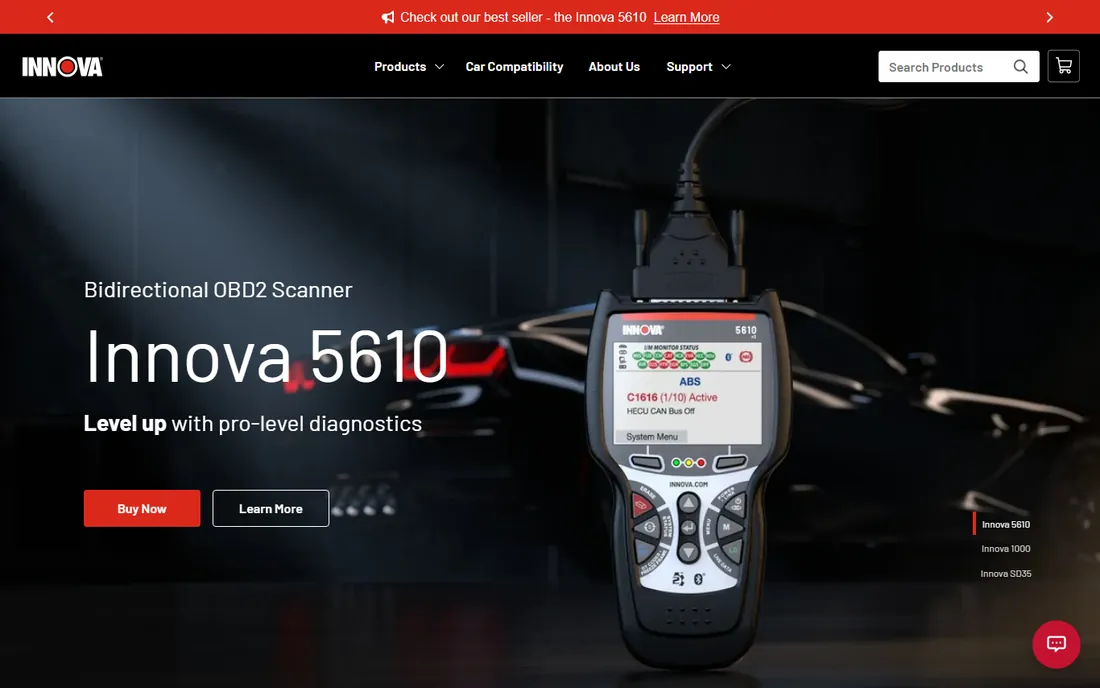
Innova sells the scanner you will find on the shelf at every auto parts store in America, and that ubiquity is a feature. When your check engine light comes on at 8 pm, you can buy one locally instead of waiting on shipping. The RepairSolutions2 app pairs with the hardware to deliver code definitions, predicted repairs and cost estimates. For most drivers, that closes the loop from "what is this light" to "what will it cost."
The range is wide enough to cause decision paralysis, from a $99 Bluetooth dongle to the pro-grade 7111 at $899. Match the tool to the job: dongles for code reading, tablets for all-system scans and service resets. Power users will eventually outgrow even the top models, since bidirectional coverage is thinner than Autel or Launch at similar prices.
What we like- Sold at every major auto parts retailer in the US
- RepairSolutions2 app gives verified fixes and predicted repair costs
- No subscription on most models
Watch out for- Depth lags behind pro tablets on bidirectional controls
- The lineup spans $99 dongles to $899 tablets, which confuses buyers
- App pairing can be fiddly on older phones
Starting priceSee website
Free planNo
TOPDON is the brand that turned phone-based scanning into a serious tool rather than a toy. The pocket-sized TopScan dongle does full-system diagnostics, bidirectional control and service resets through a phone app, covering over 100 makes. Step up to the ArtiDiag tablets and you get standalone hardware that competes directly with Autel's MaxiCOM line, usually for less money.
The product lineup churns quickly, with new models replacing old ones fast enough that a glowing review from last year may describe a discontinued tool. Buy current models from authorized sellers and you will be fine; buy grey-market and support gets complicated.
What we like- TopScan turns a phone into a bidirectional scan tool
- Free lifetime software updates on ArtiDiag700, 800 BT 2 and 900 Lite
- Strong value against Autel at every tier
Watch out for- Younger brand with a thinner US service network
- Model lineup changes fast, so reviews go stale quickly
- Top-end tablets still need paid updates after the included period
Starting priceSee website
Free planNo
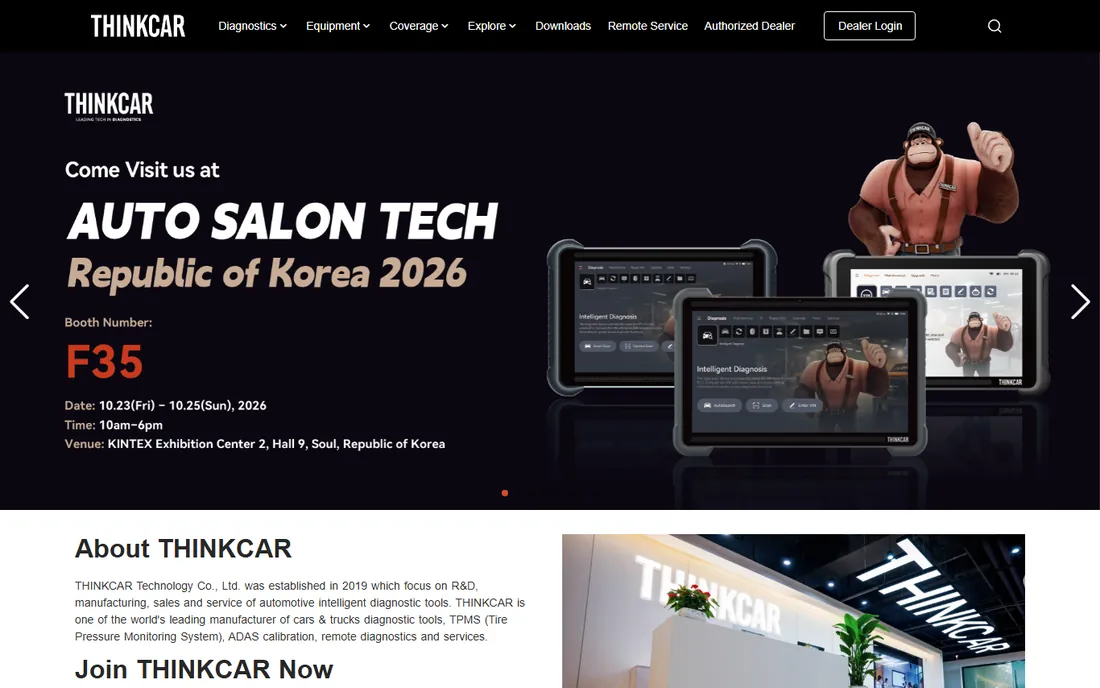
THINKCAR bets that most drivers would rather diagnose from the phone in their pocket than learn a new tablet. The ThinkDiag Bluetooth adapter paired with the ThinkDiag+ app performs all-system diagnostics, bidirectional tests and even ECU coding, functions that used to require a $1,000 tablet. The pricing model is unusual: buy the cheap dongle, then license software per vehicle brand per year. If you only own one brand, that keeps costs low.
Multi-car households should do the math carefully. Licensing three or four brands annually can exceed the cost of a mid-range tablet within two years. And the dongle is a paperweight without the app license, so factor the subscription into the real price from day one. For a mobile mechanic who services a few brands, or a household with two cars from the same maker, the value is strong.
What we like- ThinkDiag dongle delivers pro-level functions (coding, active tests) from a phone
- Per-brand software licensing keeps the entry price low
- Wide model range from dongles to pro tablets
Watch out for- App software is licensed per car brand per year, which adds up fast
- The dongle does nothing without an active license
- Brand is less known, so resale value is weak
Starting priceFrom $90 (scanner) plus annual plan
Free planFree trial
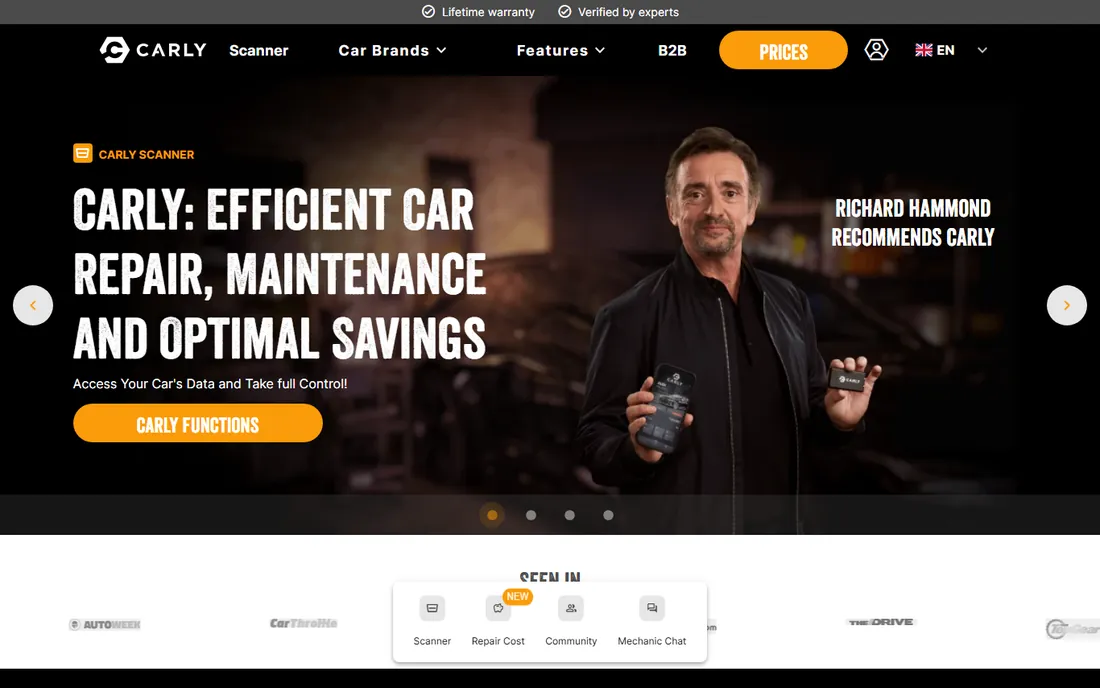
European cars punish generic scanners, and Carly was built for that exact pain. Where a $30 reader shows a vague fault, Carly reads manufacturer-specific modules, lets you code comfort features (folding mirrors, digital speedometer, start-stop memory), registers a new battery to the car and runs a used-car check that flags mileage manipulation. For BMW and VAG owners, one avoided dealer visit pays for the subscription. The business model draws the most complaints: the scanner is a one-time purchase, but the features that make Carly special sit behind an annual plan, and letting it lapse drops you back to basic OBD functions.
What we like- Deep BMW, VW, Audi, Mercedes and Porsche coverage including coding
- Used-car check flags odometer fraud
- Battery registration and service resets without a dealer visit
Watch out for- Annual subscription required for full features
- Weaker coverage on American and Japanese makes
- Coding changes can cause issues if applied carelessly
#9
FIXD
Best for: Everyday drivers who want plain English
Visit fixd.com
Starting priceFrom $19.99 (sensor, promotional pricing; retail $59)
Free planNo
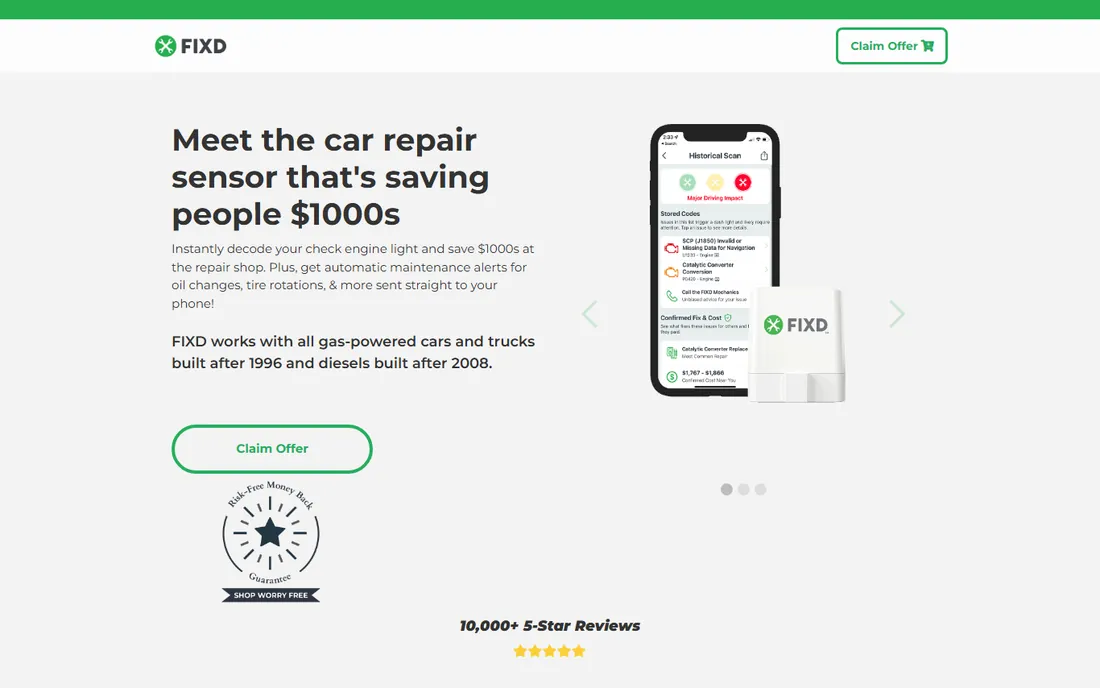
FIXD is not trying to impress a master technician. It is trying to keep a busy parent from getting ripped off at the repair shop. The Bluetooth sensor stays plugged into the OBD-II port, the free app translates every code into simple language, tells you whether it is safe to keep driving, and estimates what the repair should cost. Multi-vehicle monitoring means one account can watch the whole family's cars, which no pro tablet bothers to do.
Set expectations correctly and it delivers. This is an engine-code reader with great explanations, not a diagnostic platform: no ABS or airbag codes, no bidirectional tests, and federal rules mean it cannot clear emissions-related codes. The company sells the sensor at steep promotional discounts and makes its margin on the premium app tier. As a first scanner for someone who has never opened a hood, it is the friendliest on-ramp here.
What we like- Explains problems in plain language with severity ratings
- Monitors multiple family vehicles from one account
- Maintenance reminders for oil, tires and more
Watch out for- Shallow compared to real scan tools, engine codes only
- Cannot clear emissions-related codes
- The app pushes a premium subscription
How we chose
We did not plug each of these into a test fleet, and any guide that claims it did with nine platforms is stretching the truth. Instead we compared the things that decide a purchase: current pricing pages and update policies, published vehicle-coverage lists, documentation for bidirectional and coding functions, and public owner feedback on G2, Capterra, Reddit and technician forums. We weighted fit for two buyers, the working shop and the home DIYer, since a tool that is perfect for one is usually wrong for the other.
What to check before you buy
Coverage depth beats brand names
Every scanner here reads generic OBD-II codes. The difference is manufacturer-specific codes, the ones that point at the actual failing module instead of a vague system fault. If you work on European cars or anything with a security gateway, confirm the tool handles those makes explicitly. Generic coverage is where cheap tools quietly fail.
Add up three years, not day one
Most pro platforms include one or two years of updates, then charge annually. A $1,500 tablet with a $400 yearly update costs $2,300 over three years. Ask for the update price before you buy the hardware, and check whether the tool keeps working (without new coverage) if you let the plan lapse. Some do, some turn into expensive paperweights.
Pick your form: tablet, dongle or phone
Tablets are standalone, fast and shop-tough, but cost more. Bluetooth dongles paired with a phone app are cheaper and always in your pocket, which matters for roadside checks and used-car shopping. Dongles depend on the app's subscription though, so read the app pricing, not just the hardware price.
Support and warranty matter more than specs
When a scanner cannot talk to a 2025 model, you need a human who answers. Autel, Innova and Snap-on all run US-based support lines. Smaller import brands often route support through email with long response times. Check the warranty length too: one year is standard, lifetime warranties on dongles usually cover the hardware only, not the software license.
The subscription question, answered honestly
Almost every modern scan tool has a subscription hiding somewhere. Pro tablets charge for yearly coverage updates. Phone dongles charge per car brand per year for the app license. Carly charges an annual plan for full features. This is how vendors pay for the constant reverse-engineering that new model years require. The mistake is buying the hardware without pricing the subscription. Before checkout, answer three questions: what does year two cost, what stops working if I cancel, and can I transfer the license if I sell the tool. If a vendor cannot answer clearly, that tells you everything.
Frequently asked questions
Can a phone app replace a professional scan tool?
For reading and clearing basic codes, yes. For bidirectional tests, module coding, key programming and security-gateway access on newer cars, no. Phone-based tools like BlueDriver and THINKCAR cover the first category well and cost a tenth of a pro tablet. Shops need the second category, which is why they buy tablets.
Do I need to pay for updates every year?
Not always, but usually if you want current coverage. Most tools keep working without an update plan, they just stop learning new model years. A home user with a 2018 Camry can skip updates for years. A shop seeing 2025 and 2026 vehicles cannot.
Will these tools work on cars with a security gateway?
Only the ones that explicitly say so. FCA/Stellantis, Renault and several other brands lock diagnostic access behind a gateway that requires an authorized login. Autel, Launch, TOPDON and THINKCAR all support AutoAuth or equivalent on their current models. Generic $20 scanners do not.
Are the cheap scanners on Amazon worth it?
For reading a check engine light once, maybe. They read generic powertrain codes and clear them, which is sometimes enough. They miss manufacturer-specific codes, lack live data worth trusting, and rarely get updates. If the code comes back, you will end up buying a real tool anyway.
Can diagnostic software damage my car?
Reading codes and viewing live data is safe. Risk appears with active tests and coding, where the tool commands modules to actuate components or rewrites settings. Stick to functions you understand, and avoid coding changes from forum tutorials unless you can reverse them.
Sources we checked (10)
- https://autel.com/
- https://store.autel.com/collections/automotive-diagnostic-tools
- http://www.dbscar.com/
- http://diagnostics.snapon.com
- https://bluedriver.com/
- https://www.innova.com/collections/infiniti
- https://www.topdon.com/
- https://thinkcar.com/
- https://mycarly.com/
- https://www.fixd.com/sensor-67
Is your product missing or out of date?
We review this list regularly. Vendors can request a listing, send updated pricing or ask about featured placement.

Shihab Mia · Founder, Rankite
Shihab has spent more than a decade helping SaaS and e-commerce brands grow through search. He writes Rankite's software buying guides from pricing pages, documentation and public user reviews. More about Shihab.