How we make this list: we compare pricing pages, product documentation and public user reviews. Rankite is independent; if a vendor ever pays for a featured spot, that listing is clearly labeled Partner.
Key takeaways
- Kixie and Aloware go deepest inside HubSpot and Salesforce, with calls, texts and outcomes written back to contact and deal records automatically.
- JustCall gives small teams the lowest entry price at $29 per user per month, but its serious dialer features sit on the $49 Pro tier.
- PhoneBurner costs $140 per user per month and deliberately dials one line at a time, trading volume for answer rates and fewer spam flags.
- Five9 is the only pick built for true contact-center scale, with predictive dialing and compliance tooling that smaller tools do not offer.
Quick comparison
| Tool | Best for | Starting price | Free plan |
|---|
 Kixie Kixie | SDR teams on HubSpot, Salesforce or Pipedrive | See website | Free trial (7 days) |
 JustCall JustCall | Small teams wanting phone, SMS and dialer in one place | $29 per user/month (Team, billed annually, 2-seat minimum) | Free trial (14 days) |
 Aloware Aloware | HubSpot and Salesforce teams wanting the dialer inside the CRM | $30 per user/month (iPro + AI, billed annually, 10-user minimum) | Free trial (7 days) |
 PhoneBurner PhoneBurner | Solo agents and small teams prioritizing answer rates | $140 per user/month (Standard, billed annually) | Free trial |
 Aircall Aircall | SMB sales and support teams needing a full phone system | $30 per license/month (Essentials, billed annually, 3-license minimum) | Free trial |
 CloudTalk CloudTalk | Teams calling across borders needing many local numbers | From €19 per user/month (billed annually) | Free trial (14 days) |
 Dialpad Dialpad | Sales teams wanting AI coaching built into the dialer | $39 per user/month (Dialpad Sell Essentials, billed annually) | Free trial |
 Five9 Five9 | Mid-market and enterprise contact centers at high volume | Custom quote | No |
Is your product missing or out of date?
We review this list regularly. Vendors can request a listing, send updated pricing or ask about featured placement.
The best auto dialer software with CRM integration
#1
Kixie
Best for: SDR teams on HubSpot, Salesforce or Pipedrive
Visit kixie.com
Starting priceSee website
Free planFree trial (7 days)
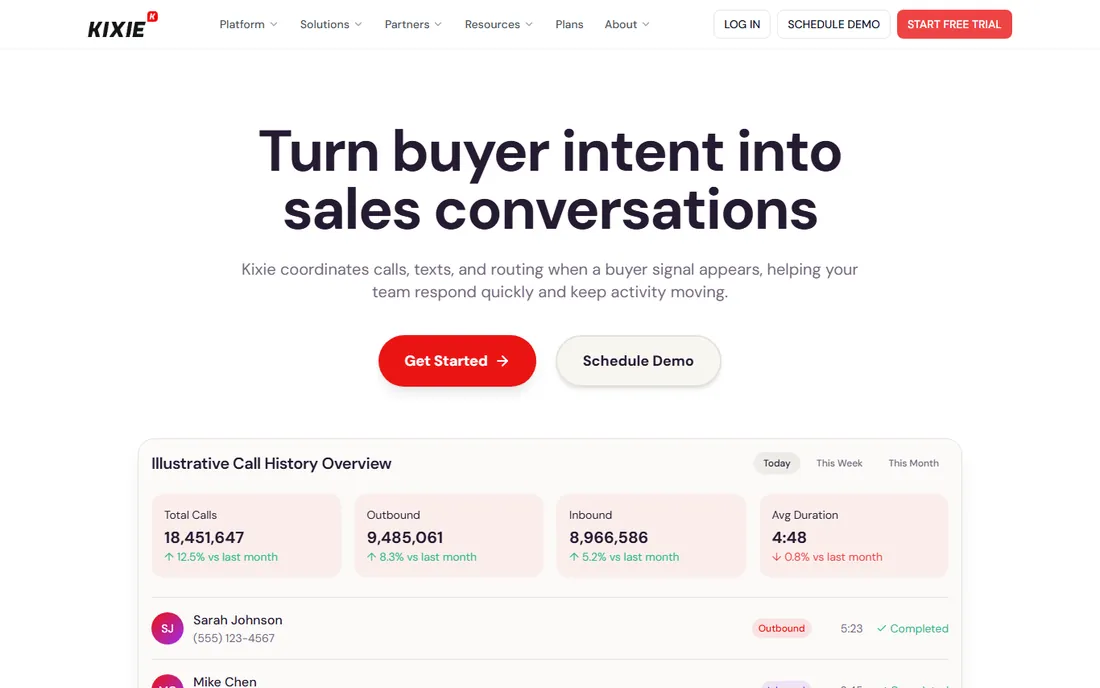
Kixie is built for one job: getting SDRs more live conversations per hour. The Multi-Line PowerDialer works through a list while reps talk, dropping voicemails and logging every outcome back into the CRM without anyone touching a keyboard. Setup takes minutes through a Chrome extension, and the two-way sync means dispositions, notes and recordings land on the right contact record in HubSpot, Salesforce, Pipedrive or Zoho.
The catch is pricing. Kixie publishes its plan names (Professional, Single-Line PowerDialer, Multi-Line PowerDialer) but not its seat prices, so you talk to sales before you can budget. Teams that dial internationally should also check per-minute rates, since unlimited minutes cover the US and Canada only. For a HubSpot or Pipedrive shop that lives on outbound, the depth of the CRM embed usually justifies the sales call.
What we like- Multi-line PowerDialer dials up to 4 lines at once
- Bi-directional sync with HubSpot, Salesforce, Pipedrive and Zoho
- Unlimited US and Canada minutes on every plan
Watch out for- Pricing is quote-based with no public seat prices
- AI human voice detection costs extra
- Strongest for US and Canada calling
#2
JustCall
Best for: Small teams wanting phone, SMS and dialer in one place
Visit justcall.io
Starting price$29 per user/month (Team, billed annually, 2-seat minimum)
Free planFree trial (14 days)
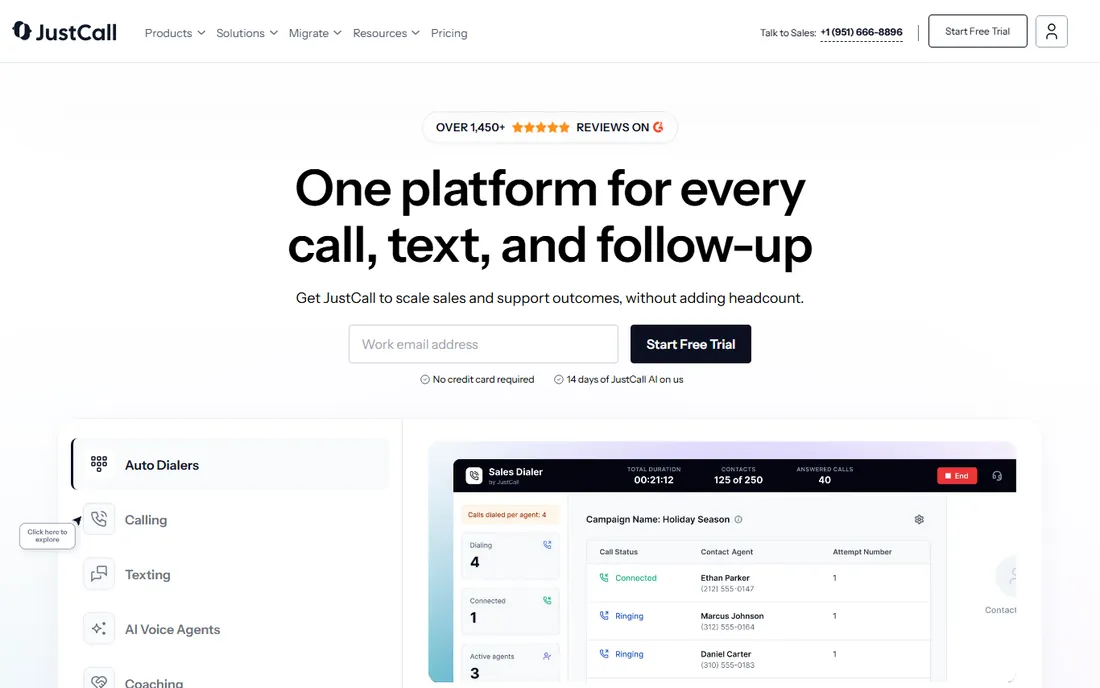
JustCall is the value pick for teams that need more than a dialer. The Team plan bundles voice, SMS and WhatsApp with AI transcription and 80-plus native integrations, so a five-person sales team can run calling, texting and follow-up from one login. The power dialer, Salesforce CTI and bulk SMS appear on Pro at $49 per user per month, which is still less than half of PhoneBurner's entry price.
Watch the minimums and the add-ons. Every plan requires at least two licenses, and features like AI call scoring and the SalesPro multi-line dialer sit behind higher tiers or a custom quote. If your reps dial all day from lists, budget for Pro rather than Team. If they split time between inbound support and outbound prospecting, Team is a fair deal.
What we like- Unlimited inbound and outbound calling minutes on every plan
- 100+ native CRM and helpdesk integrations
- 14-day trial with no credit card required
Watch out for- 2-seat minimum even for solo founders
- The power dialer only appears on the $49 Pro tier
- Some G2 reviewers report call quality drops
#3
Aloware
Best for: HubSpot and Salesforce teams wanting the dialer inside the CRM
Visit aloware.com
Starting price$30 per user/month (iPro + AI, billed annually, 10-user minimum)
Free planFree trial (7 days)
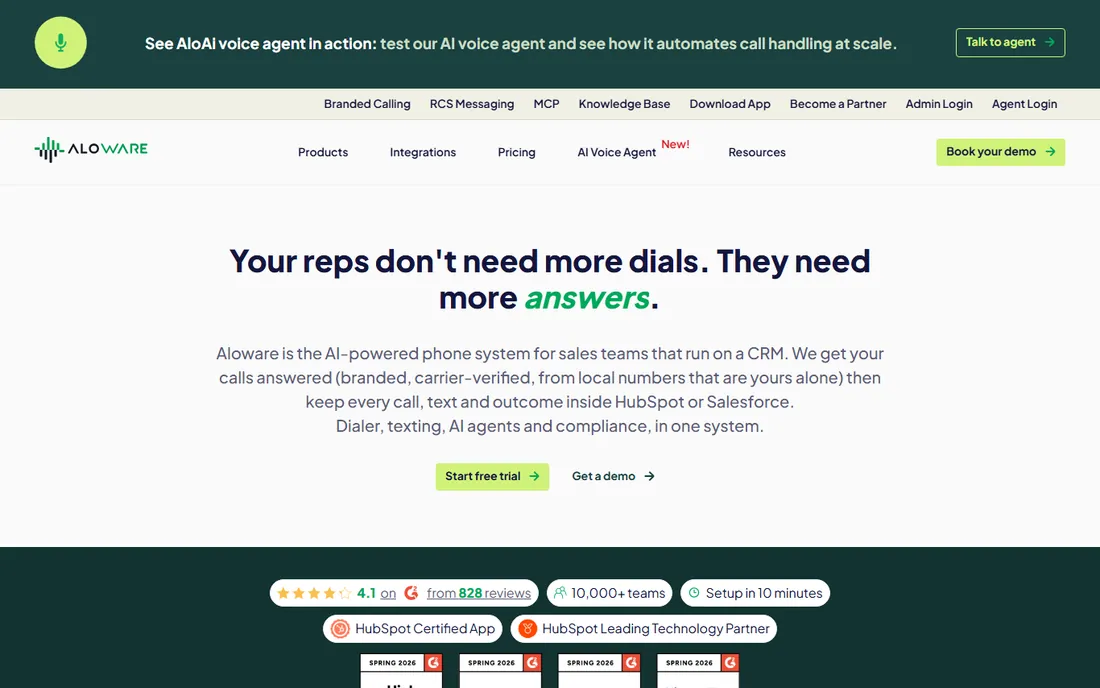
Aloware takes the opposite approach to most dialers: instead of asking reps to work in a separate app, it puts calling and texting inside HubSpot or Salesforce. Reps dial from the contact record, and every call, text and outcome syncs back in real time. The pricing is unusually honest about minutes. Agent-to-consumer calls in the US and Canada are genuinely unlimited on all plans, while automated sequences and broadcasts are metered separately.
The plan structure rewards bigger teams. iPro starts at $30 per user per month on annual billing but needs 10 users, and the small-team packages ($199 for up to 3 users, $399 for up to 5) cap minutes and texts. Salesforce shops have to step up to xPro. For a HubSpot team of 10-plus doing serious outbound, Aloware is one of the strongest CRM-native options on this list.
What we like- Truly unlimited US and Canada agent minutes with no pay-per-minute asterisk
- HubSpot workflows can trigger calls and texts
- AI call transcription and summaries included
Watch out for- IPro requires at least 10 users
- The Salesforce integration needs the $85 xPro tier
- HubSpot workflow triggers are missing from iPro
Starting price$140 per user/month (Standard, billed annually)
Free planFree trial
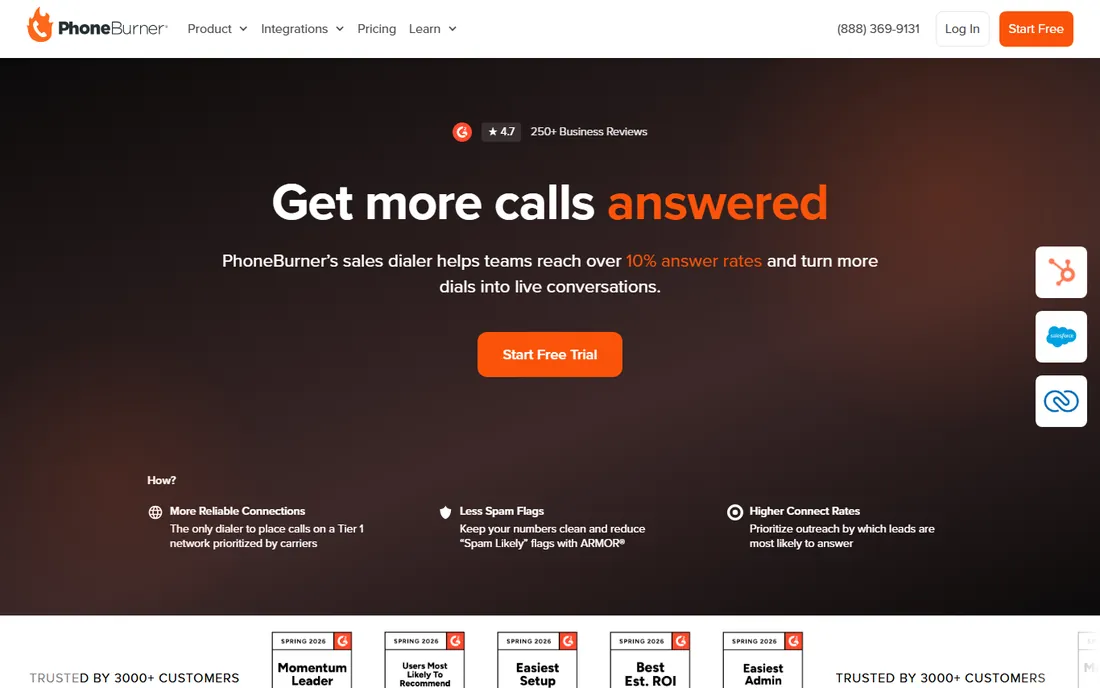
PhoneBurner is the contrarian on this list. While rivals race to dial more lines at once, PhoneBurner dials one line per rep and invests the effort in connection quality: Tier 1 carrier routing, ARMOR spam-flag monitoring and remediation, and voicemail drop that keeps reps moving. Real estate and insurance teams, where a flagged number kills a week of prospecting, swear by this approach.
You pay for it. Standard starts at $140 per user per month on annual billing, and the features that make PhoneBurner a complete system, SMS messaging, inbound routing, AI note-taking, are locked behind Professional ($165) and Premium ($183). There is no free plan, only a trial with free minutes. If your team measures success in conversations per hour, look elsewhere. If it measures in conversations per list, PhoneBurner earns its price.
What we like- Single-line power dialer designed for deliverability, not volume
- ARMOR spam-flag monitoring keeps numbers clean
- Built-in lightweight CRM included
Watch out for- Steep entry price for small teams
- SMS and inbound routing only arrive on the $183 Premium tier
- Works with US and Canada numbers only
#5
Aircall
Best for: SMB sales and support teams needing a full phone system
Visit aircall.io
Starting price$30 per license/month (Essentials, billed annually, 3-license minimum)
Free planFree trial
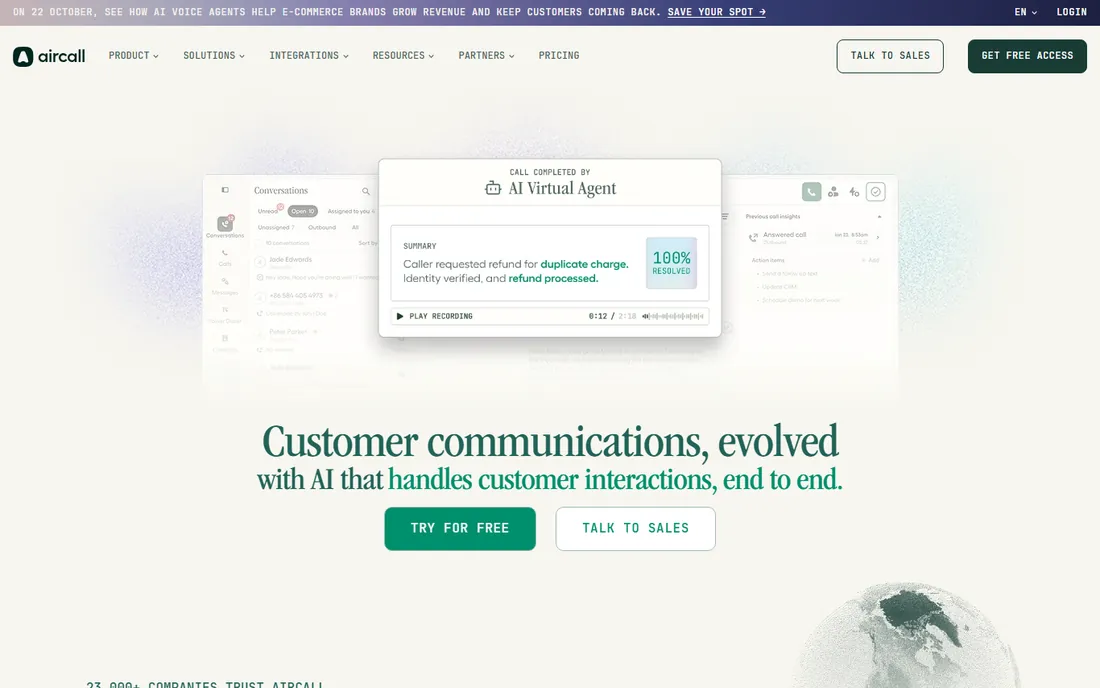
Aircall is a phone system first and a dialer second, which makes it the right pick when your team does more than outbound. Essentials covers unlimited US and Canada calling, SMS, call recording with AI transcripts and a shared inbox at $30 per license per month. The dialer-specific muscle, power dialer, outbound campaigns, smart routing and call whispering, arrives on Professional at $50.
The integration catalog is the real draw: 250-plus native connections means calls log to Salesforce, HubSpot, Pipedrive or Zendesk without middleware. Support teams like the shared inbox and live monitoring; sales teams like that the same platform handles inbound follow-up. Pure outbound teams will find cheaper dialers, but teams that blend inbound and outbound get a lot for the money.
What we like- 250+ native integrations with Salesforce, HubSpot and Pipedrive
- Shared inbox keeps every conversation visible to the team
- AI voice agents available on every tier
Watch out for- The power dialer and outbound campaigns need the $50 Professional tier
- 3-license minimum on paid plans
- AI voice agent minutes beyond the bundle cost extra
#6
CloudTalk
Best for: Teams calling across borders needing many local numbers
Visit cloudtalk.io
Starting priceFrom €19 per user/month (billed annually)
Free planFree trial (14 days)
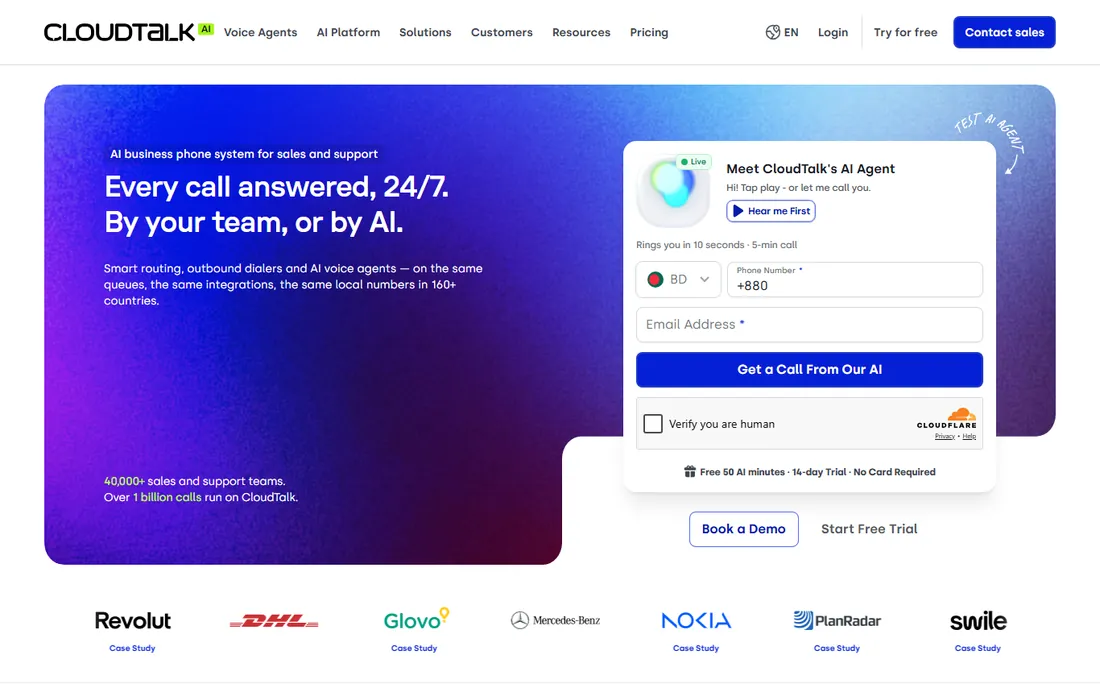
CloudTalk wins on international coverage. If your reps call prospects in a dozen countries, local numbers in 160-plus of them, number porting and per-country calling bundles solve the two problems that sink most dialers abroad: answer rates and per-minute costs. The 14-day trial is generous, with Expert-tier features, calling credit and up to three numbers included.
The pricing structure needs a careful read. Plans run from €19 to €49 per user per month on annual billing, but the preview, power and parallel dialers are add-ons on top of the seat price. Budget the dialer add-on if outbound is your main motion. For a US-only team, domestic rivals offer simpler pricing. For a team spread across regions, CloudTalk's coverage is hard to match.
What we like- Local numbers in 160+ countries with easy porting
- 14-day trial includes Expert features and calling credit
- Strong two-way CRM sync with workflow builder
Watch out for- Power and parallel dialers are paid add-ons, not included
- Entry Lite plan is thin on features
- AI voice agents are billed separately by the minute
#7
Dialpad
Best for: Sales teams wanting AI coaching built into the dialer
Visit dialpad.com
Starting price$39 per user/month (Dialpad Sell Essentials, billed annually)
Free planFree trial
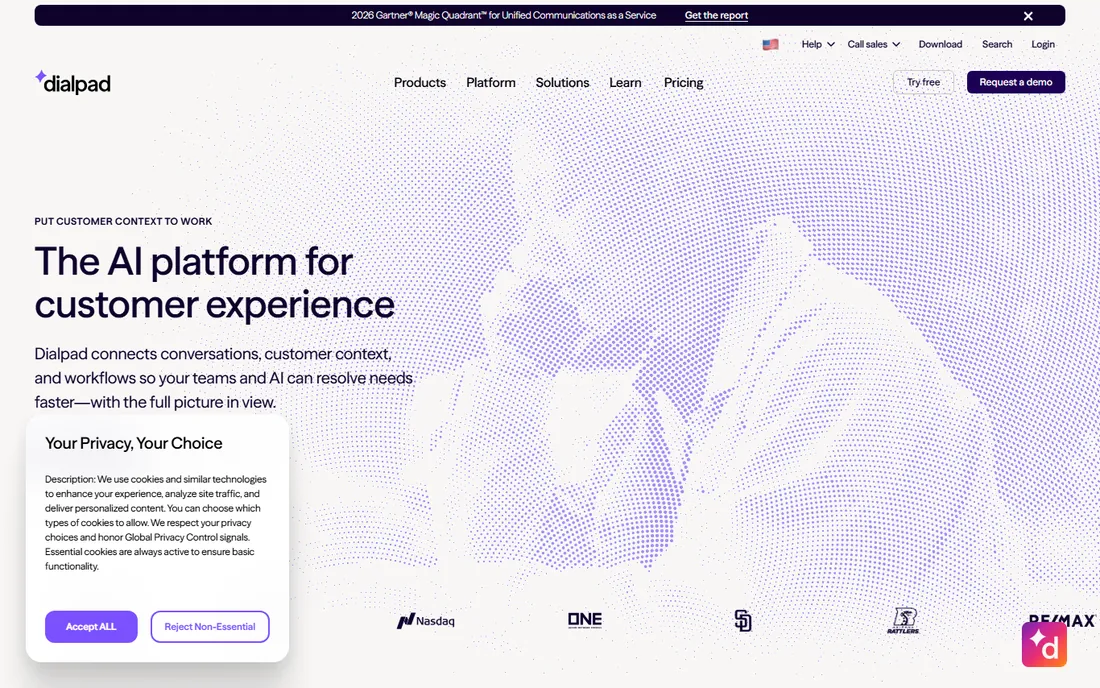
Dialpad's pitch is that AI should be table stakes, not an upsell. Even the base Sell plan includes real-time transcription, AI-generated call summaries and sentiment cues, the kind of features rivals reserve for premium tiers or add-ons. The Sell product line adds the outbound toolkit: power dialing, voicemail drop, local presence and real-time coaching with AI scorecards on higher tiers.
Pricing is the friction point. Dialpad publishes its prices, but the pricing page renders poorly outside a browser session, so the $39 figure for Sell Essentials comes from current third-party guides that track Dialpad's published rates. Connect plans start lower ($15 Standard, $25 Pro), but Sell is the product with the real dialer. Teams should also note the strict refund policy: cancellations after three days get no prorated credit.
What we like- Real-time transcription and AI call summaries included from the base tier
- Voicemail drop and local presence on Sell plans
- Native Salesforce, HubSpot and Zendesk integrations
Watch out for- Entry price confirmed via third-party pricing guides, not the vendor page
- Add-ons and AI agent usage can push the bill up
- No refunds after three days
#8
Five9
Best for: Mid-market and enterprise contact centers at high volume
Visit five9.com
Starting priceCustom quote
Free planNo
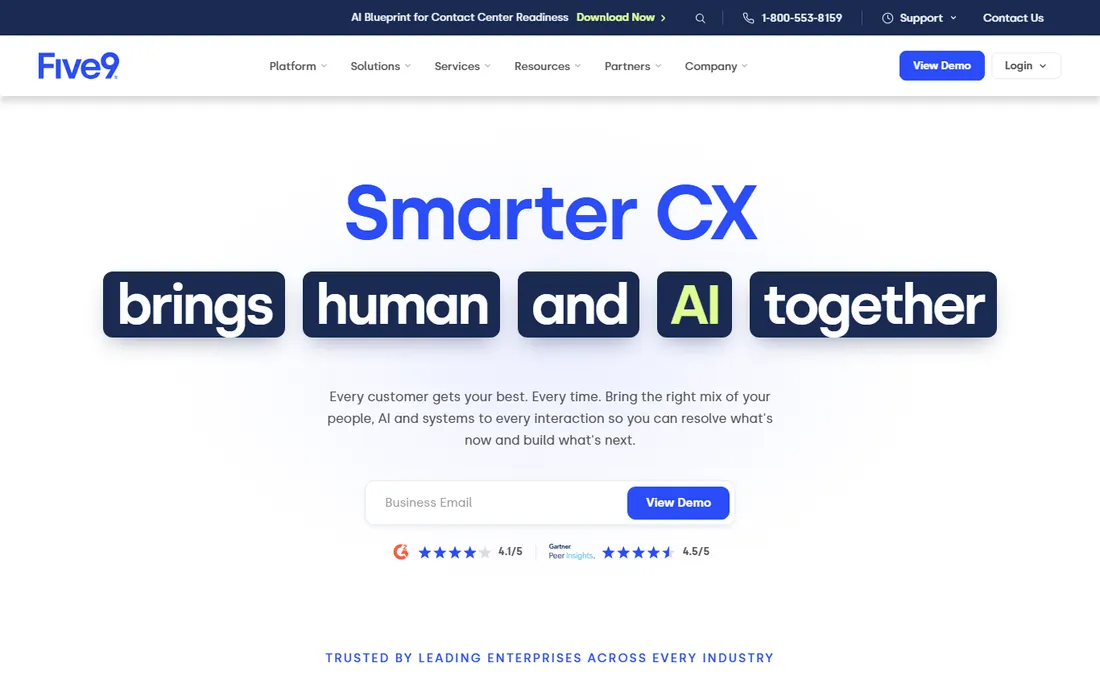
Five9 is the enterprise answer to this category. It offers every dialing mode a compliance-conscious operation needs, predictive for high-volume campaigns, progressive and preview where regulations or call quality demand a human in the loop, plus workforce management, QA scoring on 100 percent of interactions and AI agents for routine work. The Salesforce integration is deep enough that teams like Yopa run their whole outbound motion through it.
Everything about Five9 assumes scale: custom quotes, guided implementation, and a feature set that only pays off past a couple dozen seats. A 10-person SDR team will get more value per dollar from Kixie or Aloware. A 200-seat operation with compliance requirements, multiple campaigns and blended inbound-outbound traffic will find that Five9 is one of the few platforms that handles all of it without duct tape.
What we like- Predictive, progressive and preview dialing modes in one platform
- 300+ integrations with major CRMs
- Enterprise compliance, workforce management and GenAI tooling
Watch out for- Quote-only pricing with no public rates
- Built for larger operations, overkill under 20 seats
- Implementation takes longer than self-serve tools
How we chose
We started from the category definition: an auto dialer that connects to a CRM, not just a phone system with a dialer bolted on. Every tool on this list offers at least one automated dialing mode and a native or first-class integration with HubSpot, Salesforce, Pipedrive or Zoho, verified on the vendor's own site. We pulled pricing from vendor pricing pages wherever they rendered, and marked quote-based pricing honestly instead of guessing. We read plan comparison tables for seat minimums, dialer add-ons and integration gates, because the headline price rarely tells the whole story. We checked G2 and Capterra reviews for recurring complaints about call quality and support, and we excluded tools that were acquired, shut down or had pivoted away from sales dialing.
What to check before you buy
Match the dialing mode to your list
Not every team needs a predictive dialer. If your reps work warm inbound leads or small curated lists, a power or preview dialer keeps conversations personal and keeps you clear of compliance risk. Predictive dialing only makes sense with large cold lists and enough agents to absorb the pacing algorithm, and it is regulated more strictly in several US states. Ask vendors which modes are included in the plan you are actually buying, since several tools on this list sell dialer modes as add-ons.
Read the integration, not the logo wall
Almost every dialer claims a HubSpot or Salesforce integration. What matters is whether calls log automatically with recordings and dispositions, whether reps can dial from inside the CRM, and whether workflows can trigger calls from CRM events. Aloware and Kixie let reps work without leaving the CRM; others sync activity after the fact. During a trial, place ten calls and check what actually appears on the contact record.
Price the second year, not the first
Seat minimums, dialer add-ons, AI minute bundles and SMS segments change the math fast. A $29 plan with a 2-seat minimum and a quote-only dialer can cost more than a $49 plan with the dialer included. Ask for the full price of your exact configuration, including numbers, add-ons and expected usage, before you commit to annual billing. And check the cancellation terms: at least one vendor on this list offers no prorated refunds after three days.
Dialer modes, explained in plain terms
Power dialers call one number after another automatically, pausing for the rep to wrap up each call. They are the workhorse for SDR teams and the mode most tools on this list include. Predictive dialers use an algorithm to dial multiple numbers per available agent, maximizing talk time at the cost of occasional abandoned calls, which is why they are regulated. Progressive dialers wait for the rep to finish before dialing the next number, a middle ground for teams that want automation without the compliance exposure. Preview dialers show the rep the contact record first and dial on command, best for high-value or compliance-sensitive outreach. When vendors say "auto dialer," ask which of these four you are getting.
Frequently asked questions
What is the difference between an auto dialer and a power dialer?
An auto dialer is the broad category: any software that dials numbers automatically from a list. A power dialer is one specific mode that dials sequentially, one call per agent, moving to the next number as soon as the rep finishes. Most tools marketed as auto dialers are really power dialers, sometimes with predictive or preview modes available.
Do I need a CRM to use an auto dialer?
Technically no, since tools like PhoneBurner include a built-in contact manager. In practice, yes if you want the value. The whole point of CRM integration is automatic logging: calls, recordings, dispositions and follow-up tasks appear on the contact record without manual entry. Without a CRM, reps lose the history that makes the next call smarter.
How much does auto dialer software cost?
For small teams, entry prices run from $29 to $50 per user per month on annual billing, with PhoneBurner at $140 as the premium outlier and Kixie and Five9 on custom quotes. The headline price rarely includes everything: dialer add-ons, AI minutes, SMS segments and extra numbers can add 20 to 50 percent. Always price your exact configuration before signing an annual contract.
Is predictive dialing legal?
Predictive dialing is legal in the US but regulated. The TCPA restricts autodialed calls to cell phones without prior consent, and several states add their own rules about abandoned call rates and calling hours. If you run predictive campaigns, use a platform with built-in compliance tooling, keep DNC lists current, and have counsel review your dialing practices.
Can I keep my existing business phone numbers?
Yes. Every tool on this list supports number porting, and most handle the transfer for you with no service interruption. Porting typically takes one to two weeks depending on your current carrier. Start the port before you cancel your old service so there is no gap in inbound calls.
Sources we checked (9)
- https://www.kixie.com/pricing/
- https://justcall.io/pricing/
- https://aloware.com/pricing
- https://www.phoneburner.com/pricing
- https://aircall.io/pricing/
- https://www.cloudtalk.io/pricing/
- https://dialpad.com/pricing
- https://www.five9.com/
- https://www.kixie.com/sales-blog/best-affordable-power-dialers/
Is your product missing or out of date?
We review this list regularly. Vendors can request a listing, send updated pricing or ask about featured placement.

Shihab Mia · Founder, Rankite
Shihab has spent more than a decade helping SaaS and e-commerce brands grow through search. He writes Rankite's software buying guides from pricing pages, documentation and public user reviews. More about Shihab.