How we make this list: we compare pricing pages, product documentation and public user reviews. Rankite is independent; if a vendor ever pays for a featured spot, that listing is clearly labeled Partner.
Key takeaways
- Optro (formerly AuditBoard) and Diligent One lead enterprise audit management with agentic AI and board-connected GRC.
- LogicGate brings no-code flexibility to GRC workflows; MetricStream serves complex global enterprises.
- Workiva connects audit to financial reporting; Vanta and Hyperproof automate compliance evidence for tech companies.
- Resolver (a Kroll company) adds risk intelligence depth for incident-driven audit programs.
Quick comparison
| Tool | Best for | Starting price | Free plan |
|---|
 Optro Optro | Large and public companies with dedicated internal audit and SOX teams | See website | No |
 Diligent One Diligent One | Audit programs reporting to boards and executives | See website | No |
 LogicGate LogicGate | Risk teams wanting configurable, no-code GRC workflows | See website | No |
 MetricStream MetricStream | Global enterprises with complex, multi-domain GRC | See website | No |
 Workiva Workiva | Audit connected to financial and regulatory reporting | See website | No |
 Resolver Resolver | Risk intelligence with incident and investigation depth | See website | No |
 Hyperproof Hyperproof | Continuous compliance evidence and framework management | See website | No |
 Vanta Vanta | Tech companies automating security compliance | See website | No |
Is your product missing or out of date?
We review this list regularly. Vendors can request a listing, send updated pricing or ask about featured placement.
The best audit management software
Audit management software runs the internal audit lifecycle (planning, workpapers, issues, reporting) plus SOX, IT compliance and risk programs. Eight platforms, from enterprise GRC suites to automation-first compliance tools.
#1
Optro
Best for: Large and public companies with dedicated internal audit and SOX teams
Visit optro.ai
Starting priceSee website
Free planNo
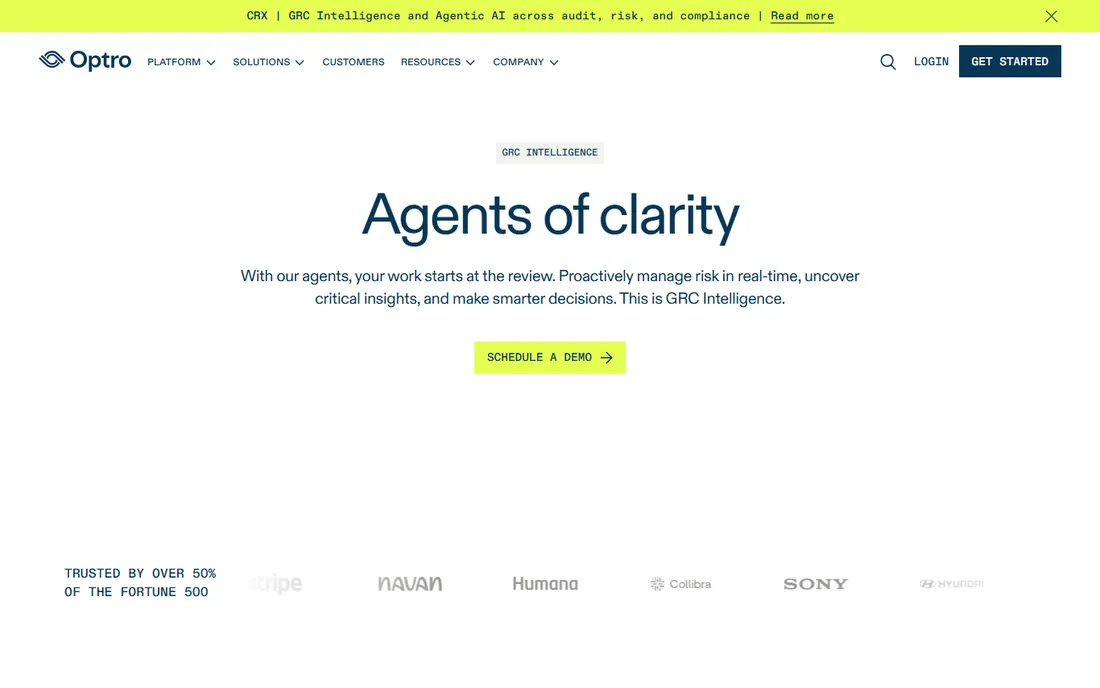
Optro, rebranded from AuditBoard in March 2026, is the GRC platform built around internal audit: SOX programs, workpapers linked to controls, enterprise risk, infosec and IT compliance (SOC 2, ISO 27001) from one shared control set. Its agentic AI direction pushes toward continuous, proactive risk management.
The honest consideration is enterprise fit. Pricing and implementation suit organizations with real audit complexity; smaller teams get better value from automation-first tools. But for public companies running serious SOX and internal audit programs, Optro is the category reference.
What we like- GRC platform built around internal audit
- AI agents for agentic risk management
- 50%-plus of Fortune 500 as customers
Watch out for- Enterprise pricing
- Platform breadth needs scoping for lean teams
#2
Diligent One
Best for: Audit programs reporting to boards and executives
Visit diligent.com
Starting priceSee website
Free planNo
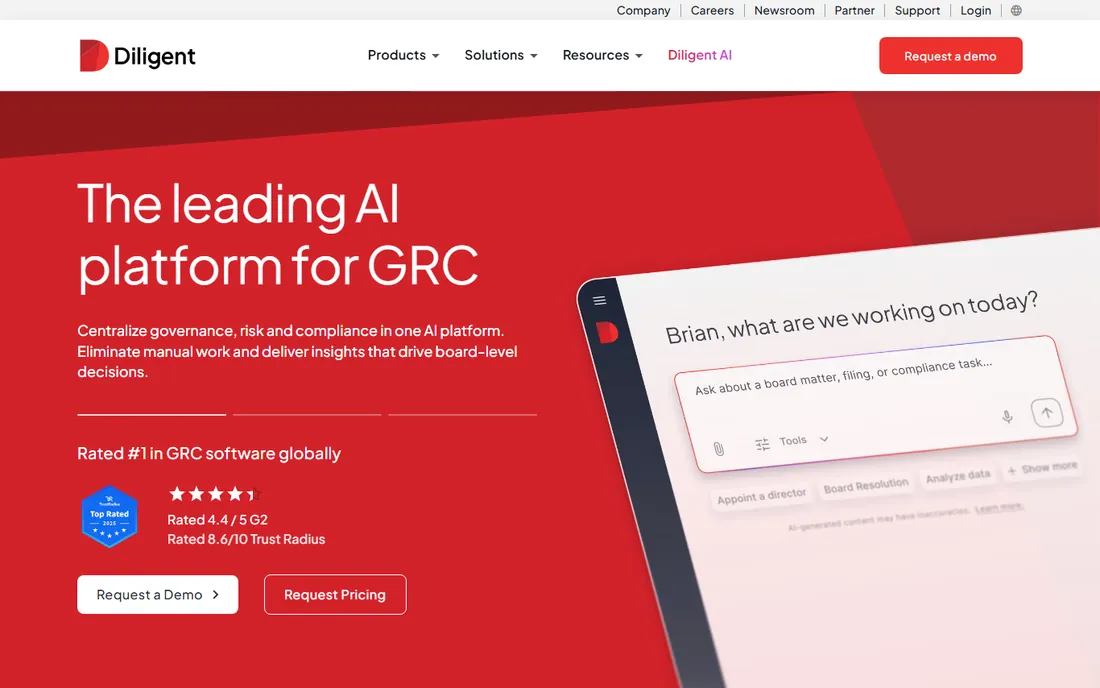
Diligent One connects audit, risk, compliance and ESG into one platform with the board reporting Diligent is known for: audit findings flow into the governance view directors actually see. Its third-party risk capabilities (via 3rdRisk's AI-native tech) automate vendor onboarding and monitoring.
The honest trade-off is breadth versus focus. Organizations wanting pure audit depth may prefer Optro; Diligent wins where audit connects to board governance. For companies where the board demands GRC visibility, Diligent One's integrated story is compelling.
What we like- Unified GRC with board-level reporting
- Strong governance heritage
- AI-driven third-party risk (3rdRisk)
Watch out for- Enterprise scope and pricing
- Smaller teams may use a fraction of the platform
#3
LogicGate
Best for: Risk teams wanting configurable, no-code GRC workflows
Visit logicgate.ai
Starting priceSee website
Free planNo
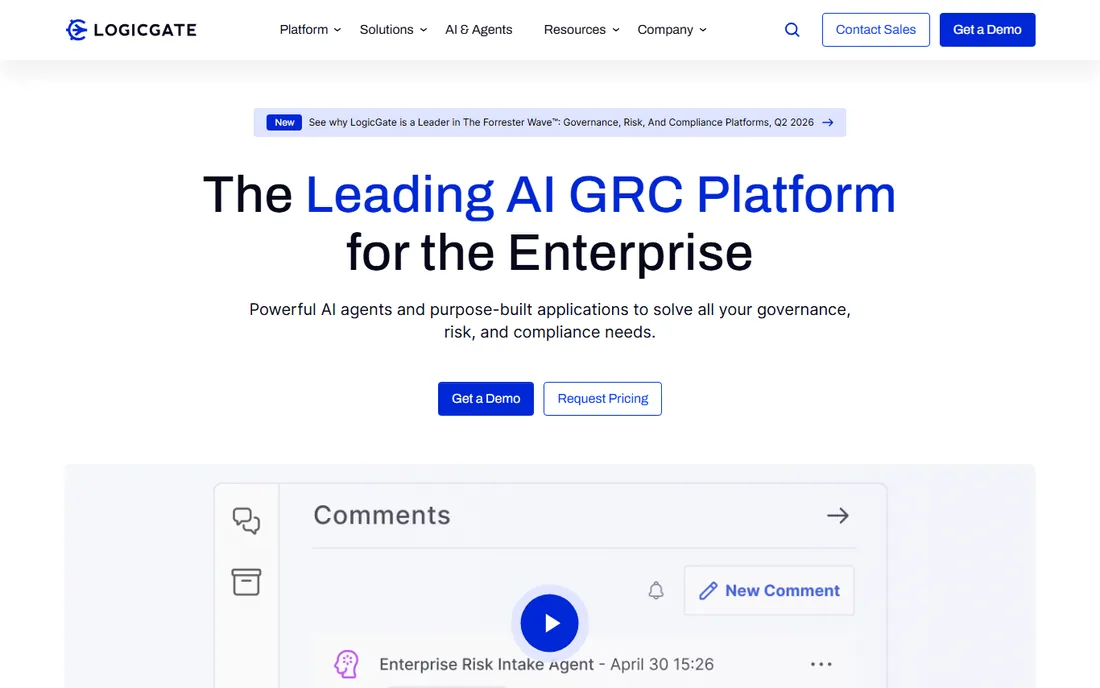
LogicGate's Risk Cloud lets GRC teams build and modify workflows without IT: audit programs, third-party risk, cyber risk and policy management on configurable no-code applications, now with AI agents for evidence testing and reporting. IDC named it a Leader in third-party risk management in 2026.
The honest caution is configurability: freedom to build anything needs discipline to build the right thing. But for organizations whose audit and risk processes don't fit off-the-shelf software, LogicGate's no-code flexibility is the answer.
What we like- No-code workflow builder
- AI autofill and agentic evidence testing
- Leader in IDC MarketScape TPRM 2026
Watch out for- Enterprise pricing
- Flexibility needs governance to avoid sprawl
Starting priceSee website
Free planNo
MetricStream's low-code/no-code GRC cloud covers audit, risk, compliance, cyber GRC, third-party risk and resilience with AI agents and industry-specific products, trusted by large enterprises across banking, insurance, healthcare and energy. It was named a Leader across all five Chartis GRC categories.
The honest reality is enterprise software: significant investment and implementation effort. Mid-market buyers find lighter options more practical. But for global organizations needing one GRC platform across risk domains and regulators, MetricStream's breadth is unmatched.
What we like- AI-first connected GRC across audit, risk, compliance and resilience
- Industry-specific products
- 1M-plus GRC professionals served
Watch out for- Heavyweight implementation
- Overkill outside large enterprises
#5
Workiva
Best for: Audit connected to financial and regulatory reporting
Visit workiva.com
Starting priceSee website
Free planNo
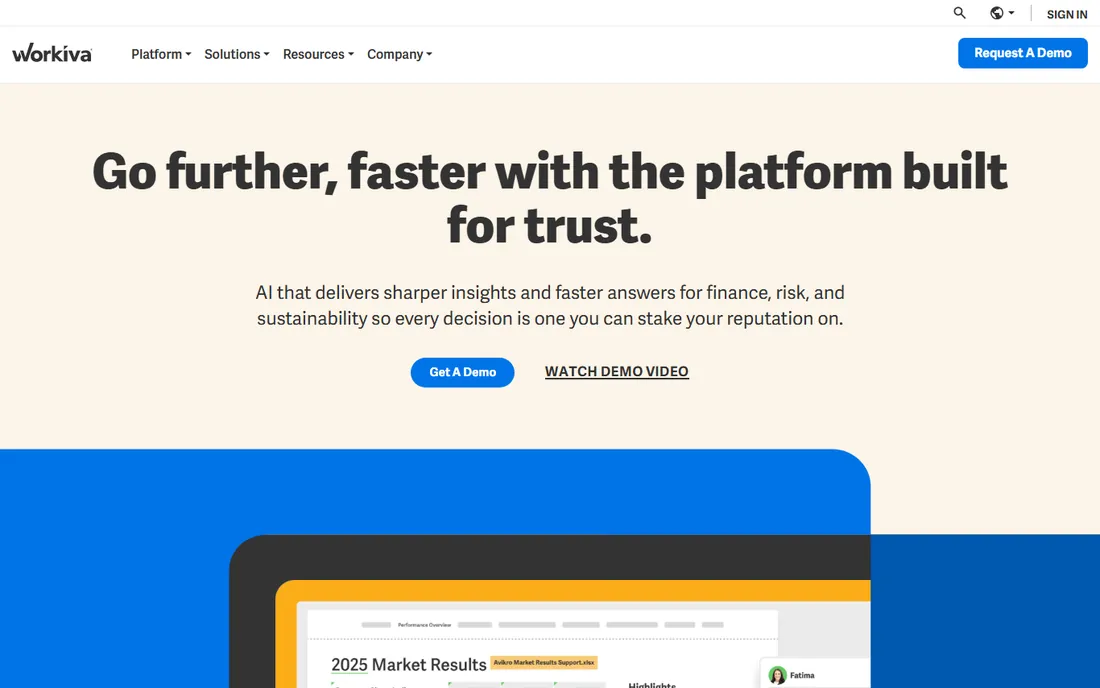
Workiva's strength is connected reporting: financial data, controls and audit evidence linked in one cloud platform, so SOX testing and financial reporting draw from the same assured data. Public companies use it to keep filings, ESG reports and audit documentation consistent.
The honest positioning is reporting-first. Audit-native platforms go deeper on audit planning and workpapers; Workiva wins where audit serves reporting. For finance-led compliance organizations, the connected data model reduces reconciliation pain dramatically.
What we like- Connected reporting links audit evidence to financial statements
- Trusted by 85% of Fortune 500
- Strong for SOX and ESG reporting
Watch out for- Reporting-centric
- Audit workflow depth less than audit-native platforms
#6
Resolver
Best for: Risk intelligence with incident and investigation depth
Visit resolver.com
Starting priceSee website
Free planNo
Resolver (a Kroll company) approaches audit through risk intelligence: incident management, investigations and risk workflows that feed audit programs with real operational risk data. Organizations with significant incident and investigation activity get audit context other platforms miss.
The honest comparison is brand and breadth. Enterprise GRC suites offer wider module catalogs; Resolver's distinction is risk-intelligence depth. For companies where incidents drive audit priorities, its integrated risk-to-audit flow stands out.
What we like- End-to-end risk management with automated workflows
- Strong incident management and investigations
- Kroll backing
Watch out for- Smaller brand than enterprise GRC leaders
- Audit module less famous than risk features
#7
Hyperproof
Best for: Continuous compliance evidence and framework management
Visit hyperproof.io
Starting priceSee website
Free planNo
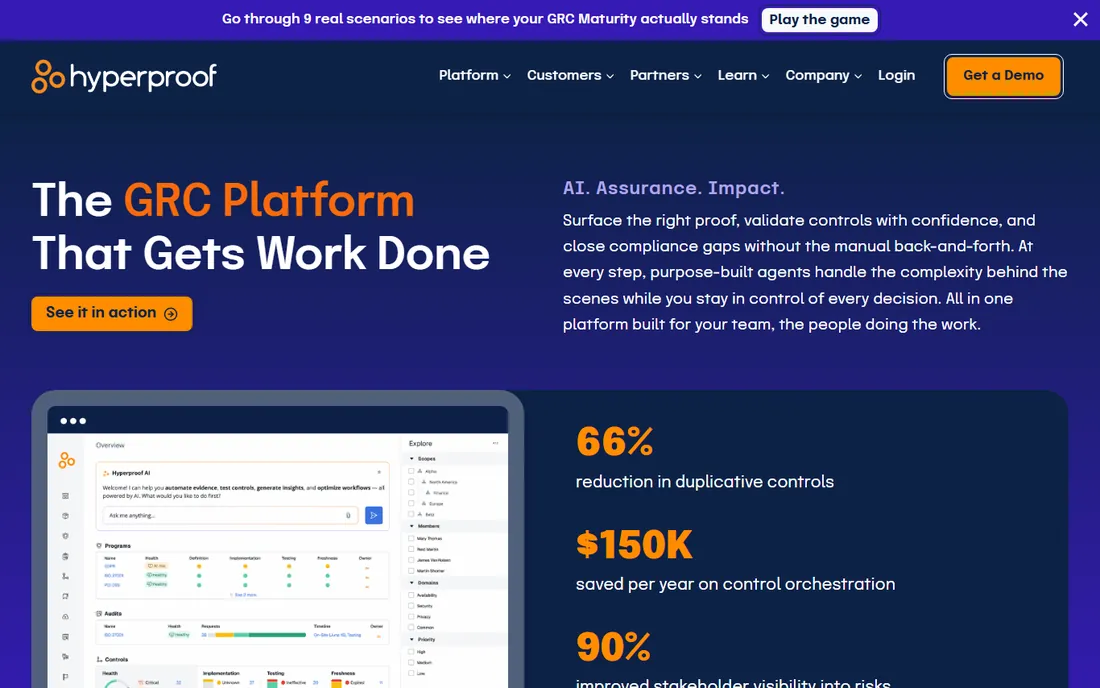
Hyperproof automates the evidence grind: integrations pull proof from cloud services continuously, mapping to SOC 2, ISO 27001, HIPAA and other frameworks so compliance stays audit-ready. Tech and finance companies manage multiple frameworks from one compliance view.
The honest limits are audit depth. Internal audit teams running full audit lifecycles need more; Hyperproof excels at the compliance-evidence side. But for organizations whose audit burden is framework compliance, its automation cuts the manual work dramatically.
What we like- Hypersyncs automate evidence collection via 110-plus connectors
- Multi-framework compliance tracking
- Real-time compliance visibility
Watch out for- Compliance-centric
- Internal audit planning less deep than Optro
#8
Vanta
Best for: Tech companies automating security compliance
Visit vanta.com
Starting priceSee website
Free planNo
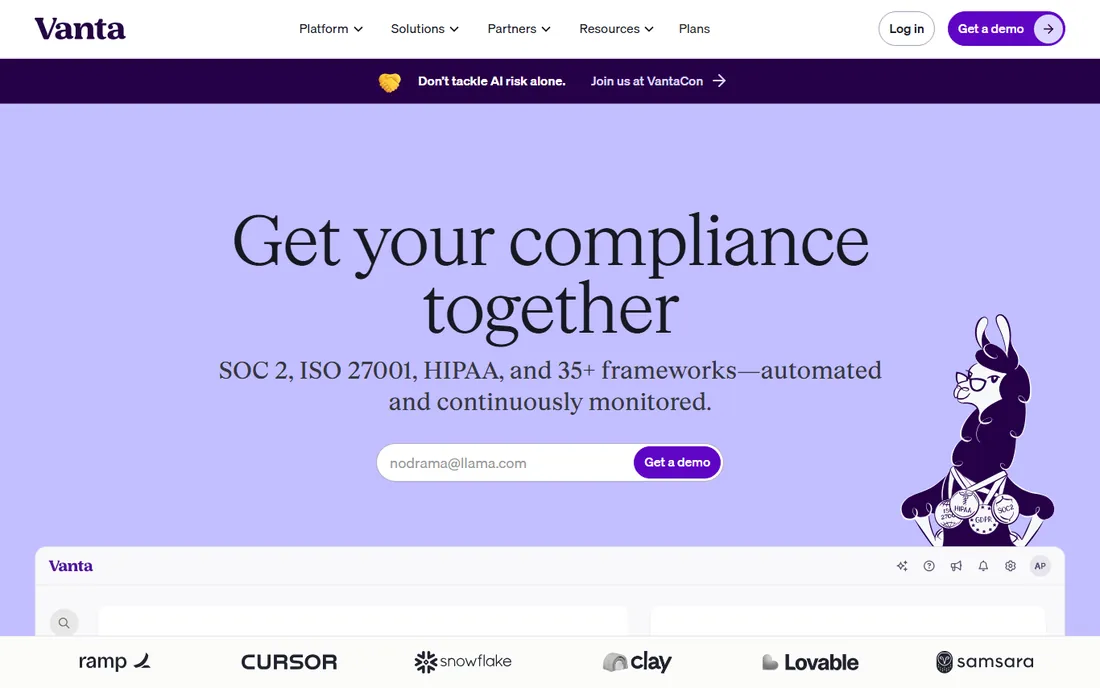
Vanta automates security compliance for modern tech companies: continuous monitoring, automated evidence collection and auditor collaboration that compress SOC 2 and ISO 27001 timelines from quarters to weeks. Its SaaS adoption makes it the default for startups needing enterprise trust fast.
The honest scope is compliance, not audit. Internal audit functions need Optro or Diligent; Vanta handles the security-compliance automation brilliantly. But for tech companies whose "audit" means passing SOC 2, Vanta is the fastest route.
What we like- Automated evidence collection and monitoring
- Fast path to SOC 2 and ISO 27001
- Huge startup and SaaS adoption
Watch out for- Security-compliance focused
- Not a full internal audit platform
How we chose
We covered the audit management spectrum: enterprise audit platforms, board-connected GRC, configurable GRC, reporting-linked audit and automation-first compliance. We weighed audit lifecycle depth, framework coverage, automation honesty, pricing fairness and real enterprise adoption. Pricing comes from each vendor's own pricing page; unverifiable plans are marked "See website." No hands-on testing was performed.
What to look for before you buy
Define your audit scope first. SOX-heavy internal audit, IT compliance, enterprise risk and board reporting are different jobs; the best tool follows the scope, not the category.
Verify evidence automation claims. Ask which integrations collect evidence automatically versus manually, and how many of your frameworks are covered. "Automated" ranges from real to aspirational.
Test workpaper and issue workflows. The daily audit work (planning, fieldwork, issue tracking, remediation) must fit your methodology; demo this with your actual audit types.
Finally, plan the control framework. Multi-framework platforms shine when controls map across SOX, SOC 2 and ISO; migrating scattered spreadsheets into a unified control set is the real implementation work.
Making the business case for audit software
Audit management platforms are expensive, and the buyers who approve them (CFOs, audit committees, boards) think in terms of risk reduction and efficiency, not features. A business case that speaks their language gets funded; a feature list does not. The strongest cases combine three arguments: coverage, efficiency and assurance.
Coverage is the risk argument. Spreadsheet-based audit programs have blind spots: issues tracked in email, control tests with no evidence trail, remediation nobody follows up. Every blind spot is a potential audit finding, restatement or regulatory penalty. Quantify it with your own history: how many issues slipped, how many findings repeated, how long remediation took. The platform's value is continuous, evidenced coverage across the audit universe.
Efficiency is the cost argument, and it is the easiest to quantify. Time studies consistently show audit teams spending 30 to 50 percent of their hours on administration: chasing evidence, formatting workpapers, building status reports. Automation of evidence collection, templated workpapers and real-time dashboards reclaim a large share of that time. Multiply recovered hours by loaded cost and compare against the license; most enterprise teams find payback inside two years. Be conservative in the estimate so the case survives scrutiny.
Assurance is the board argument. Audit committees increasingly ask whether the audit function has real-time visibility or quarter-end surprises. A platform with live dashboards, continuous monitoring and defensible evidence trails changes the answer. This argument resonates most with regulated industries and public companies, where the cost of an assurance failure dwarfs the software price.
Scope the case honestly. Do not promise the full GRC vision in year one; promise the audit lifecycle (planning, fieldwork, issues, reporting) done well, with risk and compliance modules as phase two. Vendors will happily sell the whole platform day one, but phased adoption has far better success rates and gives you negotiating power at renewal.
Include the implementation cost in the case, not just the license. Data migration from spreadsheets, control framework setup, integration with identity and ticketing systems, and training all cost money or time. A business case that hides these gets approved and then blows up; one that includes them gets trusted.
Finally, define success metrics before signing. Audit cycle time, percentage of issues remediated on schedule, evidence collection hours per audit, audit committee satisfaction. Review them at 6 and 12 months. The platform either earns its renewal with data or it does not; deciding the measures upfront keeps everyone honest.
Frequently asked questions
What is audit management software?
Software that runs the internal audit lifecycle: audit planning, workpapers, control testing, issue tracking, remediation and reporting, often extending to SOX, IT compliance and risk management.
Optro vs AuditBoard: what happened?
AuditBoard rebranded as Optro in March 2026, reflecting its shift toward agentic AI for GRC. Same company and platform, new name; the rebrand was announced at the IIA's Great Audit Minds conference.
What is the difference between audit management and GRC software?
Audit management focuses on the audit lifecycle (planning, testing, issues). GRC platforms cover audit plus risk management, compliance and governance. Most enterprise tools now blend both.
Do small companies need audit management software?
Usually not a full platform: Vanta or Hyperproof cover compliance automation for startups. Full audit management (Optro, Diligent) suits companies with internal audit functions, typically public or regulated.
How long does audit software implementation take?
Automation-first tools (Vanta, Hyperproof): weeks. Enterprise GRC (Optro, Diligent, MetricStream): months, including control framework migration and process design. Scope honestly.
Can one tool cover SOX, SOC 2 and ISO 27001?
Yes: Optro, Diligent One, LogicGate and MetricStream manage multiple frameworks from shared controls. The value is testing once and satisfying many frameworks.
Sources we checked (8)
- https://optro.ai
- https://www.diligent.com/
- https://www.logicgate.ai
- https://www.metricstream.com
- https://www.workiva.com/
- https://www.resolver.com/
- https://www.vanta.com
- https://www.hyperproof.io
Is your product missing or out of date?
We review this list regularly. Vendors can request a listing, send updated pricing or ask about featured placement.

Shihab Mia · Founder, Rankite
Shihab has spent more than a decade helping SaaS and e-commerce brands grow through search. He writes Rankite's software buying guides from pricing pages, documentation and public user reviews. More about Shihab.