How we make this list: we compare pricing pages, product documentation and public user reviews. Rankite is independent; if a vendor ever pays for a featured spot, that listing is clearly labeled Partner.
Key takeaways
- Postman remains the default for teams, with the deepest collaboration and testing features, though pricing has pushed some users away.
- Bruno and Hoppscotch are the open-source answers for developers who want their API collections in Git.
- Insomnia suits developers who want a fast, focused client without platform overhead.
- For code-based test automation, Karate and REST Assured beat GUI tools once the test suite grows.
Quick comparison
| Tool | Best for | Starting price | Free plan |
|---|
 Postman Postman | Teams needing collaboration and automation | Free | Yes |
 Insomnia Insomnia | Fast, focused API client for developers | Free | Yes |
 SoapUI SoapUI | Enterprise SOAP and REST testing | Free | Yes |
 Katalon Katalon | Low-code API and UI test automation | Free | Yes |
 Bruno Bruno | Git-friendly open-source API client | Free | Yes |
 Hoppscotch Hoppscotch | Lightweight browser-based API testing | Free | Yes |
 Apidog Apidog | API design, testing and docs in one | Free | Yes |
 Karate Karate | Code-based API test automation | Free | Yes |
 REST Assured REST Assured | Java developers testing REST APIs | Free | Yes |
 Thunder Client Thunder Client | API testing inside VS Code | Free | Yes |
Is your product missing or out of date?
We review this list regularly. Vendors can request a listing, send updated pricing or ask about featured placement.
Starting priceFree
Free planYes
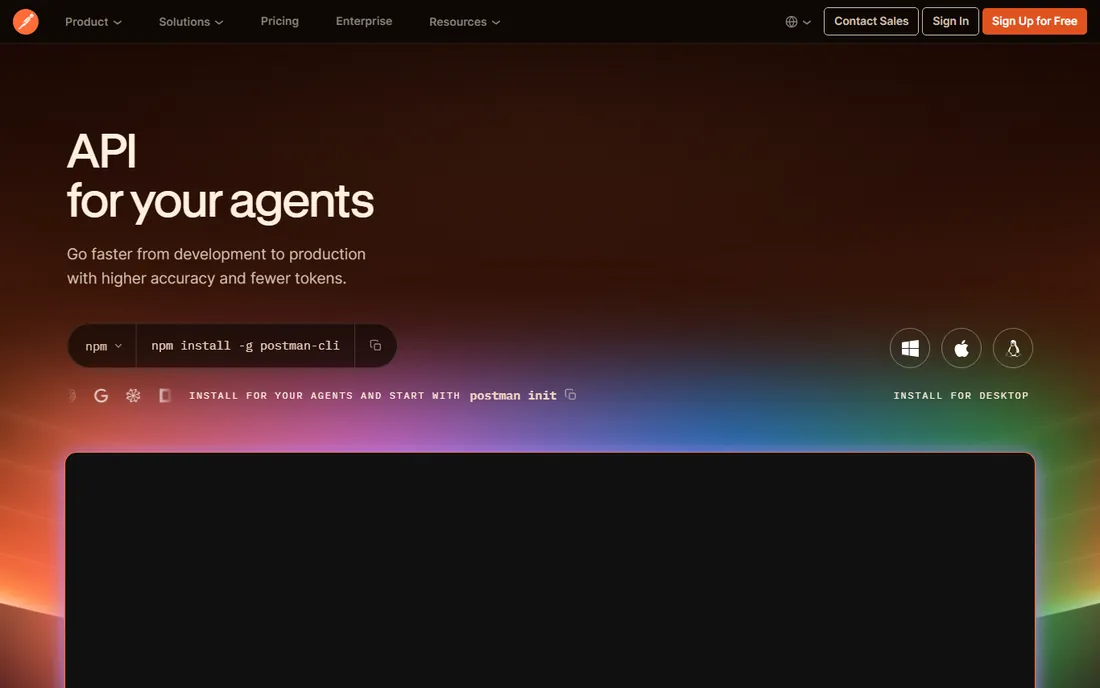
Postman is the tool most API teams standardize on, and the feature depth explains why. Beyond sending requests, it offers shared workspaces, environments, test scripts, mock servers, monitors for scheduled runs and Newman for command-line execution in CI pipelines. An API's lifecycle from design to testing to documentation can live in one place.
The pricing evolution frustrated many users, with previously free collaboration features moving to paid tiers. The app can feel heavy when all you want is a quick request. But for teams doing serious API development and testing together, Postman's combination of client, automation and collaboration remains unmatched. The free tier still covers individual use generously.
What we like- Deepest feature set for API work
- Workspaces enable real team collaboration
- Monitors and CI integration for automation
Watch out for- Pricing changes annoyed longtime users
- Can feel heavy for quick checks
- Cloud account required for teams
Starting priceFree
Free planYes
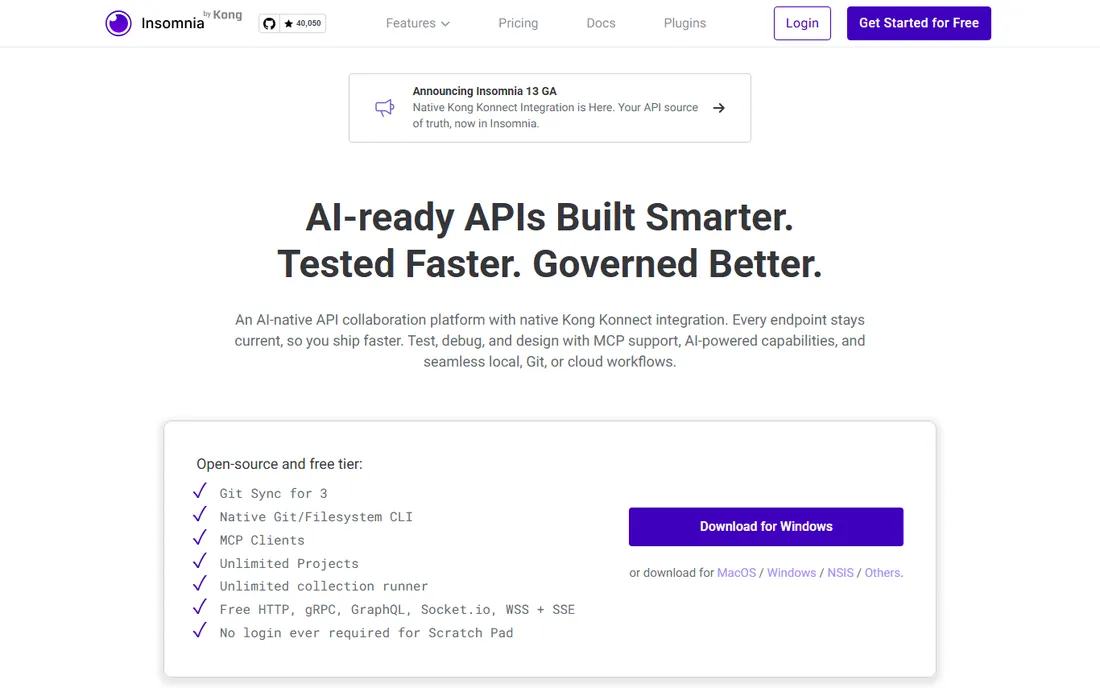
Insomnia built its following as the fast alternative to Postman. The interface is clean, requests fly, and GraphQL support is genuinely good, with schema-aware autocomplete that REST-focused tools treat as an afterthought. Plugins extend it without bloating the core.
Kong's acquisition raised the usual questions about long-term direction, though development continues. Team collaboration and automation features trail Postman. But developers who want a focused client for exploring and testing APIs, particularly GraphQL ones, keep choosing Insomnia for its speed and simplicity.
What we like- Clean, fast interface
- Great for GraphQL
- Plugin ecosystem
Watch out for- Now owned by Kong, adding roadmap questions
- Team features trail Postman
- Smaller community
Starting priceFree
Free planYes
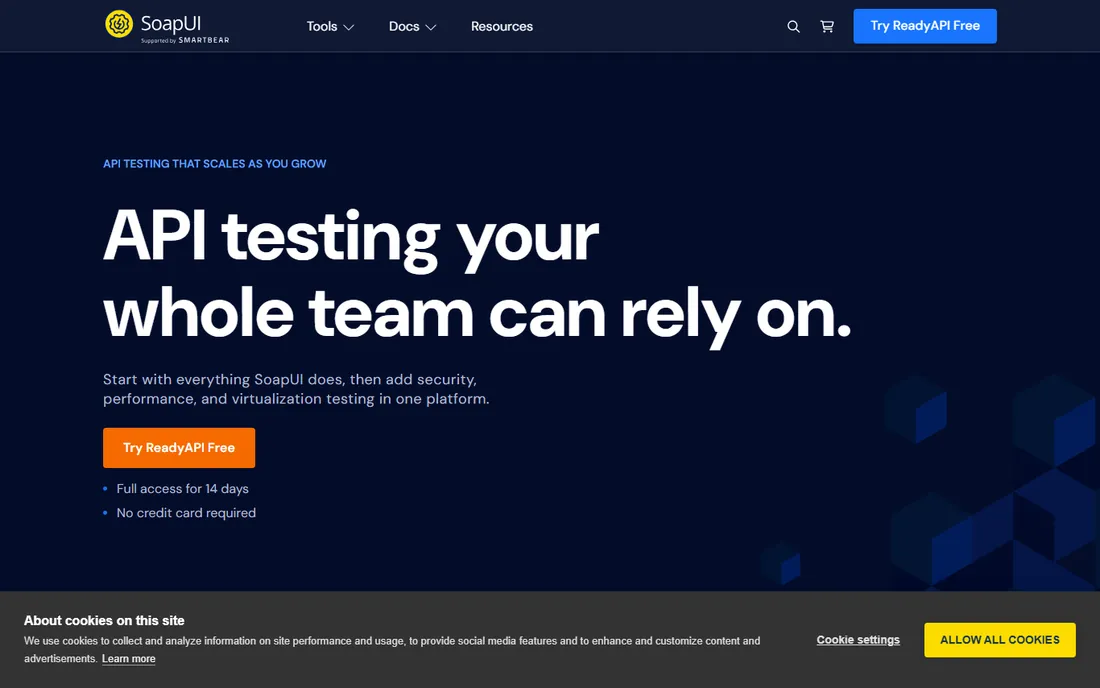
In enterprises where SOAP services refuse to die, SoapUI remains essential. Its WSDL handling, WS-Security support and data-driven testing cover the enterprise integration scenarios that newer tools ignore. The open-source version is capable, and SmartBear's ReadyAPI adds pro features for teams that need them.
The interface is unapologetically Java-desktop, and the app is heavyweight by modern standards. ReadyAPI pricing is enterprise-flavored. But for the specific world of SOAP, ESBs and enterprise integration testing, SoapUI's depth is unmatched. REST-focused teams should look elsewhere; enterprise integration teams already know it.
What we like- Best SOAP and WSDL support
- Data-driven testing
- Long enterprise track record
Watch out for- Java-based interface feels dated
- Heavyweight
- ReadyAPI pro features cost significantly
Starting priceFree
Free planYes
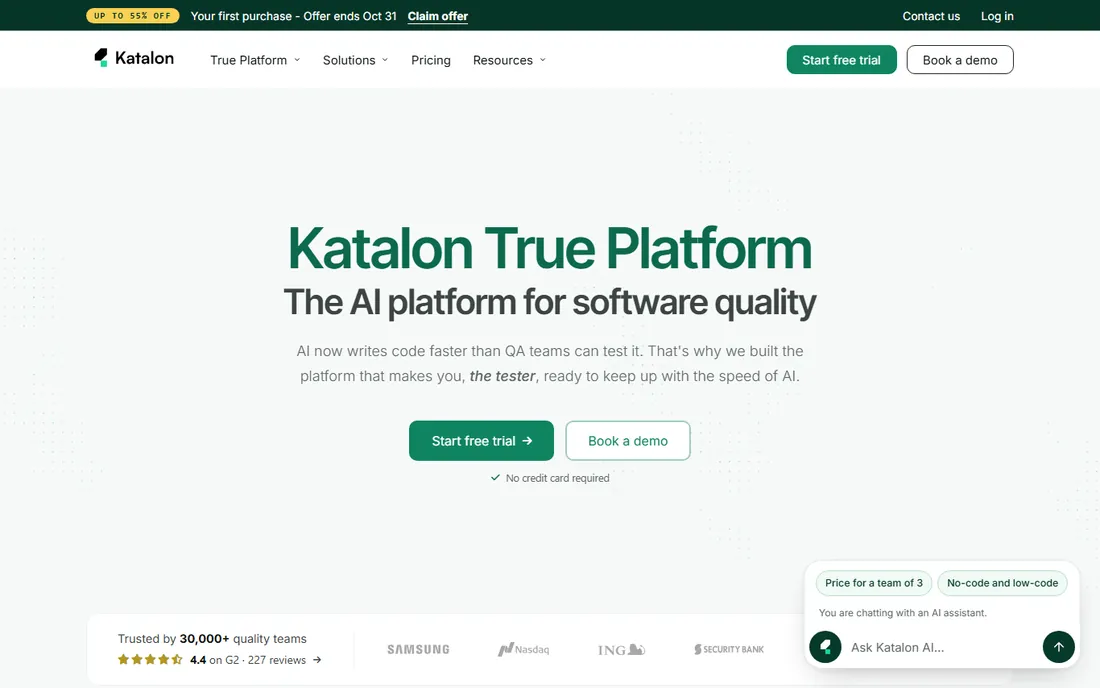
Katalon suits QA teams that test APIs and user interfaces together. The low-code approach lets testers build automated API tests without deep programming, while still allowing scripting when needed. Reporting and test management are built in, which matters for QA processes. The free tier lets teams start without procurement.
It is heavier than a pure API client, and developers often prefer code-based frameworks. Advanced features sit behind paid plans. But for QA organizations standardizing on one automation platform for API and UI testing, Katalon's breadth is the attraction.
What we like- Low-code automation for API and UI together
- Good reporting
- Free tier to start
Watch out for- Heavier than pure API tools
- Advanced features need paid plans
- Less developer-centric
Starting priceFree
Free planYes
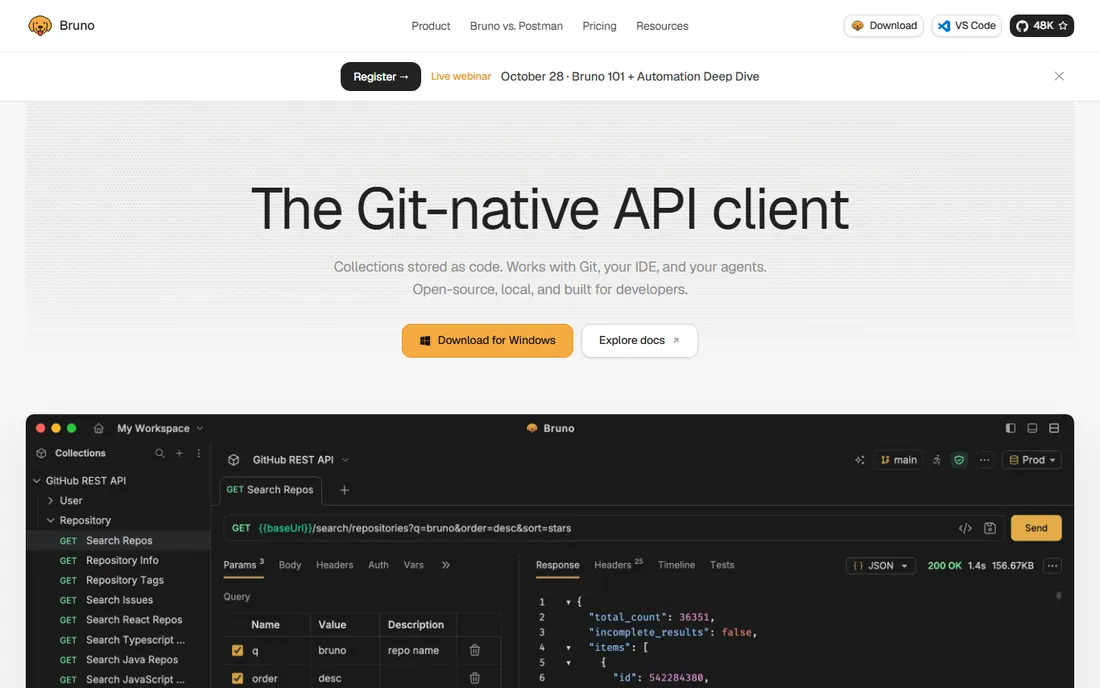
Bruno fixed Postman's most criticized design decision: collections locked in a cloud account. Bruno stores API collections as plain text files on disk, which means they version in Git, diff in pull requests and work offline. For developers who treat API definitions as code, this is the obviously right model.
The project is newer, so the ecosystem is smaller and team collaboration features are basic compared to Postman. But the open-source, offline-first, Git-native approach has won a devoted following. Developers frustrated by Postman's direction increasingly land on Bruno and stay.
What we like- Collections stored as plain files for Git
- Open source
- Fast and offline-first
Watch out for- Newer with a smaller ecosystem
- Team features are basic
- Fewer integrations
Starting priceFree
Free planYes
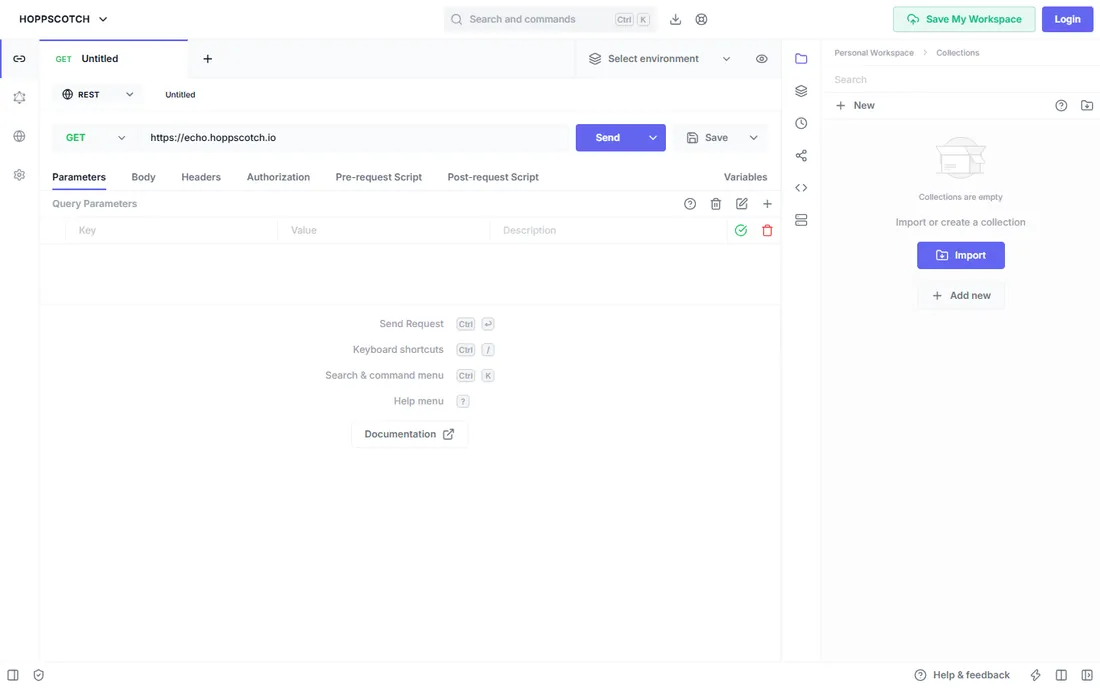
Hoppscotch is the fastest way to test an API: open the browser, send the request, done. No install, no account, no setup. The open-source project covers REST, GraphQL, WebSocket and more with a clean interface that stays out of the way. For quick checks during development, nothing beats the zero-friction model.
Browsers impose limits on certain scenarios, and power features like advanced automation are thinner than desktop tools. But Hoppscotch is not trying to replace Postman for teams. It is the quick, free, always-available tool for the common case, and it excels at exactly that.
What we like- Runs entirely in the browser
- Open source
- Extremely fast for quick tests
Watch out for- Browser limitations for some scenarios
- Fewer power features
- Team features are light
Starting priceFree
Free planYes
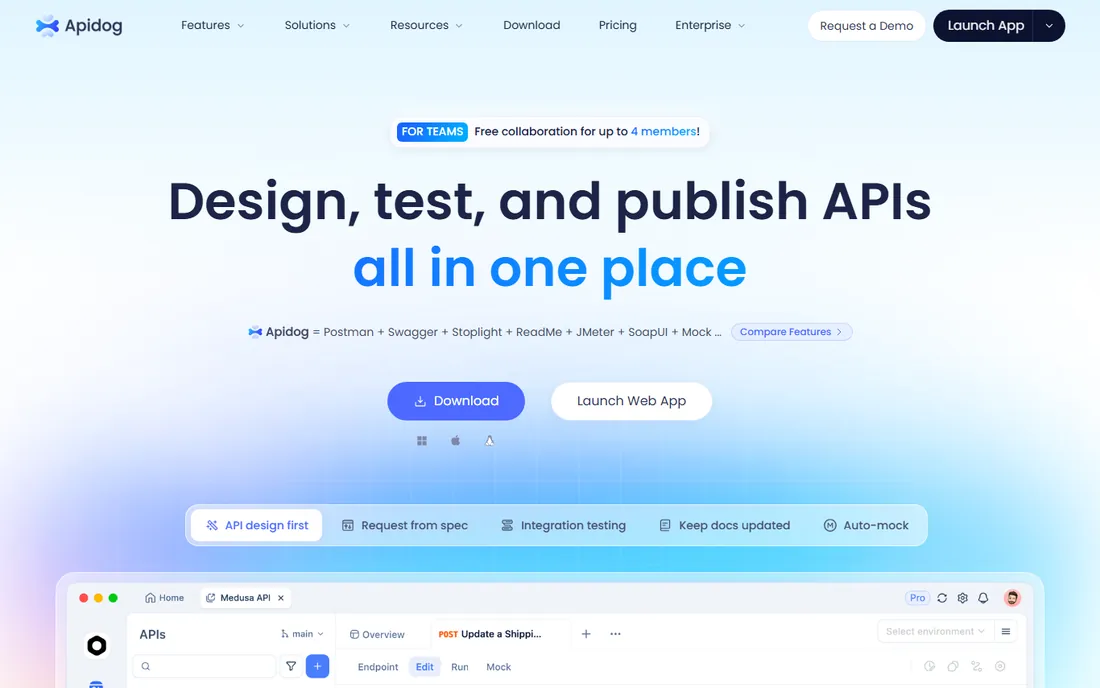
Apidog combines API design, testing, mocking and documentation in one tool, with the specification as the source of truth. Tests generate from the API definition, documentation stays in sync, and the workflow suits teams practicing design-first development. The free tier is generous.
As a newer vendor, the community and integration ecosystem are smaller than Postman's. Some advanced features require paid plans. But teams frustrated by documentation drifting from implementation find Apidog's spec-driven approach compelling. It is the most complete Postman alternative for design-led teams.
What we like- Design-first workflow with docs generation
- Testing tied to specifications
- Generous free tier
Watch out for- Newer vendor
- Smaller community
- Some advanced features are paid
Starting priceFree
Free planYes
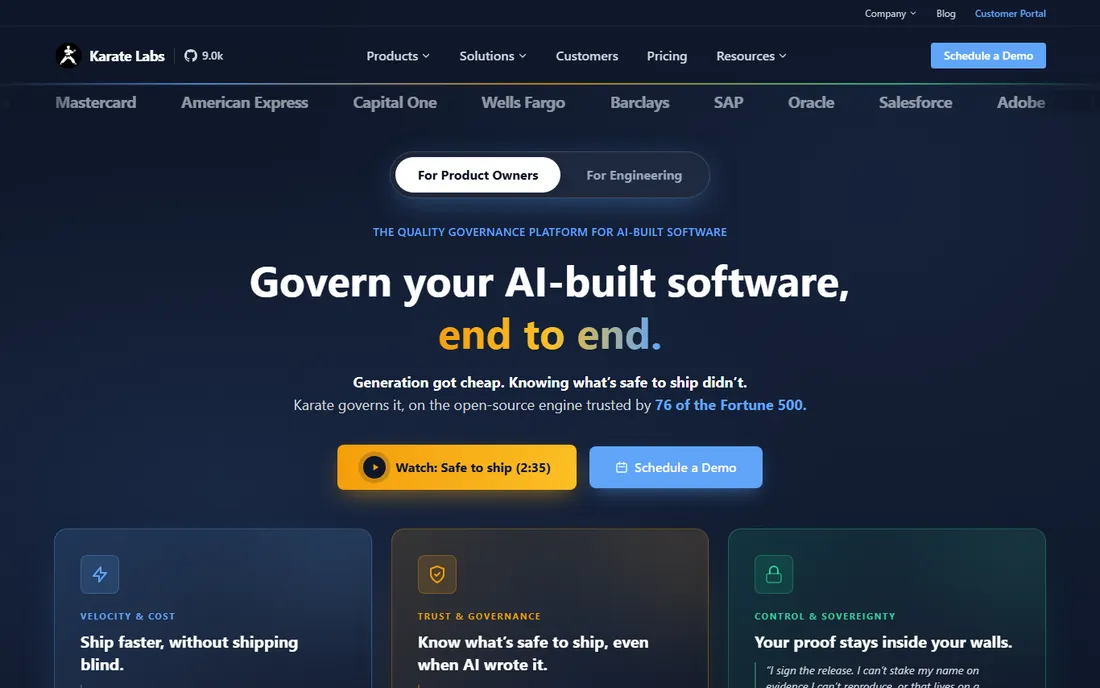
Karate lets testers write API tests in a readable syntax without the step-definition boilerplate that Cucumber-style frameworks demand. Assertions, data-driven tests and parallel execution come built in, and the same framework extends to UI and performance testing. For teams automating API test suites in code, Karate removes enormous friction.
It is still a code tool, which excludes non-technical testers. The community is smaller than REST Assured's, and the JVM base shapes its ecosystem. But for readable, maintainable API automation without framework plumbing, Karate is the most productive option available.
What we like- Plain-language test syntax
- No step definitions needed
- Handles API, UI and performance testing
Watch out for- Learning curve for non-developers
- Smaller community than REST Assured
- JVM-based
Starting priceFree
Free planYes
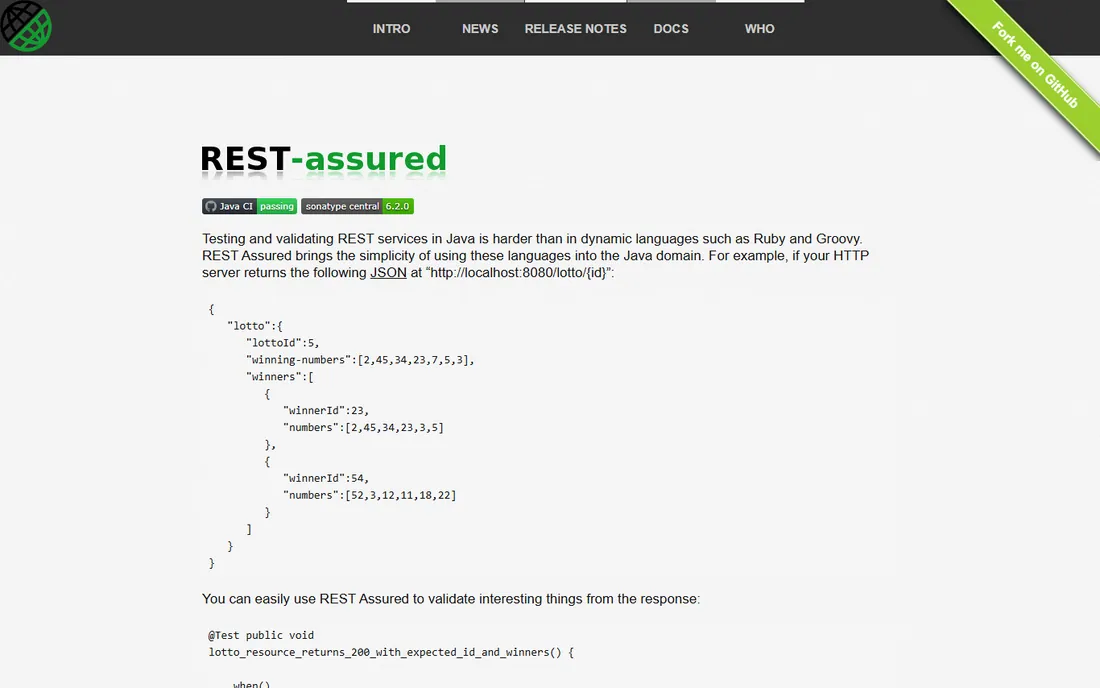
REST Assured is the standard for Java teams testing REST APIs in code. The fluent DSL makes requests and assertions read naturally, and integration with JUnit and TestNG fits existing Java test infrastructure. The Java community around it is enormous, which means answers to every question already exist.
It is Java-only and code-only: there is no GUI for exploring APIs, and non-developers cannot use it. Teams outside the JVM should choose other frameworks. But for Java shops automating API tests, REST Assured is the default, proven across countless enterprise test suites.
What we like- Fluent Java DSL for API testing
- Integrates with JUnit and TestNG
- Huge Java community
Watch out for- Java only
- Requires programming skill
- No GUI for exploration
Starting priceFree
Free planYes
Thunder Client puts API testing inside VS Code as an extension, which eliminates the app-switching tax during development. Requests, collections and environments live next to the code they test. It is lightweight, fast and free for core use.
The VS Code tie is both the feature and the limit; developers using other editors get nothing. Feature depth trails full clients like Postman. But for the large and growing share of developers living in VS Code, testing APIs without leaving the editor is a genuine workflow win.
What we like- Lives inside VS Code
- Lightweight and fast
- No app switching during development
Watch out for- Tied to VS Code
- Fewer features than full clients
- Team collaboration is basic
How we chose
We covered API clients, automation frameworks and low-code platforms, since teams use the category term for all three. Each product was verified as currently offered. We weighed request-building experience, automation capability, collaboration, Git-friendliness and pricing, drawing on vendor documentation and developer community consensus. All ten tools offer capable free tiers, which shaped the value assessments. No vendor paid for placement and we claimed no hands-on testing.
Client vs framework: which do you need
API clients like Postman, Insomnia and Bruno are for exploring, debugging and manually testing APIs. Frameworks like Karate and REST Assured are for automated test suites that run in CI. Most teams need both: a client for development-time exploration and a framework for regression safety.
The Git question increasingly decides the client. Teams that version everything prefer Bruno's file-based collections or Hoppscotch's simplicity. Teams prioritizing collaboration features accept Postman's cloud model. There is no wrong answer, only the trade-off between collaboration convenience and version-control purity.
What to check before you choose
Test with your actual APIs, including authentication. OAuth flows, client certificates and custom auth schemes separate capable tools from pretty ones. The tools that handle your auth smoothly during the trial will handle it in production.
Check the CI story for automation. GUI test builders that cannot run headless in a pipeline create a dead end. Confirm command-line execution, JUnit-style reporting and secret management before committing to an automation tool. And verify Git workflows for collections if the team versions everything.
Frequently asked questions
What is the best API testing tool?
Postman is the most complete for teams, covering manual testing, automation and collaboration. Bruno is the best open-source Git-friendly client. Karate and REST Assured lead code-based automation. The best tool depends on whether the need is exploration, team collaboration or automated suites.
Is Postman free?
Postman offers a generous free tier for individuals. Team collaboration features, higher usage limits and advanced capabilities require paid plans. Pricing changes over the years moved some features to paid tiers, which drove interest in alternatives like Bruno and Hoppscotch.
What is the difference between Postman and SoapUI?
Postman focuses on REST APIs with modern collaboration and automation features. SoapUI specializes in enterprise SOAP and WSDL testing with data-driven capabilities. REST-focused teams choose Postman; enterprises with SOAP services keep SoapUI.
Can API testing be automated?
Yes. Postman monitors and Newman run collections on schedules and in CI. Code frameworks like Karate and REST Assured integrate with test runners for full automation. Low-code platforms like Katalon offer automation without deep programming. Choose based on team skills and CI requirements.
What is the best open-source API testing tool?
Bruno is the best open-source API client, with Git-native collections. Hoppscotch is the best browser-based open-source option. Karate leads open-source code-based automation. All three are free and actively developed.
Sources we checked (10)
- https://www.postman.com
- https://insomnia.rest
- https://www.soapui.org
- https://katalon.com
- https://www.usebruno.com
- https://hoppscotch.io
- https://apidog.com
- https://karatelabs.io
- https://rest-assured.io
- https://www.thunderclient.com
Is your product missing or out of date?
We review this list regularly. Vendors can request a listing, send updated pricing or ask about featured placement.

Shihab Mia · Founder, Rankite
Shihab has spent more than a decade helping SaaS and e-commerce brands grow through search. He writes Rankite's software buying guides from pricing pages, documentation and public user reviews. More about Shihab.