How we make this list: we compare pricing pages, product documentation and public user reviews. Rankite is independent; if a vendor ever pays for a featured spot, that listing is clearly labeled Partner.
Key takeaways
- Postman ($14/user/month on Basic) is the default starting point: design, test, document and monitor APIs in the tool developers already know.
- Kong and Tyk suit teams that want a high-performance gateway, with open-source cores and paid management layers on top.
- Apigee, MuleSoft Anypoint and Boomi are the enterprise integration plays: full-lifecycle management with custom pricing and real implementation effort.
- Smaller teams shipping public APIs fast should evaluate Zuplo and Gravitee before signing an enterprise contract.
Quick comparison
| Tool | Best for | Starting price | Free plan |
|---|
 Postman Postman | Teams that want the standard API client and collaboration hub | $14/user/month (Basic plan, billed annually) | Yes (free plan for individuals and small teams) |
 Kong Kong | Teams needing a high-performance open-source-rooted gateway | See website | Yes (open-source Kong Gateway) |
 Apigee Apigee | Google Cloud shops managing API programs at scale | See website (pay-as-you-go available) | Free trial (60-day evaluation) |
 MuleSoft Anypoint MuleSoft Anypoint | Enterprises unifying integration and API management | See website (custom quote) | Free trial (available) |
 Boomi Boomi | Integration-led organizations connecting apps and APIs | See website (custom quote) | Free trial (available) |
 Zuplo Zuplo | Teams shipping public APIs with minimal setup | See website | Yes (free tier, 100K requests/month) |
 Gravitee Gravitee | Teams wanting event-native API management with open-source roots | See website | Yes (open-source edition) |
 Tyk Tyk | Developers wanting a lightweight programmable gateway | See website | Yes (open-source gateway) |
 Stoplight Stoplight | API design-first teams standardizing on OpenAPI | See website | Yes (free plan for individuals) |
Is your product missing or out of date?
We review this list regularly. Vendors can request a listing, send updated pricing or ask about featured placement.
The question is not whether you need an API platform. It is which layer you are actually buying: the gateway that routes traffic, the developer portal where consumers discover your APIs, the design tooling that keeps specs consistent, or the full-lifecycle suite that does all of it. Buy the wrong layer and you pay enterprise prices for a gateway, or you outgrow a design tool in six months.
The nine platforms below cover the real market. Some are gateways with management layered on. Some are full-lifecycle suites. A few are newer products built for teams that ship APIs without an integration department. Match the tool to the layer you need, not the brand you recognize.
#1
Postman
Best for: Teams that want the standard API client and collaboration hub
Visit postman.com
Starting price$14/user/month (Basic plan, billed annually)
Free planYes (free plan for individuals and small teams)
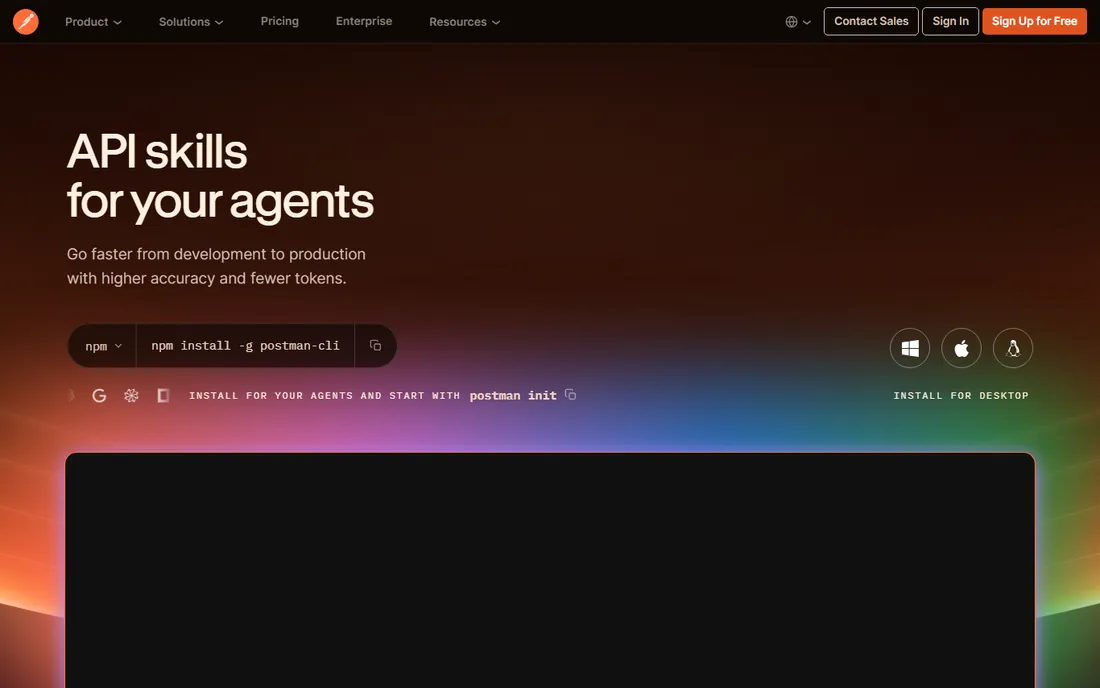
Postman won by being the tool developers open every day. The client handles requests, environments and test scripts, and the platform layer adds shared workspaces, versioned collections, mock servers and auto-generated documentation. For most teams, the journey starts here because the learning curve is zero: your developers already use it.
The platform story deepens on paid plans. Basic at $14 per user per month adds collaboration history and more monitoring; Professional at $29 adds reporting, SSO and private workspaces. Postman is not a traffic gateway in the Kong sense, so teams needing high-performance runtime routing pair it with a gateway. As the collaboration and design hub, though, it is the default.
What we like- The API client nearly every developer already knows
- Workspaces, collections and mock servers for team collaboration
- Built-in testing, documentation and monitoring
Watch out for- Full platform pricing scales per user
- Governance and private-network features need higher tiers
#2
Kong
Best for: Teams needing a high-performance open-source-rooted gateway
Visit konghq.com
Starting priceSee website
Free planYes (open-source Kong Gateway)
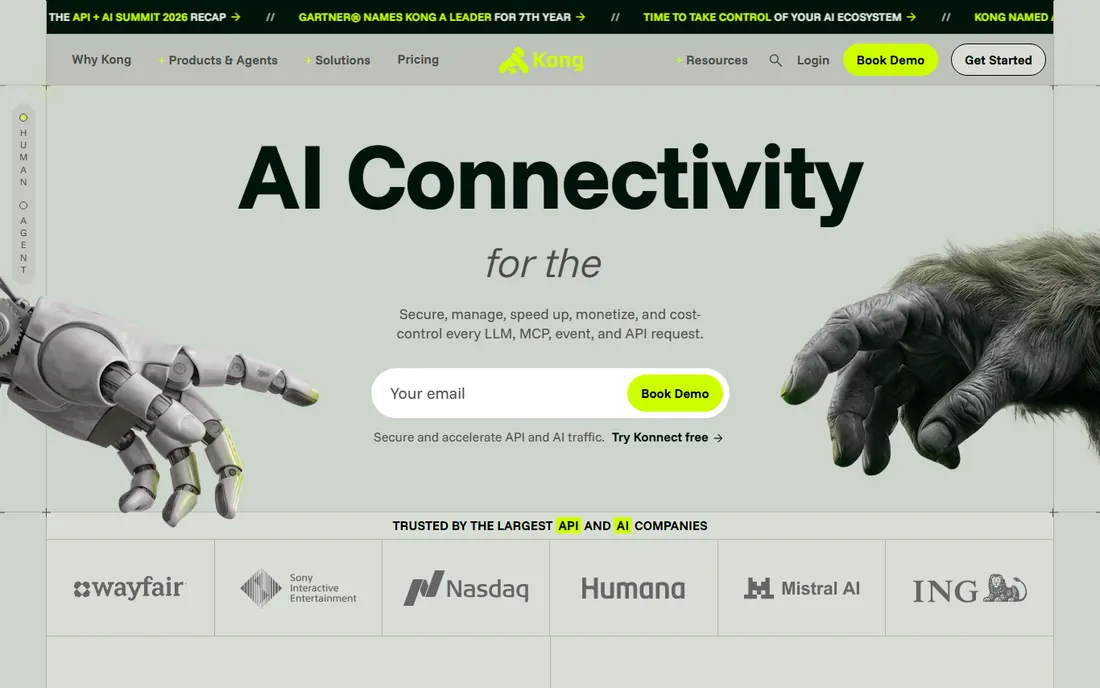
Kong is the gateway engineers pick when traffic gets serious. The open-source Kong Gateway routes, authenticates and rate-limits API traffic with a plugin architecture, and it runs anywhere: Kubernetes, VMs, bare metal. Kong Konnect adds the management layer: service catalog, developer portal, analytics and multi-gateway control.
The open-source core means you can start free and stay free if you self-manage. The commercial platform, Konnect, moves to quoted pricing for serious deployments, so budget conversations start once you need the portal and centralized management. Teams with DevOps capacity get enormous value; teams without it should weigh the operational cost honestly.
What we like- Gateway performance that handles serious traffic
- Open-source core with no license cost to start
- Plugin ecosystem for auth, rate limiting and transformations
Watch out for- Full management platform pricing is not published
- Operating it well needs DevOps skill
Starting priceSee website (pay-as-you-go available)
Free planFree trial (60-day evaluation)
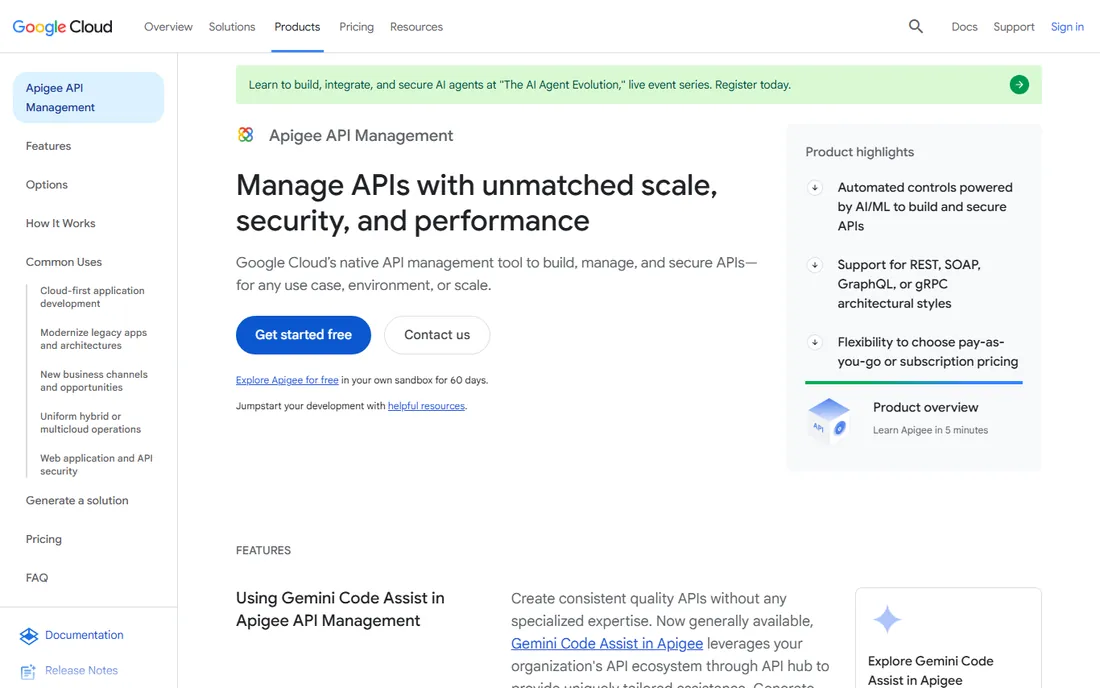
Apigee is Google's enterprise API management platform, and it shows in the depth. Beyond gateway routing, it covers the API program: developer portal, API products and monetization, advanced analytics, and security policies managed as code. Organizations running partner and public API programs at scale use it as the business layer for their APIs.
Pricing runs through Google Cloud, with pay-as-you-go and subscription paths that reward careful reading. Outside Google Cloud the value proposition thins; inside it, the integration with Cloud's IAM, logging and billing is the reason to choose it. This is an enterprise platform with enterprise onboarding, not a weekend signup.
What we like- Full-lifecycle management: design, secure, publish, analyze and monetize
- Deep Google Cloud integration
- Strong analytics and monetization tooling
Watch out for- Pricing complexity with pay-as-you-go and subscription options
- Best value inside the Google Cloud ecosystem
#4
MuleSoft Anypoint
Best for: Enterprises unifying integration and API management
Visit mulesoft.com
Starting priceSee website (custom quote)
Free planFree trial (available)
MuleSoft Anypoint treats APIs as part of integration, not a separate discipline. The platform connects SaaS apps, databases and legacy systems, then exposes the integrations as managed APIs through the same lifecycle tooling. For enterprises already invested in Salesforce, which owns MuleSoft, the combined story is the pitch.
The costs are real. Licensing is custom and substantial, and most deployments involve implementation partners. MuleSoft pays off when the organization commits to API-led integration as an operating model across dozens of systems. Teams that just need a gateway or a developer portal are buying far more platform than they need.
What we like- Integration and API management in one platform, not two vendors
- Reusable API-led connectivity model
- Salesforce ecosystem integration
Watch out for- Custom pricing with significant license costs
- Implementation typically needs specialists
#5
Boomi
Best for: Integration-led organizations connecting apps and APIs
Visit boomi.com
Starting priceSee website (custom quote)
Free planFree trial (available)
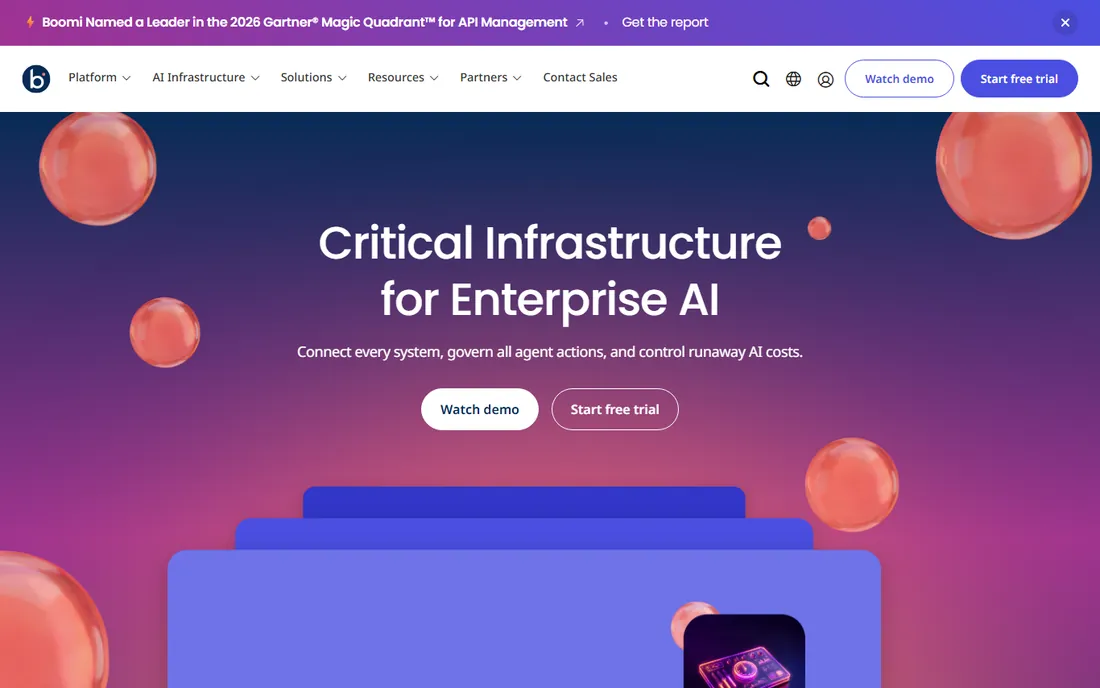
Boomi comes at APIs from the integration side. The platform's strength is connecting applications, data and systems with low-code tooling, and API management rides along: design, publish and govern the APIs your integrations expose. Organizations standardizing on Boomi for integration get API management without a second vendor.
Pure-play API teams sometimes find the gateway and portal features thinner than Kong or Apigee. Boomi's buyer is the integration architect, not the API platform engineer. If your problem is "connect everything, then expose APIs," Boomi fits. If your problem is "run a developer-facing API program," compare the specialists first.
What we like- Low-code integration platform with API management included
- Broad connector library for SaaS and on-premise systems
- Faster time to value than heavier suites
Watch out for- Custom pricing
- API management depth trails pure-play gateway vendors
#6
Zuplo
Best for: Teams shipping public APIs with minimal setup
Visit zuplo.com
Starting priceSee website
Free planYes (free tier, 100K requests/month)
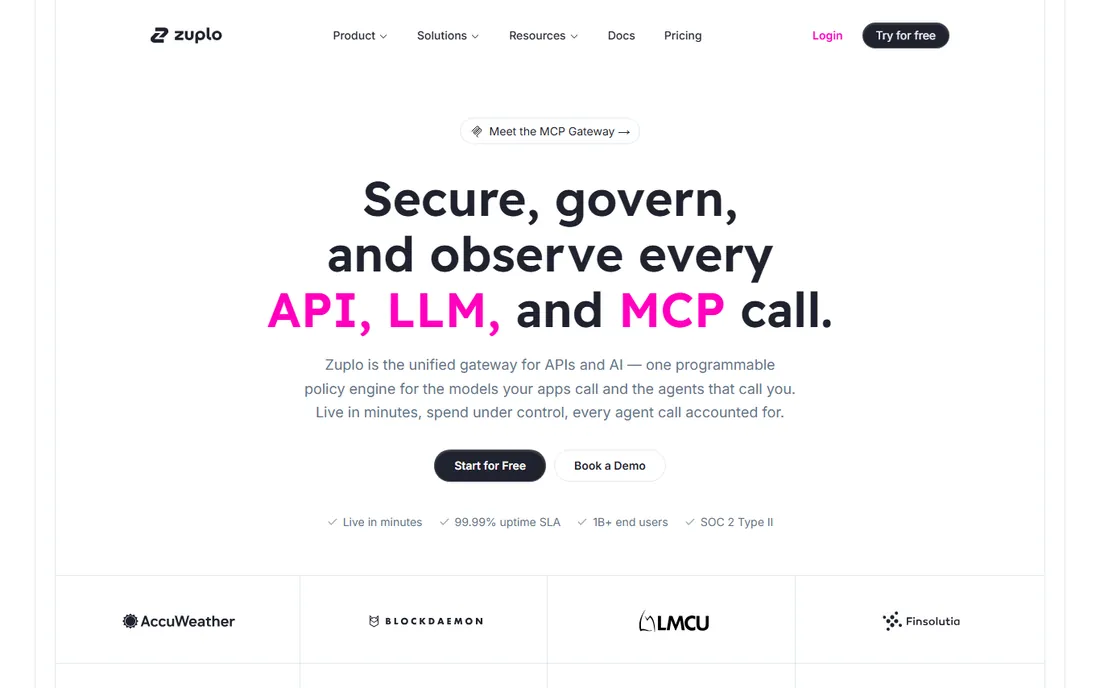
Zuplo is built for the team that needs a production API gateway this week. Configuration lives in git, deployment takes minutes, and the developer portal with documentation generates itself from your OpenAPI spec. Rate limiting, authentication and analytics come standard without the enterprise sales process.
The youth of the platform cuts both ways. You get modern developer experience and pricing that starts small, but the ecosystem of plugins and the depth of enterprise governance trail the incumbents. Startups and product teams shipping their first public API get the most value; regulated enterprises should verify compliance features before committing.
What we like- API gateway deployable in minutes with git-based config
- Developer portal and docs generated automatically
- Usage-based pricing that starts small
Watch out for- Younger platform with a smaller ecosystem
- Enterprise governance features still maturing
#7
Gravitee
Best for: Teams wanting event-native API management with open-source roots
Visit gravitee.io
Starting priceSee website
Free planYes (open-source edition)
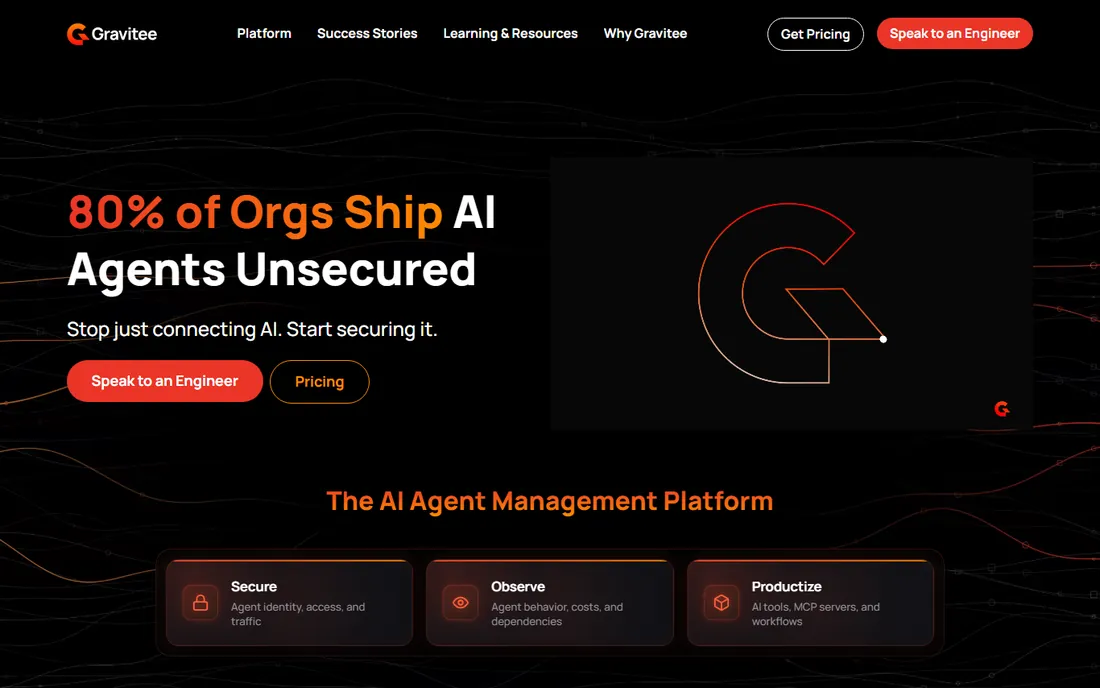
Gravitee's differentiator is event-native design. While most gateways were built for request-response REST, Gravitee manages Kafka, MQTT and WebSocket APIs alongside REST in one control plane. Organizations with event-driven architectures get API management that matches how their systems actually communicate.
Like Kong, the open-source edition lets teams start free and self-host. Commercial plans add the management, portal and support layers with quoted pricing. Teams standardizing on event streaming should evaluate Gravitee against the REST-first vendors carefully, because retrofitting event support onto a REST gateway is painful.
What we like- Handles REST, event and streaming APIs in one platform
- Open-source core with community edition
- Policy studio for no-code API policies
Watch out for- Commercial pricing not published
- Smaller community than Kong
#8
Tyk
Best for: Developers wanting a lightweight programmable gateway
Visit tyk.io
Starting priceSee website
Free planYes (open-source gateway)
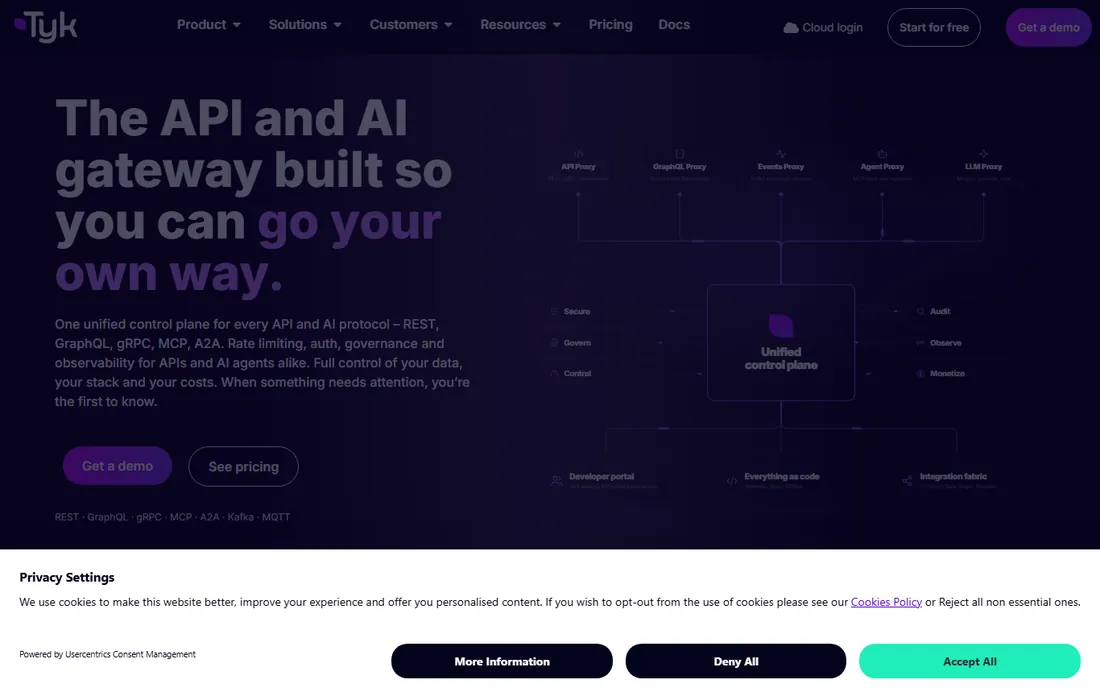
Tyk appeals to developers who want infrastructure as code all the way down. API definitions live in files, deploy through GitOps pipelines, and the gateway itself is lightweight enough to run anywhere. The dashboard and developer portal cover the management basics without the weight of a full suite.
Teams wanting a polished enterprise portal or deep analytics may find Tyk thin. Its strength is the programmable, automation-friendly core that fits platform engineering teams. Open source covers the gateway; Tyk Cloud and self-hosted commercial plans add management with quoted pricing.
What we like- Lightweight gateway with a small footprint
- API definitions as code with GitOps workflows
- Open-source core with cloud and self-hosted options
Watch out for- Management UI and portal depth trail the big suites
- Commercial pricing requires a quote
Starting priceSee website
Free planYes (free plan for individuals)
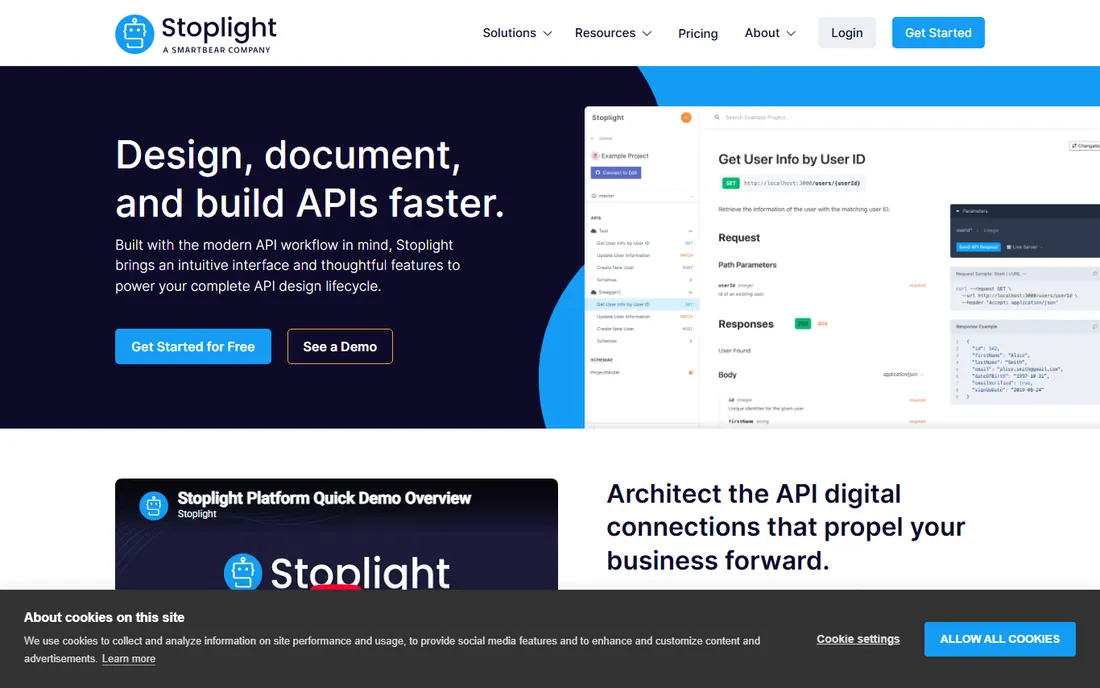
Stoplight owns the design end of the lifecycle. Teams write and maintain OpenAPI specs in a visual editor, enforce style guides with spectral linting, and generate documentation and mock servers from the same source of truth. Organizations standardizing dozens of APIs on consistent design rules use it as the governance point before any code is written.
Be clear about what it is not: Stoplight does not route traffic. It pairs with a gateway like Kong, Tyk or Apigee, handling design while the gateway handles runtime. Design-first teams that have suffered through inconsistent hand-written specs get immediate value; teams looking for one platform to do everything need to add the runtime layer.
What we like- Design-first workflow with visual OpenAPI editing
- Style guides and linting that enforce API consistency
- Documentation and mocking from the same spec
Watch out for- Not a gateway, design and documentation only
- Advanced governance needs paid tiers
Which layer are you actually buying
API platforms bundle four jobs, and most buyers need one or two of them. Naming the job prevents overbuying.
The gateway routes traffic: authentication, rate limiting, request transformation. Kong, Tyk, Zuplo and Gravitee live here. If your problem is "our APIs need to handle production traffic safely," start with the gateway layer.
The developer portal publishes APIs to consumers: documentation, API keys, onboarding. Apigee, Kong Konnect, Zuplo and Stoplight cover this. If your problem is "partners cannot figure out how to use our APIs," the portal is the gap.
Design and governance keep specs consistent before code exists. Postman and Stoplight live here. If your problem is "every team designs APIs differently," buy design tooling.
Full lifecycle does all of it with one vendor and one contract. Apigee, MuleSoft Anypoint and Boomi sell this. If your problem is "we need one platform the whole enterprise standardizes on," the suite price starts making sense.
Most teams under 100 engineers need a gateway plus Postman. The suites earn their price when API programs span business units.
How we chose
We started with the terms buyers search: API platform, API management platform and API gateway. For each candidate we opened the vendor's site and documentation, confirmed the product is a real API platform rather than a single-purpose tool, and checked public reviews on G2, Capterra and developer communities for how the platform behaves in production. We compared gateway performance claims, portal quality, pricing models and which team sizes each tool fits. Where a price could not be verified on the vendor's own page, we wrote "See website" instead of guessing.
Buying the suite for a gateway problem is the classic error. A team that needs rate limiting and auth on ten internal APIs does not need MuleSoft; Kong's open-source gateway or Zuplo handles it at a fraction of the cost and complexity.
Ignoring the developer experience is the second. The best gateway in the world fails if partner developers cannot self-serve. Evaluate the portal and documentation as a consumer would, with no help from your team.
Underestimating operations is the third. Self-hosted gateways need upgrades, monitoring and on-call coverage. If you lack platform engineering capacity, a managed cloud offering is cheaper than the outages.
Skipping the pricing conversation until late is the fourth. Usage-based pricing (Apigee pay-as-you-go, Zuplo) can surprise teams with spiky traffic. Model your request volume and get the number in writing before the architecture depends on it.
Frequently asked questions
What is the difference between an API gateway and an API platform?
A gateway routes API traffic: authentication, rate limiting and transformation at runtime. A platform adds the lifecycle around it: design, documentation, developer portal, analytics and governance. Kong Gateway is a gateway; Kong Konnect, Apigee and MuleSoft Anypoint are platforms.
Is Postman an API platform?
Postman is the collaboration and design hub most developers already use: client, collections, testing, docs and monitoring. It is not a traffic gateway. Teams commonly pair Postman for design and testing with Kong, Tyk or Apigee for runtime traffic management.
How much does an API platform cost?
It varies by layer. Postman starts at $14 per user per month. Open-source gateways (Kong, Tyk, Gravitee) are free to self-host. Managed gateways like Zuplo start small and scale with usage. Enterprise suites (Apigee, MuleSoft, Boomi) are custom-quoted and typically run into five or six figures annually.
Do I need MuleSoft or Apigee, or is Kong enough?
Kong is enough if your problem is API traffic management: routing, auth, rate limiting and a developer portal. MuleSoft and Apigee earn their price when APIs are part of a company-wide integration program with dozens of systems, monetization and multi-team governance.
What is OpenAPI and why does Stoplight focus on it?
OpenAPI is the standard specification format for describing REST APIs. Stoplight focuses on it because consistent, machine-readable specs enable documentation, mocking, testing and governance from one source. Design-first teams treat the OpenAPI spec as the contract every implementation follows.
Can I start with open source and upgrade later?
Yes, and it is a common path. Kong, Tyk and Gravitee all offer open-source cores with commercial management layers, so teams prototype free and buy the portal, analytics and support when the API program grows. Just confirm the commercial features you will eventually need exist before standardizing.
Sources we checked (11)
- https://postman.com/pricing/
- https://konghq.com/pricing
- https://cloud.google.com/apigee/docs/api-platform/get-started/pricing
- https://www.mulesoft.com/platform/enterprise-integration
- https://boomi.com/pricing/
- https://zuplo.com/pricing
- https://gravitee.io/pricing
- https://www.tyk.io/pricing/
- https://stoplight.io/pricing
- https://www.g2.com/categories/api-management
- https://www.capterra.com/api-management-software/
Is your product missing or out of date?
We review this list regularly. Vendors can request a listing, send updated pricing or ask about featured placement.

Shihab Mia · Founder, Rankite
Shihab has spent more than a decade helping SaaS and e-commerce brands grow through search. He writes Rankite's software buying guides from pricing pages, documentation and public user reviews. More about Shihab.