How we make this list: we compare pricing pages, product documentation and public user reviews. Rankite is independent; if a vendor ever pays for a featured spot, that listing is clearly labeled Partner.
Key takeaways
- CrowdStrike Falcon and SentinelOne lead AI-driven endpoint protection, with published entry pricing only on CrowdStrike's side.
- Darktrace and Vectra AI bring self-learning AI to network defense, catching threats that signature-based tools miss.
- Microsoft Defender XDR is the obvious pick for Microsoft 365 shops; everyone else should compare it against best-of-breed XDR.
- Sophos Intercept X and Elastic Security give mid-market teams AI security at far lower cost than the enterprise giants.
Quick comparison
| Tool | Best for | Starting price | Free plan |
|---|
 CrowdStrike Falcon CrowdStrike Falcon | AI endpoint protection at enterprise scale | $59.99 per device/year (Falcon Go) | Free trial (15 days) |
 SentinelOne Singularity SentinelOne Singularity | autonomous detection and response | See website | Free trial |
 Darktrace Darktrace | self-learning defense across network, cloud and email | See website | No |
 Vectra AI Vectra AI | network detection and response with clear prioritization | See website | No |
 Palo Alto Cortex XDR Palo Alto Cortex XDR | XDR in Palo Alto Networks environments | See website | Free trial |
 Microsoft Defender XDR Microsoft Defender XDR | organizations standardized on Microsoft 365 | See website | Free trial (30 days) |
 Sophos Intercept X Sophos Intercept X | mid-market endpoint protection with AI | $28 per user/year | Free trial (30 days) |
 Elastic Security Elastic Security | open SIEM and security analytics on your own terms | See website | Yes (free tier on Elastic Cloud) |
 Abnormal AI Abnormal AI | AI-native email security | See website | No |
Is your product missing or out of date?
We review this list regularly. Vendors can request a listing, send updated pricing or ask about featured placement.
CrowdStrike's 2026 Threat Hunting Report found that supply chain attacks in the first half of 2026 increasingly used malicious packages uploaded to public software registries, including dependencies pulled in by AI-assisted development tools. Attackers now use AI to move faster; defenders need AI that moves at the same speed. These nine platforms put machine learning at the center of detection and response rather than bolting it on.
Starting price$59.99 per device/year (Falcon Go)
Free planFree trial (15 days)
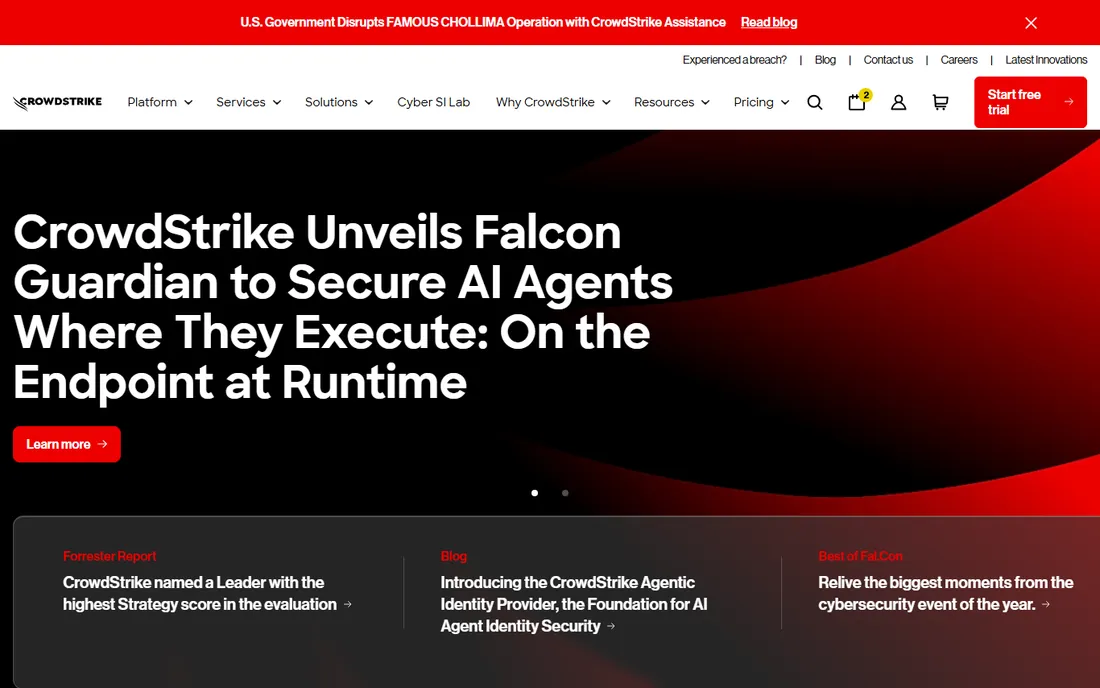
Falcon is the endpoint platform others get compared against. One lightweight sensor handles next-gen antivirus, endpoint detection and response, and managed threat hunting, with AI models trained on telemetry from hundreds of millions of devices. In 2026 CrowdStrike added Falcon Guardian, an AI detection and response layer that watches AI agents where they execute on the endpoint.
Pricing is refreshingly public for this category: Falcon Go at $59.99 per device per year, Pro at $99.99, Enterprise at $184.99, with a 15-day free trial. Costs rise as you add modules, and the full MDR service is custom-priced. For teams that want proven AI endpoint protection with transparent entry pricing, Falcon is the default shortlist entry.
What we like- Cloud-native single-agent architecture
- Real-time AI detection with threat intelligence
- New Falcon Guardian secures AI agents at runtime
Watch out for- Premium pricing that climbs with modules
- Smaller businesses find it expensive
- Advanced reporting limited on basic tiers
Starting priceSee website
Free planFree trial
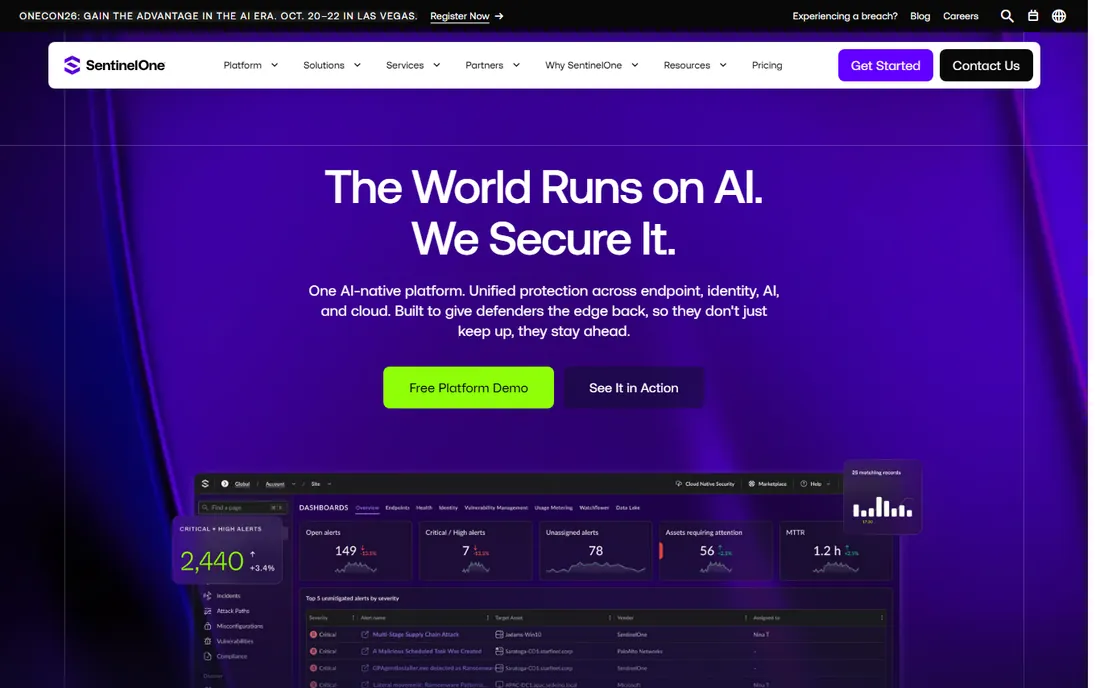
SentinelOne built its name on autonomy: the Singularity platform detects, prevents and responds to attacks without waiting for an analyst, using behavioral AI across endpoints, cloud workloads, containers, identities and mobile. Purple AI lets analysts hunt threats with natural-language queries instead of writing detection rules from scratch.
The platform holds FedRAMP High authorization and deploys as SaaS, on-premises, air-gapped or hybrid, which matters for regulated industries. Pricing is quote-based, so budget conversations start with a demo. For security teams short on analysts, the autonomous response is the selling point: fewer alerts, faster containment, less manual triage.
What we like- Autonomous response at machine speed
- Purple AI for natural-language threat hunting
- FedRAMP High authorization
Watch out for- Quote-based pricing with no public numbers
- Platform breadth can overwhelm small teams
- Partner-dependent in some regions
#3
Darktrace
Best for: self-learning defense across network, cloud and email
Visit darktrace.com
Starting priceSee website
Free planNo
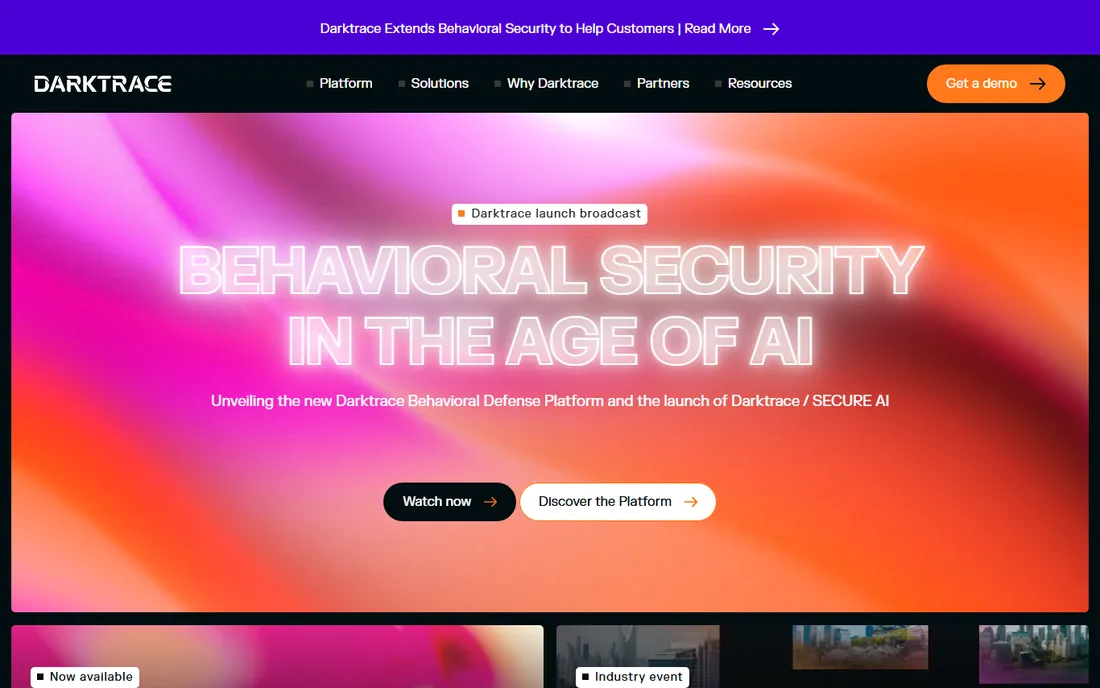
Darktrace takes a different philosophical approach: instead of studying past attacks, its AI learns the normal patterns of your business and flags what does not fit. The ActiveAI Security Platform spans network, cloud, email, endpoints and operational technology, and its autonomous response can isolate a compromised device in seconds without human intervention.
The catch is cost and calibration. Pricing is high and quote-based, and the first weeks involve tuning as the AI learns your environment. Nearly 10,000 customers use it, which speaks to results once deployed. If your threat model includes novel attacks that signatures will never catch, Darktrace belongs on the shortlist.
What we like- Learns your organization's normal behavior instead of relying on signatures
- Autonomous response contains threats in seconds
- Covers network, cloud, email, OT and endpoints
Watch out for- Premium pricing
- Can generate noise during the initial learning period
- No free tier or trial
#4
Vectra AI
Best for: network detection and response with clear prioritization
Visit vectra.ai
Starting priceSee website
Free planNo
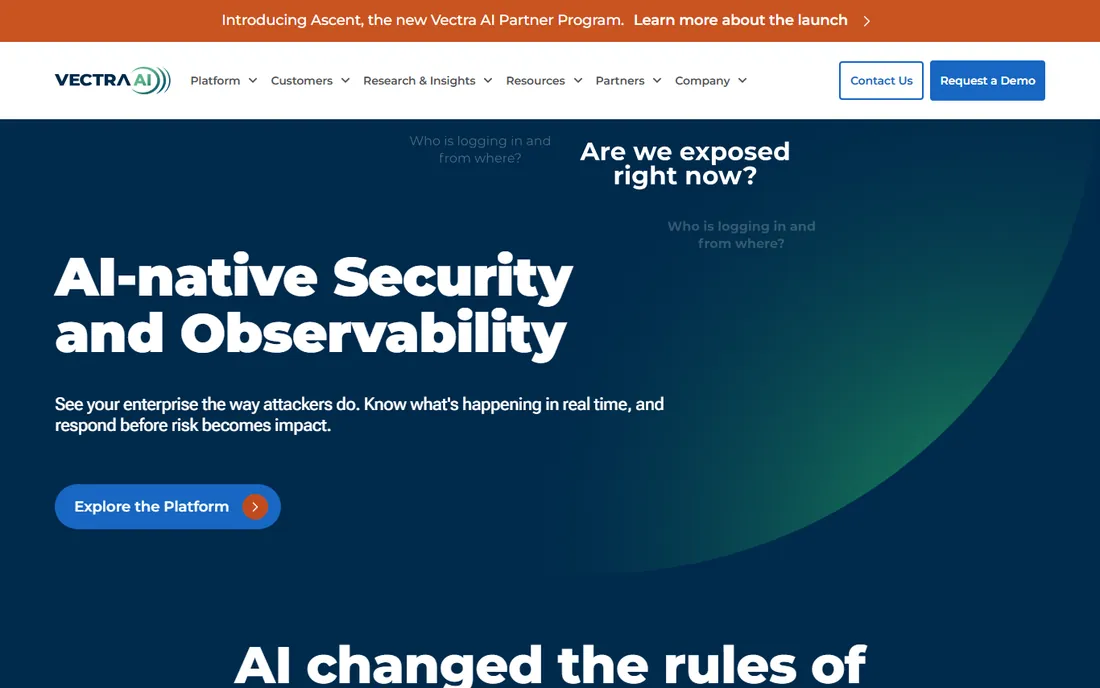
Vectra AI focuses its machine learning on attacker methods rather than anomalies, which is why its alert prioritization gets consistently good marks. The platform covers public cloud, SaaS, identity systems and on-premises networks, connecting the dots between a suspicious login, odd network traffic and a cloud misconfiguration into one attack story.
It was named a Leader in the 2026 Gartner Magic Quadrant for Network Detection and Response for the second consecutive year. The honest limitation is scope: this is network and identity threat detection, not endpoint protection, so most buyers pair it with an EDR platform. Pricing is custom, with users describing it as competitive but not cheap.
What we like- Attack Signal Intelligence prioritizes real attacker behavior
- Strong across cloud, identity, SaaS and network
- Named a Leader in the 2026 Gartner NDR Magic Quadrant
Watch out for- Network-centric, not a full endpoint suite
- Quote-based pricing
- Host-level detection less flexible than some rivals
Starting priceSee website
Free planFree trial
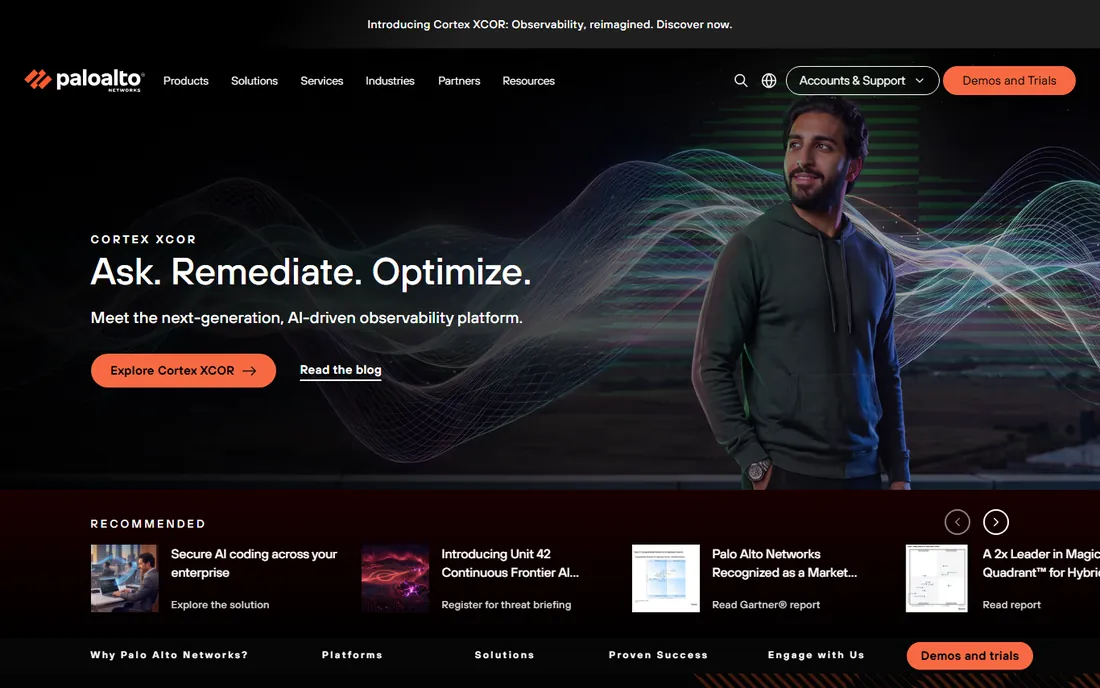
Cortex XDR was one of the products that defined the XDR category. It pulls together endpoint, network firewall, cloud workload and identity data, then applies behavioral analytics to find attacks that span those domains. For organizations already running Palo Alto firewalls, the integration is the argument: telemetry flows in without new agents or connectors.
Outside the Palo Alto ecosystem, the value proposition thins and pricing requires a sales conversation. A 30-day trial and hands-on labs are available on request. If you are standardizing on Palo Alto, Cortex XDR is the natural center of that platform; if not, compare it head-to-head with CrowdStrike or SentinelOne.
What we like- Fuses endpoint, firewall, cloud and identity telemetry
- Strong behavioral analytics
- Deep integration with the Palo Alto ecosystem
Watch out for- Best value inside the Palo Alto stack
- Pricing opaque outside it
- Platform breadth means complexity
#6
Microsoft Defender XDR
Best for: organizations standardized on Microsoft 365
Visit microsoft.com
Starting priceSee website
Free planFree trial (30 days)
Defender XDR correlates signals across endpoints, identity, email and cloud apps into one incident view, which is powerful when your whole estate is Microsoft. For companies already paying for Microsoft 365 E5, much of the capability is effectively included, making it the cheapest serious XDR option available.
The honest catch is the licensing. The security add-on runs about $10.60 per user per month on top of lower-tier plans, and the full experience assumes E5. Outside a Microsoft-centric environment, it loses its main advantage. A 30-day free trial with up to 25 licenses lets Microsoft shops test the real thing before committing.
What we like- Unified across endpoint, identity, email and cloud apps
- Often bundled in existing Microsoft licensing
- Strong AI-assisted investigation
Watch out for- Full value needs E5 licensing
- Weaker outside the Microsoft stack
- Licensing math gets complicated
#7
Sophos Intercept X
Best for: mid-market endpoint protection with AI
Visit sophos.com
Starting price$28 per user/year
Free planFree trial (30 days)
Sophos brings AI endpoint protection down to mid-market budgets. Intercept X uses deep learning to stop unknown malware, CryptoGuard rolls back ransomware-encrypted files automatically, and exploit prevention blocks attack techniques without tuning. At $28 per user per year with a 30-day free evaluation, it is a fraction of CrowdStrike's price.
You get what you pay for in depth: advanced EDR, XDR and managed detection sit on higher tiers, and the console is workmanlike rather than delightful. For companies with a few hundred endpoints and a small IT team, though, Sophos delivers serious protection per dollar.
What we like- Deep-learning malware prevention at a low price
- Strong anti-ransomware with automatic file rollback
- Synchronized security with Sophos firewalls
Watch out for- EDR and XDR features need higher tiers
- Management console less polished than leaders
- Smaller threat-intelligence operation
#8
Elastic Security
Best for: open SIEM and security analytics on your own terms
Visit elastic.co
Starting priceSee website
Free planYes (free tier on Elastic Cloud)
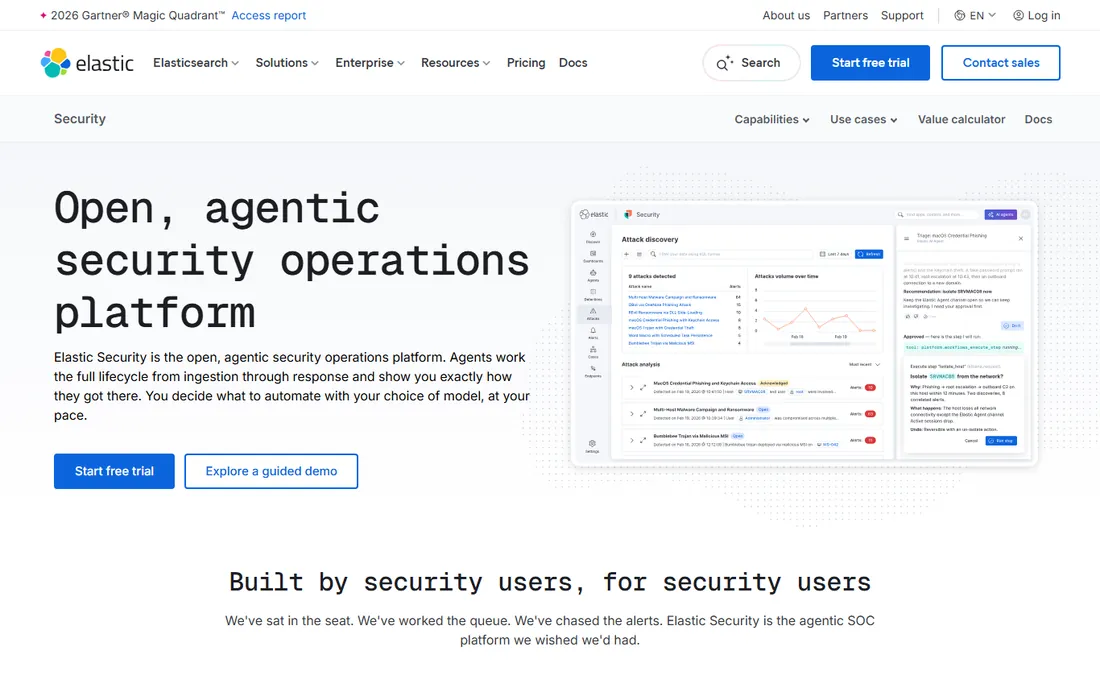
Elastic Security takes the platform approach: SIEM, endpoint protection and cloud security built on Elasticsearch, with the openness that made the Elastic Stack famous. Security teams can write their own detection rules, build custom dashboards and integrate anything with an API. A free tier on Elastic Cloud makes it easy to start.
The tradeoff is operational. Elastic rewards teams with engineering capacity and punishes those without it; this is not a managed service that runs itself. AI-assisted detection exists but is less central than at CrowdStrike or Darktrace. For SOCs that want control and already speak Elasticsearch, it is the flexible, cost-effective choice.
What we like- Open and extensible with a huge community
- Free tier to start
- Combines SIEM, endpoint and cloud security in one data platform
Watch out for- Requires real engineering to run well
- AI features trail the pure-play vendors
- Costs scale with data volume
Starting priceSee website
Free planNo
Abnormal AI, formerly Abnormal Security, protects cloud email by learning normal human communication behavior and flagging what deviates: business email compromise, vendor fraud, account takeover and misdirected mail. Because it deploys via API rather than as a mail gateway, setup takes minutes and there is no change to mail flow.
Email is the initial access vector for most breaches, so a dedicated AI email layer makes sense alongside endpoint and network defenses. The scope is email only, so it complements rather than replaces the other tools on this list, and pricing is quote-based. For organizations tired of phishing slipping past their secure email gateway, Abnormal is purpose-built for the problem.
What we like- Behavioral AI catches BEC and phishing that gateways miss
- API-based deployment in minutes
- Protects Microsoft 365 and Google Workspace
Watch out for- Email-only scope
- Enterprise pricing by quote
- Renamed from Abnormal Security, which confuses some buyers
Start with your actual attack surface, not the vendor's pitch. Endpoint-heavy teams need EDR first; network-centric teams need NDR; Microsoft shops should price Defender XDR against best-of-breed before assuming it wins. Ask every vendor the same three questions: what does the AI detect that rules cannot, how does it respond without a human, and what does the alert volume look like after 90 days?
Then check the operational fit. A platform that needs three dedicated engineers is not a fit for a two-person IT team, no matter how good the AI is. Trial with your own telemetry, measure false positives honestly, and confirm the pricing for your actual device and data volumes before signing.
How we chose
We compared AI-native security platforms across endpoint, network, email and SIEM categories, focusing on products where machine learning drives detection and response rather than marketing. We checked current pricing pages and vendor documentation, read public reviews on G2, Capterra, PeerSpot and Reddit, and weighed detection quality, autonomous response, operational burden and honest fit for small and mid-size companies. No vendor paid for placement, and we did not run hands-on trials.
Where AI actually helps in security
AI earns its keep in three places. Behavioral detection finds novel attacks that signatures miss, which is Darktrace and Vectra's whole pitch. Autonomous response contains threats in seconds when no analyst is watching, the core of SentinelOne and CrowdStrike's value. And investigation assistance, like Purple AI's natural-language hunting, makes junior analysts productive faster. AI does not replace the SOC; it decides which alerts deserve a human and handles the rest at machine speed.
Frequently asked questions
What is the best AI security platform for a small business?
Sophos Intercept X at $28 per user per year or Elastic Security's free tier. Both bring real AI-assisted protection without enterprise pricing. CrowdStrike Falcon Go at $59.99 per device per year is the premium small-business option.
How much does CrowdStrike Falcon cost?
Falcon Go starts at $59.99 per device per year, Falcon Pro at $99.99, and Falcon Enterprise at $184.99. Managed detection (Falcon Complete) and additional modules are custom-priced.
Is Darktrace worth the high price?
For organizations worried about novel, never-seen-before attacks, its self-learning approach catches things signature tools miss. The price is premium and quote-based, so it fits mid-market and enterprise budgets better than small businesses.
Do I need both EDR and NDR?
They cover different ground: EDR watches endpoints, NDR watches network traffic. Many breaches are caught at one layer and missed at the other. Mid-size teams often start with EDR and add NDR when network visibility becomes the gap.
Can AI security tools replace a SOC team?
No. AI reduces alert volume, automates containment and speeds up investigation, but humans still handle strategy, tuning and complex incidents. Think of AI as a force multiplier for a small team, not a replacement for one.
Sources we checked (12)
- https://github.com/ethicalhackingai/awesome-ai-security-tools
- https://www.techdogs.com/td-articles/product-mine/best-security-information-and-event-management-software
- https://www.channelinsider.com/security/best-edr-tools-for-msps/
- https://www.peerspot.com/products/comparisons/crowdstrike-falcon_vs_vectra-ai
- https://www.peerspot.com/products/comparisons/crowdstrike-falcon_vs_darktrace
- https://github.com/ishandutta2007/awesome-extended-detection-n-response
- https://www.crowdstrike.com/en-us/press-releases/crowdstrike-unveils-falcon-guardian-ai-agent-security/
- https://www.morningstar.com/news/business-wire/20261001718321/sentinelone-named-a-leader-in-the-idc-marketscape-for-worldwide-modern-endpoint-security-for-enterprises
- https://www.globenewswire.com/news-release/2025/10/23/3171998/0/en/Darktrace-Brings-Industry-First-Endpoint-Visibility-And-Enhanced-Agentic-AI-To-ActiveAI-Security-Platform-Closing-The-Gaps-In-Cyber-Defenses.html
- https://slashdot.org/software/p/Sophos-Intercept-X-Endpoint/
- https://github.com/majiayu000/claude-skill-registry/blob/HEAD/skills/data/siem-logging/SKILL.md
- https://www.webasha.com/blog/how-ai-is-reinventing-cybersecurity-in-2025-from-smart-threat-detection-to-automated-response-using-tools-like-crowdstrike-and-darktrace
Is your product missing or out of date?
We review this list regularly. Vendors can request a listing, send updated pricing or ask about featured placement.

Shihab Mia · Founder, Rankite
Shihab has spent more than a decade helping SaaS and e-commerce brands grow through search. He writes Rankite's software buying guides from pricing pages, documentation and public user reviews. More about Shihab.