How we make this list: we compare pricing pages, product documentation and public user reviews. Rankite is independent; if a vendor ever pays for a featured spot, that listing is clearly labeled Partner.
Key takeaways
- AiSDR's $250/month Solo plan is the cheapest published entry into a full AI SDR workflow.
- 11x and Artisan target opposite ends of the enterprise market, with 11x publishing a $3,750/month Growth tier and Artisan keeping pricing custom.
- Clay and Lavender are the assistive picks: Clay builds the pipeline data, Lavender coaches the humans writing the emails.
- Amplemarket ($600/month) and HeyReach ($79/month per sender) cover the all-in-one and LinkedIn-first motions respectively.
Quick comparison
| Tool | Best for | Starting price | Free plan |
|---|
 11x 11x | enterprises deploying AI workers instead of SDR headcount | $3,750/month (Growth plan, billed annually) | No |
 Artisan Artisan | brand-safe autonomous prospecting with oversight | See website (custom pricing) | No |
 AiSDR AiSDR | founders and small teams testing AI outbound | $250/month (Solo plan) | No |
 Regie.ai Regie.ai | AI writing and prospecting inside your current stack | Free; Pro $41/month (billed annually) | Yes |
 Clay Clay | the data engine behind any AI SDR motion | $149/month (Starter plan) | Yes (100 credits/month) |
 Lavender Lavender | coaching reps to write better cold emails | $27/month (Starter) | Yes |
 Amplemarket Amplemarket | mid-market teams consolidating their sales stack | $600/month (Startup, billed annually) | No |
 HeyReach HeyReach | LinkedIn-first outbound at agency scale | $79/month (per sender) | Free trial |
Is your product missing or out of date?
We review this list regularly. Vendors can request a listing, send updated pricing or ask about featured placement.
The best AI SDR software
#1
11x
Best for: enterprises deploying AI workers instead of SDR headcount
Visit 11x.ai
Starting price$3,750/month (Growth plan, billed annually)
Free planNo
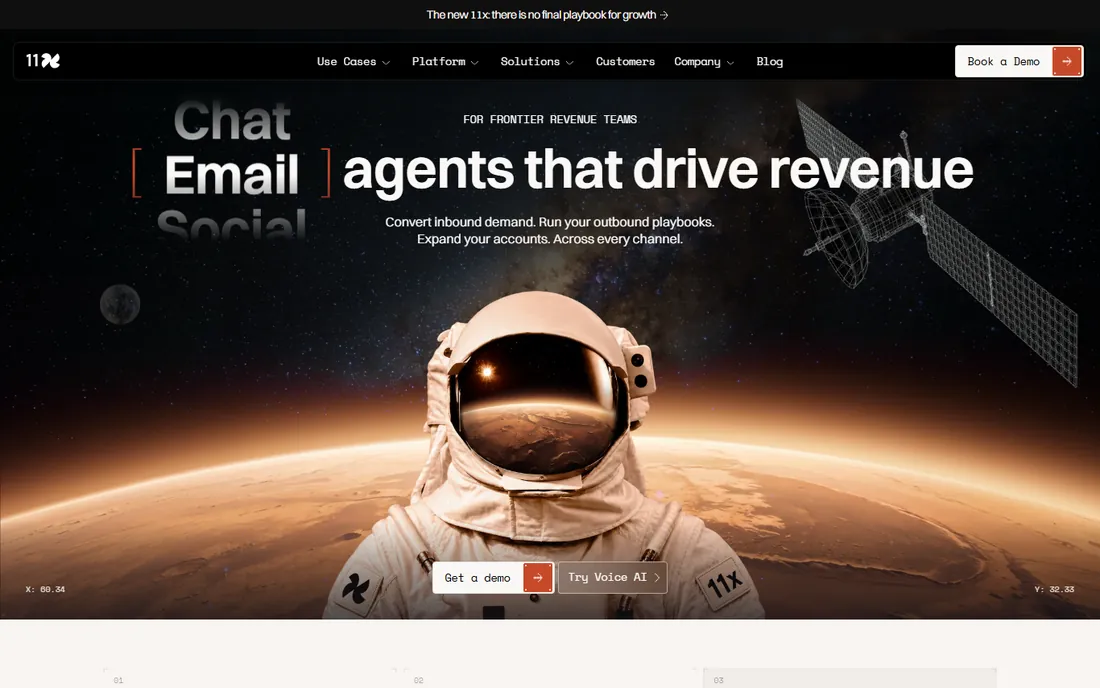
11x does not sell you software seats. It sells Alice and its sibling agents as digital workers that take on SDR responsibilities inside your CRM, with the compliance and reporting that enterprise procurement requires. It is the most ambitious interpretation of the AI SDR idea.
Everything about it assumes scale: annual contracts starting at $3,750 a month, implementation support, and a buying committee. Small teams should not apply. For large revenue organizations, it is the closest available thing to adding SDR capacity without recruiting.
What we like- Digital workers with deep CRM integration
- Enterprise governance and audit trails
- Purpose-built for scale
Watch out for- Very high price floor
- Needs RevOps support to deploy well
#2
Artisan
Best for: brand-safe autonomous prospecting with oversight
Visit artisan.co
Starting priceSee website (custom pricing)
Free planNo
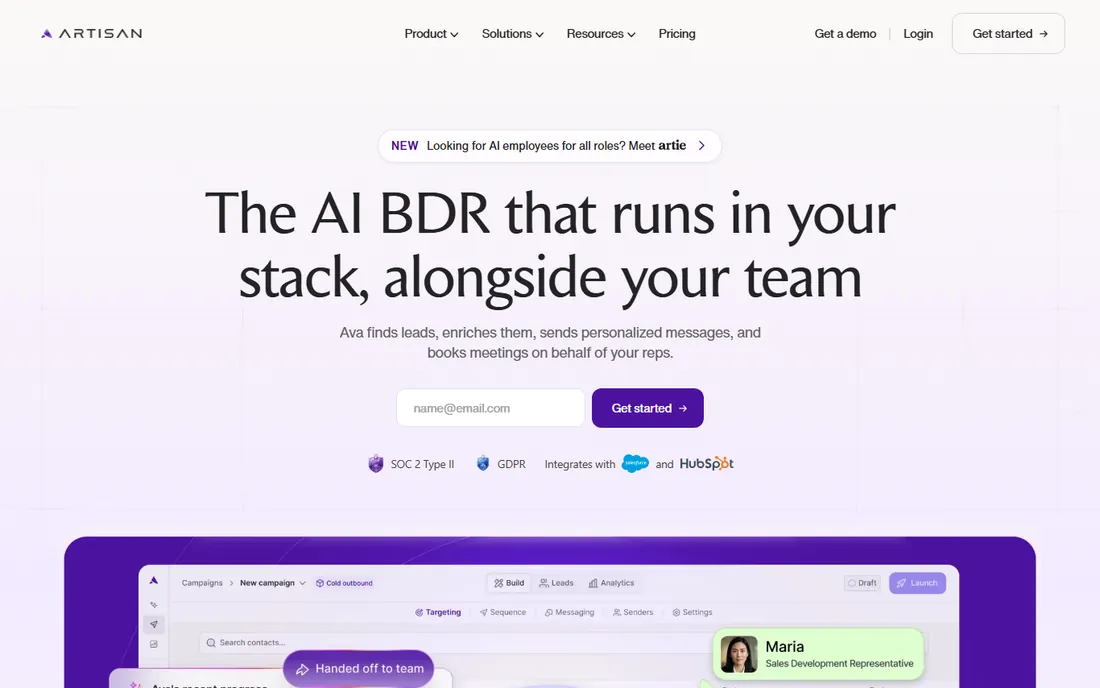
Artisan's Ava acts as a virtual BDR: prospecting, personalizing, sequencing and handling replies, with human specialists available where judgment matters. The positioning emphasizes brand safety, which resonates with companies nervous about AI talking to their market unsupervised.
You will not find prices on the website, so expect a sales process and annual pricing. Teams that want to approve every message will chafe at the autonomy. For companies that want outbound running with light supervision, the managed model is appealing.
What we like- Ava agent owns research, writing and follow-up
- Human BDR support on replies
- Polished onboarding
Watch out for- No published pricing
- Less suited to teams wanting full manual control
#3
AiSDR
Best for: founders and small teams testing AI outbound
Visit aisdr.com
Starting price$250/month (Solo plan)
Free planNo
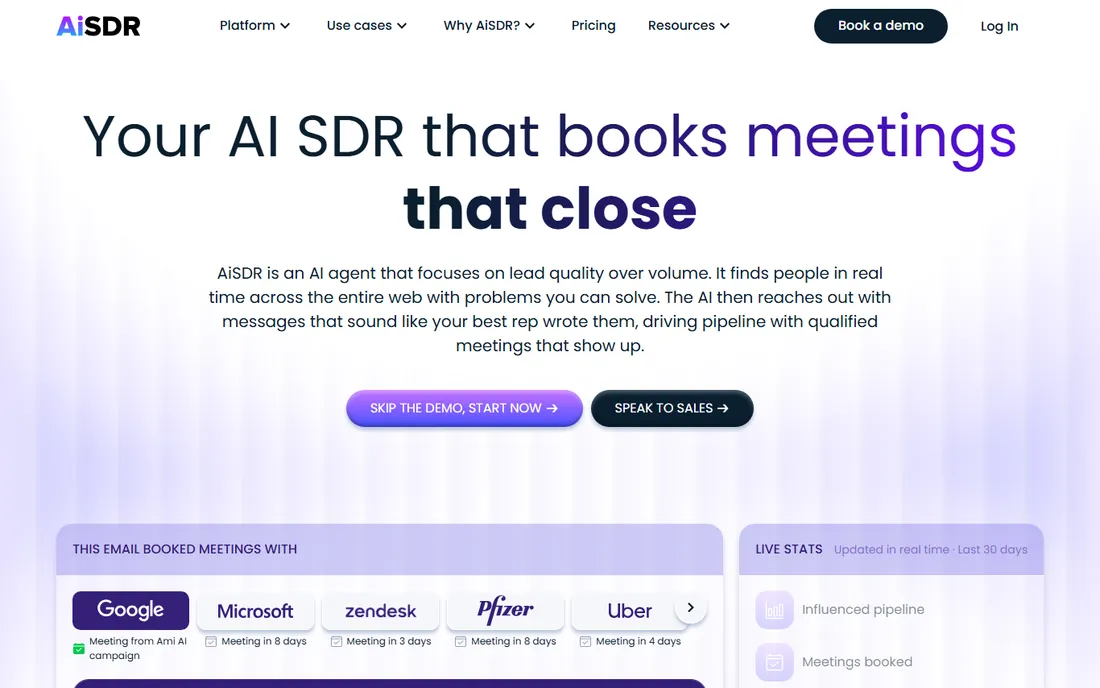
AiSDR's Solo plan is the on-ramp the category was missing: $250 a month for an AI that researches prospects, writes outreach, sends it and handles replies. Campaigns go live in under an hour, which makes it a genuine experiment rather than a project.
Solo covers a limited slice of contacts, domains and mailboxes, so treat it as a pilot. Explore at $900 and Scale at $2,500 open up serious volume. If your ICP is tight and your offer converts, it is the cheapest way to find out whether AI outbound works for you.
What we like- Cheapest published full-workflow entry
- Fast campaign setup
- Research plus sending plus reply handling
Watch out for- Solo tier is capacity-limited
- Upper tiers jump sharply in price
#4
Regie.ai
Best for: AI writing and prospecting inside your current stack
Visit regie.ai
Starting priceFree; Pro $41/month (billed annually)
Free planYes
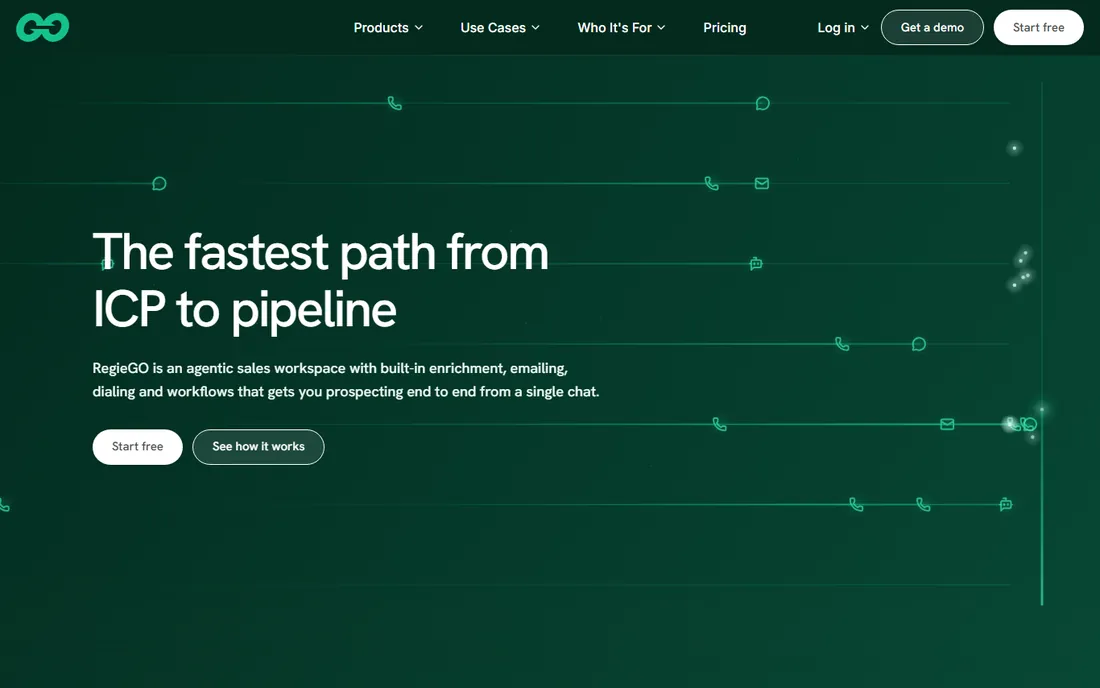
Regie.ai takes the assistive path: instead of replacing your SDRs, it gives them an AI prospecting workspace with agents that research accounts, write sequences and prep calls. The free tier is unusually generous, and Pro at $41 a month is cheap for what it does.
It will not run outbound while you sleep the way AiSDR or 11x promise. Think of it as a productivity boost for human reps rather than a replacement. Teams keeping their SDRs but wanting AI assistance get the most value.
What we like- Generous free tier
- Strong AI sequencing and call prep
- Power dialer included
Watch out for- Less autonomous than pure AI SDRs
- Advanced features need higher tiers
#5
Clay
Best for: the data engine behind any AI SDR motion
Visit clay.com
Starting price$149/month (Starter plan)
Free planYes (100 credits/month)
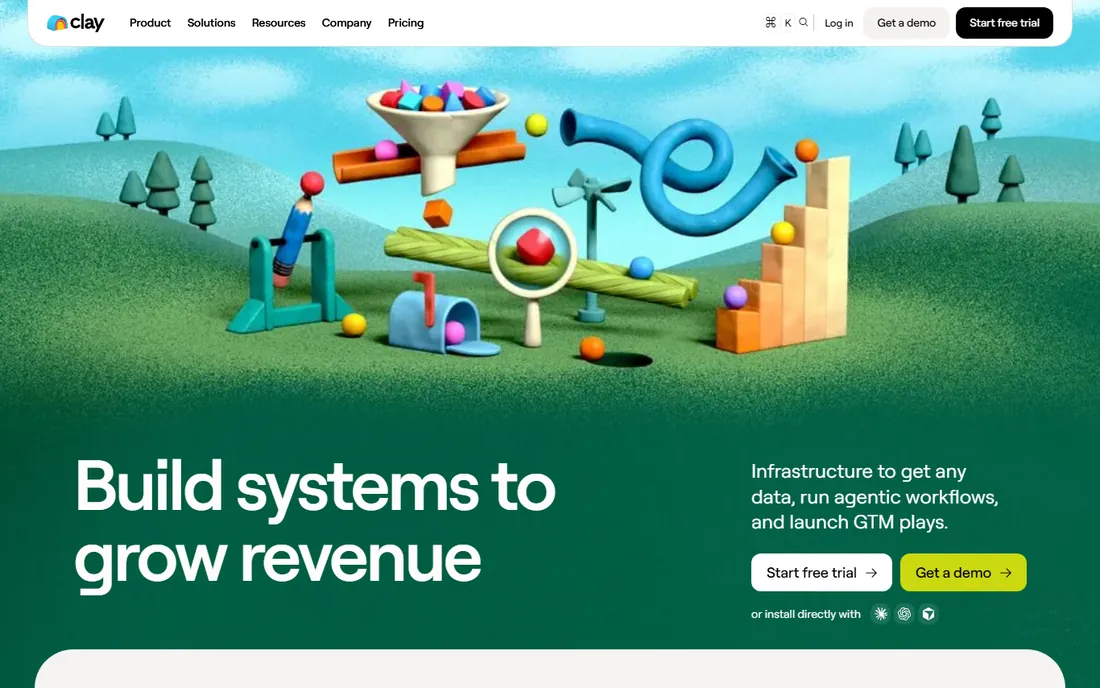
Clay is the odd one out here because it is not an SDR at all. It is the enrichment and workflow layer that feeds every other tool on this list: find accounts, enrich contacts, score leads, trigger outreach. Most serious AI SDR deployments run on Clay data whether they admit it or not.
The $149 Starter plan buys 2,000 monthly credits, which heavy enrichment consumes faster than expected. Pair it with a sending tool and you have a formidable stack. Buy it expecting an SDR and you will be disappointed.
What we like- 200+ data providers in one marketplace
- Visual workflow builder
- Free tier for testing
Watch out for- Credit costs need careful budgeting
- Not an SDR by itself
Starting price$27/month (Starter)
Free planYes
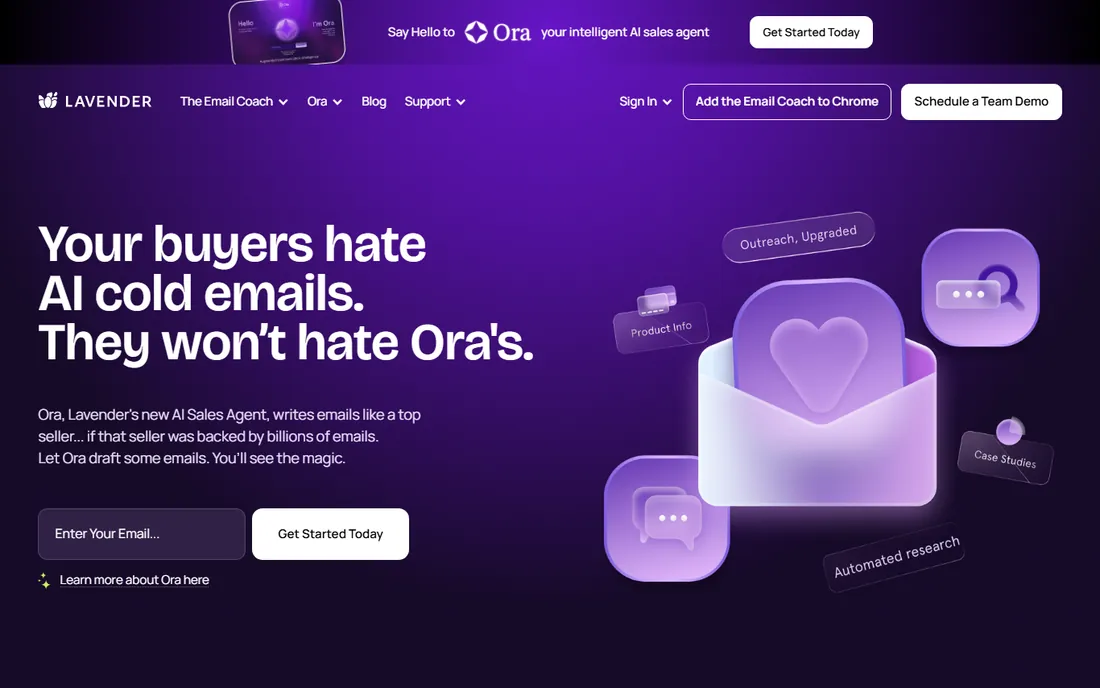
Lavender grades your cold emails as you write them, scoring tone, structure and personalization against data from billions of sent emails. Reps get instant coaching without a manager looking over their shoulder, and managers get analytics on team-wide patterns.
It is firmly in the augmentation camp: nobody gets replaced, emails just get better. The Starter plan at $27 a month is an easy yes for any team still writing outbound manually. Just remember that a high score improves odds; it does not create pipeline from bad targeting.
What we like- Real-time writing feedback inside the inbox
- Free tier to start
- Team coaching analytics
Watch out for- Assists humans rather than automating
- Scores do not guarantee replies
Starting price$600/month (Startup, billed annually)
Free planNo
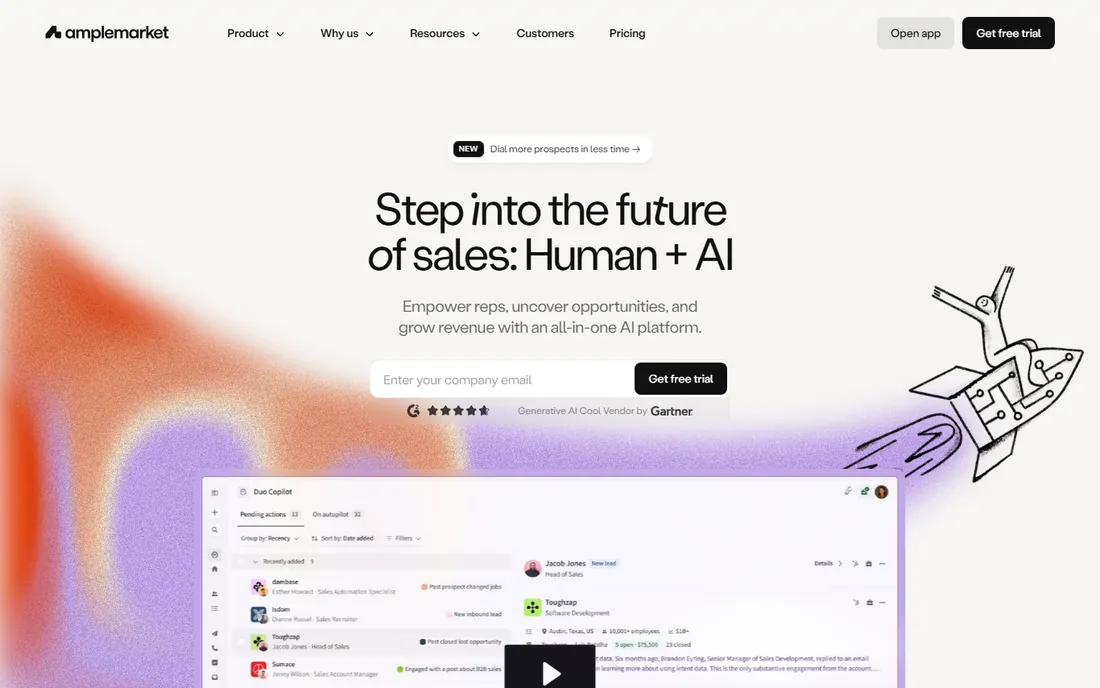
Amplemarket's pitch is consolidation: instead of paying for a sequencer, a data provider, a dialer and LinkedIn automation separately, you pay $600 a month for one platform covering all of it. The Duo AI copilot assists across the workflow, and the built-in contact database reduces bounce rates.
The catch is commitment. Annual contracts only, two users minimum on Startup, and custom pricing above that. It makes economic sense once you are paying for three separate tools; below that threshold, it is a stretch.
What we like- Email, LinkedIn, phone and data in one platform
- Duo AI copilot
- Strong multichannel sequences
Watch out for- Annual contracts only
- Expensive for small teams
Starting price$79/month (per sender)
Free planFree trial
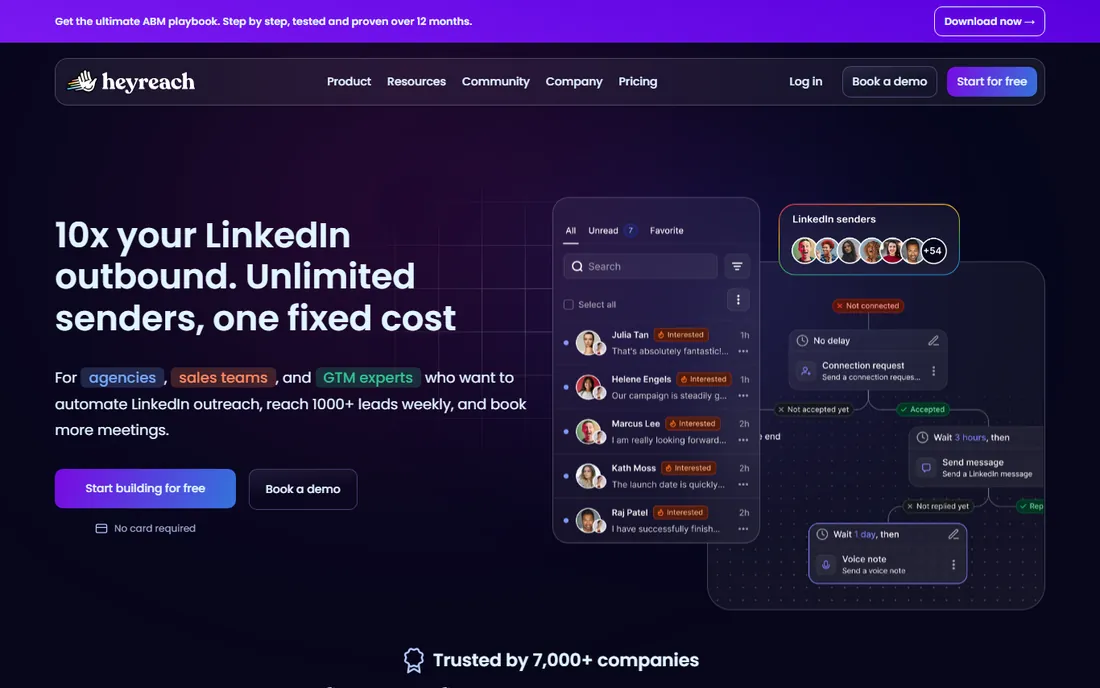
HeyReach does one channel properly: LinkedIn. Connection requests, messages and follow-ups run at scale with per-sender pricing that agencies find predictable. If your buyers live on LinkedIn, a dedicated tool beats a sequencer's LinkedIn afterthought.
Email capabilities exist but are not the strength, and LinkedIn automation always carries account risk, so follow best practices on volume and targeting. For LinkedIn-heavy motions, it is the specialist pick.
What we like- Purpose-built for LinkedIn outreach
- Per-sender pricing scales cleanly
- Agency-friendly
Watch out for- LinkedIn-centric, email is secondary
- Account safety needs care
How we chose
We evaluated vendor pricing pages, documentation and current positioning, cross-checked against practitioner reviews and 2026 AI SDR comparisons. Every tool is an active product with a live homepage as of October 2026. We included both autonomous agents and assistive tools because buyers use "AI SDR" to mean both. Prices are the lowest published tier from each vendor's own pricing page or verified third-party checks; custom-priced tools are marked accordingly.
Autonomous vs assistive: pick your philosophy
The AI SDR market splits in two. Autonomous tools (11x, Artisan, AiSDR) run outreach with minimal human involvement: they research, write, send, follow up and book. Assistive tools (Regie.ai, Clay, Lavender) make human SDRs faster: better data, better writing, better targeting, but a person still sends.
Neither is universally better. Autonomous fits high-volume, transactional outbound where speed beats nuance. Assistive fits complex sales where relationships and judgment matter. Be honest about which motion you run, because buying an autonomous agent for a relationship sale (or a coaching tool for a volume play) wastes the budget either way.
There is also a hybrid path most teams end up on: autonomous for the first touch and follow-ups, humans for replies that show real intent. Tools like Artisan are built for exactly this handoff, with AI handling the top of the funnel and people stepping in when a prospect engages. Whatever you choose, define the handoff rules before launch: which signals trigger human involvement, how fast the response must be, and who owns the conversation after the meeting is booked. The technology works when the process around it is clear.
What to check before you sign
Start with the unit economics. AI SDRs price per contacted lead, per seat, per credit or per month, and the real cost depends on your volume. Model three months of your actual prospect count against the plan limits, and ask what happens when you exceed them.
Then demand a pilot on your data. Vendor case studies show best-case reply rates on ideal ICPs. Your list, your offer and your market will differ. A paid pilot of thirty to sixty days against your own prospects is the only honest evaluation.
Finally, check the governance. Who approves what the AI sends? How are opt-outs handled? Where is conversation data stored? Can you audit every message? The answers matter for compliance and for your brand, and they vary enormously across vendors.
Frequently asked questions
What does an AI SDR actually do?
It automates parts of the sales development job: finding prospects, researching them, writing personalized outreach, sending follow-ups, handling replies and booking meetings. Autonomous tools do most of this alone; assistive tools help human SDRs do it faster.
How much does AI SDR software cost?
From $27 a month for coaching tools like Lavender to $3,750 a month for enterprise agents like 11x. Most autonomous options land between $250 and $900 a month for small teams. Always model total cost at your real volume.
Will an AI SDR replace my SDR team?
For high-volume transactional outbound, it can reduce headcount needs. For complex or enterprise sales, it works better as backup for human SDRs. Most successful deployments keep humans for strategy, relationships and closing.
How long does it take to see results?
Self-serve tools can launch campaigns in days, with meaningful data after 4 to 6 weeks. Enterprise deployments need 6 to 12 weeks of configuration and tuning. Do not judge any AI SDR on its first two weeks.
Do AI SDRs work for small businesses?
Yes, and the economics favor them: AiSDR Solo at $250 a month costs less than a part-time SDR. The keys are a clear ICP and a proven offer. AI amplifies what works; it does not fix a broken value proposition.
What are the risks of AI outbound?
Burned domains from over-sending, off-brand messaging, compliance violations and prospect backlash against obvious automation. Mitigate with warmup, volume limits, human review of messaging and strict opt-out handling.
Should the AI send from my main domain?
No. Use secondary domains and dedicated mailboxes for cold outbound, keeping your primary domain's reputation clean. If a sending domain gets burned, you retire it without affecting your main brand's email.
Sources we checked (13)
- https://www.11x.ai
- https://artisan.co
- https://aisdr.com
- https://regie.ai
- https://clay.com
- https://lavender.ai
- https://amplemarket.com
- https://heyreach.io
- https://www.spotsaas.com/blog/ai-sdr-tools
- https://www.therundown.ai/tools/lavender
- https://omidsaffari.com/blog/amplemarket-pricing
- https://gravity.fast/blog/linkedin-ai-agent/
- https://bosr.ai/blog/best-ai-sdr-tools-for-smbs
Is your product missing or out of date?
We review this list regularly. Vendors can request a listing, send updated pricing or ask about featured placement.

Shihab Mia · Founder, Rankite
Shihab has spent more than a decade helping SaaS and e-commerce brands grow through search. He writes Rankite's software buying guides from pricing pages, documentation and public user reviews. More about Shihab.