How we make this list: we compare pricing pages, product documentation and public user reviews. Ratings come from G2, Capterra or Trustpilot, with the date we checked them.
Key takeaways
- Sudowrite is the best AI-first tool for fiction writers, with brainstorming, description and revision features built for novels.
- Novelcrafter suits writers who plan carefully, with codex tracking, plotting and AI assistance in one workspace.
- Squibler is the easiest start for new authors who want AI drafting plus goal tracking.
- Atticus is the best choice for finishing and formatting a finished manuscript for publishing.
- AI tools draft and suggest, but the author still owns structure, voice and final edits, so treat output as a first draft, not a finished book.
Writing a book is a long project, and AI tools help most with momentum: beating the blank page, drafting a scene, brainstorming a plot turn, or tightening a paragraph. The tools below cover the full arc from planning to formatting, and several are built specifically for fiction. None of them writes a publishable book alone, and the best results come when the author directs every step.
Pricing is usually monthly, with tiers for word limits or features. Prices below are marked "See website" where tiers and AI credit systems change often. Most tools offer a trial or a free tier, so test the AI voice on your own chapter before paying.
Quick comparison
| Tool | Best for | Starting price | Free plan |
|---|
 Sudowrite | AI-assisted fiction | See website | Free trial |
 Novelcrafter | Planning and codex | See website | Free trial |
 Squibler | Beginner-friendly drafting | See website | Free trial |
 Atticus | Formatting and publishing | See website | No |
 Plottr | Outlining and timelines | See website | Free trial |
 Campfire | Worldbuilding | See website | Yes |
 ProWritingAid | Editing and style | See website | Yes |
 Jasper | General AI drafting | See website | Free trial |
Is your product missing or out of date?
We review this list regularly. Vendors can request a listing, send updated pricing or ask about featured placement.
The best AI book writing software
Starting priceSee website
Free planFree trial
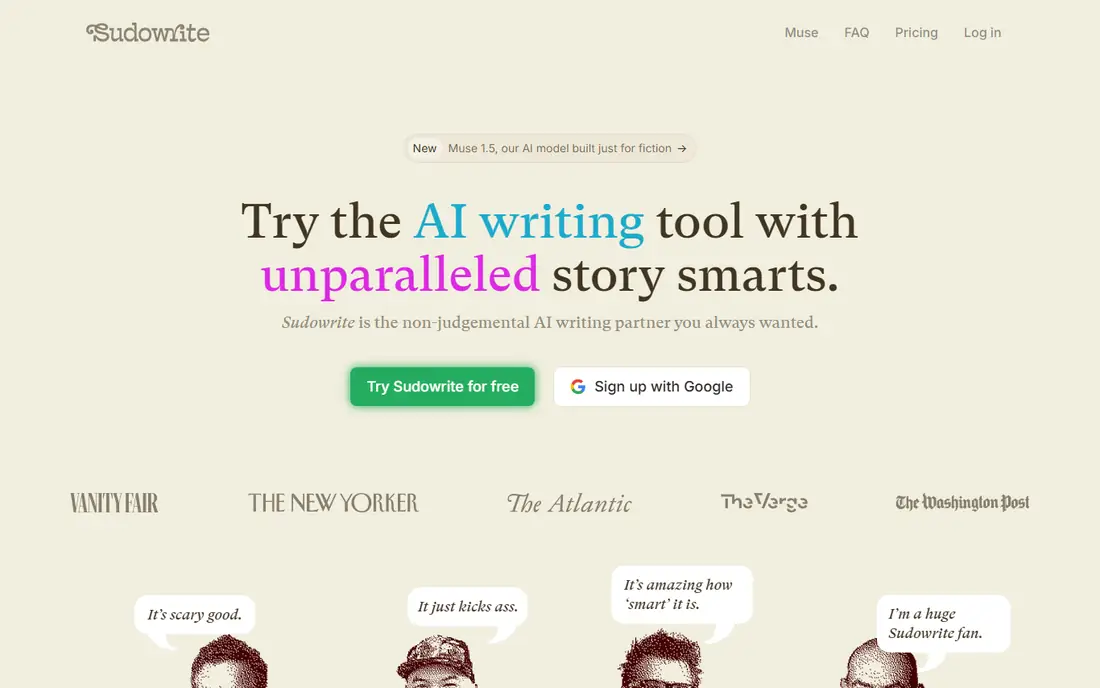
Sudowrite is the AI writing tool most fiction writers name first. Its features are built around novel writing: Describe enriches a scene with sensory detail, Brainstorm generates plot ideas and character options, Twist suggests turns when a story stalls, and Write continues a passage in your style. The interface keeps chapters organised, and the AI learns from your prose as you go.
The output is a draft, not a finished scene. Voice drift happens over long passages, and heavy users hit credit limits on lower tiers. For a novelist who wants an AI partner for drafting and unblocking, Sudowrite is the most fiction-native tool here.
What we like- Fiction-focused AI features like Describe, Brainstorm and Twist
- Strong prose generation
- Built for novelists
Watch out for- Subscription cost adds up
- Output needs editing to match your voice
Starting priceSee website
Free planFree trial
Novelcrafter is a planning-first writing workspace with AI built in. The codex stores characters, locations, items and lore, so the AI assistant can answer questions and draft scenes that respect your story bible. Planning boards, timelines and chapter organisation suit writers who outline before drafting, especially for series with large casts.
The system takes time to learn, and the most useful AI features sit on paid tiers. For a fantasy or science fiction author juggling a big world, Novelcrafter's codex plus AI is the strongest combination in this guide.
What we like- Codex tracks characters, places and lore
- Planning boards and timelines
- AI chat aware of your story bible
Watch out for- Learning curve for the full system
- AI features sit on higher tiers
Starting priceSee website
Free planFree trial
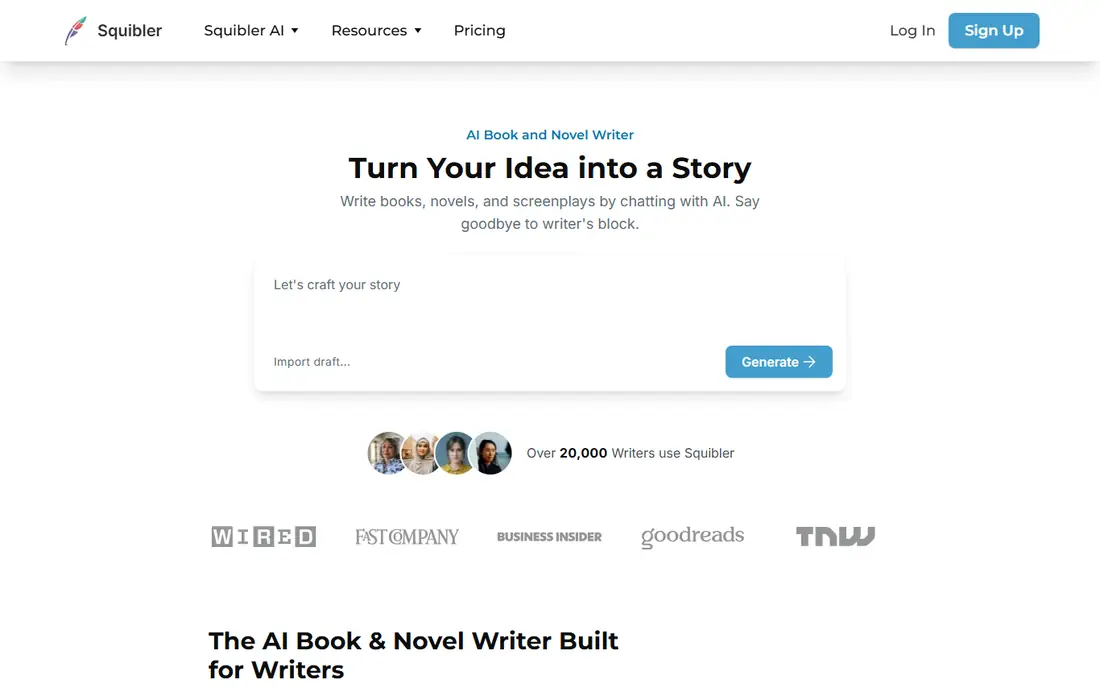
Squibler is the easiest entry point for a new author. The editor is clean, AI drafting helps expand scenes and beat blocks, and goal tracking shows daily word counts against a deadline. Templates cover novels, screenplays and nonfiction, so a first-time author does not start from a blank page.
The AI is less specialised for fiction than Sudowrite, and planning tools are lighter than Novelcrafter. For a writer starting a first book who wants gentle AI help and motivation built in, Squibler is the friendliest choice.
What we like- Simple editor with AI drafting help
- Goal tracking and progress stats
- Templates for novels and screenplays
Watch out for- AI depth is thinner than Sudowrite
- Fewer advanced planning tools
#4Atticus
Best for: Formatting and publishing3.0/5 on
G2 (2 reviews, checked Oct 2026)
Visit atticus.io
Starting priceSee website
Free planNo
Atticus is the finishing tool. Authors write in its editor, then format the same manuscript for print and ebook with professional themes, chapter headings and front matter, without hiring a formatter. Previews show exactly how the book will look, and exports cover the major publishing platforms. The one-time purchase model appeals to authors tired of subscriptions.
Atticus is not an AI drafting tool. Its AI assistance is limited compared with Sudowrite or Novelcrafter, so it pairs best with a drafting tool rather than replacing one. For an author ready to publish, Atticus turns a manuscript into a book that looks professional.
What we like- Writing plus professional print and ebook formatting
- One-time purchase
- Chapter themes and previews
Watch out for- AI features are limited
- Formatting focus means less drafting help
#5Plottr
Best for: Outlining and timelines4.8/5 on
G2 (2 reviews, checked Oct 2026)
Visit plottr.com
Starting priceSee website
Free planFree trial
Plottr is the outlining specialist. Visual timelines show plotlines, character arcs and story beats side by side, with templates for structures like the Hero's Journey and Save the Cat. The desktop apps work offline, and exports carry the outline into writing tools. Writers who plan visually find it faster than a spreadsheet or a wall of index cards.
Plottr does not draft prose with AI, so it belongs in a workflow alongside Sudowrite or a word processor. For a plotter who wants the story mapped before chapter one, Plottr is the clearest outlining tool here.
What we like- Visual timeline and outline boards
- Templates for common story structures
- Offline desktop apps
Watch out for- Not an AI drafting tool
- Plotting focus means drafting happens elsewhere
Starting priceSee website
Free planYes
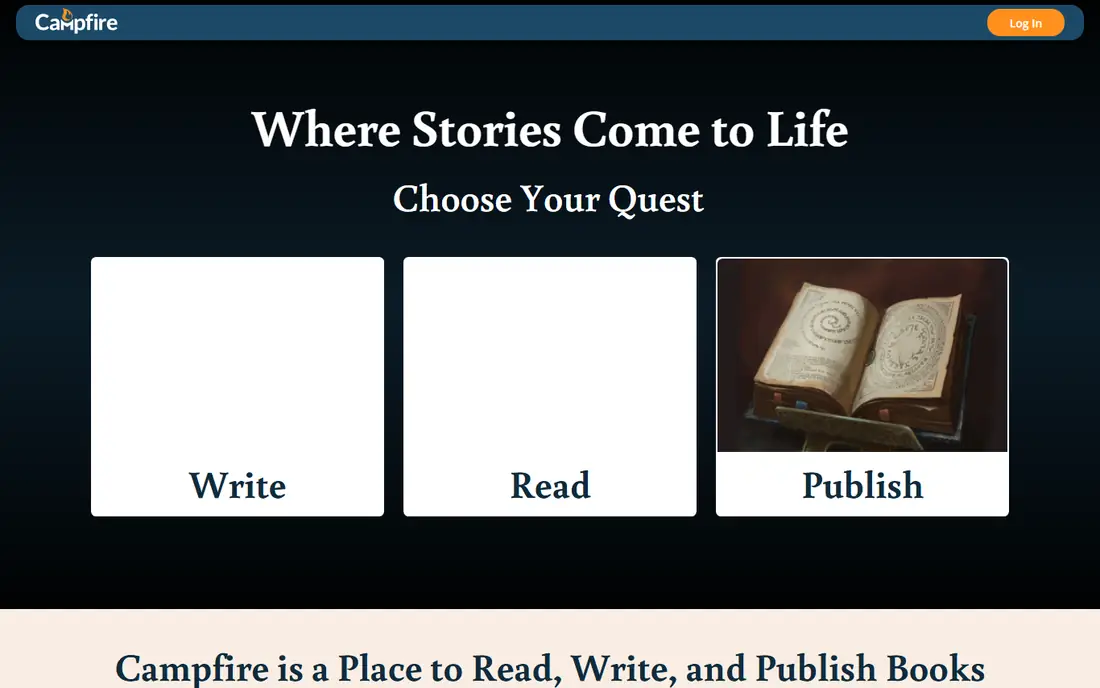
Campfire is built for worldbuilders. Modules cover characters, locations, magic systems, timelines, religions and more, with links between entries so a world stays consistent. Manuscript tools let authors draft in the same workspace, and a free tier lets new users explore before paying. Fantasy and science fiction writers with complex settings get the most from it.
The breadth can overwhelm a contemporary novel that needs little worldbuilding, and AI drafting is newer and thinner than Sudowrite's. For a big invented world, Campfire keeps lore organised in a way no general writing app matches.
What we like- Deep worldbuilding modules for characters, places and magic systems
- Manuscript tools included
- Free tier to start
Watch out for- Breadth can overwhelm simple projects
- AI features are newer and thinner
Starting priceSee website
Free planYes
ProWritingAid is the editing pass after AI drafting. Reports cover style, overused words, sentence variety, pacing, dialogue tags and readability, with explanations that teach as they correct. Integrations with Word, Google Docs and Scrivener mean it fits most workflows, and the free tier covers basic checks.
It does not draft new prose, so it complements rather than replaces a writing tool. New writers can find the volume of reports daunting, so start with one or two reports per chapter. For polishing an AI-assisted draft into publishable prose, ProWritingAid is the most thorough editor here.
What we like- Deep style, grammar and readability reports
- Integrations with Word, Docs and Scrivener
- Useful for AI-assisted drafts
Watch out for- Not a drafting tool
- Reports can overwhelm new writers
Starting priceSee website
Free planFree trial
Jasper is a general AI writing platform that adapts well to nonfiction books, memoirs and business books. Templates cover outlines, chapters and introductions, and brand voice controls keep tone consistent across a long manuscript. The AI writes fluently and handles research-heavy nonfiction drafting better than fiction-first tools.
For novels, Jasper lacks the codex, plotting and fiction-specific features of Sudowrite and Novelcrafter, and long manuscripts need manual organisation. For a nonfiction author who wants fast, clean drafting help, Jasper is the most capable general tool here.
What we like- Strong general AI writing for nonfiction and marketing
- Templates for outlines and chapters
- Brand voice controls
Watch out for- Not fiction-specialised
- Book-length organisation is weaker than novel tools
How we chose
We compared tools on their published features, pricing pages, documentation and public reviews from authors. We favoured tools built for book-length work, with AI drafting or planning features that fit fiction or nonfiction, and a clear path from draft to finished manuscript. Prices were marked "See website" because tiers and AI credit systems change often. We did not claim hands-on testing.
Using AI without losing your voice
AI output works best as raw material. Draft a scene with AI help, then rewrite it in your own voice, checking that characters act consistently and the prose sounds like you. Readers notice when a chapter shifts voice mid-book, and editors notice faster. Keep a style sheet of your character voices, key phrases and rules, and compare AI output against it.
Also check facts and continuity. AI tools invent plausible details, from street names to historical dates, and those errors survive into print if unchecked. For nonfiction, verify every claim against a source. For fiction, check that invented details match your codex. The author remains responsible for every word, whether typed or generated.
AI writing tools work best inside a clear writing routine. Many authors draft a chapter outline first, then use the AI tool to expand one scene at a time, editing each output before moving on, which keeps the author's voice in control and the plot consistent. Keeping a story bible with character traits, timelines and world rules helps too, since pasting that context into prompts reduces contradictions across chapters. Authors who treat AI output as a first draft to rewrite, rather than finished prose to publish, get stronger books and avoid the flat, repetitive style that unedited AI text often carries. Set a daily word target for your own edited words, not AI-generated words, so progress measures your book rather than the tool's output.
Frequently asked questions
Can AI write a whole book for me?
AI can draft chapters, brainstorm plots and polish prose, but a publishable book still needs an author for structure, voice, consistency and final edits. Tools like Sudowrite and Novelcrafter speed drafting, yet the best results come when the author directs and rewrites. Treat AI output as a first draft.
What is the best AI tool for writing a novel?
Sudowrite is the best AI-first tool for novels, with fiction-focused features for description, brainstorming and plot twists. Novelcrafter suits writers who plan heavily, with a codex that keeps characters and lore consistent. Try both trials with your own chapter before choosing.
Is Sudowrite better than Novelcrafter?
They serve different writers. Sudowrite leads on AI drafting quality for fiction, while Novelcrafter leads on planning, codex tracking and story organisation. Many novelists use Novelcrafter to plan and Sudowrite to draft, so the pair covers both stages.
Can I publish a book written with AI tools?
Yes, most self-publishing platforms accept AI-assisted books, but disclosure rules and copyright treatment vary by platform and jurisdiction, and they change often. Check your chosen platform's current policy before publishing, and keep records of your creative direction and edits.
How much does AI book writing software cost?
Most tools charge monthly, with tiers for AI credits or features, and prices change often. Expect entry tiers in the low tens of dollars per month, with higher tiers for heavy use. Atticus uses a one-time purchase instead. Check each vendor's pricing page for current figures.
Do I still need an editor if I use AI?
Yes. AI drafts contain voice drift, invented details and pacing problems that a human editor catches. ProWritingAid helps with style and grammar, but a developmental or copy editor still adds value for a book you plan to sell. AI shortens the editing process rather than replacing it.
Sources we checked (8)
- https://www.sudowrite.com
- https://www.novelcrafter.com
- https://www.squibler.io
- https://www.atticus.io
- https://www.plottr.com
- https://www.campfirewriting.com
- https://prowritingaid.com
- https://www.jasper.ai
Is your product missing or out of date?
We review this list regularly. Vendors can request a listing, send updated pricing or ask about featured placement.

Shihab Mia · Founder, Rankite
Shihab has 5+ years in B2B and SaaS SEO. He writes Rankite's software buying guides from pricing pages, documentation and public user reviews. More about Shihab.