How we make this list: we compare pricing pages, product documentation and public user reviews. Rankite is independent; if a vendor ever pays for a featured spot, that listing is clearly labeled Partner.
Key takeaways
- Ramp's free tier ($0) covers bill pay, cards and expenses, which makes it the obvious starting point for startups that want AP automation without a software bill.
- BILL ($49/user/month) remains the dedicated AP workflow leader for small to midsize businesses with real invoice volume and accounting sync needs.
- Tipalti ($99/month plus transaction fees) is built for global mass payouts with tax compliance, not for small domestic AP teams.
- Most midmarket AP tools (Stampli, AvidXchange, Corpay One, Zip) are quote-based: expect a sales process and implementation project, not self-serve pricing.
Quick comparison
| Tool | Best for | Starting price | Free plan |
|---|
 BILL BILL | SMBs with real AP volume and structured approvals | $49/user/month (Essentials); Team $65; Corporate $89 | No (Spend & Expense product is free; AP has no free tier) |
 Ramp Ramp | Startups and SMBs wanting AP without a software fee | $0 (Free tier); Plus $15/user/month | Yes (Free tier with bill pay, cards and expenses) |
 Tipalti Tipalti | Companies paying many vendors or contractors globally | $99/month (US, unlimited users; plus transaction fees) | No (no free tier; transaction fees apply on top) |
 Stampli Stampli | Midmarket AP teams with high invoice volume and many approvers | See website (quote-based; flat monthly by invoice volume) | No (no free plan; unlimited users on paid plans) |
 Melio Melio | Very small businesses paying a handful of vendors | See website (tiers reported by third parties but unverified on vendor page) | No (free tier reported by third parties, unverified on vendor page) |
 Paylocity for Finance Paylocity for Finance | Midsize companies unifying AP, cards and expenses | See website (quote-based; no public pricing) | No (no free tier or trial confirmed) |
 AvidXchange AvidXchange | Midmarket companies digitizing paper-heavy AP | See website (quote-based; no public pricing) | No (no free trial confirmed) |
 Corpay One Corpay One | Midmarket finance teams on major ERPs | See website (no current pricing published) | No (no free tier confirmed) |
 Zip Zip | Companies wanting purchasing controls upstream of AP | See website (quote-based; contact sales) | No (no free tier confirmed) |
Is your product missing or out of date?
We review this list regularly. Vendors can request a listing, send updated pricing or ask about featured placement.
The best accounts payable software
It is the 28th of the month. Forty invoices are sitting in a shared inbox, three approvers are on vacation, nobody knows which ones are duplicates, and the controller is reconciling it all in a spreadsheet at 9 p.m. Accounts payable software exists to end that scene: capture the invoice, route the approval, pay the vendor, sync the books. These nine AP automation tools cover the range from free startup tools to enterprise payables platforms.
#1
BILL
Best for: SMBs with real AP volume and structured approvals
Visit bill.com
Starting price$49/user/month (Essentials); Team $65; Corporate $89
Free planNo (Spend & Expense product is free; AP has no free tier)
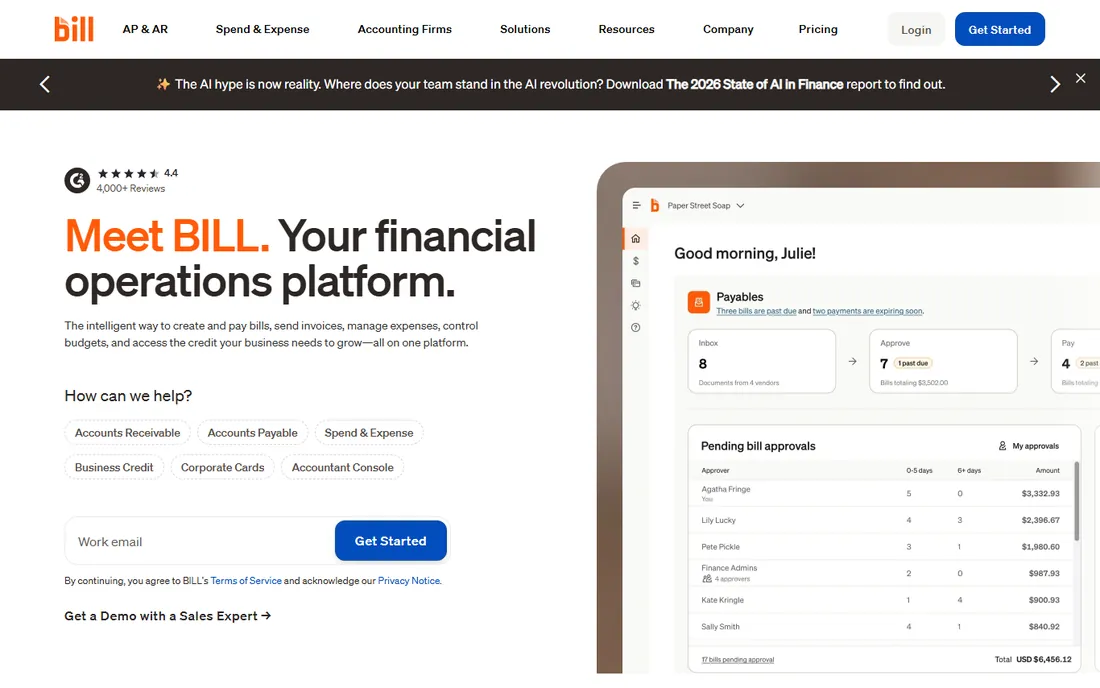
BILL is the dedicated AP specialist. Invoice capture, approval routing and payments run in one system built specifically for payables, with accounting sync to QuickBooks, NetSuite, Xero and Sage that keeps the books current without re-entry. ACH, check, wire and card payments all go out from one dashboard, which matters when vendors want to be paid five different ways.
The price is per user, and finance teams grow. Essentials at $49 per user per month is the floor; Team and Corporate add controls at $65 and $89. A 10-person finance team pays real money before any transaction costs. The interface also shows its age next to Ramp. But for a small to midsize business with genuine AP volume that needs structured approvals and clean accounting sync, BILL remains the reference implementation.
What we like- Dedicated AP workflow from invoice capture through payment and reconciliation
- Strong accounting integrations (QuickBooks, NetSuite, Xero, Sage)
- ACH, check, wire and card payments from one dashboard
Watch out for- Per-user pricing adds up fast as finance teams grow
- Interface feels dated next to newer rivals like Ramp
#2
Ramp
Best for: Startups and SMBs wanting AP without a software fee
Visit ramp.com
Starting price$0 (Free tier); Plus $15/user/month
Free planYes (Free tier with bill pay, cards and expenses)
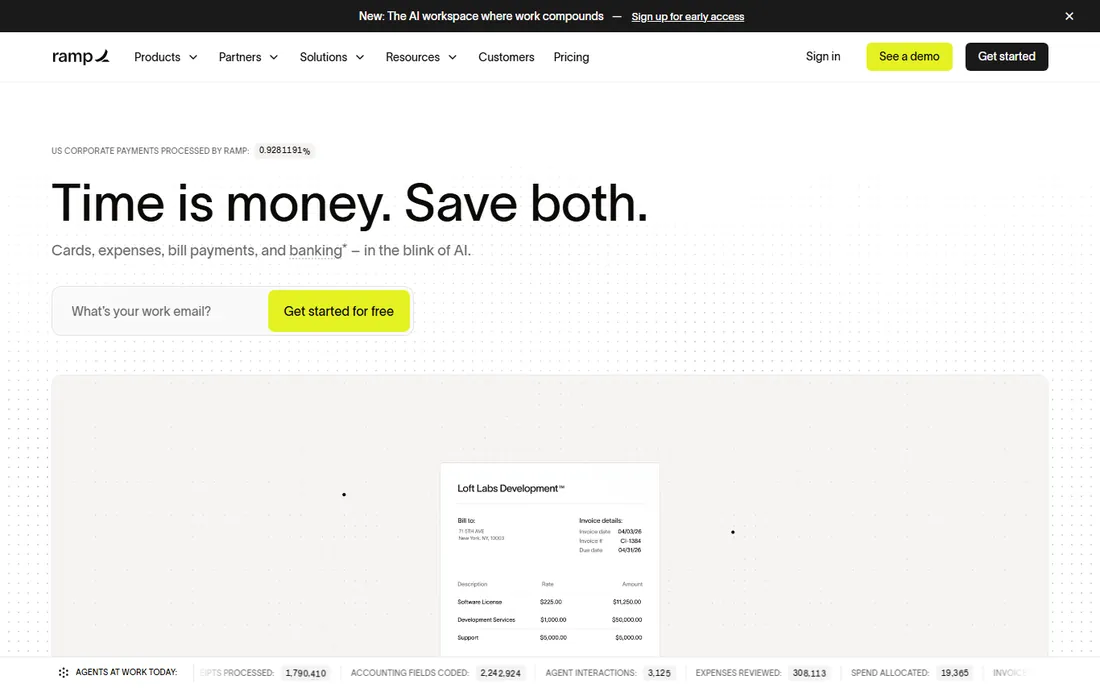
Ramp's free tier is the most disruptive pricing in AP: bill pay, corporate cards and expense management for $0, with the Plus plan at $15 per user per month adding advanced controls. For a startup that wants AP automation without a software line item, there is no reason to start anywhere else. Setup takes days, with accounting sync for QuickBooks, NetSuite and Xero.
Ramp is a card-first company, so heavy AP-only buyers should confirm the invoice approval workflow matches their process before committing the whole payables operation to it. The free tier's support is thinner than paid, and multi-entity complexity belongs on Plus or Enterprise. But the bundled model, bill pay plus cards plus expenses on one platform, is genuinely hard to beat at the price.
What we like- Genuinely free tier with bill pay, corporate cards and expense management
- AP automation bundled with accounting automation
- Fast setup with strong modern accounting integrations
Watch out for- The platform pushes toward the full Ramp ecosystem (cards, travel)
- Advanced AP controls and multi-entity features sit behind paid tiers
#3
Tipalti
Best for: Companies paying many vendors or contractors globally
Visit tipalti.com
Starting price$99/month (US, unlimited users; plus transaction fees)
Free planNo (no free tier; transaction fees apply on top)
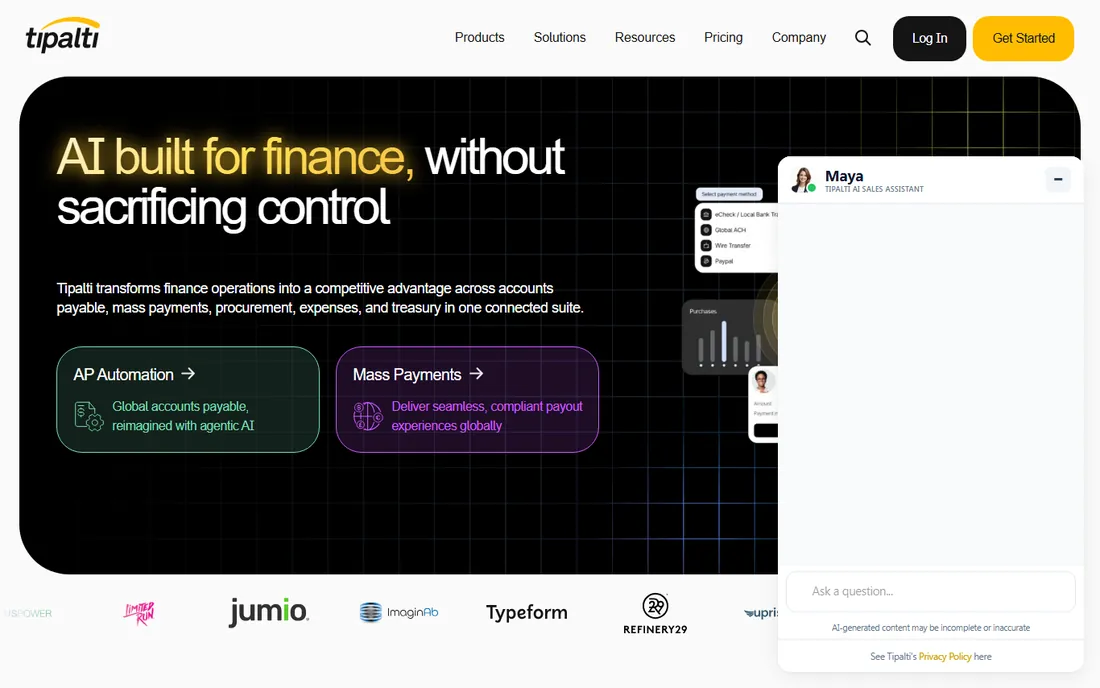
Tipalti is the payables platform for businesses that pay the world: vendors, contractors, creators and partners across borders, with tax document collection and regulatory compliance handled in-platform. Unlimited users on the entry plan means the whole finance team and every approver can work in it without per-seat math. Multi-entity and multi-currency support covers international operations natively.
Do not buy it for a domestic AP workflow. The $99 a month base plus per-transaction fees, with implementation measured in weeks, is overkill for a team paying 30 US vendors. This is mass-payouts software with tax compliance as the core competency. If your payables cross borders or involve hundreds of payees, it earns the price. If not, BILL or Ramp does the job for less.
What we like- Built for global mass payouts with W-8/W-9 and 1099 tax compliance baked in
- Unlimited users on the entry plan, priced by transaction volume
- Strong multi-entity and multi-currency support
Watch out for- Entry pricing plus transaction fees make it overkill for small domestic AP teams
- Implementation is heavier than SMB tools
#4
Stampli
Best for: Midmarket AP teams with high invoice volume and many approvers
Visit stampli.com
Starting priceSee website (quote-based; flat monthly by invoice volume)
Free planNo (no free plan; unlimited users on paid plans)
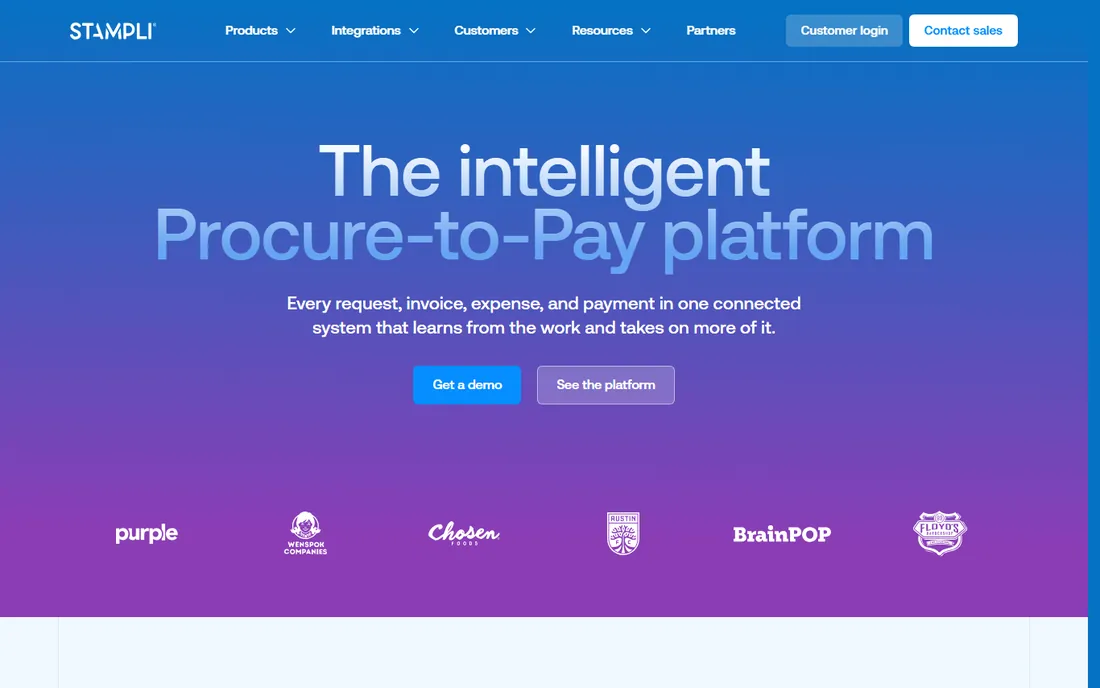
Stampli rethought the worst part of AP: the approval chase. Instead of email threads, invoice questions and approvals live with the invoice in a communication-style interface, so the "did anyone approve this" problem disappears. Pricing by invoice volume with unlimited users means adding approvers costs nothing, which suits organizations where half the company touches an invoice.
The trade is opacity and payments. Pricing is quote-based with no public numbers, so you cannot benchmark without a sales conversation, and payment execution is thinner than Tipalti or BILL. Implementation runs a few weeks with ERP integration and approval routing configuration. For midmarket teams drowning in invoice volume with sprawling approver lists, the approval experience is the reason to evaluate it.
What we like- AI-powered invoice capture with a communication-style approval interface
- Unlimited users, priced by invoice volume, so approvals do not cost per seat
- 70-plus ERP and accounting integrations
Watch out for- Quote-based pricing makes budget planning hard
- Payment execution is thinner than dedicated payables platforms
Starting priceSee website (tiers reported by third parties but unverified on vendor page)
Free planNo (free tier reported by third parties, unverified on vendor page)
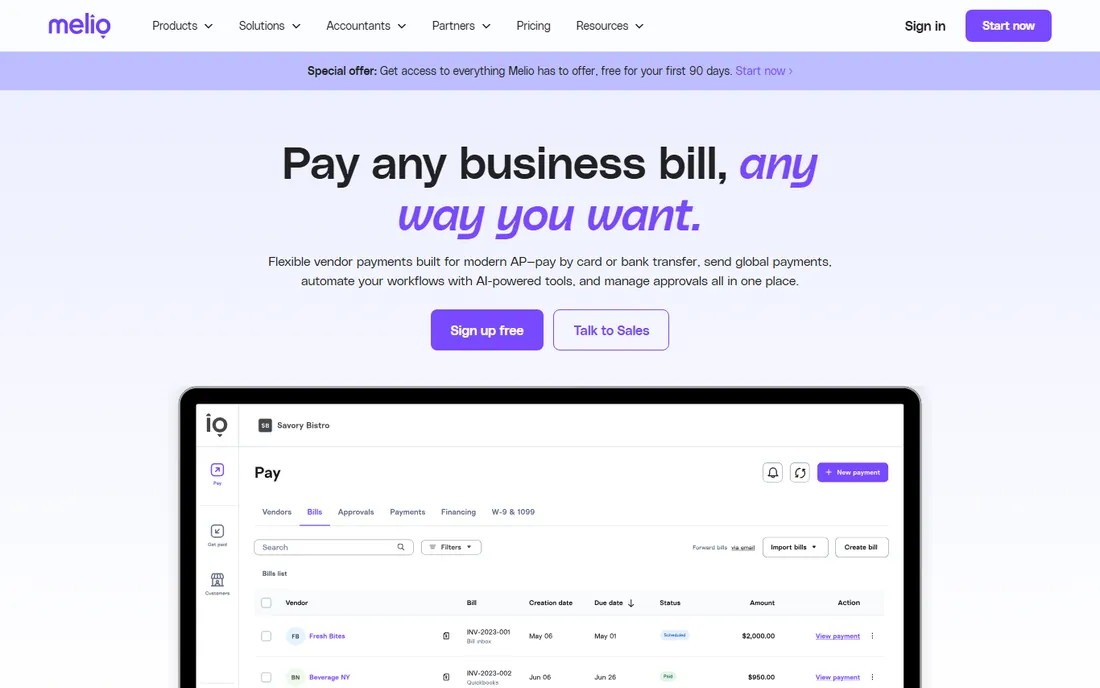
Melio's appeal, per third-party reports, is the low end: a free entry plan for businesses paying a few vendors a month, and the flexibility to pay by card or ACH while the vendor receives a check or bank transfer, which smooths cash flow. QuickBooks and Xero sync keeps the books straight, with approval workflows on paid tiers.
The honest problem is verification. None of Melio's pricing figures could be confirmed on its own pricing page during research, so every number in this section is third-party reported and the article lists "See website" for the price. Confirm current plans and the per-transaction fees (card payments around 2.9% reported) directly with the vendor before budgeting. For a freelancer or micro-business paying five vendors, it is worth the call. For real AP volume, the dedicated platforms above are safer bets.
What we like- Free entry tier reported for very small businesses
- Pay vendors by card or ACH while they receive check or bank transfer
- QuickBooks and Xero sync with approval workflows on paid tiers
Watch out for- Pricing and plan names could not be verified on Melio's own page
- Per-transaction fees stack on top of subscriptions
#6
Paylocity for Finance
Best for: Midsize companies unifying AP, cards and expenses
Visit airbase.com
Starting priceSee website (quote-based; no public pricing)
Free planNo (no free tier or trial confirmed)
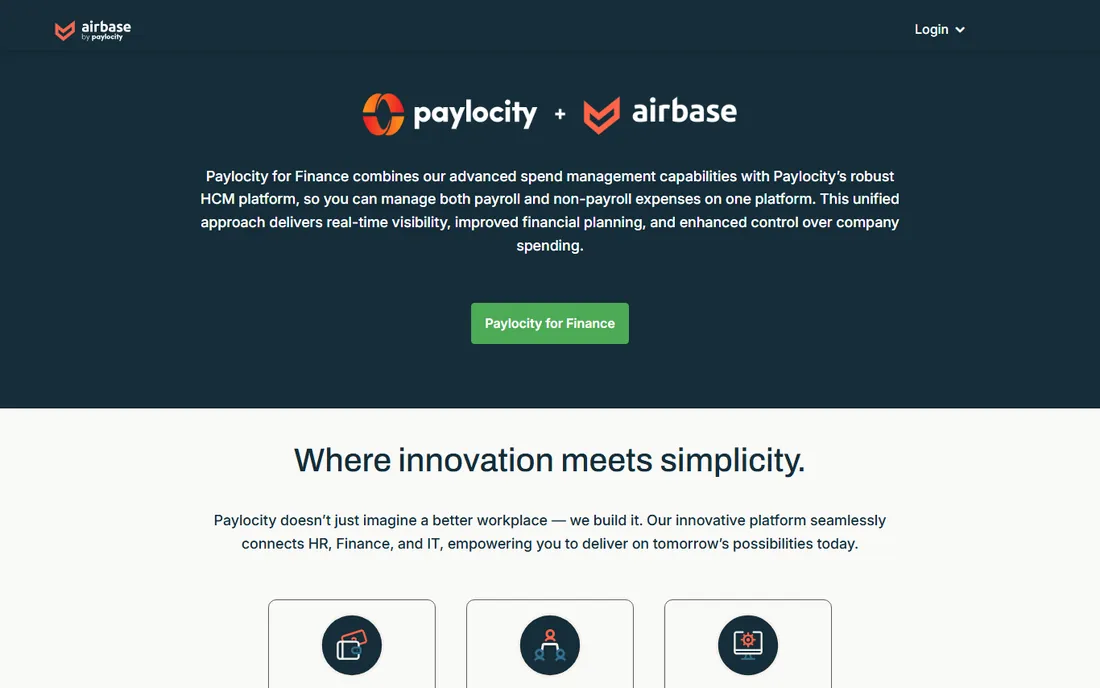
Paylocity for Finance, formerly Airbase, is the spend management platform for midsize companies (roughly 100 to 500 employees) that want AP, corporate cards and expenses governed by one set of policies. The strength is policy-driven spend control with real-time visibility across departments: finance sees what is being spent, where, before it becomes a reconciliation surprise.
The rebrand is a genuine buyer hazard. Airbase became Paylocity for Finance, so reviews, pricing discussions and comparison articles use both names, and you need to confirm you are evaluating the current product. Pricing is custom and quote-based with guided implementation over a few weeks. If you are unifying spend management rather than just automating AP, it belongs on the shortlist. If you only need payables, the focused tools above are simpler.
What we like- Unified spend management: AP, cards and expense reimbursements on one platform
- Deep accounting integrations and strong approval workflow controls
- Built for distributed teams with complex spend policies
Watch out for- The Airbase to Paylocity for Finance rebrand creates research confusion
- Quote-based pricing with no quick cost comparison
Starting priceSee website (quote-based; no public pricing)
Free planNo (no free trial confirmed)
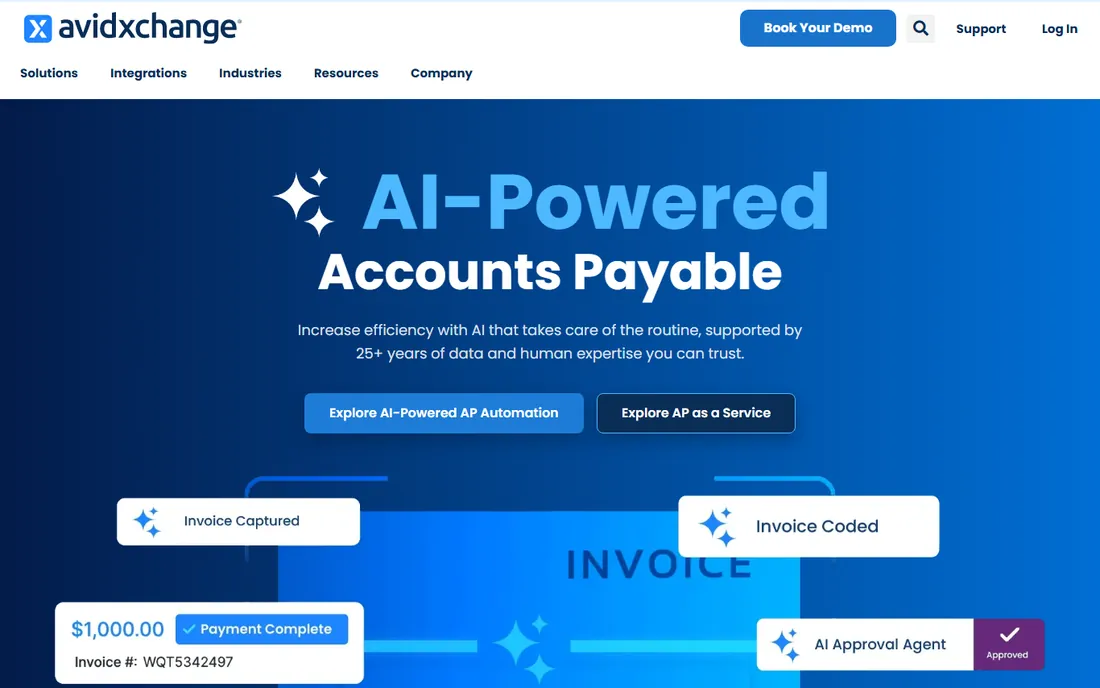
AvidXchange is the digitization play for midmarket companies (roughly 200 to 2,000 employees) still processing paper invoices. The end-to-end invoice-to-pay workflow is purpose-built for that transition, and the large supplier network helps vendors accept electronic payments, which is where paper AP processes usually stall. Over 200 accounting integrations cover the midmarket ERP market.
Small teams should not be here: pricing is fully custom and reported well above SMB tools, and implementation is a guided project over several weeks. This is software for a company with an AP department, not an AP task. If that is you and the invoices arrive in envelopes, AvidXchange is built for exactly that migration.
What we like- Purpose-built for midmarket invoice-to-pay automation
- Large supplier network eases electronic payment adoption
- 200-plus accounting system integrations
Watch out for- Quote-based pricing reportedly well above SMB tools
- Implementation is project-based and slower than self-serve competitors
Starting priceSee website (no current pricing published)
Free planNo (no free tier confirmed)
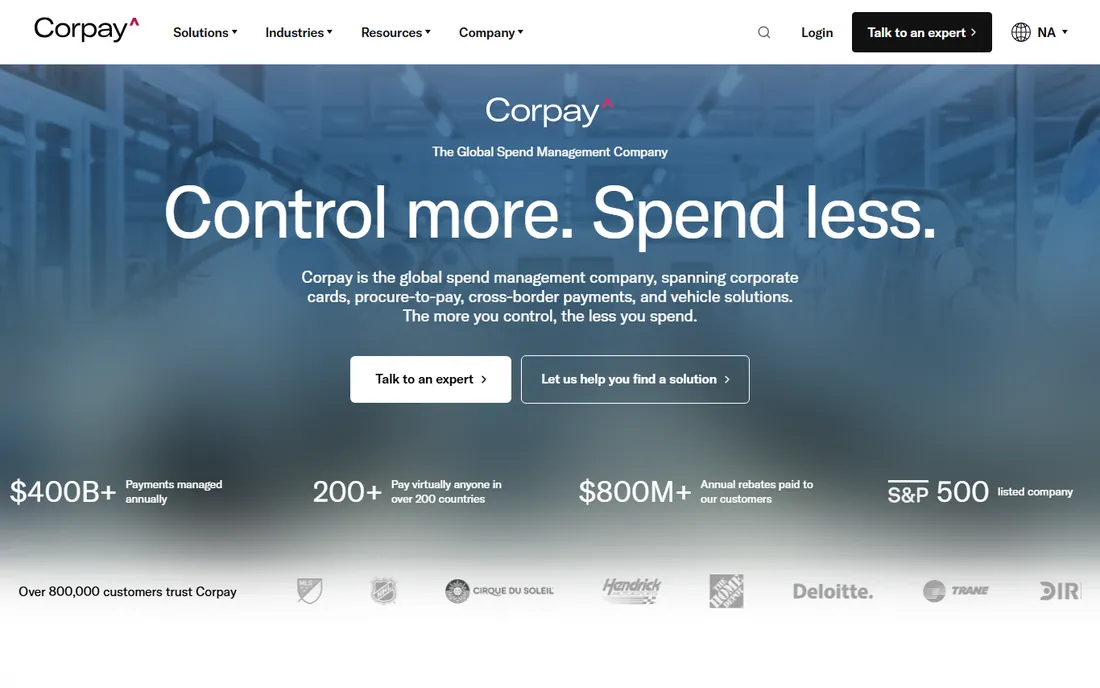
Corpay One, formerly MineralTree, brings a mature AP engine to midmarket finance teams running major ERPs. The invoice capture and approval routing are battle-tested, the ERP integrations (NetSuite, Sage, Dynamics) run deep, and virtual card payments add rebate revenue on top of efficiency. For a NetSuite or Sage shop, the fit is natural.
Like Airbase, the rebrand creates homework: older reviews say MineralTree, newer material says Corpay One, so confirm you are evaluating the current product and current pricing. Pricing is custom and unpublished, with implementation-led onboarding. It competes directly with AvidXchange and Stampli for the midmarket AP deal; the ERP you run may decide it.
What we like- Mature invoice capture and approval routing from the MineralTree heritage
- Deep ERP integrations (NetSuite, Sage, Microsoft Dynamics)
- Virtual card and ACH payment options
Watch out for- The MineralTree to Corpay One rebrand complicates research and reviews
- No public pricing
#9
Zip
Best for: Companies wanting purchasing controls upstream of AP
Visit zip.com
Starting priceSee website (quote-based; contact sales)
Free planNo (no free tier confirmed)
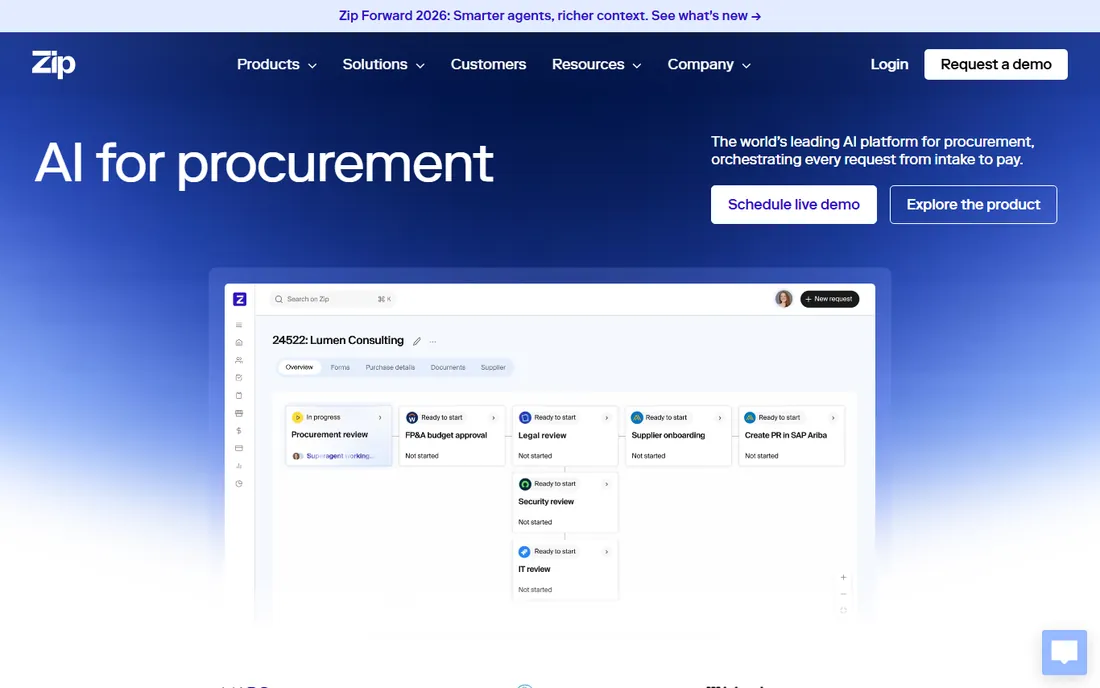
Zip starts earlier than AP software: at the purchase request. Employees request, managers approve, finance pays, all within policy, so the invoice arrives pre-approved instead of starting a chase. For companies where maverick spending is the real problem, controlling intake beats automating the invoice queue downstream.
The fit question is scope. Zip is procurement software first, so a company with simple AP needs will find it heavy and expensive: pricing is custom enterprise with implementation-led onboarding over weeks. If your problem is "too many invoices," buy AP automation. If your problem is "too many unapproved purchases," Zip's intake-to-pay model is the right shape.
What we like- Procurement-first platform covering intake, approvals and payments
- Strong for companies wanting buying controls before invoices exist
- Modern interface with workflow automation
Watch out for- Quote-based enterprise pricing, not built for small-business budgets
- More procurement platform than pure AP tool
What to automate first in AP
AP automation fails when teams try to automate everything at once. The sequence that works: invoice capture first, because manual data entry is the slowest step and the easiest to eliminate. Approval routing second, because the email chase is where invoices go to die; every tool here except the lightest tiers offers rules-based routing with automatic reminders. Payments third: ACH, virtual cards and checks from the platform, which is where the time savings compound.
Leave for later: the exotic stuff. Multi-entity consolidation, global tax compliance and procurement intake matter, but only after capture, approvals and payments run cleanly. A 20-person company gets 80 percent of the value from BILL Essentials or Ramp Free covering those three steps. Buy the platform that nails the basics for your volume; the advanced modules will still be there when you need them.
How we chose
We started with the searches finance teams actually run: accounts payable software, AP automation software and invoice processing software. For each candidate we opened the vendor's own pricing page, checked plan names and prices against public reviews on G2 and Capterra and practitioner discussion on Reddit, and compared feature lists, approval workflows, payment options and company-size fit. Where a price could not be verified on the vendor's page we wrote "See website" instead of guessing. The shortlist mixes free and low-cost tools a small team can buy today with midmarket platforms and global payables specialists, because a startup and a 1,000-person company are not automating the same AP.
The per-seat trap in AP pricing
AP vendors price two ways, and the model matters more than the monthly figure. Per-seat pricing (BILL at $49 per user per month, Ramp Plus at $15) charges for everyone who touches the system, which punishes companies where approvals sprawl across departments. Volume pricing (Stampli by invoice count, Tipalti by transaction) charges for throughput, which punishes invoice-heavy businesses but lets you add unlimited approvers free.
Do the math for your shape. A company with 5 finance users processing 2,000 invoices a month pays less per-seat; a company with 50 occasional approvers and 200 invoices pays less by volume. Ramp's free tier sidesteps the question entirely for small teams. And watch the second price: per-transaction fees on card payments (around 2.9% reported at Melio) and Tipalti's transaction layer can exceed the subscription. The subscription is the quote; the throughput cost is the bill.
Frequently asked questions
What is accounts payable automation?
Software that digitizes the payables workflow: capturing invoice data (OCR or e-invoicing), routing approvals by rules, executing payments (ACH, check, wire, virtual card), and syncing everything to the accounting system. The goal is to remove manual data entry, kill the email approval chase, and close the books faster with a full audit trail.
How much does AP software cost?
For small teams: $0 on Ramp's free tier, or $49 per user per month on BILL Essentials. Midmarket platforms (Stampli, AvidXchange, Corpay One) are quote-based and land in the low-to-mid five figures annually in practice. Global payables (Tipalti) starts at $99 a month plus per-transaction fees. Model per-seat versus per-transaction costs for your volume before comparing headline prices.
Do I need AP software if I already use QuickBooks or Xero?
Your accounting system records what happened; AP software manages the workflow before it happens. If invoices arrive by email, approvals happen in threads, and someone retypes data into QuickBooks, AP software pays for itself in time saved. BILL, Ramp, Melio and the rest all sync to QuickBooks and Xero rather than replacing them.
What is the difference between AP automation and spend management?
AP automation (BILL, Tipalti, Stampli) focuses on the invoice-to-pay workflow: capture, approve, pay, reconcile. Spend management (Ramp, Paylocity for Finance, Zip) covers the broader outflow: corporate cards, expenses, procurement intake and budgets, with AP as one module. If cards and expenses are half your chaos, buy the suite. If invoices are the problem, buy the specialist.
How long does AP software take to implement?
Self-serve tools (Ramp, BILL, Melio) deploy in days: connect accounting, import vendors, configure approvals. Midmarket platforms (Stampli, AvidXchange, Corpay One) run guided implementations over several weeks with ERP integration work. Global payables (Tipalti) takes longer with vendor onboarding and compliance configuration. The approval workflow design, not the technical setup, is usually the long pole.
Can AP software prevent duplicate payments and fraud?
The good ones help materially: duplicate detection flags the same invoice twice, approval rules enforce segregation of duties, and audit trails record every touch. Virtual card payments add control through single-use numbers and limits. No software replaces basic controls, but moving approvals out of email into a rules-based system closes the most common fraud gaps.
Sources we checked (11)
- https://www.bill.com/pricing/
- https://www.ramp.com/pricing
- https://www.tipalti.com/pricing/
- https://www.stampli.com/pricing/
- https://www.meliopayments.com/
- https://www.airbase.com/
- https://www.avidxchange.com/
- https://www.corpay.com/
- https://www.zip.com/
- https://www.g2.com/categories/accounts-payable
- https://www.capterra.com/accounts-payable-software/
Is your product missing or out of date?
We review this list regularly. Vendors can request a listing, send updated pricing or ask about featured placement.

Shihab Mia · Founder, Rankite
Shihab has spent more than a decade helping SaaS and e-commerce brands grow through search. He writes Rankite's software buying guides from pricing pages, documentation and public user reviews. More about Shihab.