How we make this list: we compare pricing pages, product documentation and public user reviews. Rankite is independent; if a vendor ever pays for a featured spot, that listing is clearly labeled Partner.
Key takeaways
- SaaS accounting is different because of deferred revenue: cash arrives before it is earned, and your books must recognize it monthly under ASC 606.
- Early-stage SaaS companies get by fine on QuickBooks Online ($38/month) or Xero ($27/month), both paired with a Stripe integration and a spreadsheet-free rev rec process.
- Around $3M to $10M ARR, native revenue recognition becomes the deciding feature. Sage Intacct is the usual step up; NetSuite is the enterprise destination.
- AI-native options like Puzzle and DualEntry target funded startups that want automated categorization and Stripe payouts broken out without manual work.
- If you invoice hourly or project work alongside subscriptions, FreshBooks keeps time-to-invoice painless.
Quick comparison
| Tool | Best for | Starting price | Free plan |
|---|
 QuickBooks Online QuickBooks Online | early-stage US SaaS that needs an accountant-friendly ledger | $38/month (Simple Start) | Free trial (30 days) |
 Xero Xero | growing teams that want unlimited users for one flat price | $27/month (Early, from October 2026) | Free trial (30 days) |
 FreshBooks FreshBooks | SaaS-adjacent businesses that bill time and projects | $23/month (Lite) | Free trial (30 days) |
 Wave Wave | pre-revenue founders who need free books | Free | Yes |
 Zoho Books Zoho Books | budget-conscious teams already using Zoho apps | $20/month (Standard) | Yes |
 Sage Intacct Sage Intacct | mid-market SaaS that needs audit-grade revenue recognition | See website | No |
 Puzzle Puzzle | funded startups that want AI doing the bookkeeping | See website | No |
 NetSuite NetSuite | enterprise SaaS running multiple entities and countries | See website | No |
Is your product missing or out of date?
We review this list regularly. Vendors can request a listing, send updated pricing or ask about featured placement.
The best accounting software for SaaS
Starting price$38/month (Simple Start)
Free planFree trial (30 days)
Picture a seed-stage SaaS founder doing the first real month-end close. Stripe payouts need categorizing, deferred revenue needs spreading, and the part-time bookkeeper needs to log in without a training course. QuickBooks Online handles that scene better than anything else, mostly because every bookkeeper in America already speaks it.
Simple Start costs $38 a month. Essentials runs $85 and Plus $140 after Intuit's August 2026 increases. Revenue recognition, the feature SaaS actually needs, only appears on Advanced at $340 a month. That is a steep ladder, but for companies under $2M ARR it is the pragmatic default.
What we like- Every US accountant knows it
- Broad integration ecosystem
- Advanced plan adds revenue recognition
Watch out for- No native ASC 606 rev rec below Advanced
- Per-seat pricing climbs fast
#2
Xero
Best for: growing teams that want unlimited users for one flat price
Visit xero.com
Starting price$27/month (Early, from October 2026)
Free planFree trial (30 days)
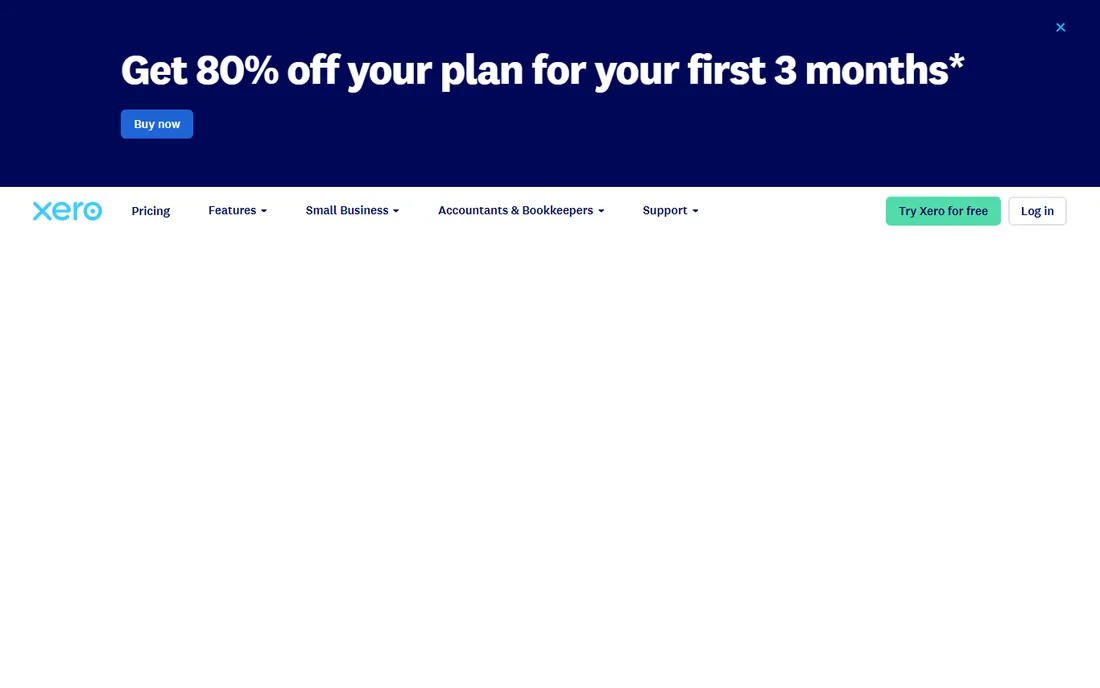
Xero's pitch is simple: one flat subscription, as many users as you like. Early costs $27 a month, Growing $59, and Established $97 after the October 2026 US price increase. A five-person finance team pays the same base price as a solo founder, which makes it easy math for growing SaaS companies.
The product itself is clean and modern, with bank reconciliation that reviewers consistently praise. The gaps show at scale. Multi-currency sits on Established, and US payroll goes through Gusto as a paid add-on. Like QuickBooks, it has no native ASC 606 automation, so pair it with a billing tool like Chargebee or Maxio if recognition matters.
What we like- Unlimited users on every plan
- Clean bank reconciliation
- Strong app marketplace
Watch out for- Multi-currency needs the top plan
- US payroll runs through a partner add-on
Starting price$23/month (Lite)
Free planFree trial (30 days)
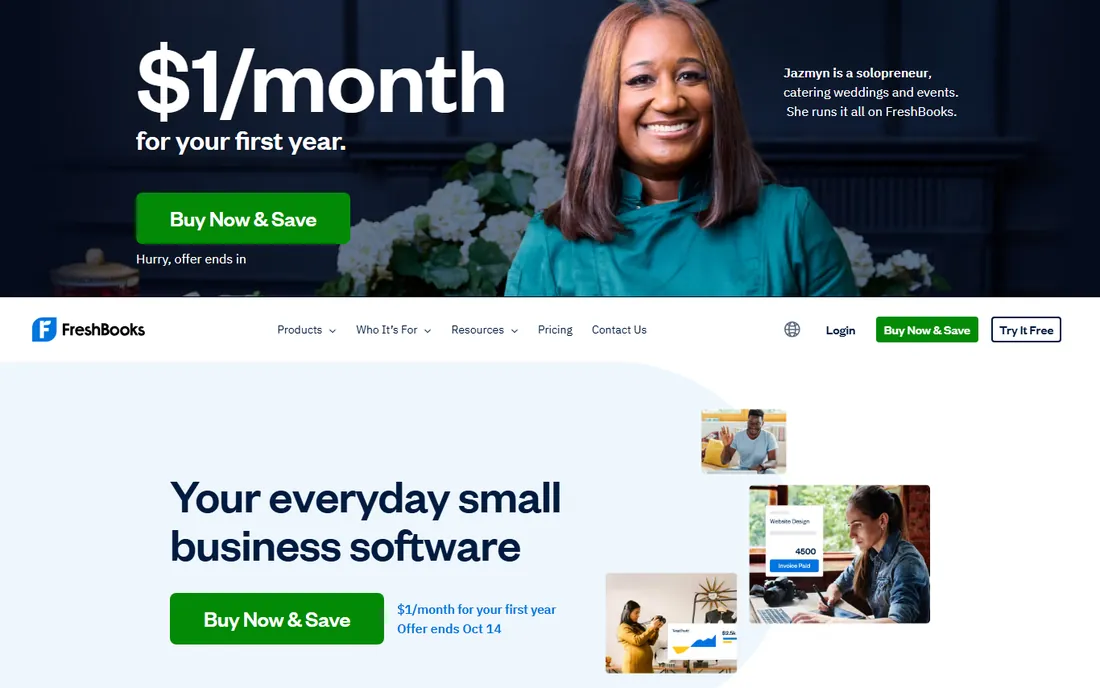
FreshBooks is not a full general ledger for complex SaaS, and it does not pretend to be. It is invoicing and time billing done better than anyone else. Tracked hours flow straight onto invoices without retyping, estimates convert to projects, and clients get a polished portal.
Lite costs $23 a month but caps you at five billable clients. Plus at $43 raises that to 50 and adds accounting reports. Premium at $70 removes the cap. For a consultancy-style SaaS or an agency with recurring retainers, it is a pleasure to use. For a product SaaS with deferred revenue, it is the wrong category.
What we like- Best-in-class invoicing
- Native time tracking that flows to invoices
- Easy to learn
Watch out for- Five-client cap on Lite
- No permanently free tier
- Light on true accounting depth
Starting priceFree
Free planYes
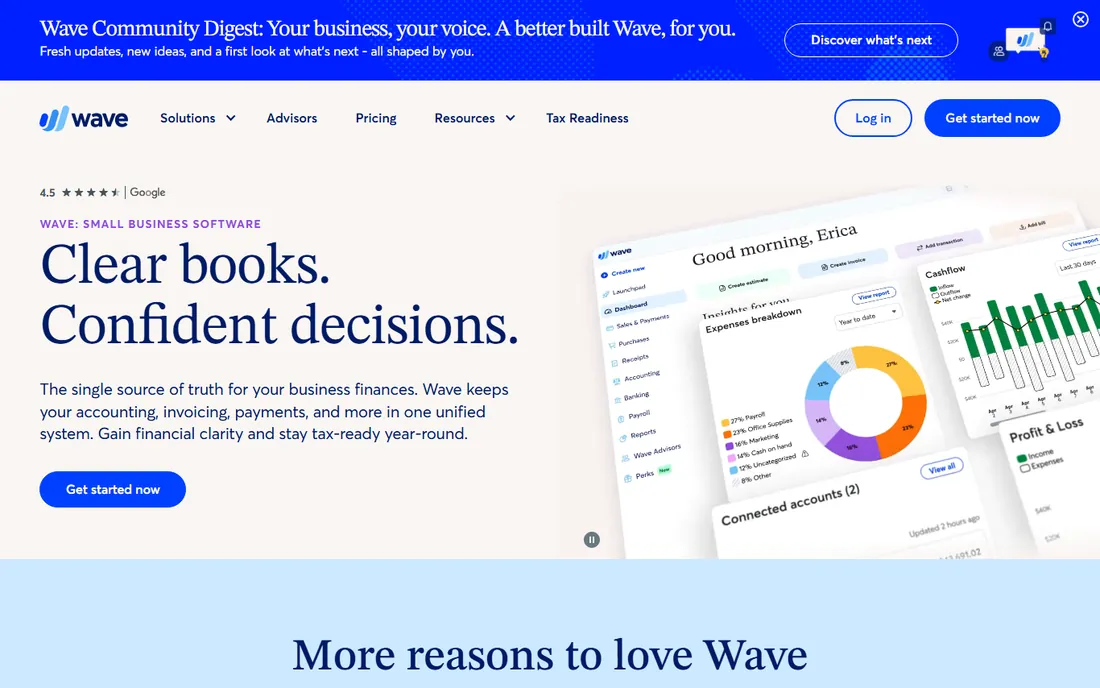
Wave is the honest free option. Invoicing, accounting and receipt scanning cost nothing, which is why it shows up in every early-stage founder's stack. For a pre-revenue SaaS company tracking burn and sending the occasional invoice, it is enough.
It will not grow with you. There is no deferred revenue automation, no ASC 606 support, and the integration ecosystem is thin. Plan the migration to QuickBooks or Xero before your first priced round, not after the auditors ask questions.
What we like- Genuinely free accounting and invoicing
- Simple enough for non-accountants
- No trial games
Watch out for- No revenue recognition to speak of
- Limited integrations
- Not built for scale
#5
Zoho Books
Best for: budget-conscious teams already using Zoho apps
Visit zoho.com
Starting price$20/month (Standard)
Free planYes
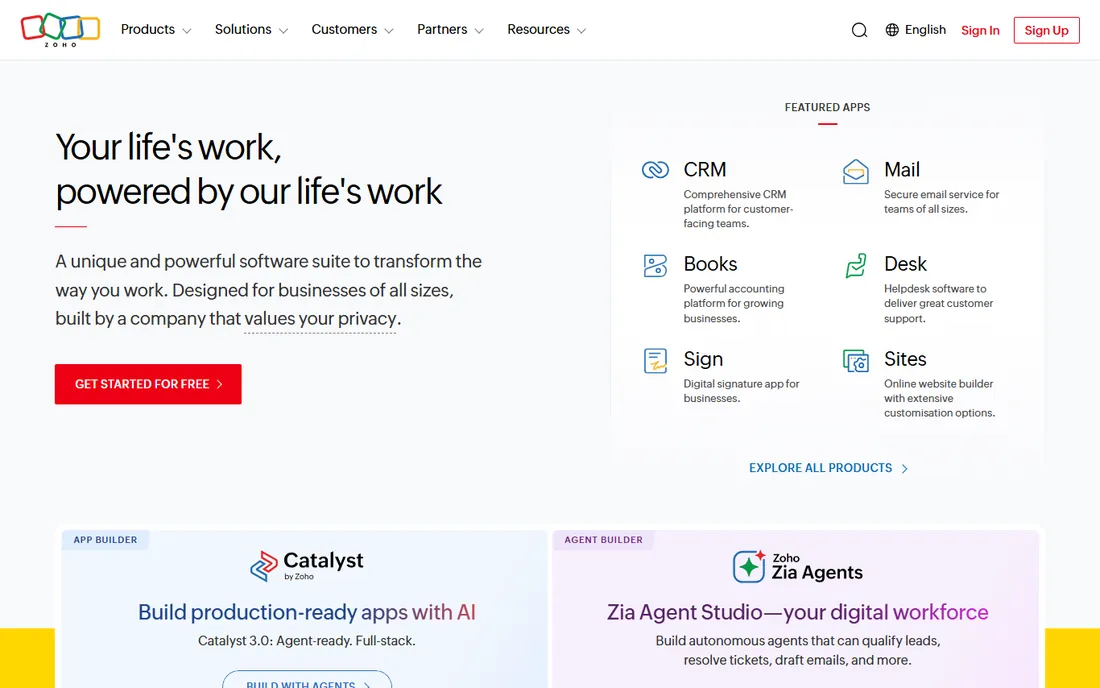
Zoho Books undercuts everyone on price. The free tier covers businesses under $50K in annual revenue with invoicing, reconciliation and reports. Standard costs $20 a month, Professional $50, and Premium $70. Inside the Zoho ecosystem, it talks to Zoho CRM, Inventory and the rest of the suite natively.
Outside that ecosystem it is less magnetic. Fewer US accountants default to it, and some SaaS-relevant features like multi-currency sit on Professional or above. But for a bootstrapped SaaS running on Zoho One, the value is hard to beat.
What we like- Free tier for businesses under $50K revenue
- Cheap paid plans
- Deep Zoho ecosystem integration
Watch out for- Multi-currency and bills need higher tiers
- Weaker US accountant network
#6
Sage Intacct
Best for: mid-market SaaS that needs audit-grade revenue recognition
Visit sage.com
Starting priceSee website
Free planNo
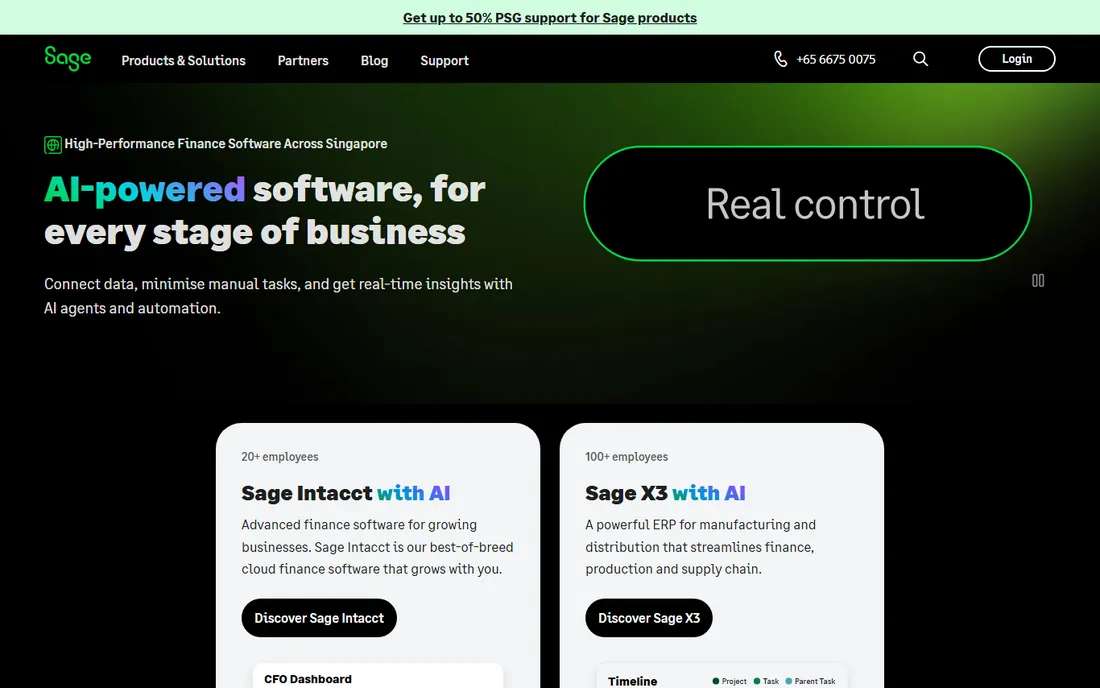
This is where SaaS companies graduate when spreadsheets break. Sage Intacct bakes revenue recognition into the core product: contract schedules, ratable recognition, multi-element arrangements and the waterfall reports auditors actually accept. It is the standard answer for SaaS between roughly $3M and $100M in ARR.
The tradeoff is enterprise software reality. Pricing requires a quote, implementation is a project measured in weeks or months, and you will pay for professional services. Buy it when the pain of manual rev rec exceeds the pain of an ERP rollout.
What we like- Native ASC 606 rev rec and contract billing
- Dimensional reporting
- Strong controls and audit trails
Watch out for- Quote-only pricing
- Implementation takes months, not days
#7
Puzzle
Best for: funded startups that want AI doing the bookkeeping
Visit puzzle.io
Starting priceSee website
Free planNo
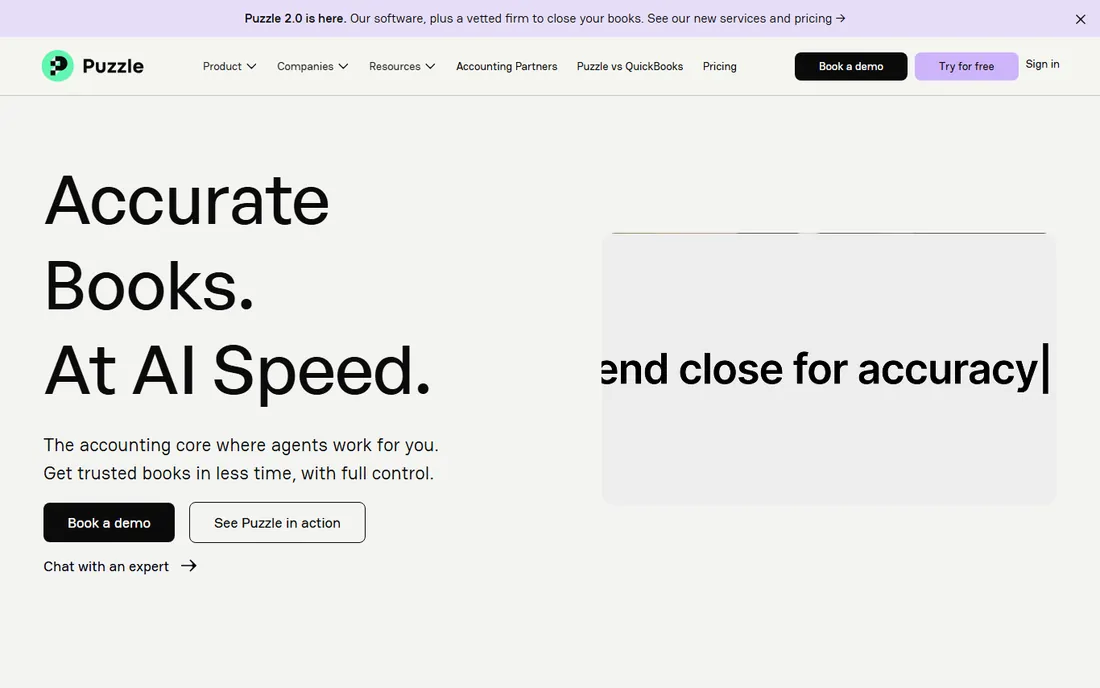
Puzzle takes the opposite bet from the incumbents: instead of adding AI to old software, it built accounting around it. Transactions categorize themselves, Stripe payouts break into individual charges, fees and refunds automatically, and Mercury cash syncs in real time. For a seed or Series A SaaS company, that means the founder can run the books until the finance hire arrives.
Being new has costs. Pricing is not published, the customer base is smaller, and your accountant may never have heard of it. Evaluate it the way you would any startup tool: strong fit for the bold, with an exit plan in your back pocket.
What we like- AI-native categorization
- Native Stripe and Mercury integrations
- Built for startups, not adapted for them
Watch out for- Newer platform
- Pricing not published
- Smaller support ecosystem than incumbents
#8
NetSuite
Best for: enterprise SaaS running multiple entities and countries
Visit netsuite.com
Starting priceSee website
Free planNo
NetSuite is the destination, not the starting point. When a SaaS company runs multiple subsidiaries, consolidates across currencies and needs one system for finance, billing and operations, Oracle's cloud ERP is the category leader. Advanced Revenue Management handles complex recognition scenarios, and the partner ecosystem can implement almost anything.
It is also expensive, slow to implement and administratively heavy. Companies below roughly $15M in ARR usually find it more system than they need. Buy NetSuite when the business demands it, not before.
What we like- Full ERP beyond accounting
- Multi-subsidiary consolidation
- Mature partner ecosystem
Watch out for- Expensive and heavy to implement
- Overkill below $15M ARR
What SaaS companies should actually check
The first question is revenue recognition. If you book annual contracts and recognize monthly, ask every vendor how deferred revenue and ASC 606 work in their product, not in a spreadsheet you maintain. Native rev rec separates the mid-market tools from the entry-level ones.
Second, check the Stripe integration. SaaS lives on Stripe, and the difference between a native integration that disaggregates payouts and a CSV import you do by hand is hours of month-end work. Ask for a demo of the actual payout reconciliation flow.
Third, count the users honestly. QuickBooks charges per seat; Xero does not. A five-person finance team on QuickBooks Plus pays substantially more than the sticker price suggests once every user is a seat. Model the per-team cost, not the per-plan cost.
Fourth, plan the migration before the fundraise. Auditors will flag manual rev rec spreadsheets and missing audit trails. Moving to a system with real controls before a priced round is cheaper than explaining the old one during diligence.
How we chose
We compared vendor pricing pages and documentation current as of October 2026, including Intuit's August 2026 price increases and Xero's October 2026 US price change, alongside public reviews on G2 and practitioner comparisons. Tools made the list only if they exist today and serve a real SaaS accounting job, from free founder books to enterprise ERP. Prices change frequently in this category, so verify the live numbers on each vendor's pricing page.
Where the money actually goes
The subscription is only part of the bill. Xero's US payroll runs through Gusto at $49 a month plus $6 per person. Inventory add-ons, advanced reporting tools like Fathom, and expense modules stack on top. A realistic Xero Growing setup for a three-person team often lands near $120 a month before payment processing fees.
FreshBooks adds team members at $11 each per month, payroll at $40 plus $6 per user, and Advanced Payments at $20. QuickBooks payroll is a separate add-on too, and its AI features arrive bundled with the 2026 price increases whether you use them or not. Add up the stack, not just the headline plan.
Frequently asked questions
What is the best accounting software for a SaaS startup?
For pre-revenue and seed stage, QuickBooks Online or Xero. QuickBooks wins on accountant familiarity in the US; Xero wins on unlimited users and clean reconciliation. Both need a billing tool or manual process for ASC 606 revenue recognition until you graduate to Sage Intacct.
Do SaaS companies need special accounting software?
Yes, mainly for revenue recognition. SaaS collects cash upfront and earns it over the subscription term, which creates deferred revenue that must be recognized monthly under ASC 606. Generic small-business software handles the cash side fine but leaves recognition to spreadsheets, which breaks as contract volume grows.
Is QuickBooks good for SaaS?
It is good for early-stage SaaS bookkeeping, invoicing and expense tracking, and every US accountant can work in it. It is not purpose-built for SaaS: native revenue recognition only appears on the $340-a-month Advanced plan. Most scaling SaaS companies pair it with a dedicated billing and rev rec tool.
What is ASC 606 revenue recognition?
ASC 606 is the US accounting standard that says revenue is recognized when the service is delivered, not when cash is received. A $12,000 annual subscription paid on January 1 generates $1,000 of recognized revenue per month, with the rest sitting as deferred revenue on the balance sheet until earned.
When should a SaaS company switch from QuickBooks to Sage Intacct?
The usual trigger is the month-end close breaking: manual rev rec spreadsheets, multi-entity consolidation, or audit findings around $3M to $10M in ARR. If your controller spends more time in spreadsheets than in the accounting system, it is time.
Is there free accounting software for SaaS?
Wave is free for accounting and invoicing, and Zoho Books has a free tier for businesses under $50K in revenue. Both work for pre-revenue founders. Neither handles SaaS revenue recognition, so treat them as starter systems with a planned migration.
Sources we checked (14)
- https://topickz.com/list/best-accounting-software/
- https://www.dualentry.com/blog/best-saas-accounting-software
- https://www.dualentry.com/blog/saas-accounting
- https://fitsmallbusiness.com/quickbooks-online-comparison/
- https://www.techrepublic.com/article/quickbooks-online-reviews/
- https://www.basis365.com/blog/switch-from-quickbooks-to-xero-2026
- https://www.workforce.com/news/quickbooks-online-price-increase
- https://ifeeltech.com/blog/xero-accounting-software-review
- https://techhelp.ca/xero-price-increase-2026-software-costs/
- https://cpaadvisor.us/articles/freshbooks-review/
- https://bookkeeping-services.com/freshbooks-review/
- https://www.topconsumerreviews.com/best-accounting-software/reviews/zoho-books.php
- https://costbench.com/software/accounting/zoho-books/
- https://puzzle.io/blog/best-accounting-software-saas-startups-stripe-mercury
Is your product missing or out of date?
We review this list regularly. Vendors can request a listing, send updated pricing or ask about featured placement.

Shihab Mia · Founder, Rankite
Shihab has spent more than a decade helping SaaS and e-commerce brands grow through search. He writes Rankite's software buying guides from pricing pages, documentation and public user reviews. More about Shihab.