How we make this list: we compare pricing pages, product documentation and public user reviews. Ratings come from G2, Capterra or Trustpilot, with the date we checked them.
Key takeaways
- Most teams leave LaunchDarkly for price, self-hosting or a simpler pricing model, not because feature flags themselves fail.
- Flagsmith and Unleash are the strongest open source replacements, with hosted and self-hosted options.
- GrowthBook and Statsig suit teams that want flags plus experimentation in one place, while ConfigCat suits simple, reliable flag delivery.
- Pricing models differ sharply: per seat, per request, per flag and per event all produce very different bills at scale.
- Use OpenFeature where you can, so switching vendors later means changing a provider, not rewriting every flag call.
Quick comparison
| Tool | Best for | Starting price | Free plan |
|---|
 Flagsmith | open source flags with remote config | $45 per month | Yes |
 Unleash | enterprise self-hosting and governance | $75 per user per month | Yes |
 ConfigCat | simple cross-platform flag delivery | $110 per month | Yes |
 GrowthBook | flags plus warehouse-native experiments | See website | Yes |
 Statsig | flags, experiments and analytics together | $150 per month | Yes |
 PostHog | flags inside a wider product platform | Free | Yes |
 DevCycle | developer-friendly OpenFeature flags | See website | Yes |
 Flipt | Git-native self-hosted flags | $200 per month | Yes |
Is your product missing or out of date?
We review this list regularly. Vendors can request a listing, send updated pricing or ask about featured placement.
The best alternatives to LaunchDarkly
#1Flagsmith
Best for: open source flags with remote config4.8/5 on
G2 (37 reviews, checked Oct 2026)
Visit flagsmith.com
Starting price$45 per month
Free planYes
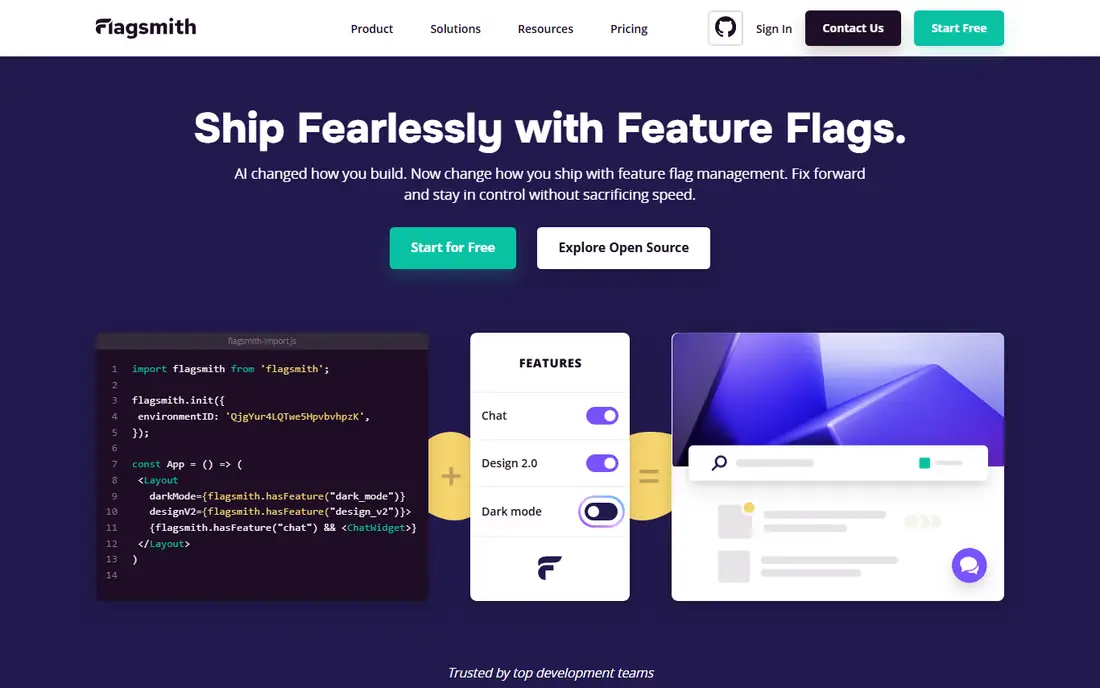
Flagsmith is the most direct open source replacement for LaunchDarkly for teams that mainly need reliable flag delivery. You can run it yourself, use the hosted cloud, or use a private cloud, and the same flag model works across web, mobile and server SDKs. Remote config is a useful extra: instead of only turning a feature on or off, you can change a value, such as a limit or a message, without a new deploy. That helps product teams tune a release without waiting on engineering.
The free cloud tier, with 50,000 requests per month in vendor summaries, is enough for a small product or a trial, and the Startup plan at $45 per month raises that limit sharply. Experimentation exists through multivariate flags, but it is not a full stats engine, so teams that run many formal experiments should pair Flagsmith with an analytics tool or choose GrowthBook or Statsig instead. If your main goal is safer releases at a predictable price, Flagsmith is a strong first trial.
What we like- Open source with self-hosted option
- Remote config alongside boolean flags
- Unlimited flags on the free cloud tier up to request limits
Watch out for- Experimentation is basic compared with dedicated platforms
- Enterprise features such as SSO sit on higher tiers
- Request limits need monitoring at scale
#2Unleash
Best for: enterprise self-hosting and governance4.7/5 on
G2 (137 reviews, checked Oct 2026)
Visit getunleash.io
Starting price$75 per user per month
Free planYes
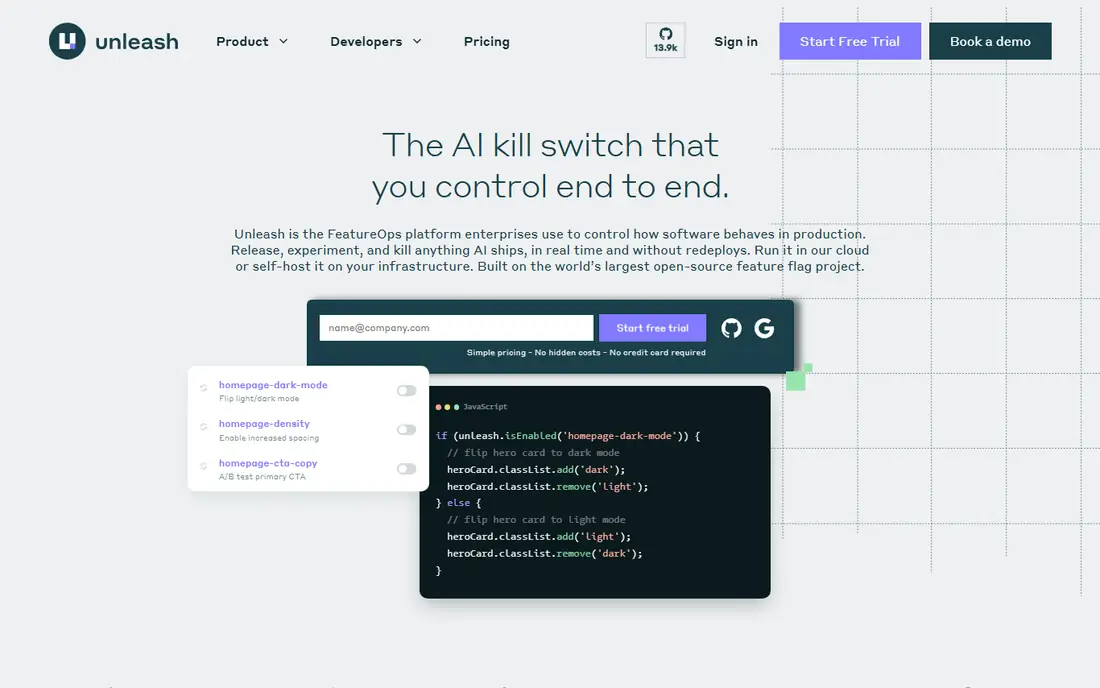
Unleash is built for organizations that need control over where flag data lives and how releases are approved. The open source edition is free to self-host, and flag evaluation happens locally in your apps or at the edge, which keeps latency low and keeps user data inside your infrastructure. Enterprise plans add role-based access, change requests with approvals, audit logs and data residency choices, which matter for banks, insurers and other regulated teams. The vendor homepage notes a pay-as-you-go enterprise price of $75 per seat per month, with a 14-day trial.
Self-hosting is both the strength and the cost. You gain control, but you also own upgrades, backups, monitoring and scaling, and a small team may find that burden larger than the license saving. Unleash suits mid-size and large teams with platform engineering capacity, or teams in regulated industries that cannot use a SaaS-only flag service. For a startup that just wants flags quickly, a hosted tool such as Flagsmith or ConfigCat is usually simpler.
What we like- Large open source community
- Self-hosting with local flag evaluation
- Strong governance features on enterprise plans
Watch out for- Enterprise pricing is per seat and adds up for large teams
- Setup and operations fall on you when self-hosting
- Experimentation is less deep than Statsig
#3ConfigCat
Best for: simple cross-platform flag delivery4.7/5 on
G2 (45 reviews, checked Oct 2026)
Visit configcat.com
Starting price$110 per month
Free planYes
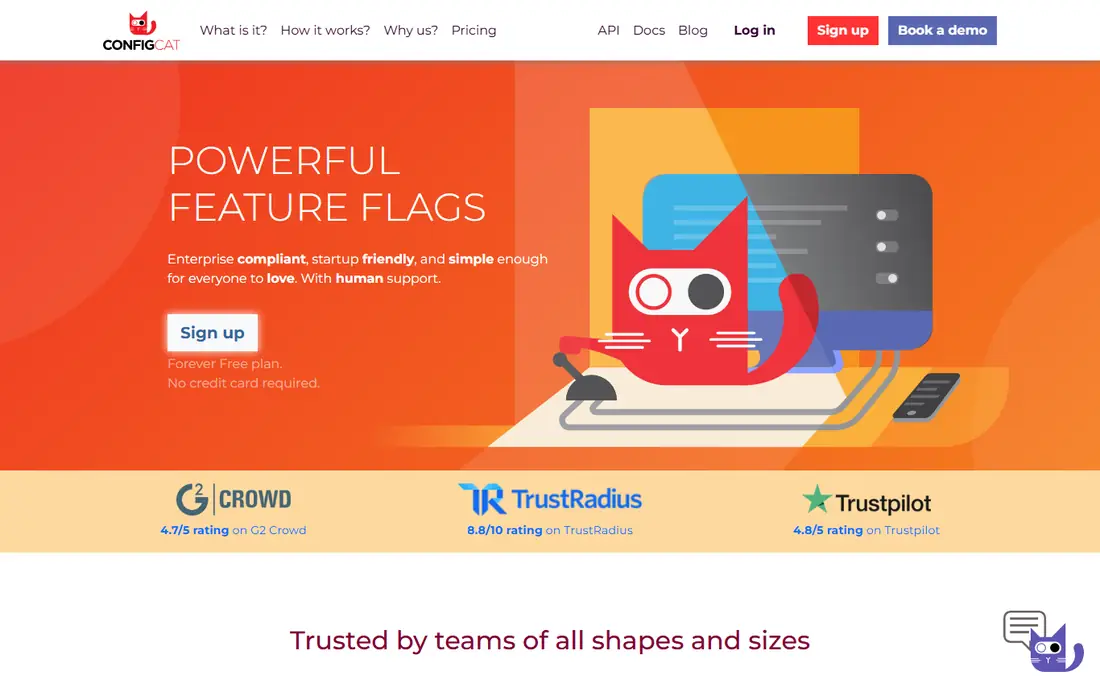
ConfigCat focuses on doing one job well: delivering flag and config values reliably to many platforms. Its SDK list covers JavaScript, .NET, Java, Go, Python, PHP, iOS, Android, Flutter, Unity, Unreal and more, which makes it a good fit for mobile and game teams that LaunchDarkly pricing or SDK gaps frustrate. The vendor homepage lists a Forever Free plan, a Pro plan at $110 per month, and higher tiers, with unlimited seats, which helps when many product managers and engineers need access without per-seat billing.
The pricing model needs a careful count before you commit, because plans are tied to config downloads and flag counts, and a team with many flags can outgrow Pro faster than expected. ConfigCat also lacks the deep experimentation and analytics of GrowthBook or Statsig, so it is best when flags and remote config are the job, and experiments live elsewhere. If you want a simple, well-supported flag service with broad SDK coverage, ConfigCat is a clean choice.
What we like- Very wide SDK coverage including mobile and game engines
- Unlimited seats on paid plans
- CDN delivery with offline caching
Watch out for- Pricing is based on flag and config counts on some plans
- Experimentation is limited
- No self-hosted edition in the same way as open source tools
#4GrowthBook
Best for: flags plus warehouse-native experiments4.6/5 on
G2 (26 reviews, checked Oct 2026)
Visit growthbook.io
Starting priceSee website
Free planYes
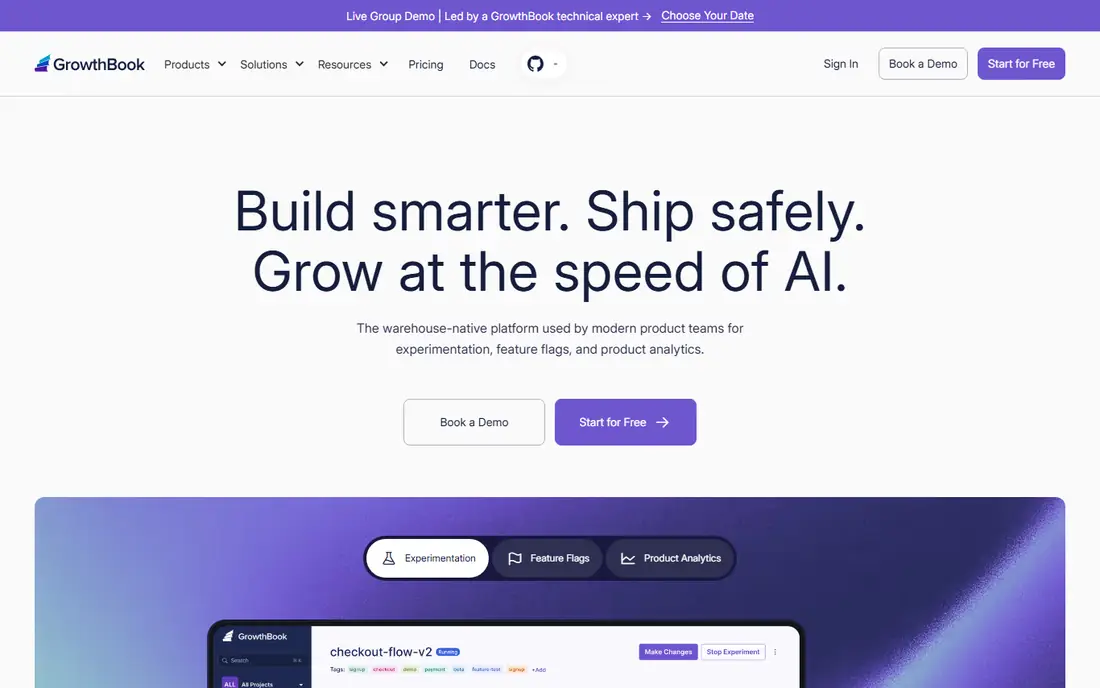
GrowthBook combines feature flags with experimentation in a way that suits data-driven product teams. Instead of copying event data into a vendor warehouse, it can run experiments against your own warehouse, which keeps data where it already lives and avoids duplication costs. The stats engine handles sequential testing and other methods that help teams avoid peeking problems, and the flag system includes staged rollouts, guardrails and auto-rollbacks on some plans. The open source edition is free to self-host, and the cloud edition has a free starter tier for small teams.
The trade-off is setup effort. A simple flag rollout is quick, but a full experimentation setup needs a warehouse connection, metric definitions and event tracking, which takes data engineering time. Cloud pricing also depends on seats and event volume, so confirm the current plan page before budgeting. Choose GrowthBook if experiments are a core part of your product process, and choose a simpler flag tool if you only need on and off switches.
What we like- Open source and self-hostable
- Strong stats engine for experiments
- Works with your existing data warehouse
Watch out for- Setup is heavier if you want full experimentation
- Cloud pricing varies by seats and events
- Less enterprise governance polish than Unleash
#5Statsig
Best for: flags, experiments and analytics together4.7/5 on
G2 (348 reviews, checked Oct 2026)
Visit statsig.com
Starting price$150 per month
Free planYes
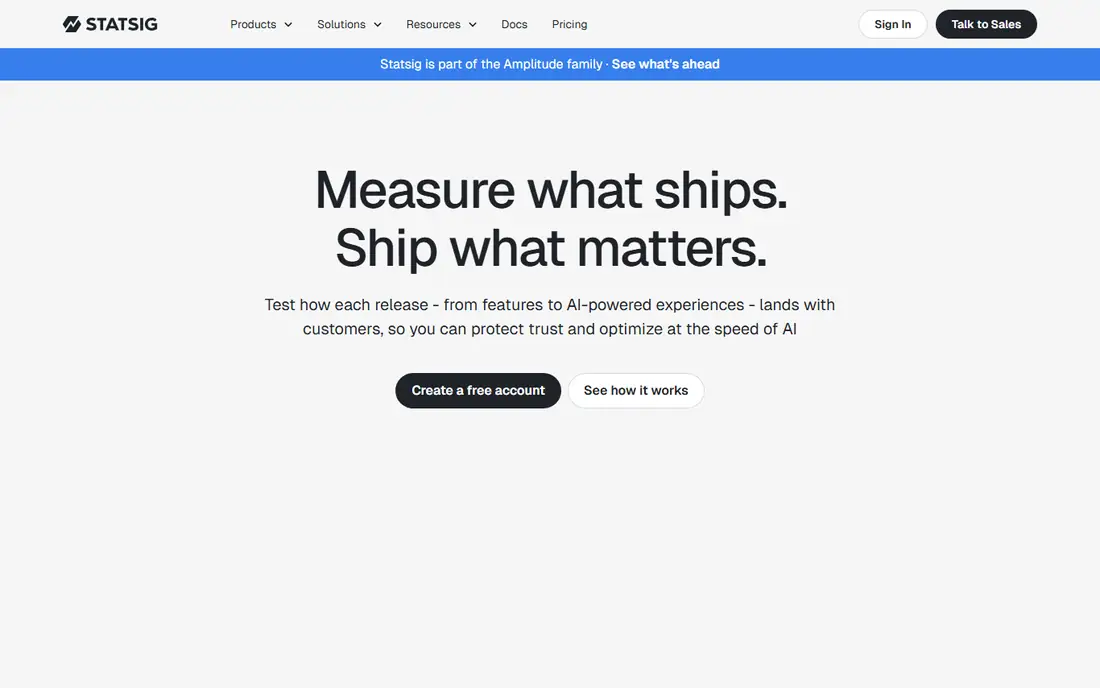
Statsig suits teams that want one platform for flags, experiments and product analytics, rather than stitching three tools together. A single SDK can gate a feature, run an experiment on it, watch guardrail metrics and replay sessions where users struggled, which shortens the loop from release to learning. Vendor summaries list a free developer tier with 2 million events per month and a Pro plan at $150 per month, with unlimited flag checks, which makes it affordable to start and predictable at moderate scale.
The risk is scope and event volume. If you only need flags, Statsig is a larger platform than you need, and event-based pricing means a high-traffic product can outgrow the free tier quickly, even if flag checks themselves are unlimited. Statsig was acquired by OpenAI in September 2025, according to vendor comparison pages, so check the current roadmap and terms if long-term independence matters to you. For product teams that experiment often, Statsig is one of the strongest all-in-one options.
What we like- Flags, experiments, analytics and session replay in one SDK
- Strong stats methods including CUPED
- Generous free event allowance
Watch out for- Usage-based pricing can grow with events
- Full platform is more than a simple flag tool needs
- Enterprise governance sits on higher tiers
#6PostHog
Best for: flags inside a wider product platform4.5/5 on
G2 (1,053 reviews, checked Oct 2026)
Visit posthog.com
Starting priceFree
Free planYes
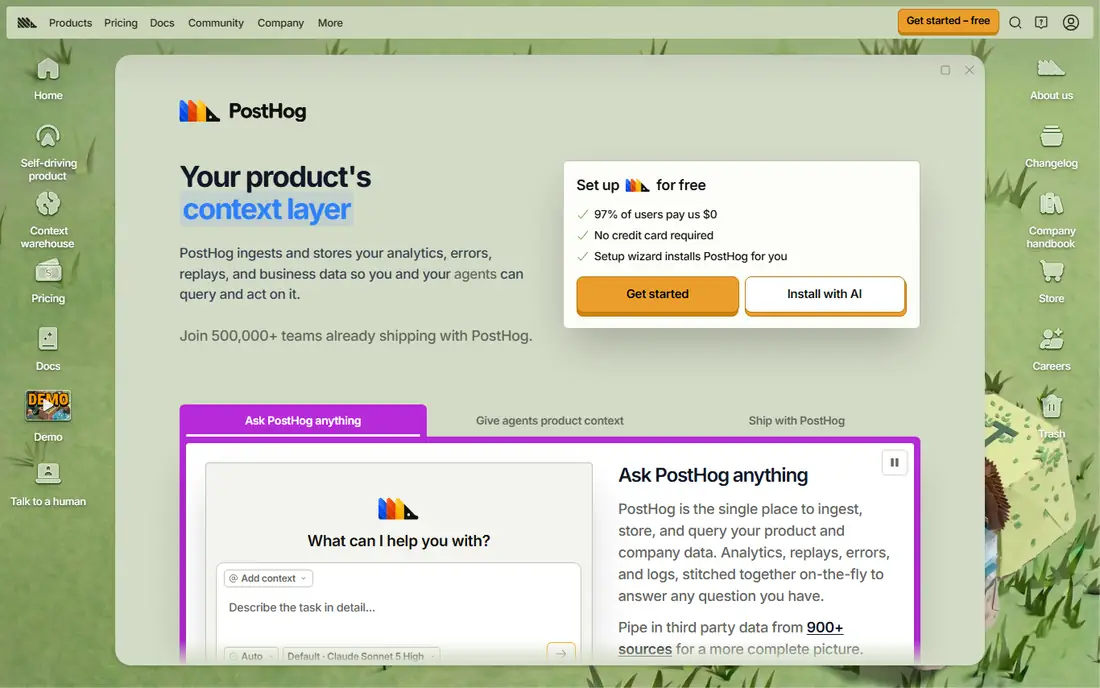
PostHog is a good fit if you already use, or plan to use, product analytics, session replay and experiments, and you want flags in the same place. The flag service is open source, supports server and client SDKs, and includes multivariate flags for experiments, with analytics that show how a flag variant affects user behavior without exporting data. The free tier includes 1 million flag requests per month, and paid usage is billed per request on a sliding scale, with no seat fees, which suits small teams and startups.
PostHog is not the deepest flag-only tool. Governance, approval workflows and enterprise flag features are less mature than Unleash or LaunchDarkly, and the wider platform can feel large if you only want flags. Set a billing limit when you start, because usage-based pricing for analytics, replay and flags can add up across products. If your team wants one product platform rather than a flag specialist, PostHog is a practical and low-cost starting point.
What we like- Flags, analytics, experiments and replay in one open source platform
- 1 million free flag requests per month
- Usage-based pricing with no seat minimums
Watch out for- Flags are one product among many, so depth lags dedicated tools
- Usage pricing needs billing limits at scale
- Self-hosting the full platform is heavier than a flag-only tool
#7DevCycle
Best for: developer-friendly OpenFeature flags4.5/5 on
G2 (36 reviews, checked Oct 2026)
Visit devcycle.com
Starting priceSee website
Free planYes
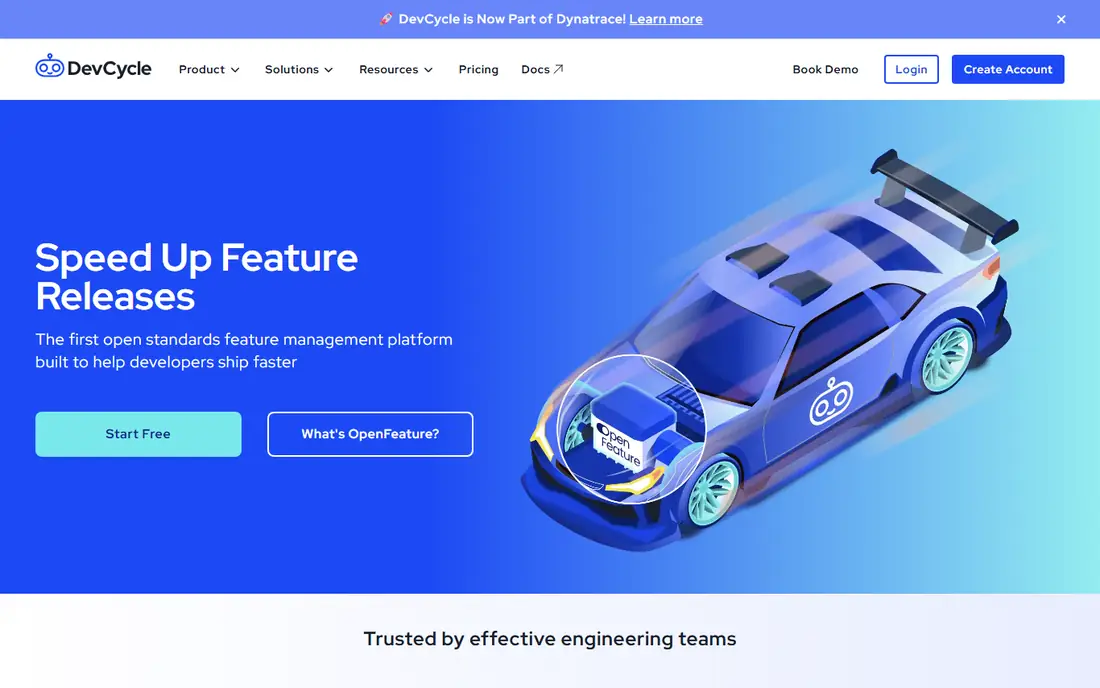
DevCycle positions itself as an OpenFeature-native flag platform, which is a useful selling point for teams worried about vendor lock-in. OpenFeature is a vendor-neutral standard for flag evaluation, so code written against it can switch providers with less rewriting than a proprietary SDK. DevCycle also emphasizes a developer-friendly workflow, with clear flag management and targeting, and it suits teams that want modern flagging without adopting a full experimentation or analytics suite.
The limit is scale and depth. DevCycle is smaller than Flagsmith, Unleash or Statsig, so its integration list, community answers and enterprise features are narrower. Check the current pricing page before committing, because plans and free limits change, and confirm that your languages and frameworks are covered. For a developer-led team that values OpenFeature and a simple flag workflow, DevCycle is worth a trial beside Flagsmith.
What we like- OpenFeature-native design eases switching
- Clean developer workflow
- Good for teams that want flags without a heavy platform
Watch out for- Smaller ecosystem than the major platforms
- Experimentation depth is limited
- Pricing details need confirmation on the vendor page
Starting price$200 per month
Free planYes
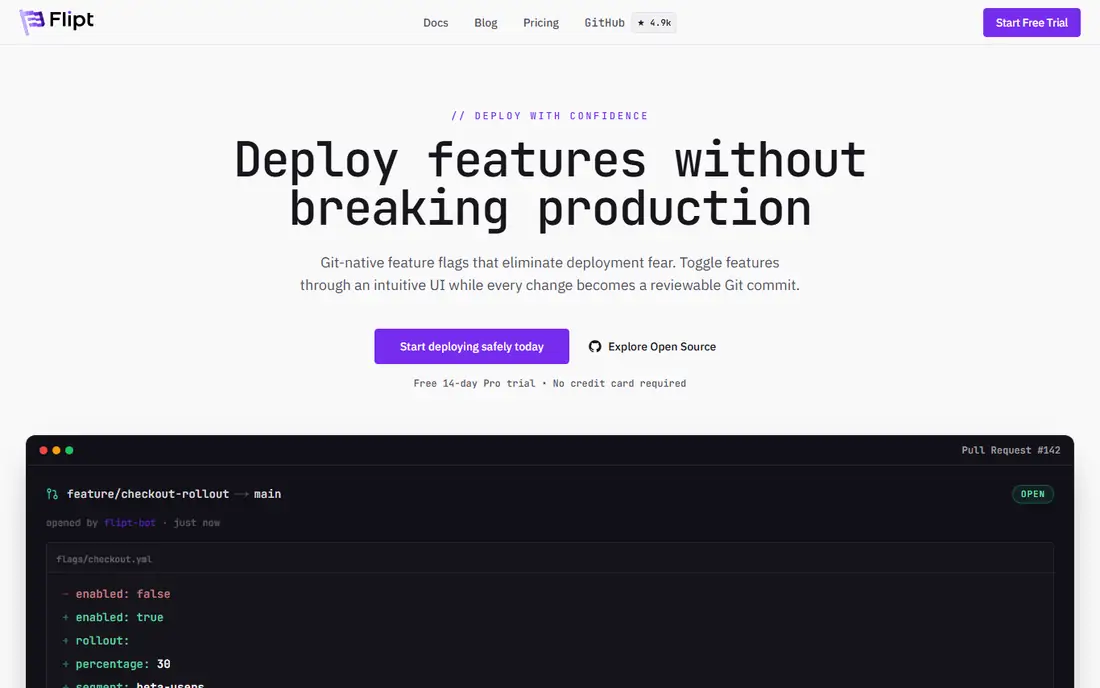
Flipt is the choice for teams that manage infrastructure as code and want flags to follow the same rules. Changes made in the UI become Git commits, and Pro adds pull request creation from the UI, so a flag change gets the same review as a code change. The open source edition is free forever, with unlimited flags, Git sync, real-time updates and REST and gRPC APIs, and self-hosting is a single binary with no dependencies. That simplicity makes it easy to run and easy to audit.
The Pro price, listed at $200 per month on the vendor homepage, is the main hurdle for small teams, though it has no per-seat fees, so a large team may find it cheaper than per-seat rivals. Flipt is not an experimentation platform, so teams that need formal A/B testing should look elsewhere or pair it with an analytics tool. If your team lives in Git and wants flags under version control, Flipt is a distinctive and well-designed option.
What we like- Git-native workflows with reviewable commits
- Flat pricing with no per-seat fees on Pro
- Single binary self-hosting
Watch out for- Pro plan is $200 per month, which is high for a small team
- Experimentation is not the focus
- Enterprise features need a custom plan
How we chose
We compared vendor pricing pages, product documentation and public reviews, and we checked each homepage to confirm the product exists and matches the name on this list. We favored tools with a clear flag, rollout or experimentation workflow, a usable free or open source tier, and a pricing model that can be explained in one sentence. Prices shown are starting prices from vendor pages or pricing summaries checked in October 2026, and where a price could not be confirmed we wrote See website rather than guessing.
Migrating without breaking releases
Start by listing every flag in LaunchDarkly, its type, its targeting rules and its owner, because a migration usually fails on forgotten flags, not on SDK code. Mark flags that are already at 100 percent and can be removed, flags that are temporary experiments, and flags that are permanent entitlements, because each group needs a different plan. Permanent flags, such as plan-based access, should move first to a stable system, while temporary flags can be cleaned up rather than migrated.
Use OpenFeature and run both systems in parallel
Where your new tool supports OpenFeature, use that provider in new code, so future switches are easier. For existing code, run both systems in parallel for one release cycle: evaluate the old flag and the new flag, log any mismatch, and switch traffic only when the logs agree. Keep a kill switch for the migration itself, so you can revert to LaunchDarkly without a deploy if a new SDK misbehaves. After the switch, set an expiry date for every migrated flag and schedule its removal, because stale flags are the most common source of flag debt.
Model your bill before you sign
Do not compare headline prices alone. Estimate your monthly flag evaluations, events, seats, flag count and warehouse usage, and ask each vendor for a quote on that same model. A per-seat tool can be cheap for a small team and expensive for a large one, while a usage tool can be cheap at low traffic and costly at high traffic. Run a two-week trial on real traffic, check the usage dashboard daily, and confirm what happens when you exceed a limit, whether the tool throttles, charges overages or blocks new flags.
Frequently asked questions
What is the cheapest LaunchDarkly alternative?
It depends on your usage model. For self-hosting, Flagsmith, Unleash, GrowthBook and Flipt open source editions are free apart from your hosting costs. For hosted use, PostHog and Statsig have generous free tiers, while Flagsmith Startup at $45 per month is a low-cost paid starting point.
Can I self-host a LaunchDarkly alternative?
Yes. Flagsmith, Unleash, GrowthBook and Flipt all offer open source, self-hosted editions. ConfigCat, Statsig and PostHog cloud are primarily hosted, though PostHog also has an open source edition, so check the current self-hosting docs for each tool before planning.
Will switching break my existing flags?
Not if you migrate in parallel. Run both systems for one release cycle, log mismatches, and switch only when they agree. Using OpenFeature in new code also reduces future switching work, because the flag calls stay the same when the provider changes.
Do I need experimentation, or just feature flags?
Most teams need flags first and experimentation later. Start with a flag tool, add experiments when product decisions regularly depend on measured results, and avoid paying for a full stats platform before you have the traffic and metric discipline to use it well.
How do I avoid flag debt after migrating?
Give every flag an owner and an expiry date, review flags monthly, and remove flags that reach 100 percent or are no longer needed. Treat flag cleanup as part of the release checklist, not as a separate project that never gets scheduled.
Is OpenFeature worth using?
Yes, for most teams. OpenFeature separates flag evaluation from the vendor SDK, which makes it easier to switch providers, test flag logic and keep code consistent across languages. It does not remove all migration work, but it removes the most painful part, which is rewriting every flag call.
Sources we checked (8)
- https://flagsmith.com
- https://www.getunleash.io
- https://configcat.com
- https://www.growthbook.io
- https://www.statsig.com
- https://posthog.com
- https://devcycle.com
- https://flipt.io
Is your product missing or out of date?
We review this list regularly. Vendors can request a listing, send updated pricing or ask about featured placement.

Shihab Mia · Founder, Rankite
Shihab has 5+ years in B2B and SaaS SEO. He writes Rankite's software buying guides from pricing pages, documentation and public user reviews. More about Shihab.