How we make this list: we compare pricing pages, product documentation and public user reviews. Ratings come from G2, Capterra or Trustpilot, with the date we checked them.
Key takeaways
- The best wind company depends on your angle, since turbine makers, project developers, and utility owners play different roles.
- Vestas and Siemens Gamesa lead on turbine manufacturing scale, while Orsted leads on offshore project development.
- NextEra Energy leads on US wind generation at utility scale, with a large operating fleet and a deep project pipeline.
- GE Vernova suits buyers who want US made turbines and grid equipment from one supplier.
- This article covers companies, not investment advice, so check current financial reports before any investment decision.
Quick comparison
Is your product missing or out of date?
We review this list regularly. Vendors can request a listing, send updated pricing or ask about featured placement.
The best wind energy company
Starting priceSee website
Free planNo
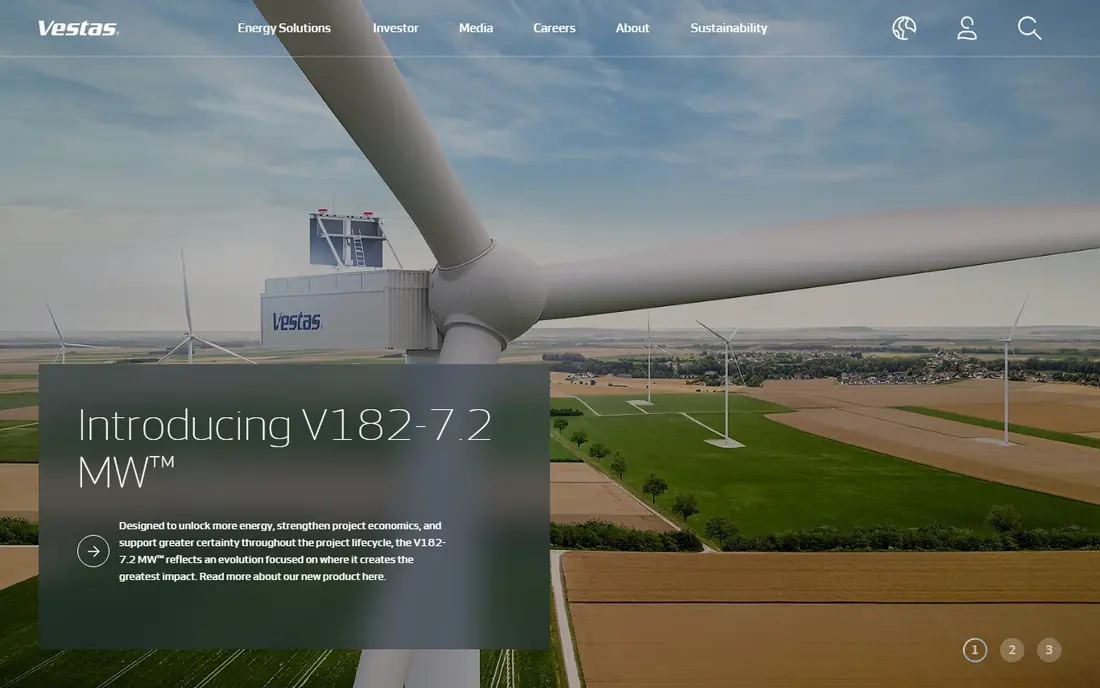
Vestas, based in Denmark, has installed turbines in dozens of countries and remains the largest wind turbine maker by capacity delivered. Its onshore platforms cover low, medium, and high wind sites, while its offshore joint work extends the range to large sea based projects. A global service network supports turbines long after installation, which matters because a wind farm runs for decades.
Cost pressure is the main weakness. Steel, transport, and supply chain costs have squeezed turbine makers in recent years, and project delays from permitting can push revenue between quarters. Buyers should judge Vestas on turbine reliability, service coverage, and delivery record rather than on a single quarter of orders. For a developer choosing a turbine supplier at scale, Vestas is the benchmark most rivals are measured against.
What we like- Largest turbine maker by installed base
- Broad onshore and offshore range
- Global service network
Watch out for- Margins face cost pressure
- Project timing can shift with permitting
Starting priceSee website
Free planNo
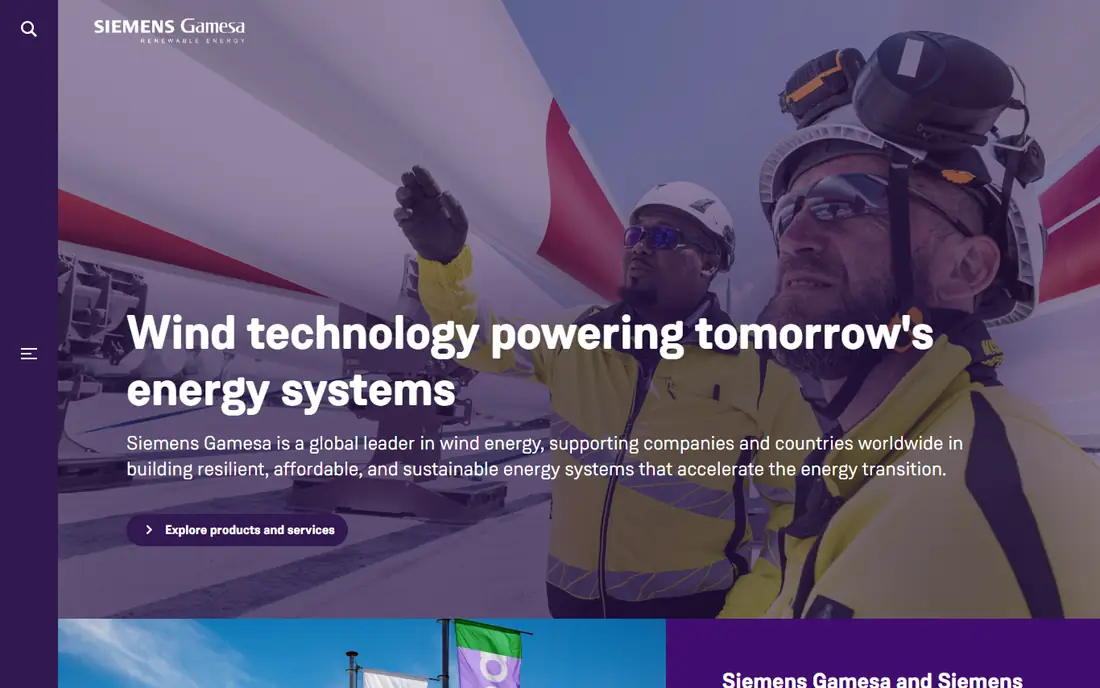
Siemens Gamesa, part of Siemens Energy, leads in offshore wind turbines, where rotor sizes keep growing and each turbine now produces far more power than older models. Its offshore machines serve North Sea projects and other large sea based farms, and its service arm supports those assets over long contracts. European manufacturing and engineering depth give it a strong home base.
Past quality problems in some onshore platforms hurt results and slowed deliveries, and the company has worked through fixes and restructuring since. Onshore buyers may find the range narrower than Vestas, though offshore buyers have fewer peers at this scale. For a large offshore project, Siemens Gamesa remains one of the first names on the shortlist.
What we like- Leading offshore turbine sizes
- Siemens Energy backing
- Strong European base
Watch out for- Quality issues hit past results
- Onshore range is narrower than Vestas
Starting priceSee website
Free planNo
Orsted transformed from a Danish fossil fuel utility into the leading offshore wind developer, building and operating large farms in the North Sea and beyond. Its skill covers the full chain, from seabed surveys and permitting to construction and long term operation. That depth helps when projects face complex grid connections and harsh sea conditions.
Rising interest rates and supply costs hit US offshore projects hard, and Orsted paused or resized some American plans as a result. The company still holds a large operating portfolio, and its experience in Europe remains a strong asset. For a partner or buyer focused on offshore development skill, Orsted sets the standard.
What we like- Deep offshore development record
- Operates large sea based farms
- US and Europe presence
Watch out for- US project costs rose sharply
- Some projects were paused or resized
Starting priceSee website
Free planNo
NextEra Energy owns the largest wind generation fleet in the United States through its Energy Resources arm, alongside the regulated Florida Power and Light utility. That mix gives it scale in building, owning, and operating wind farms across many states, plus solar and storage projects that pair with wind output. Its pipeline and operating record make it a central player in US clean power.
The limits are scope and policy. NextEra is a diversified utility, not a pure wind company, so its results reflect gas, solar, and regulated earnings too. Grid connection queues and policy shifts can delay projects, even for a developer of this size. For US wind generation at scale, no rival matches its operating fleet.
What we like- Largest US wind fleet
- Regulated utility plus renewables arm
- Long project pipeline
Watch out for- Growth depends on US policy and grid queues
- Stock is not a pure wind play
Starting priceSee website
Free planNo
GE Vernova, spun out of General Electric, pairs wind turbines with grid, gas, and power equipment, which suits buyers who want one supplier across a project. Its onshore turbines serve US wind farms at scale, and its grid solutions help connect variable wind output to the network. US manufacturing also helps projects that need domestic content.
Wind profitability has been uneven, and GE Vernova lacks the offshore scale of Vestas or Siemens Gamesa. Its strength is breadth across the power system rather than wind alone. For a US buyer who values domestic supply and grid integration, GE Vernova is a serious option.
What we like- US manufacturing base
- Onshore turbine range
- Grid and power equipment breadth
Watch out for- Wind margins have been thin
- Offshore presence is smaller than European rivals
Starting priceSee website
Free planNo
Iberdrola, based in Spain, runs one of the largest renewable portfolios in the world, with wind farms in Europe, the Americas, and beyond, plus regulated electricity networks. Its ScottishPower and Avangrid arms extend that reach into the United Kingdom and the United States. The network business gives steady income that supports long term wind investment.
The company is not a pure wind play, since networks, retail supply, and other generation shape its results. Project timing also varies by country, as permitting and grid rules differ widely. For a buyer or partner who wants a global utility with deep wind holdings, Iberdrola offers scale few rivals match.
What we like- Large renewables portfolio
- Regulated networks
- Wind across several continents
Watch out for- Complex global structure
- Results reflect networks and retail as well as wind
Starting priceSee website
Free planNo
Brookfield Renewable owns and operates clean power assets across North and South America, Europe, and Asia, with hydro as a large base alongside wind and solar. Long term power contracts give its cash flows a steadier shape than merchant only developers, and its parent Brookfield brings large scale asset management skill. Wind farms in its portfolio benefit from that operating depth.
Complexity is the drawback. The listed entities and partnership structure confuse some buyers, and wind alone does not drive results. For an investor or partner who wants diversified clean power with wind as a core piece, Brookfield Renewable offers breadth and scale.
What we like- Hydro, wind, and solar mix
- Global asset base
- Long term contracts
Watch out for- Structure is complex
- Wind is one part of a wider portfolio
Starting priceSee website
Free planNo
Enel Green Power, the renewables arm of Italian utility Enel, operates wind and solar plants across Europe, the Americas, Africa, and Asia. Its scale lets it pair wind with solar and storage, which smooths output and suits grids that need flexible supply. Enel backing supports large projects and long term operation.
Wind is one part of a wide portfolio, so the wind share varies by country and year. Regulatory shifts in any single market can affect local plans, though global spread softens that risk. For a global renewables partner with wind, solar, and storage together, Enel Green Power is a strong candidate.
What we like- Large global renewables fleet
- Enel utility backing
- Storage and solar pairing
Watch out for- Portfolio spans many markets
- Wind focus varies by region
How we chose
We compared installed capacity, turbine technology, development and operating records, geographic reach, service networks, and public financial and project reports. We favored companies with proven delivery at scale, long operating histories, and clear wind holdings, rather than firms with wind as a minor side line. No hands on testing is claimed, and this article is not financial advice. Prices are shown as See website because these firms sell projects and equipment by contract, not by a single public price.
How to judge a wind company for your project
Start with role. A turbine maker suits a developer buying machines, a developer suits a landowner or utility seeking a project partner, and a utility suits a buyer of long term power. Check the operating fleet, not just announced projects, since completed farms prove delivery. Ask about service terms, spare parts, and warranty length, because a turbine runs for 20 years or more.
Review permitting and grid connection records in your region, since local delays matter more than global rankings. For investment questions, read annual reports and check debt, contract length, and exposure to merchant power prices. A company that looks strong worldwide may still struggle in your market, so local track record should weigh heavily. Talk to operators of nearby wind farms when you can, since their experience with service response, noise, and maintenance costs gives a clearer picture than any brochure. Ask for references from projects of a similar size, and check how the company handled faults, warranty claims, and end of life plans for older turbines.
Frequently asked questions
Which company makes the most wind turbines?
Vestas leads on installed capacity and global delivery, with Siemens Gamesa close in offshore machines. GE Vernova leads among US based makers. The leader varies by onshore versus offshore and by region, so check the segment that matches your project.
Is offshore wind more expensive than onshore wind?
Yes, in most cases, because sea foundations, installation vessels, and grid connections cost more. Offshore turbines are larger and often run at higher capacity factors, which offsets part of the gap. Costs have also risen with interest rates and supply chain pressure in recent years.
Can a small business buy power from a wind company?
Yes, through green tariffs, power purchase agreements, or renewable certificates, depending on your market. Small firms usually buy through a utility or supplier rather than directly from a developer. Check what your supplier offers and what share is backed by new projects.
How long does a wind farm take to build?
A small onshore farm can take a few years from first surveys to operation, while a large offshore farm can take much longer. Permitting, grid connection, and turbine supply set the pace. Early engagement with local communities and grid operators reduces delay risk.
Is wind power reliable without storage?
Wind output varies with weather, so grids pair it with solar, storage, hydro, and flexible demand. Modern forecasting and larger turbines smooth output, but storage and grid upgrades remain part of a reliable system. A single farm alone cannot power a grid around the clock.
Sources we checked (8)
- https://www.vestas.com
- https://www.siemensgamesa.com
- https://orsted.com
- https://www.nexteraenergy.com
- https://www.gevernova.com
- https://www.iberdrola.com
- https://www.brookfield.com
- https://www.enelgreenpower.com
Is your product missing or out of date?
We review this list regularly. Vendors can request a listing, send updated pricing or ask about featured placement.

Shihab Mia · Founder, Rankite
Shihab has 5+ years in B2B and SaaS SEO. He writes Rankite's software buying guides from pricing pages, documentation and public user reviews. More about Shihab.
 Vestas
 Siemens Gamesa
 Orsted
 NextEra Energy
 GE Vernova
 Iberdrola
 Brookfield Renewable
 Enel Green Power