How we make this list: we compare pricing pages, product documentation and public user reviews. Ratings come from G2, Capterra or Trustpilot, with the date we checked them.
Key takeaways
- Energy software comes in three types. Bill-based tools track what you pay. Meter-based tools track what you use in real time. Benchmarking tools compare your buildings against others. Decide which one you need before you book demos.
- EnergyCAP and Arcadia lead on utility bill management. Arcadia covers bill collection, auditing, payment, budgeting and forecasting, which suits companies with hundreds of utility accounts.
- GridPoint and Verdigris both need hardware in your buildings. Plan for an electrician visit and a longer rollout than with software that only reads bills.
- ENERGY STAR Portfolio Manager is free from the US EPA. Most paid tools on this list can send data to it, so it works best as a reporting endpoint, not a replacement.
- None of the eight vendors publishes a full self-serve price list. Expect a demo, a quote and pricing tied to meters, sites or accounts, not seats.
Quick comparison
Is your product missing or out of date?
We review this list regularly. Vendors can request a listing, send updated pricing or ask about featured placement.
The best energy software for businesses

#1EnergyCAP
Best for: Utility bill tracking and auditing4.8/5 on
G2 (18 reviews, checked Oct 2026)
Visit energycap.com
Starting priceSee website
Free planNo
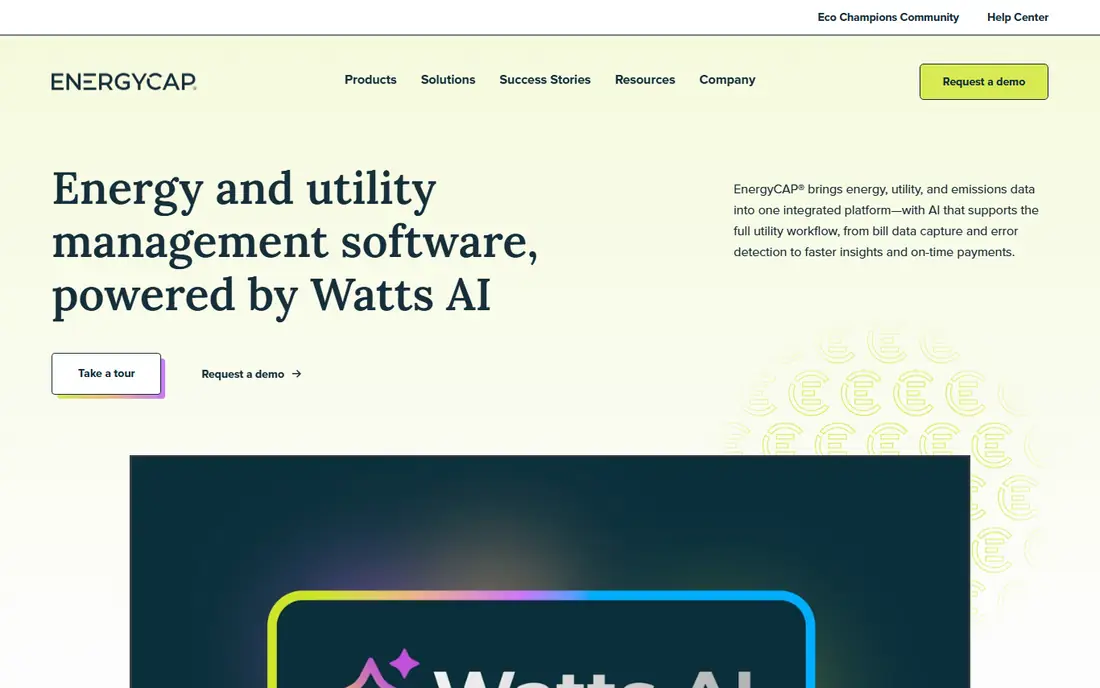
Facilities and finance teams that need to know where the utility money goes should start with EnergyCAP. It brings energy, utility and carbon data into one system, then audits bills, benchmarks facilities and reports on trends. A common use is catching billing errors and spotting a building whose use is creeping up.
Pricing depends mostly on how many utility meters you track, and the plans go up from an entry tier to an enterprise tier, with a separate track for government buyers. That model is good for a company with a few dozen buildings, because a small office doesn't cost the same as a hospital campus. EnergyCAP also has a built-in tool for sending building data to ENERGY STAR, which helps if your city requires benchmarking.
The catch is the data source. Bills arrive monthly and often late, so EnergyCAP shows you a problem weeks after it starts. If you need to see a rooftop unit misbehaving this afternoon, you'll need a meter-based tool alongside it.
What we like- Long track record in utility bill management
- Bill auditing, benchmarking and analytics in one place
- Direct submission to ENERGY STAR Portfolio Manager
Watch out for- Built around monthly bill data, not live meter readings
- Setup takes work if your bills are spread across many vendors
Starting priceSee website
Free planNo
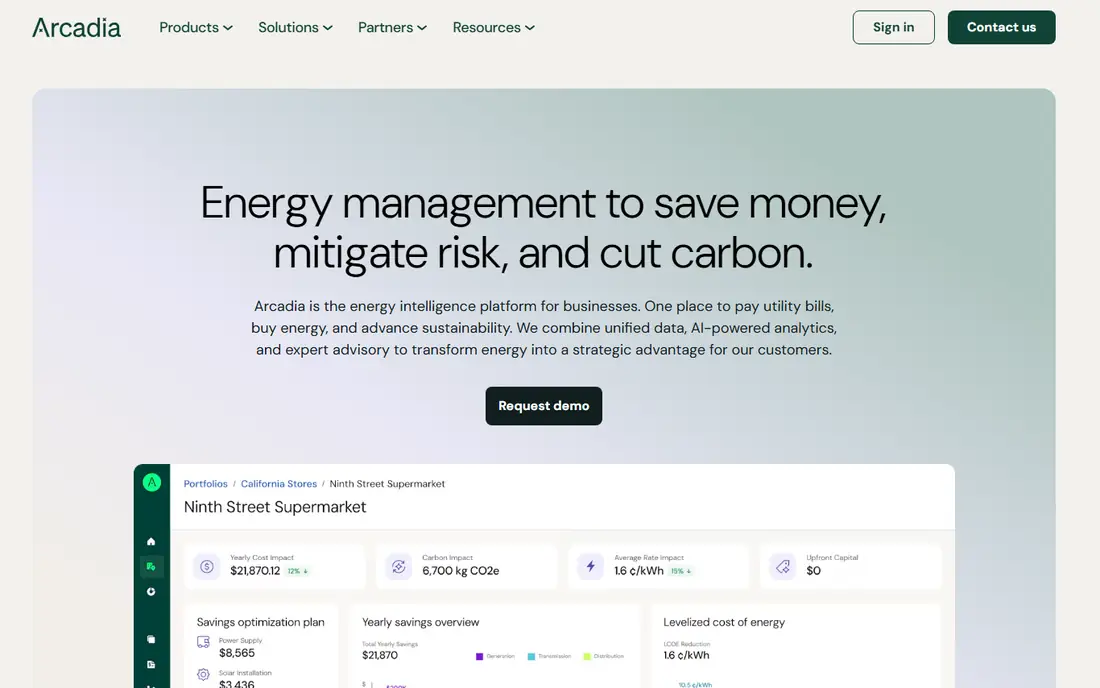
Arcadia is a good fit for operators with hundreds or thousands of utility accounts who are tired of paying bills by hand. It automates collecting, auditing, paying, budgeting and forecasting utility bills. The audits compare bills against meter interval data and the applicable tariff to find wrong rates, misread meters and duplicate fees.
Its strength comes from acquisitions. Arcadia bought Genability for tariff data and Urjanet for utility data automation, and more recently ENGIE Impact, which it calls the world's largest enterprise utility bill management platform. It also offers energy procurement advisory services, which helps if you buy power in deregulated states.
The honest downside is fit. A regional chain with 15 sites may find the onboarding and contract larger than it needs, and you won't see a price until you talk to sales. Ask how they'll pull data from your utilities (automatically or not) and how long bill history loading takes before you sign.
What we like- Automates bill collection, auditing, payment and forecasting
- Owns well-known utility data and tariff assets
- Procurement advisory available from the same vendor
Watch out for- Built for enterprise volume, so a ten-location business may be too small for it
- No public pricing
Starting priceSee website
Free planNo
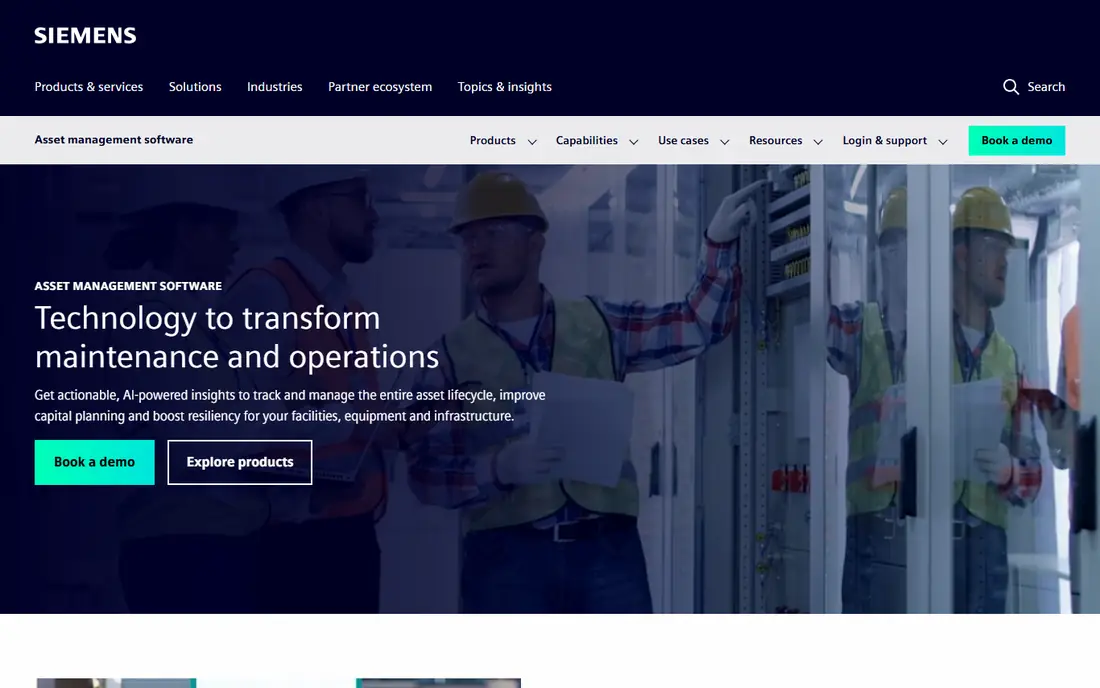
Brightly, a Siemens company, is best known for maintenance and asset management software used by school districts, cities and campuses. Energy Manager is its cloud-based energy tracking product. It shows how you use energy, tracks costs and supports conservation programs. Brightly's own material puts it toward raising ENERGY STAR scores and building awareness of ways to save.
Its real advantage shows up if you already use Brightly for work orders. The facilities team then sees energy and maintenance data side by side, so a spike in usage can lead straight to a work order. Public-sector buyers will also like that the vendor is used to procurement rules and board reporting.
For a private company with no other Brightly products, the argument is weaker. You'd be choosing a bill-tracking tool from a vendor whose main focus is elsewhere, and dedicated tools like EnergyCAP go deeper on utility auditing.
What we like- Cloud-based energy tracking focused on cost control and conservation
- Supports work on ENERGY STAR scores
- Fits with Brightly's maintenance and asset tools
Watch out for- Strongest inside the Brightly suite and less compelling as a standalone purchase
- Quote-only pricing
Starting priceSee website
Free planNo
Spacewell Energy grew out of Dexma, a Barcelona company, and now sits inside Spacewell, part of the Nemetschek group. It's a cloud platform that uses AI and big data to monitor, analyze and improve energy use in commercial and industrial buildings. Energy service companies and consultants often use it to manage client portfolios.
Its main selling point is being hardware-agnostic. If your buildings already have meters, a building management system or IoT sensors from different brands, Spacewell can usually take in that data, so you don't have to replace hardware you've already paid for. Alerts for unusual consumption and savings tracking for efficiency projects are core features, not add-ons.
US buyers should ask two things in the demo. First, how bill and tariff data from American utilities gets in. Second, what support coverage looks like in US time zones. The analytics are strong, but the product grew up in European markets.
What we like- Cloud analytics for commercial and industrial buildings
- Works with meters and sensors from many brands
- AI-based detection of unusual consumption
Watch out for- European roots, so check US utility data coverage
- US support hours and partner network are smaller than domestic rivals
Starting priceSee website
Free planFree trial
EnergyElephant suits a mid-size company that wants a simple way to track cost, consumption and carbon without hiring an energy manager. It covers energy, waste, water, transport and emissions across sites, and the vendor says it's used in more than 80 countries. That breadth helps when your sustainability report needs more than kilowatt-hours.
The bill management feature is practical. It checks unit rates automatically and flags estimated readings, which are common sources of overcharges. Cost forecasting reports also let you model how a switch to renewable supply or an efficiency project would change spending and emissions.
The weakness for US buyers is the same as with Spacewell. The company is based in Ireland, and listings quote prices in euros. Confirm how it connects to your US utilities, and whether you'll be uploading bills by hand, before you commit to more than a trial.
What we like- Covers energy, water, waste, transport and carbon in one place
- Automated bill checks flag wrong unit rates and estimated readings
- Reviewers describe it as easy to use
Watch out for- Pricing is listed in euros on third-party sites, which points to a European base
- US utility integrations need checking
Starting priceSee website
Free planNo
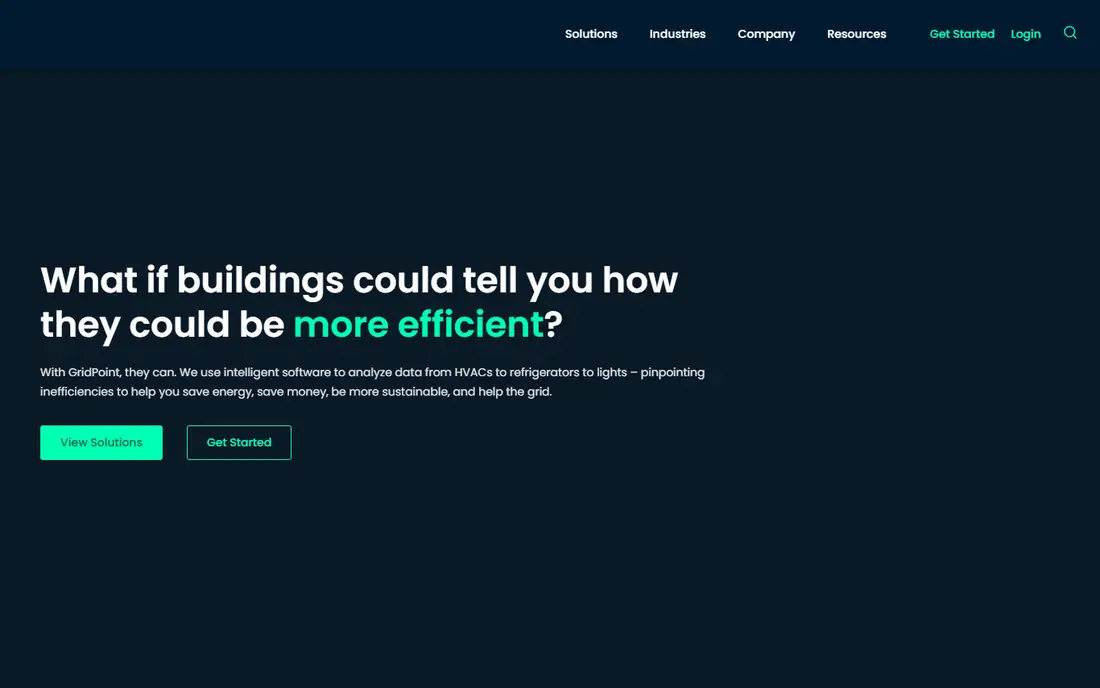
Need to control equipment, not just watch it? GridPoint is the strongest choice here. The Virginia company, founded in 2003, takes a whole-building approach. It installs submeters and controls, then uses its software to manage HVAC, lighting and refrigeration across many locations. Chain restaurants, convenience stores and retailers with dozens or hundreds of similar sites are its sweet spot.
The mobile app is genuinely useful for district managers. It shows which assets are working well and which are failing, so a dead compressor shows up before the walk-in cooler warms up. Because the system can adjust setpoints and schedules itself, savings don't depend on store staff remembering to turn things off.
The tradeoff is the install. Every site needs hardware and an electrician, so rollout runs in weeks or months, not days. Ask who owns the equipment, what happens to it if you cancel, and whether the controls work with your existing thermostats.
What we like- Combines monitoring with control of HVAC and lighting
- Remote asset monitoring across many sites
- Mobile app for managers on the move
Watch out for- Requires installing hardware at each site
- You're tied to one vendor's controls
Starting priceSee website
Free planNo
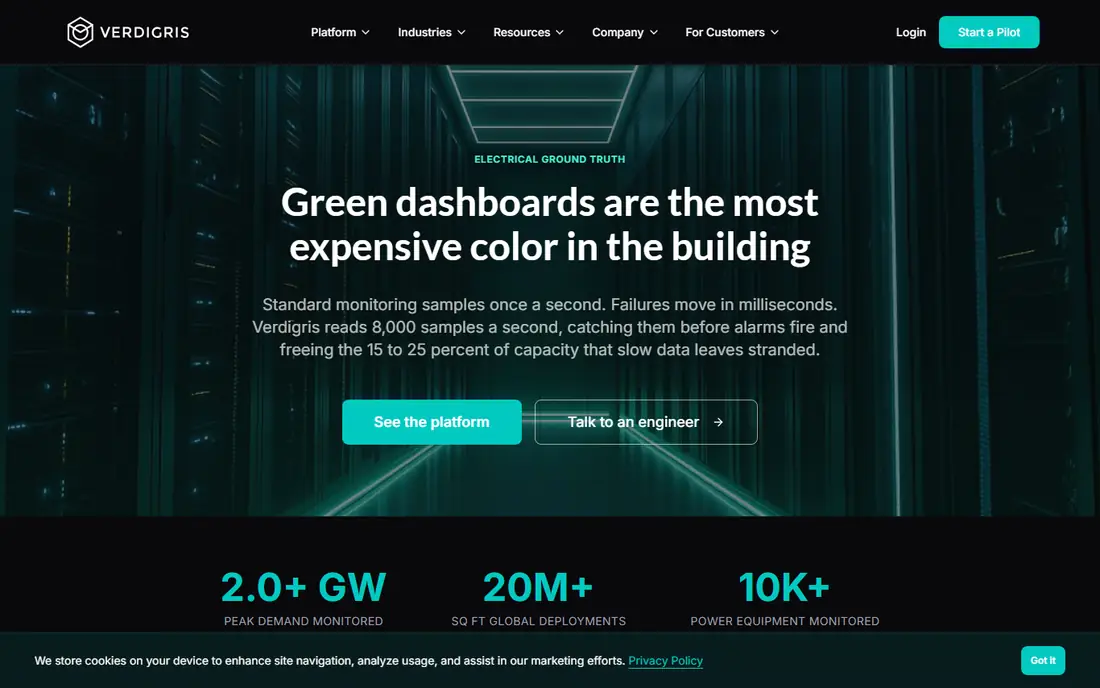
Verdigris is for owners of large, power-hungry buildings who want to know exactly which circuit is doing what. Founded in 2011, it installs energy meters in electrical panels and runs AI analytics on the data. Its customers include commercial real estate, data centers, hotels, logistics and manufacturing.
The detail is what stands out. Verdigris measures about 8,000 times per second, which lets its software pick up patterns that point to a motor wearing out or a load that shouldn't be running overnight. For a facilities team, that turns energy monitoring into an early warning system for equipment problems, not just a cost report.
Of course, a 5,000-square-foot office doesn't need that kind of detail. Installation means panel access and a licensed electrician. The value comes from acting on the alerts, so make sure someone on your team owns that work.
What we like- Measures electrical data at very high resolution (about 8,000 samples per second)
- AI analytics spot failing equipment early
- Serves commercial real estate, data centers, hotels, logistics and manufacturing
Watch out for- Needs sensors installed in electrical panels
- More than a small office needs

#8
ENERGY STAR Portfolio Manager
Best for: Free benchmarking and compliance reporting
Visit energystar.gov
Starting priceFree
Free planYes
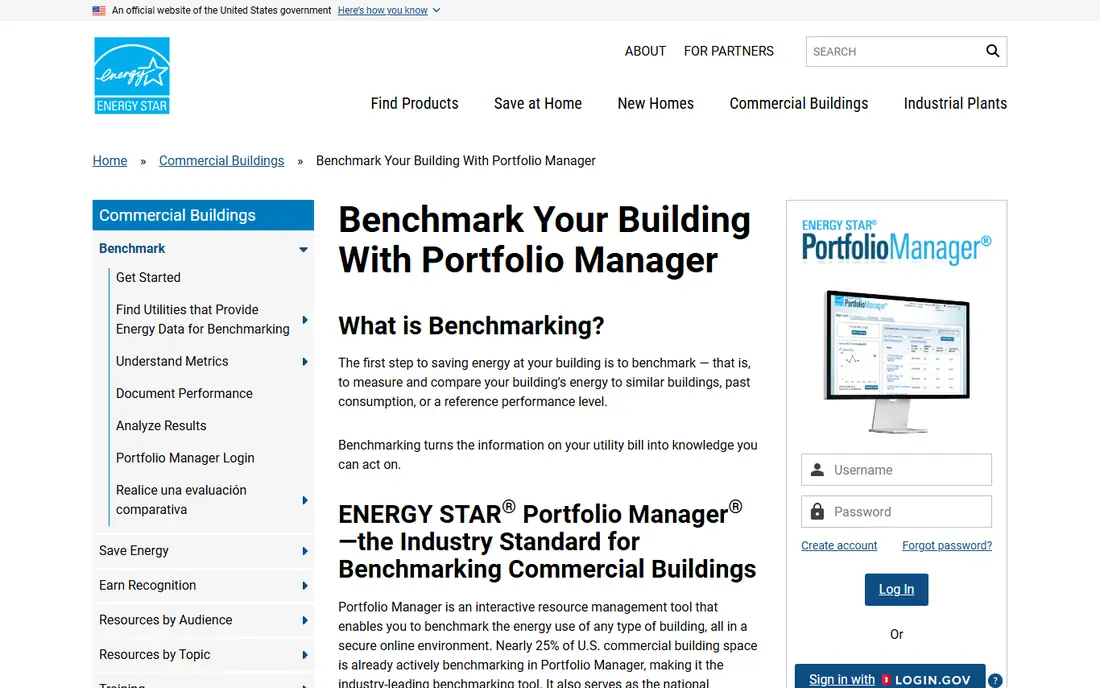
Every US building owner should know about Portfolio Manager, even if they buy something else. It's a free online tool from the EPA for tracking energy and water use, waste and emissions in any type of building. Eligible buildings get a 1 to 100 ENERGY STAR score that compares them with similar buildings nationwide.
Its biggest practical use is compliance. Many cities and states with benchmarking ordinances require reports through Portfolio Manager, so you'll probably use it whatever else you choose. Several paid tools on this list, including EnergyCAP, can push data into it automatically.
On its own, it's a scorecard, not a management system. It won't audit bills, alert you to spikes or control equipment, and typing in bills by hand across many buildings gets old fast. Use it as your starting point and your reporting tool, then add a paid product when the manual work costs more than a subscription.
What we like- Free tool from the US EPA
- Tracks energy, water, waste and greenhouse gas emissions
- The standard tool for many city and state benchmarking laws
Watch out for- Monthly data only, with no real-time monitoring
- Manual data entry can get tedious without a connected provider
How we chose
We started with products that business buyers actually see when they look for energy management, utility bill management and building energy analytics. Then we kept only tools that are sold today and fit a US business. For each one we read the vendor's product pages and documentation, checked how it's priced, and read public reviews on G2, Capterra, Software Advice and TrustRadius to find recurring praise and complaints. We did not install or run these products ourselves.
We scored each tool on what it measures (bills, meters or both), the hardware it needs, integrations with ENERGY STAR and building systems, which company sizes it fits, and how open the vendor is about pricing. None of the paid vendors publishes a complete price list on its own site, so we list "See website" rather than repeat third-party estimates. Expect pricing based on meters, sites or accounts, and confirm the final number with a quote.
Choosing energy software without overbuying
Start with your data, not the feature list
If all you have is utility bills, a bill-based tool (EnergyCAP, Arcadia, EnergyElephant) will pay off fastest. It needs no hardware and often finds billing errors in the first few months. If you already have meters or a building management system, a hardware-agnostic platform like Spacewell Energy turns that existing data into alerts. Real-time hardware from GridPoint or Verdigris makes sense when equipment runs around the clock and a single failure costs real money.
Count meters and sites before you ask for quotes
Most vendors price by meter, site or utility account, not by user. Before your first demo, list every account, meter and building, including the small ones like parking lot lighting. Vendors can give a firm quote much faster, and you can compare them on the same basis.
Ask about onboarding and contract terms
Loading 12 to 24 months of bill history is usually the slowest part of setup. Ask whether the vendor collects bills directly from utilities or expects your team to upload PDFs. Also ask about contract length, whether hardware is bought or leased, and how you export your data if you leave. Multi-year terms are common with hardware-based vendors.
Plan for compliance reporting
Check whether your city or state has a building benchmarking law. If it does, make sure the tool you pick sends data to ENERGY STAR Portfolio Manager automatically. Otherwise, someone on your team will be re-entering numbers every year.
Assign an owner
Energy software only saves money when someone acts on what it finds. Before you sign, name the person who will review alerts, dispute bill errors and follow up with facilities. Without that person, even the best platform turns into a dashboard nobody opens.
Frequently asked questions
What does energy management software actually do?
It collects data on how much energy your buildings use and what it costs, then turns that data into reports, alerts and savings opportunities. Bill-based tools work from utility invoices. Meter-based tools read live data from sensors in your electrical panels or equipment. Some, like GridPoint, can also control equipment such as HVAC and lighting.
Is there free energy software for businesses?
Yes. ENERGY STAR Portfolio Manager from the US EPA is free and tracks energy, water, waste and emissions for any building type. It's mainly a benchmarking and reporting tool, so it won't audit bills or send real-time alerts. Most paid tools offer demos, and EnergyElephant also lists a free trial.
How much does energy software cost?
None of the paid vendors in this guide publishes a full price list on its site. Pricing is usually tied to the number of meters, sites or utility accounts, and hardware-based tools add installation costs. Get quotes from two or three vendors using the same meter and site count so you can compare them fairly.
Do I need to install hardware?
Only if you want real-time, equipment-level data. EnergyCAP, Arcadia, Brightly Energy Manager and EnergyElephant can work from utility bill data alone. GridPoint and Verdigris need meters or controls installed by an electrician. Spacewell Energy can connect to hardware you already have.
How long does setup take?
Bill-based tools can usually be running within weeks, but loading past bills and mapping accounts to buildings takes the most effort. Hardware rollouts take longer because every site needs an install visit. Ask each vendor for a written onboarding timeline based on your number of sites.
Can small businesses use these tools?
A business with one to five buildings can often get by with ENERGY STAR Portfolio Manager plus a utility's own online dashboard. Paid tools start to make sense when you have many utility accounts, multiple locations or benchmarking requirements. Enterprise-focused vendors like Arcadia are usually more than a small business needs.
Sources we checked (24)
- https://www.trustradius.com/products/energycap/pricing
- https://www.softwareadvice.com/utility-billing/energycap-profile/
- https://zoftwarehub.com/products/energycap/pricing
- https://www.energycap.com/utility-bill-energy-management-software/features/energy-star-benchmarking-software/
- https://softwarefinder.com/facility-management-software/energycap
- https://www.arcadia.com/utility-expense-management
- https://www.arcadia.com/about-us
- https://www.arcadia.com/about-us/faqs
- https://help.brightlysoftware.com/Content/Documentation/Energy/Energy%20Manager/Energy%20Manager.htm
- https://www.brightlysoftware.com/resource/energy-manager-technical-information
- https://www.capterra.com/p/111249/Spacewell-Energy-by-Dexma/
- https://www.softwareadvice.com/cafm/dexma-energy-intelligence-profile/
- https://softwarefinder.com/facility-management-software/spacewell-energy-dexma
- https://www.softwareadvice.com/cafm/energyelephant-profile/
- https://www.g2.com/products/energy-elephant/reviews
- https://www.capterra.com/p/150272/Energy-Elephant/
- https://www.gridpoint.com/platform/
- https://www.gridpoint.com/platform/mobile-energy-management/
- https://en.wikipedia.org/wiki/GridPoint
- https://en.wikipedia.org/wiki/Verdigris_Technologies
- https://www.rolandberger.com/en/Insights/Publications/Making-energy-management-easy-for-businesses.html
- https://simplify.jobs/c/Verdigris
- https://aspen.gov/FAQ.aspx?QID=419
- https://www.westchester.org/clean-energy/energy-star-portfolio-manager/
Is your product missing or out of date?
We review this list regularly. Vendors can request a listing, send updated pricing or ask about featured placement.

Shihab Mia · Founder, Rankite
Shihab has 5+ years in B2B and SaaS SEO. He writes Rankite's software buying guides from pricing pages, documentation and public user reviews. More about Shihab.
 Arcadia
 Brightly Energy Manager
 Spacewell Energy (Dexma)
 EnergyElephant
 GridPoint
 Verdigris