How we make this list: we compare pricing pages, product documentation and public user reviews. Rankite is independent; if a vendor ever pays for a featured spot, that listing is clearly labeled Partner.
Key takeaways
- IBM Maximo and SAP EAM are the enterprise defaults for large operators with complex reliability programs and existing ERP investments.
- Hexagon EAM and AVEVA suit asset-intensive operators that need deep engineering data alongside maintenance workflows.
- Ultimo is the strongest mid-market EAM, with faster deployment than the enterprise suites.
- UpKeep and Fiix bring mobile-first CMMS to smaller operations, with transparent pricing and quick setup.
- Prometheus Group is the specialist pick for SAP shops that need serious planning and scheduling on top of their ERP.
Quick comparison
| Tool | Best for | Starting price | Free plan |
|---|
 Ultimo Ultimo | Mid-market EAM with fast deployment | See website | See website |
 SAP EAM SAP EAM | SAP-centric large enterprises | See website | See website |
 Hexagon EAM Hexagon EAM | Asset-intensive industries | See website | See website |
 IBM Maximo IBM Maximo | Reliability-centered maintenance at scale | See website | See website |
 AVEVA AVEVA | Engineering data and digital twins | See website | See website |
 Bentley AssetWise Bentley AssetWise | Infrastructure and linear assets | See website | See website |
 UpKeep UpKeep | Mobile-first CMMS for smaller teams | $24 per user/month | Free trial |
 Fiix Fiix | Quick-setup CMMS with a free tier | See website | Yes |
 eMaint eMaint | Configurable CMMS backed by Fluke | See website | See website |
 Prometheus Group Prometheus Group | Planning and scheduling for SAP users | See website | See website |
Is your product missing or out of date?
We review this list regularly. Vendors can request a listing, send updated pricing or ask about featured placement.
The best oil and gas asset management software
Starting priceSee website
Free planSee website
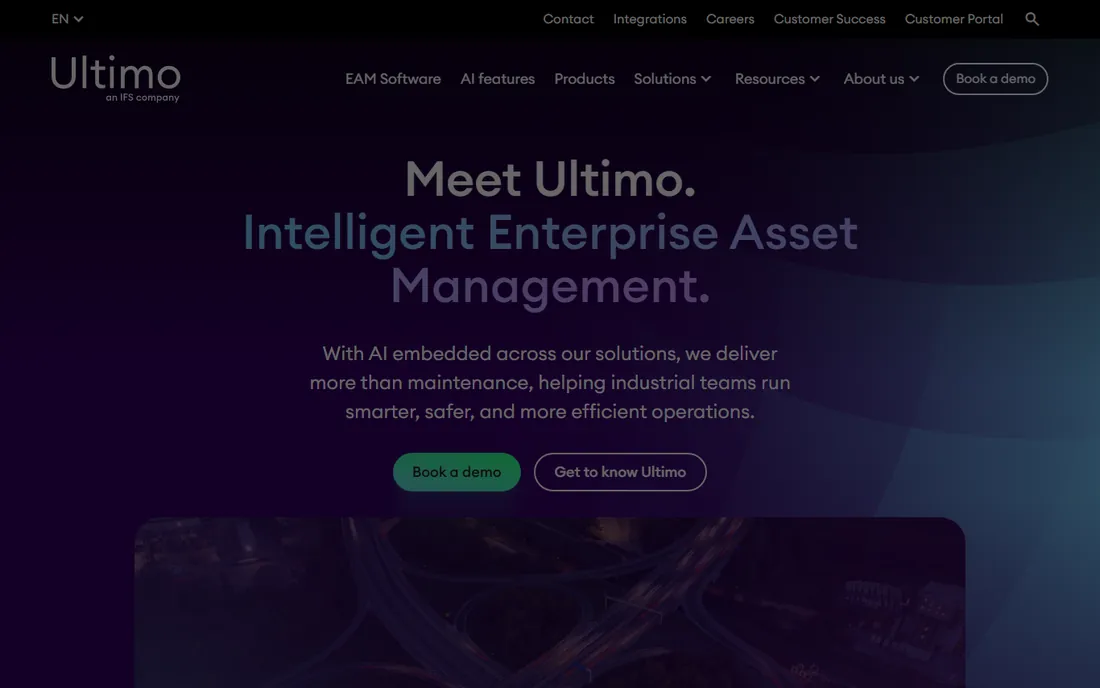
Ultimo, part of IFS, has carved out the space between lightweight CMMS and heavyweight EAM. Its pitch is speed: rapid deployment, flexible pricing and an interface that maintenance teams actually adopt, backed by thorough e-learning. For a mid-size operator or a single refinery that finds Maximo overwhelming and UpKeep too light, Ultimo hits the middle with genuine EAM depth, including analytics, maintenance planning and collaboration features.
The tradeoff is scale. Ultimo will not match the multi-decade reliability libraries, industry templates and global SI partner networks of SAP or IBM. Its flexible pricing model is a plus for buyers tired of enterprise license negotiations, but expect the quote to still require a sales conversation. If your operation needs real EAM without a two-year implementation, Ultimo deserves the first demo slot.
What we like- Marketed on unmatched time to value with rapid deployment
- Flexible configuration without heavy customization
- Strong e-learning resources for adoption
Watch out for- Less depth than SAP or Maximo for the largest global operators
- Smaller partner ecosystem than the enterprise giants
Starting priceSee website
Free planSee website

For operators already running SAP, SAP EAM is less a choice than a consequence: the asset data lives next to the financials, the procurement and the HR, and maintenance planning draws on the same master data. That integration is the product's superpower in oil and gas, where turnaround planning, MRO procurement and capital project accounting all touch the asset register.
The cost is real in both money and time. SAP EAM implementations are measured in quarters, not weeks, and the licensing conversation requires specialists. An operator without SAP ERP elsewhere should think very carefully before buying EAM standalone, because the integration value is where the price is justified. For the SAP shop, though, it is the system of record everything else feeds.
What we like- Native integration with SAP ERP, finance and procurement
- Deep asset lifecycle and capital planning capabilities
- Massive global implementation partner network
Watch out for- Expensive licensing and long implementation timelines
- Overkill for operations not already on SAP
Starting priceSee website
Free planSee website
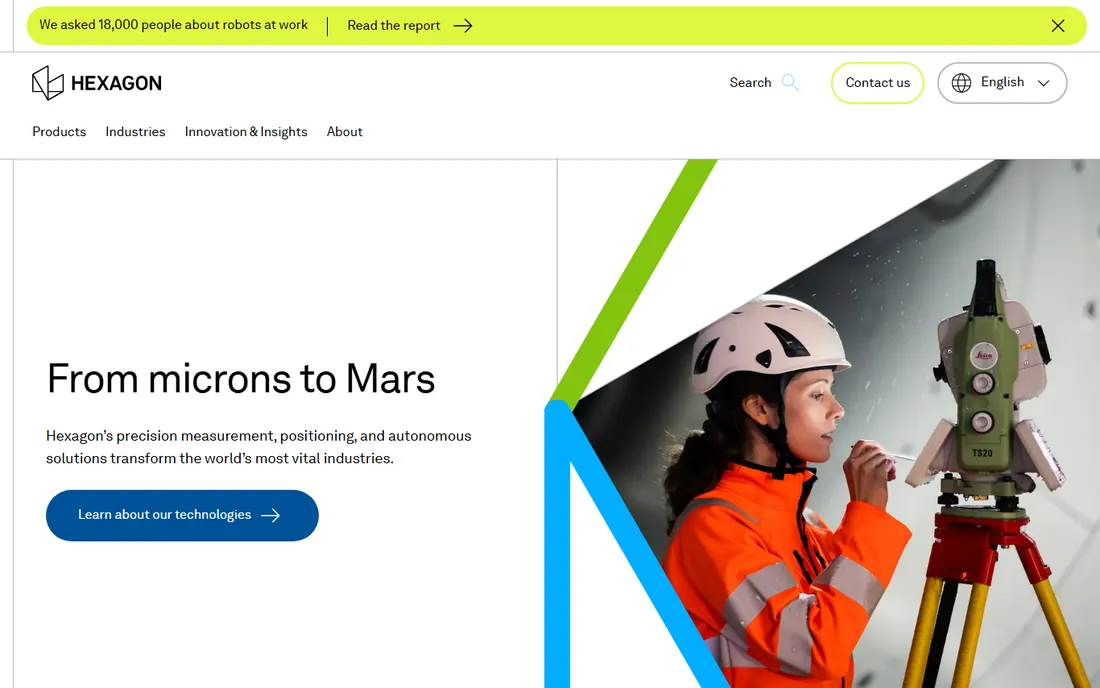
Hexagon EAM (the former Infor EAM, now under the Hexagon banner) has one of the longest track records in this category, and oil and gas is core to its customer base. It handles the structures the industry runs: complex asset hierarchies, linear assets like pipelines, permit-heavy maintenance workflows and the reporting regulators expect.
The challenge is navigating Hexagon itself. The company sells an enormous portfolio, and buyers sometimes struggle to tell where EAM ends and adjacent products begin during the sales process. Pricing is enterprise and opaque. For asset-intensive operators that want a proven EAM with deep industry templates, it remains a top-tier option, but bring a clear scope to the first meeting.
What we like- Deep roots in asset-intensive industries including oil and gas
- Strong on linear assets and complex asset hierarchies
- Part of Hexagon's broad industrial software portfolio
Watch out for- Hexagon's vast portfolio can make licensing and product boundaries confusing
- Enterprise sales cycle with quote-only pricing
#4
IBM Maximo
Best for: Reliability-centered maintenance at scale
Visit ibm.com
Starting priceSee website
Free planSee website
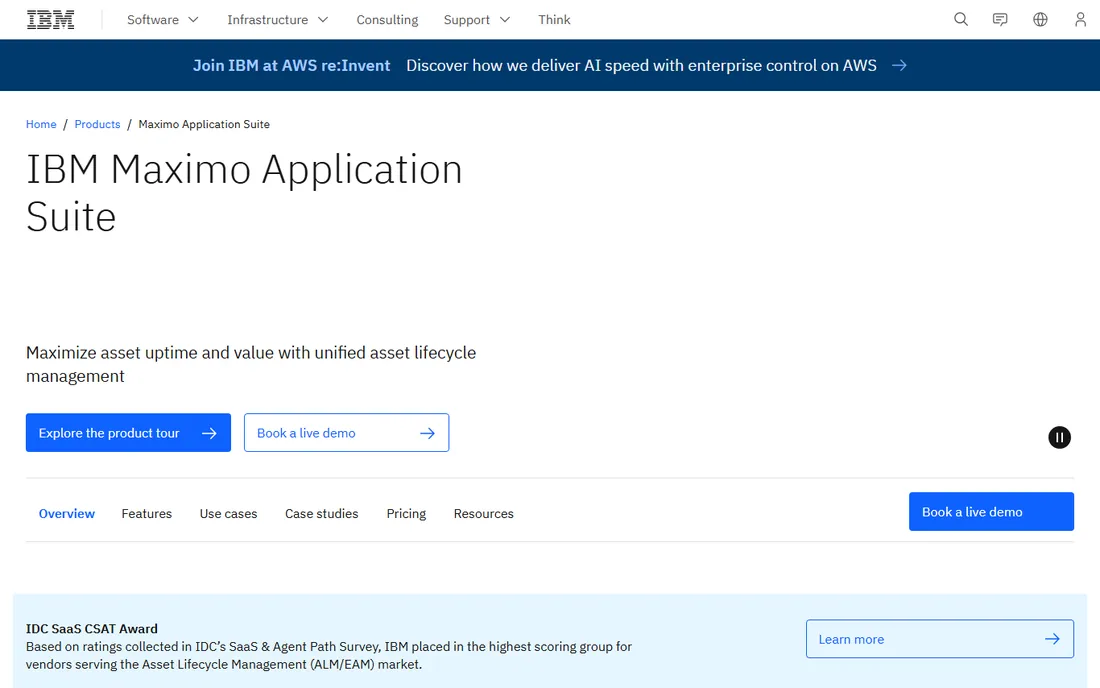
Maximo is the name most reliability engineers reach for first, and the current Maximo Application Suite justifies the reputation. It bundles maintenance management, asset inspection, field service, MRO inventory optimization and asset performance management with reliability workflows and failure mode analysis. For an operator running a formal RCM program across multiple sites, there is no deeper toolkit.
Depth is also the drawback. Maximo needs dedicated administrators, and implementations without experienced partners tend to stall. But for large oil and gas operators where unplanned downtime costs six figures a day, Maximo's reliability tooling is the industry benchmark.
What we like- Maximo Application Suite covers maintenance, inspection, inventory and APM in one platform
- Strong reliability-centered maintenance and failure analysis
- AI-assisted asset inspection and inventory optimization
Watch out for- Complexity demands skilled administrators
- Implementation and customization costs run high
Starting priceSee website
Free planSee website
AVEVA comes at asset management from the engineering side, which is exactly right for oil and gas. Its strength is the digital thread from design data to operations: 3D models, P&IDs, equipment datasheets and documents connected to live performance data in a digital twin. For brownfield facilities where the engineering documentation is scattered across decades of contractors, AVEVA's information management is often the missing foundation that makes every other system work better.
It is not, however, the tool your technicians will open to close work orders. AVEVA pairs with a CMMS or EAM for execution; it provides the engineering truth those systems execute against. For operators investing in digital twins, it is close to a default choice.
What we like- Unmatched engineering and design data integration for brownfield assets
- Digital twin capabilities tie 3D models to live operational data
- Strong oil and gas customer base
Watch out for- More engineering-information platform than work-order CMMS
- Enterprise pricing with a consultative sales process
Starting priceSee website
Free planSee website
Bentley AssetWise extends the company's infrastructure engineering DNA into operations. Where AVEVA leans process-industry, Bentley leans infrastructure: pipelines, terminals, offshore structures and the linear assets that dominate midstream. The continuity from design tools like OpenPlant into AssetWise means the asset register can inherit engineering data rather than being rebuilt from scratch at handover.
The catch is that AssetWise makes most sense inside a Bentley ecosystem. Operators already using Bentley design software get a smooth path; others face both a licensing maze and a cultural question about who owns the asset data. For midstream and infrastructure-heavy operators with Bentley in the engineering department, it is a natural fit.
What we like- Deep integration with Bentley's design and BIM tools
- Strong for linear assets like pipelines and transmission networks
- Digital twin workflows from project delivery into operations
Watch out for- Bentley's licensing model is complex
- Engineering-heavy orientation needs design-side buy-in
Starting price$24 per user/month
Free planFree trial
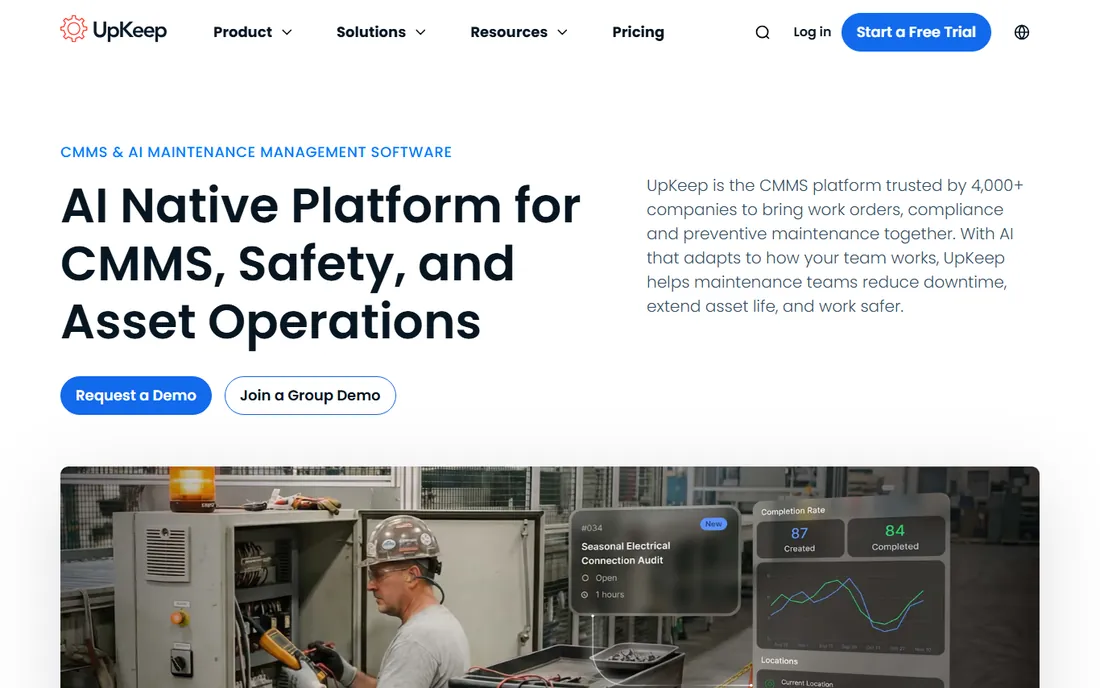
UpKeep is the rare maintenance platform that publishes its prices: the Essential plan starts at $24 per user per month, and every plan includes a free trial with no credit card required. The product is a mobile-first CMMS covering work orders, preventive maintenance, asset tracking, parts and inventory, with newer additions for safety reporting, fleet, IoT condition monitoring and an AI assistant that drafts work orders from real-time data. Its customer list includes names like Chevron and Unilever.
For oil and gas, UpKeep fits the smaller end: single sites, field service teams, contractors and mid-size operators getting off paper and spreadsheets. It will not replace Maximo's reliability analytics or SAP's capital planning. But for teams that need work orders, PMs and asset history running in weeks rather than quarters, the value is hard to argue with.
What we like- Transparent pricing starting at $24 per user per month
- Mobile experience technicians actually use in the field
- AI assistant (Nova) and IoT sensor options extend the platform
Watch out for- CMMS depth rather than full EAM for complex reliability programs
- Advanced modules add cost on higher tiers
Starting priceSee website
Free planYes
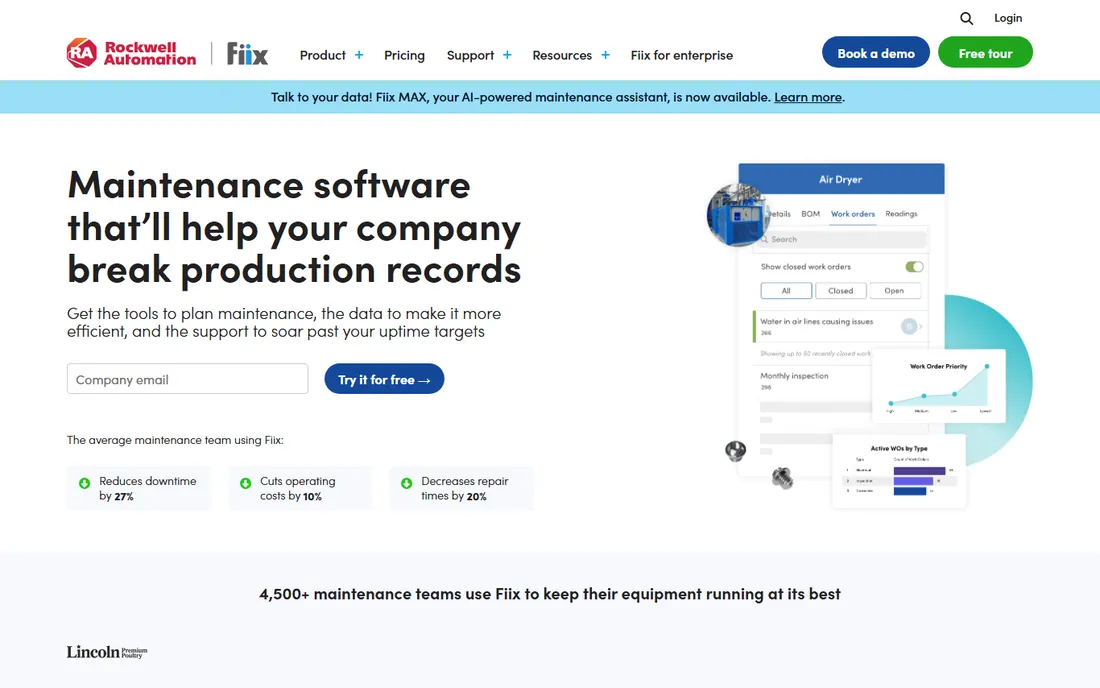
Fiix, now part of Rockwell Automation, offers something almost nobody else in this category does: a genuinely free CMMS tier. Small maintenance teams can run work orders, assets and parts without a budget conversation, then upgrade as needs grow. The paid product is a clean cloud CMMS with asset insights dashboards that flag overspending on maintenance before it becomes downtime.
The honest framing is that Fiix is a CMMS, not an EAM. It handles day-to-day maintenance well but does not attempt the capital planning or reliability modeling of the enterprise suites. For oil and gas contractors, small operators and single facilities, that is often exactly right.
What we like- Free CMMS tier gets small teams started at no cost
- Cloud-based with quick implementation
- Solid work order, asset and parts management
Watch out for- Reporting and analytics depth grows on higher plans
- Enterprise features lag the full EAM suites
Starting priceSee website
Free planSee website
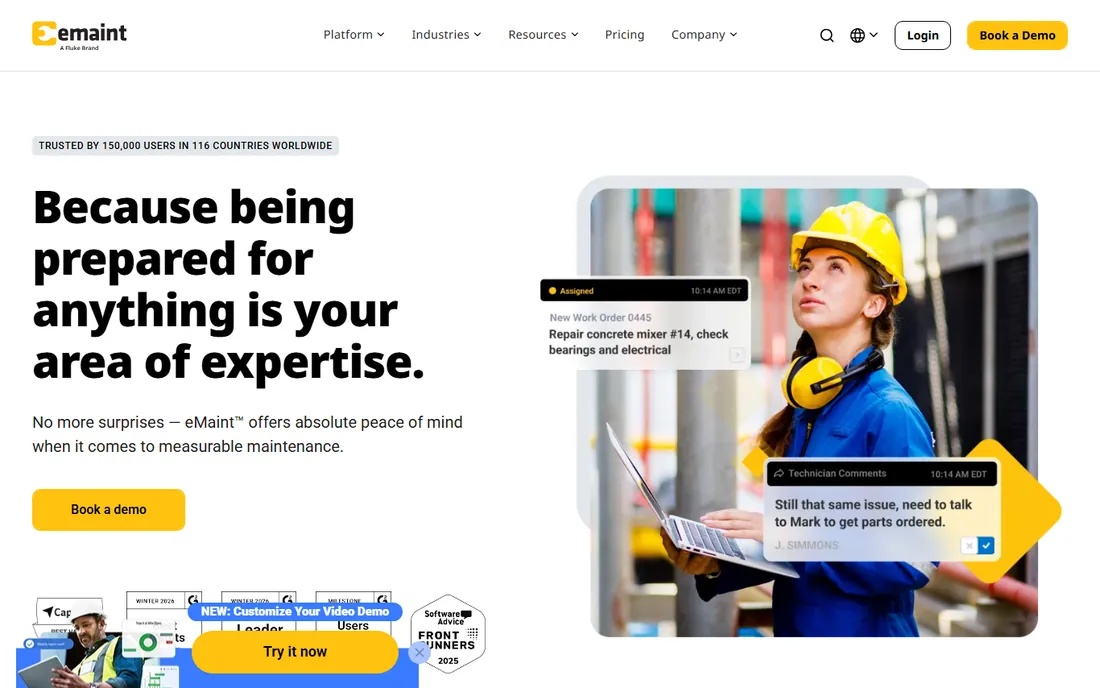
eMaint has been refining its CMMS for four decades, and it shows in configurability: teams can shape workflows, forms and reports to match their processes without custom development. Backed by Fluke, it brings reliability credibility and the stability of a large parent, with multi-site governance that suits operators standardizing maintenance across facilities. The platform handles the full CMMS scope from work orders to inventory to analytics.
The buying reality is enterprise: quote-based pricing plus implementation services, with teams typically going live over months rather than days. For operators that want a proven, configurable CMMS with a vendor that will still be here in twenty years, eMaint's longevity is the argument.
What we like- Highly configurable workflows without custom code
- Fluke backing brings reliability expertise and stability
- Strong multi-site governance for growing operations
Watch out for- Quote-only pricing with implementation services adding to the total
- Interface shows its age next to newer cloud rivals
Starting priceSee website
Free planSee website
Prometheus Group does one thing exceptionally well: it makes SAP Plant Maintenance usable for the planners and schedulers who live in it. Its tools cover the full maintenance workflow from planning and scheduling through permits, safety and mobile execution, with particular strength in turnarounds and shutdowns where oil and gas operators feel the most pain. The ERP integration is the point: data flows in and out of SAP rather than living in a disconnected point solution.
That focus is also the boundary. Prometheus shines brightest inside SAP shops; outside them, much of the value proposition thins. For the SAP-based refinery or chemical plant struggling with turnaround planning, it is the specialist worth evaluating before any generic EAM shortlist.
What we like- Planning and scheduling tools purpose-built on top of SAP PM
- Strong in turnarounds, shutdowns and outage management
- Deep ERP integration keeps data in one system
Watch out for- Value is concentrated in SAP environments
- Standalone appeal is limited outside that ecosystem
How we chose
We evaluated each product from vendor documentation, pricing pages, analyst coverage and public reviews on G2, Capterra and Reddit. Every tool here exists today and is deployed in oil, gas or adjacent asset-intensive industries. We weighted industry fit (regulatory workflows, linear assets, MRO inventory, offline field mobility, ERP integration) over generic maintenance features, and we included both enterprise EAM suites and lighter CMMS tools because the right tier depends on operation size. We noted acquisitions and rebrands so you evaluate the current product. We did not run hands-on trials.
What to look for before you buy
First, decide whether you need EAM or CMMS, because the price difference is an order of magnitude. EAM covers the full asset lifecycle: procurement, capital planning, depreciation, reliability modeling and decommissioning. CMMS covers the daily work: work orders, preventive maintenance, parts and technician scheduling. A single plant or field operation usually needs CMMS; a multi-site operator with capital planning needs EAM. Buying EAM for a CMMS problem is the classic overspend.
Second, map your regulatory and safety requirements. Oil and gas maintenance lives under OSHA process safety management, EPA rules and often state-level regimes, and the software must support permits, lockout/tagout, management of change and audit trails without workarounds. Ask vendors to demo the exact compliance workflows you run. Electronic signatures, revision-controlled procedures and inspection-ready reporting separate serious industry tools from generic ones.
Third, test the field reality. Technicians work in areas with no connectivity, wearing gloves, often in harsh weather. The mobile app must work fully offline, sync cleanly, and let a tech close a work order with photos in under a minute. If the vendor's mobile demo needs perfect Wi-Fi, that tells you everything.
Fourth, interrogate integration. The asset system must talk to your ERP (SAP, Oracle or otherwise), your historian or SCADA data, and your document management. Ask which integrations are native, which need middleware, and who has actually deployed them in oil and gas. Data migration from legacy systems and spreadsheets is where implementations die, so ask for a migration plan with named references before you sign.
How pricing usually works
Oil and gas asset management pricing splits into two worlds. CMMS tools like UpKeep and Fiix publish per-user monthly pricing, typically $24 to $80 per user per month, with free trials or free tiers to start. Implementation is measured in days or weeks, and the total first-year cost is predictable.
Enterprise EAM is a different conversation. SAP EAM, Maximo, Hexagon EAM and AVEVA license by user counts, asset counts or enterprise agreements, always quote-based, with implementation services that often exceed the first-year license cost. A realistic enterprise EAM project runs from hundreds of thousands into seven figures all-in. Prometheus Group and similar specialists price by module and user count on top of the ERP investment you already made.
The honest budgeting rule: take the license quote, add implementation, add internal staff time, and add a contingency for data migration. Whoever gives you the smallest total cost over five years usually wins, not whoever has the lowest year-one license.
Frequently asked questions
What is the difference between EAM and CMMS?
A CMMS manages day-to-day maintenance: work orders, preventive maintenance schedules, parts inventory and technician activity. EAM covers the full asset lifecycle, adding procurement, capital planning, depreciation, reliability engineering and end-of-life. Most modern platforms blend both, but the enterprise suites go much deeper on lifecycle and financial integration.
Which system is best for a small oilfield services company?
Start with a CMMS, not an EAM suite. UpKeep ($24 per user per month with a free trial) or Fiix (which offers a free tier) will get work orders, preventive maintenance and asset history running in weeks. Graduate to Ultimo or an enterprise EAM only when multi-site complexity or capital planning demands it.
How long does an EAM implementation take?
It depends on the tier. Cloud CMMS tools go live in days to weeks. Mid-market EAM like Ultimo typically deploys in weeks to a few months. Enterprise suites run six to eighteen months for a multi-site rollout, with data migration consuming much of that time. Ask for three reference customers of your size and call them.
Do these systems work offline in the field?
The good ones do. Field technicians in oil and gas routinely work beyond cellular coverage, so offline mobile capability with clean sync is a requirement, not a feature. UpKeep, Fiix, Maximo and Prometheus Group all offer offline-capable mobile apps. Verify offline depth in a trial: some apps cache read-only data but require connectivity to submit work.
Can asset management software help with regulatory compliance?
Yes, and in oil and gas it is often the primary justification. The right system enforces permit workflows, lockout/tagout procedures, management-of-change documentation and calibration tracking, then produces the audit trail inspectors ask for. Generic maintenance tools without these workflows will leave your compliance team maintaining a parallel paper system, which defeats the purpose.
Sources we checked (10)
- https://ultimo.com/
- https://www.sap.com
- https://hexagon.com/
- https://www.ibm.com/products/maximo
- https://aveva.com/
- https://bentley.com/
- https://upkeep.com/
- https://fiixsoftware.com/
- https://emaint.com/
- https://prometheusgroup.com/
Is your product missing or out of date?
We review this list regularly. Vendors can request a listing, send updated pricing or ask about featured placement.

Shihab Mia · Founder, Rankite
Shihab has spent more than a decade helping SaaS and e-commerce brands grow through search. He writes Rankite's software buying guides from pricing pages, documentation and public user reviews. More about Shihab.