How we make this list: we compare pricing pages, product documentation and public user reviews. Rankite is independent; if a vendor ever pays for a featured spot, that listing is clearly labeled Partner.
Key takeaways
- GRIN is the only platform here with public pricing, starting at $200 per month with a genuinely free starting tier, which makes it the easiest to evaluate.
- Upfluence and Aspire are built for ecommerce first, with deep Shopify integrations, affiliate tracking and product seeding workflows.
- CreatorIQ and Traackr serve enterprises that need brand safety, global data and governance, and both now lead with AI strategists.
- Later pairs influencer marketing with social media management, a useful combo if one team owns both.
- Influencity packs the widest feature list, adding social listening and a social publishing hub to the standard influencer toolkit.

#1
Upfluence
Best for: ecommerce brands running affiliate and creator campaigns at scale
Visit upfluence.com
Starting priceSee website
Free planNo
Upfluence is built around the commercial side of creator marketing. Its integrations with Shopify, WooCommerce, Magento, BigCommerce and Amazon pull real sales data into the platform, so you can see which creators actually drive revenue rather than just reach. Affiliate campaigns run on promo codes and trackable links, and creator payments, including PayPal and Upfluence Pay with KYC checks, happen inside the same system.
The newer Jaice AI co-pilot helps with creator matching and campaign setup, which shortens the learning curve. Outreach templates and a creator marketplace cover the top of the funnel. The honest trade-offs are price and complexity: plans are quote-based and aimed at brands with real budgets, and smaller teams may find the feature depth more than they need. For ecommerce brands where creator ROI has to show up in the P&L, Upfluence is purpose-built for that job.
What we like- Jaice AI co-pilot
- Deep Shopify, WooCommerce and Amazon integrations
- Built-in creator payments with KYC
- Strong sales tracking
Watch out for- Quote-based pricing
- Setup can be heavy for small teams

#2
Aspire
Best for: ecommerce brands scaling creator programs with product seeding
Visit aspire.io
Starting priceSee website
Free planNo
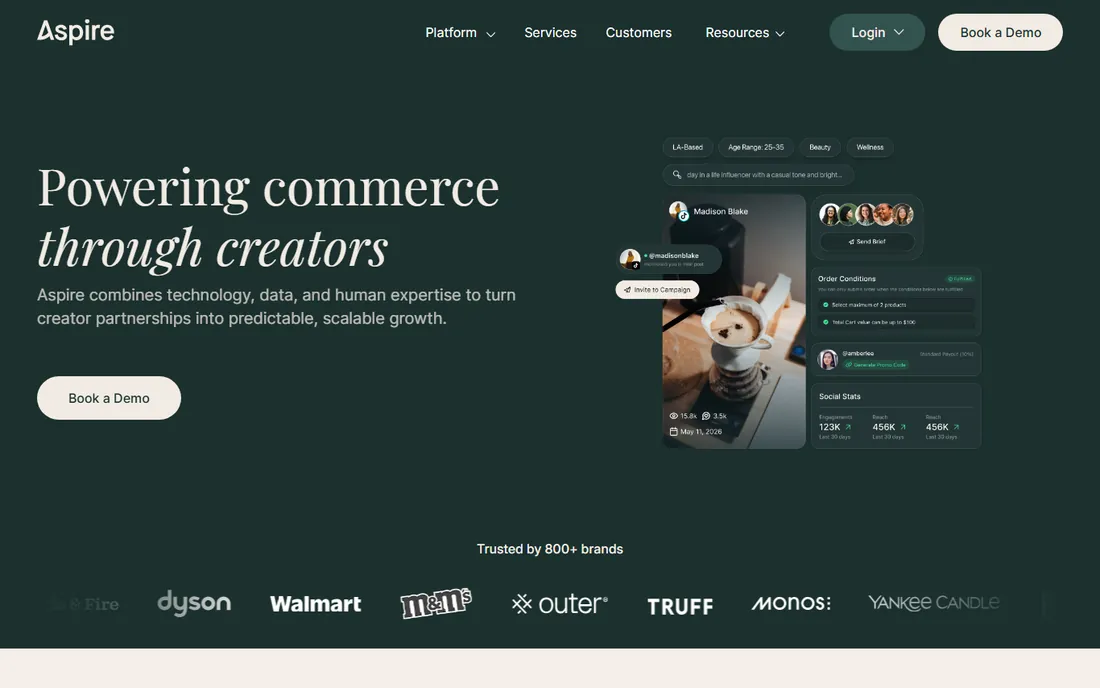
Aspire serves more than 800 brands and positions itself as the all-in-one creator platform for ecommerce. Its AI creator discovery lets marketers describe the creator they want in plain language instead of fiddling with filters, and the marketplace brings opted-in creators to the brand. Product seeding is a particular strength: Shopify fulfillment lets creators pick from a curated catalog or receive products directly, with full visibility and no side spreadsheets.
Campaign management covers briefs, content approval, automated workflows and payments, while affiliate links, promo codes and tiered commissions tie creator activity to sales. Reporting connects reach, engagement and revenue in dashboards built for proving ROI. Pricing is custom and the sales process starts with a demo, which puts it firmly in the considered-purchase category. Brands already doing creator seeding at volume will get the most from it.
What we like- AI creator discovery in plain language
- Large creator marketplace
- Shopify fulfillment for seeding
- Affiliate and promo code tracking
Watch out for- Enterprise pricing
- Demo-gated sales process

#3
GRIN
Best for: DTC brands that want a creator CRM with transparent pricing
Visit grin.co
Starting price$200 per month
Free planYes
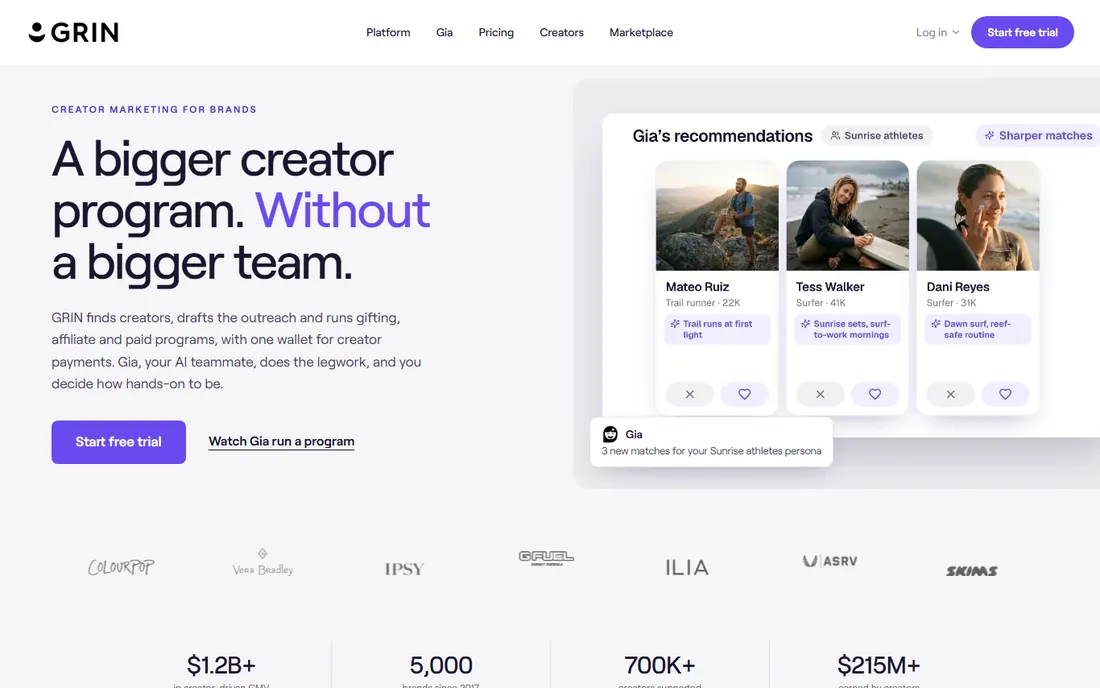
GRIN stands out in this list for transparency. Paid plans start at $200 per month, month to month, and you can start free without a credit card or a sales call. A simple affiliate program costs nothing beyond that, with no commissions on affiliate sales, which is rare in this category. The platform combines creator discovery, a real CRM, campaign execution and reporting, with 700,000+ opted-in creators in its marketplace.
The newer Gia AI agent acts as an operating layer on top, handling outreach, follow-ups and reporting groundwork while the team keeps approval control. GRIN publishes real market rate benchmarks so brands negotiate from data instead of guesses. The pricing model uses credits for what the AI does rather than seats, which is flexible but takes a minute to understand. For direct-to-consumer brands built on product seeding and affiliate creators, GRIN is the most approachable full platform here.
What we like- Public pricing from $200 per month
- Free to start with no credit card
- Gia AI agent
- 700,000+ creator network
- No commissions on affiliate programs
Watch out for- Credit-based pricing takes explaining
- Strongest for product-seeding brands

#4
CreatorIQ
Best for: enterprises that need governance, measurement and brand safety
Visit creatoriq.com
Starting priceSee website
Free planNo
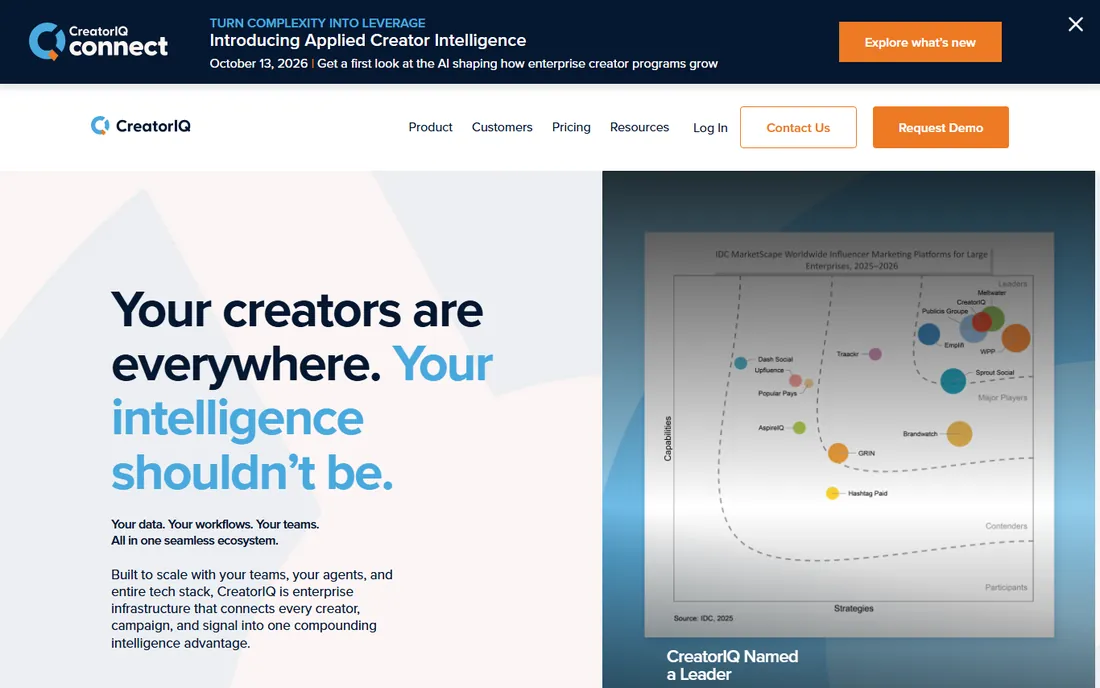
CreatorIQ is enterprise infrastructure for creator marketing, and it does not pretend otherwise. Its Creator Graph indexes millions of creators with content refreshed daily, and the platform is built for companies running programs across multiple brands, markets and teams. SafeIQ screens creator content against brand safety standards continuously, which matters when a wrong partnership can make headlines.
Measurement is the other pillar: an analytics agent answers questions against your own campaign data, with hundreds of metrics for deciding where to invest next. The company was named a Leader in the IDC MarketScape for influencer marketing platforms, and integrations with tools like Sprinklr plus a bi-directional API fit it into enterprise stacks. All of this comes with enterprise pricing and a proper sales cycle. If your program spans regions and needs compliance-grade controls, CreatorIQ is the benchmark. Smaller brands should look elsewhere.
What we like- Creator Graph data infrastructure
- SafeIQ brand safety screening
- IDC MarketScape Leader
- Strong API and tech-stack integrations
Watch out for- Enterprise cost and sales cycle
- Far more than small teams need

#5
Later
Best for: brands that want influencer marketing and social management from one vendor
Visit later.com
Starting priceSee website
Free planNo
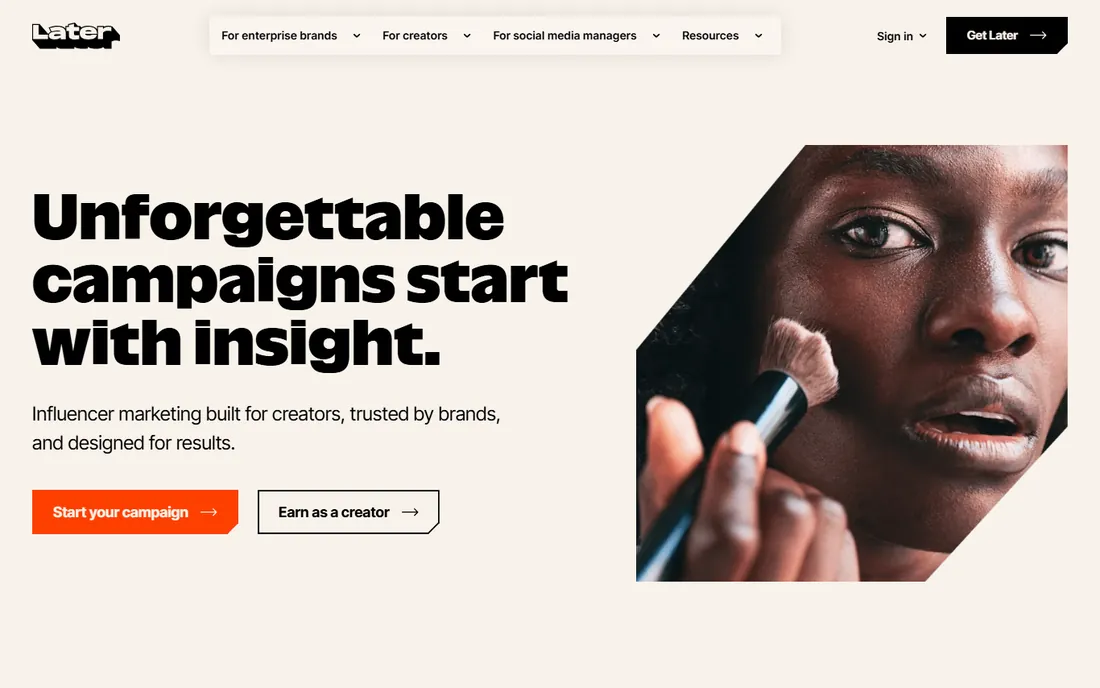
Later is unusual here because it does two jobs: influencer marketing and social media management. For teams where the same people run the brand's social accounts and its creator campaigns, that combination removes a lot of context switching. Its EdgeAI analyzes creator behavior, trends and purchase data, drawing on over a billion link-in-bio transactions and $2 billion in verified influencer-driven purchases.
Creator matching is done with brand fit, safety and past performance checked upfront, and the company works with names like Nike, Unilever and Crumbl. The influencer side leans more managed-service than pure self-serve software, so hands-on teams should clarify how much is platform versus people during the sales conversation. Pricing is not published. Later fits mid-market and enterprise brands that want data-backed creator selection without stitching two vendors together.
What we like- EdgeAI campaign insights
- Data from $2B+ in verified influencer-driven purchases
- Combines influencer with social scheduling
Watch out for- Pricing is not transparent
- Influencer offering leans service-heavy

#6
Traackr
Best for: global brands that want data-driven creator intelligence
Visit traackr.com
Starting priceSee website
Free planNo
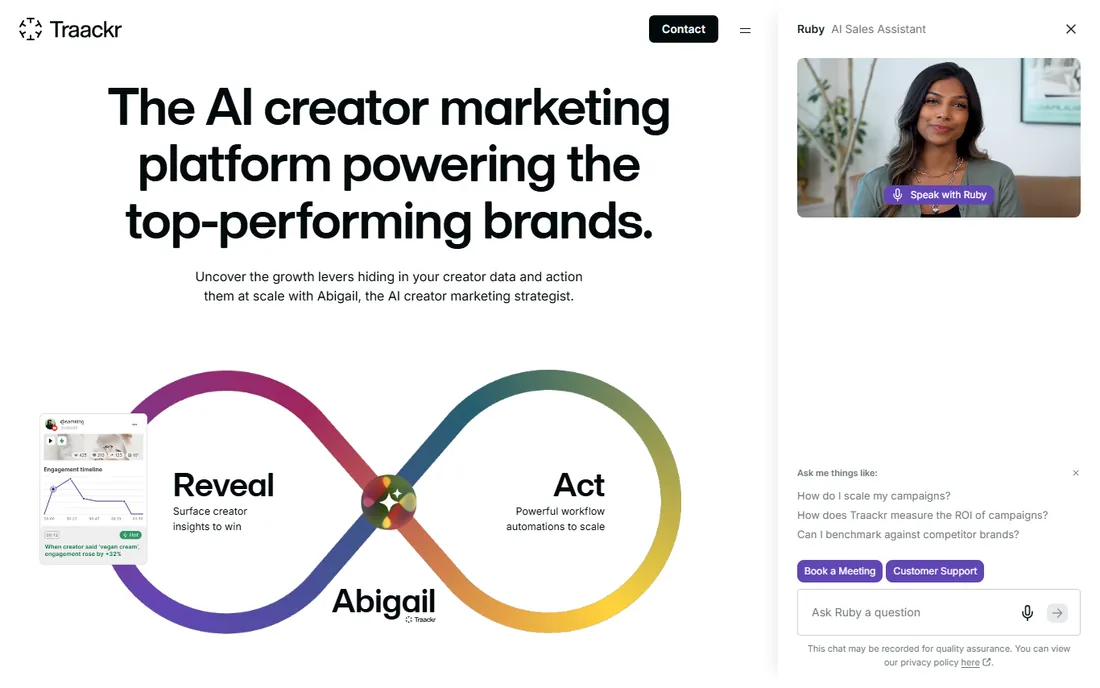
Traackr has spent over 15 years defining this category, and its current platform leans hard into AI. Abigail, its AI creator marketing strategist, turns campaign briefs into ranked creator shortlists, assists activation workflows and generates reports on what worked. The data backbone covers 70 benchmarked countries, and its Brand Vitality Score gives global teams one shared way to measure creator performance across markets, a real pain point for multinationals.
Case work with brands like Danone and L'Oreal shows the enterprise positioning: unified measurement across 18 markets, market-entry campaigns, global team rollouts. The platform suits companies where creator marketing is a line item with regional stakeholders, not a side project. Pricing is quote-based and onboarding starts with a demo. If your needs are one country and a dozen creators, this is more machine than you need.
What we like- Abigail AI creator strategist
- Benchmarks across 70 countries
- 15+ years in the category
- Strong brand vitality metrics
Watch out for- Enterprise pricing
- Demo-gated

#7
Influencity
Best for: agencies and brands that want influencer tools plus social listening
Visit influencity.com
Starting priceSee website
Free planTrial available
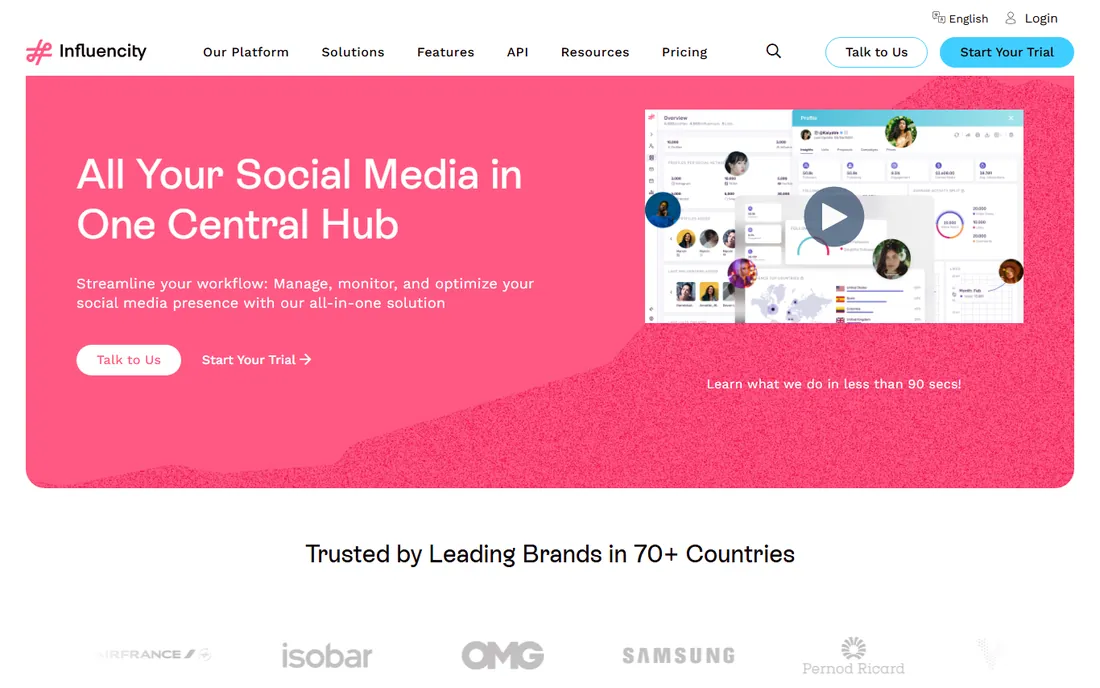
Influencity takes the all-in-one idea further than anyone else here by merging three categories: influencer marketing, social media management and social listening. Discovery covers 350 million profiles across Instagram, TikTok and YouTube with bot-audits for audience quality, and the influencer CRM tracks relationship stages, pricing histories and internal notes per creator. Outreach runs through automated email sequences from your own connected inbox.
Payments go out in bulk across 180+ countries with consolidated invoicing, and reporting is white-labeled for agencies. The social hub adds publishing, a unified inbox, link-in-bio and social ads, while social listening finds creators from real conversations instead of static filters. A 7-day free trial lets you test the core workflow. The breadth means onboarding takes longer, but agencies managing multiple clients get client workspaces and centralized control that narrower tools lack.
What we like- 350M+ searchable profiles
- Influencer CRM with pricing histories
- Outreach sequences
- Payments in 180+ countries
- 7-day free trial
Watch out for- Wide feature set means a learning curve
- Pricing is not public

#8
Modash
Best for: teams that want straightforward creator discovery without enterprise overhead
Visit modash.io
Starting priceSee website
Free planNo
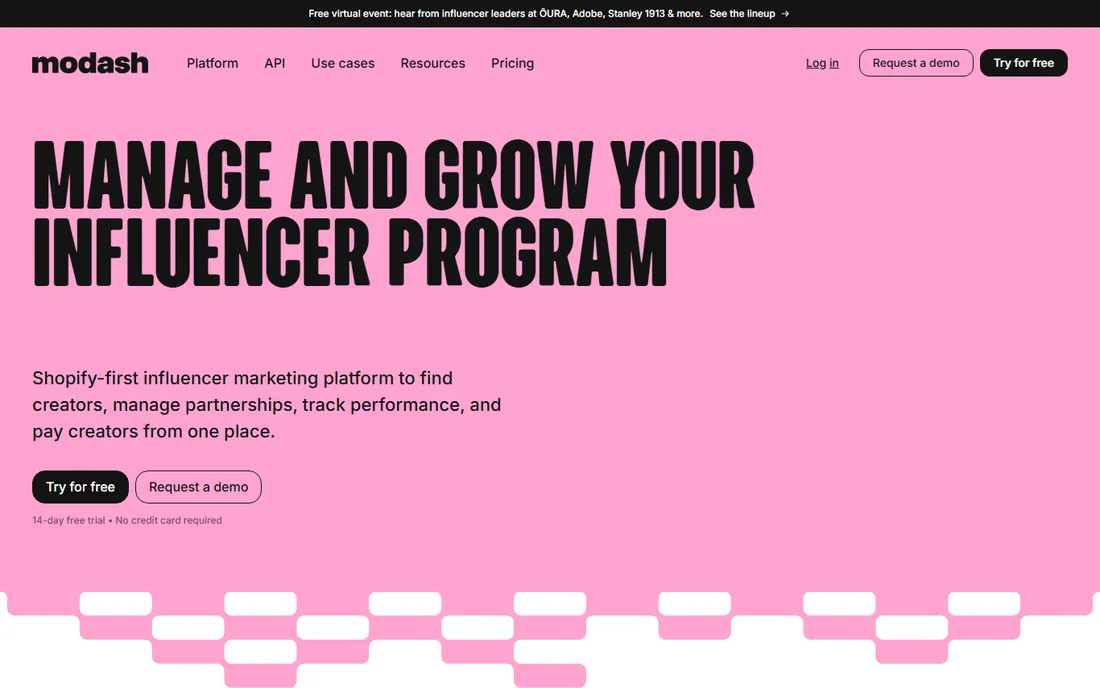
Modash is a well-known creator discovery platform aimed at teams that find the enterprise suites too heavy. Its searchable creator database, audience analytics and campaign tracking cover the core influencer workflow without the managed-service layer or the enterprise sales process. Smaller brands and agencies use it to find creators, vet audiences and run campaigns at a more accessible price point than the enterprise names above.
One honest flag: we could not open the Modash homepage in our browser during research, so treat the URL above as provided rather than address-bar verified, and confirm current pricing and plans directly on the site before deciding. If straightforward discovery is your main need and you want to avoid demo-gated enterprise tools, Modash deserves a spot on the shortlist next to GRIN and Influencity.
What we like- Large creator database
- Simple discovery workflow
- Popular with smaller teams and agencies
Watch out for- Homepage could not be verified in our browser check
- Pricing is not public
Quick comparison
| Tool | Best for | Starting price | Free plan |
|---|
| Upfluence | ecommerce brands running affiliate and creator campaigns at scale | See website | No |
| Aspire | ecommerce brands scaling creator programs with product seeding | See website | No |
| GRIN | DTC brands that want a creator CRM with transparent pricing | $200 per month | Yes |
| CreatorIQ | enterprises that need governance, measurement and brand safety | See website | No |
| Later | brands that want influencer marketing and social management from one vendor | See website | No |
| Traackr | global brands that want data-driven creator intelligence | See website | No |
| Influencity | agencies and brands that want influencer tools plus social listening | See website | Trial available |
| Modash | teams that want straightforward creator discovery without enterprise overhead | See website | No |
Is your product missing or out of date?
We review this list regularly. Vendors can request a listing, send updated pricing or ask about featured placement.
Self-serve versus enterprise: picking your tier
This category splits cleanly in two, and picking the wrong side wastes months. On the self-serve side, GRIN's public pricing and free start, Influencity's trial and Modash's lighter footprint let a small team launch a creator program this week. You trade white-glove support for speed and a credit card instead of a procurement cycle.
On the enterprise side, CreatorIQ, Traackr, Aspire and Upfluence sell governance, global data, dedicated support and integrations with the rest of the marketing stack. That is worth real money when creator spend is six or seven figures and legal, procurement and regional teams all need a say. Later sits between the two, with a managed flavor that suits brands wanting guidance.
The practical test is headcount. If one or two marketers run the whole program, buy self-serve and upgrade when the pain is real. If creator marketing spans teams, markets or agencies, the enterprise platforms pay for themselves in avoided chaos.
How we chose
We started from the platforms buyers actually evaluate: G2 and Capterra rankings, agency recommendations, analyst reports like the IDC MarketScape and creator-economy press coverage. We opened every vendor homepage to confirm the product is live under its current name and pulled pricing only from vendors' own pages; anything unverified is marked "See website." One URL, Modash, could not be opened in our browser check and is flagged as such in its review.
We favored platforms with real creator networks, working payments and reporting, not just discovery databases, and we weighted honest fit over feature counts. No vendor paid for placement, and these write-ups come from public documentation, pricing pages and user reviews, not hands-on testing.
Frequently asked questions
How much does influencer marketing software cost?
It ranges from free starting tiers to five-figure annual contracts. GRIN publishes pricing from $200 per month. Most others are quote-based, with cost driven by creator count, markets covered and support level. Always get the quote before shortlisting.
Do I need software, or can I manage creators in spreadsheets?
Spreadsheets work until about ten creators. Past that, outreach tracking, contract versions, payment records and performance screenshots become unmanageable. Software pays for itself in time saved and in the reporting you need to defend the budget.
What is the difference between a marketplace and a platform?
A marketplace is a closed network of opted-in creators you recruit from, sometimes with commissions. A platform like Influencity or CreatorIQ gives you discovery across the open social web plus CRM, outreach and payments, and your team keeps control of selection and negotiation.
How do creator payments work on these platforms?
Most handle payouts directly: you fund campaigns, the platform pays creators in their local currency and gives you consolidated invoicing. Upfluence, Aspire, GRIN and Influencity all include payment workflows, which removes the wire-transfer chaos of paying dozens of creators manually.
Can small brands use enterprise tools like CreatorIQ or Traackr?
Technically yes, practically it is a mismatch. The pricing, sales process and feature depth assume large programs. Small brands get faster results from GRIN, Influencity or Modash and can migrate up when the program outgrows them.
Sources we checked (8)
- https://upfluence.com/
- https://aspire.io/
- https://grin.co/
- https://creatoriq.com/
- https://later.com/
- https://traackr.com/
- https://influencity.com/
- https://modash.io/
Is your product missing or out of date?
We review this list regularly. Vendors can request a listing, send updated pricing or ask about featured placement.

Shihab Mia · Founder, Rankite
Shihab has spent more than a decade helping SaaS and e-commerce brands grow through search. He writes Rankite's software buying guides from pricing pages, documentation and public user reviews. More about Shihab.