How we make this list: we compare pricing pages, product documentation and public user reviews. Ratings come from G2, Capterra or Trustpilot, with the date we checked them.
Direct answer
Backblaze B2 is the top pick for most teams leaving Wasabi because storage costs $6.95 per TB and downloads stay free up to 3 times stored data. Cloudflare R2 suits download heavy apps better, since egress is free on every storage class while Standard storage costs $0.015 per GB-month.
Key takeaways
- Backup teams that rarely download data should look at Backblaze B2 first, at $6.95 per TB per 30 days with free egress up to 3 times stored data.
- Teams serving files to the public should price Cloudflare R2, where egress is free and Standard storage costs $0.015 per GB-month after a 10 GB-month free tier.
- Small projects that need a fixed entry price can start with DigitalOcean Spaces at $5 per month for 250 GB of storage and 1 TB of outbound transfer.
- Teams that delete objects often should check iDrive e2 at $6 per TB per month, with no restriction of minimum data retention.
- AWS teams should compare Amazon S3 Standard at $0.023 per GB-month for the first 50 TB against the lower per TB rates above.
Quick comparison
| Tool | Best for | Starting price | Free plan |
|---|
 Backblaze B2 | Backups with steady stored data | $6.95/TB/30-days pay as you go | None found on vendor page |
 iDrive e2 | Cheap storage with frequent deletions | $6/TB/Month | 10 GB free |
 Cloudflare R2 | Public downloads without egress fees | $0.015/GB-month Standard storage | 10 GB-month storage, 1 million Class A and 10 million Class B operations per month |
 Storj | Distributed storage with a trial | $7/TB Standard monthly storage | Free trial for 30 days, no credit card required |
 DigitalOcean Spaces | Small apps needing storage plus CDN | $5 per month | None found on vendor page |
 Vultr Object Storage | Vultr users with bundled transfer needs | $6.00 per month Archival Tier | None found on vendor page |
 Akamai Object Storage | Media delivery with Akamai CDN | See website | None found on vendor page |
 Amazon S3 | Workloads already running on AWS | $0.023 per GB-month S3 Standard for the first 50 TB | Up to $200 in AWS Free Tier credits for new AWS customers |
 Google Cloud Storage | Data already processed on Google Cloud | $0.000027397 per GiB hour Standard storage in Iowa | 5 GiB Standard storage, 5,000 Class A and 50,000 Class B operations per month |
 Microsoft Azure Blob Storage | Applications already running on Azure | See website | None found on vendor page |
Is your product missing or out of date?
We review this list regularly. Vendors can request a listing, send updated pricing or ask about featured placement.
The best Wasabi alternatives
Object storage pricing has four parts: storage per GB or TB, download fees, request fees, and minimum storage durations. A low storage rate can still produce a high bill when downloads or early deletions are charged. This list ranks 10 S3-compatible or cloud object storage services for buyers switching from Wasabi, using vendor pricing pages checked on 2026-11-28. The ranking weighs storage rate first, then egress terms, request fees, and minimum durations. Tools without readable numeric pricing are marked See website. Each entry states who should pick the tool and who should look elsewhere.
Starting price$6.95/TB/30-days pay as you go
Free planNone found on vendor page
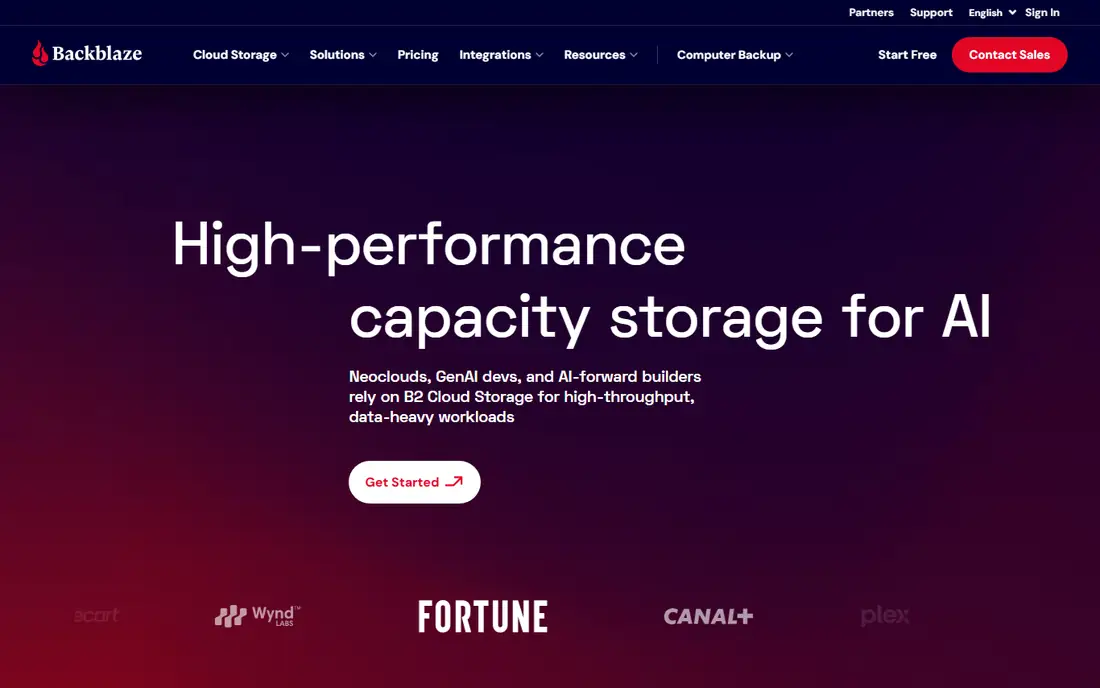
Backblaze B2 is S3-compatible cloud object storage billed monthly by byte-hour at $6.95 per TB per 30 days. It suits backup targets, media libraries, and application data that stays stored for weeks or months. The pricing page states free egress up to 3 times average monthly storage, then $0.01 per GB. Downloads through partner CDNs and compute services, including Cloudflare and Fastly, carry unlimited free egress. Backblaze describes B2 as always-hot storage and offers 1 to 5 year capacity commits for buyers that want a locked rate. For a 10 TB backup set, storage alone costs $69.50 per month at the listed rate.
The catch is the 3x egress allowance. A small bucket that serves heavy public traffic can pass 3 times its stored size and start paying $0.01 per GB, unless downloads run through a listed partner CDN. Capacity commits also bill the full term at contract start, which reduces flexibility. Pick B2 when stored data is steady and downloads stay under 3 times storage. Look at Cloudflare R2 instead when public downloads regularly exceed stored volume.
What we like- Storage at $6.95 per TB
- Free egress up to 3x stored data
- Unlimited free egress via partner CDNs
Watch out for- Egress beyond 3x costs $0.01/GB
- Committed capacity is billed for the full term at contract start
Starting price$6/TB/Month
Free plan10 GB free
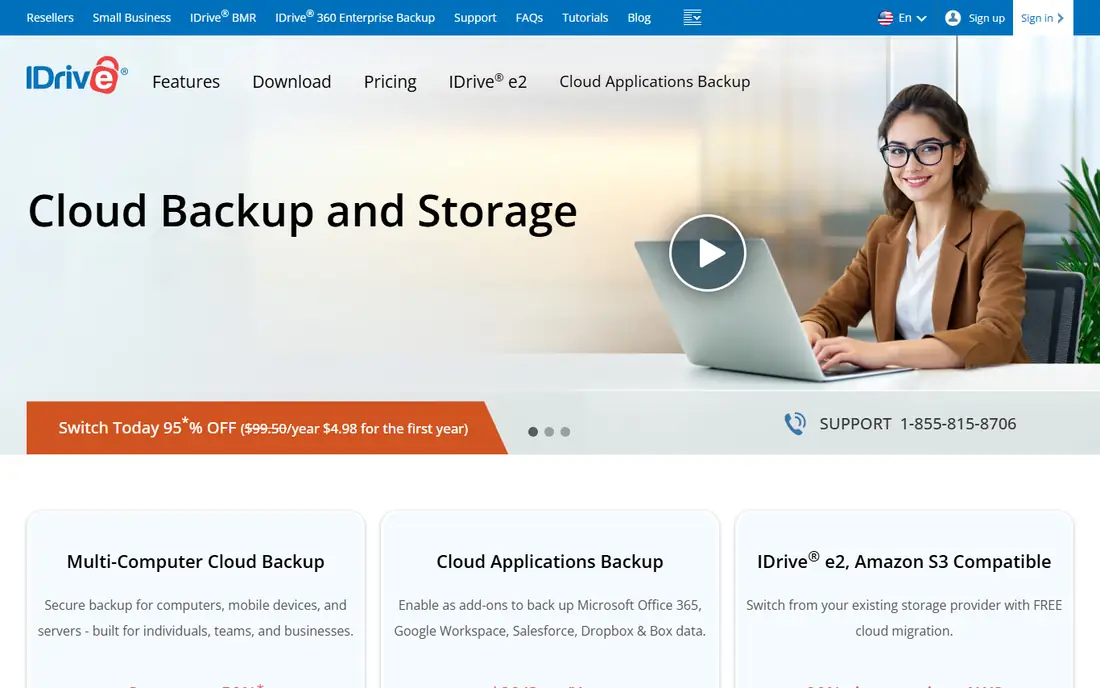
iDrive e2 is S3-compatible object storage from the iDrive backup company. The vendor comparison page lists monthly storage at $6 per TB per month, with 10 GB free to try the service. Monthly egress up to 3X storage plan capacity is free, and API calls across all classes are free. The same page states no restriction of minimum data retention, which matters for backup jobs that rotate copies daily. Annual plans start at $59.50 per year for 1 TB. Fixed pricing across all regions keeps the bill simple for teams that store copies in more than one location.
The catch is that free egress has a cap. Downloads beyond 3X storage plan capacity fall outside the free allowance, so a small, popular bucket can still face transfer charges. The annual plan also shows $29.75 for the first year against a $59.50 yearly price, so renewal cost is higher than year one. Pick e2 when objects churn often and downloads stay moderate. Look elsewhere when one bucket must serve unlimited public traffic.
What we like- Storage at $6 per TB per month
- No restriction of minimum data retention
- Free API calls across all classes
Watch out for- Free egress stops at 3X storage plan capacity
- Annual discount price applies to the first year only
Starting price$0.015/GB-month Standard storage
Free plan10 GB-month storage, 1 million Class A and 10 million Class B operations per month
Cloudflare R2 is S3-compatible object storage with no egress charges on any storage class. Standard storage costs $0.015 per GB-month. Class A operations, such as PutObject and ListObjects, cost $4.50 per million requests. Class B operations, such as GetObject, cost $0.36 per million requests. Every account gets 10 GB-month of storage, 1 million Class A operations, and 10 million Class B operations free each month. Infrequent Access storage lowers the storage rate to $0.01 per GB-month. R2 fits user uploads, software downloads, and media delivery where downloads would dominate the bill on per GB egress pricing.
The catch is operation pricing. Write heavy workloads that create millions of small objects pay $4.50 per million Class A requests after the free tier, and list heavy tools add the same rate. Infrequent Access also charges $0.01 per GB on retrieval and bills a 30 day minimum storage duration. Pick R2 when downloads are large and object counts are moderate. Look at Backblaze B2 instead when storage volume is high and downloads stay under 3 times stored data.
What we like- Egress free on every storage class
- Monthly free tier with 10 GB-month storage
- Infrequent Access storage at $0.01 per GB-month
Watch out for- Class A operations cost $4.50 per million requests
- Infrequent Access adds a $0.01 per GB retrieval fee
Starting price$7/TB Standard monthly storage
Free planFree trial for 30 days, no credit card required
Storj sells distributed S3-compatible object storage. The Standard plan lists monthly storage at $7 per TB and egress at $7 per TB, with data distributed globally across tens of thousands of storage locations. The Advanced plan lists $10 per TB for storage in U.S. SOC2 type 2 compliant data centers, with egress also at $7 per TB. A free trial runs 30 days without a credit card. Storj states that all tiers are designed for 11 nines durability through erasure coding. The service fits teams that want storage spread across many locations instead of one cloud region.
The catch is that egress is charged, not free. Downloading 20 TB costs $140 at the $7 per TB egress rate, before storage charges. Standard objects also carry a 30 day minimum retention period, objects under 50 KB are billed as 50 KB, and accounts pay a $5 minimum monthly fee. Pick Storj when distributed placement matters and downloads are planned. Look elsewhere when free egress is the main reason for switching.
What we like- Standard storage at $7 per TB
- 30 day free trial without a credit card
- No API fees on new tiers
Watch out for- Egress costs $7 per TB
- Standard objects carry a 30 day minimum retention period
Starting price$5 per month
Free planNone found on vendor page
DigitalOcean Spaces is S3-compatible object storage with a built-in global CDN. The entry price is $5 per month for 250 GB of storage and 1 TB of outbound transfer. Additional outbound transfer costs $0.01 per GB. Spaces Cold Storage costs $0.007 per GiB per month for infrequently accessed data, with instant retrieval and a minimum 30 day retention. The product page states a maximum of 1500 requests per second per client IP address. Spaces fits web assets, user uploads, and backups for teams that already run Droplets or want one bill for compute and storage.
The catch is the fixed $5 base. A test bucket with a few GB still sits inside a $5 monthly subscription, while pay as you go rivals bill only for stored bytes. Storage above the included 250 GB also adds cost on top of the base, and Cold Storage data must stay 30 days. Pick Spaces when the CDN and simple $5 entry matter more than the lowest per TB rate. Look at Backblaze B2 for multi TB backups.
What we like- $5 per month includes 250 GB storage and 1 TB outbound transfer
- Built-in CDN at no extra cost
- Cold Storage at $0.007 per GiB per month
Watch out for- $5 monthly base applies even for small usage
- Outbound transfer beyond 1 TB costs $0.01 per GB
#6
Vultr Object Storage
Best for: Vultr users with bundled transfer needs
Visit vultr.com
Starting price$6.00 per month Archival Tier
Free planNone found on vendor page
Vultr Object Storage is S3-compatible storage sold by tier. Every tier includes 1000 GB of file storage, 1000 GB of outbound data transfer, and unlimited inbound data transfer. The Archival Tier costs $6.00 per month, with additional storage at $0.006 per GB. The Standard Tier costs $18.00 per month, with additional storage at $0.018 per GB. Premium, Performance, and Accelerated tiers cost $36.00, $50.00, and $100.00 per month for higher throughput needs. The bundled model fits teams that already run Vultr compute and want storage and transfer in one monthly tier price.
The catch is the tier base fee. A bucket with 100 GB stored still pays the full tier price, while pay as you go rivals bill for stored bytes only. Outbound transfer past the included 1000 GB costs $0.01 per GB on every tier. Pick Vultr when the included 1000 GB storage and transfer match your usage. Look at Backblaze B2 or iDrive e2 when stored volume varies month to month.
What we like- 1000 GB storage and transfer included
- Archival at $6.00 per month
- Unlimited inbound transfer
Watch out for- Standard Tier base is $18.00 per month
- Outbound transfer beyond the included limit costs $0.01 per GB
#7
Akamai Object Storage
Best for: Media delivery with Akamai CDN
Visit akamai.com
Starting priceSee website
Free planNone found on vendor page
Akamai Object Storage is Amazon S3-compatible storage built to sit behind the Akamai content delivery network. The product page lists media processing and delivery, application data, backups, website assets, and content distribution as core uses. Akamai states that erasure coding splits objects into parts stored across multiple servers, and data is replicated across nodes for availability. Pricing is based on stored gigabytes plus outbound transfer, with numeric rates maintained on the Akamai website. Current documentation states no charges for API requests on any endpoint type. Teams already buying Akamai delivery get one vendor for origin storage and edge delivery.
The catch is account level billing control. Akamai documentation states that you need to cancel Object Storage to stop billing for the service, so an unused bucket setup can keep a charge alive. Static website hosting also works on some endpoint types only, with the Akamai CDN recommended for static content. Pick Akamai when CDN delivery is already part of the stack. Look elsewhere when a published per TB rate is needed for budget approval.
What we like- Amazon S3-compatible storage for CDN origin use
- Erasure coding splits objects across servers
- No API request charges on current endpoint types
Watch out for- Billing continues until Object Storage is cancelled
- Static website hosting works on some endpoint types only
Starting price$0.023 per GB-month S3 Standard for the first 50 TB
Free planUp to $200 in AWS Free Tier credits for new AWS customers
Amazon S3 is the object storage service behind many AWS data lakes, backups, and application platforms. S3 Standard starts at $0.023 per GB-month for the first 50 TB, with volume discounts at higher tiers. S3 Glacier Deep Archive lists archival storage at $0.00099 per GB-month. AWS states there are no minimum fees and no upfront commitments, and billing covers storage per GB-month, requests, and data retrieval. Lifecycle policies, versioning, and cross region replication are built in. S3 fits teams whose analytics, backup, or machine learning tools already read from AWS buckets and regions.
The catch is that storage is only one billing line. Requests and data retrieval add charges on top of the $0.023 per GB-month Standard rate, so request heavy tools cost more than the storage rate suggests. New customer credits of up to $200 also end, after which every meter bills at list rates. Pick S3 when AWS services must read the data directly. Look at Backblaze B2 or iDrive e2 when the bucket is a standalone backup target.
What we like- Eight storage classes
- No minimum fees or upfront commitments
- Lifecycle and replication built in
Watch out for- Requests and data retrieval are charged on top of storage
- Standard storage rate is higher per GB than low cost rivals
Starting price$0.000027397 per GiB hour Standard storage in Iowa
Free plan5 GiB Standard storage, 5,000 Class A and 50,000 Class B operations per month
Google Cloud Storage is object storage for Google Cloud analytics, applications, and backups. Pricing is based on data storage, data processing, and network usage, with rates that vary by storage class and bucket location. Standard storage in Iowa lists $0.000027397 per GiB hour, and a dual-region example bills Standard at $0.022 per GB per month for each region. Standard Class A operations cost $0.005 per 1,000 operations and Class B operations cost $0.0004 per 1,000 operations in a single region. Storage charges are prorated to the sub-second for each object. The service fits datasets that Google Cloud tools already query or process.
The catch is cold class minimums. Nearline storage carries a 30 day minimum storage duration, Coldline carries 90 days, and Archive carries 365 days, with early deletion charges when objects leave sooner. Rates also change by location, so a bucket move can change the storage rate. Pick Google Cloud Storage when the data feeds Google Cloud analytics. Look at iDrive e2 when objects are deleted and rewritten often.
What we like- No minimum duration on Standard
- Four storage classes
- Charges prorated to the sub-second
Watch out for- Nearline, Coldline, and Archive carry 30, 90, and 365 day minimums
- Operation charges apply per 1,000 operations
Starting priceSee website
Free planNone found on vendor page
Microsoft Azure Blob Storage is object storage for documents, videos, pictures, backups, and other unstructured data. Total cost depends on stored volume, operations, data transfer, and the redundancy option selected. The Hot tier suits most workloads, while Cool, Cold, and Archive tiers lower the per GB storage price for colder data. Premium blob storage targets low and consistent latency for transaction heavy work. Reserved capacity can be bought in 100 TB and 1 PB increments for 1 year or 3 year terms. Azure fits applications that already use Microsoft identity, networking, and data services.
The catch is tier discipline. Blobs moved to Cool, Cold, or Archive tiers face early deletion periods of 30, 90, and 180 days, charged on a prorated basis. Reading Archive data also requires a tier change that typically takes up to 15 hours. Pick Azure Blob Storage when the application already runs on Azure. Look at Cloudflare R2 or Backblaze B2 when the bucket must stand alone with a simple published rate.
What we like- Hot to Archive tiers
- Reserved capacity from 100 TB
- Premium tier for low latency
Watch out for- Early deletion penalties apply for 30, 90, and 180 days by tier
- Archive tier changes typically take up to 15 hours
How much will egress fees add to your monthly bill?
Egress decides the bill whenever downloads approach or pass stored volume. Take 10 TB stored and 20 TB downloaded in one month. Backblaze B2 storage costs $69.50 at $6.95 per TB, and egress stays free because 20 TB is under the 3x allowance of 30 TB. iDrive e2 storage costs $60 at $6 per TB, with egress free up to 3X storage plan capacity. Cloudflare R2 storage costs about $150 for 10,000 GB at $0.015 per GB-month, and egress adds $0 at any volume. Storj storage costs $70 at $7 per TB, and 20 TB of egress adds $140 at $7 per TB, for a $210 total before other fees. The pattern is clear. Low storage rates win when data sits still. Free egress wins when the same data is downloaded many times. Price both meters with your own restore and delivery numbers before signing a capacity commit. Run the same math at your peak download month, not your average month.
Which Wasabi alternative costs least for 10 TB of backups?
iDrive e2 costs least on storage alone, at $60 per month for 10 TB. Backblaze B2 costs $69.50 and Storj Standard costs $70 before egress. Cloudflare R2 costs about $150 for 10,000 GB. A full 10 TB restore stays inside the 3x free egress allowance on B2 and e2, adds $0 on R2, and adds $70 on Storj. Count restore tests as egress when you price backups.
Do you need S3 compatibility to switch from Wasabi?
Yes, if your backup tool or pipeline already speaks the S3 API. Backblaze B2, iDrive e2, Cloudflare R2, Storj, DigitalOcean Spaces, and Akamai state S3 compatibility on vendor pages, and Amazon S3 is the native S3 service. Google Cloud Storage and Azure Blob Storage need a migration check for endpoints and lifecycle behavior. Test multipart uploads, versioning, and restores on a small bucket first.
What minimum storage durations should you check before switching?
Check cold tier minimums before storing short lived data. R2 Infrequent Access bills 30 days. Storj Standard has a 30 day retention period and a 50 KB minimum billed size. DigitalOcean Cold Storage requires 30 days. Google Cloud Storage sets 30, 90, and 365 days for Nearline, Coldline, and Archive. Azure applies 30, 90, and 180 day early deletion periods. iDrive e2 states no minimum retention restriction.
Frequently asked questions
What is the cheapest Wasabi alternative for backups?
iDrive e2 lists the lowest storage rate here at $6 per TB per month, with 10 GB free and no restriction of minimum data retention. Backblaze B2 costs $6.95 per TB per 30 days. For 10 TB stored, that is $60 against $69.50 per month before downloads.
Which Wasabi alternative has no egress fees?
Cloudflare R2 charges no egress fees on any storage class. Standard storage costs $0.015 per GB-month, Class A operations cost $4.50 per million requests, and Class B operations cost $0.36 per million requests. Backblaze B2 and iDrive e2 include free egress only up to 3 times stored data.
Can I keep using my S3 backup tool after switching?
In most cases, yes. Backblaze B2, iDrive e2, Cloudflare R2, Storj, DigitalOcean Spaces, and Akamai Object Storage state S3 compatibility on vendor pages. You still need to change the endpoint, access keys, and bucket settings, then test a full backup and restore.
Which option is best for serving files to the public?
Cloudflare R2 fits public delivery because egress is free while Standard storage costs $0.015 per GB-month. DigitalOcean Spaces also fits small sites, with a built-in CDN and 1 TB of outbound transfer inside the $5 monthly price. Backblaze B2 works when downloads stay under 3 times stored data or run through a listed partner CDN.
Do any of these tools offer a free tier?
Yes. Cloudflare R2 includes 10 GB-month of storage plus 1 million Class A and 10 million Class B operations each month. iDrive e2 lists 10 GB free. Google Cloud Storage lists 5 GiB of Standard storage free each month. Storj offers a 30 day free trial without a credit card. Amazon S3 offers up to $200 in credits for new AWS customers.
What to look for before you buy
First, price storage, egress, requests, and retrieval together using one month of real backup and restore numbers. Second, check minimum storage durations and object sizes against how often your tools delete objects. Third, confirm S3 compatibility, including multipart uploads, versioning, and object lock. Fourth, read free egress caps as plain numbers, such as 3 times stored data. Fifth, run a small migration and restore test before moving production buckets.
How we chose
Prices and facts were checked on vendor pricing pages, product pages, and official documentation on 2026-11-28. Each tool had a live vendor page confirming the service, and prices keep the vendor plan names and units. Where numeric pricing could not be read, the entry says See website. No hands-on testing is claimed.
Sources we checked (11)
- https://www.backblaze.com/cloud-storage/pricing
- https://www.idrive.com/s3-storage-e2/e2-vs-microsoft-azure
- https://developers.cloudflare.com/r2/pricing/
- https://www.storj.io/pricing
- https://www.digitalocean.com/products/spaces
- https://docs.vultr.com/support/platform/billing/how-is-object-storage-billed
- https://www.akamai.com/products/object-storage
- https://techdocs.akamai.com/cloud-computing/docs/object-storage-pricing
- https://aws.amazon.com/s3/pricing/
- https://cloud.google.com/storage/pricing
- https://azure.microsoft.com/en-us/pricing/details/storage/
Is your product missing or out of date?
We review this list regularly. Vendors can request a listing, send updated pricing or ask about featured placement.

Shihab Mia · Founder, Rankite
Shihab has 5+ years in B2B and SaaS SEO. He writes Rankite's software buying guides from pricing pages, documentation and public user reviews. More about Shihab.