How we make this list: we compare pricing pages, product documentation and public user reviews. Rankite is independent; if a vendor ever pays for a featured spot, that listing is clearly labeled Partner.
Key takeaways
- CallMiner and Verint remain the depth kings for large contact centers, but both are quote-only enterprise buys with real implementation projects attached.
- If your goal is coaching agents rather than mining data, Observe.AI and Enthu.AI are built for that job and get you to value faster.
- Marketing teams that live on phone leads should look at Invoca and CallRail, not the contact-center giants: they tie calls to campaigns and revenue.
- NICE, Genesys and Talkdesk bundle analytics into full contact-center platforms, which is the cheapest route only if you also need the phone system.
- Nobody in this category publishes real prices except CallRail, so budget a sales conversation and ask for the fully loaded annual number, platform fees included.
Quick comparison
| Tool | Best for | Starting price | Free plan |
|---|
 CallMiner CallMiner | deep analytics at enterprise scale | See website | No |
 Verint Verint | large enterprises already in the Verint ecosystem | See website | No |
 NICE CXone NICE CXone | contact centers that want analytics inside the phone system | See website | No |
 Observe.AI Observe.AI | automated QA and agent coaching at scale | See website | No |
 Genesys Genesys | complex routing environments that need analytics too | See website | Free trial |
 Invoca Invoca | marketing teams that live on inbound phone calls | See website | No |
 CallRail CallRail | small businesses and agencies that need call tracking plus insight | $55 per month | No |
 Enthu.AI Enthu.AI | mid-size teams that want analytics running this week | See website | No |
 Talkdesk Talkdesk | contact centers going all-in on AI agents | See website | No |
Is your product missing or out of date?
We review this list regularly. Vendors can request a listing, send updated pricing or ask about featured placement.
The best voice analytics software
Starting priceSee website
Free planNo
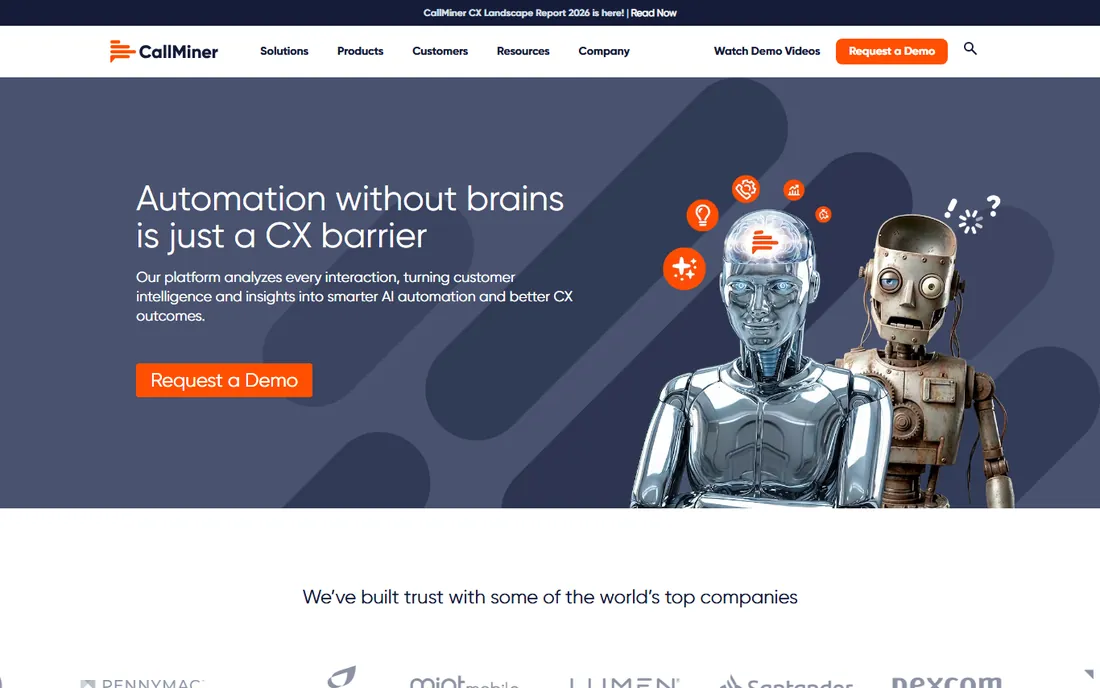
CallMiner has been doing conversation intelligence longer than almost anyone, and the depth shows. The platform captures voice, email, chat, social and survey interactions, then applies topic modeling and natural language understanding to find root causes: why calls spike on Tuesdays, which phrases precede cancellations, where agents deviate from required disclosures. Forrester named it a Strong Performer in customer feedback management and analytics in 2026, citing its AI and topic modeling.
The trade-off is that CallMiner sells to enterprises and prices like it. Expect a sales cycle, a scoping exercise and a services engagement to tune the analytics to your business. A 200-seat contact center with compliance exposure will get its money's worth. A 15-person support team will pay for depth it never touches and should look at lighter tools instead.
What we like- Analyzes 100 percent of interactions across voice and digital channels
- Strong topic modeling and natural language understanding
- Mature compliance monitoring and data redaction
Watch out for- Quote-only enterprise pricing
- Deployment is a project, not a signup
- More platform than a small team will ever use
#2
Verint
Best for: large enterprises already in the Verint ecosystem
Visit verint.com
Starting priceSee website
Free planNo
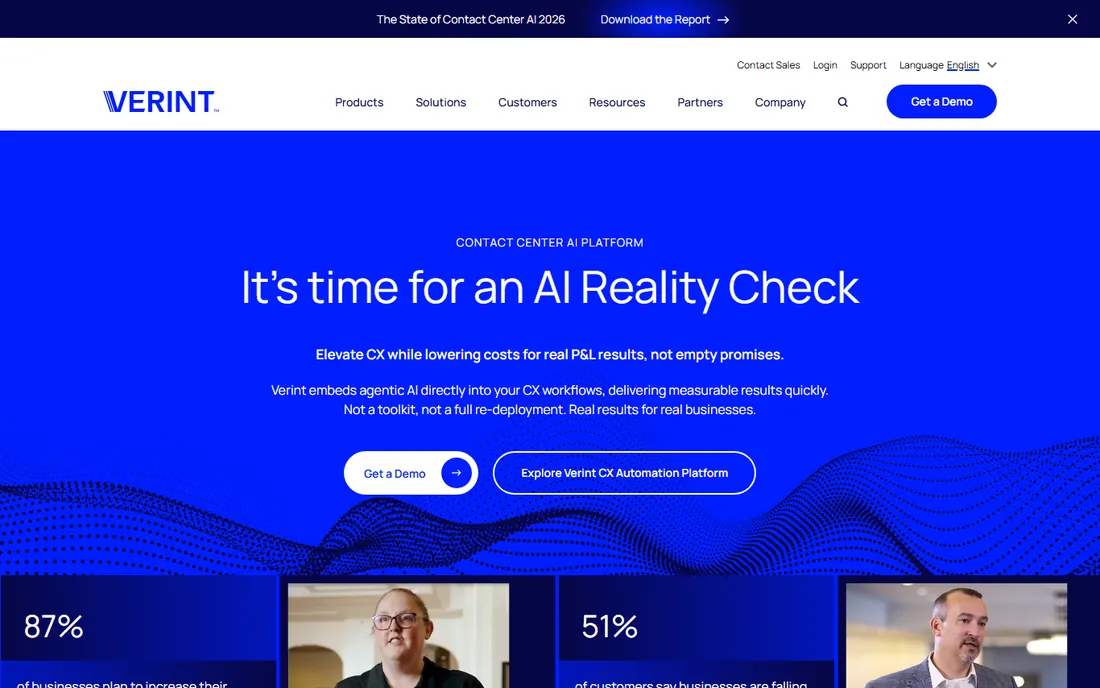
Verint positions itself as a contact center AI platform rather than a point analytics tool, and that framing matters for buyers. Speech analytics sits alongside virtual agents, agent assist, quality management and workforce engagement, all sharing the same data. The pitch is measurable business outcomes without ripping out your existing phone system: start with one automation use case, prove the return, then expand.
That breadth is the product's strength and its tax. Verint's analytics are genuinely strong, but you buy them inside an enterprise platform with enterprise pricing and an enterprise sales process. Companies already running Verint workforce tools get the most value, because the analytics plug into workflows they own. Everyone else should be honest about whether they need a platform or just answers from their calls.
What we like- Full CX automation platform beyond analytics, including AI agents and workforce engagement
- Trusted by most of the Fortune 100
- Open approach that works with the AI models you choose
Watch out for- Quote-only enterprise pricing
- The platform's breadth adds real complexity
- Small teams will drown in modules they never open
#3
NICE CXone
Best for: contact centers that want analytics inside the phone system
Visit nice.com
Starting priceSee website
Free planNo
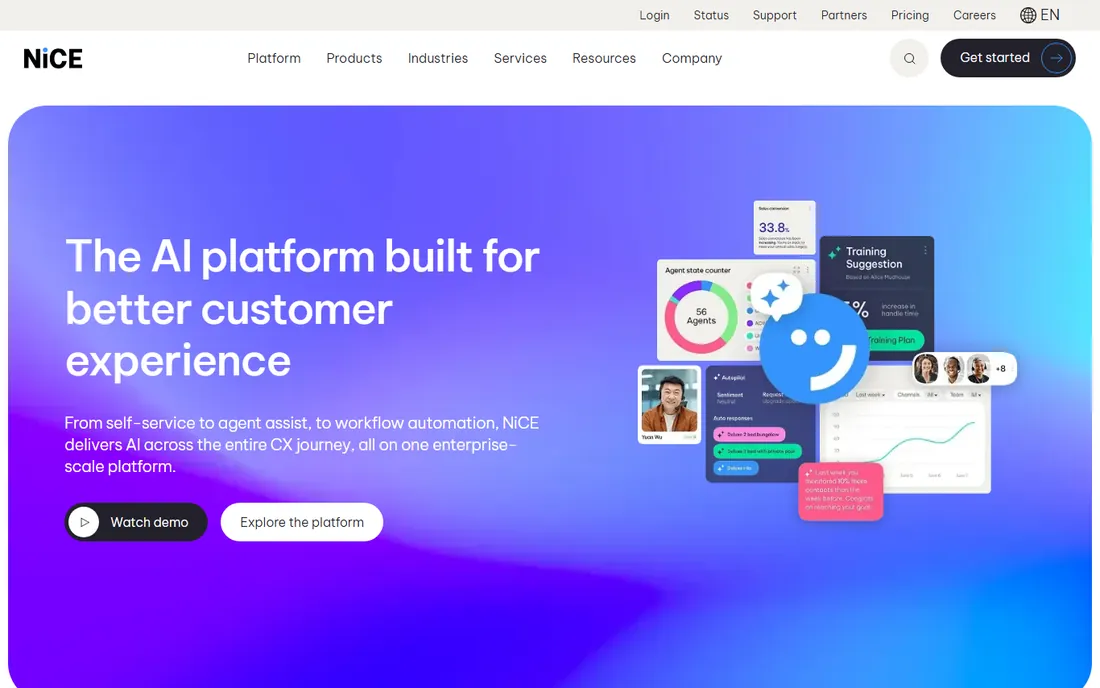
NICE takes the suite approach: CXone is a cloud contact center with AI woven through routing, self-service, agent assist and analytics. Interaction analytics, quality management and workforce optimization share one data foundation, so a flagged call can flow straight into a coaching workflow without integrations or exports.
For a company already shopping for a contact center platform, this bundling is the cheapest way to get serious analytics. The analytics alone are capable, though specialists like CallMiner go deeper on pure analysis. The catch is commitment: CXone pricing is quote-based, and the analytics make the most sense inside the full suite. If you love your current phone system and only want insight into calls, a standalone tool will be simpler and cheaper.
What we like- Interaction analytics built into the CXone cloud platform
- Proven at massive scale across billions of annual interactions
- Strong workforce optimization and quality management
Watch out for- The best value comes from buying the whole platform
- Analytics depth varies by bundle
- Moving an existing contact center onto CXone is a migration project
#4
Observe.AI
Best for: automated QA and agent coaching at scale
Visit observe.ai
Starting priceSee website
Free planNo
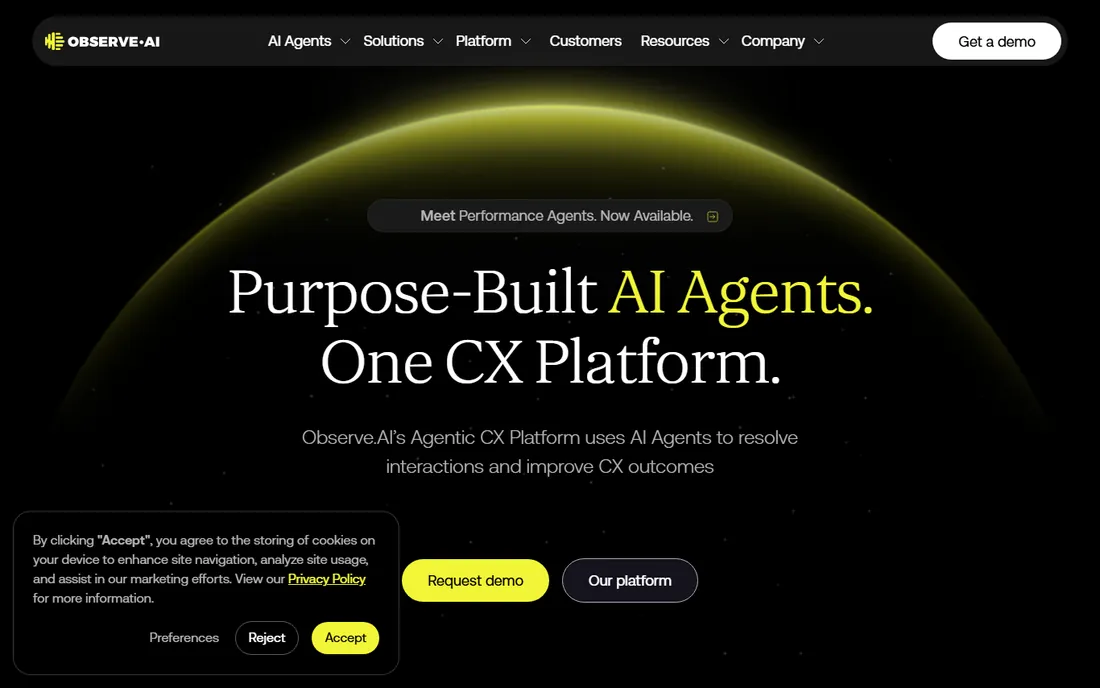
Observe.AI built its reputation on one promise: stop scoring 2 percent of calls and start scoring all of them. Its Auto QA product evaluates every customer interaction with AI-powered scorecards, attaching evidence to each score so supervisors can trust what they did not personally hear. Coaching workflows then turn those findings into targeted feedback with progress tracking.
The newer platform adds AI agents that resolve interactions and real-time assistance that guides agents mid-call, but the core buyer is still the quality leader who needs coverage. Reviews consistently praise the interface and the speed from setup to production. The honest limitation is focus: this is a contact-center QA and coaching tool, not a marketing analytics platform. If your question is "are my agents following the process," Observe.AI answers it. If your question is "which ad made the phone ring," look elsewhere on this list.
What we like- Auto QA evaluates every interaction instead of a sample
- Real-time agent assist during live calls
- Coaching workflows connect QA findings to feedback
Watch out for- Enterprise-focused pricing and sales motion
- Weaker fit for marketing attribution use cases
- Needs meaningful call volume to justify the cost
#5
Genesys
Best for: complex routing environments that need analytics too
Visit genesys.com
Starting priceSee website
Free planFree trial
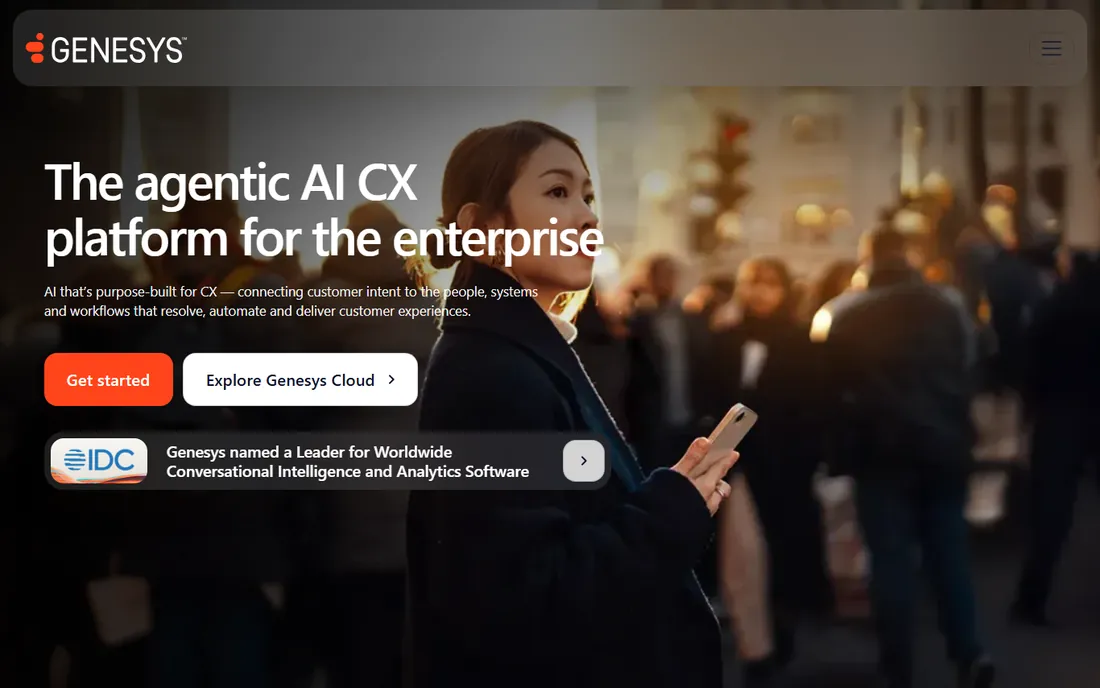
Genesys Cloud CX is one of the most widely deployed cloud contact center platforms, and its analytics ride on top of that footprint. Because Genesys already handles the routing, the IVR and the agent desktop, its analytics see the full journey: where the caller came from, how they were routed, what the agent did and how it ended. That context makes the insight more actionable than a standalone recording analysis.
The platform's openness is a real advantage. Pre-built integrations with Salesforce, ServiceNow and hundreds of AppFoundry partners mean analytics data flows into the CRM where managers already work. The trade-off mirrors NICE: you get the best analytics value as a Genesys contact center customer. As a pure analytics add-on to a third-party phone system, it works, but you pay platform prices for a point need.
What we like- Flexible cloud platform with the deepest partner ecosystem in CX
- Native integrations with Salesforce and ServiceNow
- Strong analyst and user recognition
Watch out for- Quote-based pricing
- Analytics is one slice of a broad platform
- Smaller operations may find the platform heavy
#6
Invoca
Best for: marketing teams that live on inbound phone calls
Visit invoca.com
Starting priceSee website
Free planNo
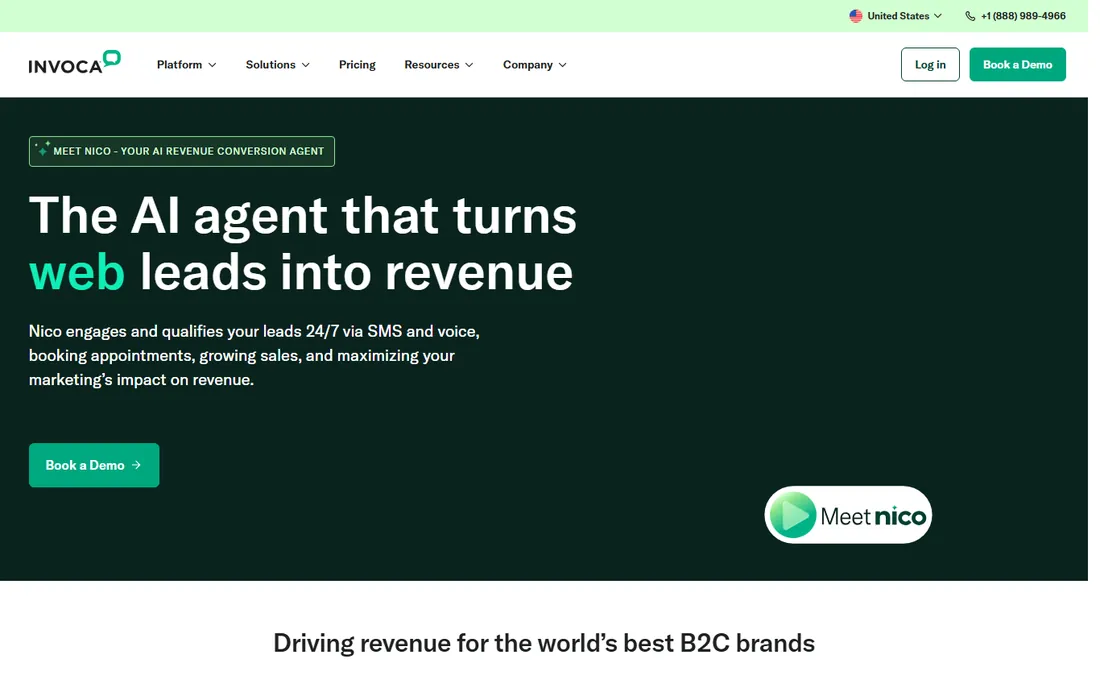
Invoca answers a different question than the contact-center tools: not "how did the agent do" but "did the marketing work." It attributes each inbound call to its source campaign, keyword or creative, then uses AI to determine whether the call was a sales conversation, an appointment booked or a missed opportunity. Marketing leaders use it to shift budget from campaigns that ring the phone to campaigns that create revenue.
The platform has expanded into AI agents that engage leads by voice and SMS around the clock, plus contact-center coaching features, but its heart is revenue attribution. Companies in high-consideration industries, where a phone call is the conversion, get the clearest return. The pricing reflects that value and the mid-market target. Support teams wanting QA depth should pick a contact-center specialist instead.
What we like- Connects every call to the campaign, keyword and page that drove it
- AI scores calls for intent and outcome
- Strong in healthcare, home services, automotive and telecom
Watch out for- Priced for mid-market and up
- Built for marketers, not QA teams
- Call tracking setup takes real configuration
#7
CallRail
Best for: small businesses and agencies that need call tracking plus insight
Visit callrail.com
Starting price$55 per month
Free planNo
CallRail is the accessible end of this market and makes no apology for it. More than 200,000 businesses use it for call tracking, and the pitch is simple: connect campaigns to conversations to customers, and see which marketing actually drives calls. Premium Conversation Intelligence adds AI summaries, keyword spotting and lead scoring on top of the tracking foundation.
The $55 starting price and published plans are refreshing in a category where everyone else says "contact sales." Agencies love it because multi-client management is built in. The limitation is depth: CallRail will tell you a call was a qualified lead and why, but it will not do the root-cause topic modeling or compliance analytics of a CallMiner or Verint. For lead-driven SMBs, that trade is exactly right. For regulated contact centers, it is not enough.
What we like- Plans start at just $55 a month with published pricing
- Premium Conversation Intelligence surfaces intent and buying signals
- 50-plus integrations with marketing, CRM and automation platforms
Watch out for- Analytics depth is below the enterprise speech platforms
- Per-number and usage costs add up at high volume
- The strongest AI features sit in the higher tiers
#8
Enthu.AI
Best for: mid-size teams that want analytics running this week
Visit enthu.ai
Starting priceSee website
Free planNo
Enthu.AI positions itself as the speech analytics tool you can actually deploy. Where enterprise platforms take months of configuration, Enthu promises teams can be up and running in hours, transcribing calls with speaker labels, summarizing them, and auto-scoring against parameters like empathy, compliance and script adherence. Custom evaluation forms let QA teams encode their own scorecards instead of adapting to a vendor's template.
That speed and simplicity make it a natural fit for mid-size contact centers and sales teams that need 100 percent call coverage without an enterprise project. The trade-offs are scale-related: the integration ecosystem is narrower than the giants, and real-time agent guidance is less developed than Observe.AI or Balto. Pricing is quote-based, though the company's pitch is that the price, like the setup, is built for the mid-market.
What we like- Implementation measured in hours, not months
- AI auto-scoring across empathy, compliance and script adherence
- Consistently praised for ease of use
Watch out for- Quote-based pricing
- Smaller vendor with a thinner integration library
- Strongest at QA, lighter on real-time assist
Starting priceSee website
Free planNo
Talkdesk has repositioned around what it calls the hybrid workforce: human agents handling judgment and empathy while AI agents execute work end to end. Interaction analytics, quality management and the newer autonomous agent capabilities share one platform, with quality enforced as a control layer that validates AI behavior in real time.
For analytics buyers, the appeal is context. Because Talkdesk runs the contact center, its analytics see intent, routing, agent actions and outcomes in one place, and the compliance posture (ISO, SOC, HIPAA, PCI, FedRAMP) satisfies regulated industries. The price of admission is the platform: Talkdesk sells contact-center software with analytics inside, not analytics alone. Companies already committed to Talkdesk get strong insight. Companies shopping for a standalone analytics layer will find simpler options above.
What we like- Hybrid human-plus-AI workforce platform with quality as a built-in control layer
- Broad compliance coverage including HIPAA, PCI and FedRAMP
- Strong analytics across the interaction lifecycle
Watch out for- Quote-only enterprise pricing
- Analytics comes wrapped in a full CCaaS purchase
- AI agent features demand real change management
What separates good voice analytics from an expensive dashboard
Decide your primary job before you shortlist. Contact-center QA and coaching need auto-scoring, evidence-linked scorecards and coaching workflows: Observe.AI, Enthu.AI and CallMiner. Marketing attribution needs call tracking tied to campaigns and revenue: Invoca and CallRail. Platform analytics need the phone system and the insight in one place: NICE, Genesys and Talkdesk. Buying a QA tool for a marketing problem, or vice versa, is the most expensive mistake in this category.
Then interrogate transcription quality with your own calls. Vendor accuracy claims are measured on clean audio; your calls have accents, background noise and industry jargon. Ask for a sample transcription of your real recordings during the trial, and check whether the platform handles your languages and redacts payment data and personal information automatically.
Finally, price the fully loaded year. Ask for the platform fee, the per-user or per-minute charges, storage costs and any overage rates in one written quote. Several vendors look affordable per agent and add a four-figure monthly platform fee underneath. Confirm the integrations are native and maintained, not just API access that needs your developers, and check whether insights push back into your CRM or only live in the vendor's dashboard.
How we chose
We evaluated the category the way buyers experience it: vendor homepages and documentation for what each platform actually analyzes, public reviews on G2 and Capterra for setup effort and accuracy, and analyst recognition such as Forrester's 2026 Wave for the enterprise players. We weighted coverage (what share of calls get analyzed), actionability (whether findings flow into coaching or marketing decisions) and fit for team size. We included both contact-center specialists and marketing-focused platforms because "voice analytics" means different jobs to different buyers, and we excluded pure dialers and transcription utilities with no analytics layer.
Frequently asked questions
What is voice analytics software?
It transcribes phone calls and other voice interactions, then applies AI to find patterns: agent performance, customer sentiment, compliance risks, sales opportunities and the reasons customers call. Instead of a QA team sampling a few percent of calls, the software analyzes all of them and flags what matters.
How is voice analytics different from call recording?
Recording stores the audio; analytics understands it. A recorder gives you files to listen to. An analytics platform gives you transcripts, automated scores, trend reports and alerts, plus the ability to search across every call for a phrase, topic or outcome.
Do we need it if we already record calls for compliance?
Recording satisfies the regulator; analytics extracts the value. Compliance teams use it to verify disclosures were read on every call instead of a sample. Operations teams use the same data to find why call volumes spike and which issues drive repeat contacts.
What does voice analytics cost?
Only CallRail publishes a starting price ($55 a month). Everyone else prices by quote, usually per agent per month with a platform fee underneath. Mid-market tools typically land in the tens of dollars per agent monthly; enterprise platforms run higher with annual contracts and implementation services.
Can it analyze calls in languages other than English?
The major platforms support dozens of languages, but accuracy varies by language, accent and audio quality. Always test with your own recordings before committing, especially for less common languages or heavy industry jargon.
How long does implementation take?
It ranges from hours to months. Lighter tools like Enthu.AI and CallRail can be live in days. Enterprise platforms like Verint, CallMiner and NICE typically need weeks to months of configuration, integration and model tuning before the analytics reflect your business.
Sources we checked (12)
- https://callminer.com/
- https://verint.com/
- https://nice.com/
- https://observe.ai/
- https://genesys.com/
- https://www.talkdesk.com/
- https://www.invoca.com/
- https://callrail.com/
- https://enthu.ai/
- https://www.ringly.io/blog/speech-analytics-software
- https://blog.hubspot.com/sales/best-conversation-intelligence-software
- https://www.businesswire.com/news/home/20260917733485/en/CallMiner-Named-a-Strong-Performer-in-Customer-Feedback-Management-and-Analytics-Report-by-Top-Analyst-Firm
Is your product missing or out of date?
We review this list regularly. Vendors can request a listing, send updated pricing or ask about featured placement.

Shihab Mia · Founder, Rankite
Shihab has spent more than a decade helping SaaS and e-commerce brands grow through search. He writes Rankite's software buying guides from pricing pages, documentation and public user reviews. More about Shihab.