How we make this list: we compare pricing pages, product documentation and public user reviews. Ratings come from G2, Capterra or Trustpilot, with the date we checked them.
Key takeaways
- Pricing splits into three models: flat monthly subscriptions (Quetext, Copyleaks, Winston AI), credit or pay-per-scan systems (Originality.ai, Copyscape), and quote-only institutional contracts (Turnitin).
- Quetext is the cheapest verified option for a team, with a free tier and paid plans from $14.99 per month. PlagiarismCheck.org lists plans from $4.25 per month for individuals.
- Most tools now bundle AI-writing detection with plagiarism checks. Copyleaks, Originality.ai, Winston AI, Quetext and PlagiarismCheck.org all do, so you can often buy one tool instead of two.
- Web-only checkers cannot see private databases. A school or publisher that needs to compare against past student or author submissions needs an institutional product like Turnitin.
- Treat every similarity score as a prompt for human review. No tool can tell you whether a matched passage is a properly quoted source or copied text.
Quick comparison
| Tool | Best for | Starting price | Free plan |
|---|
 Turnitin | Schools and universities | See website | No |
 Grammarly | Everyday writers who want one assistant | See website | Yes |
 Copyleaks | Plagiarism and AI checks in 100+ languages | $16.99 per month ($13.99 per month billed annually) | See website |
 Quetext | Small teams and students on a budget | $14.99 per month | Yes |
 Copyscape | Web publishers checking for duplicate content | See website | See website |
 Originality.ai | Content agencies and publishers | $14.95 per month | See website |
 Scribbr | Students checking a thesis or paper | See website | Yes (limited free check) |
 PlagiarismCheck.org | Schools and individuals on tight budgets | From $4.25 per month | Free trial |
 Winston AI | Combined AI and plagiarism screening | $18 per month (monthly billing) | Free trial (14 days) |
Is your product missing or out of date?
We review this list regularly. Vendors can request a listing, send updated pricing or ask about featured placement.
The best plagiarism detection software for writing
Starting priceSee website
Free planNo
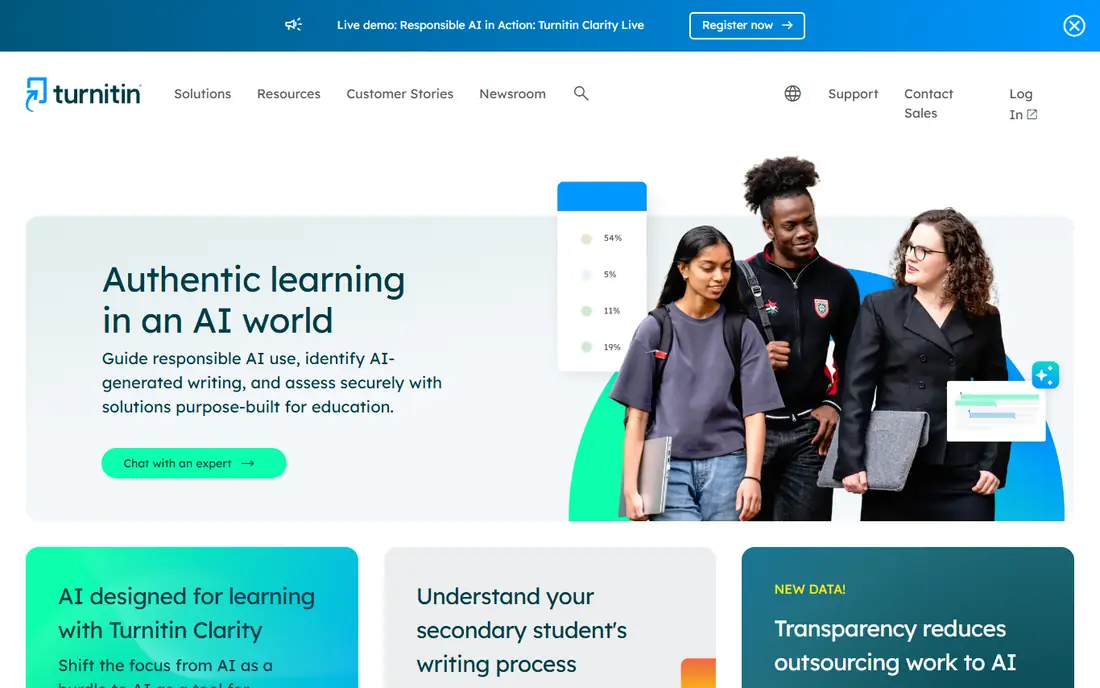
Turnitin is the name most teachers and professors already know. It is built for academic settings, so it connects to learning management systems and lets instructors review similarity reports on student submissions. If your organization is a school, a training provider or a university department, this is the default product to price out first.
What sets it apart is the institutional model. Submitted work can be compared against a private collection of earlier submissions, something a purely web-based checker cannot do. That matters when the concern is one student reusing another student's paper.
The catch is access. Turnitin does not publish prices on a standard pricing page, and contracts are generally negotiated with the institution. A small business that just wants to scan blog posts will find the sales process heavy and the product aimed at the wrong audience.
What we like- Built for institutions and learning management systems
- Compares against a large store of submitted student work
- Long track record in education
Watch out for- Sold through quotes rather than public pricing
- Not designed for individual freelancers or marketing teams
#2Grammarly
Best for: Everyday writers who want one assistant4.7/5 on
G2 (14,073 reviews, checked Oct 2026)
Visit grammarly.com
Starting priceSee website
Free planYes
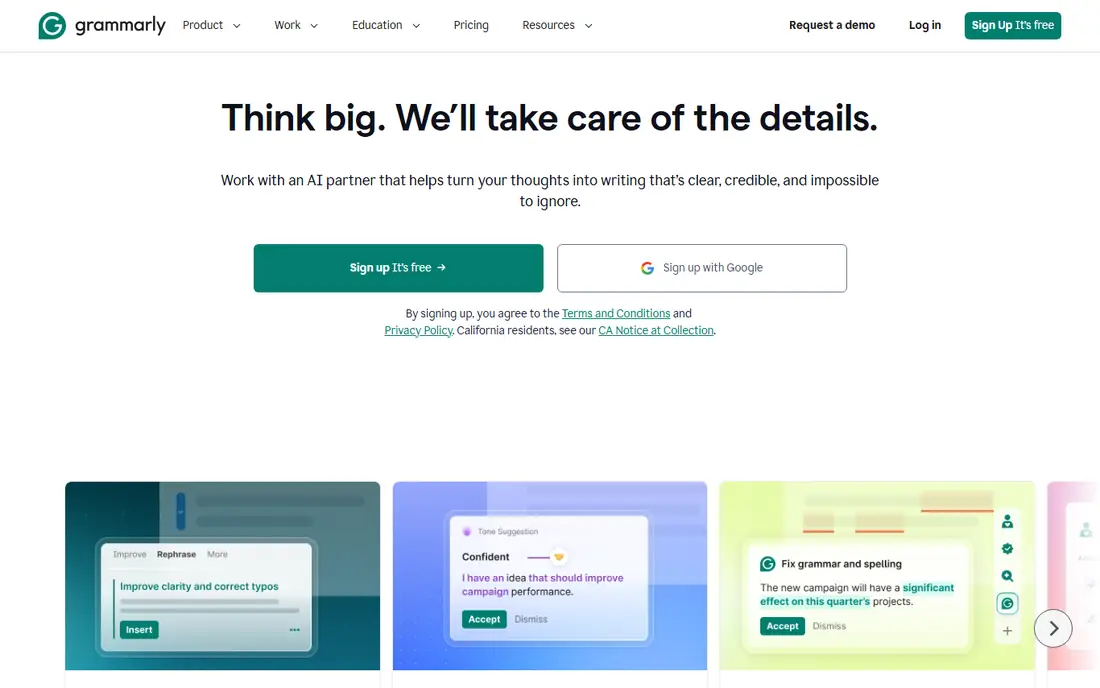
Grammarly makes sense when plagiarism checking is a small part of a bigger writing routine. Staff who already use it for grammar and tone can run a similarity check without opening another tool. For an office where most people write emails, proposals and reports, that convenience counts for more than a detailed forensic report.
The weakness is scope. Grammarly is a writing assistant first, so it lacks the batch scanning, API access and monitoring options that dedicated checkers offer. Plans and pricing change often and vary by individual or business use, so check the current plan page before you budget.
Use it as a quick pre-submission check. It is a poor fit for an editor who has to screen fifty freelance articles a week.
What we like- Plagiarism check sits inside a writing assistant people already use
- Works in browser, desktop and docs
- Easy to roll out to a team
Watch out for- Plagiarism detection is tied to paid tiers
- Less depth for bulk checking or publisher workflows
Starting price$16.99 per month ($13.99 per month billed annually)
Free planSee website
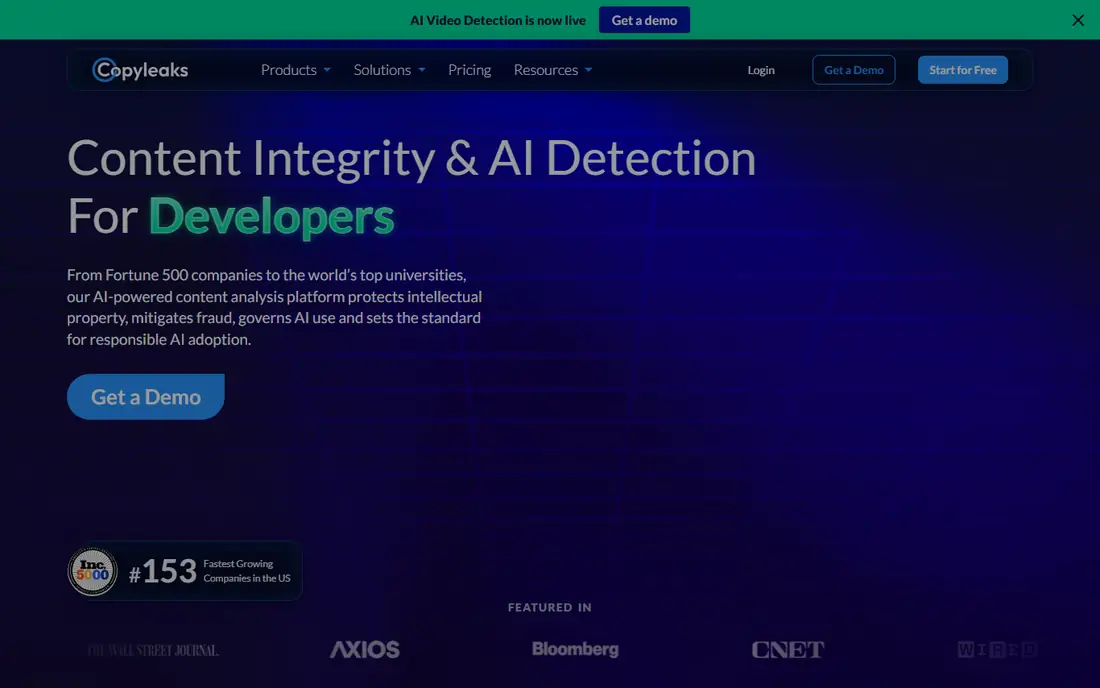
Copyleaks has the widest language coverage in this list. Its pricing page states plagiarism detection in more than 100 languages and AI detection in more than 30. A company that publishes in Spanish, German or Portuguese as well as English gets a single tool instead of juggling several.
Pricing is subscription-based with a monthly credit allowance. On its pricing page, one credit covers up to 250 words or one image, so volume planning is simple arithmetic. The Personal plan is $16.99 per month, or $13.99 per month billed annually. The Pro plan is $99.99 per month, or $74.99 on annual billing.
The honest downside is the gap between those two tiers. A growing content team can outgrow Personal quickly and then face a steep step up. Read the credit counts carefully before signing.
What we like- Plagiarism detection in 100+ languages
- AI detection in 30+ languages
- Plagiarism and AI results in one report
Watch out for- Credit-based allowance can run out on heavy use
- Pro tier jumps to $99.99 per month
#4Quetext
Best for: Small teams and students on a budget4.7/5 on
G2 (13 reviews, checked Oct 2026)
Visit quetext.com
Starting price$14.99 per month
Free planYes
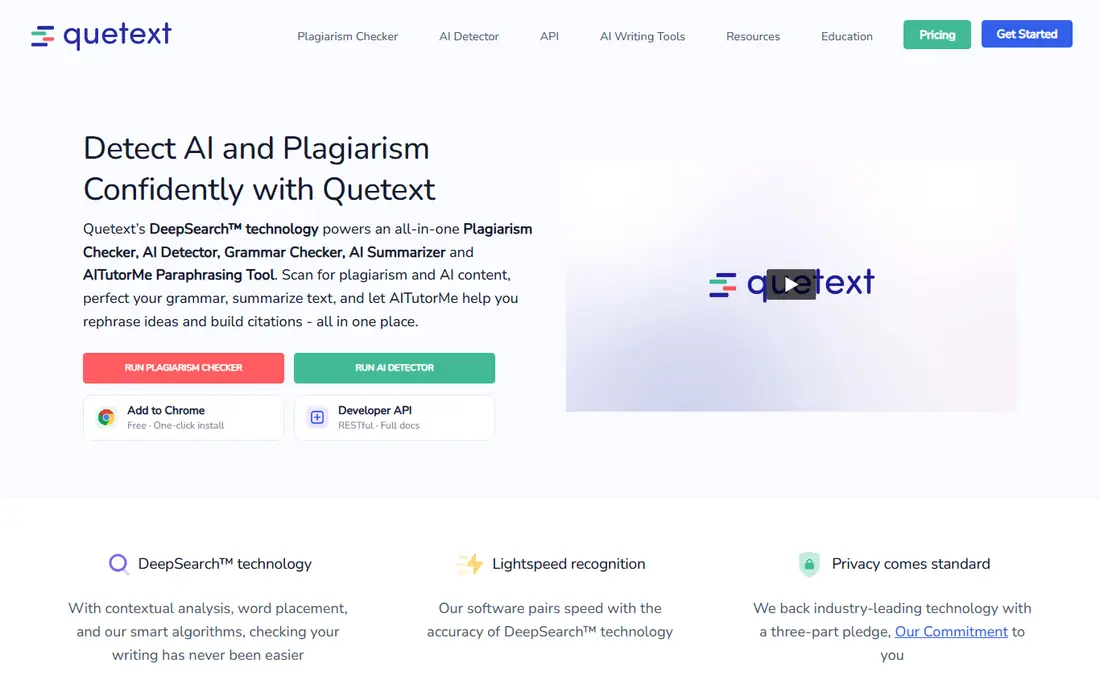
Quetext is a sensible first stop for a small company or a freelancer. Its pricing page lists a Free plan at $0 per month with a plagiarism checker and AI detector, each limited to 1,000 words. You can test it on a real draft before paying anything.
Paid plans are priced by words. Essential starts at $14.99 per month for 100,000 words per month, with bulk uploads of 20 files. Professional starts at $29.98 per month for 200,000 words per month and 100 bulk files. The page also says you can cancel anytime and that it supports 17 or more languages.
Quetext also pushes a long list of add-ons, including a humanizer, summarizer and tutor tool. If you only want similarity checks, that bundling adds noise, though it does not raise the price of the checker itself.
What we like- Free tier available
- Word-based plans that scale
- Bulk uploads and API access on paid tiers
Watch out for- Free tier is capped at 1,000 words per check
- The plan pages bundle many extras you may not need
#5Copyscape
Best for: Web publishers checking for duplicate content4.4/5 on
G2 (27 reviews, checked Oct 2026)
Visit copyscape.com
Starting priceSee website
Free planSee website
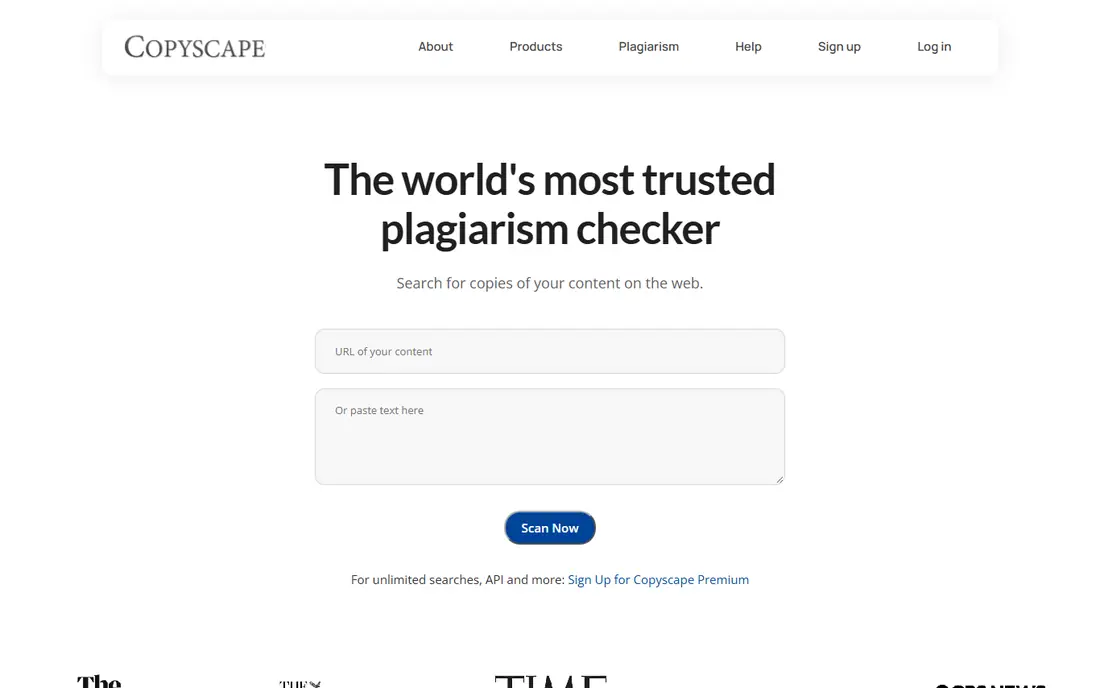
Copyscape answers one question well: has this text appeared elsewhere on the internet? SEO managers and content editors use it to catch scraped articles and freelancers who recycle old work. It does not try to be a writing coach, which keeps the workflow short.
The model is usage-based rather than a flat subscription. That suits an agency that checks in bursts, but costs can climb for a team that scans every draft. Because I could not confirm current rates on the vendor's own pages, check the live pricing before you plan a budget.
Do not expect it to catch passages copied from private or paywalled academic databases. It also does not flag AI-generated text, so many teams pair it with a second tool.
What we like- Aimed squarely at finding copies of web content
- Pay-per-use model suits irregular checking
- Long-standing name among SEO teams
Watch out for- Checks the public web only
- No AI-writing detection or collaborative review tools
#6Originality.ai
Best for: Content agencies and publishers4.4/5 on
G2 (248 reviews, checked Oct 2026)
Visit originality.ai
Starting price$14.95 per month
Free planSee website
Originality.ai is built for people who buy a lot of written content. Agencies and publishers use it to screen freelance submissions for copied text and for AI-generated writing before they publish and pay. That focus on content buyers, not students, shapes the whole product.
Entry pricing is credit-based. Per the vendor's own blog, the Pro plan is $14.95 a month for 2,000 credits, with a $30 pay-as-you-go option for 3,000 credits. The Enterprise page lists $136.58 per month and describes it as ideal for agencies and publishers.
The catch is that credits deplete quickly at scale, and a busy editorial team will likely end up on the Enterprise plan. Model the monthly article volume before choosing a tier.
What we like- Plagiarism and AI detection in one workflow
- Credit system that works for teams
- Enterprise tier with API access
Watch out for- Credits are consumed with every scan
- No flat unlimited plan at the entry level
Starting priceSee website
Free planYes (limited free check)
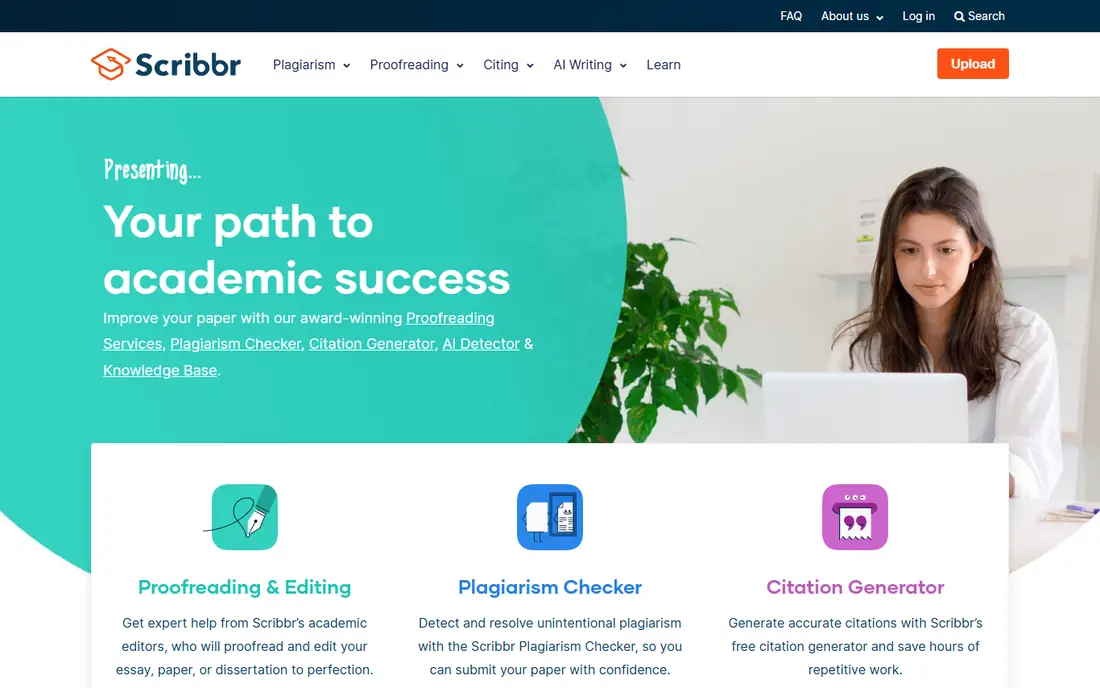
Scribbr is the pick for a one-off, high-stakes document. A graduate student or a researcher preparing a thesis can upload a Word or PDF file, with a minimum of 300 words, and get a report before submitting. The page says your writing stays private and is not shared with other checkers.
It is honest about its limits. Scribbr notes that universities may check work against private student paper databases it cannot access, so results can differ slightly. It offers a free Self-Plagiarism Checker add-on that lets you upload your own earlier documents to avoid accidental self-plagiarism.
For a business, the per-document model is the problem. A marketing team that checks dozens of drafts each month will find a subscription tool cheaper and easier to administer.
What we like- Free check to start
- Private by design
- Self-plagiarism add-on for your own source documents
Watch out for- Priced per document, so it is not made for ongoing team use
- Cannot see private university paper databases
#8PlagiarismCheck.org
Best for: Schools and individuals on tight budgets4.8/5 on
G2 (45 reviews, checked Oct 2026)
Visit plagiarismcheck.org
Starting priceFrom $4.25 per month
Free planFree trial
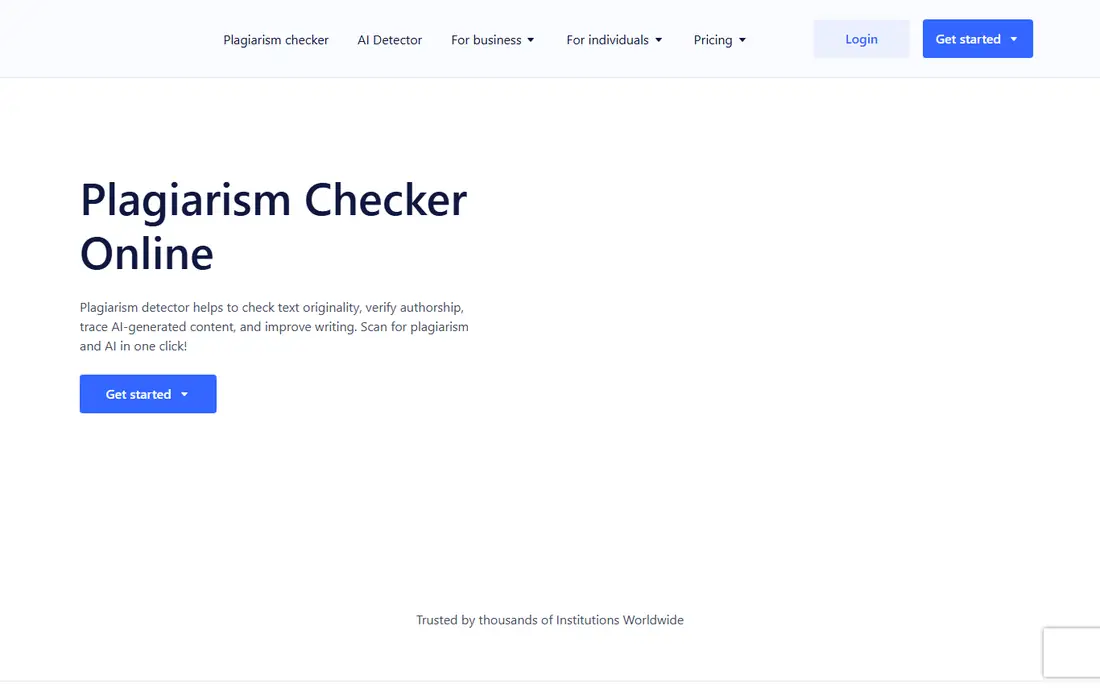
PlagiarismCheck.org targets the budget end of the market. Its own comparison page lists individual subscriptions from $4.25 per month and AI detection only from $2.08 per month, with a free trial check available. For a freelancer or a student, that is hard to beat on price.
The site also has separate pages for K-12, higher education, teachers and businesses, which suggests it is trying to serve institutions as well. If you are a school that cannot afford a Turnitin-style contract, it is worth a trial to see how its reports read.
Buyers should check how its similarity reports compare with the tool their institution or client already trusts. A cheap check that no one accepts as evidence does little good in a formal dispute.
What we like- Low entry price
- Separate AI-detection option
- Solutions for K-12, higher education and business
Watch out for- Lower-cost plans are aimed at individuals
- Less brand recognition than Turnitin
#9Winston AI
Best for: Combined AI and plagiarism screening4.4/5 on
G2 (13 reviews, checked Oct 2026)
Visit gowinston.ai
Starting price$18 per month (monthly billing)
Free planFree trial (14 days)
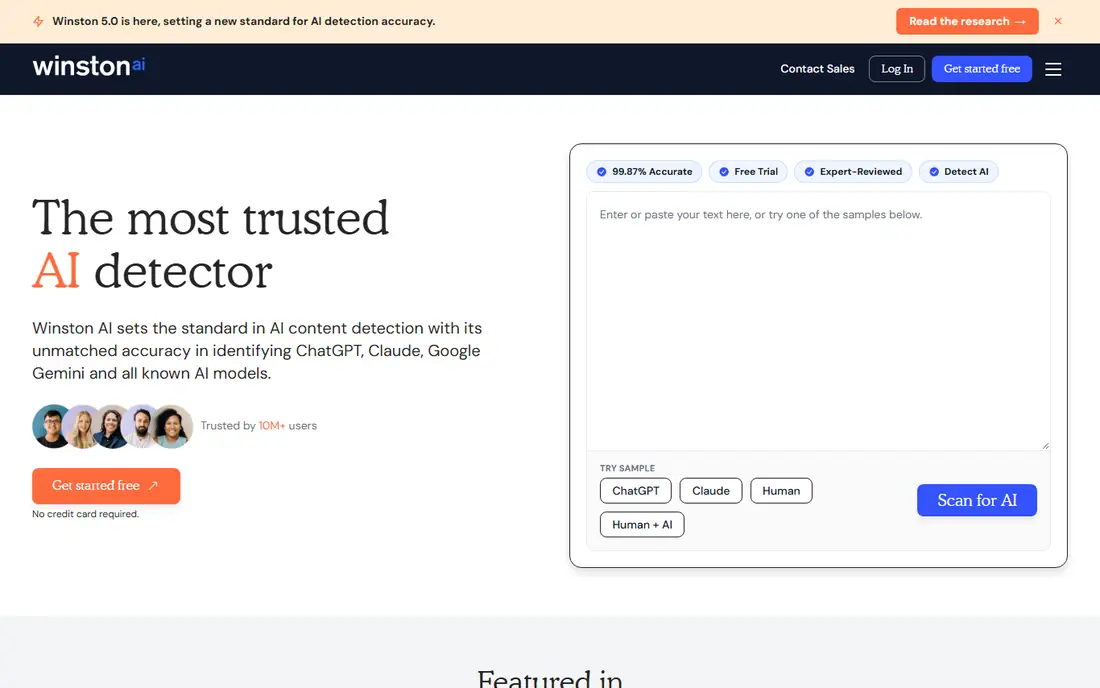
Winston AI is mostly known as an AI-text detector, but its plans also include plagiarism checking. The free plan gives a 14-day trial with 2,000 credits. It is a handy way to test both functions on the same document before paying.
On the pricing page, Essential lists $18 per month on monthly billing with 100,000 credits, and Advanced lists $29 per month with 200,000 credits and up to 5 team members. Elite is $49 per month for 500,000 credits. Annual billing shows lower monthly figures, and the page was advertising a 50 percent promotional discount when I looked, so expect the live price to differ.
The OCR feature, which scans pictures and handwriting, is the odd strength here. It helps teachers who receive scanned work. The weakness is that the credit-based plans make it hard to predict cost until you have run a few weeks of real documents through.
What we like- AI detection, plagiarism checks and OCR for scanned or handwritten pages
- Shareable PDF reports
- Clear tier ladder
Watch out for- Credit system takes time to understand
- Promotional pricing changes often
How we chose
We did not run hands-on lab tests. Our picks come from reading vendor pricing pages and product documentation, then cross-checking claims against public reviews on G2, Capterra and Reddit. We looked at what each tool checks (the open web, academic databases, AI-written text), how it bills, and what limits apply on lower plans.
We favored tools that serve different buyers: institutions, agencies, small teams, students and individual writers. Where a vendor did not publish a price we could verify on its own site, we wrote "See website" instead of guessing. Prices change often, so confirm on the vendor's page before you buy.
How to pick the right plagiarism checker for your team
Start with what you need to compare against
Plagiarism software compares your text to a database. Web-focused tools such as Copyscape look for copies online. Institutional tools such as Turnitin also compare against stored student submissions. If your concern is freelancers copying published articles, a web checker is enough. If it is students sharing essays, you need a product with a private collection.
Decide whether you also need AI detection
Many buyers now want both checks. Copyleaks, Originality.ai, Winston AI, Quetext and PlagiarismCheck.org all bundle some form of AI detection. Be careful with the results. AI detectors produce false positives, so a flagged paragraph should start a conversation, not end one.
Work out your volume and billing model
Count the words or documents you will scan each month. A subscription with a monthly allowance (Quetext, Copyleaks) is predictable. A credit or pay-per-search system (Originality.ai, Copyscape) can be cheaper for low volume and expensive for high volume. Quote-only contracts, like Turnitin, usually involve annual terms, so ask about length and renewal terms.
Check the practical details
Ask whether the tool supports your file types, whether reports can be exported or shared as PDFs, and whether team members can be added. Check language coverage if you publish outside English. Look at data handling too: confirm whether your uploaded text is stored or added to a database, especially for unpublished or confidential drafts.
Plan for human review
A similarity percentage is not a verdict. Quoted passages, bibliographies and common phrases raise scores. Set an internal rule, such as manual review of any match over a threshold you choose, and keep a record of the source the tool found.
Frequently asked questions
What is the best software for plagiarism detection in writing?
It depends on your use. Turnitin suits schools, Originality.ai suits content agencies, and Quetext or Copyleaks suit small teams. Match the tool to the database it checks and the billing model you prefer.
Is there a free plagiarism checker that is good enough?
Free tiers are useful for testing and for short drafts. Quetext's free plan covers up to 1,000 words per check, and Scribbr offers a limited free check. For longer or regular work, you will likely need a paid plan.
Can plagiarism checkers detect AI-written text?
Several tools now include AI detection, including Copyleaks, Originality.ai, Winston AI, Quetext and PlagiarismCheck.org. Detection is probabilistic and can be wrong, so use it as a signal for review. Do not treat it as proof.
Do plagiarism checkers store my documents?
Policies vary by vendor. Scribbr states that your writing stays private and is not seen by other checkers. For other tools, read the privacy policy and data-retention terms before uploading confidential material.
How much does plagiarism detection software cost?
Verified entry prices on vendor pages range from $4.25 per month (PlagiarismCheck.org individual plans) to $14.99 per month (Quetext), $16.99 per month (Copyleaks) and $18 per month (Winston AI). Turnitin and some others require a quote or live-price check. Enterprise tiers cost more, for example $99.99 per month for Copyleaks Pro and $136.58 per month for Originality.ai Enterprise.
Sources we checked (7)
- https://www.quetext.com/pricing
- https://copyleaks.com/pricing
- https://gowinston.ai/pricing/
- https://www.scribbr.com/plagiarism-checker/
- https://originality.ai/enterprise
- https://originality.ai/blog/copyscape-plagiarism-checker-review
- https://plagiarismcheck.org/plagiarismcheck-vs-turnitin/
Is your product missing or out of date?
We review this list regularly. Vendors can request a listing, send updated pricing or ask about featured placement.

Shihab Mia · Founder, Rankite
Shihab has 5+ years in B2B and SaaS SEO. He writes Rankite's software buying guides from pricing pages, documentation and public user reviews. More about Shihab.