How we make this list: we compare pricing pages, product documentation and public user reviews. Ratings come from G2, Capterra or Trustpilot, with the date we checked them.
Key takeaways
- Every database on this list encrypts data at rest and in transit; the real differences are in key management, access controls and how much security you configure yourself.
- Open-source options (PostgreSQL, MariaDB) give you strong security primitives for free, but you own the hardening, patching and audit work.
- Managed cloud databases (Atlas, RDS, Cloud SQL, Snowflake) shift patching, backups and baseline encryption to the vendor, which is where most small teams should start.
- Enterprise databases (Oracle, SQL Server, Db2) justify their price with compliance-oriented features like data redaction, separation of duties and centralized audit, not with stronger AES.
Quick comparison
Is your product missing or out of date?
We review this list regularly. Vendors can request a listing, send updated pricing or ask about featured placement.
The most secure database software options
Starting priceSee website
Free planSee website
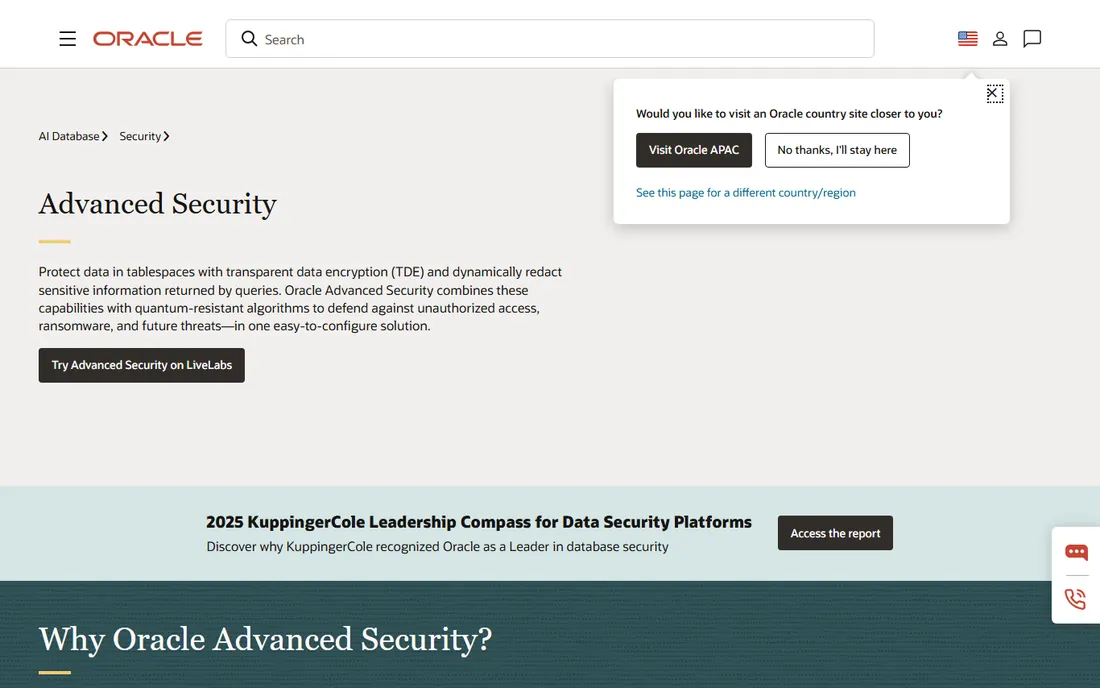
Nobody buys Oracle for simplicity. They buy it when auditors, regulators or enterprise customers demand proof, and Oracle's security stack is built for exactly that conversation. Transparent Data Encryption (TDE) encrypts tablespaces and columns with AES-256 without application changes, Database Vault draws boundaries even DBAs cannot cross, and Data Redaction masks sensitive values in query results based on who is asking. Oracle's current release line, branded Oracle AI Database 26ai, adds quantum-resistant algorithms to the mix.
The honest catch is the commercial model. Advanced Security, Database Vault and related options are licensed separately from the database itself, so the security story that looks complete in the datasheet arrives as a stack of line items. For a bank or healthcare company, that is simply the cost of compliance. For a 30-person SaaS company, it is overkill.
What we like- Transparent Data Encryption built into the kernel
- Database Vault blocks even privileged users
- Data Safe for posture management
Watch out for- Licensing is complex and expensive
- Many security features are paid options on top of the base license
Starting priceSee website
Free planSee website
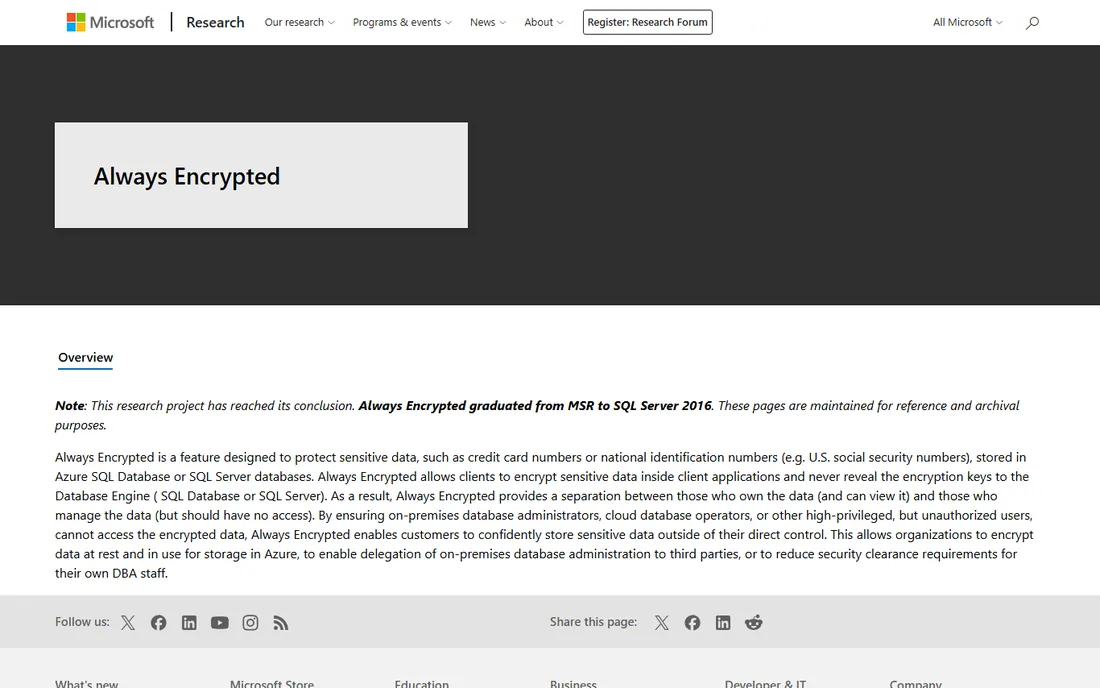
SQL Server's standout security idea is Always Encrypted: sensitive columns are encrypted inside the client application, so the database engine, the DBAs and even the cloud operator never see plaintext. That separation between data owners and data managers is exactly what regulated industries ask for, and the newer secure-enclave variant allows richer queries over encrypted data. Around it sits a mature set of controls: row-level security, dynamic data masking, transparent data encryption and auditing that integrates with the Windows security model most enterprises already run.
The catch is edition-gating. The security features that matter most live in Enterprise edition, and Microsoft prices SQL Server through licensing programs that make apples-to-apples comparison genuinely difficult. If your infrastructure is already Windows and Active Directory based, SQL Server's security integrates more naturally than anything else here. If not, you are paying the Microsoft tax for benefits you will not fully use.
What we like- Always Encrypted keeps keys away from DBAs
- Deep Active Directory integration
- Mature auditing and row-level security
Watch out for- Strongest features need Enterprise edition
- Licensing through Microsoft agreements is hard to price transparently
Starting priceSee website
Free planYes
Atlas is MongoDB's managed cloud service, and its security pitch is that the baseline is already done for you. Data is encrypted at rest and in transit without configuration, network access is deny-by-default behind IP allow lists and VPC peering, and authentication runs through SCRAM with role-based access control. Because MongoDB runs the infrastructure, patching and backup encryption are handled, which removes the two misconfigurations that cause most database breaches: unpatched servers and open networks.
The tradeoff is cost control and ceiling. The free M0 tier (512 MB) is genuinely useful for prototypes and small apps, but production workloads move to usage-based pricing that rewards careful capacity planning. Teams handling regulated data should also check which tier includes customer-managed encryption keys, since that level of control is not on every plan.
What we like- Encryption at rest and in transit by default
- Network isolation and IP allow lists built in
- Free tier for starting out
Watch out for- Usage-based pricing can surprise
- Advanced security controls (like customer key management) sit on higher tiers
Starting priceFree
Free planYes
PostgreSQL gives away for free what other vendors put behind enterprise licenses: row-level security, column-level grants, certificate and Kerberos authentication, and TLS for connections. There is no paid edition holding back a security feature, which makes it the default choice for teams that want strong primitives without a procurement process. The extension model adds more, from pgcrypto for column encryption to audit extensions for compliance logging.
The catch is operational. PostgreSQL does not encrypt data at rest by itself; that comes from your disk encryption, your cloud provider or an extension you configure. Patching, hardening guides and audit retention are your responsibility too. For a team with database expertise, that is freedom. For a team without it, a managed Postgres (including Atlas, RDS or Cloud SQL) buys back the nights and weekends.
What we like- Completely free with no edition gating
- Row-level security and SCRAM authentication built in
- Huge extension ecosystem
Watch out for- Encryption at rest depends on your setup
- You own patching, hardening and audit configuration
Starting priceSee website
Free planFree trial
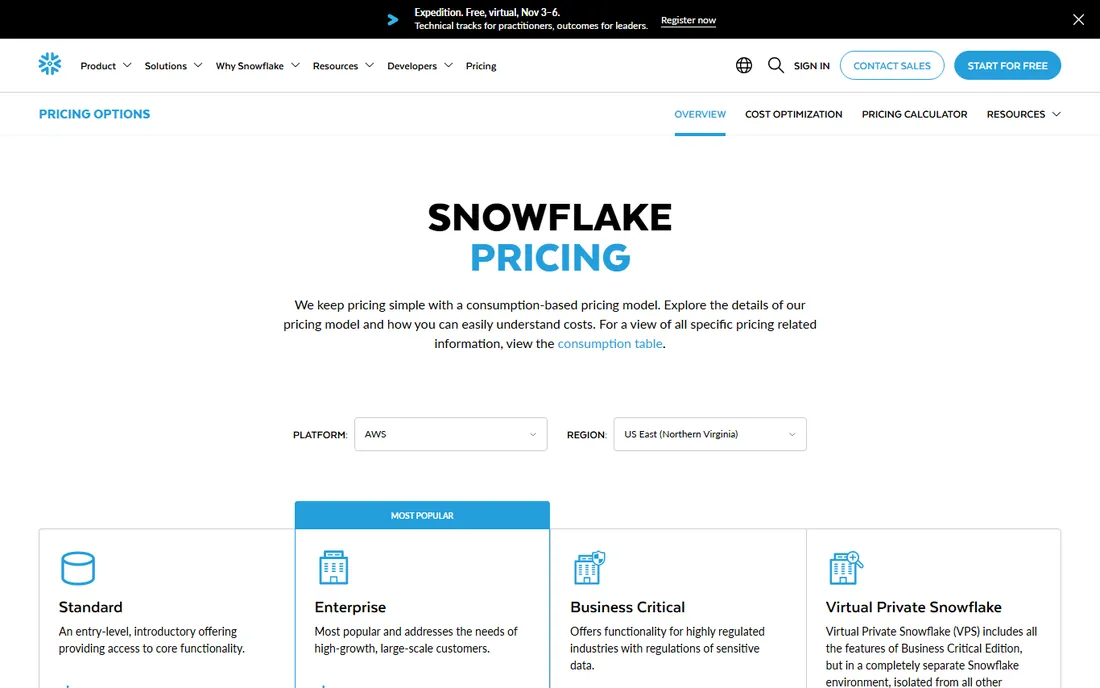
Snowflake approaches database security from the analytics side. All data is encrypted automatically with no configuration, and the platform layers on role-based access, dynamic data masking, row-level access policies and object tagging for data classification. For teams sharing sensitive datasets across departments or with partners, the governance controls (especially on Enterprise and above) are more practical than raw encryption features.
Pricing is consumption-based: you buy credits for compute and pay separately for storage, with on-demand or prepaid options, and Snowflake's own pricing page confirms the model without quoting a single starting number. A free trial is available. The honest limitation is scope: Snowflake is an analytics platform, not a place to run your application's transactional workload, so most buyers pair it with one of the operational databases on this list.
What we like- All data encrypted automatically
- Granular governance and masking controls
- Consumption-based pricing with no servers to secure
Watch out for- No fixed price to budget against
- Analytics-focused, not a transactional database
Starting priceSee website
Free planSee website
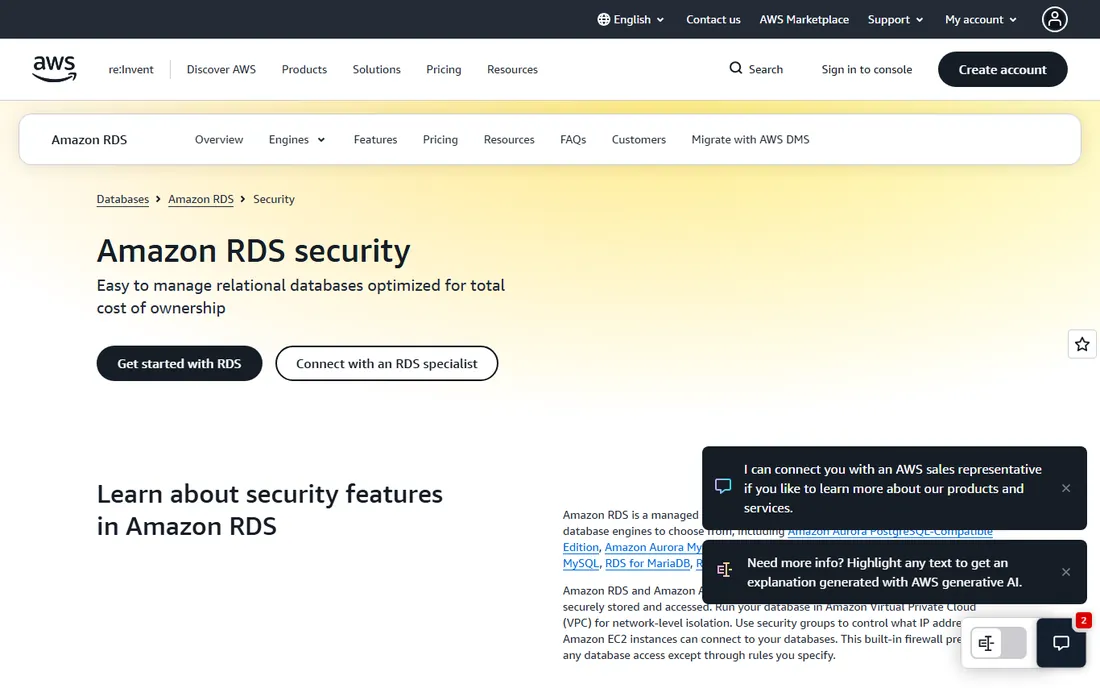
RDS is the pragmatic choice for teams already on AWS: a managed relational database where Amazon handles patching, backups and failover across MySQL, PostgreSQL, MariaDB, Oracle, SQL Server and Db2. On security, RDS encrypts storage, backups, replicas and snapshots with AES-256 through keys you manage in KMS, supports TLS for connections, and adds IAM database authentication so applications can use short-lived tokens instead of stored passwords. VPC placement keeps instances off the public internet by default.
Two details matter in practice. First, encryption at rest must be switched on when the instance is created; you cannot retrofit it onto an existing unencrypted instance without a migration. Second, pricing is pure AWS usage-based (instance hours, storage, I/O), which is flexible but demands monitoring. For AWS shops, RDS is usually the lowest-effort path to a properly secured database.
What we like- KMS-managed AES-256 encryption at rest
- VPC isolation and IAM database authentication
- Supports six engines including Oracle and SQL Server
Watch out for- Encryption must be enabled at creation and cannot be added later
- Costs scale with instance size and I/O
Starting priceSee website
Free planSee website
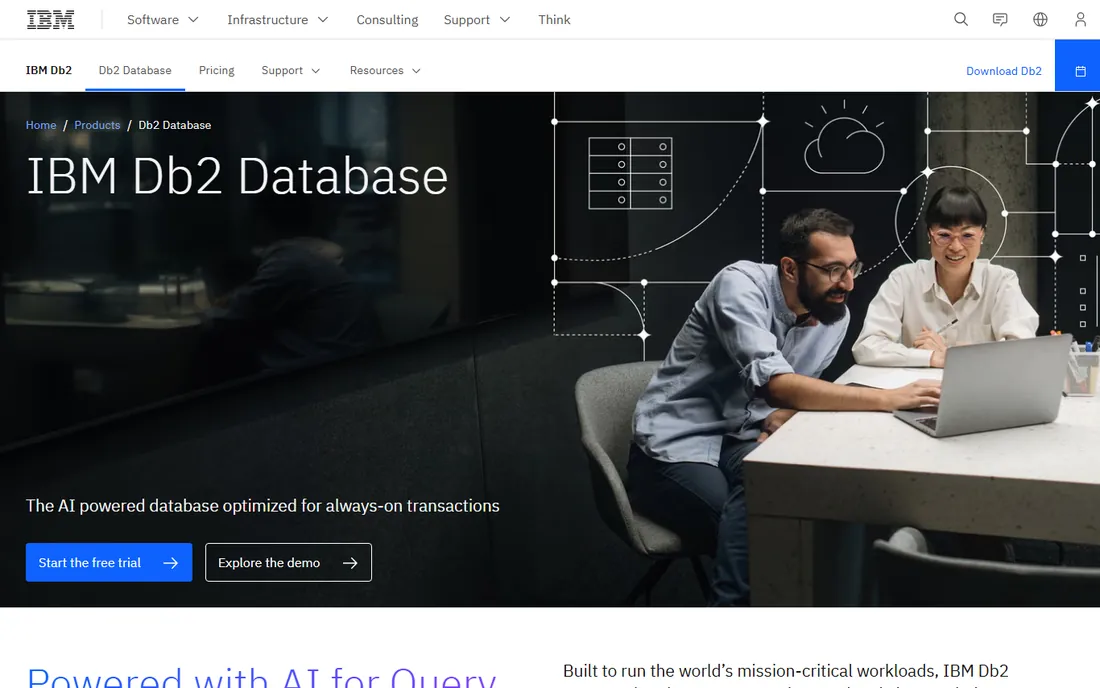
Db2 is IBM's answer for organizations that run core transactional systems and answer to regulators. Its security story centers on governance: role-based access control, data masking (including mask-at-read to obfuscate sensitive values during queries), row permissions and audit utilities, with encryption protecting data in motion and at rest. The managed Db2 as a Service variant adds encrypted-by-default cloud deployment with automated operations.
The catch is the buying experience. Db2 is sold through IBM's enterprise motion with custom quotes, reserved-instance options and license models that take a call to untangle. The technology is proven in banking and large ERP deployments, but a mid-size company without an IBM relationship will find the evaluation process heavy compared with the self-serve cloud options here.
What we like- End-to-end governance with masking and audit
- Data encrypted in motion and at rest
- PureScale for continuous availability
Watch out for- Enterprise sales motion with custom pricing
- Smaller community than Postgres or MySQL ecosystems
Starting priceSee website
Free planSee website
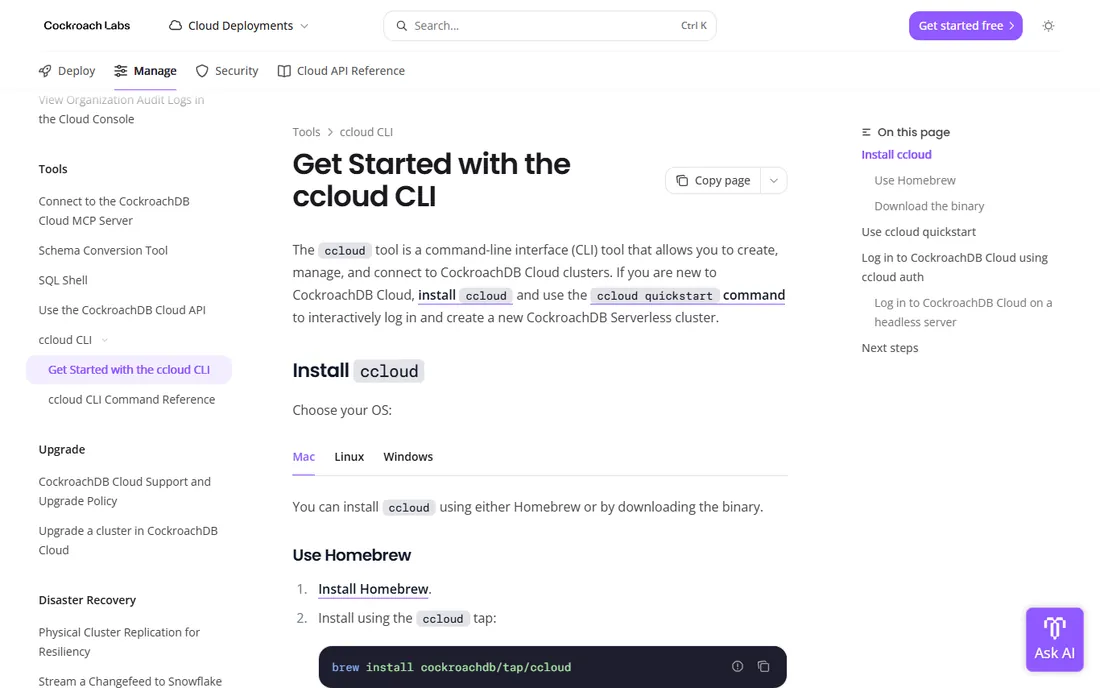
CockroachDB is the distributed SQL option: a database that spreads itself across nodes and regions while speaking the PostgreSQL wire protocol, so existing drivers and ORMs mostly just work. Security-wise it encrypts data in transit between nodes and at rest, supports role-based access and (on higher tiers) customer-managed encryption keys, which matters for the fintech and SaaS companies that are its core audience.
The important caveat is pricing churn. Cockroach Labs restructured its cloud tiers in September 2026, and the old free serverless tier's status for new signups is unclear from public sources; new accounts are offered trial credits instead. Check the current pricing page before planning around a free tier. The distributed model also demands more operational understanding than a single-node Postgres, so budget learning time.
What we like- Distributed by design with encryption in transit and at rest
- PostgreSQL-compatible
- Strong consistency across regions
Watch out for- Pricing changed in late 2026, verify current tiers
- Operational concepts have a learning curve
Starting priceFree
Free planYes
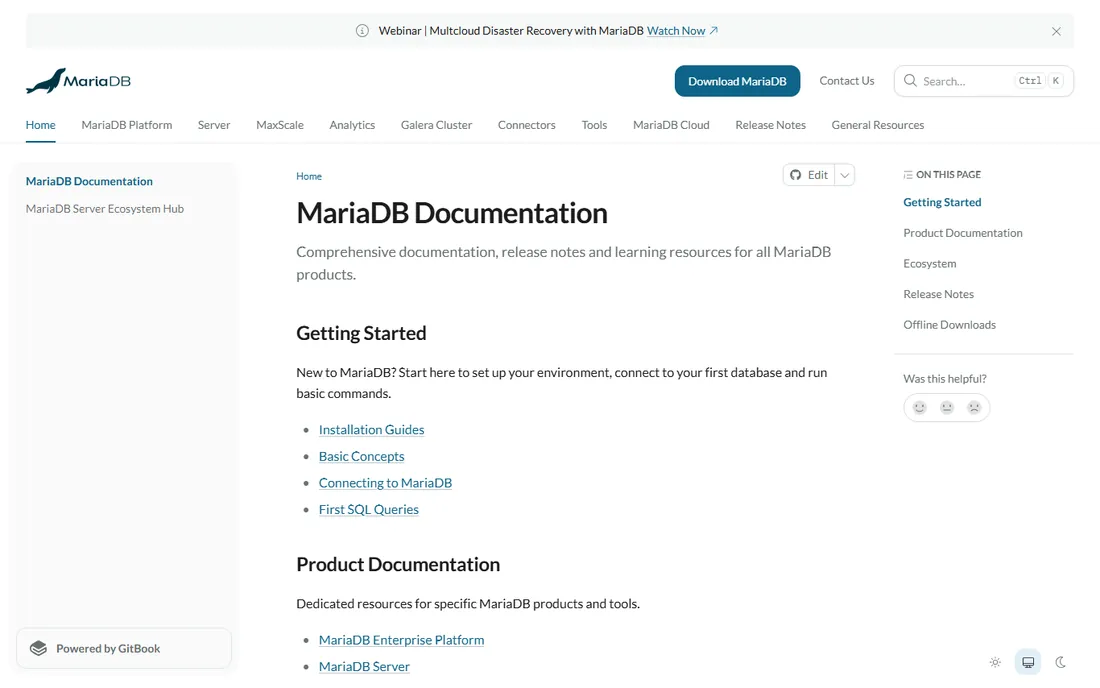
MariaDB began as a community fork of MySQL and remains the free, open-source path for MySQL-compatible workloads. The community server costs nothing and includes TLS for connections and AES encryption for InnoDB tables and logs. For stronger controls, MariaDB's MaxScale proxy adds a database firewall that accepts or rejects queries by rule, plus query-based data masking, which gives smaller teams enterprise-style protections without the enterprise database.
The split to understand is community versus enterprise. Advanced security, auditing and centralized management live in the paid Enterprise Platform and the managed MariaDB Cloud service (which encrypts data in transit and at rest by default). If your workload is MySQL-shaped and your budget is zero, the community server plus MaxScale is a legitimate secure setup; if you need compliance paperwork, that is what the paid tiers are for.
What we like- Free community server with no license cost
- MaxScale adds firewall and masking
- Drop-in MySQL compatibility
Watch out for- Enterprise security features need the paid platform
- Community support only unless you buy a subscription
Starting priceFrom $0.0413 per vCPU/hour
Free planSee website
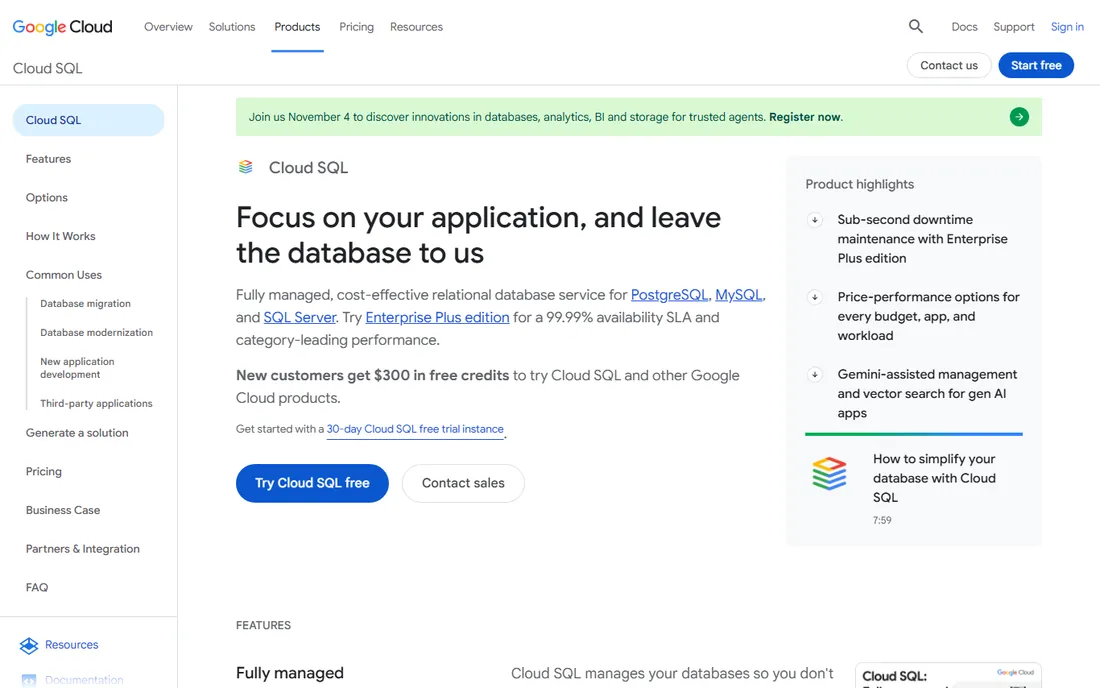
Cloud SQL is Google's managed relational service for MySQL, PostgreSQL and SQL Server, and its security defaults are strong: data is encrypted in transit on Google's network and at rest in tables, temp files and backups, with VPC and private-service connectivity keeping instances off the public internet. Compliance coverage (including HIPAA and PCI DSS) is documented on Google's own pages, which simplifies vendor reviews.
Pricing is usage-based and Google publishes the rates: compute starts at $0.0413 per vCPU/hour on the Enterprise edition, with memory and storage billed separately and committed-use discounts cutting 25 to 52 percent for one- and three-year terms. Watch the storage gotcha: once automatic storage increase grows your provisioned disk, it cannot be shrunk without a migration. For Google Cloud shops, Cloud SQL is the natural, well-documented default.
What we like- Automatic encryption in transit and at rest
- Per-second billing
- Compliance certifications including HIPAA and PCI DSS
Watch out for- Storage cannot be shrunk after auto-increase
- Committed-use discounts add planning overhead
What "secure database" actually means when buying
Vendors use "secure" to mean different things, so pin down which ones you are buying. Encryption at rest protects files, backups and stolen disks; every tool here does it, though some need you to switch it on. Encryption in transit protects data moving between your app and the database; again universal, usually via TLS. The differentiators start after that: who holds the encryption keys (you, via KMS or HSM, or the vendor), whether DBAs and cloud operators can see plaintext (SQL Server's Always Encrypted and Oracle's Database Vault address exactly this), and whether sensitive values can be masked per user (data redaction and dynamic masking).
Then comes the operational half of security, which matters more than cipher suites: automated patching, backup encryption, network isolation by default, audit logging and access reviews. Managed services win here by doing it for you. When comparing options, ask each vendor four questions: where are keys managed, what does a DBA see, what is encrypted by default versus by configuration, and what audit evidence ships for compliance. The answers separate marketing from architecture faster than any feature matrix.
How we chose
We defined "secure database software" as database platforms with serious, documented security controls: encryption at rest and in transit, authentication and authorization models, and audit or governance features. We verified each product still exists and is actively maintained, opened the vendor's own site to confirm the URL, and read current documentation plus user discussions for known limitations. Pricing comes only from vendor-published pages; where vendors sell through custom quotes, we say so instead of guessing. We excluded pure security add-ons and discontinued products. No vendor paid for placement, and we ran no hands-on tests; the ordering reflects security depth, operational fit and pricing transparency for small and mid-size US companies.
Pricing models explained
Database pricing falls into three buckets, and the bucket matters more than the number. Open source (PostgreSQL, MariaDB Community) costs nothing for the software; you pay in engineering time for hardening, patching and operations. Managed usage-based (RDS, Cloud SQL, Atlas, Snowflake, CockroachDB Cloud) bills by the hour, vCPU, credit or request unit, which is flexible but needs cost monitoring; Google is the most transparent here with published per-vCPU rates, while most others require the pricing calculator or a sales call. Enterprise licensed (Oracle, SQL Server, Db2) uses custom quotes, edition tiers and license programs, where the security features you want may be paid options.
Two practical tips. First, confirm whether encryption and key management cost extra: on some enterprise databases they are separate licensed options, while managed clouds generally include baseline encryption. Second, check free tiers and trials for evaluation, but do not architect production around them; free tiers change, as CockroachDB's 2026 restructuring showed. Budget for the production tier from day one.
Frequently asked questions
Which database is the most secure?
There is no single winner; security depends on configuration as much as the product. Oracle Database and IBM Db2 offer the deepest compliance-oriented controls, while managed services like RDS and Cloud SQL provide the strongest defaults for teams without dedicated database security staff. A well-configured PostgreSQL beats a misconfigured Oracle every time.
Is open-source database software secure enough for business use?
Yes, with competent operations. PostgreSQL and MariaDB include strong authentication, TLS and access controls; what they do not include is someone else doing your patching, backup encryption and hardening. If you lack database expertise in-house, a managed service is the safer choice regardless of the engine.
What is Transparent Data Encryption (TDE)?
TDE encrypts the database's stored data automatically, so files, backups and disks are unreadable without the encryption keys, with no application changes needed. Oracle, SQL Server and RDS (via KMS) all offer it. It protects against stolen media and out-of-band file access, but it does not protect data from authorized database users, which is where redaction and masking come in.
Should a small business use a managed database or self-host?
For most small businesses, managed. Services like RDS, Cloud SQL and Atlas handle patching, backup encryption, failover and baseline network isolation, which are the exact tasks small teams postpone until after an incident. Self-hosting makes sense when you have the expertise and a specific reason, such as data residency or cost at scale.
How do I compare database pricing?
Separate license cost from operating cost. Open source has no license fee but real labor cost. Managed services bill for compute, storage and features; use the vendor's pricing calculator with your actual workload numbers. Enterprise databases need a quote; always ask which security features are included versus separately licensed, and get the answer in writing.
Sources we checked (10)
- https://www.oracle.com/security/database-security/advanced-security/
- https://www.microsoft.com/en-us/research/project/always-encrypted/
- https://www.mongodb.com/atlas
- https://www.postgresql.org/download/windows/
- https://snowflake.com/pricing/
- https://aws.amazon.com/rds/features/security/
- https://www.ibm.com/products/db2-database?lnk=flatitem
- https://cockroachlabs.com/docs/cockroachcloud/ccloud-get-started
- https://mariadb.com/docs/
- https://cloud.google.com/sql
Is your product missing or out of date?
We review this list regularly. Vendors can request a listing, send updated pricing or ask about featured placement.

Shihab Mia · Founder, Rankite
Shihab has 5+ years in B2B and SaaS SEO. He writes Rankite's software buying guides from pricing pages, documentation and public user reviews. More about Shihab.
 Oracle Database
 Microsoft SQL Server
 MongoDB Atlas
 PostgreSQL
 Snowflake
 Amazon RDS
 IBM Db2
 CockroachDB
 MariaDB
 Google Cloud SQL