How we make this list: we compare pricing pages, product documentation and public user reviews. Ratings come from G2, Capterra or Trustpilot, with the date we checked them.
Key takeaways
- Defect investigation software falls into three groups: inspection and data capture tools (SafetyCulture, 1factory), full quality management systems with CAPA and nonconformance workflows (QT9, Qualio, MasterControl, ETQ Reliance), and shop floor app builders (Tulip).
- Most enterprise quality systems do not publish prices. Third-party listings put MasterControl and ETQ Reliance entry points around $25,000 per year, and Qualio around $12,000 per year plus per-user fees.
- If your main pain is catching defects at the line and logging them fast, an inspection tool is cheaper and quicker to roll out than a full quality management system.
- If an auditor or customer asks for documented root cause and corrective action, pick a tool with closed-loop CAPA, not just checklists.
- Always ask about implementation fees, user licensing (named or concurrent) and data export before you sign a multi-year contract.
Quick comparison
| Tool | Best for | Starting price | Free plan |
|---|
 SafetyCulture | Mobile inspections and issue tracking on the floor | See website | Yes (limited, check current terms) |
 1factory | Inspection planning, SPC and first article reports | See website | Free trial (confirm length with vendor) |
 Tulip | Building custom defect capture apps on the line | See website | See website |
 QT9 QMS | Small and mid-size manufacturers needing a full QMS | See website | Free trial (request from vendor) |
 Qualio | Life sciences manufacturers | See website | No |
 MasterControl | Regulated manufacturers with large document and CAPA loads | See website | No |
 ETQ Reliance | Configurable CAPA and nonconformance at scale | See website | No |
Is your product missing or out of date?
We review this list regularly. Vendors can request a listing, send updated pricing or ask about featured placement.
The best manufacturing defect investigation software
Starting priceSee website
Free planYes (limited, check current terms)
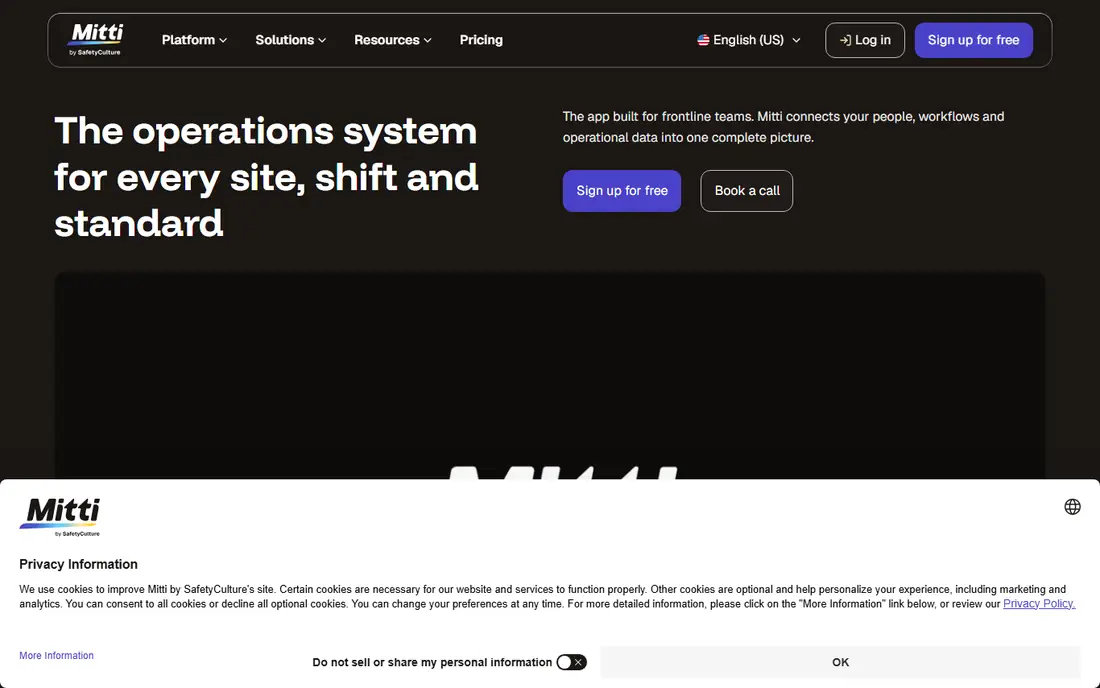
SafetyCulture started as an inspection app and still feels like one. Operators or inspectors fill in a checklist on a phone, attach photos, flag a failure and assign an action to someone. For a plant that currently tracks defects on paper or in spreadsheets, that alone is a big step, and setup is measured in days rather than months.
Third-party listings show a free plan for up to 10 users and a paid Premium plan priced per user per month, with a discount for annual billing. Confirm the exact figures and limits on the vendor's pricing page, because inspection template caps on the free tier tend to bite quickly.
The catch is depth. You can log a defect and track the fix, but formal root cause methods, effectiveness checks and audit-ready CAPA records are thinner here than in a quality management system. Many buyers pair it with a heavier system later, or use it as the front end that feeds one.
What we like- Fast to roll out on phones and tablets
- Large template library
- Free tier for very small teams
Watch out for- Not a full CAPA system
- Investigation depth is limited compared with a dedicated QMS
#2
1factory
Best for: Inspection planning, SPC and first article reports
Visit 1factory.com
Starting priceSee website
Free planFree trial (confirm length with vendor)
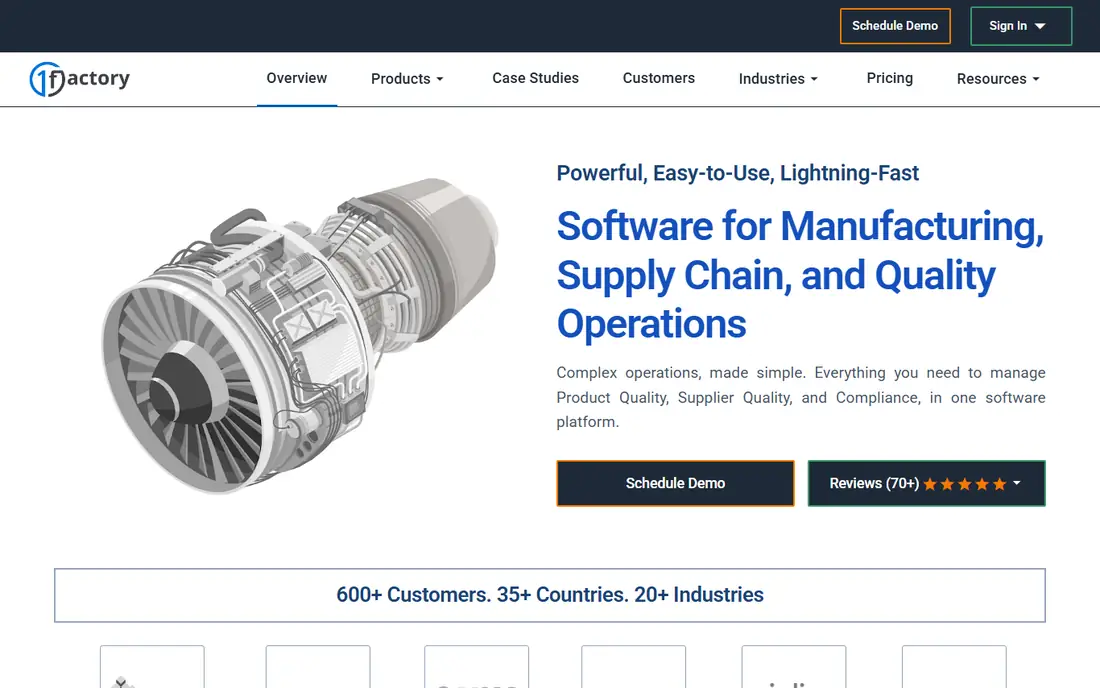
1factory is aimed at discrete manufacturers, especially machine shops and aerospace or medical suppliers that live by drawings and tolerances. You upload a PDF drawing, the tool balloons the dimensions, and inspectors record measurements against them. When a dimension drifts, the nonconformance and its history sit next to the measurement data.
That link between measurement data and the defect record is its main strength for investigation work. You can see which feature, which machine and which lot produced the problem, then act on it. Public review sites rate it highly for ease of use and support, though those are small review counts.
Pricing is the part to pin down. Capterra lists per-user monthly plans, while G2 shows a different entry figure with a five-user minimum, so ask for a written quote. If you also need a full document control and training system, plan on a second tool.
What we like- Automatic ballooning of drawings
- First article and in-process inspection built in
- SPC and control plans
Watch out for- Pricing varies across public listings
- Narrower on document control and training than a full QMS
#3Tulip
Best for: Building custom defect capture apps on the line4.5/5 on
G2 (37 reviews, checked Oct 2026)
Visit tulip.co
Starting priceSee website
Free planSee website
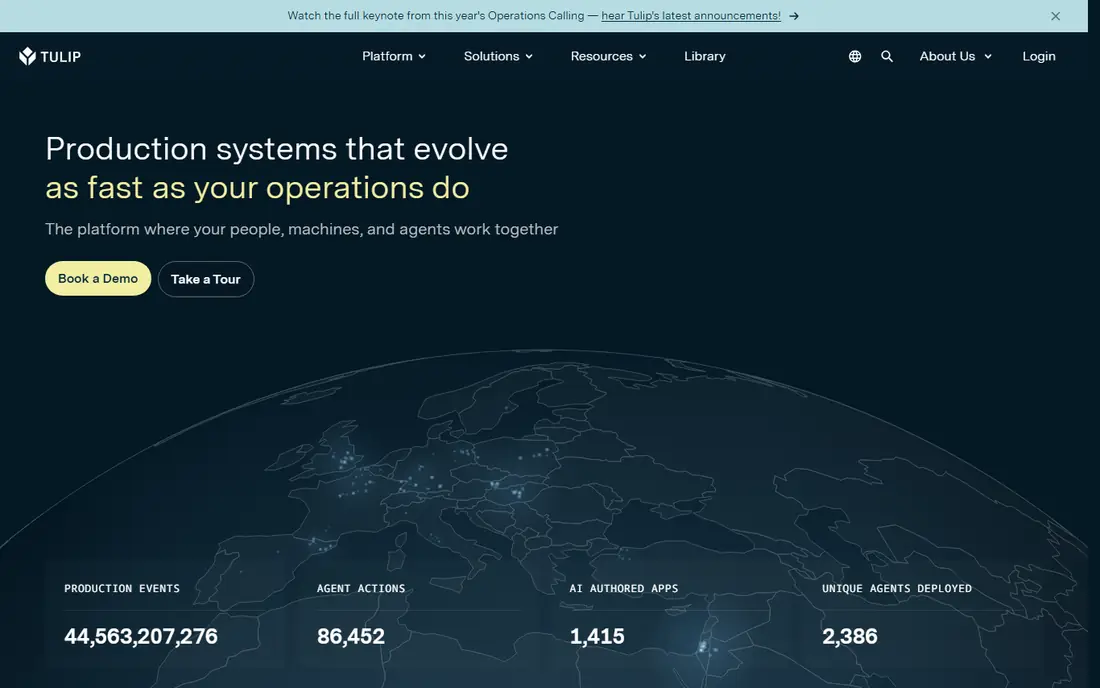
Tulip is a frontline operations platform, and it suits plants that want to design their own defect workflow instead of adopting someone else's. An engineer can build an app that prompts an operator for a defect code, pulls a reading from a gauge, snaps a photo and routes the record to a supervisor. Data lands in one place for later analysis.
This works well for engineering-led teams with unusual products or a lot of hand assembly. A packaging line and a medical device cell can end up with very different apps on the same platform.
The trade-off is effort. Someone has to own the apps, and the investigation logic (who reviews, what gets escalated, how a root cause is recorded) is yours to design. Listed prices on review sites conflict, so get a quote based on your number of stations or interfaces before comparing it to per-user tools.
What we like- No-code app builder for operators
- Connects to machines, gauges and sensors
- Flexible for unusual processes
Watch out for- You build the workflow yourself
- Not a ready-made CAPA or QMS
#4QT9 QMS
Best for: Small and mid-size manufacturers needing a full QMS4.8/5 on
G2 (125 reviews, checked Oct 2026)
Visit qt9software.com
Starting priceSee website
Free planFree trial (request from vendor)
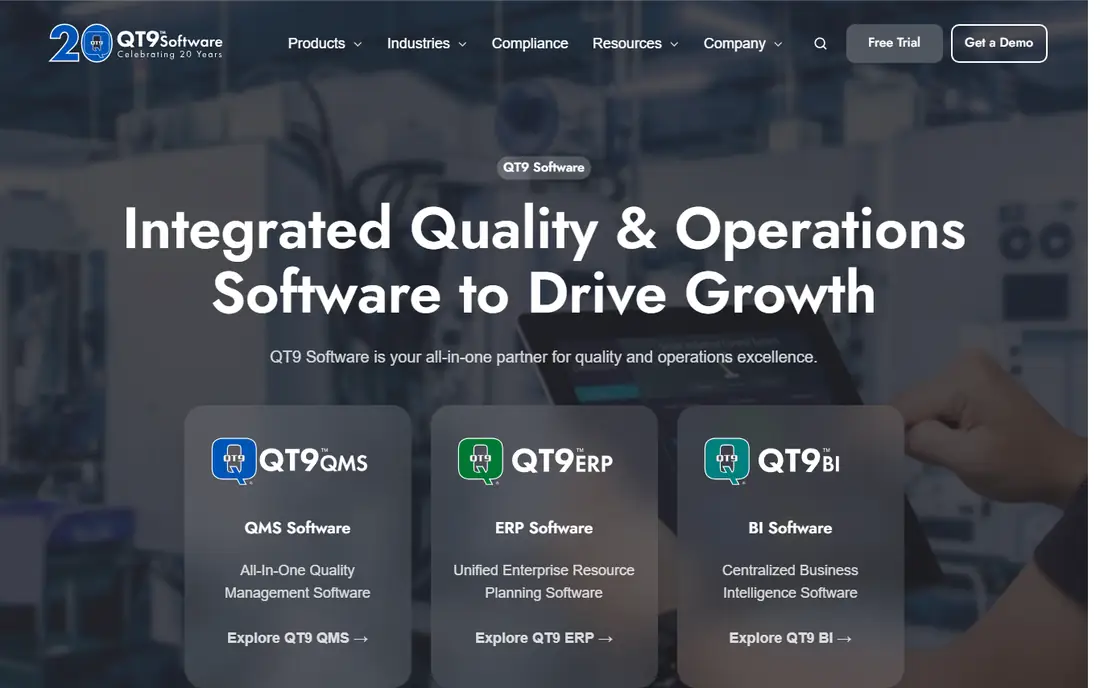
QT9 is a good match for a 30 to 300 person manufacturer that has outgrown spreadsheets and wants one system for documents, training, supplier quality, audits and corrective action. Defects can be logged as nonconformances, linked to a CAPA, and closed with sign-off, which is what ISO 9001 and many customer audits expect.
Pricing is licence-based. One third-party listing describes concurrent user licensing, which can lower cost when many people use the system only occasionally, and notes that implementation and training are charged separately. Another listing shows a much lower annual entry figure, so treat all of these as rough and ask for a quote.
Reviewers often praise the breadth for the money and sometimes grumble about the look and feel. If your team will be entering defects on a tablet at the line, ask to see the mobile experience before you commit.
What we like- Covers CAPA, nonconformance, document control and audits in one system
- Cloud or on-premises option
- Vendor has operated since 1999
Watch out for- Implementation and training are extra
- Interface feels dated to some reviewers
#5Qualio
Best for: Life sciences manufacturers4.4/5 on
G2 (781 reviews, checked Oct 2026)
Visit qualio.com
Starting priceSee website
Free planNo
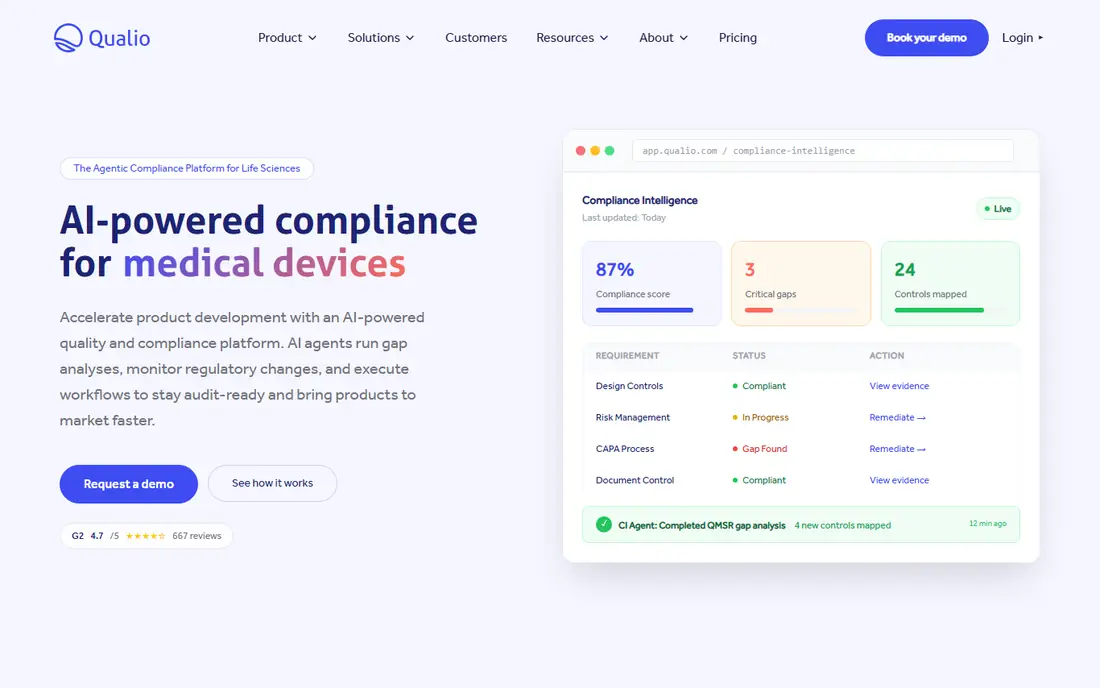
Qualio is a cloud quality system built for medical device, biotech and similar regulated companies. Its event and CAPA modules guide a team from a reported issue through investigation, root cause, action and effectiveness check, with the paper trail an inspector will ask for.
Third-party sources describe a base platform fee of roughly $12,000 per year plus a per-user charge, and TrustRadius says there is no free version or trial. Those figures are not from the vendor, so use them only as a planning range.
It is a weaker choice for a general metal or plastics plant that needs line-side inspection records. Qualio manages the quality process well, but it does not replace measurement or inspection software, so you may need to feed it from another source.
What we like- Built around FDA and ISO 13485 style workflows
- Clean interface
- Strong support ratings on review sites
Watch out for- Priced for life sciences budgets
- Light on shop floor data capture
#6MasterControl
Best for: Regulated manufacturers with large document and CAPA loads4.3/5 on
G2 (536 reviews, checked Oct 2026)
Visit mastercontrol.com
Starting priceSee website
Free planNo
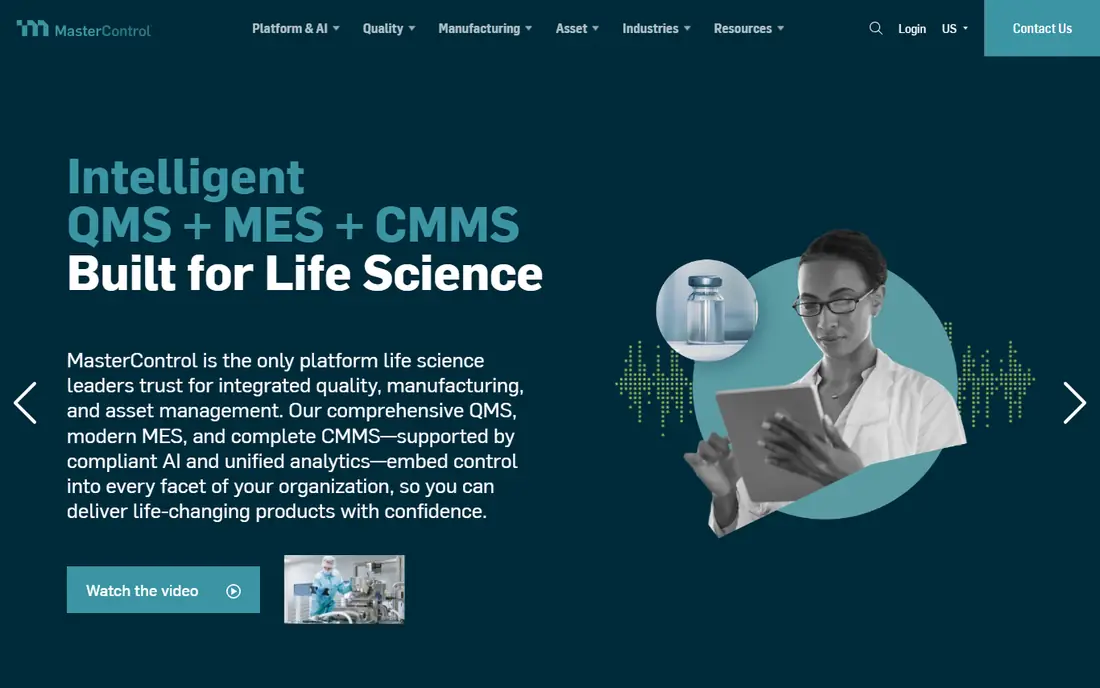
MasterControl is one of the longest-established names in quality management for life sciences and other regulated manufacturing. Its quality suite ties deviations, nonconformances and CAPA to controlled documents and training, so that when an investigation produces a procedure change, the update and retraining follow in the same system.
Capterra lists a Basic tier from $25,000 per year, with other tiers priced on request, and an independent write-up suggests that costs can pass $100,000 per year at larger companies. These are third-party figures, so ask for a full quote that includes implementation, validation support and any add-on modules.
It fits companies where compliance risk justifies the spend. For a small shop with a handful of quality staff, it will probably be more system than you need, and some reviewers say certain tasks feel complex without extra training.
What we like- Mature document control, training and CAPA in one suite
- Long record in regulated industries
- Analytics options
Watch out for- Expensive
- Modules are sold separately and costs can climb
#7ETQ Reliance
Best for: Configurable CAPA and nonconformance at scale4.3/5 on
G2 (628 reviews, checked Oct 2026)
Visit etq.com
Starting priceSee website
Free planNo
ETQ Reliance is a configurable quality platform used for CAPA, nonconformance, complaints, audits and supplier quality. Review sites now sometimes list it under the Octave brand name, so do not be surprised if the vendor's site and the listings differ. It is aimed at companies with several plants or complex approval chains.
Listings show an entry price of about $25,000 per year, though the vendor sells by quote based on the applications, users and sites you pick. Plan on a longer rollout than with the lighter tools above, because configuration is the point of the product.
Reviewers like the flexibility but a number of newer users complain that the interface takes time to learn. It makes the most sense when your defect investigation process is formal, differs by site and needs to be tailored rather than adopted as is.
What we like- Highly configurable workflows
- Broad set of quality applications
- Suited to multi-site manufacturers
Watch out for- Pricing not published and starts high
- Some users find it unintuitive
How we chose
We built this list from public sources, not hands-on trials. For each tool we looked at the vendor's product pages and documentation where they were available, then compared pricing and plan details published on review sites such as Capterra, G2, Software Advice and TrustRadius, plus user feedback on those sites. We checked features that matter for investigating defects: nonconformance logging, root cause and CAPA workflows, inspection data capture, integrations, and fit by company size.
Where we could not confirm a figure on a vendor's own pricing page, the tables say "See website" and any third-party number in the text is labeled as such. We also mixed established quality suites with smaller inspection and app-building tools, because the right answer depends on whether your problem is capturing defects or proving you fixed them. Prices change often, so confirm everything with the vendor.
Start with the problem you actually have
If defects are found but never recorded consistently, you need capture first. An inspection app or a line-side app builder will solve that quickly. If defects are recorded but the same ones keep coming back, you need structured root cause and corrective action, which means a QMS with CAPA.
Match the tool to your regulatory load
Medical device, aerospace and food producers face outside audits that expect traceable investigations. In those cases, a system with electronic signatures, audit trails and validation support is not optional. A general manufacturer certified to ISO 9001 can often use a lighter system, as long as it records cause, action and verification.
Ask the contract questions early
Pricing models vary a lot. Some vendors charge per named user, some use concurrent licences, and others quote a platform fee plus seats. Ask about implementation and training fees, the minimum contract length, how many sites and users are included, and what it costs to add modules later.
Check integrations and data export
Defect data is most useful when it connects to your ERP, MES, gauges and supplier records. Ask which integrations are native and which need an API or a services project. Also ask how you can export your records if you leave, and in what format, since quality records often have to be kept for years.
Run a real defect through the demo
Give each vendor a recent defect from your plant and ask them to walk it from discovery to closure. You will quickly see how many clicks it takes, whether the 5 Whys or 8D steps fit your method, and whether operators can use it without a laptop.
Frequently asked questions
What is manufacturing defect investigation software?
It is software that records a defect or nonconformance, helps a team find the root cause, and tracks corrective and preventive actions until they are verified. Some products focus on inspection data, others on the full quality process, and some cover both.
Is a QMS the same as defect investigation software?
Not exactly. A QMS usually includes defect investigation through its nonconformance and CAPA modules, but also covers documents, training, audits and suppliers. If you only need to capture and track defects, an inspection tool may be enough.
How much does it cost?
It ranges widely. Inspection tools can be priced per user per month, while full quality suites are often quoted annually and third-party listings place entry points from about $12,000 to $25,000 per year or more. Implementation and validation can add to the total, so get a written quote.
Can small manufacturers use these tools?
Yes. SafetyCulture, 1factory and QT9 are generally the more approachable options for smaller teams, based on their review profiles. Enterprise suites such as MasterControl and ETQ Reliance tend to suit larger or heavily regulated operations.
How long does implementation take?
Inspection apps can be running within days to a few weeks. A full QMS typically takes longer because of configuration, data migration, training and, in regulated settings, validation. Ask each vendor for a realistic timeline for a company of your size.
Sources we checked (18)
- https://www.educate-me.co/blog/safetyculture-pricing
- https://connecteam.com/reviews/safetyculture/
- https://www.capterra.com/p/151002/1factory/pricing/
- https://www.g2.com/products/1factory/pricing
- https://www.softwareadvice.com/manufacturing/1factory-profile/
- https://www.trustradius.com/products/tulip-interfaces/pricing
- https://softwarefinder.com/manufacturing-software/tulip-co
- https://www.selecthub.com/p/quality-management-software/qt9-qms/
- https://softwareconnect.com/reviews/qt9-quality-management/
- https://www.capterra.com/p/97557/QT9-Quality-Management/
- https://www.trustradius.com/products/qualio/pricing
- https://softwareconnect.com/reviews/qualio/
- https://www.softwareadvice.com/capa/qualio-profile/
- https://www.capterra.com/p/148577/MasterControl/pricing/
- https://openregulatory.com/articles/mastercontrol-pricing
- https://www.capterra.com/p/172042/Quality-Management-Software/pricing/
- https://www.softwareadvice.com/capa/etq-reliance-profile/
- https://www.erpresearch.com/erp-add-ons/healthcare/etq-reliance
Is your product missing or out of date?
We review this list regularly. Vendors can request a listing, send updated pricing or ask about featured placement.

Shihab Mia · Founder, Rankite
Shihab has 5+ years in B2B and SaaS SEO. He writes Rankite's software buying guides from pricing pages, documentation and public user reviews. More about Shihab.