How we make this list: we compare pricing pages, product documentation and public user reviews. Ratings come from G2, Capterra or Trustpilot, with the date we checked them.
Key takeaways
- The best logistics developer is the one with recent work in your exact workflow, whether that is fleet dispatch, warehouse operations or freight booking.
- Custom builds suit operations that have outgrown spreadsheets and generic tools, while a packaged TMS or WMS may be cheaper for standard processes.
- Ask for integration experience with carriers, telematics, ERP and warehouse hardware before judging a portfolio by design quality alone.
- Fixed-scope quotes need a detailed brief; vague briefs produce change orders, and change orders are where logistics projects lose budget.
Quick comparison
| Tool | Best for | Starting price | Free plan |
|---|
 Cleveroad | Cloud logistics platforms | See website | No |
 ScienceSoft | Enterprise logistics systems | See website | No |
 Vention | Dedicated logistics teams | See website | No |
 Yalantis | Supply chain and transport apps | See website | No |
 Andersen | Large logistics programmes | See website | No |
 Intellectsoft | Enterprise logistics builds | See website | No |
 Netguru | Composable logistics platforms | See website | No |
 Itransition | Long-running logistics delivery | See website | No |
 BairesDev | Nearshore logistics teams | See website | No |
 Computools | Logistics product development | See website | No |
Is your product missing or out of date?
We review this list regularly. Vendors can request a listing, send updated pricing or ask about featured placement.
The best logistics software development companies
Starting priceSee website
Free planNo
Cleveroad is a natural first call for a logistics company that needs a custom platform rather than a single feature. Its logistics work covers transport, fleet and supply chain workflows, with web and mobile delivery. Cloud experience matters here, because dispatch, tracking and warehouse data must stay in sync across users and devices.
The limit is cost clarity. Like most firms on this list, Cleveroad quotes per project, so a buyer needs a clear brief to get a useful number. Share volumes, user roles, integrations and must-have workflows early, and ask for a phased plan if the full build is too large for one budget cycle.
What we like- Dedicated logistics experience
- Cloud and mobile delivery
- AWS partnership for scaling
Watch out for- Project pricing is quote-only
- Smaller firms may need a phased scope to fit budget
#2ScienceSoft
Best for: Enterprise logistics systems4.7/5 on
G2 (4 reviews, checked Oct 2026)
Visit scnsoft.com
Starting priceSee website
Free planNo
ScienceSoft suits larger logistics operators that need a system to last for years. The firm has a long record in enterprise software, including supply chain, warehouse and transport projects. That depth helps when a build must connect to ERP, accounting and legacy systems without breaking daily operations.
Smaller companies should check fit carefully. Enterprise delivery brings process, documentation and testing, which add cost and time. For a small fleet or a single warehouse, a lighter firm or a packaged product may deliver faster value.
What we like- Long enterprise history
- Broad logistics and supply chain coverage
- Strong analysis and testing practice
Watch out for- Enterprise process can feel slow for a startup
- Minimum project size may exceed small budgets
Starting priceSee website
Free planNo
Vention works well when a logistics company wants a dedicated development team rather than a one-off project. That model suits firms with an ongoing product roadmap, such as a TMS that needs regular carrier integrations or a driver app that evolves with fleet needs. Teams can scale up or down as priorities change.
The catch is ownership. A dedicated team still needs a product owner on the client side to set priorities and review work. Without that role, delivery can drift. Buyers should name an internal owner, agree on sprint reviews and keep a written backlog.
What we like- Dedicated team model
- Experience across transport and supply chain
- Flexible scaling
Watch out for- Team quality depends on the people assigned
- Management overhead stays with the client
Starting priceSee website
Free planNo
Yalantis is a strong option for logistics apps that depend on real-time information, such as tracking, delivery status and driver communication. Its portfolio includes supply chain and transport work, with mobile apps for field users and web tools for dispatchers. That pairing matters, because a driver app and a dispatcher dashboard must work as one system.
Start dates and scope need early discussion. Popular firms book out, and a delayed start can clash with a seasonal peak. Ask for a realistic timeline, a named team and a plan for support after launch.
What we like- Strong supply chain and transport portfolio
- Mobile and web delivery
- Experience with real-time data
Watch out for- Demand can affect start dates
- Pricing is quote-only
Starting priceSee website
Free planNo

Andersen suits logistics programmes that need many developers, testers and analysts working together. Large warehouse, freight and supply chain builds benefit from that capacity, especially when several systems must launch together. Structured governance also helps when a project has many stakeholders.
Mid-market buyers should test fit. A large firm can still deliver a small project well, but the overhead may not suit a tight budget. Ask for a team size that matches the scope, and avoid paying for roles the project does not need.
What we like- Large delivery capacity
- Logistics and enterprise experience
- Structured project governance
Watch out for- Large-team pricing can exceed mid-market budgets
- Process may feel formal for small builds
Starting priceSee website
Free planNo
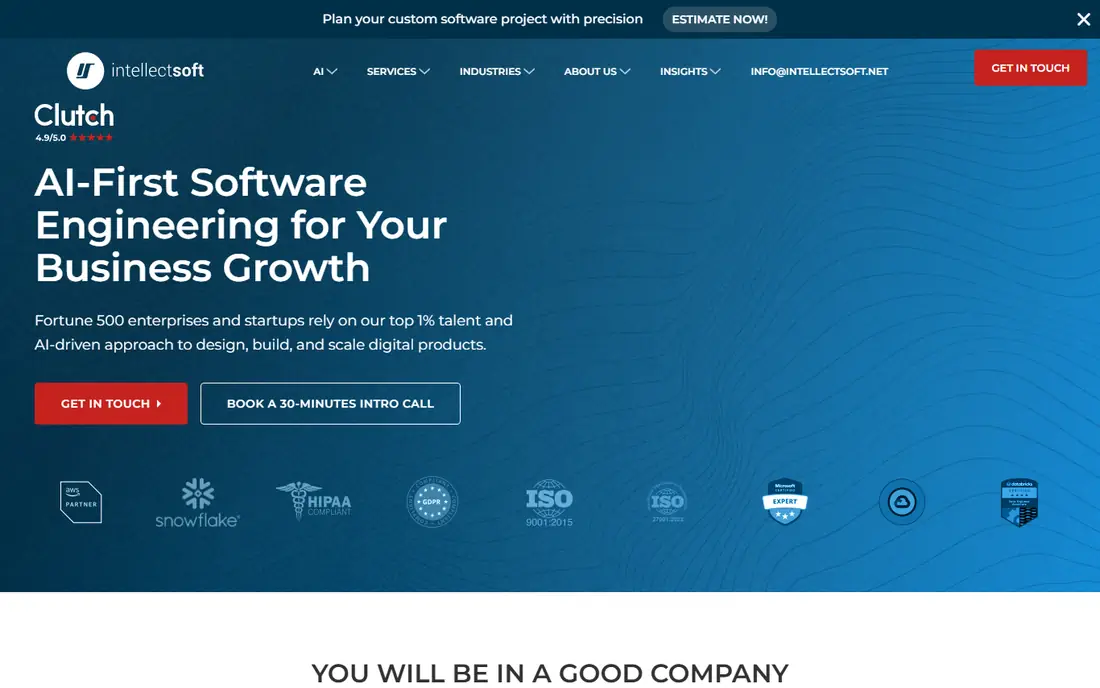
Intellectsoft is worth considering for enterprise logistics builds that need mobile apps, cloud platforms and integration with existing systems. Its work covers transport and supply chain use cases, with an emphasis on solutions that support daily operations rather than demo features. Long-term support is part of the appeal for operators who cannot afford downtime.
The sales cycle can be slow, and a buyer with an urgent deadline should confirm availability before committing to a launch date. A clear statement of work, with milestones and acceptance criteria, keeps a long project on track.
What we like- Enterprise logistics experience
- Mobile and cloud delivery
- Focus on long-term partnerships
Watch out for- Sales process can be lengthy
- Smaller projects may wait for team availability
#7Netguru
Best for: Composable logistics platforms4.3/5 on
G2 (2 reviews, checked Oct 2026)
Visit netguru.com
Starting priceSee website
Free planNo

Netguru is known for building platforms from connected services rather than one monolithic system. For logistics, that approach suits companies that want a TMS, a customer portal and a tracking service to evolve separately. Product design is a strength, which helps for customer-facing tracking and booking tools.
Logistics buyers should verify team experience, not only firm reputation. Ask for recent logistics cases, the engineers who will work on the project, and how integrations with carriers and ERP systems were handled. A strong general platform firm still needs logistics-specific knowledge on the team.
What we like- Composable commerce and platform experience
- Product design strength
- Large project history
Watch out for- Premium positioning
- Logistics depth varies by team
Starting priceSee website
Free planNo

Itransition has a long record in custom software, including logistics and supply chain projects. That history helps when a build must handle complex rules for routing, inventory and freight costing. Broad technology coverage also helps when a client runs a mix of old and new systems.
The trade-off is pace. Established process brings reliability, but it can feel slower than a small studio. Buyers with a tight seasonal deadline should agree on milestones, communication rhythm and a change process before work starts.
What we like- Long delivery history
- Logistics and supply chain work
- Broad technology coverage
Watch out for- Older firm processes can feel slow
- Quote-only pricing
Starting priceSee website
Free planNo
BairesDev suits US logistics companies that want nearshore teams in similar time zones. That overlap helps for daily standups, dispatch issues and urgent fixes, compared with a team many hours away. The firm has a large talent pool and experience across logistics and enterprise software.
Nearshore does not remove management work. Buyers still need a product owner, clear priorities and regular reviews. Ask how the team is selected, how turnover is handled and who leads delivery day to day.
What we like- Nearshore teams for US clients
- Large talent pool
- Logistics and enterprise experience
Watch out for- Time zone and team management still need care
- Quality varies by assigned team
Starting priceSee website
Free planNo
Computools appears in recent logistics rankings and positions itself around product development for logistics and supply chain. That product mindset suits companies building a platform they will sell or operate for years, rather than a one-off internal tool. TMS, WMS and fleet concepts are central to its logistics positioning.
Buyers should verify recent cases in their exact workflow. Ask for a demo, client references and details on integrations delivered. A product approach is valuable only when the team understands dispatch, warehouse and carrier realities.
What we like- Logistics software focus in recent lists
- Product development approach
- Experience with TMS and WMS concepts
Watch out for- Portfolio claims need verification against recent cases
- Pricing is quote-only
How we chose
We compared logistics development firms using vendor websites, published case studies, service descriptions and public reviews on G2, Capterra and Reddit where available. We favoured firms with visible logistics work, integration experience and a delivery model that matches real operations. Pricing is quote-only across this category, so we did not invent rates. Firms were excluded when we could not confirm current logistics services or an official homepage.
Briefing a logistics build so the quote is real
Write the brief around workflows, not features. Describe how an order moves from booking to delivery, who touches it, what data each role needs and where delays happen today. Include volumes, peak periods, carrier names, telematics providers and ERP systems. A developer can price a workflow, while a feature list leaves room for guesswork and change orders.
Test integration skill early
Ask each finalist to explain how they would connect to one carrier, one telematics feed and one ERP system. Listen for specifics: API limits, data mapping, error handling and what happens when a feed fails. Vague answers on integration are a warning, because integration work often takes more time than screens and reports. A small paid discovery phase can expose those risks before a full build.
Plan for support after launch
Logistics software fails at the worst times, such as peak season or overnight dispatch. Agree on support hours, response times, monitoring and a release process for fixes. Confirm who owns the code, the documentation and the data. A build without a support plan becomes a liability the first time a carrier API changes.
Frequently asked questions
How much does custom logistics software cost?
Cost depends on scope, integrations and team size, and most firms quote per project. A simple driver and dispatch tool costs far less than a full TMS with warehouse, billing and carrier integrations. A detailed brief and a phased plan give the most accurate quote.
Should I build custom software or buy a TMS or WMS?
Buy a packaged system when your process matches standard workflows and speed matters. Build custom software when your process is a competitive advantage, when packaged tools force costly workarounds, or when you need deep integration across systems. Many firms use a mix: packaged core plus custom portals and integrations.
How long does a logistics build take?
A focused tool can launch in a few months, while a full platform often takes six to twelve months or more. Timeline depends on scope, integration complexity, data migration and testing with real operations. Seasonal peaks should shape the launch plan.
What integrations matter most?
Carrier APIs, telematics and GPS, ERP and accounting, warehouse hardware such as scanners, and customer notification tools are common priorities. List your current systems in the brief, and ask each developer to confirm experience with each one. Unfamiliar integrations add risk and time.
Who should own the project on my side?
A named product owner who knows daily operations should own priorities, approvals and testing. Without that role, developers guess at workflow details and rework follows. The owner should have time each week for reviews and decisions.
How do I reduce risk on a large build?
Start with discovery, build in phases, test with real dispatchers and drivers, and set acceptance criteria for each milestone. Keep the first release narrow, measure results, then expand. That approach limits budget exposure if priorities change.
Sources we checked (13)
- https://www.cleveroad.com
- https://www.scnsoft.com
- https://ventionteams.com
- https://yalantis.com
- https://andersenlab.com
- https://www.intellectsoft.net
- https://www.netguru.com
- https://www.itransition.com
- https://www.bairesdev.com
- https://computools.com
- https://stfalcon.com/en/blog/post/top-logistics-software-development-companies
- https://computools.com/top-logistics-software-development-companies/
- https://www.exeideas.com/2026/06/top-logistics-software-development-companies-2026.html
Is your product missing or out of date?
We review this list regularly. Vendors can request a listing, send updated pricing or ask about featured placement.

Shihab Mia · Founder, Rankite
Shihab has 5+ years in B2B and SaaS SEO. He writes Rankite's software buying guides from pricing pages, documentation and public user reviews. More about Shihab.