How we make this list: we compare pricing pages, product documentation and public user reviews. Ratings come from G2, Capterra or Trustpilot, with the date we checked them.
Key takeaways
- In health information management, "record tracking" covers three separate jobs. One is finding paper charts. Another is following chart deficiencies until physicians sign. The third is logging every release of information (ROI) request. Very few products do all three well.
- None of the seven vendors below publishes list prices. All of them sell through a demo and a quote. Several ROI vendors charge per request or take a share of request revenue instead of charging a seat fee.
- Hospitals that already run OnBase or a large EHR can use Hyland's HIM tools to handle deficiencies and chart completion inside their existing content platform. Smaller facilities that still use paper charts get more value from a dedicated chart locator or an RFID file tracker.
- Verisma, MRO and Datavant are the big ROI vendors for large organizations. Verisma says its Release Manager can go live across a complex health system in as little as six weeks. Datavant says it connects to more than 70 EHR systems.
- ChartRequest is the easiest option to adopt for physician groups, FQHCs and imaging centers. It has separate plans for low-billable and high-billable specialties, plus a self-service tier.
Quick comparison
| Tool | Best for | Starting price | Free plan |
|---|
 Hyland OnBase (HIM solutions) | Hospitals that want deficiency and chart completion inside an enterprise content platform | See website | No |
 Verisma Release Manager | Health systems that need governed, auditable ROI tracking | See website | No |
 MRO | Large providers that want ROI software plus outsourced fulfillment | See website | No |
 Datavant | Health systems that want to offload ROI at scale | See website | No |
 ChartRequest | Physician practices, FQHCs and imaging centers | See website | No |
 MED2020 WinRecs | Community hospitals that track paper chart loans and deficiencies | See website | No |
 IoTFileTracker | Facilities with large paper record rooms that need RFID or barcode tracking | See website | No |
Is your product missing or out of date?
We review this list regularly. Vendors can request a listing, send updated pricing or ask about featured placement.
The best HIM software for record tracking
#1
Hyland OnBase (HIM solutions)
Best for: Hospitals that want deficiency and chart completion inside an enterprise content platform
Visit hyland.com
Starting priceSee website
Free planNo

Hyland is the pick for HIM directors who already think of the medical record as a pile of documents that needs governing. Its HIM solutions handle capture, indexing, storage, auditing and physician completion of unstructured records. The OnBase documentation describes a full deficiency model, including deficiency types for orders left unsigned in another application. That matters if your biggest tracking headache is incomplete charts rather than lost folders.
The standout is depth. Hyland's documentation shows deficiency tables at both the chart and document level, coding workflow tables and access limits by facility. That suggests the reporting and security controls are mature. Hyland also sells medical records indexing, which sorts incoming records automatically so clinicians can open them from inside the EHR.
The catch is weight. OnBase is a platform, not an app you switch on in an afternoon. Buyers should budget for setup, interface work with their EHR and ongoing administration. A 40-bed critical access hospital with no existing OnBase setup will likely find it more than it needs.
What we like- Covers the full record life cycle from capture to compliant destruction
- Deficiency and chart completion tools documented in detail
- Integrations with major EHRs and cloud fax
Watch out for- Enterprise implementation that usually needs a partner or in-house OnBase admin
- No published pricing
#2
Verisma Release Manager
Best for: Health systems that need governed, auditable ROI tracking
Visit verisma.com
Starting priceSee website
Free planNo
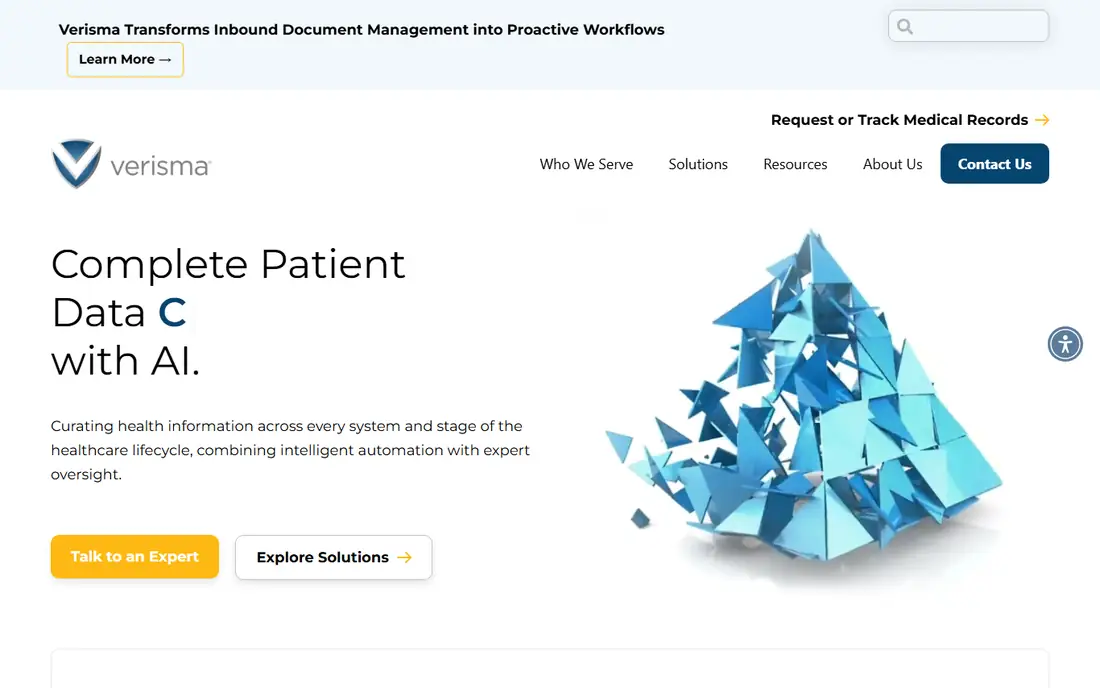
If your auditors ask "who released what, to whom, and when," Verisma Release Manager (VRM) is built around that question. The cloud platform logs each request from intake through processing, quality review, delivery and reporting. Verisma describes a time-stamped audit trail of what was reviewed and by whom. An intake layer collects fax, email, paper and scanned requests, stamps the date received and pre-logs each case for staff to confirm.
What sets it apart is the review model. Verisma's Technology-Assisted Review scans every page for sensitive or mixed-in content from other patients or encounters. A person still confirms and signs off before anything goes out. For HIM teams worried about AI-driven disclosure errors, that split is reassuring. Verisma also sells a self-service request app and status updates to cut down on "where are my records" calls.
The honest weakness is fit for smaller buyers. Verisma says VRM is built for health systems "large and small," but the feature list is clearly aimed at organizations with a dedicated ROI team (rules across multiple sites, enterprise analytics, connectors to several EHRs). Ask how the contract is structured, since ROI vendors often mix software fees with per-request service charges.
What we like- Tracks every request type (patient, legal, payer, continuity of care, disability) in one workflow
- Human reviewers sign off on every release after AI-assisted page review
- Vendor states go-live in as little as 6 weeks
Watch out for- Built for health systems, so small practices may find it heavy
- Pricing only by quote
#3
MRO
Best for: Large providers that want ROI software plus outsourced fulfillment
Visit mrocorp.com
Starting priceSee website
Free planNo
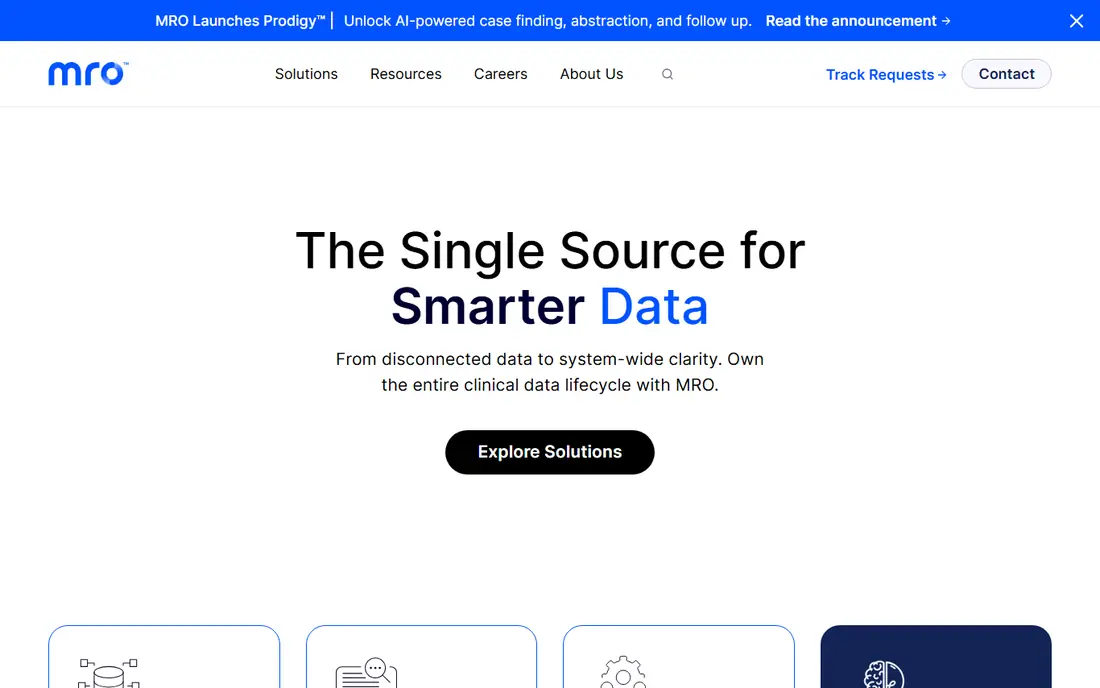
MRO makes sense when the HIM department wants to hand off a large share of its request volume, not just buy a tracking screen. Its cloud-based Exchange Manager enforces standardized ROI workflows and audit trails, and MRO can also handle fulfillment for you. The company now offers clinical data abstraction and revenue integrity services too, so a health system can cut down the number of record-related vendors it uses.
Security is a real strength. MRO states that every line of business holds either HITRUST r2 validation or SOC 2 Type II certification. That shortens the vendor risk review for most compliance teams.
The tradeoff is control. When a vendor's staff process your requests, your own team sees status through the vendor's tools and reports instead of owning every step. Before signing, ask for sample turnaround reports and the escalation path for disputed releases. Also ask how you can export your request data if you leave.
What we like- Cloud-based Exchange Manager standardizes ROI workflows and keeps audit trails
- HITRUST r2 or SOC 2 Type II certification across its business lines
- Broader clinical data services (abstraction, revenue integrity) under one vendor
Watch out for- Service-heavy model gives you less direct control than pure software
- No public pricing or plan details
Starting priceSee website
Free planNo
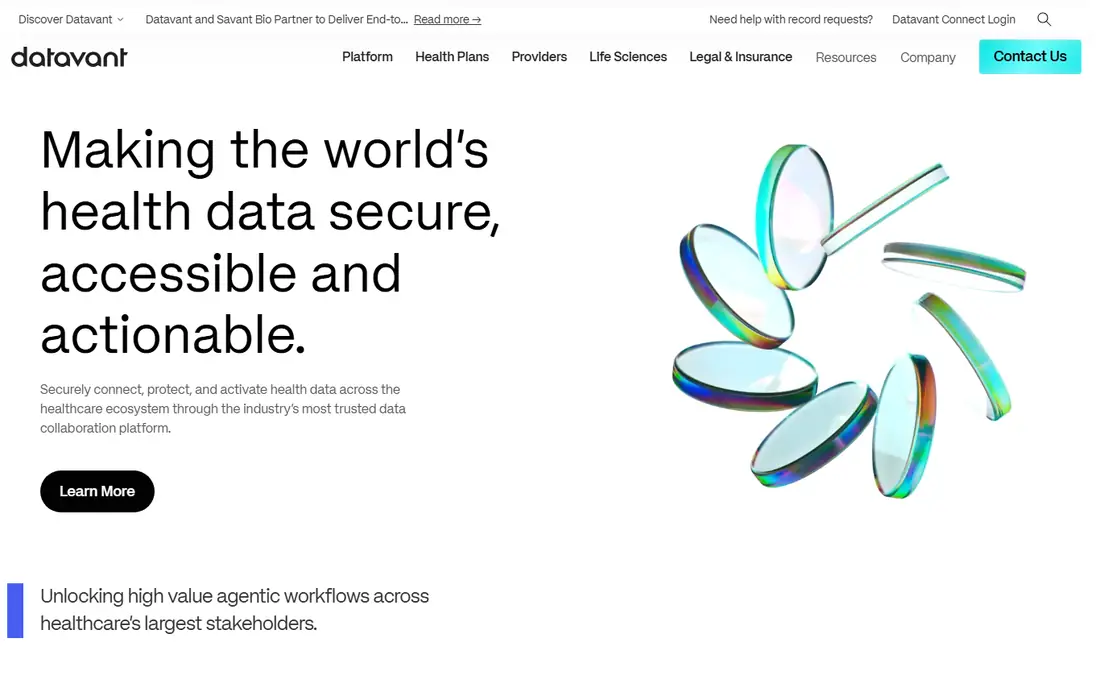
Datavant owns Ciox Health, a long-established US ROI company, and now presents itself as a data platform for the whole health system. For HIM, that means request intake tools for patients and providers, digital fulfillment through more than 70 EHR connections, and the option of Datavant staff working your queue. The company says 70% of the top 100 US health systems use its ROI service.
The concrete strength is reach. Some facilities constantly get requests from payers, attorneys and other providers. For them, Datavant's network and request tools reduce phone and fax traffic, and the same vendor can cover coding overflow and audit management.
The catch is that Datavant is a big company serving big customers. One competitor's published comparison calls Datavant slower to implement and less transparent for outside requesters. Check both points when you call references. A small clinic will probably get faster attention elsewhere.
What we like- Connects to 70+ EHR systems for digital fulfillment
- Large retrieval network of more than 40,000 facilities
- Optional embedded HIM staff and coding services
Watch out for- Implementation can be slower than lighter tools
- Better suited to large systems than small clinics
Starting priceSee website
Free planNo
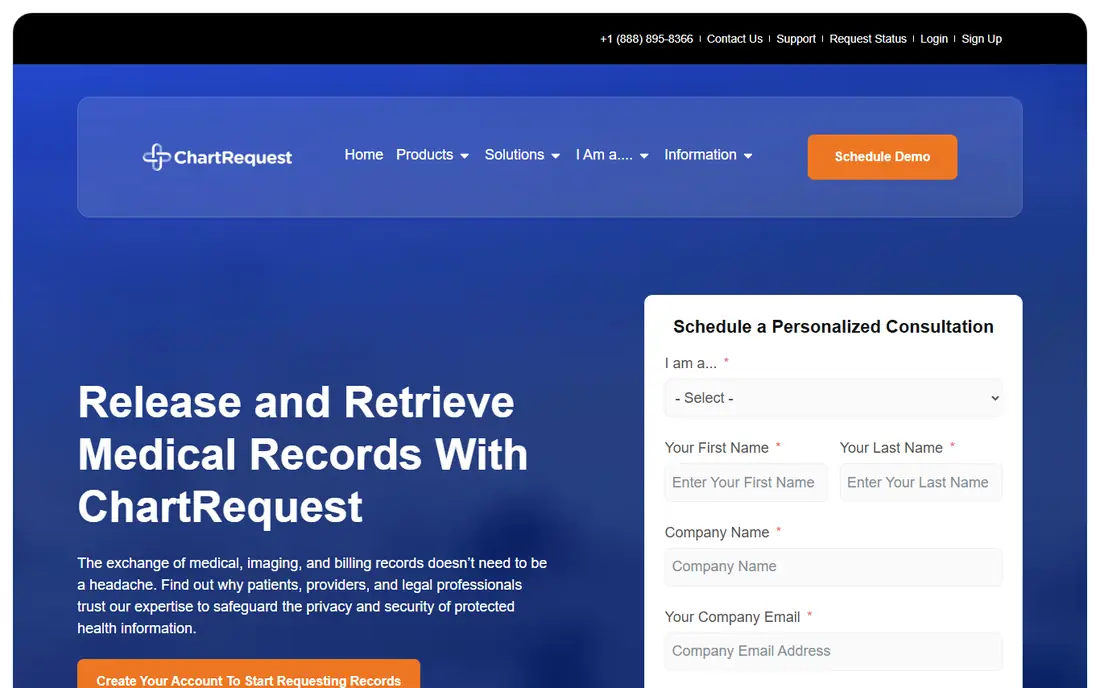
ChartRequest is built for the practice manager who wants request tracking without a large IT project. Its ROI software automates intake and request management. Staff and requesters can both follow request status in real time, which cuts the status calls that eat up front-desk time. You can keep fulfillment in-house or let ChartRequest's team release records for you.
The plan structure is the most useful detail for smaller buyers. ChartRequest Complete is a flat-fee managed service aimed at low-billable specialties. ChartRequest Select offers flexible billing for high-billable specialties. ChartRequest Pro is a self-service platform paid for through a revenue share. There is also a custodianship plan that keeps records available after a practice closes.
The weakness is transparency. The company does not list dollar amounts, and its own comparison content rates itself above every competitor, so treat that as marketing. Ask for a written fee schedule that includes what requesters are charged, since fees charged to patients can turn into complaints.
What we like- Three plan styles (flat-fee managed, flexible billing, self-service with revenue share)
- Real-time request tracking via dashboard and mobile app
- SOC 2 platform with a published EHR integration list
Watch out for- No published dollar prices
- Much of its marketing compares itself favorably to rivals, so verify claims in a demo
#6
MED2020 WinRecs
Best for: Community hospitals that track paper chart loans and deficiencies
Visit med2020.ca
Starting priceSee website
Free planNo
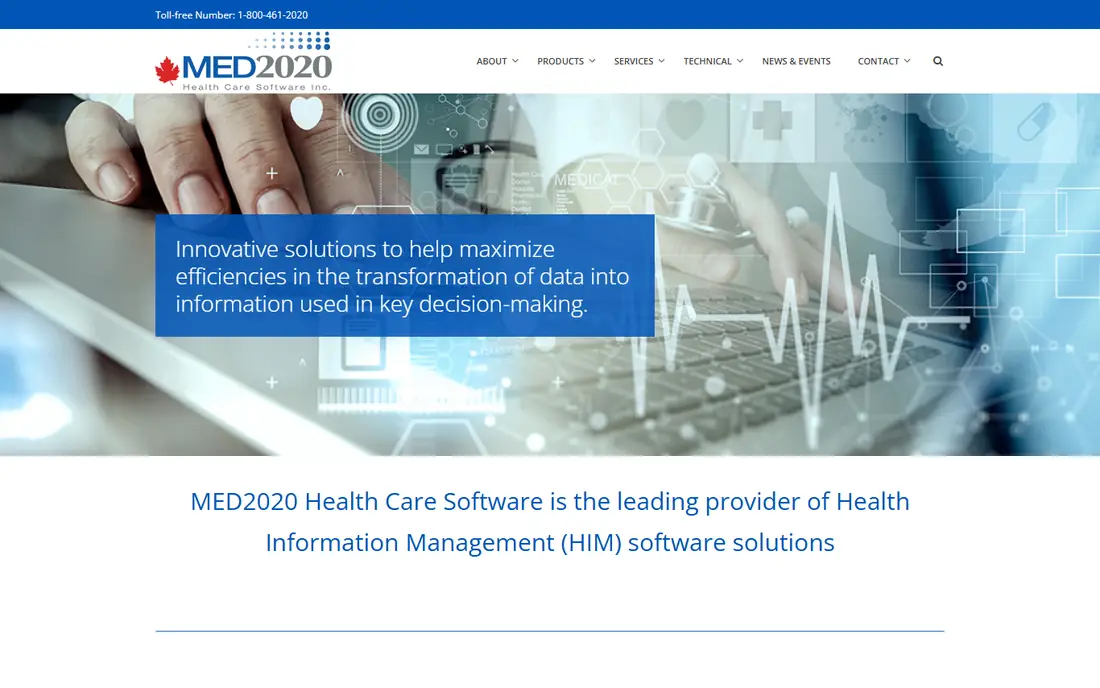
MED2020 is the most literal answer to "record tracking" on this list. Its Chart Locator module logs every chart loan, transfer and return across the hospital. It handles single charts as well as batch pull lists for clinics or rounds. When a location keeps a chart past its allowed number of days, it produces an Outstanding Loan Report. Barcode scanning is optional for faster check-in and check-out.
The Chart Deficiency module is just as practical. Staff enter deficiencies by hand or by scanning, and the system prints deficiency slips. When a physician has finished all outstanding charts, staff can close them all by entering that physician's number. Delinquency letters go out after a number of days the hospital chooses, in up to five escalation levels that the hospital writes itself.
The honest catch for US readers is that MED2020 is a Canadian company. Its ROI module talks about invoicing and logging releases under Canadian national and provincial privacy laws. Ask directly about US clients, HIPAA accounting of disclosures and support hours in your time zone.
What we like- Chart Locator, Chart Deficiency and ROI modules can be bought separately
- Barcode support for chart movement and deficiency entry
- Configurable overdue loan reports and five levels of physician delinquency letters
Watch out for- Canadian vendor whose ROI module references national and provincial privacy law, so confirm US HIPAA workflows
- Dated website and little public review data
#7
IoTFileTracker
Best for: Facilities with large paper record rooms that need RFID or barcode tracking
Visit filetrackingiot.com
Starting priceSee website
Free planNo
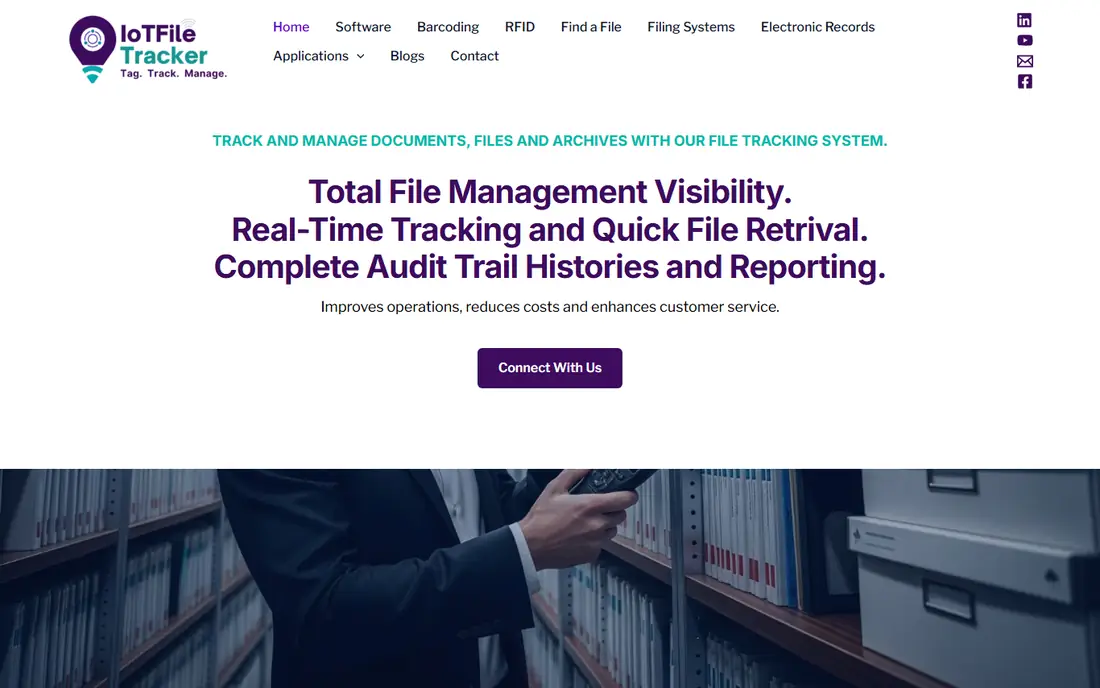
Plenty of US facilities still have record rooms full of paper, especially behavioral health providers, long-term care operators and hospitals holding old charts. IoTFileTracker targets exactly that problem. RFID tags on folders are read automatically as files pass through doorways, nursing stations and archive rooms. Locations update without anyone having to remember to scan.
The strongest point is that it mixes methods. Facilities can use RFID in high-traffic areas and color-coded barcodes everywhere else. The system sends alerts when a file is overdue or moves somewhere it should not. It also links physical tracking to an electronic document management system, which helps during a scanning project or an EHR migration.
The limitation is scope. This is file tracking, not chart completion or release management, so you will still need your EHR or another tool for deficiencies and ROI. Expect a site survey and hardware costs. Ask how it connects to your EHR or hospital information system, since the vendor says it can run on its own or alongside existing systems.
What we like- UHF RFID doorway readers log files automatically with no scanning
- Color-coded barcodes as a low-cost fallback
- Alerts for overdue files, unauthorized movement and missing records
Watch out for- Requires hardware (tags, antennas, handheld scanners) and site planning
- Not a full HIM suite, so no deficiency or ROI workflow
How we chose
We started from the three tracking jobs an HIM department actually does: finding physical charts, tracking deficiencies and chart completion, and logging releases of information. We then looked for vendors with a current, maintained product page that clearly serves one or more of those jobs for healthcare providers. We left out general document management tools, and EHRs that only mention records in passing.
For each product we read the vendor's own site and product documentation. We checked for published pricing (none of these seven publishes dollar figures, so we list "See website"). We also noted integrations, security certifications, setup-time claims and plan structures. We checked public review listings such as Capterra and published industry comparisons where they existed, treating comparisons written by vendors with caution. Finally, we considered which size of organization each tool realistically fits. We did not run the software ourselves.
What to check before you sign an HIM tracking contract
Decide which tracking problem is costing you most
Lost paper charts, late physician signatures and slow ROI turnaround are separate problems with separate tools. Count how many hours a week your team spends on each before talking to vendors. A clinic buried in records requests needs ChartRequest or an ROI vendor, not an RFID system.
Understand the pricing model
ROI vendors rarely charge a simple per-seat fee. Expect some mix of platform fees, per-request charges, a revenue share on requester fees, or a flat managed-service fee. Chart tracking software is more often licensed per facility or by module, and RFID projects add hardware. Ask for a three-year total cost, not a monthly number.
Ask about contract length and exit terms
Enterprise HIM contracts often run several years. Get in writing how you will export request logs, disclosure histories and deficiency data if you switch vendors, and in what format. Your accounting of disclosures records need to outlast any single contract.
Check integration and audit trail depth
Confirm which EHR versions the vendor connects to today, not on a roadmap. Then ask to see a sample audit trail showing who touched a record, when, and what was released. If the demo cannot show that clearly, your compliance officer will not be able to either.
Plan for setup time
Simple ROI platforms for practices can be running within weeks. Enterprise ROI and OnBase rollouts take longer because of interfaces and workflow design. RFID tracking needs a site survey and time to tag files. Build the labor for tagging or scanning old records into your timeline.
Frequently asked questions
What does HIM software for record tracking actually do?
It records where patient records are and what is happening to them. That can mean logging paper chart loans and returns, or tracking missing signatures and dictations until a chart is complete. It can also mean logging every release of information request from intake to delivery. Most products specialize in one of these jobs.
Does my EHR already handle this?
Large EHRs include HIM modules for deficiency tracking and some ROI functions, and many hospitals use them. Organizations usually add a dedicated tool when the EHR's ROI workflow is too manual, when paper charts still circulate, or when they want to outsource request fulfillment.
How much does HIM record tracking software cost?
None of the vendors in this guide publish prices. ROI platforms are often priced per request or through a share of requester fees. Chart tracking software is typically licensed by facility or module. Ask for a written quote that includes setup, support and any hardware.
Is RFID worth it for medical record tracking?
RFID pays off when a facility moves a lot of paper files between many locations and loses time searching for them. Smaller record rooms where files rarely move can usually get by with barcode check-in and check-out, which costs far less.
Should we outsource release of information or keep it in-house?
Outsourcing to a vendor such as MRO, Datavant or Verisma eases staffing pressure and hands some compliance work to specialists, but you give up some day-to-day control. Keeping it in-house with software works well for practices with steady, moderate volume and trained staff.
What security certifications should an HIM vendor have?
At minimum, expect a signed business associate agreement and evidence of HIPAA safeguards. Many ROI vendors also hold SOC 2 Type II reports or HITRUST certification, which speed up your vendor risk review.
Sources we checked (15)
- https://www.hyland.com/en/solutions/industries/healthcare/health-information-management
- https://docs.hyland.com/r/OnBase/DeficiencyPop/Foundation-23.1/DeficiencyPop/Overview/Definitions/Deficiency
- https://docs.hyland.com/r/OnBase/Database-Reporting-Guide/Foundation-25.1/Database-Reporting-Guide/Database-Tables/CODINGFLOW
- https://verisma.com/solutions/release-of-information/release-manager/
- https://verisma.com/
- https://mrocorp.com/blog/navigating-healthcares-new-compliance-reality/
- https://www.datavant.com/who-we-serve/health-information-management
- https://en.wikipedia.org/wiki/Datavant
- https://www.chartrequest.com/
- https://www.chartrequest.com/provider-solutions/chartrequest-custodianship
- https://www.chartrequest.com/articles/top-release-of-information-companies
- https://med2020.ca/products/chart-maintenance/chart-locator/
- https://med2020.ca/products/chart-maintenance/chart-deficiency/
- https://med2020.ca/products/chart-maintenance/release-of-information/
- https://filetrackingiot.com/healthcare-patient-record-tracking-system/
Is your product missing or out of date?
We review this list regularly. Vendors can request a listing, send updated pricing or ask about featured placement.

Shihab Mia · Founder, Rankite
Shihab has 5+ years in B2B and SaaS SEO. He writes Rankite's software buying guides from pricing pages, documentation and public user reviews. More about Shihab.