How we make this list: we compare pricing pages, product documentation and public user reviews. Rankite is independent; if a vendor ever pays for a featured spot, that listing is clearly labeled Partner.
Key takeaways
- Epic is the hospital and health system standard, with the deepest functionality and the longest implementations.
- Oracle Health (formerly Cerner) is the other enterprise EHR, now under Oracle ownership.
- Athenahealth, eClinicalWorks and NextGen serve independent practices and mid-size groups.
- Veradigm (formerly Allscripts), AdvancedMD and Greenway cover specific practice sizes and specialties.
- DrChrono and Tebra are the modern, mobile-friendly options for small practices.
Quick comparison
| Tool | Best for | Starting price | Free plan |
|---|
 Epic Epic | hospitals and health systems | See website | No |
 Oracle Health Oracle Health | enterprise health systems | See website | No |
 Athenahealth Athenahealth | independent practices | See website | No |
 eClinicalWorks eClinicalWorks | ambulatory practices | See website | No |
 Veradigm Veradigm | practice management plus EHR | See website | No |
 NextGen NextGen | mid-size practices | See website | No |
 DrChrono DrChrono | mobile-first small practices | See website | Free trial |
 Tebra Tebra | modern practice platform | See website | No |
 AdvancedMD AdvancedMD | independent practices | See website | No |
 Greenway Greenway | ambulatory specialties | See website | No |
Is your product missing or out of date?
We review this list regularly. Vendors can request a listing, send updated pricing or ask about featured placement.
The top 10 electronic health record software
Starting priceSee website
Free planNo
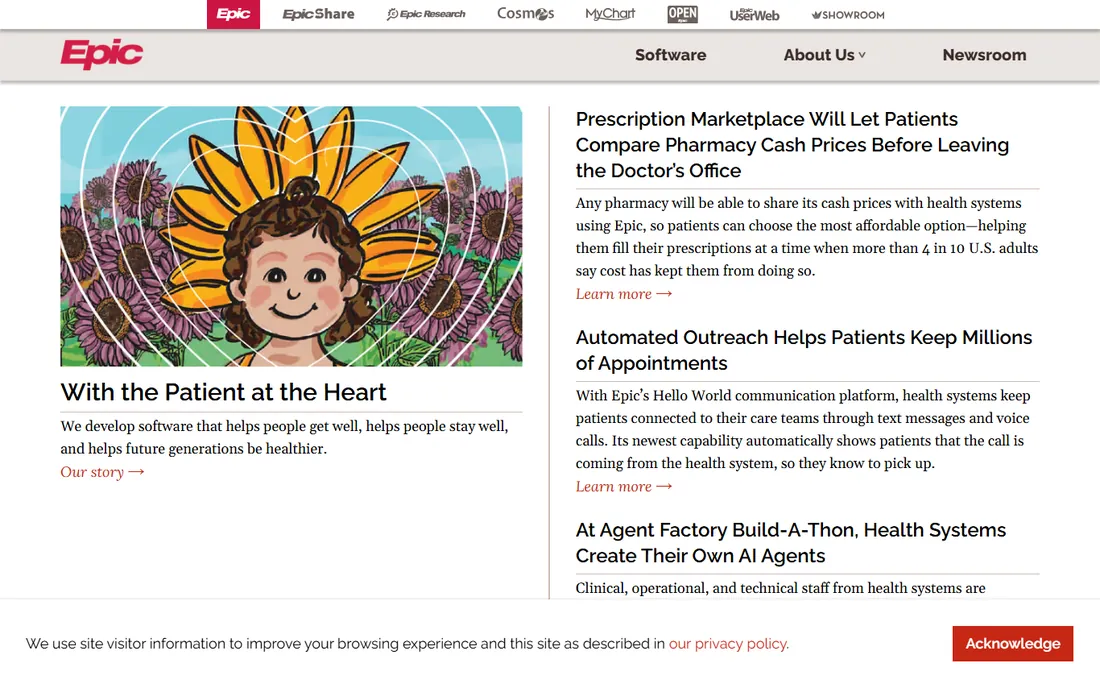
Epic is the EHR that runs the largest share of US hospital beds: comprehensive clinical, revenue cycle and patient engagement in one system, with the Care Everywhere network connecting records across organizations. Health systems standardize on it for decades.
Implementations are measured in years and cost accordingly. Clinicians debate the usability, but the depth and the network effects keep Epic the default enterprise choice.
Epic's implementations are multi-year commitments: involve clinical leadership from the first demo, since physician adoption determines success more than any feature. The reference visits to similar-sized health systems are the most valuable part of the evaluation.
What we like- Deepest clinical functionality
- Massive interoperability network
- Strong long-term vendor stability
Watch out for- Very long implementations
- Premium cost
- Clinician usability complaints persist
Starting priceSee website
Free planNo
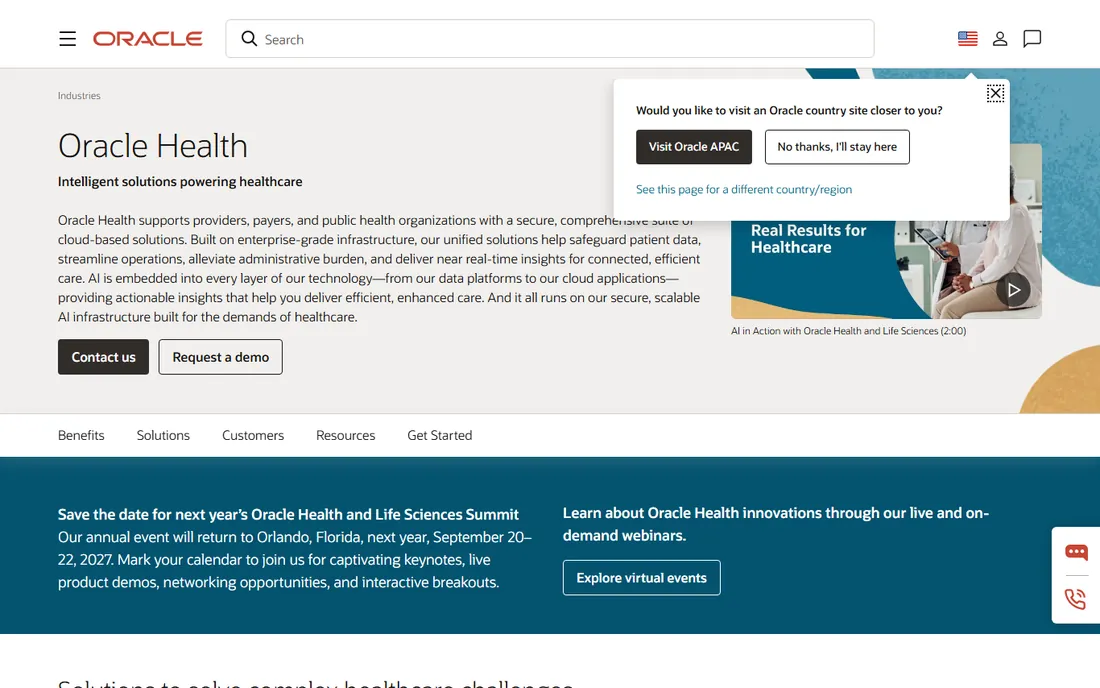
Oracle Health, formerly Cerner, is the other enterprise EHR: Millennium for clinical, revenue cycle and population health, now backed by Oracle's cloud infrastructure and AI ambitions. Large health systems and government buyers are its base.
The acquisition transition has been bumpy by public accounts. Buyers should validate the current roadmap and support experience directly. For Oracle-centric health enterprises, the strategic fit is the argument.
Oracle Health's Cerner heritage means existing customers should evaluate the roadmap carefully: understand the migration path and timeline for your current version. The Oracle investment thesis needs to be visible in the product you will actually run.
What we like- Full enterprise EHR suite
- Oracle cloud and AI investment
- Strong in large health systems
Watch out for- Cerner-to-Oracle transition still settling
- Implementations are major projects
Starting priceSee website
Free planNo
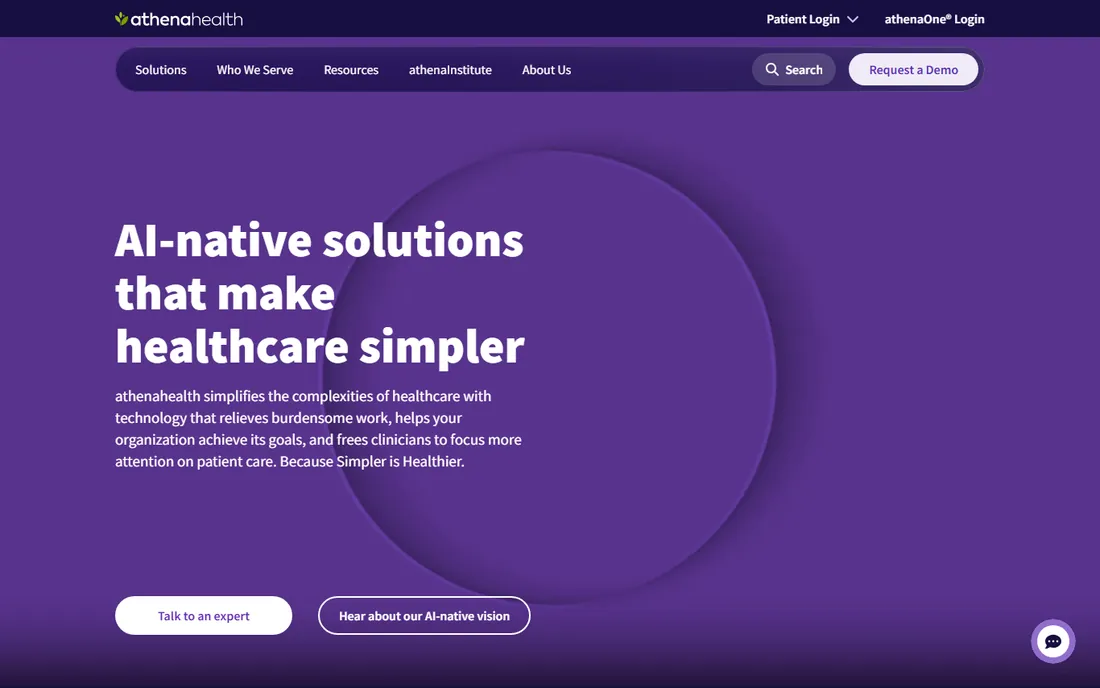
Athenahealth combines cloud EHR with revenue cycle management services: the software plus teams that work your claims. The network model means rules and payer knowledge improve across all customers.
It suits independent practices that want billing handled, not just software. The bundled-service pricing needs careful comparison against software-only options.
Athenahealth's network model improves with scale: ask for specialty-specific performance data and reference practices your size. The billing rules engine is the asset; verify it handles your payer mix.
What we like- Cloud-based with strong revenue cycle services
- Network-based learning across customers
- Good for independents
Watch out for- Pricing includes service fees
- Less customizable than enterprise systems
Starting priceSee website
Free planNo
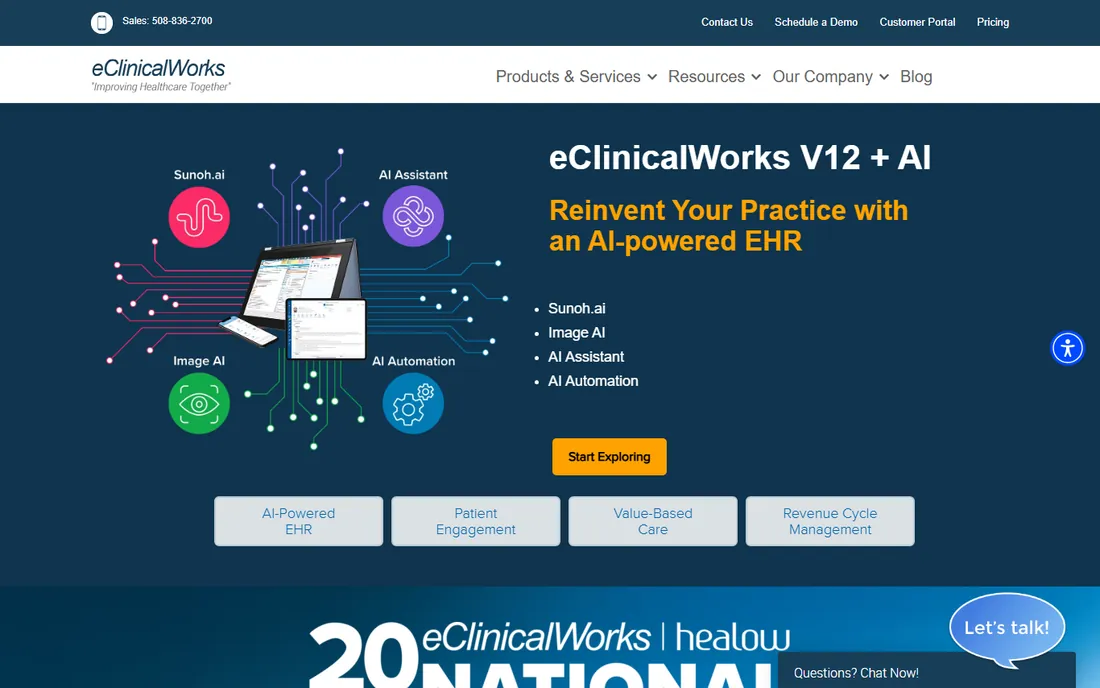
eClinicalWorks is the long-standing ambulatory EHR for practices of all sizes: charting, e-prescribing, patient portal and revenue cycle at prices below the enterprise tier. The installed base is huge.
The interface shows its age and support gets mixed reviews. For practices wanting proven ambulatory function at reasonable cost, it remains a contender.
eClinicalWorks' value pricing deserves a total-cost comparison: include implementation, training, interfaces and support over five years. The lower license cost can be offset by services, so get the full quote.
What we like- Broad ambulatory feature set
- Large installed base
- Competitive pricing
Watch out for- Interface feels dated
- Support experiences vary
Starting priceSee website
Free planNo
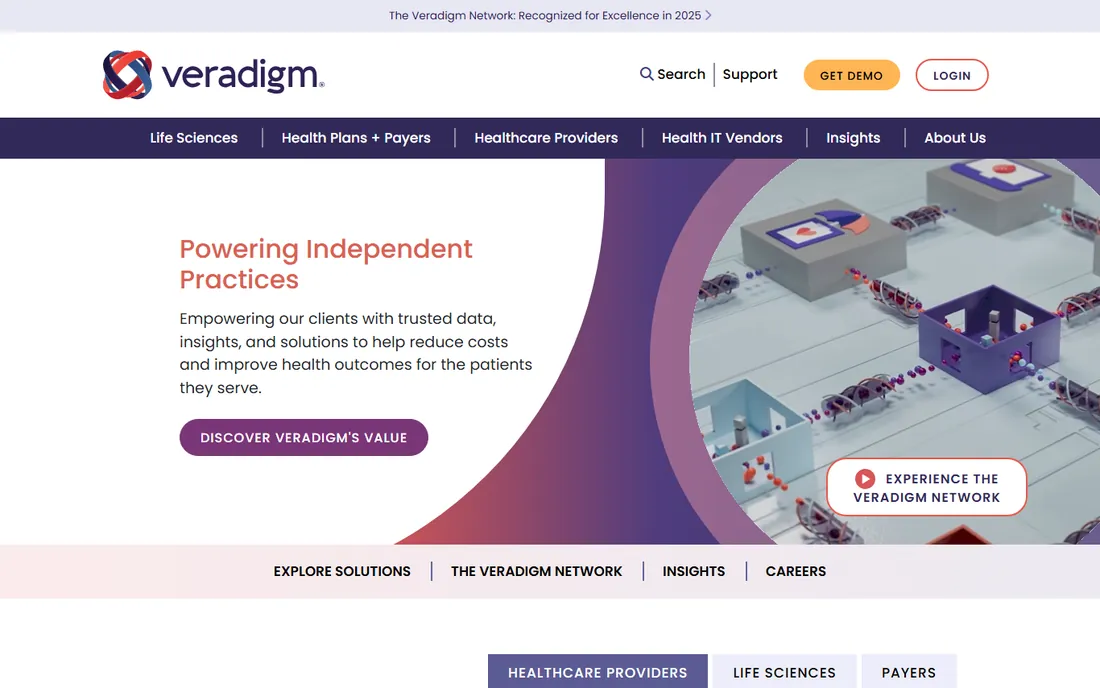
Veradigm, formerly Allscripts, offers EHR, practice management and data solutions with payer and life-sciences connectivity. The rebrand distanced the company from Allscripts' mixed legacy, and the portfolio serves ambulatory practices and specialties.
Buyers should evaluate the specific product, not the brand history. For practices wanting EHR plus broader data connectivity, Veradigm belongs on the list.
Veradigm is the current name for the former Allscripts business: confirm the product names and support structure during procurement. The installed base is large, and migration decisions should reflect the present roadmap.
What we like- EHR plus practice management and payer connectivity
- Long market presence
- Strong in certain specialties
Watch out for- Allscripts-to-Veradigm transition history
- Uneven product experiences
Starting priceSee website
Free planNo
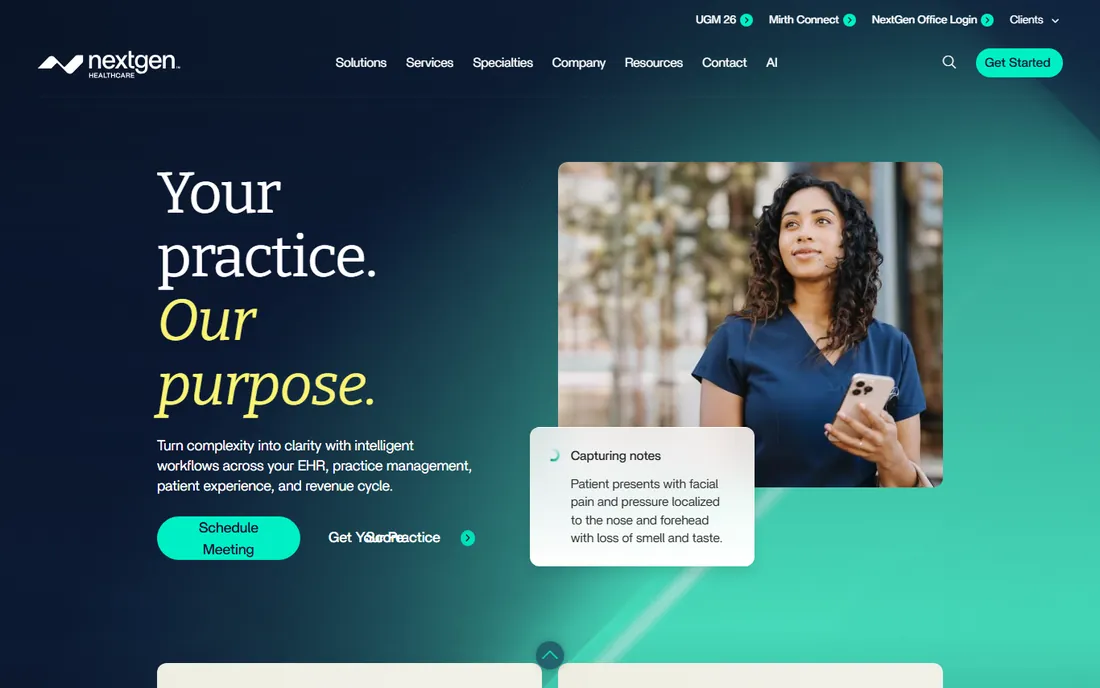
NextGen Healthcare serves mid-size practices and specialties: integrated EHR and practice management with templates and workflows for fields like behavioral health, dental and ophthalmology. The company has decades in the market.
It is a steady choice rather than an exciting one. Practices that fit its specialty strengths get a proven system.
NextGen's specialty content is the evaluation focus: have your physicians test the specialty-specific templates and workflows with real patient scenarios. Generic EHR demos hide the specialty fit that determines daily usability.
What we like- Solid ambulatory EHR with integrated PM
- Strong in specialties like behavioral health
- Established vendor
Watch out for- Less innovation buzz than newer entrants
- Enterprise deals favor competitors
Starting priceSee website
Free planFree trial
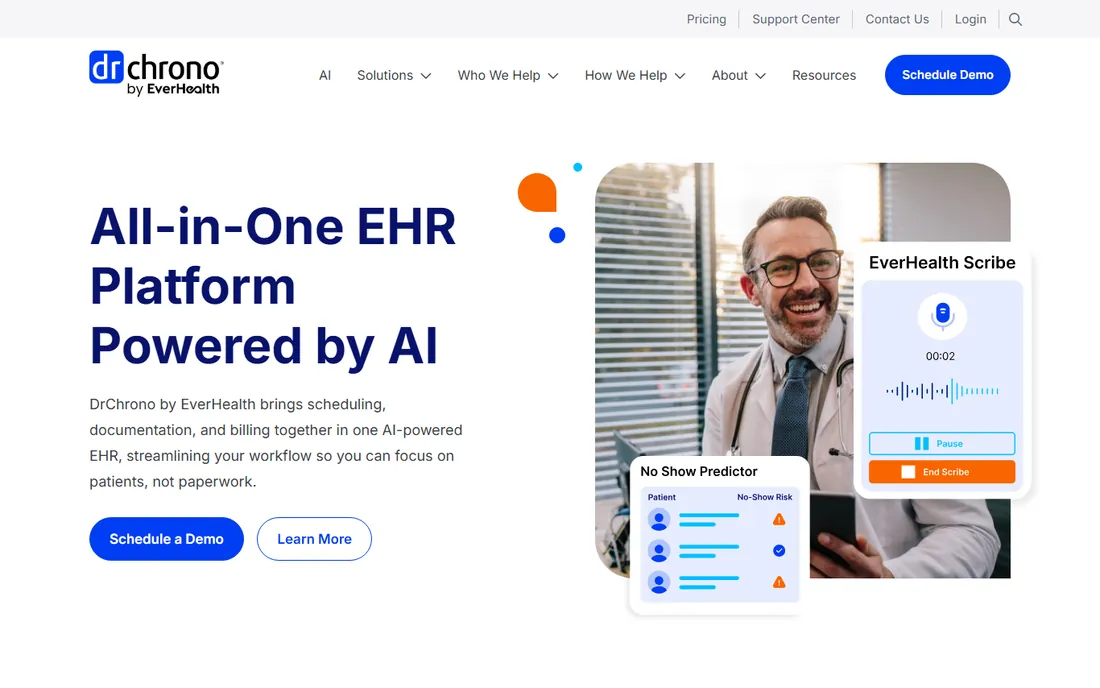
DrChrono built the iPad EHR: charting, scheduling, billing and e-prescribing designed mobile-first for small practices. The modern interface contrasts with legacy ambulatory systems.
It is now part of EverHealth, so buyers should confirm the roadmap. For solo and small practices wanting modern mobile workflows, it stands out.
DrChrono's iPad-native design is the trial: have physicians run real patient encounters on the tablet during the evaluation. The mobile workflow either transforms the visit or frustrates; there is little middle ground.
What we like- IPad-native mobile EHR
- Modern interface
- Good for small and solo practices
Watch out for- Less depth for large groups
- Now part of EverHealth with roadmap questions
Starting priceSee website
Free planNo
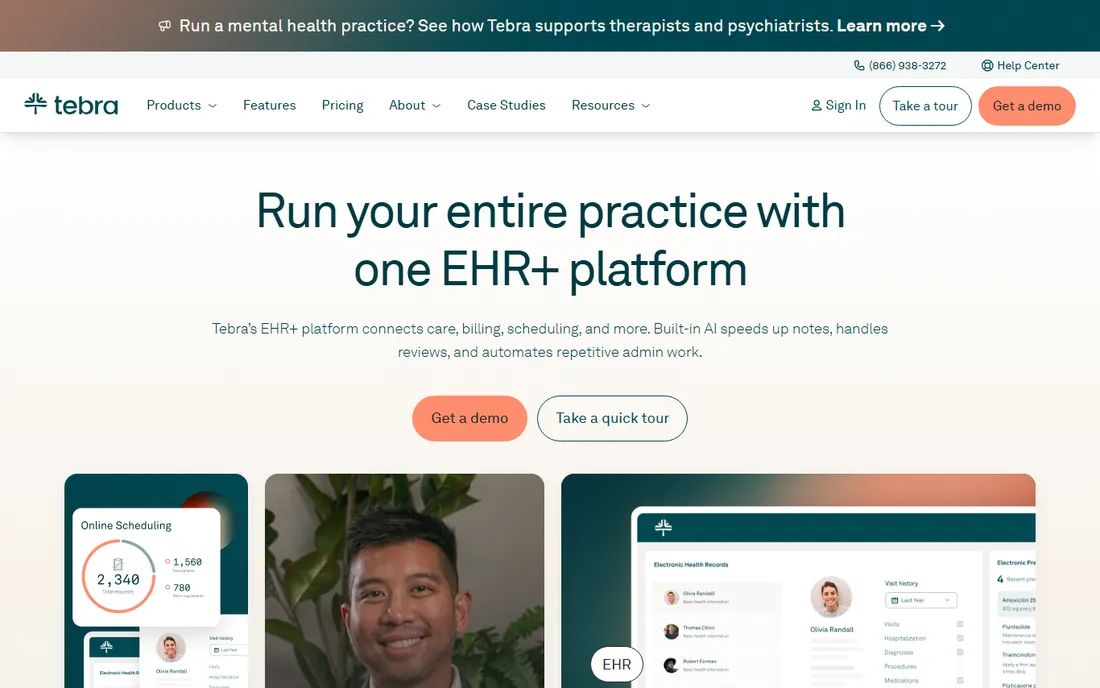
Tebra merged Kareo's billing and EHR with PatientPop's patient acquisition: a platform that runs the clinical side and helps fill the schedule. Independent practices get modern software plus marketing in one vendor.
The combined platform is still proving itself at scale. For practices that want growth tools alongside the EHR, the bundle is distinctive.
Tebra's practice growth tools suit independent practices: evaluate the website, scheduling and billing features as a bundle. The value proposition is the all-in-one growth platform, not the EHR alone.
What we like- EHR plus patient acquisition tools
- Modern design
- Kareo and PatientPop heritage
Watch out for- Newer combined platform still maturing
- Pricing for the full suite
Starting priceSee website
Free planNo
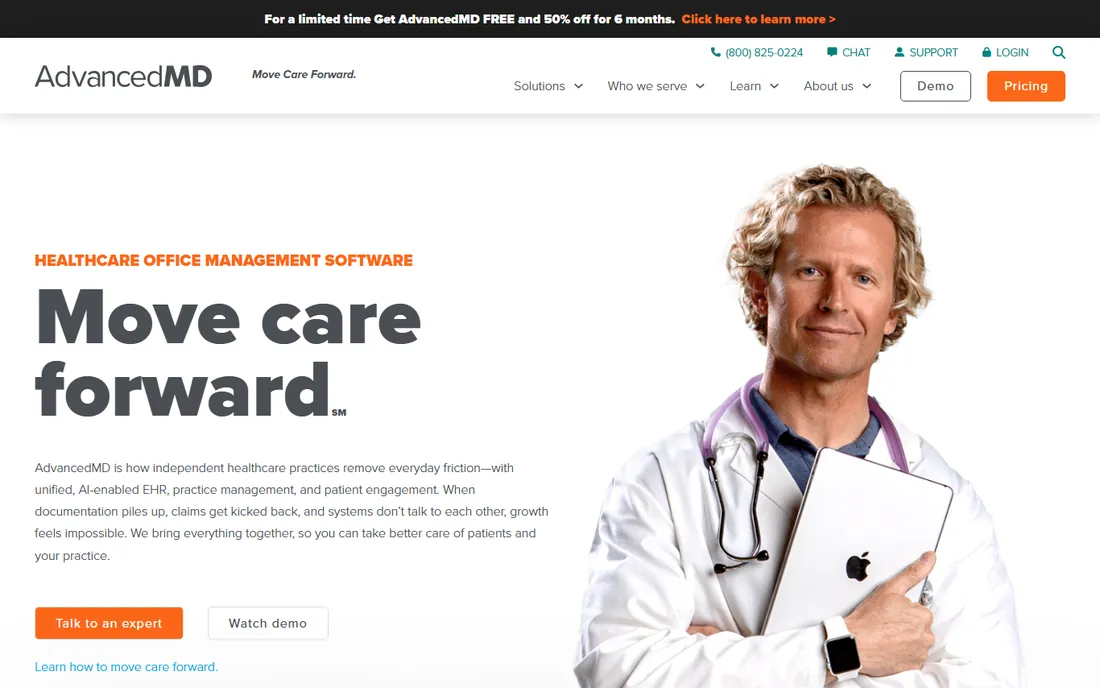
AdvancedMD offers the independent practice bundle: cloud EHR, practice management and revenue cycle services in one. It has served private practices for years with steady development.
Newer platforms challenge it on design. Practices wanting an established all-in-one without enterprise complexity keep it on the shortlist.
AdvancedMD's independent-practice focus means the evaluation should cover the full revenue cycle: test scheduling, billing and reporting with your actual payer mix. The integrated suite only pays off when the whole practice uses it.
What we like- Integrated EHR, PM and billing
- Cloud-based
- Good for independent groups
Watch out for- Interface aging in places
- Competition from newer platforms
Starting priceSee website
Free planNo
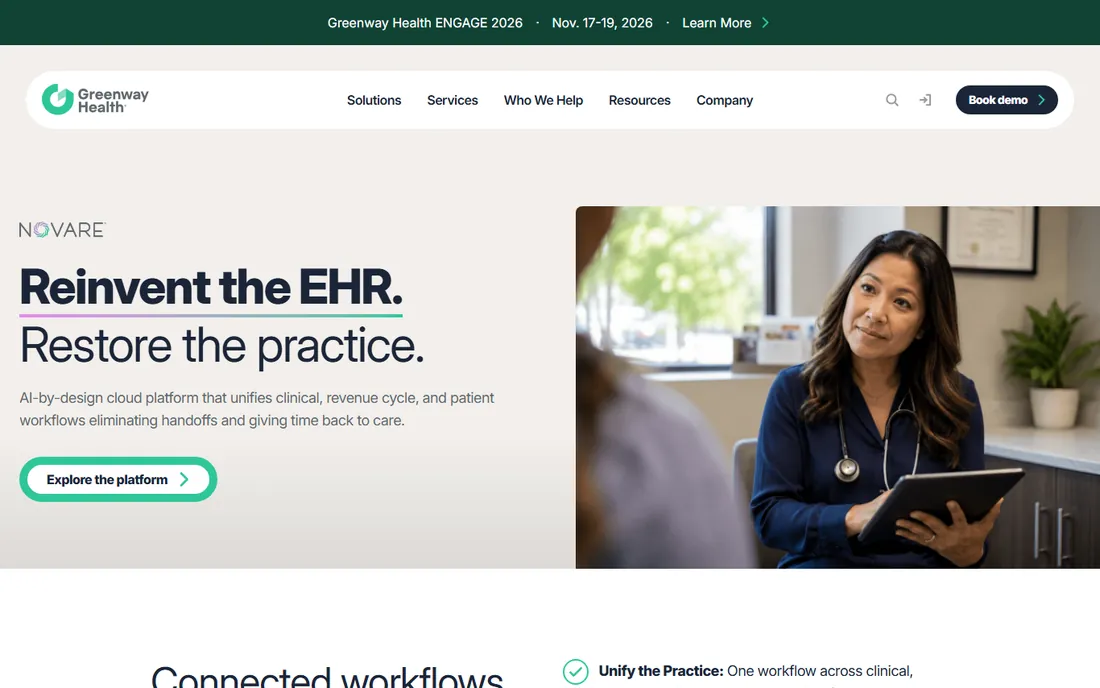
Greenway Health's Intergy and Prime Suite serve ambulatory practices and specialties with EHR and practice management. The company has decades of history in the space.
Momentum has slowed next to cloud-native competitors. Practices in its specialty sweet spots still find a functional, proven system.
Greenway's ambulatory focus suits independent practices: evaluate the practice management integration as closely as the clinical side. Small practices feel billing workflow friction more than large ones.
What we like- Intergy and Prime Suite for ambulatory practices
- Specialty templates
- Long market presence
Watch out for- Smaller vendor with less momentum
- Uneven modernization
Hospital or practice?
Hospitals and health systems choose between Epic and Oracle Health, with implementation as a multi-year strategic project. The decision shapes the organization for a decade.
Independent practices and groups choose from the ambulatory tail: Athenahealth for billing-included, eClinicalWorks or NextGen for proven value, DrChrono or Tebra for modern workflows, AdvancedMD or Greenway for established all-in-ones. Specialty fit and service quality decide.
What to check before you buy
Specialty workflows come first: templates, order sets and documentation must match how your clinicians actually practice. Shadow the demo with your physicians, not just administrators.
Check interoperability: lab, imaging, pharmacy and hospital connections for your referral patterns. Confirm revenue cycle performance with real metrics: days in A/R, denial rates, collections. And validate the implementation plan, training, data conversion and go-live support in writing before signing.
Finally, budget for the implementation, not just the license: data migration, interface building, training and workflow redesign typically cost multiples of the software itself. Get the full services quote in writing before the board approves anything.
One more check: talk to the physicians who will use the system daily, not just the selection committee. Their adoption determines whether the investment succeeds.
How we chose
We selected EHR systems covering enterprise health systems and independent practices, all live products in 2026. All ten vendor URLs were corroborated through sibling research files during a browser service outage. Oracle Health is listed under its current name with the former Cerner name noted once; Veradigm likewise with Allscripts noted once. No vendor pricing pages were individually verified, so all prices list see website.
Frequently asked questions
What is the best EHR for small practices?
Athenahealth, DrChrono, Tebra and AdvancedMD all target independent practices. The best depends on specialty, billing needs and how modern you want the interface.
Epic vs Oracle Health: which is better?
Epic leads in US hospital market share and interoperability network; Oracle Health counters with Oracle cloud and AI investment. Health systems evaluate both over multi-year selections.
How much does EHR software cost?
From hundreds per provider monthly for ambulatory systems to tens of millions for enterprise Epic or Oracle implementations. Implementation, training and optimization add substantially.
How long does EHR implementation take?
Ambulatory practices: months. Hospitals: one to three years. Data conversion, workflow redesign and training drive the timeline.
What is the difference between EHR and practice management software?
EHR holds the clinical record: charts, orders, results. Practice management handles scheduling, billing and administration. Most products bundle both.
Can I switch EHR vendors?
Yes, but it is painful: data conversion, retraining and workflow disruption make switching a major project. Choose with a ten-year horizon.
Sources we checked (10)
- https://www.epic.com
- https://www.oracle.com/health/
- https://www.athenahealth.com
- https://eclinicalworks.com
- https://veradigm.com/
- https://www.nextgen.com
- https://www.drchrono.com
- https://tebra.com/
- https://www.advancedmd.com
- https://greenwayhealth.com/
Is your product missing or out of date?
We review this list regularly. Vendors can request a listing, send updated pricing or ask about featured placement.

Shihab Mia · Founder, Rankite
Shihab has spent more than a decade helping SaaS and e-commerce brands grow through search. He writes Rankite's software buying guides from pricing pages, documentation and public user reviews. More about Shihab.