How we make this list: we compare pricing pages, product documentation and public user reviews. Rankite is independent; if a vendor ever pays for a featured spot, that listing is clearly labeled Partner.
Key takeaways
- Every vendor on this list quotes custom pricing; none publish prices, so plan for a demo-led sales process and negotiate training and data migration in the contract.
- RevolutionEHR, Eyefinity Encompass, and Compulink Advantage are the established all-in-one choices for US optometry practices.
- If your practice is VSP-affiliated, Eyefinity Encompass fits naturally; practices already on VisionWeb services get the most from Uprise.
- There are no free tiers in this category, and trials run through sales, so shortlist two or three systems and compare them on your own exam workflows.
Quick comparison
| Tool | Best for | Starting price | Free plan |
|---|
 RevolutionEHR RevolutionEHR | Independent optometry practices wanting a cloud-based all-in-one system | See website (custom quote) | No |
 Eyefinity Encompass Eyefinity Encompass | VSP-affiliated practices and those wanting ModMed-powered exam documentation | See website (custom quote) | No |
 Compulink Advantage Compulink Advantage | Practices wanting EHR, practice management, and optical POS in one database | See website (custom quote) | No |
 MaximEyes MaximEyes | Practices wanting EHR, practice management, and patient engagement in one login | See website (custom quote) | No |
 Crystal PM Crystal PM | Smaller optometry practices wanting a straightforward system | See website (custom quote) | No |
 My Vision Express My Vision Express | Dispensary-driven practices where optical retail is central | See website (custom quote) | No |
 LiquidEHR LiquidEHR | Practices that prefer a smaller vendor with direct relationships | See website (custom quote) | No |
 Uprise Uprise | Practices already using VisionWeb for labs and claims | See website (custom quote, Pro and Essentials editions) | No |
 ModMed ModMed | Mid-size and larger practices prioritizing exam documentation depth | See website (custom quote) | No |
 Acuitas Acuitas | Multi-country groups and practices wanting global optical experience | See website (custom quote) | No |
Is your product missing or out of date?
We review this list regularly. Vendors can request a listing, send updated pricing or ask about featured placement.
The best optometry EHR software for eye care practices
Your front desk re-enters insurance details the EHR should already know. Your doctor finishes charts after the last patient leaves. Your optical runs on a separate system that never talks to the exam lane. That is the daily cost of the wrong EHR, and it is why choosing the best optometry EHR software matters more than most vendors admit. These ten systems are built for eye care specifically, covering exam documentation, optical point of sale, claims, and patient recall in various combinations.
#1
RevolutionEHR
Best for: Independent optometry practices wanting a cloud-based all-in-one system
Visit revolutionehr.com
Starting priceSee website (custom quote)
Free planNo
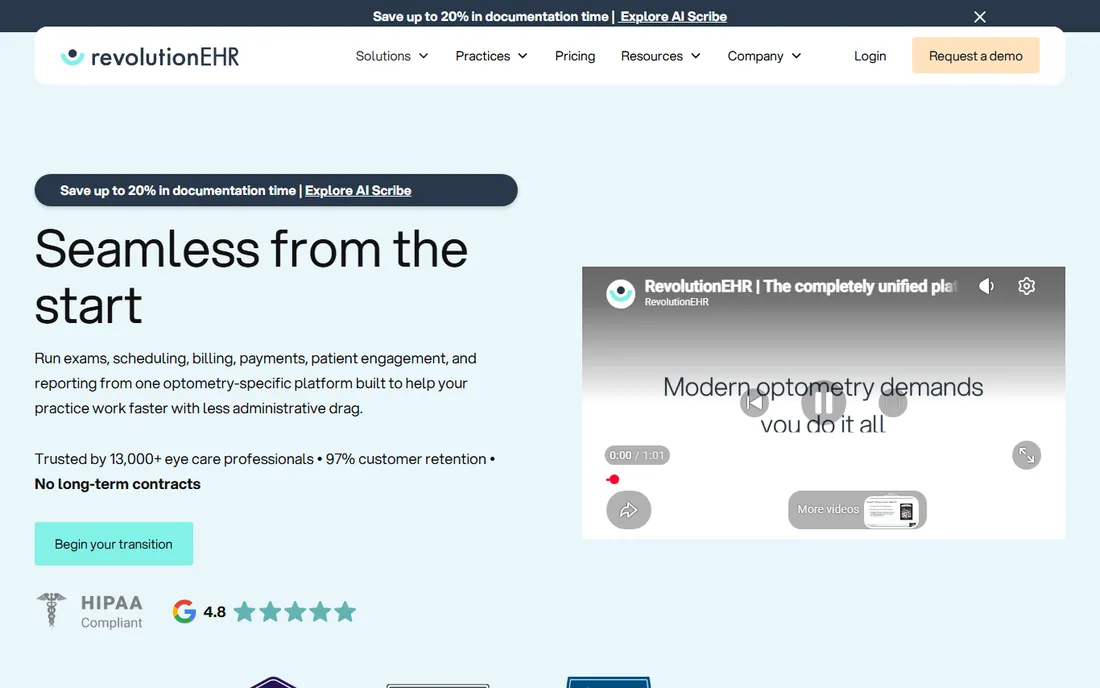
RevolutionEHR is the cloud-native veteran of this list. Built specifically for optometry and now part of PracticeTek, it combines EHR charting, practice management, claims processing, and patient engagement in one browser-based system, so a multi-location practice can run every office from the same login.
The trade-off is the buying process. Pricing is custom-quoted after a demo, and rolling out a full all-in-one system takes planning: data migration, template setup, and staff training. Practices that want a proven optometry-specific cloud platform and are comfortable with a sales-led purchase will find it a strong fit.
What we like- Purpose-built for optometry with EHR, practice management, and claims in one cloud system
- PracticeTek backing
- Multi-location support
Watch out for- No published pricing
- Implementation and training take planning
- May be more system than a solo practice needs
#2
Eyefinity Encompass
Best for: VSP-affiliated practices and those wanting ModMed-powered exam documentation
Visit eyefinity.com
Starting priceSee website (custom quote)
Free planNo
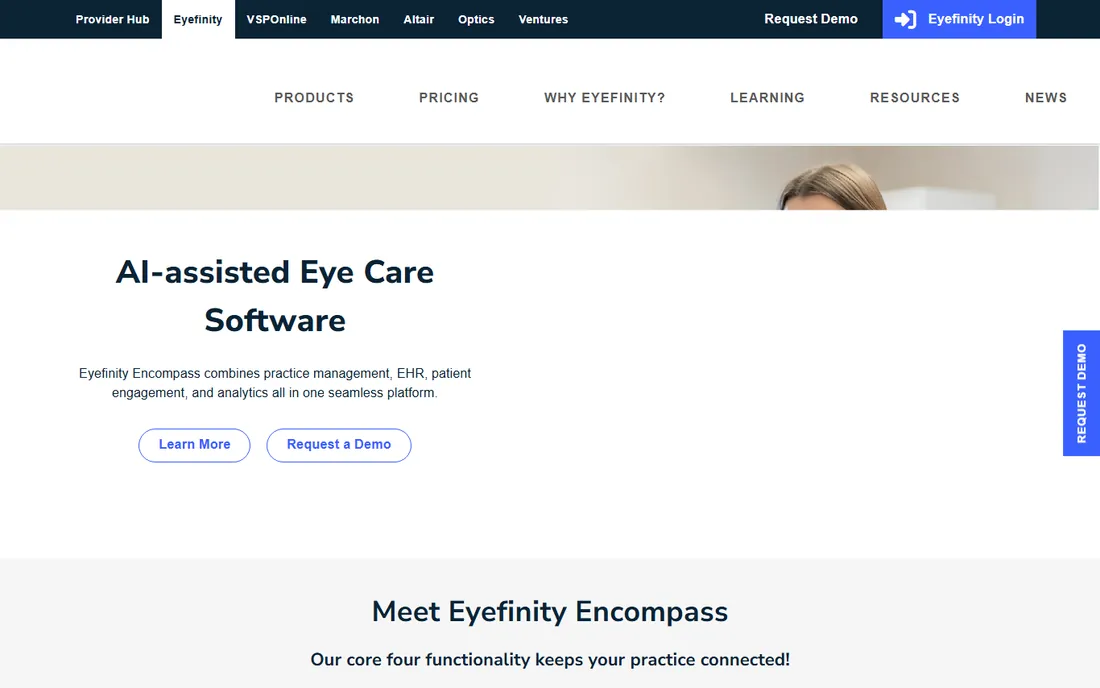
Eyefinity Encompass is the pick for practices already inside the VSP Vision orbit. The EHR is powered by ModMed's EMA platform, which brings ophthalmology-grade exam documentation to optometry, and it sits alongside Eyefinity's practice management and claims tools.
Because it is part of VSP Vision, integration with VSP vision plans is the natural strength. Independent practices that are not VSP-affiliated can still use it, but they should confirm that the plan-specific workflows match how they bill. Like everything else here, pricing comes through a sales conversation.
What we like- EHR powered by the ModMed EMA platform
- Tight VSP Vision plan integration
- Combines EHR with practice management and claims
Watch out for- No published pricing
- VSP-centric workflows matter less to non-affiliated practices
Starting priceSee website (custom quote)
Free planNo
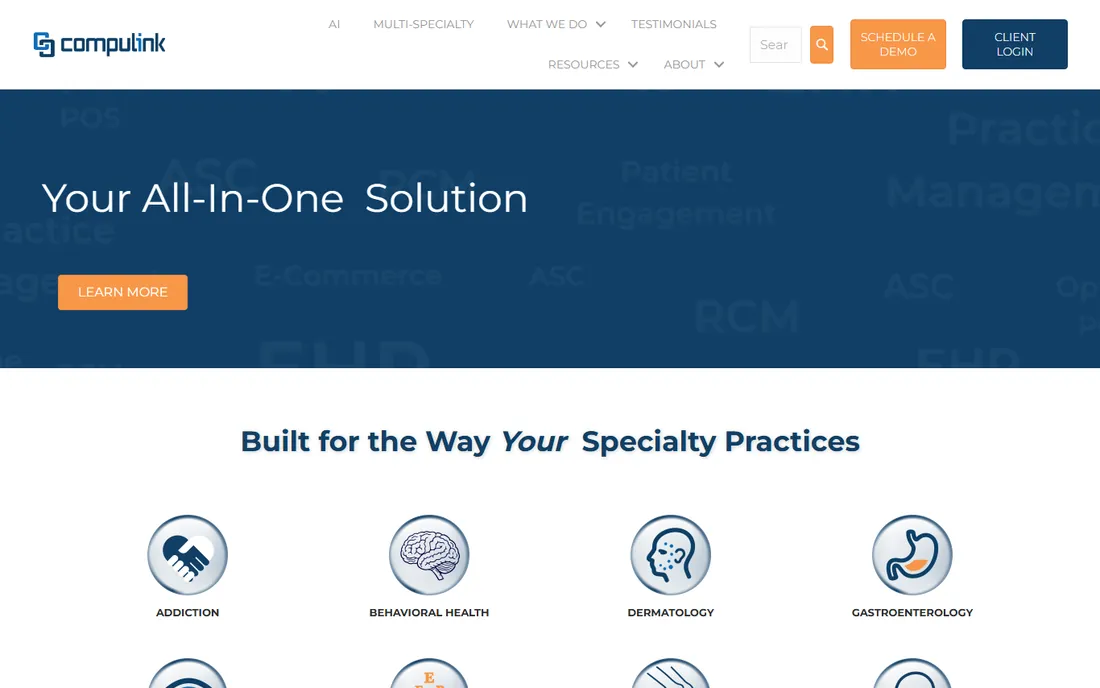
Compulink Advantage, built around the Advantage SMART Practice platform, takes the all-in-one idea furthest: EHR, practice management, optical point of sale, and revenue cycle tools in a single database. For practices that want one vendor for the exam lane and the optical shop, that single-database design removes a lot of interface headaches.
The breadth is also the commitment. You are buying into one vendor's ecosystem for nearly everything, so evaluate the optical and billing modules as carefully as the EHR itself. Pricing is quoted per practice after discovery, with no public price list.
What we like- Single-database all-in-one design
- Strong optical and revenue cycle modules
- Built for eye care specialties
Watch out for- No published pricing
- Going all-in-one means committing to one vendor's ecosystem
#4
MaximEyes
Best for: Practices wanting EHR, practice management, and patient engagement in one login
Visit maximeyes.com
Starting priceSee website (custom quote)
Free planNo
MaximEyes from First Insight targets practices that want EHR, practice management, and patient communication without bolting on third-party tools. The vendor positions it as a complete system for optometry and ophthalmology, with exam documentation templates built for eye care workflows.
It competes directly with RevolutionEHR and Compulink on scope, so the decision usually comes down to the demo: which exam templates, optical workflows, and reporting fit your practice. Pricing is custom, and the sales process includes a workflow review.
What we like- Complete optometry and ophthalmology scope from First Insight
- Eye care exam templates
- Patient communication tools included
Watch out for- No published pricing
- Best evaluated head-to-head against RevolutionEHR and Compulink in a demo
#5
Crystal PM
Best for: Smaller optometry practices wanting a straightforward system
Visit crystalpm.com
Starting priceSee website (custom quote)
Free planNo
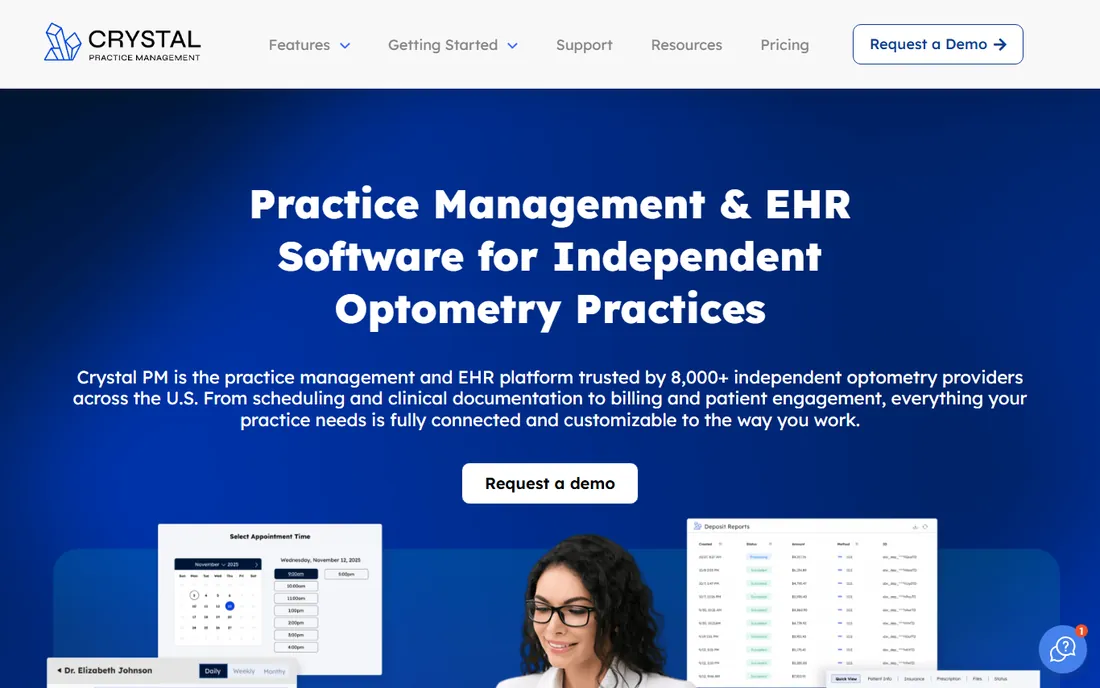
Crystal PM keeps the pitch simple: practice management and EHR software designed for optometry, without the enterprise overhead of the bigger suites. Smaller practices often find its scope easier to adopt, since there are fewer modules to configure and less for staff to learn.
The flip side of a focused product is a thinner ecosystem: fewer third-party integrations and add-ons than the category leaders offer. If your practice runs standard optometry workflows and wants a straightforward system, that trade can be worth it. Pricing is quoted per practice.
What we like- Focused optometry scope that is easier to adopt
- Less configuration overhead
- Practice management plus EHR
Watch out for- No published pricing
- Thinner integration ecosystem than the biggest suites
Starting priceSee website (custom quote)
Free planNo
My Vision Express leans harder into the retail side than most names here. It pairs optometry EHR with optical point of sale, inventory, and lab integration, which suits practices where the optical dispensary drives a large share of revenue.
Practices that are clinically heavy and retail-light may find the optical modules are more than they need, while dispensary-driven practices get the most value. As with the rest of this category, expect a sales-led quote rather than a price list.
What we like- Strong optical POS, inventory, and lab integration alongside the EHR
- Built for the retail side of eye care
Watch out for- No published pricing
- Optical depth may exceed what clinically focused practices need
#7
LiquidEHR
Best for: Practices that prefer a smaller vendor with direct relationships
Visit liquidehr.com
Starting priceSee website (custom quote)
Free planNo

LiquidEHR is the smaller independent vendor on this list, and it sells like one: direct relationships, optometry-specific charting, and a product shaped by a narrower customer base. Some practices prefer that over being one account among thousands.
The honest limitation is ecosystem depth. A smaller vendor means fewer published integrations and a smaller user community to learn from. Pricing is custom-quoted, and the evaluation should focus on whether its exam workflows match yours out of the box.
What we like- Optometry-specific charting from an independent vendor
- Direct vendor relationship
- Focused product
Watch out for- No published pricing
- Smaller integration ecosystem and user community
Starting priceSee website (custom quote, Pro and Essentials editions)
Free planNo

Uprise comes from VisionWeb, the company most eyecare practices already know from lab orders and claims. That history matters: Uprise Pro and Uprise Essentials are built to connect the clinical side with the business of running an optical, and VisionWeb's existing relationships smooth the onboarding.
It is strongest for practices that already use VisionWeb services, since the combined workflow is the selling point. Standalone EHR shoppers should compare its charting depth against the pure-play EHR vendors. Pricing is custom across both editions.
What we like- Built by VisionWeb with optical business workflows in mind
- Two editions for different practice sizes
- Existing VisionWeb relationships ease onboarding
Watch out for- No published pricing
- Charting depth should be compared against pure-play EHR vendors
#9
ModMed
Best for: Mid-size and larger practices prioritizing exam documentation depth
Visit modmed.com
Starting priceSee website (custom quote)
Free planNo
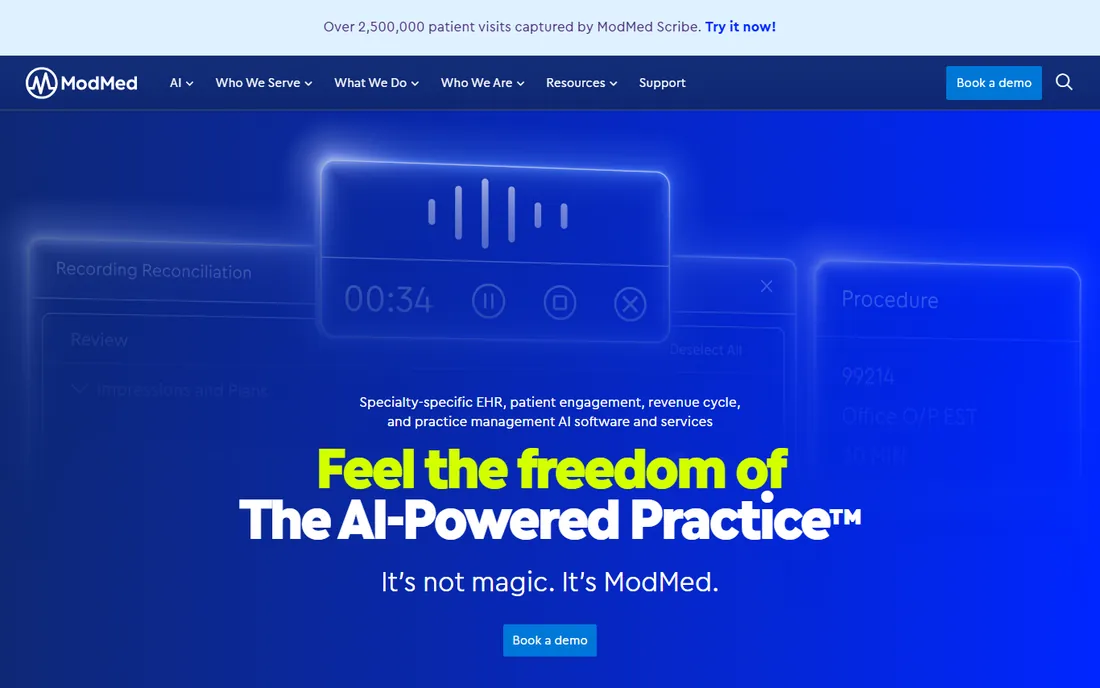
ModMed is best known for EMA, its ophthalmology EHR, and it brings that specialty depth to optometry as well. The platform's exam documentation was designed around how eye doctors actually work, with structured data capture that feeds billing and reporting.
ModMed's strength is clinical documentation rather than optical retail, so practices with a large dispensary should check how the EHR connects to their point of sale. Pricing is enterprise-style and quoted after a demo, which suits mid-size and larger practices best.
What we like- EMA platform with specialty-grade structured documentation
- Strong billing and reporting from structured data
- Proven in ophthalmology
Watch out for- No published pricing
- Optical retail integration needs verification
- Enterprise-style sales process
#10
Acuitas
Best for: Multi-country groups and practices wanting global optical experience
Visit ocuco.com
Starting priceSee website (custom quote)
Free planNo
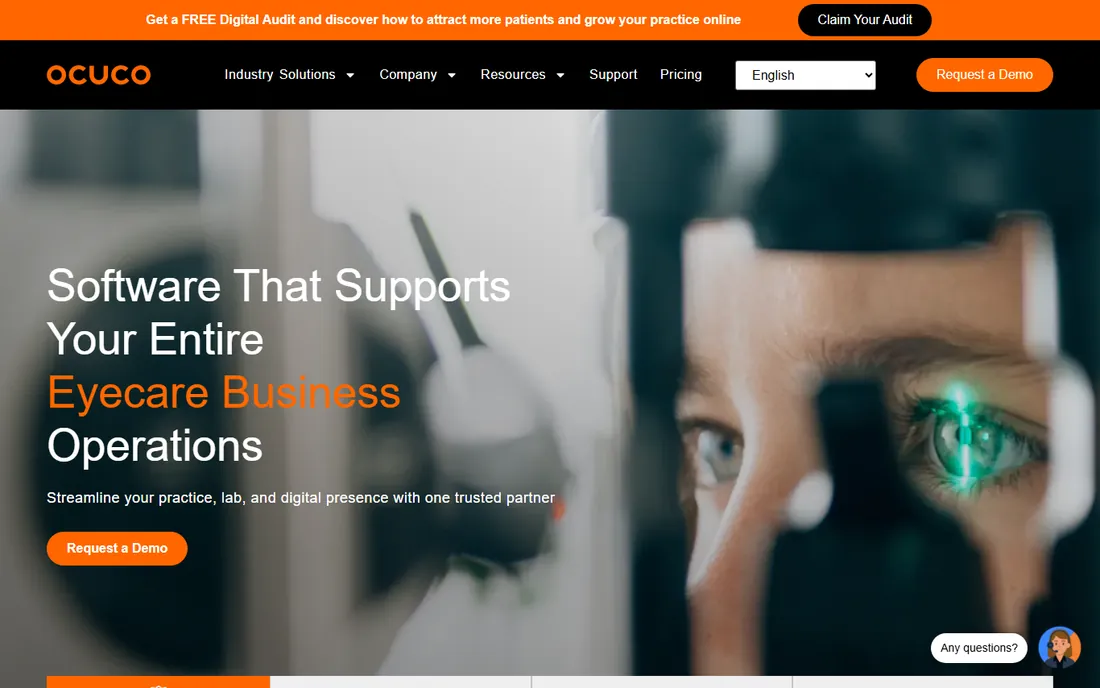
Acuitas from Ocuco is the international option. Ocuco serves optical and optometry businesses across multiple countries, and Acuitas 3, launched in August 2025, is its current-generation platform combining practice management with clinical tools.
US practices should verify stateside support coverage and US-specific billing workflows, since Ocuco's footprint is strongest outside the US. For multi-country groups or practices that want a vendor with global optical experience, it is worth a look. Pricing is quoted.
What we like- Current-generation Acuitas 3 platform launched in 2025
- Ocuco's international optical footprint
- Practice management plus clinical tools
Watch out for- No published pricing
- US practices should verify stateside support and US billing workflows
How we chose
We started with the categories buyers search: optometry EHR software, eye care EHR, and optometry practice management software. For each candidate we opened the vendor's own website, checked for published pricing, and compared feature scope, eye care specificity, optical retail coverage, and practice-size fit against public reviews on G2 and Capterra and practitioner discussion on Reddit. Every vendor in this category quotes custom pricing, so where no price could be verified on the vendor's page we wrote "See website" rather than repeating third-party estimates. We excluded products that have been merged into larger suites and vendors with no verifiable current web presence.
What to check before you sign an optometry EHR contract
Cloud hosting versus on-premise servers is the first fork. Most systems here are cloud-based, which removes server maintenance and makes multi-location access simple, but confirm the vendor's uptime record and how you get your data out if you leave. A few practices still prefer servers on site; if that is you, shortlist accordingly before falling for a cloud-only demo.
Next, map the optical workflow. If your dispensary matters to revenue, the EHR must connect to point of sale, inventory, and lab orders without manual re-entry. Ask which optical integrations are native and which need a third party. Then check claims: which clearinghouses are supported, whether eligibility checks are built in, and how vision plans like VSP and EyeMed are handled versus medical billing.
Exam templates decide daily happiness. Sit a doctor in the demo and chart a real exam: refraction, slit lamp, fundus, and the assessment and plan. Count the clicks. Ask about patient recall and reminders, since recall drives revenue in optometry. Finally, pin down the commercial terms: per-provider monthly pricing versus license fees, what onboarding and data migration cost, and what support response times are in writing.
Why specialty EHR beats generic medical EHR for eye care
A generic medical EHR treats an eye exam like any other encounter, and that shows up in the charting. Optometry-specific systems build the exam around refraction, binocular vision, contact lens fittings, and disease management, with templates that match how eye doctors think. That structure also feeds cleaner claims, because the diagnosis and procedure coding reflects eye care rather than general medicine.
The optical side is the bigger gap. Generic EHRs have no concept of frames, lenses, lab orders, or edging; specialty systems tie the prescription written in the exam lane to the dispensary sale. Vision plan billing is another specialty area: VSP and EyeMed rules differ from medical insurance, and optometry platforms handle both. For a practice whose revenue spans exams and retail, the specialty system pays for itself in fewer workarounds.
Frequently asked questions
What is optometry EHR software?
It is an electronic health record system designed for eye care practices. Beyond charting exams, it typically covers scheduling, claims, patient recall, and optical point of sale, all built around optometry workflows rather than general medicine.
How much does optometry EHR software cost?
Vendors in this category quote custom pricing, usually per provider per month, and none publish price lists. Expect a demo-led sales process. Third-party estimates circulate online, but we could not verify any of them on a vendor's own pricing page, so treat them as rough guides at best.
Should I choose cloud-based or server-based optometry EHR?
Most current systems are cloud-based, which suits multi-location practices and removes server upkeep. Server-based systems still exist for practices that want data on site. Either way, confirm backup, uptime, and how you export your data before signing.
Can optometry EHR software manage my optical shop too?
Many can. Compulink Advantage, My Vision Express, and Uprise build optical point of sale, inventory, and lab integration into the same system as the EHR. If your dispensary is a major revenue source, prioritize these over clinically focused systems and verify the POS depth in a demo.
How long does it take to implement an optometry EHR?
For a small practice, expect several weeks from contract to go-live, covering data migration, template setup, and staff training. Larger or multi-location practices should plan for a few months. Ask the vendor for a written implementation timeline with named milestones.
Do these systems work with VSP and EyeMed?
Optometry-specific systems generally handle vision plan billing, and Eyefinity Encompass has the closest VSP Vision integration by design. Confirm exactly how each system submits vision claims and checks eligibility, and whether medical billing for disease management is equally supported.
Sources we checked (10)
- https://www.revolutionehr.com
- https://www.eyefinity.com
- https://compulinkadvantage.com
- https://www.maximeyes.com
- https://www.crystalpm.com
- https://www.myvisionexpress.com
- https://www.liquidehr.com
- https://visionweb.com
- https://www.modmed.com
- https://www.ocuco.com
Is your product missing or out of date?
We review this list regularly. Vendors can request a listing, send updated pricing or ask about featured placement.

Shihab Mia · Founder, Rankite
Shihab has spent more than a decade helping SaaS and e-commerce brands grow through search. He writes Rankite's software buying guides from pricing pages, documentation and public user reviews. More about Shihab.