How we make this list: we compare pricing pages, product documentation and public user reviews. Rankite is independent; if a vendor ever pays for a featured spot, that listing is clearly labeled Partner.
Key takeaways
- Ironclad is the enterprise CLM leader for legal teams that need deep workflow automation, but expect quote-based pricing and a months-long rollout.
- PandaDoc at $19 a user a month is the pick for sales teams that need proposals and contracts out the door fast, with a free plan to start.
- Juro suits fast-growing tech companies that want collaborative drafting and negotiation in one browser-based workspace.
- ContractSafe at $375 a month is the repository-first choice: unlimited users and OCR search for teams drowning in existing contracts.
- ContractWorks at $600 a year is the simplest affordable repository for mid-size businesses that need organized storage with renewal alerts.
Quick comparison
| Tool | Best for | Starting price | Free plan |
|---|
 Ironclad Ironclad | enterprise legal teams needing full CLM | See website | No |
 DocuSign CLM DocuSign CLM | companies already on DocuSign | See website | No |
 PandaDoc PandaDoc | sales teams needing fast proposals and contracts | $19 per user/month (billed annually) | Yes |
 Juro Juro | collaborative drafting for growing tech companies | See website | No |
 Agiloft Agiloft | highly customizable enterprise CLM | See website | No |
 Icertis Icertis | large enterprises with complex contract portfolios | See website | No |
 LinkSquares LinkSquares | AI-first contract analytics for legal teams | See website | No |
 ContractSafe ContractSafe | searchable repository with unlimited users | $375/month | No |
 ContractWorks ContractWorks | simple affordable contract repository | $600/year | No |
 Concord Concord | all-in-one drafting, signing, and management | See website | No |
Is your product missing or out of date?
We review this list regularly. Vendors can request a listing, send updated pricing or ask about featured placement.
The top contract management software
WorldCC, the contracting standards body, highlights that poor contract management can cost an enterprise 9% of its annual revenue (via Sirion's 2026 contract-aware enterprise report). Missed renewals, unenforced pricing terms, and obligations nobody tracks add up to real money leaking out of every agreement a company signs.
Contract lifecycle management software exists to stop that leakage. It handles the full journey: drafting from templates, negotiation and redlining, approvals, e-signature, storage, and renewal tracking. Modern platforms add AI that drafts clauses, reviews redlines, and extracts key terms automatically.
The top 10 contract lifecycle management software tools below split into two families. Enterprise CLM platforms like Ironclad, Agiloft, and Icertis manage the whole lifecycle for legal-led organizations. Document-first tools like PandaDoc and Concord focus on getting agreements created and signed fast. Knowing which family you belong to cuts the evaluation in half.
Starting priceSee website
Free planNo
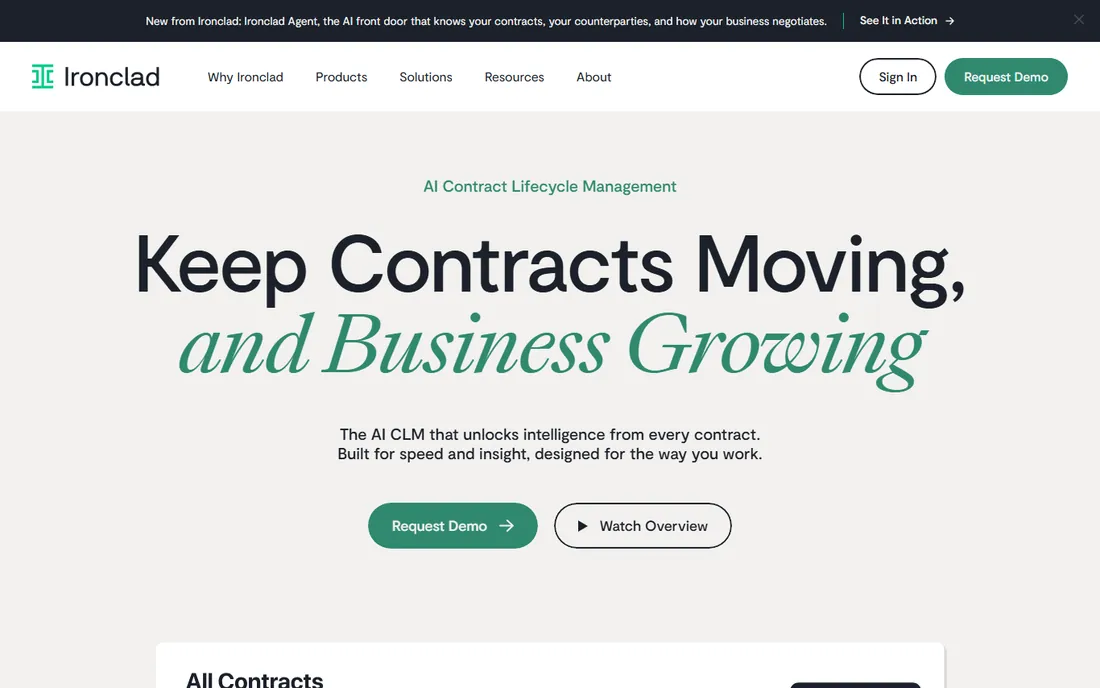
Ironclad is the name most enterprise legal teams evaluate first, and for good reason. Its workflow engine routes contracts through drafting, review, and approval with conditional logic that mirrors how legal departments actually work. The Salesforce integration is the best in the category, which matters because most enterprise contracts start as sales opportunities.
AI features draft clauses, suggest redlines, and extract terms from third-party paper. The catch is everything enterprise: quote-only pricing that typically starts in five figures annually, implementation measured in months, and a product that assumes a real legal operations function. Ironclad fits companies with high contract volume and dedicated legal staff. Smaller teams get 80% of the value from Juro or PandaDoc at a fraction of the cost and effort.
What we like- Deepest workflow automation in the category
- Strong Salesforce integration
- Proven at large enterprise scale
Watch out for- Quote-only pricing at enterprise levels
- Implementation measured in months
Starting priceSee website
Free planNo
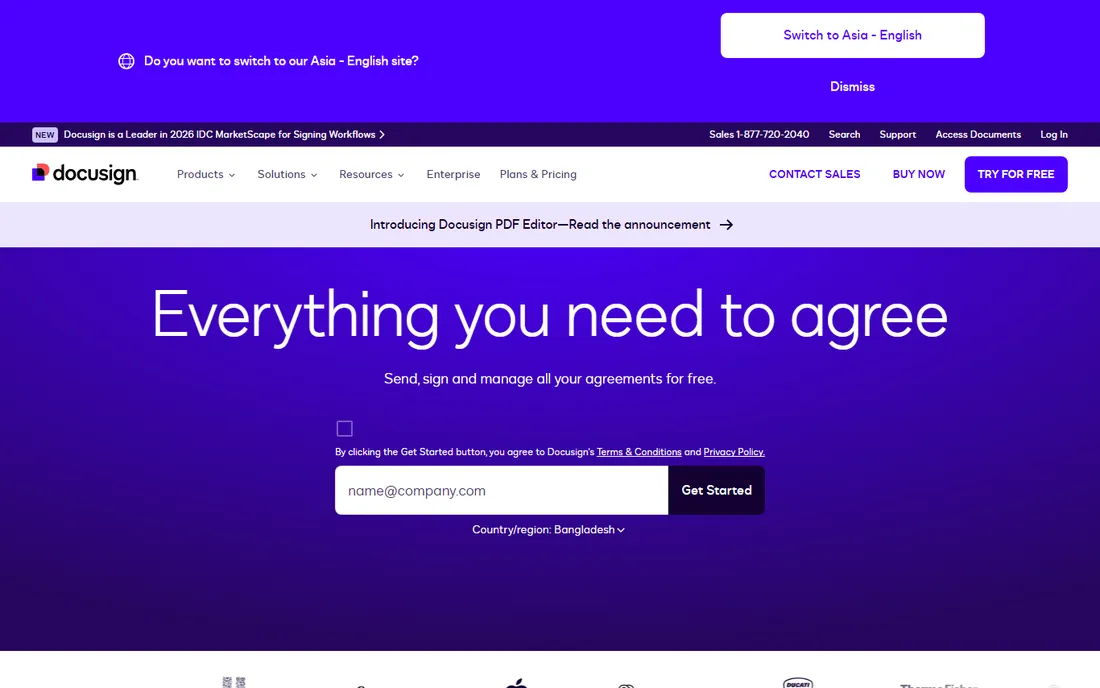
If your company already runs on DocuSign for e-signatures, DocuSign CLM is the path of least resistance. Contract generation, negotiation workflows, and the signature step live in one ecosystem, and the compliance certifications DocuSign carries globally transfer to the CLM layer. Procurement teams like buying from a vendor they already trust.
As a CLM, it is capable rather than category-leading. Workflow depth and AI features trail Ironclad, and pricing across the DocuSign bundle adds up. But the integration dividend is real: no new signature workflow to train, no separate vendor security review. Companies standardized on DocuSign should evaluate CLM before adding a second contract vendor to the stack.
What we like- Natural extension for DocuSign eSignature users
- Strong document generation
- Global compliance footprint
Watch out for- CLM depth lags Ironclad
- Pricing bundles get expensive
Starting price$19 per user/month (billed annually)
Free planYes
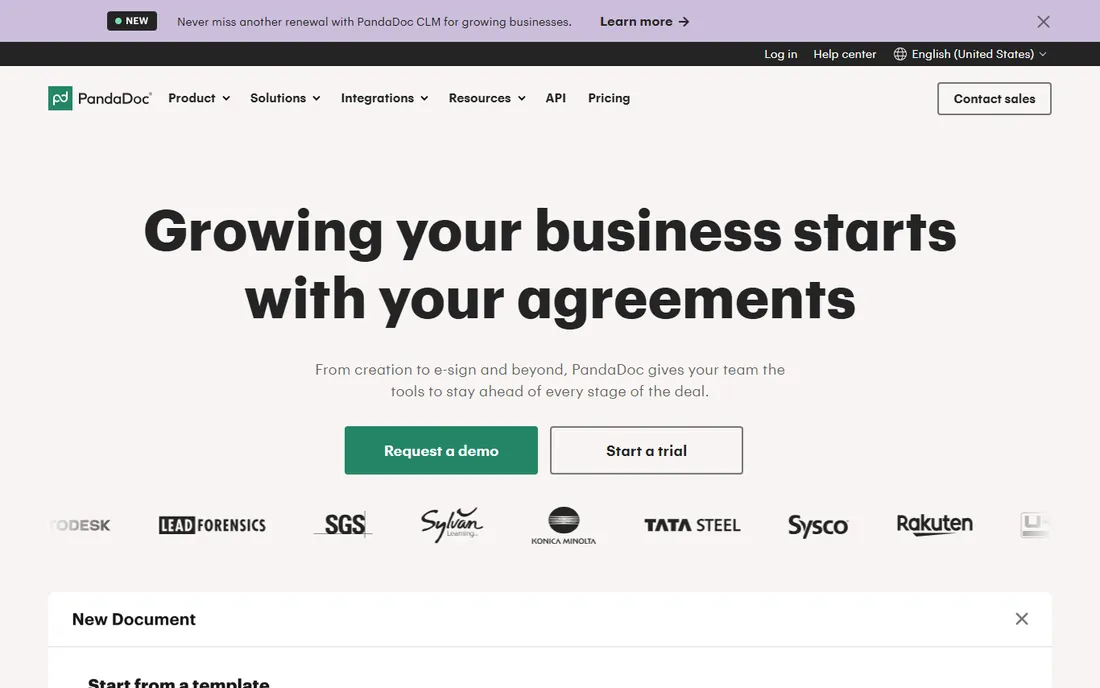
PandaDoc is the sales team's contract tool. Reps build proposals and contracts from templates, send them for e-signature, and even collect payment through Stripe or Square integrations, all without leaving the document. The Essentials plan at $19 a user a month and Business at $49 keep pricing transparent, and a free plan lets small teams start immediately.
It is honest about what it is not: a full contract lifecycle management system. Approval workflows and redlining exist, but vendor risk management, obligation tracking, and deep legal governance do not. For sales-led organizations whose problem is getting agreements out the door fast, PandaDoc is the right tool. Legal-led teams needing lifecycle control should look at Ironclad or Juro.
What we like- Transparent per-seat pricing
- Editor sales teams learn in an afternoon
- 1,000+ templates
Watch out for- Document automation rather than full lifecycle governance
- No vendor risk or spend tracking
#4
Juro
Best for: collaborative drafting for growing tech companies
Visit juro.com
Starting priceSee website
Free planNo
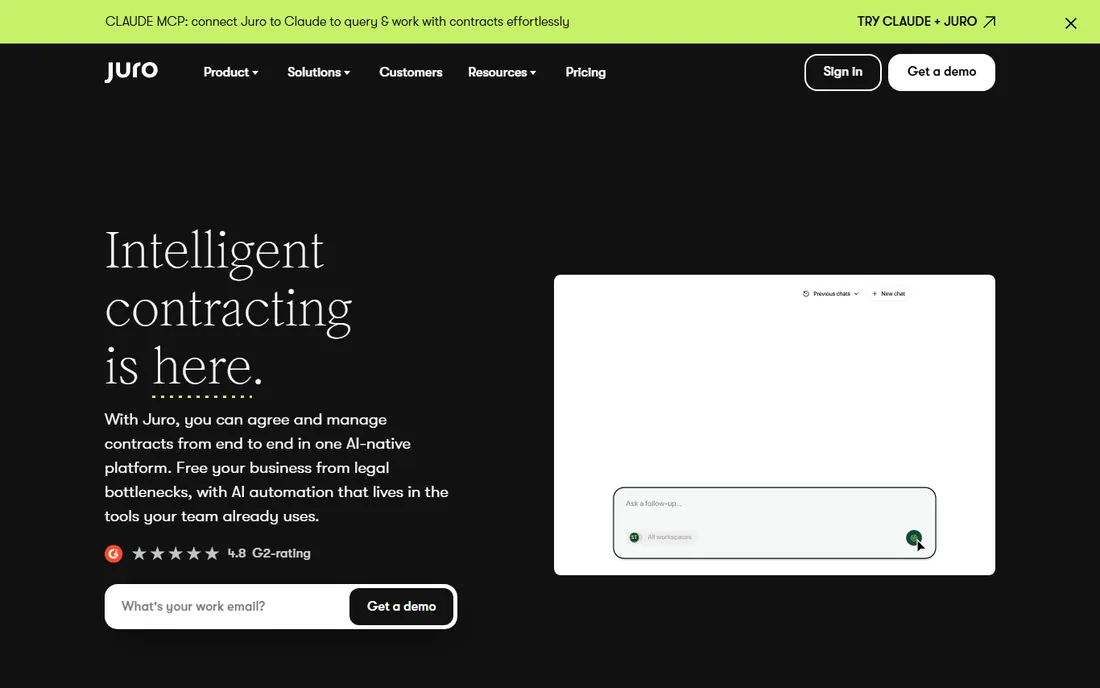
Juro reimagines contracts as collaborative browser documents rather than Word files emailed around. Internal and external stakeholders edit together in real time, approval workflows run automatically, and a clause library with conditional logic builds dynamic contracts from approved language. Deployment takes weeks, not months.
The product targets fast-growing tech companies and mid-size businesses where contract throughput matters more than enterprise governance. AI capabilities focus on data extraction rather than deep review assistance. Pricing starts around $450 a month but the structure draws transparency complaints, so get a written quote early. Teams that live in Google Docs will find Juro's collaboration model immediately natural.
What we like- Real-time collaborative editing in the browser
- Fast deployment
- Clause library with conditional logic
Watch out for- Pricing transparency weaker than rivals
- Contract count caps on plans
Starting priceSee website
Free planNo
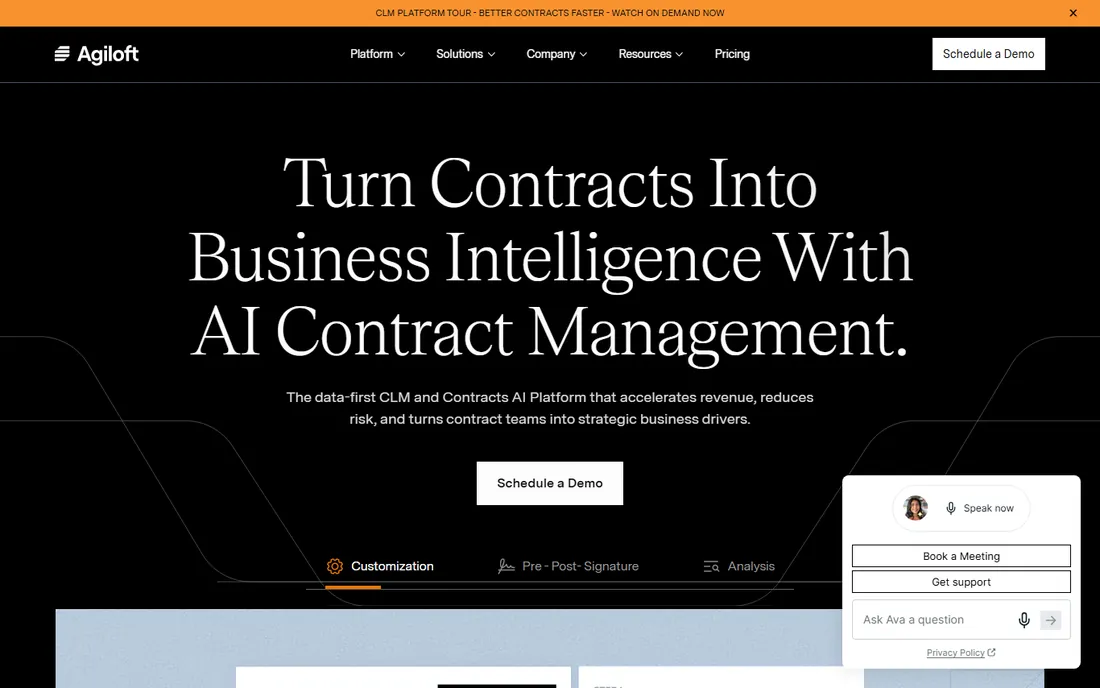
Agiloft's pitch is configurability without code. Business users can build custom workflows, fields, and approval chains that would require developers on other platforms. That flexibility suits enterprises with unusual contracting processes: multi-entity approvals, industry-specific compliance steps, or integration with bespoke internal systems.
The flexibility costs implementation time and demands someone who enjoys configuring systems. The interface feels more traditional than Ironclad or Juro. But for organizations whose contracting process does not fit anyone's template, Agiloft's no-code depth is the reason to choose it. Standard processes should pick a more opinionated tool and save the configuration budget.
What we like- No-code customization unusually deep
- Flexible data model
- Strong for complex approval chains
Watch out for- Customization depth demands implementation effort
- Interface less modern than Juro
#6
Icertis
Best for: large enterprises with complex contract portfolios
Visit icertis.com
Starting priceSee website
Free planNo
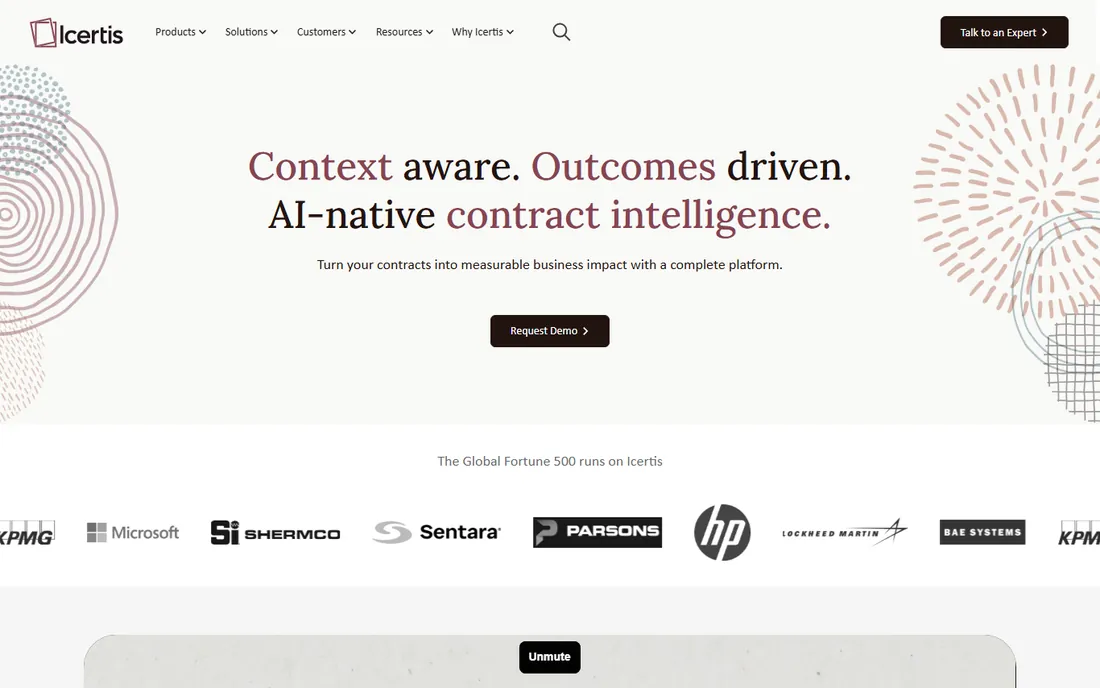
Icertis operates at the top of the market: global enterprises managing hundreds of thousands of contracts across procurement, sales, and legal. Obligation management, tracking what each contract requires the company to do, is the standout capability. Deep integrations with SAP, Oracle, and Salesforce connect contract terms to the systems that execute them.
Everything is enterprise-scale, including minimum deal sizes and implementation timelines. There is no meaningful mid-market offering. Icertis fits Fortune 1000 companies where contract intelligence is a C-level initiative. Everyone else will find the sales process itself a signal that this is not their tool.
What we like- Proven at massive contract volumes
- Strong obligation management
- Deep ERP integrations
Watch out for- Enterprise-only pricing and implementation
- Overkill below large scale
Starting priceSee website
Free planNo
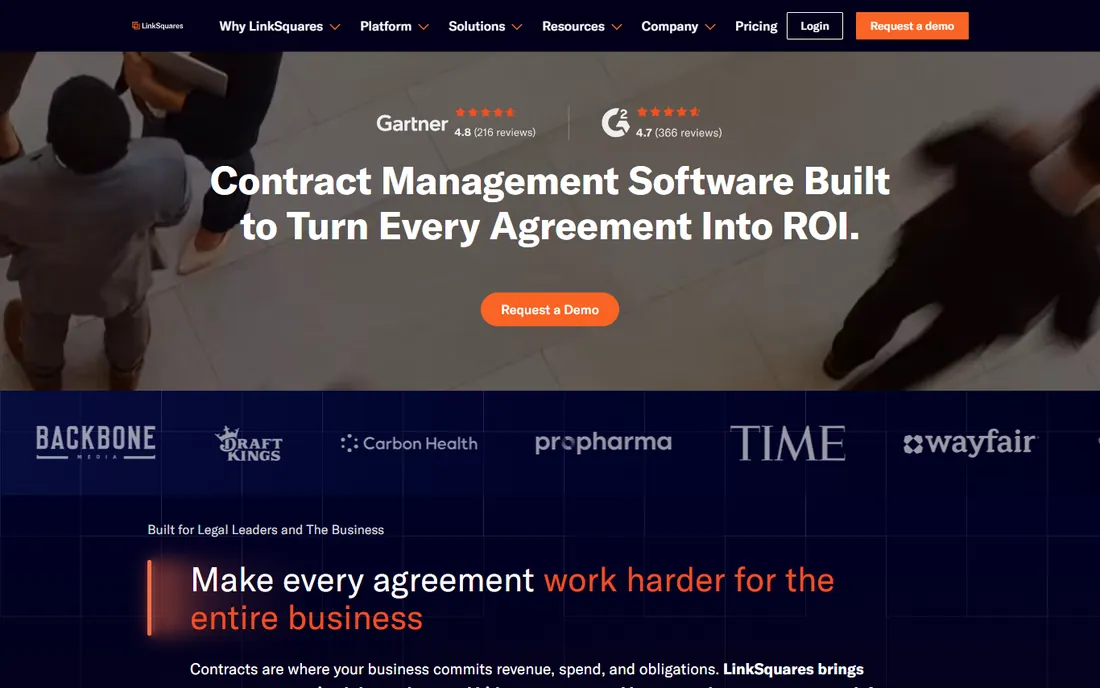
LinkSquares leads with AI applied to the contracts you already have. Upload a legacy portfolio and its models extract key terms, dates, and obligations into a searchable, reportable database. For legal teams inheriting thousands of unmanaged agreements, that retroactive organization delivers value before any new contract is drafted.
Newer CLM capabilities cover drafting and workflows, but analytics on existing contracts remains the distinctive strength. Pricing is quote-based. The partner ecosystem is smaller than Ironclad's or Icertis's. Legal teams whose immediate pain is "we don't know what's in our contracts" should evaluate LinkSquares first; teams starting from scratch may prefer a drafting-first tool.
What we like- Strong AI extraction and analytics on existing contracts
- Fast time to insight on legacy portfolios
- Modern interface
Watch out for- Quote-based pricing
- Newer vendor with smaller partner ecosystem
Starting price$375/month
Free planNo
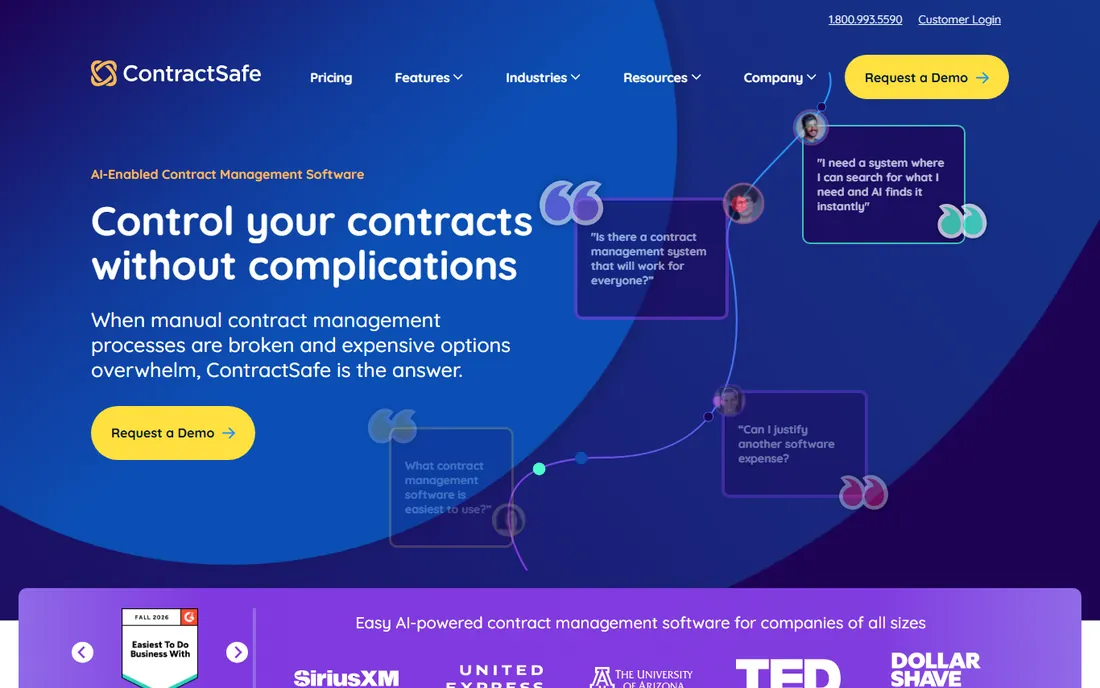
ContractSafe takes the opposite approach from Juro: instead of focusing on drafting, it focuses on what happens after signing. Every contract, including scanned PDFs, becomes searchable through OCR. Automated reminders track renewals and key dates. The unlimited-user model means the whole company can access contracts without per-seat math.
Setup is fast and support gets consistently strong reviews. At $375 a month, it is priced for mid-size operations rather than startups. Teams that draft complex agreements collaboratively will miss Juro's editing depth. But for the common reality, hundreds of existing contracts nobody can find, ContractSafe's searchable repository solves the actual problem.
What we like- Unlimited users with no per-seat fees
- OCR makes scanned contracts searchable
- Fast setup
Watch out for- Repository-first, lighter on drafting workflows
- $375 a month is steep for tiny teams
Starting price$600/year
Free planNo
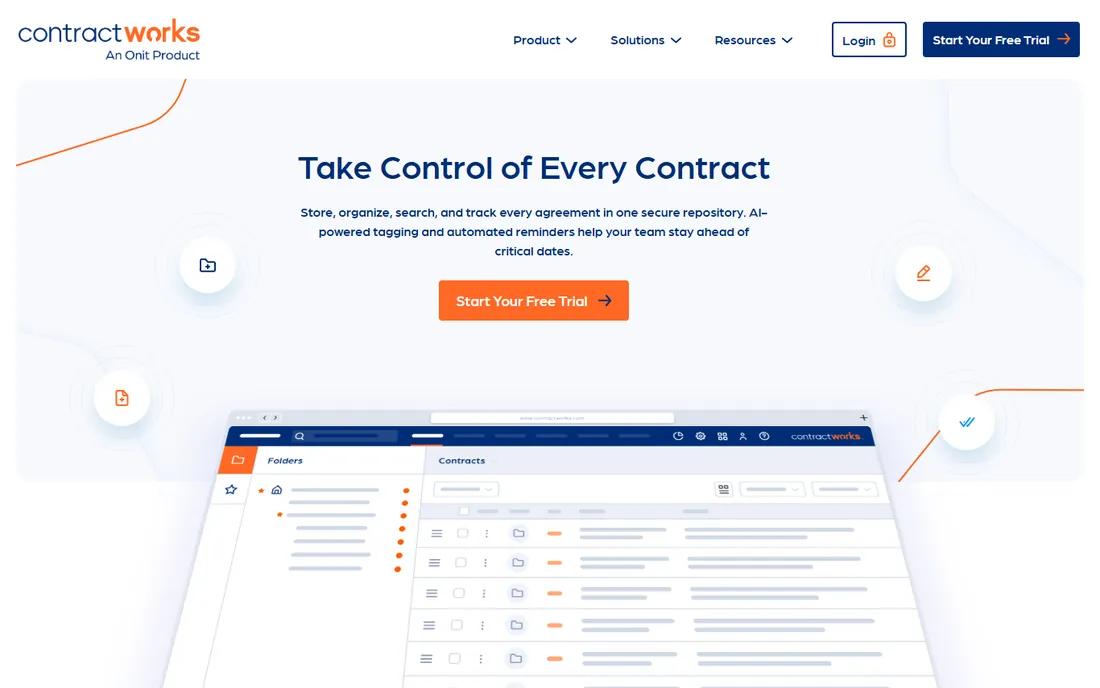
ContractWorks is the budget repository: $600 a year flat for secure contract storage, custom alerts, and reporting. No per-user fees, no modules, no sales negotiation. Mid-size businesses that need contracts organized, searchable, and monitored for renewals get exactly that without CLM complexity.
The simplicity is the limit. There is no AI extraction, minimal workflow automation, and drafting happens elsewhere. It is a filing cabinet with alerts, and an excellent one. Companies that need lifecycle automation should spend more on Juro or PandaDoc. Companies that need their contracts findable and their renewals flagged will find ContractWorks hard to beat at the price.
What we like- Flat $600 annual price
- Secure storage with alerts
- Easy to use
Watch out for- No AI features
- Limited workflow automation
Starting priceSee website
Free planNo
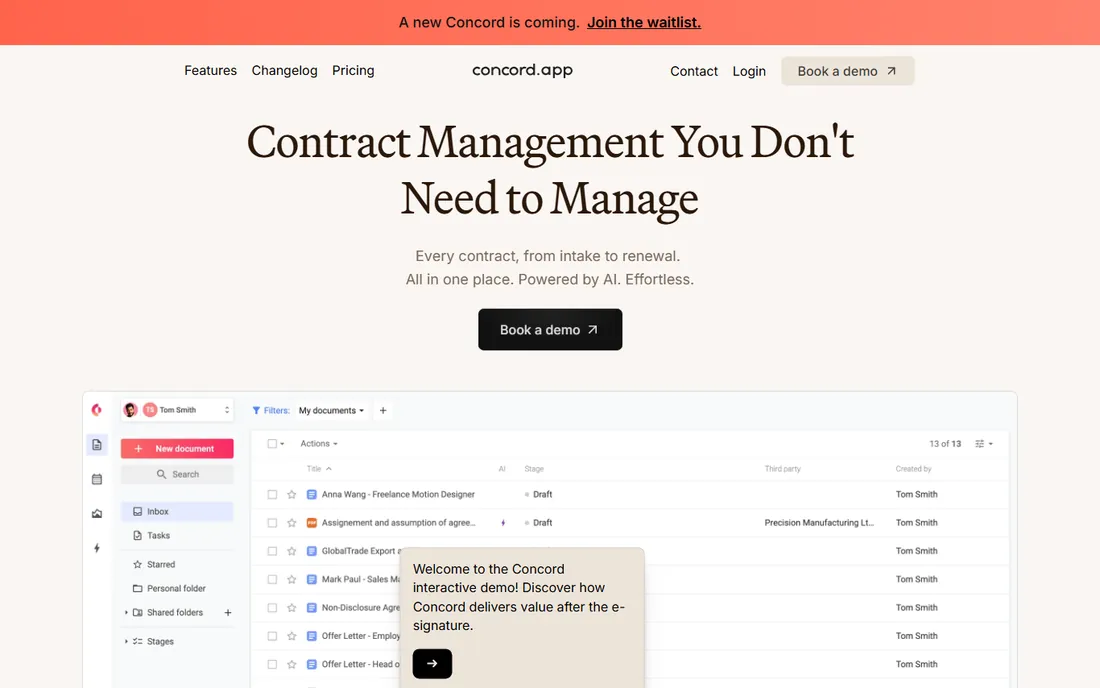
Concord covers the whole contract flow in one platform: draft collaboratively, negotiate with version tracking, sign electronically with unlimited signatures, and store with deadline alerts. The all-in-one scope at a mid-market price point makes it a practical alternative to stitching PandaDoc to a repository.
The interface is clean and modern, and unlimited e-signatures remove the envelope-counting that annoys DocuSign users. Pricing is not published, so expect a quote. Brand recognition lags the bigger names, which matters when counterparties need to trust the signing experience. For teams wanting one contract home without enterprise CLM weight, Concord deserves a trial.
What we like- Drafting, negotiation, signing, and storage in one
- Unlimited e-signatures
- Clean interface
Watch out for- Pricing not published
- Brand less known than DocuSign or PandaDoc
How we built this shortlist
We compared contract management tools using vendor pricing pages, feature documentation, and review data from G2, Capterra, SelectHub, and legal technology publications. We weighted lifecycle coverage from drafting to renewal, AI capabilities, approval workflow depth, e-signature quality, and fit for team size and buying center. We did not run hands-on trials, so workflow details come from documentation and verified user reviews rather than our own use.
What to check before you sign
Clarify who owns the buying decision: legal or sales. Legal-led teams need clause libraries, approval workflows, and redlining depth, which points to Ironclad or Juro. Sales-led teams need fast document generation tied to the CRM, which points to PandaDoc. Buying the wrong family's tool creates daily friction that no feature list fixes.
Test AI extraction on your own contracts during the trial. Vendor demos use clean sample agreements. Upload fifty of your real contracts, including scanned PDFs and third-party paper, and check what the AI actually extracts. Accuracy on messy real-world documents is the only metric that matters for analytics-first tools like LinkSquares.
Check the e-signature story end to end. Some CLM platforms include unlimited signatures; others meter envelopes or integrate with a separate DocuSign account you pay for separately. Ask whether counterparties need accounts, whether the signing experience works on mobile, and which compliance certifications cover your jurisdictions.
Model user counts honestly, including occasional users. Per-seat tools like PandaDoc charge for everyone with a login, while ContractSafe and ContractWorks cover unlimited users. Finance, procurement, and sales leadership often need view access, and those seats add up on per-user pricing. Price the real audience, not just the legal team.
Ask about implementation scope in writing. Enterprise CLM deployments run months and the services bill can rival the license. Lighter tools deploy in days to weeks. Get a statement of work with timeline and cost before signing, and ask for two reference customers at your company size who completed implementation in the last year.
Who should own the contract process: legal or sales
This ownership question decides more than any feature comparison. When legal owns contracts, the priorities are risk control, consistent language, and approval discipline. The right tools are CLM platforms with clause libraries and workflow enforcement: Ironclad, Juro, Agiloft. When sales owns contracts, the priorities are speed, CRM integration, and low friction. The right tools are document automation platforms: PandaDoc, Concord.
Most companies need both and buy in sequence. The pattern that works is a drafting and negotiation home that serves both sides, with legal controlling templates and sales controlling velocity. Juro's collaborative model and PandaDoc's CRM depth both attempt this bridge from opposite sides.
The failure mode is buying a legal tool for a sales problem or vice versa. A sales team forced into Ironclad's approval chains will route around it with side agreements. A legal team handed PandaDoc will discover at audit time that nobody used the approved clauses. Match the tool to the primary owner, then confirm the secondary users can live with it during the trial.
Frequently asked questions
What is contract lifecycle management software?
CLM software manages contracts from creation through renewal: drafting from templates, negotiation and redlining, approvals, e-signature, storage, obligation tracking, and renewal alerts. It replaces Word documents and email threads with one governed system.
How much does contract management software cost?
It ranges widely. PandaDoc starts at $19 a user a month, ContractSafe at $375 a month, and ContractWorks at $600 a year. Enterprise CLM like Ironclad and Icertis is quote-based, typically starting in five figures annually plus implementation.
Does contract software replace a lawyer?
No. It speeds drafting, review, and management, and AI can flag risky terms, but legal judgment stays with counsel. Templates and high-stakes agreements need attorney review, and AI-generated clauses should always be verified.
What is the difference between CLM and e-signature software?
E-signature tools like DocuSign execute the signing step. CLM platforms manage the entire lifecycle around it: drafting, negotiation, approvals, storage, and renewals. Many CLM tools include e-signatures; standalone e-signature tools do not manage the lifecycle.
How long does CLM implementation take?
Enterprise CLM like Ironclad or Icertis takes months with professional services. Mid-market tools like Juro deploy in weeks. Repository tools like ContractSafe and document tools like PandaDoc go live in days. Match the implementation appetite to your timeline.
Can AI review my contracts?
AI can extract key terms, flag deviations from standard clauses, and suggest redlines, and tools like LinkSquares and Ironclad do this well on clean documents. Accuracy drops on scanned or unusual agreements, so test with your real contracts and keep attorney review for anything material.
Sources we checked (6)
- https://kurums.com/best-contract-management-software-2026-comparison/
- https://www.esign.ai/blog/ironclad-clm-pricing-esignglobal
- https://hackernoon.com/the-8-best-contract-management-software-tools-worth-using-in-2026
- https://www.selecthub.com/contract-lifecycle-management-software/juro-vs-contractsafe/
- https://www.pandadoc.com/blog/best-contract-management-software/
- https://lifestyle.longislandreport.org/story/872478/data-without-context-why-enterprise-contract-data-is-failing-ai/
Is your product missing or out of date?
We review this list regularly. Vendors can request a listing, send updated pricing or ask about featured placement.

Shihab Mia · Founder, Rankite
Shihab has spent more than a decade helping SaaS and e-commerce brands grow through search. He writes Rankite's software buying guides from pricing pages, documentation and public user reviews. More about Shihab.