How we make this list: we compare pricing pages, product documentation and public user reviews. Ratings come from G2, Capterra or Trustpilot, with the date we checked them.
Key takeaways
- None of the eight vendors below publishes a price list. Expect a quote built on claim volume, member lives, a share of savings, or a mix of the three, and push for the fee model in writing before a pilot.
- Cotiviti and ClaimInsight (from AMPS) are the two options here with dedicated TPA programs built around prepay editing for self-funded employer clients.
- Claritev, Zelis and Vālenz Health bundle payment accuracy with network access and repricing, which suits TPAs that want fewer vendor contracts. They also make it harder to judge each piece on its own.
- Lyric and Machinify run at large health plan scale. They fit big or plan-owned TPAs best, not a 30-person administrator.
- Alivia Analytics goes after fraud, waste and abuse patterns, not coding edits. Treat it as an add-on to a claim editor, not a replacement.
Quick comparison
| Tool | Best for | Starting price | Free plan |
|---|
 Cotiviti | Prepay final-filter editing with a clinical team | See website | No |
 ClaimInsight by AMPS | Mid-size TPAs that want high-dollar review and transparent editing | See website | No |
 Claritev | TPAs already using the PHCS network | See website | No |
 Zelis | One vendor for pricing, payment integrity and payments | See website | No |
 Vālenz Health | Prepay bill review plus repricing for self-funded plans | See website | No |
 Lyric | Large administrators that need a primary editing library | See website | No |
 Machinify | Plan-owned or very large TPAs wanting AI audit and COB | See website | No |
 Alivia Analytics | Fraud, waste and abuse detection across pre- and post-pay | See website | No |
Is your product missing or out of date?
We review this list regularly. Vendors can request a listing, send updated pricing or ask about featured placement.
The best claims payment accuracy software for TPAs
Starting priceSee website
Free planNo
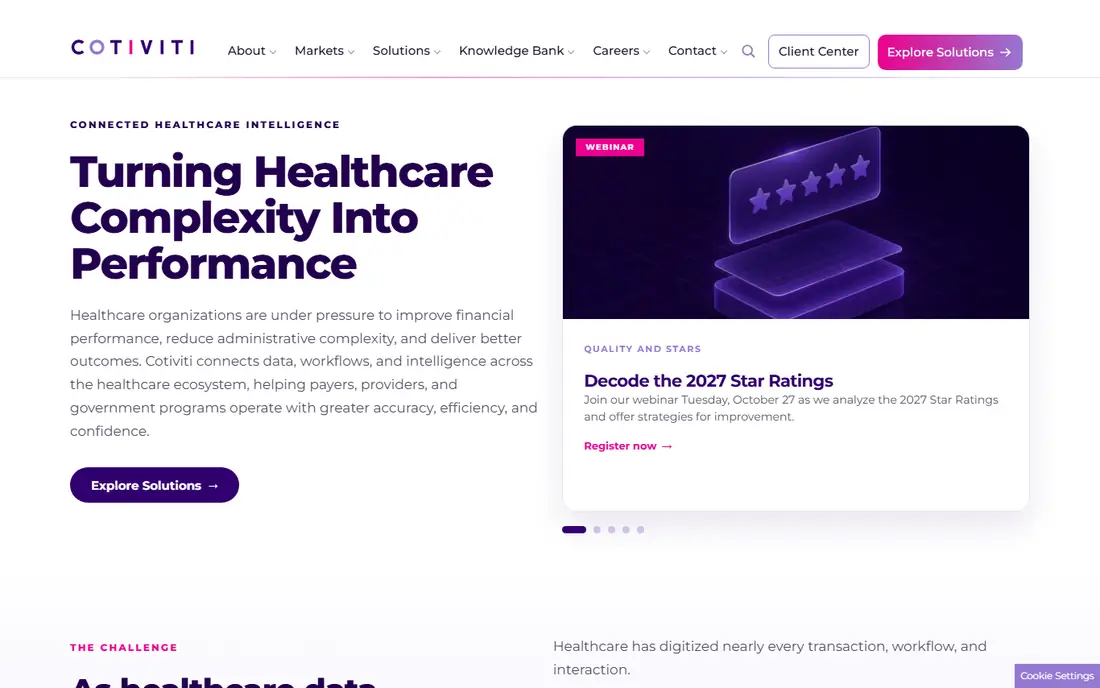
Cotiviti is one of the largest names in prepay claim review, and it runs a program built specifically for TPAs. It pairs its Payment Policy Management and Coding Validation products, delivered as software-as-a-service claim editing plus clinical coding review, with a consultative service layer. Cotiviti says its TPA work covers benefit administration companies with nearly 6 million member lives.
The strongest point for a TPA is staffing. Every TPA client gets a designated clinical team led by a medical director or clinical consultant, who helps choose, customize and maintain the payment policies you switch on. That matters if you do not employ certified coders or a medical director who can defend edits when a provider pushes back. Cotiviti positions the product as a final filter that catches what your claim system and primary editor miss, without changing your adjudication workflow.
The catch is fit and transparency on cost. Cotiviti's headline numbers (up to 4% savings on annual claim spend and 99.9% average editing accuracy) are vendor figures, partly drawn from health plan clients with self-funded business. Ask for results from TPAs your size, and get clear answers on how fees are set and how each edit's savings is attributed before you sign.
What we like- Dedicated TPA program with a named clinical lead
- Sits on top of your current claim system and primary editor
- Long payment policy library maintained by clinicians
Watch out for- No public pricing
- Enterprise sales process can be slow for smaller TPAs
#2
ClaimInsight by AMPS
Best for: Mid-size TPAs that want high-dollar review and transparent editing
Visit claiminsight.com
Starting priceSee website
Free planNo

ClaimInsight is the payment integrity platform from AMPS, a healthcare technology company that also serves brokers, employers and property and casualty payers. Its TPA package has two parts that can run together or separately: High-Dollar Review (HDR), which is itemized, physician-led review of expensive claims, and Intelligent Policy Update (IPU), a prepay editing engine. AMPS also sells Clarity Medical Bill Review and a Retro Review and Recovery program.
The setup path is practical. AMPS suggests starting with HDR for quick savings on large claims while it studies your claim data to prepare IPU. HDR thresholds can be set starting at $25,000, and the product can serve as your main editing tool or a second layer on top of an incumbent. The company openly pitches against legacy tools and what it calls costly contingency models, so it is worth asking for a flat or hybrid fee proposal.
The weakness is scale of proof. The best-known savings figure on its site ($8.5 million) comes from a 160,000-member Medicaid plan, not a TPA book of employer groups. Ask for TPA references and a sample of the physician rationale your clients and providers will see.
What we like- Built and marketed for TPAs
- High-dollar review thresholds start at $25K
- Works as a primary editor or second layer
Watch out for- Smaller vendor with less public client evidence
- Published savings examples come mostly from a Medicaid plan
Starting priceSee website
Free planNo
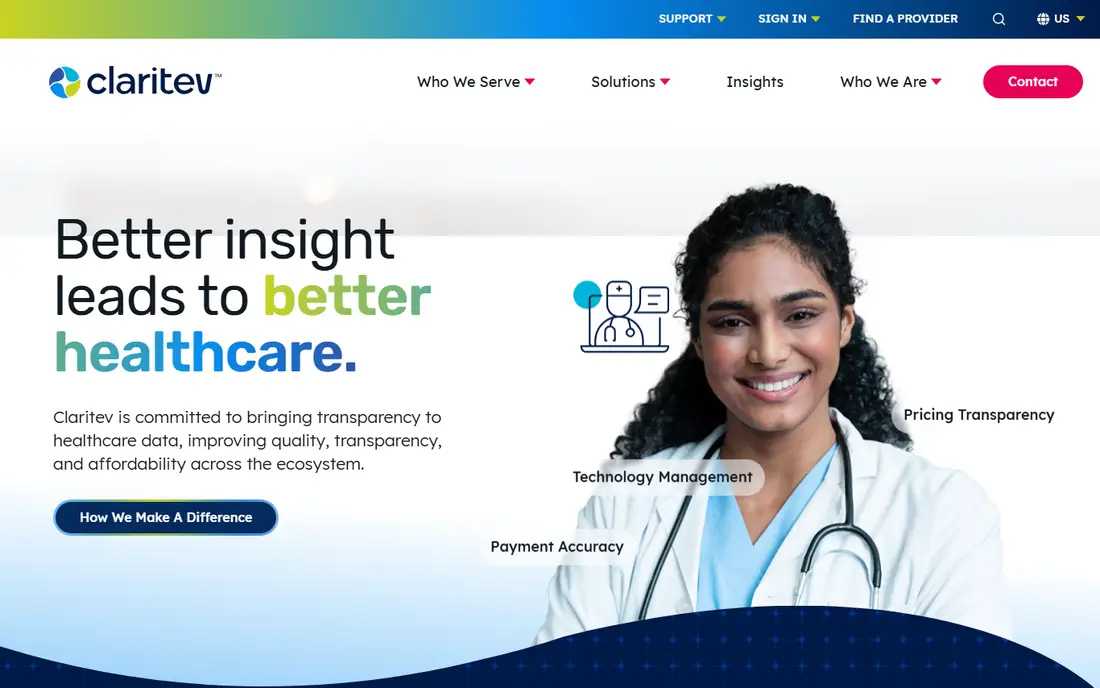
Claritev is the company formerly known as MultiPlan, and many TPAs already route out-of-network claims through its PHCS network. It has a dedicated TPA segment, and in August 2026 Marpai, a publicly traded TPA, expanded from PHCS network access to Claritev's pre- and post-payment integrity services for its self-funded employer clients.
The core prepay product is Advanced Code Editing. Claritev says its rules cover more than 80 million code combinations across 90 service areas. High-confidence findings go straight back to the client, and the rest are reviewed by a clinician or coder before an edit is applied. Providers can look up the reason for an edit on an online portal, which cuts down on the phone calls your claims staff would otherwise field. Claritev reports a dispute rate under 2% on corrected charges.
The trade-offs are speed and vendor dependence. A 24 to 48 hour turnaround is fine for most claims, but it is not real-time editing inside your claim system. And because Claritev earns more when you use its network, repricing and integrity products together, run a side-by-side test against a standalone editor before you consolidate.
What we like- Pre- and post-pay coverage from one vendor
- Clinicians check lower-confidence flags before they go back
- Provider portal explains edits
Watch out for- 24 to 48 hour claim turnaround adds time to the payment cycle
- Strongest value comes from bundling with its network and pricing products
#4
Zelis
Best for: One vendor for pricing, payment integrity and payments
Visit zelis.com
Starting priceSee website
Free planNo
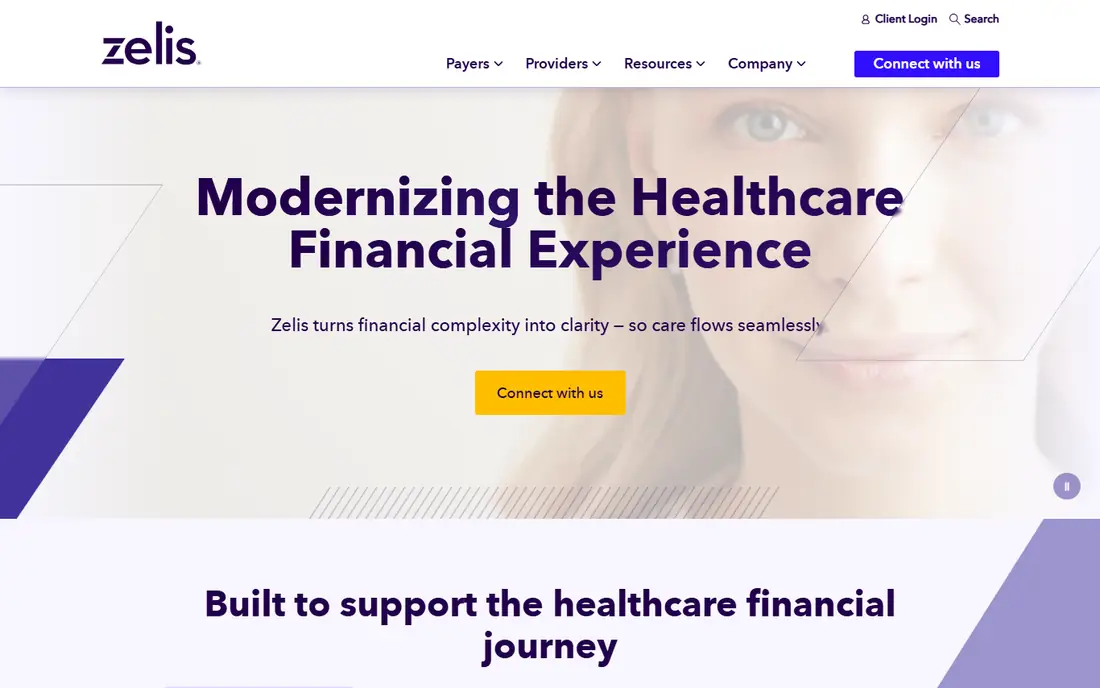
Zelis takes a wide view of claims cost. Its Claims Optimization group combines out-of-network pricing, in-network benchmark pricing and payment integrity (claims editing plus complex claims review) on its Intelligent Pricing Platform. TPAs can add provider payments, member communications and network management from the same company.
For a TPA juggling a separate repricer, editor, payment vendor and EOB printer, that consolidation is the appeal. Fewer contracts mean fewer file feeds to maintain and one place to reconcile savings. Zelis also publishes TPA case studies, including one on No Surprises Act and independent dispute resolution performance, which is a live pain point for administrators of self-funded plans.
The honest catch is focus. Zelis is a payments and pricing company first, and its editing content is not the main reason most buyers sign. If accuracy of coding edits is your top concern, ask for edit-level hit rates and overturn rates, and compare them to a specialist such as Cotiviti or Lyric.
What we like- Claims editing, complex claims review and out-of-network pricing under one roof
- Also covers provider payments and member EOBs
- TPA-specific case studies, including No Surprises Act work
Watch out for- Payment integrity is one module in a broad suite
- Expect cross-selling across payments and communications
Starting priceSee website
Free planNo

Vālenz Health sells into the self-funded market from several angles, and TPAs are one of its named audiences. Its payment integrity suite includes prepay Bill Review, in-network and out-of-network repricing, Clean Claim Verification (a SaaS tool for checking billing codes and coverage) and Curated Data Sources for keeping code sets and rules current.
The bill review product combines AI with in-house clinical and coding staff to check medical necessity, provider credentials and contract alignment before payment. That is a good fit for TPAs whose biggest leaks are high-cost facility claims and out-of-network bills, not routine professional claims. Having repricing from the same vendor can also simplify stop-loss reporting.
The weakness is how little you can learn before a sales call. Vālenz publishes few specifics on edit counts, turnaround times or dashboards, so ask for a demo of the reporting your employer clients would receive and a written description of how disputes are handled.
What we like- Serves TPAs, self-insured employers, brokers and stop-loss producers
- Prepay bill review checks medical necessity, provider credentials and contract terms
- SaaS clean claim verification and reference data
Watch out for- Thin public detail on edit libraries and reporting
- Much of the lineup is services rather than software you run yourself
#6
Lyric
Best for: Large administrators that need a primary editing library
Visit lyric.ai
Starting priceSee website
Free planNo
Lyric is the former ClaimsXten business, rebranded and expanded into what it calls a healthcare decision intelligence platform, Lyric42. Its Edit product runs pre-pay edits against claims in milliseconds. Lyric says it has built more than 180 million edits over 35 years, maintained by clinical, coding and reimbursement experts who track CMS, AMA and specialty society guidance.
For a TPA, the main draw is configurability. Lyric acts as the system of record for client-specific rules, so you can tailor policies, review thresholds, provider carve-outs and sequencing for different employer groups while keeping one source of truth. It offers primary editing, secondary editing and content programs, and every recommendation carries a traceable rationale back to the source policy.
The catch is size. Lyric says nine of the top 10 US health plans use it, and its product pages are written for health plans. A large TPA or union benefit fund with its own claims IT team can make good use of it. A small TPA without that staff will likely get more value from a managed service.
What we like- One of the largest prepay edit libraries available
- Supports primary and secondary editing
- Client-specific configuration of policies, thresholds and provider carve-outs
Watch out for- Built for health plan scale
- Heavier implementation than a TPA-focused service
#7
Machinify
Best for: Plan-owned or very large TPAs wanting AI audit and COB
Visit machinify.com
Starting priceSee website
Free planNo
Machinify is an AI payment integrity company backed by New Mountain Capital, and it has grown fast through deals. Its platform now includes the businesses of The Rawlings Group (subrogation), VARIS (DRG and APC overpayment review) and Apixio's payment integrity unit. In October 2025 it closed the roughly $670 million acquisition of Performant Healthcare, adding audit and recovery work.
What stands out is breadth plus delivery choice. Products cover coordination of benefits, subrogation, audit, payment and pharmacy, and each can run insourced, hybrid or fully managed. For a TPA that already has a strong internal team, being able to use the software directly instead of handing everything to a contingency vendor is a real advantage.
The honest weakness is audience. Machinify reports more than 90 customers, including 18 of the top 20 health plans, and 270 million member lives. Smaller TPAs should ask how they would be served, what the minimum claim volume is, and how product roadmaps are holding up after so many acquisitions.
What we like- Covers coordination of benefits, subrogation, audit, payment and pharmacy
- Insourced, hybrid or fully managed delivery
- Deep subrogation and DRG review heritage
Watch out for- Customer base skews to the largest health plans
- Still integrating several recent acquisitions
Starting priceSee website
Free planNo
Alivia Analytics comes at payment accuracy through fraud, waste and abuse. Its Alivia 360 platform targets what the company calls the gray zone between billing error and outright fraud. Commercial plans, TPAs and self-insured employers are named markets, along with Medicaid and government programs.
On the prepay side, FWA Claims Manager scores providers and flags high-risk claims for review before payment, using triggers you configure. Post-pay, FWA Finder surfaces leads and Alivia Case Manager handles investigation workflow. Clinical audits and data mining services back this up, and Alivia offers outsourced special investigations for TPAs without an SIU. It holds HITRUST r2 and SOC 2 Type 2 certification, which helps with employer security reviews.
The limitation is scope. Alivia will not replace a coding and payment policy editor, and its strengths show most on patterns across many claims and providers. Use it to catch the outliers your editor cannot see.
What we like- Pre-pay provider risk scoring with configurable pend-and-review triggers
- Post-pay lead generation and case management
- Outsourced SIU option for lean teams
Watch out for- Not a coding edit library
- Works best alongside a primary claim editor
How we chose
We started with vendors that sell claim payment accuracy tools (prepay editing, bill review, coding validation, FWA analytics) and confirmed each one names TPAs, self-funded employers or benefit administrators as a market, or has public TPA deployments. For every tool we read the vendor's own product and TPA pages, checked recent press releases and acquisition news, and looked at what public reviews and industry discussion say about implementation and provider friction. We did not test these products ourselves.
We then weighed fit for small and mid-size TPAs: whether the product can sit beside an existing claim system, whether clinical review comes with it, how flexible the delivery model is, and how open the vendor is about fees. None of the eight publishes pricing, so every price field reads "See website." Vendor savings and accuracy figures in this guide are the vendors' own claims, not independent results.
What to check before you sign a payment accuracy contract
Decide where the tool sits in your claim flow
Some products act as a primary editor inside adjudication. Others are a final filter or a high-dollar review step that runs after your main editor. Map your current claim system, editor and repricer first. Then decide whether you are replacing something or adding a layer, because stacking two editors with overlapping logic produces double denials and angry providers.
Get the fee model in writing
Payment accuracy is often sold on contingency, meaning a percentage of identified savings. That aligns incentives on paper but can reward aggressive edits that are later overturned. Ask how savings are defined, whether overturned edits are credited back, and whether a per-claim or per-member fee is available. Also confirm contract length, renewal terms and what happens to your edit history if you leave.
Ask for TPA-specific proof
Many vendors' headline numbers come from health plans. Request two or three references from TPAs with a similar mix of employer groups, and ask them about setup time, file formats and how long it took to see first savings.
Look hard at provider abrasion
Your employer clients will hear about it if local hospitals start complaining. Ask for overturn rates, appeal handling, and whether providers get a portal or written rationale for each edit. Vendors with clinicians reviewing borderline findings usually generate fewer disputes.
Plan for client reporting
Self-funded employers increasingly expect proof that their administrator is guarding plan assets. Make sure the vendor can produce group-level savings reports you can share, and that you can export claim-level edit data in a format your team can use.
Frequently asked questions
What is claims payment accuracy software?
It is software, often paired with clinical review services, that checks medical claims for coding errors, payment policy violations, duplicate billing and other problems before or after payment. For TPAs, the goal is to pay self-funded plan claims correctly the first time and show employer clients that their money is protected.
Do TPAs need this if their claim system already has an editor?
Often yes. Built-in editors cover standard code pairs well but usually lack the depth of a dedicated library or clinical review of complex and high-dollar claims. Vendors such as Cotiviti and ClaimInsight specifically sell a second-layer option for this reason.
How much does claims payment accuracy software cost?
None of the vendors in this guide publishes pricing. Fees are typically a percentage of savings, a per-claim or per-member charge, or a hybrid. Ask for at least two pricing structures and model both against your last 12 months of claims.
How long does implementation take?
It depends on the integration. A high-dollar review or post-pay service can start once claim files are flowing, while a primary editor wired into adjudication takes longer because rules must be configured and tested. Ask each vendor for a written timeline and the staff hours they expect from your side.
Prepay or post-pay: which should a TPA start with?
Prepay review avoids the cost and provider friction of chasing money back, so most TPAs start there for high-volume coding errors and expensive facility claims. Post-pay analytics still matter for fraud patterns and coordination of benefits issues that only show up across many claims.
Will payment accuracy edits upset providers?
They can if edits are aggressive or poorly explained. Choose vendors that have clinicians review borderline findings, give providers a clear rationale, and report overturn rates, so you can spot rules that cause more disputes than they are worth.
Sources we checked (21)
- https://www.cotiviti.com/solutions/payment-accuracy/prepay-claim-integrity-for-tpas
- https://www.cotiviti.com/solutions/payment-accuracy
- https://www.claiminsight.com/
- https://www.claiminsight.com/third-party-administrators
- https://www.claritev.com/solutions/payment-revenue-integrity-solutions/
- https://www.claritev.com/solutions/payment-revenue-integrity-solutions/pre-payment-integrity/advanced-code-editing/
- https://www.claritev.com/newsroom/marpai-claritev-payment-integrity-solutions/
- https://www.zelis.com/payers/third-party-administrators/
- https://www.zelis.com/payers/claims-optimization/
- https://www.valenzhealth.com/
- https://www.valenzhealth.com/solutions/payment-integrity/
- https://www.lyric.ai/
- https://www.lyric.ai/solutions/edit
- https://www.lyric.ai/our-company
- https://www.1199seiubenefits.org/news/claimsxten-select-lyric/
- https://www.machinify.com/
- https://www.machinify.com/about
- https://www.machinify.com/resources/machinify-completes-acquisition-of-performant-healthcare
- https://www.newmountaincapital.com/the-rawlings-group-apixio-payment-integrity-and-varis-merge-to-form-next-generation-payment-accuracy-and-integrity-platform/
- https://www.aliviaanalytics.com/
- https://www.aliviaanalytics.com/markets/commercial-plans/
Is your product missing or out of date?
We review this list regularly. Vendors can request a listing, send updated pricing or ask about featured placement.

Shihab Mia · Founder, Rankite
Shihab has 5+ years in B2B and SaaS SEO. He writes Rankite's software buying guides from pricing pages, documentation and public user reviews. More about Shihab.