How we make this list: we compare pricing pages, product documentation and public user reviews. Rankite is independent; if a vendor ever pays for a featured spot, that listing is clearly labeled Partner.
Key takeaways
- Spreedly and IXOPAY suit engineering-led teams that want a vault plus deep PSP connectivity under their own control.
- Primer and Gr4vy fit merchants that want orchestration without a large integration project, with no-code workflow control.
- Yuno and Juspay are strong for businesses expanding across regions, where local payment methods decide approval rates.
- Every platform here is quote-based: expect a sales process and ask for per-transaction pricing in writing before comparing.
Quick comparison
| Tool | Best for | Starting price | Free plan |
|---|
 Spreedly Spreedly | Engineering-led teams that want a vault and orchestration in one contract | See website (custom quote) | No (no free trial advertised) |
 Primer Primer | Merchants that want orchestration logic without building it | See website (custom quote) | No (no free trial advertised) |
 CellPoint Digital CellPoint Digital | Airlines and travel merchants with complex payment flows | See website (custom quote) | No (no free trial advertised) |
 Gr4vy Gr4vy | Teams that want orchestration deployed in their own cloud | See website (custom quote) | No (no free trial advertised) |
 IXOPAY IXOPAY | Enterprises that need the widest acquirer connectivity | See website (custom quote) | No (no free trial advertised) |
 Yuno Yuno | Global merchants expanding across many markets | See website (custom quote) | No (no free trial advertised) |
 Juspay Juspay | Merchants that want open-source foundations under their orchestration | See website (custom quote) | No (no free trial advertised) |
 BR-DGE BR-DGE | Enterprise merchants that want a vendor-neutral orchestration layer | See website (custom quote) | No (no free trial advertised) |
Is your product missing or out of date?
We review this list regularly. Vendors can request a listing, send updated pricing or ask about featured placement.
Payment orchestration is sold as freedom: one integration, many processors, routing that chases the highest approval rate. The pitch is mostly honest. What vendors mention less often is that orchestration pays off only at real transaction volume, and the wrong platform choice trades one kind of lock-in for another. These eight platforms are the actual orchestration layer market in 2026, not gateways with a routing tab bolted on.
#1
Spreedly
Best for: Engineering-led teams that want a vault and orchestration in one contract
Visit spreedly.com
Starting priceSee website (custom quote)
Free planNo (no free trial advertised)
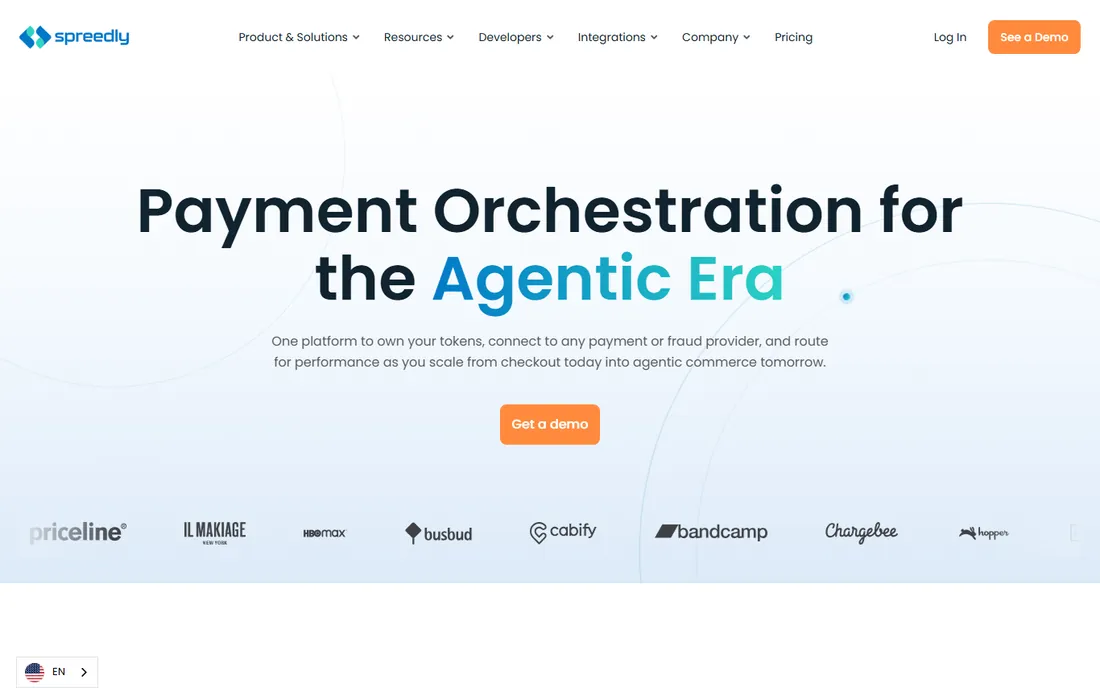
Spreedly built its name on the vault: card credentials stored independently of any processor, usable with whichever provider processes the transaction. That is the core of real orchestration. Around the vault sits connectivity to a large set of gateways plus routing, retries and fraud-provider chaining, all aimed at teams with payments engineers who treat the stack as infrastructure.
The commercial reality is enterprise-shaped. Pricing is quote-based and usage-metered, and reviewers consistently flag that costs scale with API activity, which makes load testing and automated QA expensive if you do not negotiate terms for it. Get the per-call and per-transaction schedule in writing, including what counts as a billable call. If you have the engineering team to use it, Spreedly is the deepest tool on this list. If you do not, start further down.
What we like- Independent token vault that works across providers, so stored cards survive a processor switch
- Broad gateway and fraud-provider connectivity
- Routing and retry logic built for teams that already run payments infrastructure
Watch out for- Quote-only pricing with usage-metered economics that punish heavy testing
- Implementation is a developer project, not a dashboard setup
- Smaller merchants will find the sales process heavy for their volume
#2
Primer
Best for: Merchants that want orchestration logic without building it
Visit primer.io
Starting priceSee website (custom quote)
Free planNo (no free trial advertised)
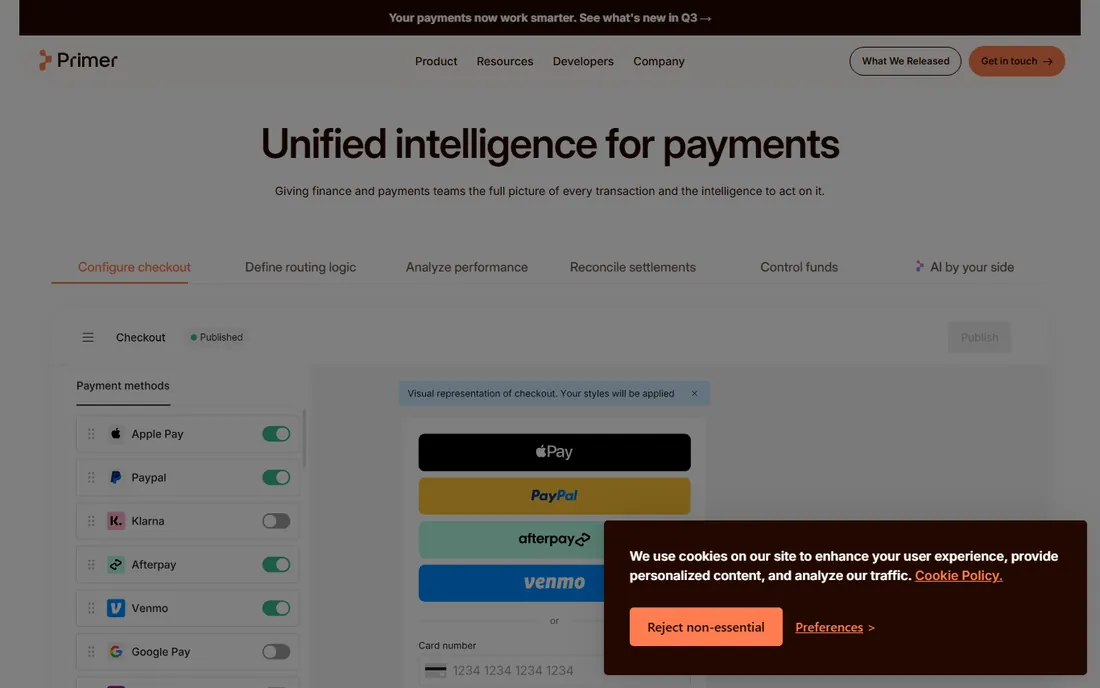
Primer takes the opposite approach from Spreedly: instead of infrastructure for engineers, it offers a control plane that payments and product teams can operate. Routing rules, fallback chains and 3DS handling are configured visually, and the checkout components keep the customer-facing side consistent while the back end switches providers. For a merchant doing serious cross-border volume without a dedicated payments engineering team, that division of labor matters.
The tradeoff is control depth. Teams with exotic requirements, like marketplace payouts with split logic or travel-specific settlement flows, may hit the edges of the visual builder. Pricing is custom, and like every vendor here, Primer prices on volume and module mix. Ask for a pricing model tied to your actual transaction mix, not a flat platform fee, and test the fallback behavior before you commit.
What we like- No-code workflow builder for routing, fallbacks and 3D Secure logic
- Unified checkout components that keep the front end consistent
- Solid coverage of payment methods and fraud tools through one integration
Watch out for- Quote-only pricing, so budget planning starts with a sales call
- The abstraction layer means less control than API-first platforms for unusual flows
- Best suited to card and wallet commerce rather than complex vertical needs
Starting priceSee website (custom quote)
Free planNo (no free trial advertised)
Few vendors admit they are built for one vertical, but CellPoint Digital does, and travel merchants are better for it. Travel payments are unusually messy: multi-currency settlement, agency and direct channels, alternative payment methods that vary by market, and fraud patterns specific to ticketing. CellPoint's orchestration layer is built for that mess rather than adapted to it.
If you are not in travel, this is probably not your shortlist. The platform's value concentrates in the vertical it knows, and the sales and implementation process assumes enterprise scale. Travel merchants, though, should evaluate it against the generalists here: a platform that already understands travel settlement and travel fraud will get you live faster than a generic layer you have to teach.
What we like- Deep specialization in travel payments, including the alternative payment methods travelers actually use
- Orchestration built around airline and OTA settlement complexity
- Strong in regions where travel merchants struggle with local methods
Watch out for- Travel-first positioning means less relevance outside that vertical
- Enterprise sales cycle with custom pricing
- Smaller merchants are not the target buyer
#4
Gr4vy
Best for: Teams that want orchestration deployed in their own cloud
Visit gr4vy.com
Starting priceSee website (custom quote)
Free planNo (no free trial advertised)
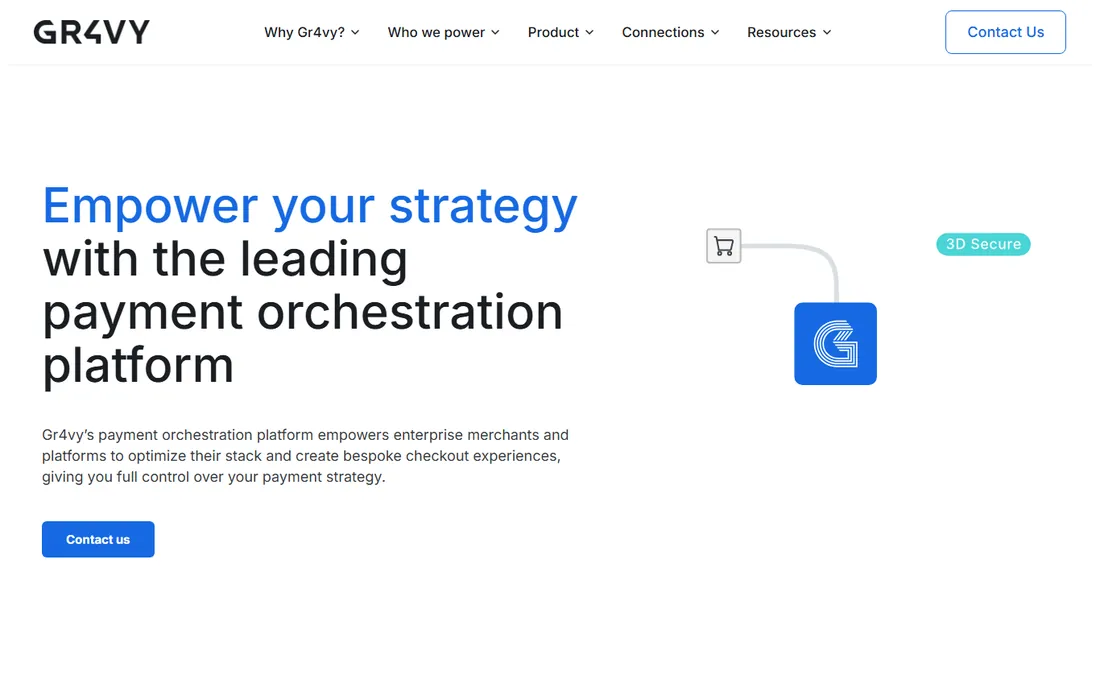
Gr4vy's differentiator is where the software runs. Instead of a shared multi-tenant service, Gr4vy deploys as cloud infrastructure in the merchant's own environment, which changes the data residency and compliance conversation. On top of that sit no-code orchestration rules: routing, cascading and 3DS handling configured without engineering tickets.
That deployment model is the reason to choose Gr4vy and also the thing to evaluate hardest. Running payments infrastructure in your own cloud brings control and audit simplicity, but it also brings operational responsibility. Ask exactly what Gr4vy manages versus what your team owns, get the connector list for your specific providers in writing, and confirm the pricing model covers your transaction volume curve, not just today's numbers.
What we like- Cloud-native deployment model that keeps payment data in your infrastructure
- No-code orchestration rules for routing and 3DS
- Modern API for teams that want both dashboard control and programmatic access
Watch out for- Quote-only pricing
- A younger vendor than Spreedly or IXOPAY, so the connector catalog is still growing
- Deployment flexibility adds architecture decisions smaller teams may not want
#5
IXOPAY
Best for: Enterprises that need the widest acquirer connectivity
Visit ixopay.com
Starting priceSee website (custom quote)
Free planNo (no free trial advertised)
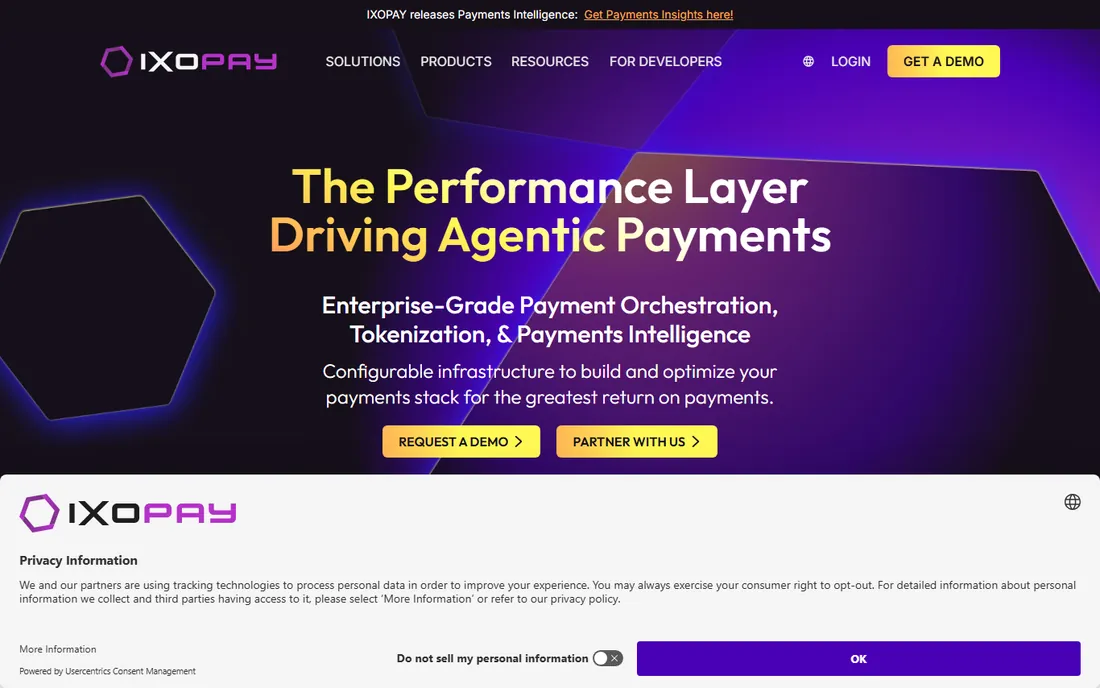
IXOPAY has been building orchestration since 2014, and the adapter catalog shows it: hundreds of pre-built connections to acquirers and payment methods, which matters when your expansion roadmap includes markets with local processors. The platform layers smart routing and automated reconciliation over that connectivity, with tokenization designed to keep credentials portable across providers.
Recent additions push toward intelligence: AI-assisted analytics over payment data to spot approval-rate problems and fee waste. The white-label program is a genuine differentiator for platforms and PSPs that want to offer orchestration under their own brand. Like every enterprise tool here, pricing is custom. The evaluation question is connector coverage for your specific markets: bring your provider list to the first call and ask which ones are pre-built versus custom.
What we like- One of the largest adapter catalogs in the category, with hundreds of pre-built connections
- Universal tokenization layer plus AI-assisted payments intelligence
- White-label options for platforms and PSPs
Watch out for- Enterprise positioning with quote-only pricing
- The breadth of the platform means longer evaluation and onboarding
- Smaller merchants will pay for scale they do not use
#6
Yuno
Best for: Global merchants expanding across many markets
Visit y.uno
Starting priceSee website (custom quote)
Free planNo (no free trial advertised)
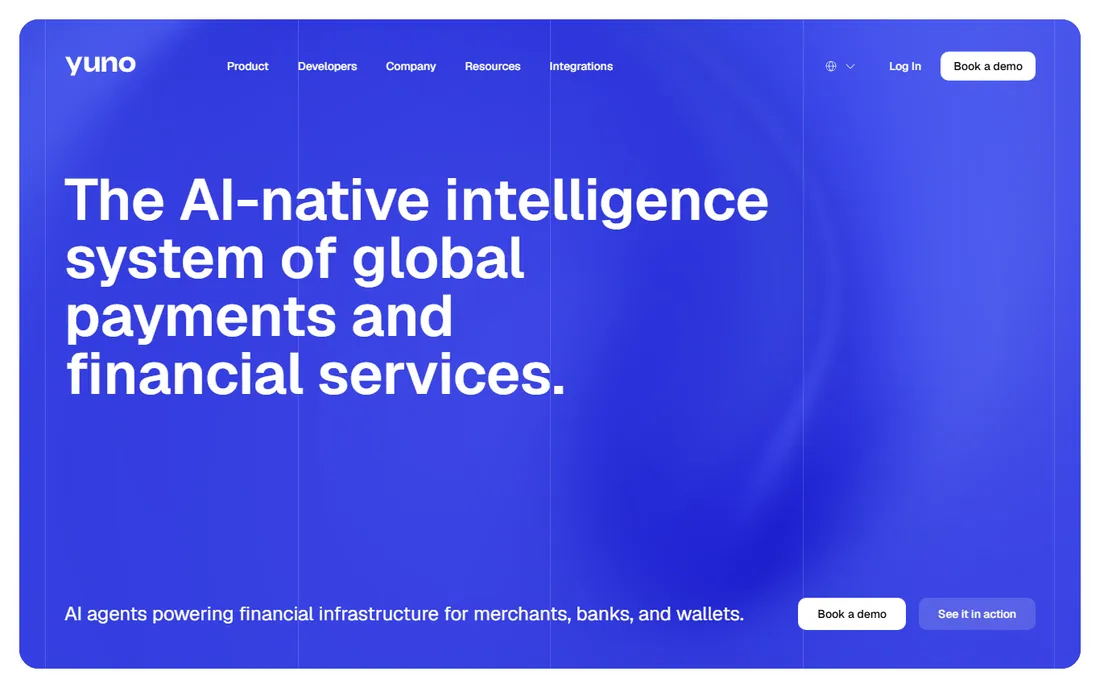
Yuno's pitch is geographic: one integration reaching a large set of payment methods across close to 200 countries, with routing that picks the provider most likely to approve each transaction. For merchants whose growth plan is market expansion, the value is time-to-launch: enabling a local payment method through a dashboard instead of a new integration project.
The AI layer, a payments concierge agent plus monitoring, aims at the operational side: explaining why approvals dip and recommending routing changes in plain language. Treat the AI claims as secondary and evaluate the routing data model itself. Ask how the performance data is collected, how quickly routing adapts to a provider outage, and what happens when you want to override the automation. Yuno fits merchants with real cross-border volume; single-market businesses will not use what makes it special.
What we like- Very wide payment method coverage aimed at cross-border commerce
- Smart routing driven by performance data rather than commercial preference
- No-code provider enablement that shortens market launches
Watch out for- Quote-only enterprise pricing
- The platform assumes meaningful volume, with its own guidance targeting tens of thousands of transactions monthly
- Support depth varies by region for newer markets
#7
Juspay
Best for: Merchants that want open-source foundations under their orchestration
Visit juspay.io
Starting priceSee website (custom quote)
Free planNo (no free trial advertised)
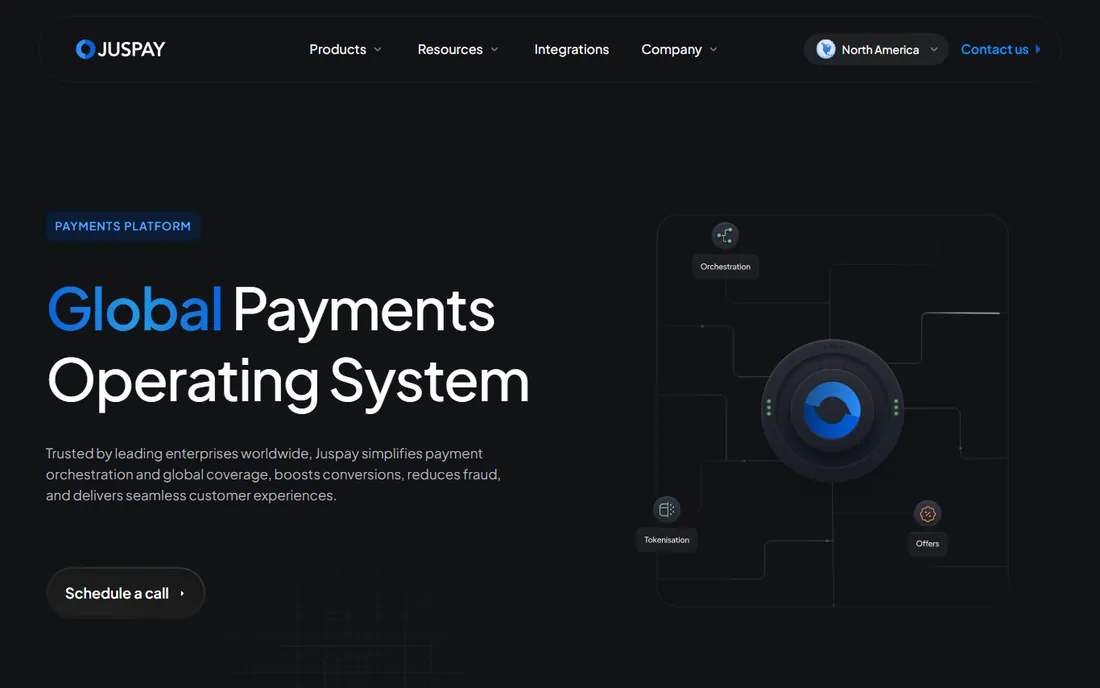
Juspay is the most interesting structural story in orchestration: its Hyperswitch platform is open source, which means the routing and orchestration logic is inspectable and forkable. For merchants burned by vendor lock-in, that is a meaningful difference from every closed platform on this list. The commercial product layers dynamic routing, network tokens, retries and checkout optimization over that foundation.
The company's history in high-volume, cost-sensitive transaction environments shows in its strengths: diverse payment methods handled at serious scale. Global expansion has broadened the PSP coverage well beyond that origin. When evaluating, clarify what the open-source version covers versus the commercial offering, and get support SLAs in writing. If lock-in risk is your main fear about orchestration, Juspay deserves the first call.
What we like- Open-source Hyperswitch core gives transparency and an exit path competitors cannot match
- Dynamic routing across a large PSP set
- Strong checkout optimization tooling alongside the orchestration layer
Watch out for- Enterprise sales motion with custom pricing
- The open-source and commercial packaging takes explanation, so get the support boundaries in writing
- Documentation depth varies across the newer modules
#8
BR-DGE
Best for: Enterprise merchants that want a vendor-neutral orchestration layer
Visit br-dge.to
Starting priceSee website (custom quote)
Free planNo (no free trial advertised)
BR-DGE, based in Edinburgh, sells independence as a feature: a vendor-agnostic orchestration layer with no acquiring or processing business that could bias routing decisions. The platform covers smart routing, tokenisation (including network tokens through its Vault product), and customisable payment flows through a single integration point.
For merchants in regulated sectors or with strict vendor-neutrality requirements, that positioning resonates. The practical evaluation is the same as for every platform here: connector coverage for your providers, routing logic transparency, and commercial terms. Ask how routing decisions are audited, what data you can export, and what happens to your tokens if you leave. Independence is a contract term, not a slogan, so read the contract.
What we like- Explicitly independent positioning with no acquiring business of its own
- Tokenisation vault product alongside the orchestration platform
- PCI Level 1 and SOC 2 compliance posture suited to regulated merchants
Watch out for- Quote-only pricing aimed at enterprise
- Connector catalog smaller than the largest competitors
- The independence pitch needs verification in contract terms, not just marketing
Start with your provider list, not the vendor's feature page. Write down every PSP, acquirer, fraud tool and payment method you use or plan to use in the next 18 months, then ask each vendor which are pre-built connectors and which need custom work. Custom connectors are where timelines and budgets die. Second, separate routing from connectivity: every platform connects providers, but routing quality depends on whose performance data drives decisions and how fast the system reacts to an outage. Ask for the routing inputs, the decision latency, and whether you can override or pin routes manually.
Third, pin down token portability. The vault is the lock-in point of every orchestration deal: if your stored credentials cannot move to another provider or platform, the independence pitch is hollow. Ask for the token export process in writing, including format, timeline and cost. Fourth, get pricing tied to your economics: per-transaction fees, platform fees, implementation costs and what counts as a billable event. Finally, run a pilot on a slice of traffic before migrating everything. Routing behavior under real decline patterns is the only test that matters, and no sales demo reproduces it.
Do you actually need orchestration?
Many merchants do not. If you process in one or two markets, with one or two providers, and your approval rates are healthy, an orchestration layer adds cost and complexity without a return. Orchestration earns its keep when you run multiple providers across multiple markets, when approval-rate differences between providers are measurable in revenue, or when processor outages have cost you real money. A useful rule: if you cannot name the revenue you lost to failed payments or downtime last year, you probably cannot justify the platform fee this year.
There is also a middle path. Some merchants get most of the benefit from a smart gateway with multi-acquirer support, or from their PSP's own routing features, without a separate orchestration contract. And if your real problem is checkout conversion rather than backend routing, the money is better spent on the front end. Orchestration is infrastructure: buy it when the infrastructure problem is real and measured, not because the category is fashionable.
How we chose
We started with the searches buyers run: payment orchestration platform, payment orchestration software and PSP orchestration. For each candidate we verified it is a live, independent orchestration layer (not a gateway or PSP with a routing feature), opened the vendor's own site to confirm the product and current positioning, and checked pricing pages where they exist. Every platform on this list prices by custom quote, so we wrote "See website" rather than repeating third-party estimates. Feature claims come from vendor documentation and product pages, cross-checked against practitioner discussion, not from hands-on testing.
Frequently asked questions
What is payment orchestration?
It is a software layer that sits between your checkout and your payment providers. Instead of integrating each PSP, acquirer and fraud tool separately, you integrate the orchestration platform once, then route transactions between providers by rule, market or performance data. The point is higher approval rates, lower costs and no single-processor dependency.
How much does payment orchestration cost?
Every major platform prices by custom quote, tied to transaction volume, connector count and modules. Expect a platform fee plus per-transaction economics, and get the full schedule (including what counts as a billable API call) in writing. Pilot pricing for a traffic slice is a reasonable ask before a full commitment.
What is the difference between orchestration and a payment gateway?
A gateway connects you to the card networks through one processing path. Orchestration connects you to many gateways, PSPs and fraud tools through one integration, then decides per transaction which path to use. If you only ever need one path, a gateway is simpler and cheaper.
How long does implementation take?
For a standard integration with pre-built connectors, teams typically go live in weeks; custom connectors, data migration and vault token migration extend that to months. The longest pole is usually token migration: moving stored credentials into the new vault without asking customers to re-enter cards. Ask for the migration plan and timeline before signing.
Can I switch orchestration providers later?
Yes, but the cost depends on token portability and contract terms. If your tokens export cleanly and your routing rules are documented, migration is a project, not a crisis. If tokens are locked in, switching means re-collecting payment credentials. Settle the export process before you sign the first contract, not when you want to leave.
Sources we checked (10)
- https://spreedly.com/
- https://primer.io/
- https://cellpointdigital.com/
- https://gr4vy.com/
- https://ixopay.com/
- https://y.uno/
- https://juspay.io
- https://br-dge.to/
- https://www.g2.com/categories/payment-processing
- https://www.capterra.com/payment-gateway-software/
Is your product missing or out of date?
We review this list regularly. Vendors can request a listing, send updated pricing or ask about featured placement.

Shihab Mia · Founder, Rankite
Shihab has spent more than a decade helping SaaS and e-commerce brands grow through search. He writes Rankite's software buying guides from pricing pages, documentation and public user reviews. More about Shihab.