How we make this list: we compare pricing pages, product documentation and public user reviews. Rankite is independent; if a vendor ever pays for a featured spot, that listing is clearly labeled Partner.
Key takeaways
- App developers who need geofences inside their own product should start with Radar or Bluedot: both are SDK-first platforms built for in-app location triggers.
- Marketers buying audiences and foot-traffic attribution rather than building tech should look at GroundTruth, Foursquare or Cuebiq, which sell data and managed media.
- Airship fits brands that want geofencing as one trigger inside a broader mobile messaging program, not a standalone location stack.
- Every vendor here prices by custom quote. Expect the conversation to start with monthly active users, API volume or media spend.
Quick comparison
| Tool | Best for | Starting price | Free plan |
|---|
 Radar Radar | Product teams embedding geofencing, maps and location APIs in their apps | See website (custom quote) | No |
 Bluedot Bluedot | QSR, retail and hospitality brands needing precise arrival detection | See website (custom quote) | No |
 Airship Airship | Brands running geofencing as part of cross-channel mobile messaging | See website (custom quote) | No |
 GroundTruth GroundTruth | Advertisers wanting location-targeted campaigns tied to store visits | See website (custom quote) | No |
 Unacast Unacast | Analysts and marketers needing location data and foot-traffic insights | See website (custom quote) | No |
 Foursquare Foursquare | Teams needing POI data, location audiences and proximity targeting | See website (custom quote) | No |
 Cuebiq Cuebiq | Brands and agencies needing privacy-safe footfall measurement | See website (custom quote) | No |
Is your product missing or out of date?
We review this list regularly. Vendors can request a listing, send updated pricing or ask about featured placement.
Picture a coffee chain that wants the kitchen to start a mobile order the moment a customer turns into the parking lot, not when they tap "I'm here." That is a geofencing problem, and the difference between a five-meter trigger and a hundred-meter trigger is the difference between hot coffee and a refund. These seven platforms cover the two sides of the market: the SDKs developers embed in apps, and the data and media platforms marketers buy.
#1
Radar
Best for: Product teams embedding geofencing, maps and location APIs in their apps
Visit radar.com
Starting priceSee website (custom quote)
Free planNo
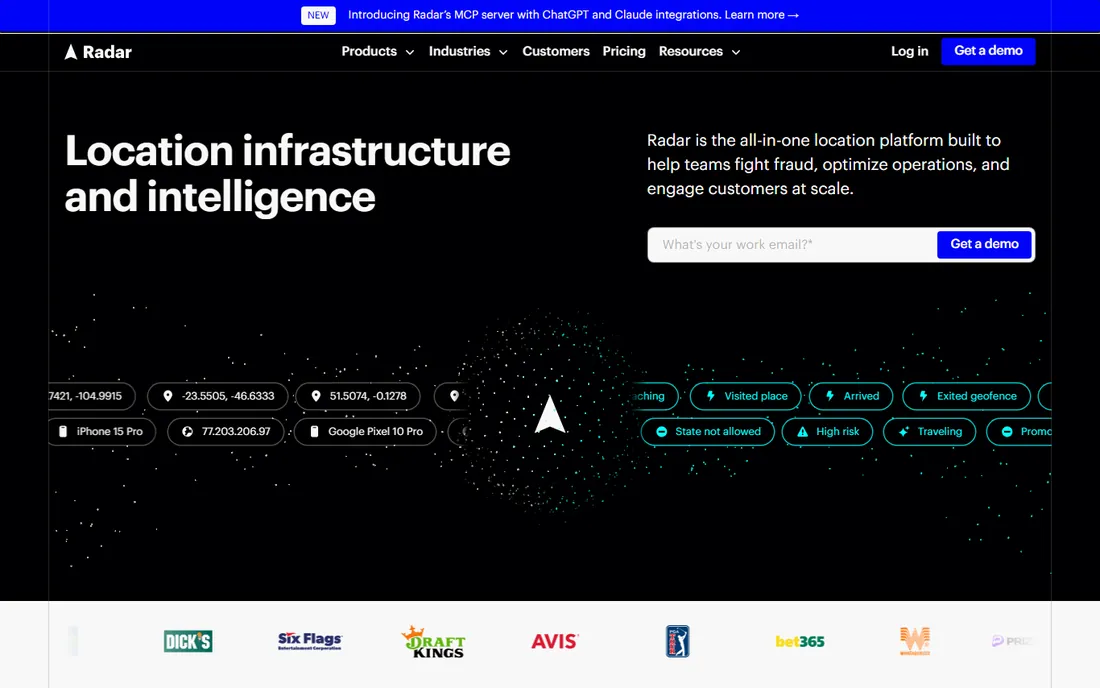
Radar is the developer default for in-app geofencing. Instead of stitching together a geofence SDK, a maps provider and a fraud tool, teams get one platform with SDKs and APIs for geofencing, maps, geocoding, search and routing, plus location verification for fraud use cases. The company reports a billion API calls a day across hundreds of millions of devices, which matters because geofencing accuracy and battery efficiency only prove out at scale.
The honest catch is the commercial model. Radar sells to product and engineering teams at companies with real traffic, and pricing follows API volume. A prototype is cheap to start; a national retail app with millions of monthly users is an enterprise contract. Talk to them when you have a defined use case and rough volume numbers, not before.
What we like- All-in-one location stack (geofencing, maps, geocoding, routing) from one vendor
- Developer-friendly SDKs with fast integration
- Fraud prevention and compliance tooling built in
Watch out for- Enterprise positioning means smaller teams go through sales
- Pricing scales with API volume, so high-traffic apps should model costs early
#2
Bluedot
Best for: QSR, retail and hospitality brands needing precise arrival detection
Visit bluedot.io
Starting priceSee website (custom quote)
Free planNo
Bluedot lives in one demanding niche: knowing exactly when a customer arrives. Its geofencing claims roughly 20x the accuracy of typical solutions, which is what makes order-ahead drive-thru sequencing and curbside pickup actually work instead of approximately work. The platform also powers location-based messaging and automated loyalty triggers, all segmented per app install with GDPR compliance stated up front.
The trade-off is breadth. Bluedot does arrival detection and location-triggered engagement very well, but it is not a maps API or a fraud platform. If your use case is specifically pickup, drive-thru or visit detection, that focus is a strength. If you need a general location stack, look at Radar instead.
What we like- Accuracy down to about five meters, far tighter than typical 100-200 meter geofences
- Purpose-built for drive-thru, curbside and pickup flows
- Privacy-forward positioning with no location data sales
Watch out for- Narrower use-case focus than full location platforms
- Custom pricing with no self-serve tier
#3
Airship
Best for: Brands running geofencing as part of cross-channel mobile messaging
Visit airship.com
Starting priceSee website (custom quote)
Free planNo
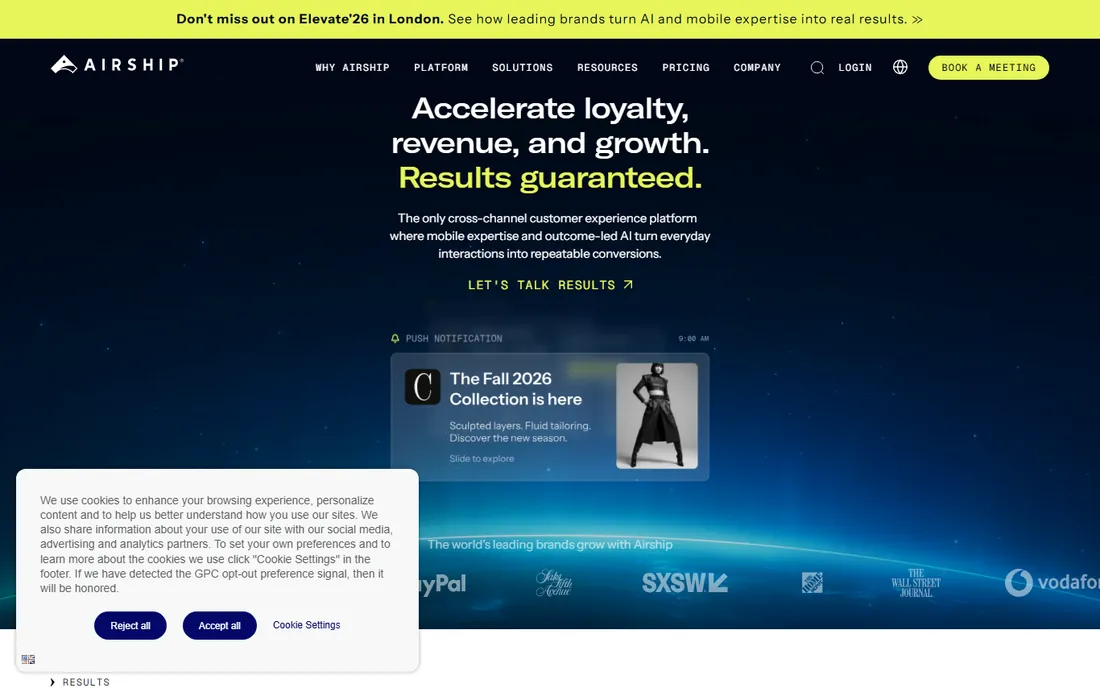
Airship, formerly Urban Airship, approaches geofencing from the messaging side. Location is one trigger among many inside a cross-channel customer experience platform: a customer entering a geofence can kick off a push notification, an in-app message or a wallet pass update, orchestrated alongside the rest of the journey. For brands already running mobile messaging on Airship, adding location triggers is natural.
Buy it for that reason, not as a pure geofencing SDK. Teams that need raw geofence infrastructure for their own apps will find Radar or Bluedot more direct. Airship's pricing covers the whole platform, so the geofencing use case alone rarely justifies the contract.
What we like- Geofence triggers inside a mature push, SMS, email and wallet platform
- AI agents for campaign building and optimization
- Long enterprise track record with major retail brands
Watch out for- Geofencing is a feature of a messaging suite, not a standalone location platform
- Pricing reflects the full customer experience platform
#4
GroundTruth
Best for: Advertisers wanting location-targeted campaigns tied to store visits
Visit groundtruth.com
Starting priceSee website (custom quote)
Free planNo
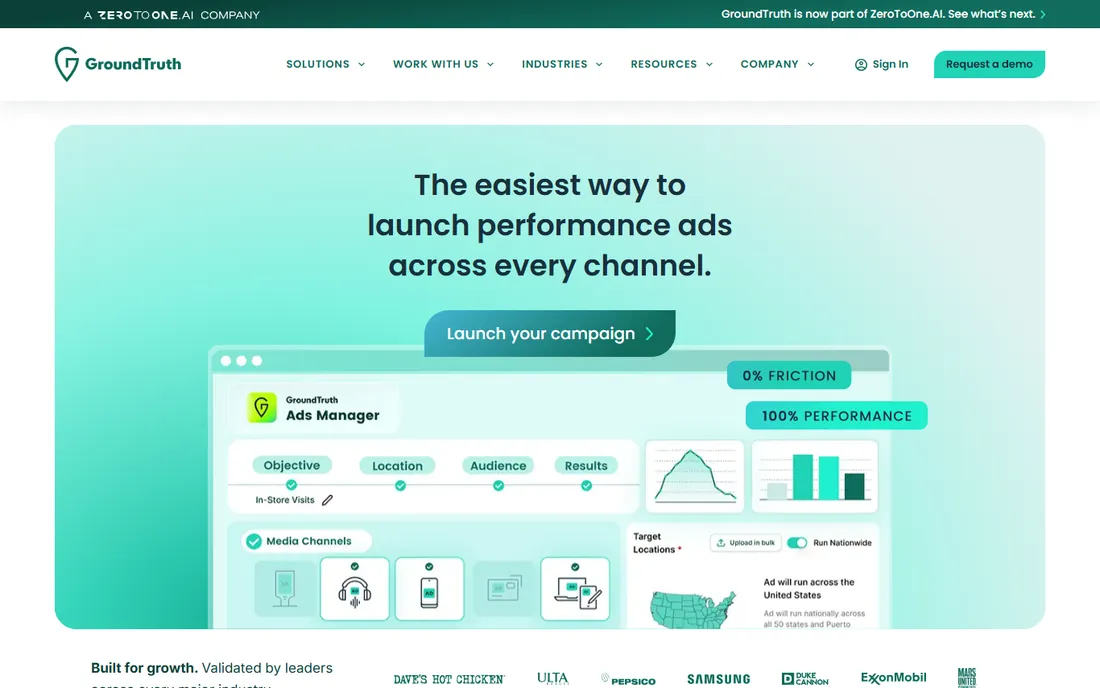
GroundTruth sits on the media side of geofencing. Instead of selling SDKs, it sells outcomes: location-targeted ad campaigns across channels, with visit attribution that connects exposure to actual store visits. The pitch is performance marketing for physical retail, where the geofence defines the audience and the store visit defines the conversion.
This is the right shape when the goal is driving foot traffic rather than building product features. It is the wrong shape when your developers need geofence events inside your own app. Expect a media-style buying process with minimums that suit national and regional advertisers more than single-location shops.
What we like- Managed media plus self-serve options for location campaigns
- Visit attribution connects ad exposure to foot traffic
- Large brand client base
Watch out for- It is an advertising platform first, not a developer SDK
- Results depend on campaign scale
#5
Unacast
Best for: Analysts and marketers needing location data and foot-traffic insights
Visit unacast.com
Starting priceSee website (custom quote)
Free planNo
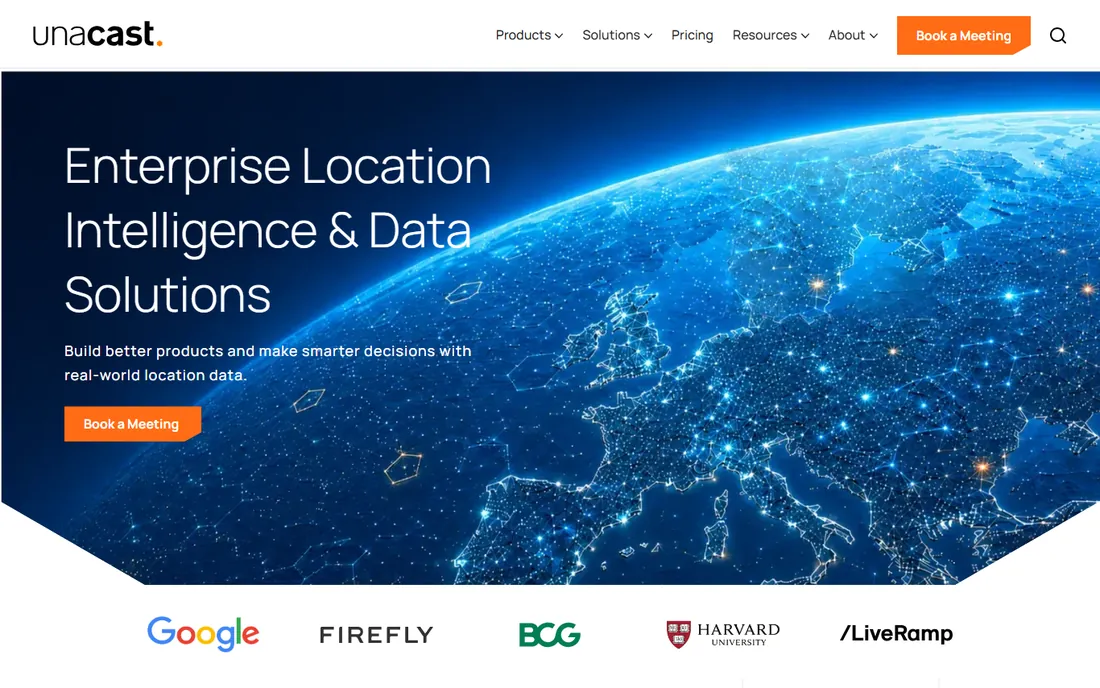
Unacast sells the raw material the rest of the industry runs on: location data. Its products cover human mobility insights, foot-traffic data for commercial points of interest, and consumer data enrichment, delivered to analytics teams, advertisers and researchers. If your question is "where do our customers actually go" rather than "how do we trigger a push notification," this is the vendor.
The honest catch is that data is not a solution. Unacast assumes you have analysts, a CDP or a media partner to activate it. Smaller marketing teams without that layer will get more from a managed platform like GroundTruth. Price is custom and data licensing is an annual conversation.
What we like- Deep location datasets covering mobility, foot traffic and trade areas
- Strong privacy and compliance posture
- Flexible data delivery for analytics teams
Watch out for- Data provider, not a campaign or SDK platform
- Requires in-house analytics capability to get full value
#6
Foursquare
Best for: Teams needing POI data, location audiences and proximity targeting
Visit foursquare.com
Starting priceSee website (custom quote)
Free planNo
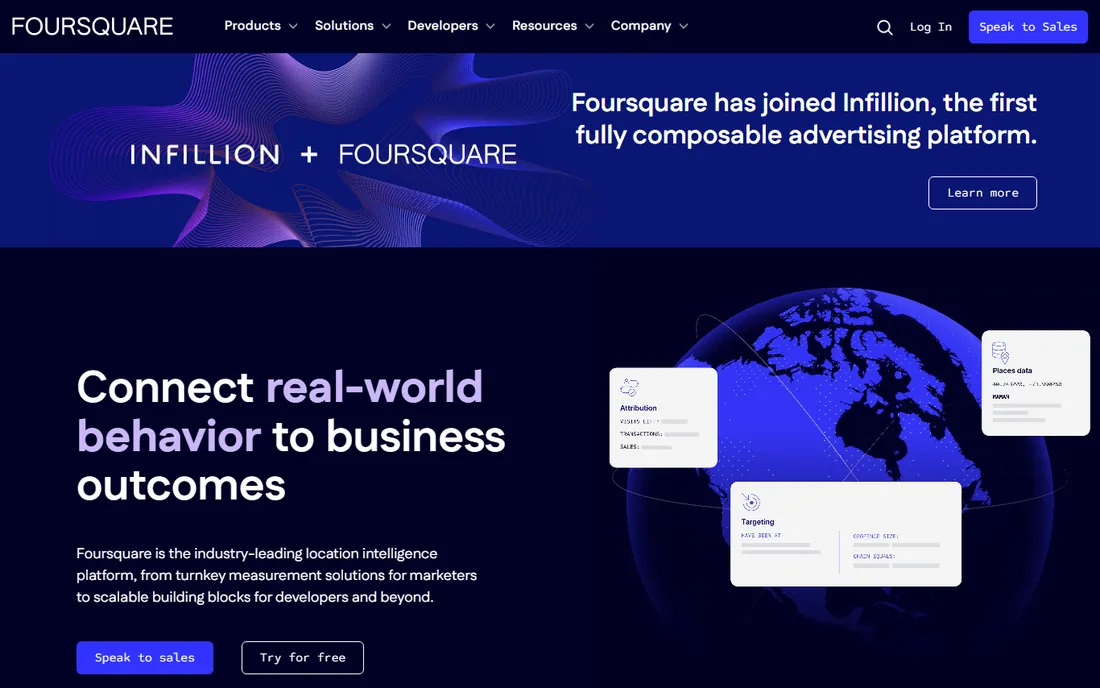
Foursquare's consumer app past became an enterprise data business: a massive point-of-interest database, a Movement SDK for in-app location, and audience and attribution products for marketers. The Proximity product builds geofences from real-time movement, and the Places API gives developers venue data without building their own POI graph.
One thing to diligence: Foursquare has joined Infillion, the composable advertising platform. The location products continue, but longer contracts should confirm roadmap commitments. For pure geofence SDK work, Radar is usually simpler; Foursquare wins when POI data quality and audience scale matter most.
What we like- Enormous POI database (100M+ places) from years of check-in data
- Movement SDK and Places API for developers
- Strong attribution and audience products
Watch out for- Joined Infillion, so confirm product direction in longer contracts
- Enterprise sales motion
#7
Cuebiq
Best for: Brands and agencies needing privacy-safe footfall measurement
Visit cuebiq.com
Starting priceSee website (custom quote)
Free planNo
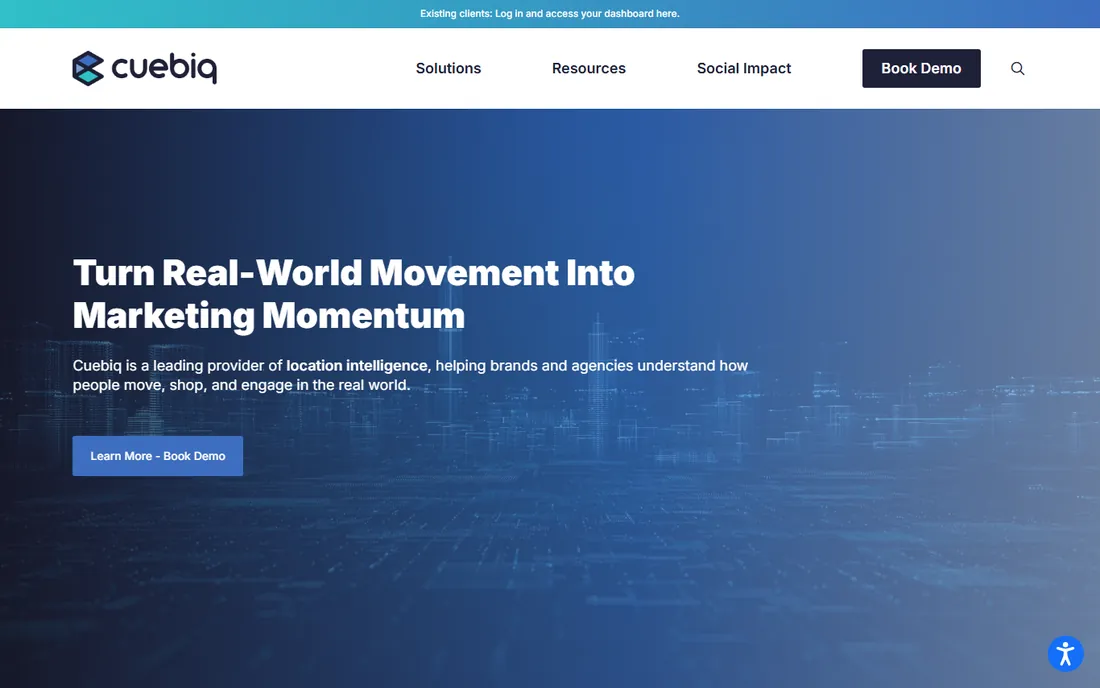
Cuebiq occupies the measurement corner of the market: footfall measurement, offline attribution and location intelligence, sold with an explicit privacy and compliance emphasis. For brands in regulated industries or agencies that need defensible methodology for client reporting, that positioning is the point.
Like Unacast, it is not a campaign platform or an SDK, so pair it with media or product tooling. It suits measurement-led buyers who already have activation covered and want trustworthy visit data underneath it.
What we like- Footfall measurement and offline attribution with a strong privacy posture
- Clean data positioning for regulated industries
- Agency-friendly
Watch out for- Measurement focus means it will not run your campaigns or build your app features
- Smaller vendor than Foursquare or GroundTruth
What to look for before you buy
Geofencing purchases fail on three specifics, so check them before signing. First, accuracy at your use case: a 100-meter geofence is fine for a "welcome to the mall" message and useless for curbside pickup sequencing. Ask vendors for accuracy figures at the venue types you care about, and run a live pilot at real locations before committing.
Second, battery and OS behavior. Geofencing lives or dies on the phone's operating system, and iOS and Android background location rules change regularly. Ask how the SDK handles background operation, what the battery impact is, and how the vendor adapted to the latest OS location permission changes. A vendor that cannot answer precisely has not done the work.
Third, the data question. Some vendors collect location data from your app's users into their own graphs; others process on-device or per-install. Get the data flow in writing: what is collected, where it is stored, whether it is sold or shared, and how consent is handled. This is both a privacy compliance issue and a competitive one. Finally, note that this market consolidates: older names disappear (PlotProjects' domain now serves an unrelated gambling site), so favor vendors with live products and current customer proof over legacy brand recognition.
How we chose
We started with the searches buyers run: geofencing platforms, geofencing SDK and location-based marketing platforms. For each candidate we opened the vendor's homepage to confirm the product exists and fits the category, checked public reviews and documentation, and compared feature scope and buyer fit. One formerly well-known vendor, PlotProjects, was excluded because its domain no longer serves the company. Where vendors publish no prices, we wrote "See website" rather than guessing.
The category splits cleanly in two, and buying the wrong half wastes quarters. SDK platforms (Radar, Bluedot, and to an extent Airship and Foursquare's Movement SDK) go inside your app: your developers integrate them, and geofence events trigger your product logic. Buy these when the geofence is a product feature, like arrival detection or location-based content.
Data and media platforms (GroundTruth, Unacast, Cuebiq, Foursquare's audience business) never touch your app: they sell location data, audiences or managed campaigns measured by foot traffic. Buy these when the geofence is a marketing tactic, like conquesting a competitor's parking lot or proving a campaign drove visits.
The hybrid buyers, usually retailers with both an app and a media budget, often end up with one of each: an SDK for the app experience and a data or media partner for acquisition. That is normal. What is not normal is paying enterprise SDK prices when you needed a media campaign, or vice versa. Name the job before you shortlist.
Frequently asked questions
What is a geofencing platform?
Software that defines virtual boundaries around real-world locations and triggers actions when devices cross them: a push notification, an ad impression, a kitchen ticket or an analytics event. Platforms either provide SDKs for your app or sell location data and media built on geofences.
How much do geofencing platforms cost?
All the vendors here price by custom quote, typically tied to monthly active users, API call volume or media spend. Small pilots can start in the low thousands per year; national deployments run into six figures. Get the volume tiers in writing before you compare.
How accurate is geofencing?
Typical geofences resolve to about 100-200 meters, which suits marketing use cases. High-accuracy vendors like Bluedot claim accuracy down to about five meters for arrival detection. Accuracy depends on GPS, Wi-Fi, the venue environment and phone OS behavior, so pilot at your real locations.
Do I need an app to use geofencing?
For SDK-based geofencing, yes: the geofence lives in your app. For location-based advertising, no: platforms like GroundTruth or Foursquare can target users near a location without you owning an app, using their own data and media networks.
What happened to PlotProjects?
PlotProjects was an early geofencing SDK vendor whose domain no longer serves the company; the domain now hosts an unrelated site. It is a reminder to verify that any location vendor you evaluate is still operating before signing.
Is geofencing legal under privacy laws?
Yes, with proper consent and data handling. Both iOS and Android require user permission for location access, and regulations like GDPR and state privacy laws apply to storing location data. Ask vendors exactly what they collect, where it is stored and whether it is shared or sold, and get it in writing.
Sources we checked (8)
- https://radar.com
- https://bluedot.io
- https://airship.com/
- https://www.groundtruth.com
- https://unacast.com/
- https://www.foursquare.com
- https://cuebiq.com/
- https://www.g2.com/categories/geofencing
Is your product missing or out of date?
We review this list regularly. Vendors can request a listing, send updated pricing or ask about featured placement.

Shihab Mia · Founder, Rankite
Shihab has spent more than a decade helping SaaS and e-commerce brands grow through search. He writes Rankite's software buying guides from pricing pages, documentation and public user reviews. More about Shihab.