How we make this list: we compare pricing pages, product documentation and public user reviews. Rankite is independent; if a vendor ever pays for a featured spot, that listing is clearly labeled Partner.
Key takeaways
- Enterprise teams that want the full funnel in one contract should shortlist Radancy, Phenom and Symphony Talent: all three bundle career sites, CRM, programmatic media and analytics.
- Sourcing-heavy teams that live in outbound will get more from Gem or Beamery, which are built around talent CRM and pipeline building rather than media buying.
- If your problem is specifically wasted job-ad spend, start with a programmatic specialist: Appcast, Joveo or PandoLogic (now Veritone Hire) optimize spend across job boards automatically.
- None of these vendors publish prices. Every quote is custom, so budget for a sales process and ask for the full module list before comparing.
Quick comparison
| Tool | Best for | Starting price | Free plan |
|---|
 Radancy Radancy | Global employers that want career sites, CRM, programmatic media and analytics on one platform | See website (custom quote) | No |
 Phenom Phenom | Enterprises that want one AI layer across hiring, development and retention | See website (custom quote) | No |
 Symphony Talent Symphony Talent | Employers that want creative services bundled with the technology | See website (custom quote) | No |
 Beamery Beamery | Companies building skills-based hiring and internal mobility | See website (custom quote) | No |
 Gem Gem | Recruiting teams that source proactively and run multi-touch outreach | See website (custom quote) | No |
 Appcast Appcast | Employers that want job-ad spend managed against hiring outcomes | See website (performance-based pricing) | No |
 Joveo Joveo | Teams wanting AI-driven programmatic advertising plus campaign creative | See website (custom quote) | No |
 PandoLogic PandoLogic | High-volume employers running programmatic recruitment at scale | See website (custom quote) | No |
Is your product missing or out of date?
We review this list regularly. Vendors can request a listing, send updated pricing or ask about featured placement.
Your careers page gets traffic, your job ads get clicks, and somehow the pipeline still runs dry every quarter. That gap between attention and applicants is what recruitment marketing platforms exist to close. They combine the pieces most teams buy separately: the employer brand and career site, the CRM that keeps silver-medalist candidates warm, and the programmatic engine that puts budget behind the roles that need it.
These eight platforms cover the real market, from full talent acquisition clouds to specialists that do one thing, job-ad optimization, better than anyone else.
#1
Radancy
Best for: Global employers that want career sites, CRM, programmatic media and analytics on one platform
Visit radancy.com
Starting priceSee website (custom quote)
Free planNo
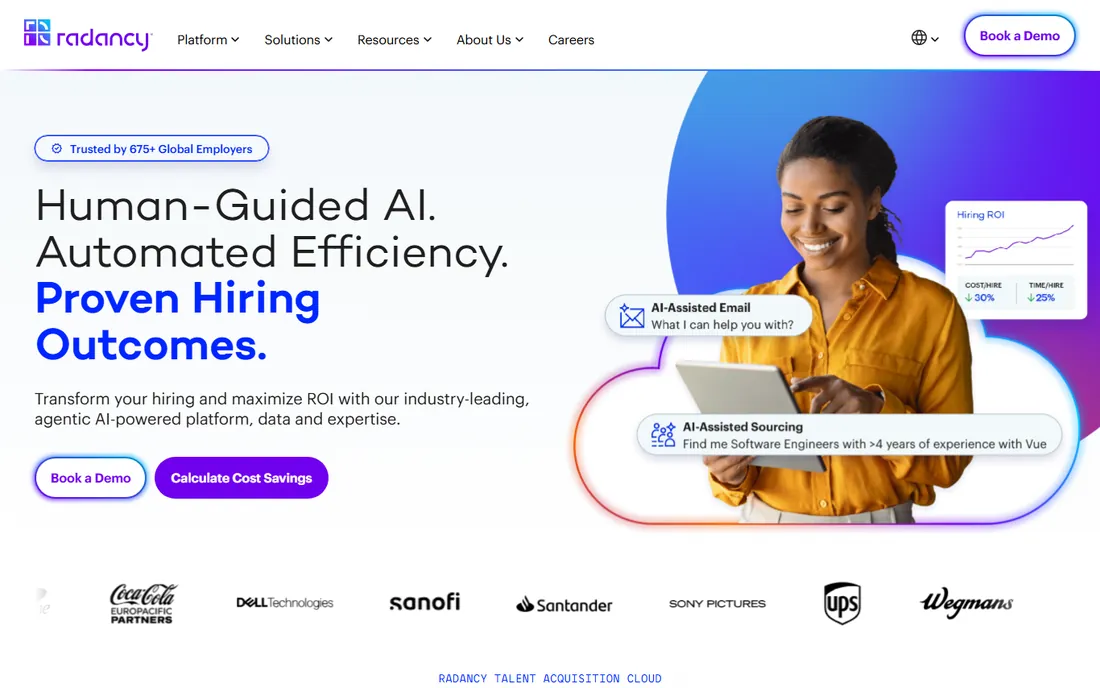
Radancy, formerly TMP Worldwide, is the closest thing this category has to a default enterprise pick. The Talent Acquisition Cloud folds employer branding, programmatic job advertising, career sites, CRM and analytics into one system, and the 2025 agentic AI additions handle screening, scheduling and workflow orchestration on top. Acquisitions of Ascendify (CRM), Brazen (hiring events) and Firstbird (referrals) filled out the suite, so fewer point tools are needed around it.
The honest catch is the buying motion. This is a platform sale with a platform timeline: scoping, creative services onboarding and integrations take months, not weeks, and every price is negotiated. Mid-market teams should confirm which modules are actually included in their quote, because the full cloud is more than most companies under 1,000 employees need.
What we like- Unified Talent Acquisition Cloud covering brand, media, career sites and CRM
- Agentic AI layer for screening, scheduling and insights
- Deep analytics tying spend to hires
Watch out for- Enterprise-grade scope means enterprise-grade contracts and implementation timelines
- Pricing is fully custom with no public starting point
#2
Phenom
Best for: Enterprises that want one AI layer across hiring, development and retention
Visit phenom.com
Starting priceSee website (custom quote)
Free planNo
Phenom pitches itself as applied AI for the whole talent lifecycle, and the recruitment marketing pieces are strong: AI-powered career sites, Talent CRM with fit-scoring and rediscovery, conversational agents for screening and scheduling, and internal mobility. The company reports hundreds of organizations using its X+ generative AI features across more than a hundred use cases, which at least signals real deployment depth rather than slideware.
The trade-off is scope. Phenom wants to be the system of record for hiring, development and retention, so a team shopping narrowly for recruitment marketing buys into a bigger vision than it asked for. Implementation is an enterprise project. Ask for the recruitment-marketing-only scope in writing if that is all you need.
What we like- Phenom X+ brings generative and agentic AI across CRM, career sites and scheduling
- Strong fit-scoring and talent rediscovery
- Broad industry coverage from healthcare to retail
Watch out for- The platform's breadth can overwhelm teams that only need recruitment marketing
- Custom pricing with no public tiers
Starting priceSee website (custom quote)
Free planNo
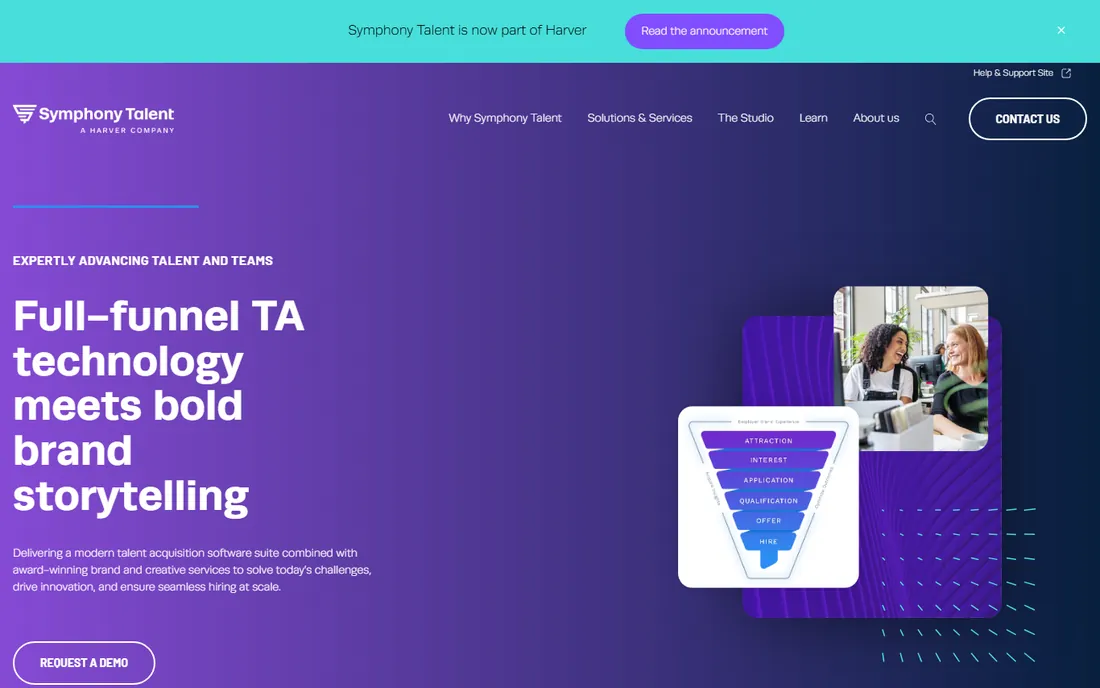
Symphony Talent's differentiator is the bundle of technology and creative services. The SFX Solution Suite handles the funnel (brand activation, programmatic media, career sites, CRM, assessments, analytics) while The Studio, its in-house agency, produces the employer brand campaigns that run on it. For companies where the career site and brand creative are the bottleneck, having both under one roof removes the usual agency-vendor friction. The SmashFly heritage shows in the CRM, which remains one of the stronger talent relationship tools here.
The catch is the same as the pitch: the value proposition assumes you want both the tech and the creative. Teams with an internal brand team or an existing agency may pay for services they will not use. Pricing is custom, and the full-funnel analytics pitch only pays off if you actually run the full funnel on the platform.
What we like- SFX suite covers CRM, programmatic media, career sites, assessments and analytics
- In-house creative agency (The Studio) for employer brand work
- Strong in high-volume hiring
Watch out for- Best value comes from buying the full suite, which not every team needs
- Custom pricing only
#4
Beamery
Best for: Companies building skills-based hiring and internal mobility
Visit beamery.com
Starting priceSee website (custom quote)
Free planNo
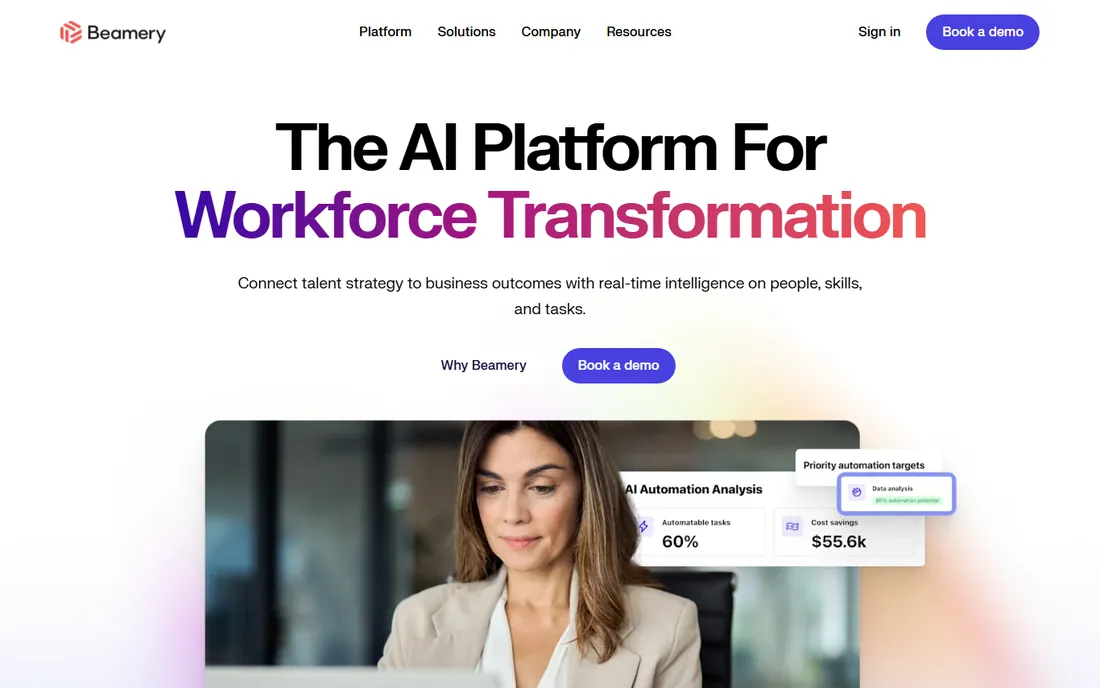
Beamery sits slightly apart from the pure recruitment marketing crowd: it is a talent CRM and workforce intelligence platform first. The pitch is skills-based hiring, where candidate and employee profiles are organized around verified skills, feeding sourcing, internal mobility and workforce planning. Integrations with Workday and SAP matter here, since Beamery is designed to sit alongside the HCM system rather than replace it.
For recruitment marketing specifically, that means Beamery covers the CRM and talent pool side well but does not buy your job ads for you. Most buyers pair it with a programmatic partner. It is also unapologetically enterprise: expect a consultative sale, a substantial annual contract, and no self-serve option.
What we like- Talent CRM built around skills data rather than requisitions
- Strong Workday and SAP ecosystem integrations
- Ethical AI positioning with governance controls
Watch out for- More talent-intelligence platform than media buyer, so pair it with a programmatic tool for ad spend
- Enterprise pricing with no public figures
#5
Gem
Best for: Recruiting teams that source proactively and run multi-touch outreach
Visit gem.com
Starting priceSee website (custom quote)
Free planNo
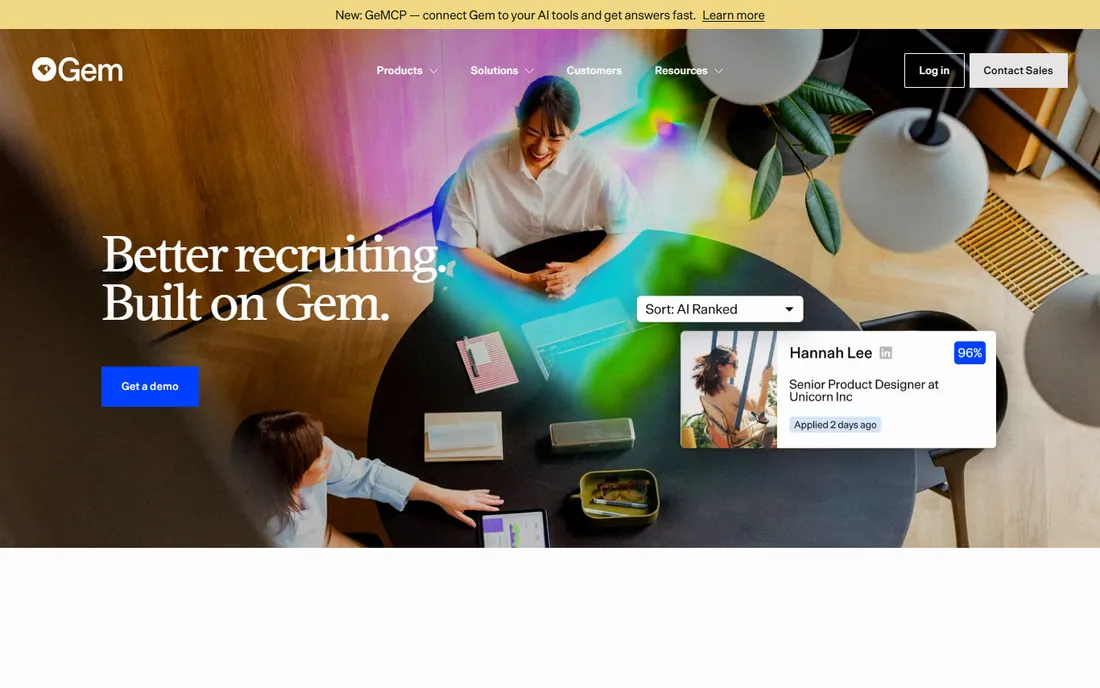
Gem is the tool for teams that hire through outbound. It started as a sourcing CRM and grew into a fuller platform with applicant tracking, interview scheduling and analytics, but the heart is still the same: find candidates, run multi-channel sequences, and keep every prospect in a searchable pipeline. The 1-click sourcing from dozens of sites and unlimited email finding are the concrete reasons sourcing teams pick it over a generic CRM.
The limitation is on the inbound side. Gem will not build your employer brand or run your career site content strategy; it assumes candidates exist to be found. Pricing is entirely custom, and the pricing page lists product tiers without numbers, so every deal goes through sales. It fits tech and professional hiring teams far better than high-volume hourly.
What we like- Sourcing CRM with sequences, 1-click sourcing from 20+ sites and unlimited email finding
- Strong ATS integrations
- Talent rediscovery and pipeline analytics
Watch out for- No published pricing at all
- Centered on outbound sourcing, so inbound career-site and brand features are thinner
#6
Appcast
Best for: Employers that want job-ad spend managed against hiring outcomes
Visit appcast.io
Starting priceSee website (performance-based pricing)
Free planNo
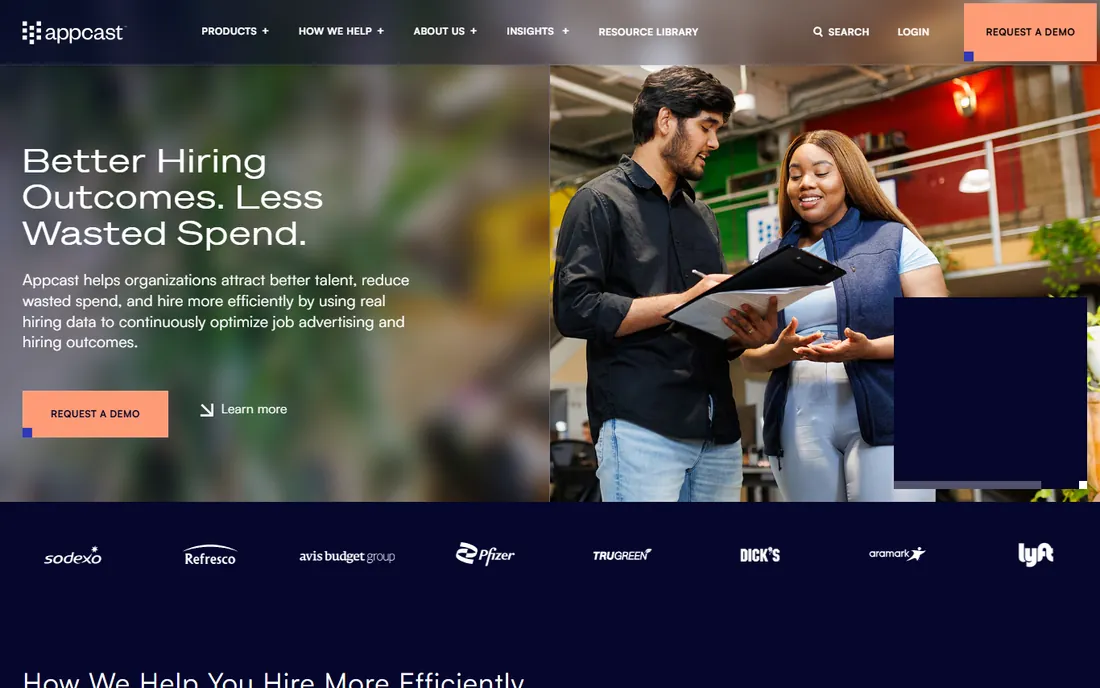
Appcast answers a narrower question than the suites above: where should the next job-ad dollar go? Its programmatic platform distributes spend across job boards and automatically shifts budget toward the roles and channels producing quality applicants, measured against ATS outcomes rather than clicks. For employers already spending five or six figures a year on job ads, that reallocation is usually worth more than another dashboard.
What it does not do is the rest of recruitment marketing. There is no talent CRM here and no career site CMS; Appcast assumes you have somewhere to send the candidates it finds. Pricing is performance-based, so model it against your current cost-per-applicant before signing.
What we like- Programmatic engine allocates budget to the roles and channels that produce hires
- Full-funnel analytics from click to ATS outcome
- Managed service option with recruitment marketing experts
Watch out for- It is a media optimization platform, not a CRM or career site builder
- Performance pricing means costs scale with volume
#7
Joveo
Best for: Teams wanting AI-driven programmatic advertising plus campaign creative
Visit joveo.com
Starting priceSee website (custom quote)
Free planNo
Joveo has grown from a programmatic job-advertising tool into a broader AI hiring platform, adding AI-built career sites, landing pages, talent campaigns and analytics around the media core. The practical appeal is the combination: the same system that buys the media also builds the landing pages candidates arrive on, which tightens the loop between spend and conversion.
The honest caveat is maturity of the broader platform story. The programmatic engine is proven; the newer AI career-site and chatbot layers have less public proof. Pricing is custom. It suits mid-market to enterprise teams that like the programmatic approach but want more than a pure media bidder.
What we like- Programmatic job advertising with AI bid and budget management
- AI-generated career sites and landing pages
- Unified analytics across channels
Watch out for- Newer full-platform positioning means less analyst track record than Radancy or Phenom
- Custom pricing
#8
PandoLogic
Best for: High-volume employers running programmatic recruitment at scale
Visit pandologic.com
Starting priceSee website (custom quote)
Free planNo
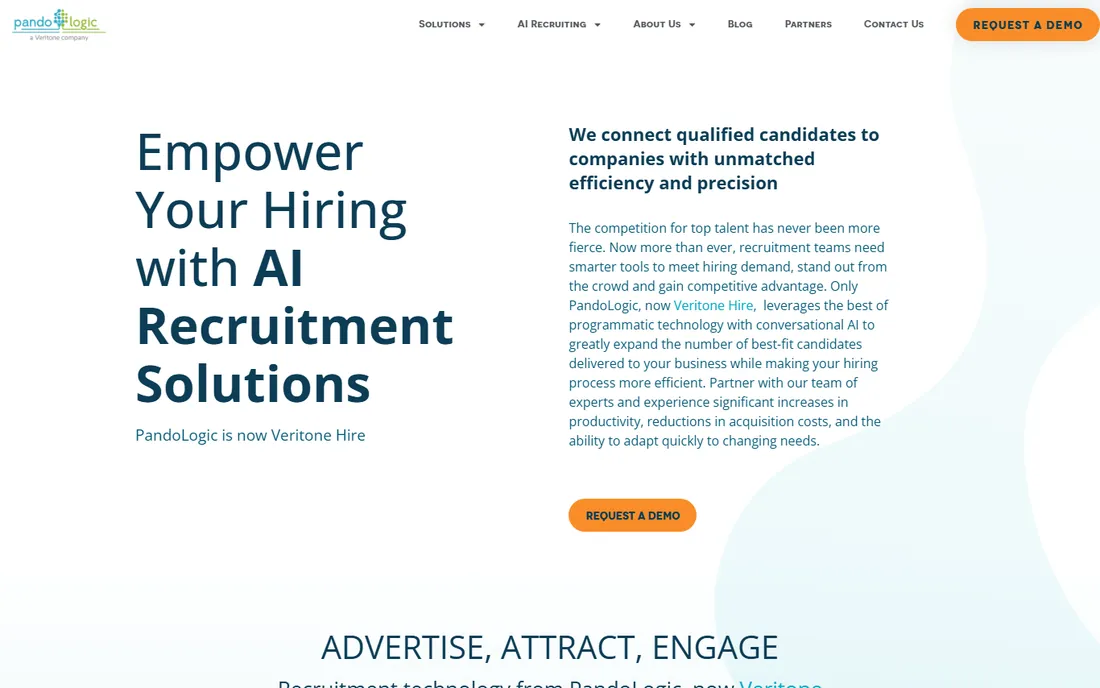
PandoLogic, now operating as Veritone Hire, is one of the pioneers of programmatic recruitment, with its pandoIQ platform automating job-ad placement across thousands of sites since the late 2000s. The pitch is efficiency at scale: algorithms continuously reallocate budget, and conversational AI handles candidate communication and qualification.
The acquisition is the thing to diligence. Veritone bought PandoLogic and folded it into Veritone Hire; the pandologic.com site still serves the product, but buyers should get roadmap commitments in writing rather than assuming the standalone product continues unchanged. Pricing is custom. It remains a strong pick for high-volume hourly and frontline hiring where programmatic scale matters most.
What we like- PandoIQ platform with a long programmatic track record
- Large job-site network
- Conversational AI for candidate communication
Watch out for- Acquired by Veritone and rebranded as Veritone Hire, so confirm the product roadmap in your contract
- No public pricing
How we chose
We started with the searches buyers actually run: recruitment marketing platforms, talent acquisition software and programmatic job advertising. For each candidate we opened the vendor's homepage to confirm the product exists and fits the category, checked pricing pages and public reviews on G2 and Capterra, and compared feature scope, integrations and company-size fit. Where a vendor publishes no prices, which is most of this category, we wrote "See website" rather than repeating third-party estimates.
What to verify before you sign
Recruitment marketing contracts are where the surprises live, so diligence matters more here than in categories with published prices. First, get the module list in writing: suites like Radancy, Phenom and Symphony Talent sell bundles, and the price you are quoted may cover only part of the cloud. Ask exactly which products are included, and what a second module costs.
Second, pin down the commercial model. Programmatic tools (Appcast, Joveo, PandoLogic) price on media spend or performance, which means your cost moves with your hiring volume; model a high-hiring quarter, not an average one. CRM-centric tools (Beamery, Gem) price per seat or per platform, so count your actual recruiter and sourcer seats, including the ones you plan to hire next year.
Third, ask about creative and services. Symphony Talent bundles an agency; Radancy sells brand services alongside the tech. If you already have an agency or an internal brand team, make sure you are not paying twice. Finally, confirm data and ATS integration specifics: which fields sync bidirectionally, how often, and who owns the implementation work. A recruitment marketing platform that does not talk to your ATS is an expensive reporting island.
The suites vs. specialists decision
The fundamental choice in this category is breadth versus depth. The suites (Radancy, Phenom, Symphony Talent) give you one vendor, one contract and one data model from brand impression to hire. That pays off when your team is big enough to run the full funnel and tired of stitching point tools together. The cost is commitment: longer implementations, bigger contracts, and features you may not use in year one.
The specialists give you best-of-breed for the problem you actually have. If sourcing is the bottleneck, Gem or Beamery will outperform a suite's CRM module. If wasted ad spend is the bottleneck, Appcast or Joveo will beat a suite's media add-on. Many mature teams end up with a hybrid: a CRM-centric platform for pipeline plus a programmatic partner for media. That is a legitimate architecture, not a failure to commit. Match the shape of the purchase to the shape of your problem, and be suspicious of any vendor that insists the suite is the only answer.
Frequently asked questions
What is a recruitment marketing platform?
It is software that markets your employer brand and open roles the way marketers market products: career sites, talent CRM, email and SMS campaigns, programmatic job advertising and analytics. The goal is a steadier pipeline of qualified candidates instead of starting from zero every time a req opens.
How much do recruitment marketing platforms cost?
Almost all of them are custom-quoted, and realistically you are looking at five to six figures annually for the enterprise suites. Programmatic tools often price on media spend or performance. Because no vendor here publishes prices, treat any number you see online as unverified and get a written quote scoped to your modules and seat count.
What is the difference between a talent CRM and programmatic job advertising?
A talent CRM (Gem, Beamery, Phenom's CRM) stores and nurtures candidates you already know: past applicants, sourced prospects, silver medalists. Programmatic job advertising (Appcast, Joveo, PandoLogic) spends money to find candidates you do not know yet, automatically shifting budget across job boards. Most mature teams use both.
Do I need a recruitment marketing platform if I have an ATS?
An ATS manages candidates who applied. A recruitment marketing platform creates candidates before they apply and keeps them warm afterward. If your ATS is full of one-time applicants you never talk to again, the CRM side of these platforms is the missing piece. If your problem is applicant volume, the programmatic side matters more.
Which platform is best for high-volume hourly hiring?
Programmatic specialists built for scale: PandoLogic (Veritone Hire), Joveo and Appcast all handle high-volume hourly and frontline hiring, where automated budget allocation across job boards pays off fastest. Pair one with a CRM if you also need to re-engage past applicants.
Can small businesses use these platforms?
Most of these are built for mid-market and enterprise teams, and the sales process reflects that. Smaller teams usually get more value from a lighter CRM like Gem plus job-board spend they manage themselves, or from their ATS vendor's built-in CRM features, until hiring volume justifies a dedicated platform.
Sources we checked (10)
- https://radancy.com/
- https://phenom.com/
- https://symphonytalent.com/
- https://beamery.com/
- https://gem.com/pricing
- https://www.appcast.io
- https://joveo.com/
- https://pandologic.com/
- https://www.g2.com/categories/recruitment-marketing
- https://www.capterra.com/recruitment-marketing-software/
Is your product missing or out of date?
We review this list regularly. Vendors can request a listing, send updated pricing or ask about featured placement.

Shihab Mia · Founder, Rankite
Shihab has spent more than a decade helping SaaS and e-commerce brands grow through search. He writes Rankite's software buying guides from pricing pages, documentation and public user reviews. More about Shihab.