How we make this list: we compare pricing pages, product documentation and public user reviews. Rankite is independent; if a vendor ever pays for a featured spot, that listing is clearly labeled Partner.
Key takeaways
- UKG and Dayforce lead dedicated workforce management for complex scheduling, time and pay.
- Workday, Oracle, SAP SuccessFactors and ADP cover HR plus workforce management in enterprise suites.
- Rippling and Deel modernize the stack for tech-forward and global companies.
- Infor and Paycom serve industry-specific and mid-market needs.
- Implementation quality decides outcomes more than feature checklists.
Quick comparison
| Tool | Best for | Starting price | Free plan |
|---|
 UKG UKG | Enterprise WFM depth | See website | No |
 Workday Workday | Unified HCM and WFM | See website | No |
 Oracle HCM Oracle HCM | Oracle-stack enterprises | See website | No |
 SAP SuccessFactors SAP SuccessFactors | SAP-centric global HR | See website | No |
 ADP ADP | Payroll-rooted workforce management | See website | No |
 Dayforce Dayforce | Single-system HR and pay | See website | No |
 Rippling Rippling | Modern all-in-one for growing companies | See website | No |
 Deel Deel | Global workforce and compliance | See website | No |
 Infor Infor | Industry-specific WFM | See website | No |
 Paycom Paycom | Single-database HR and payroll | See website | No |
Is your product missing or out of date?
We review this list regularly. Vendors can request a listing, send updated pricing or ask about featured placement.
The top 10 workforce management software
Starting priceSee website
Free planNo
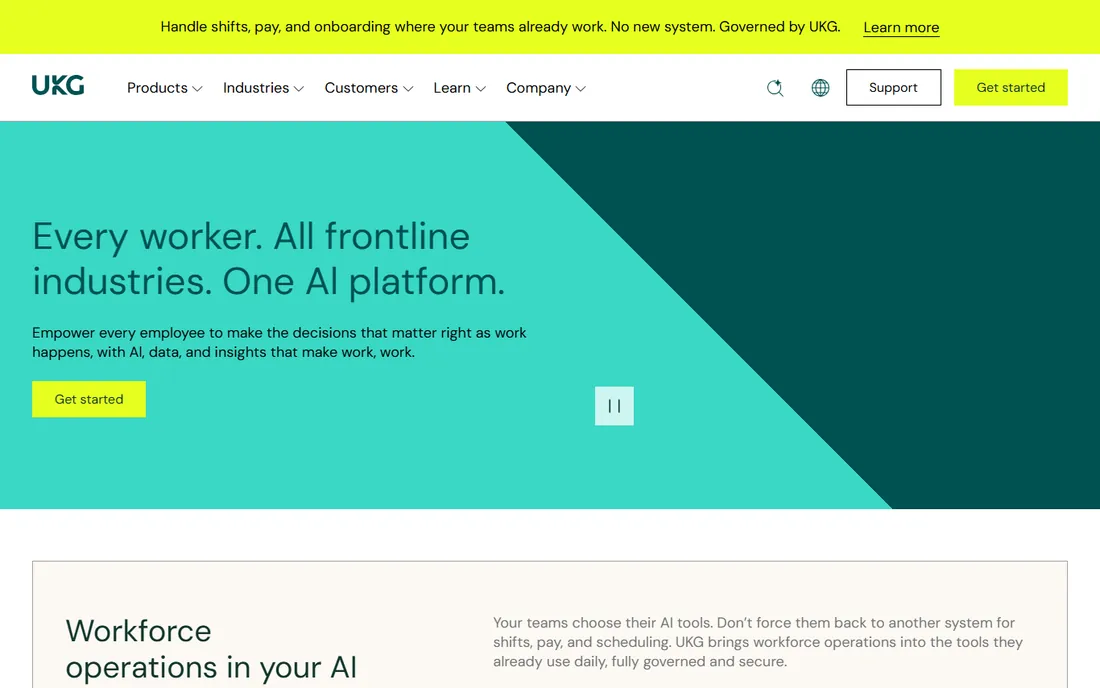
UKG, formed from Kronos and Ultimate Software, is the workforce management specialist: time and attendance, scheduling, absence management and payroll for organizations where labor complexity is the business. Hospitals, retailers, manufacturers and hospitality chains run on it. The depth in labor forecasting, compliance and union rules is unmatched.
It is enterprise software in every sense: pricing, implementation timelines, complexity. The product portfolio spans Pro, Ready and Bryte AI, which confuses buyers. But for organizations whose workforce management needs exceed what HR suites handle, UKG's specialization is the reason it leads the category.
UKG's Bryte AI assistant and workforce analytics mine scheduling data for patterns managers miss: chronic understaffing by shift, overtime clustering, compliance risks forming. The dimensions product handles the global enterprise complexity, multiple countries, languages and labor regimes, in one tenant. Customers consistently praise the depth but warn about implementation: dedicate internal project leadership, because the system rewards organizations that invest in the rollout. For pure WFM complexity, nothing else goes as deep.
What we like- Deepest workforce management functionality
- Strong in complex scheduling and compliance
- Huge customer base
Watch out for- Enterprise pricing and complexity
- Implementations are major projects
- Product portfolio confuses buyers
Starting priceSee website
Free planNo
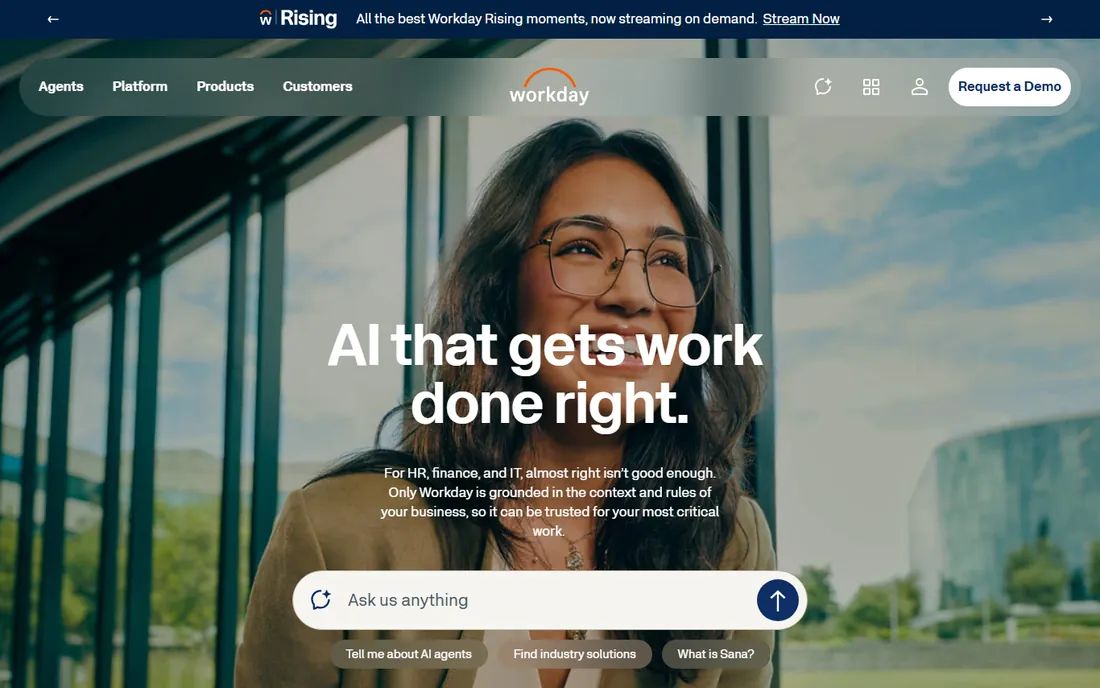
Workday unifies human capital management with workforce management: core HR, payroll, time tracking, scheduling and absence in one system with one data model. The user experience sets the standard, and the continuous update model eliminates upgrade projects. Large enterprises standardize on it confidently.
Pure WFM depth, complex scheduling optimization and industry-specific labor rules, trails the specialists. Pricing is premium. For organizations already on Workday HCM, adding its workforce management is natural. For WFM-first buyers with extreme complexity, compare against UKG directly.
Workday's skills cloud and talent marketplace extend workforce management beyond scheduling into who does the work: matching people to shifts by skills, not just availability. The unified data model means a schedule change flows to payroll, time tracking and absence without reconciliation. Customers report the highest user satisfaction in the category, which drives adoption, the perennial WFM failure point. The premium is real, but so is the reduction in shadow systems.
What we like- HR, payroll, time and scheduling unified
- Excellent user experience
- Continuous cloud updates
Watch out for- Premium pricing
- Workforce management depth trails UKG
- Best with full Workday adoption
Starting priceSee website
Free planNo
Oracle Fusion Cloud HCM covers the full HR spectrum including workforce management: time, scheduling, absence and payroll for global enterprises. Organizations standardized on Oracle technology get deep integration across ERP, HCM and cloud infrastructure. Multi-country compliance is broad.
Oracle's commercial practices are industry lore: aggressive sales and audits. Costs are enterprise-grade and implementations demand top partners. For Oracle-stack enterprises, the integration value is real. Others should weigh the relationship carefully.
Oracle's workforce management within Fusion HCM benefits from the same quarterly update cadence as the rest of the suite: no big-bang upgrades, continuous improvement. The AI-driven scheduling suggestions learn from historical patterns. Global payroll integrations cover the multinational requirement. Oracle shops get a coherent story from hire to retire. Independent buyers should evaluate the WFM depth against UKG directly, because Oracle's strength is breadth.
What we like- Comprehensive global HCM
- Strong in complex organizations
- Deep Oracle ecosystem integration
Watch out for- Complex and expensive
- Oracle's commercial reputation
- Implementations need elite partners
#4
SAP SuccessFactors
Best for: SAP-centric global HR
Visit sap.com
Starting priceSee website
Free planNo
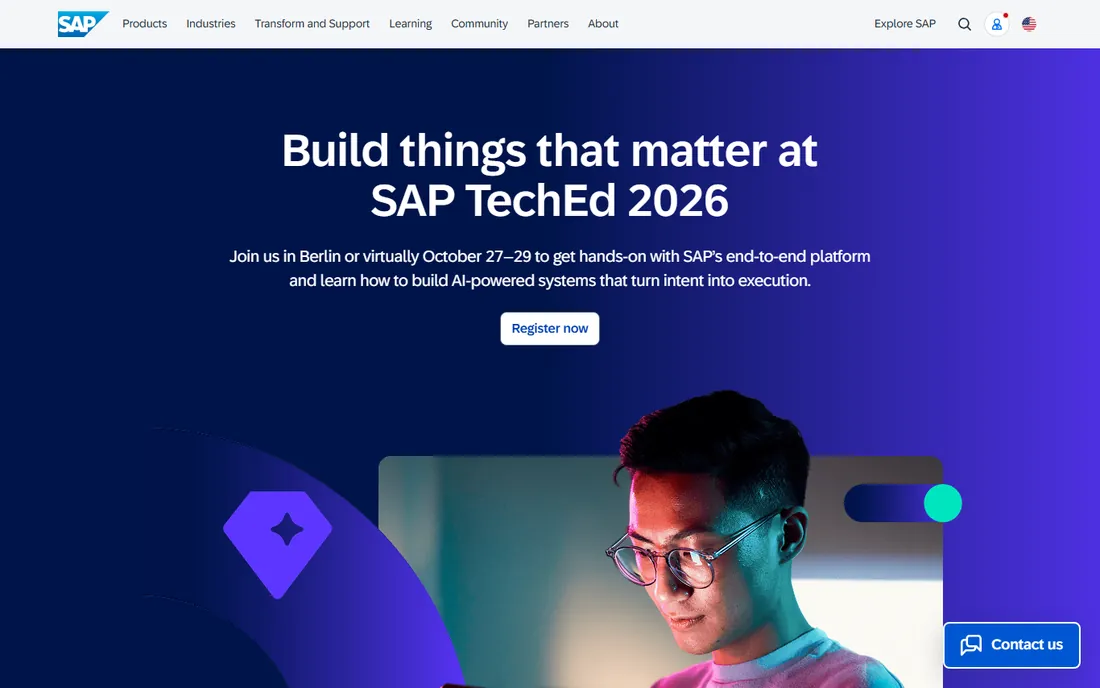
SuccessFactors is SAP's cloud HR suite with workforce management: time tracking, scheduling and absence alongside core HR and talent. Global enterprises running SAP ERP get the integrated story. Multi-country payroll and compliance coverage is extensive.
The module lineup confuses buyers, pricing is enterprise, and the user experience trails Workday and Rippling. For SAP-centric multinationals, it is the strategic choice. For others, the modern alternatives usually win on experience and speed.
SAP's SuccessFactors Time Tracking handles the complex scenarios global enterprises face: multiple concurrent employments, cross-border assignments, intricate overtime rules. Integration with S/4HANA finance gives labor cost analytics natively. The Joule AI assistant is being embedded across HR workflows. For the SAP-installed base, the integration value compounds; for others, the module complexity deserves honest evaluation against simpler suites.
What we like- Global HR depth
- Strong talent management
- Integrates with SAP ERP
Watch out for- Complex module lineup
- Pricing is enterprise
- UX lags modern rivals
#5
ADP
Best for: Payroll-rooted workforce management
Visit adp.com
Starting priceSee website
Free planNo
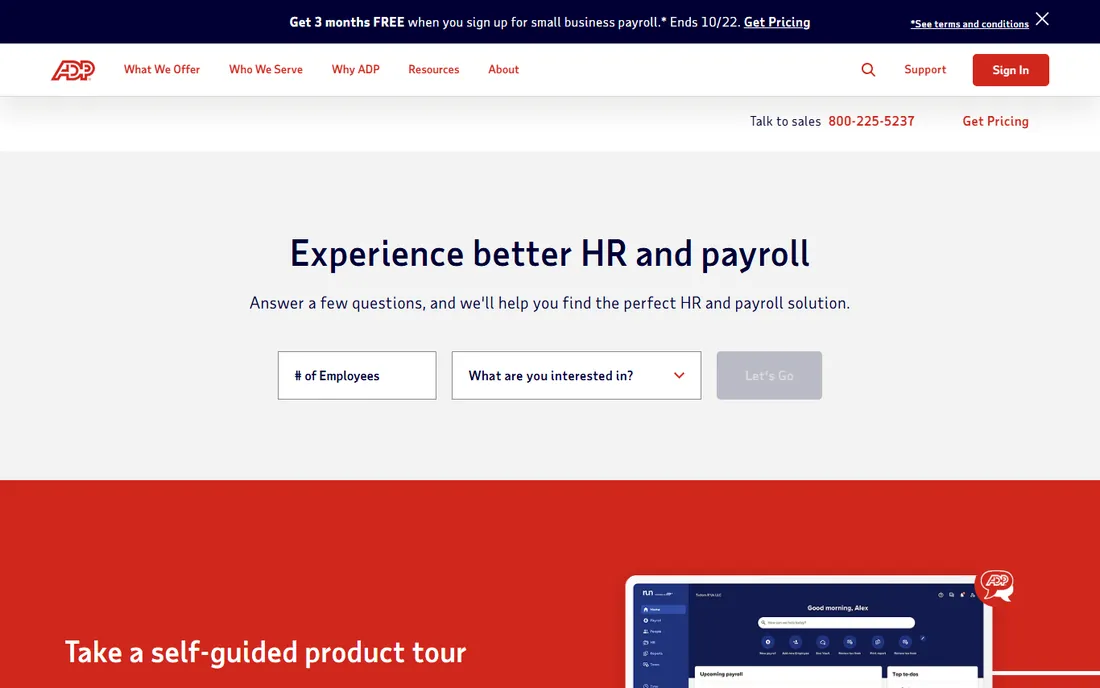
ADP built its empire on payroll and extended into full workforce management: time, scheduling, HR and benefits around the payroll core. Workforce Now serves mid-market, Vantage HCM serves enterprise. The compliance support, tax filing and regulatory updates, is the deepest in the business.
The product portfolio sprawls confusingly, service quality varies by segment, and the innovation pace trails cloud natives. But for organizations that prioritize payroll correctness and compliance above all, ADP's scale and expertise remain reassuring.
ADP's compliance engine, backed by the company's massive regulatory operation, is the moat: tax filings, garnishments and labor law updates handled across jurisdictions. The data cloud benchmarks client metrics against aggregated peers. Service quality varies by segment, so buyers should reference-check their specific service tier. For organizations where payroll correctness is existential, ADP's scale provides reassurance no startup can match.
What we like- Payroll expertise is unmatched
- Scales from SMB to enterprise
- Compliance support is deep
Watch out for- Product sprawl across many offerings
- Service quality varies
- Innovation pace is slow
Starting priceSee website
Free planNo
Dayforce's architecture is its pitch: one database, one record, continuous payroll calculation instead of batch processing. HR, time, scheduling, benefits and pay stay consistent because they share one system. The workforce management depth rivals UKG for many use cases.
Pricing and implementation are enterprise-grade. The Ceridian rebrand still confuses some buyers. For organizations wanting HR and WFM truly unified with modern payroll, Dayforce is the strongest alternative to the UKG-plus-payroll split.
Dayforce's continuous payroll calculation is architecturally different: every time entry immediately shows its pay impact, eliminating the batch-processing surprises of legacy payroll. The single data model means HR, benefits and WFM never disagree about an employee's status. Customers report faster payroll processing and fewer adjustments. The implementation is still enterprise-grade work, but the architectural payoff is real and differentiating.
What we like- Single database for HR, pay, time and scheduling
- Real-time payroll calculations
- Strong WFM depth
Watch out for- Enterprise pricing
- Implementations are significant
- Formerly Ceridian which confuses
Starting priceSee website
Free planNo
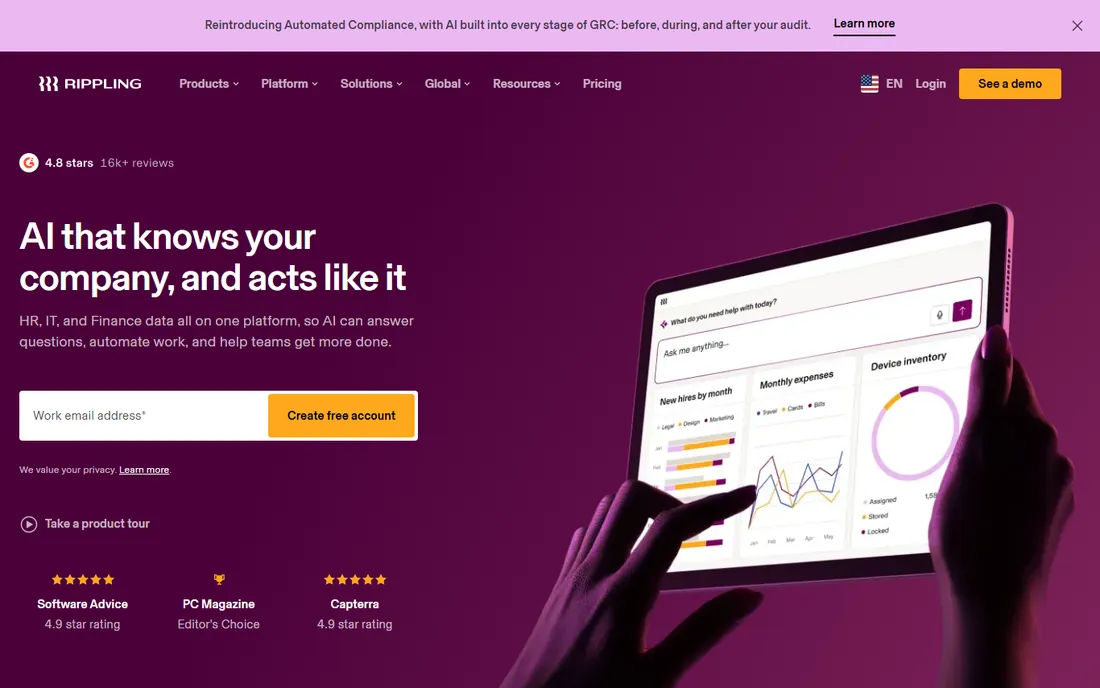
Rippling modernized the category: hire an employee and the system provisions HR, payroll, laptop, apps and access automatically. The automation and user experience embarrass legacy vendors. Growing tech companies adopt it enthusiastically for the all-in-one simplicity.
International coverage, while growing fast, trails Deel and the giants. Module pricing accumulates. For US-centric growing companies wanting HR, IT and finance unified with modern UX, Rippling is the most exciting option. Global enterprises need more.
Rippling's workflow automations, hundreds of prebuilt recipes plus a custom builder, extend beyond HR: onboarding triggers IT provisioning, app access and payroll in one motion. The app store model lets companies add modules as they grow. International expansion through Deel-like EOR partnerships broadens the footprint. For tech-forward companies that want consumer-grade software for back-office work, Rippling keeps winning head-to-head.
What we like- HR, IT and finance in one platform
- Excellent automation
- Beloved user experience
Watch out for- Younger than enterprise incumbents
- International depth still growing
- Pricing adds up with modules
Starting priceSee website
Free planNo
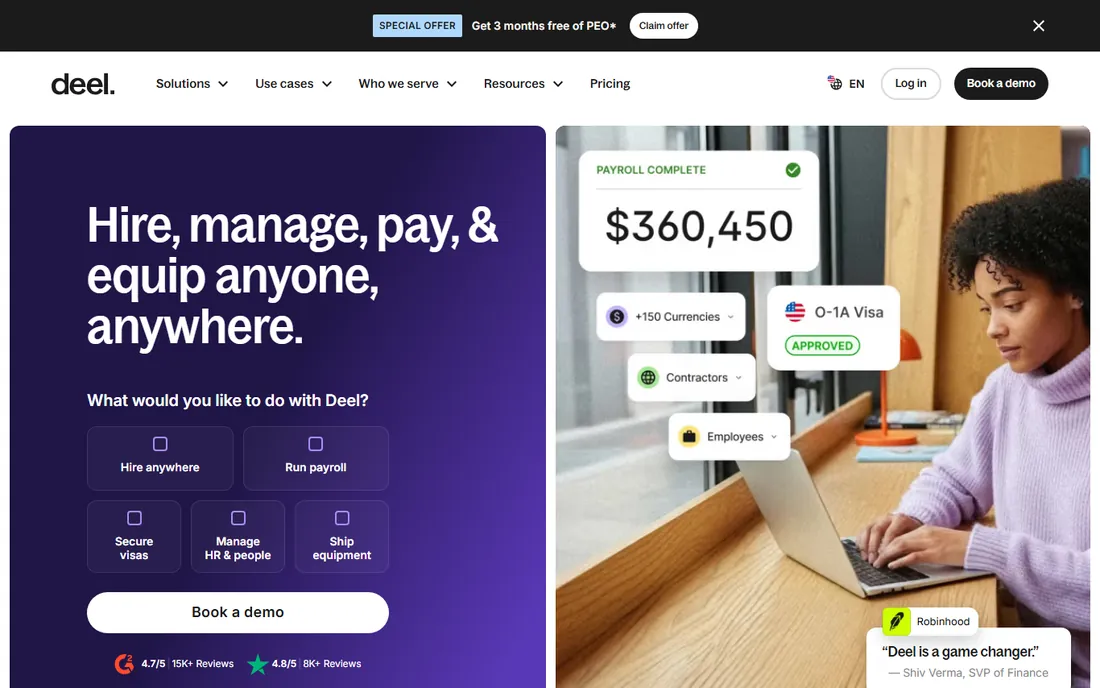
Deel solved global hiring: employ anyone anywhere through its employer-of-record entities, with contracts, payroll, taxes and compliance handled per country. Remote-first companies hire globally in days instead of establishing entities. Contractor management and compliance are strong.
EOR fees per employee per month accumulate at scale, and domestic HR depth trails the HR suites. For companies whose workforce is genuinely global, Deel is transformative. For domestic workforces, the domestic platforms fit better.
Deel's contractor management, beyond EOR, handles the compliance details companies get wrong: misclassification risk assessments, localized contracts, tax document collection. The immigration support add-on helps relocate hires. For remote-first companies, the combination of hiring speed and compliance coverage is transformative. As the workforce stabilizes in countries, Deel's entity setup services provide the off-ramp from EOR to owned entities.
What we like- Employer-of-record in 150+ countries
- Contractor compliance handled
- Fast global hiring
Watch out for- EOR fees add up
- Less depth in domestic HR
- Support quality varies
Starting priceSee website
Free planNo
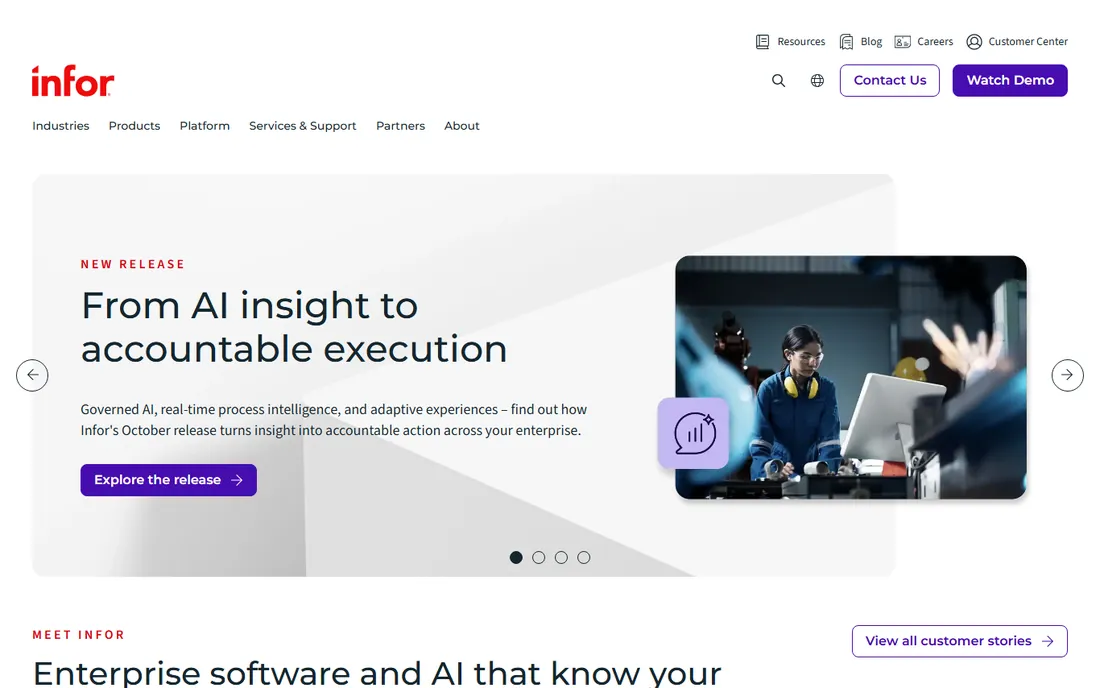
Infor builds industry-specific workforce management: manufacturing, healthcare and hospitality get scheduling and labor tools shaped for their operations rather than generic HR modules. The Coleman AI platform adds intelligent features. Organizations in Infor's sweet-spot industries get tailored fit.
Generalist buyers find less mindshare and community. Pricing is quote-based. For manufacturers and healthcare systems already in Infor's world, the industry-specific WFM is a genuine advantage over generic suites.
Infor's Coleman AI brings practical intelligence to WFM: demand forecasting for scheduling, anomaly detection in time entries, conversational interfaces for common tasks. Industry-specific editions, like Healthcare and Manufacturing, come with relevant labor rules preconfigured. The multi-tenant cloud keeps everyone current. For Infor ERP customers, the workforce management completes a coherent industry suite.
What we like- Industry-specific workforce management
- Strong in manufacturing and healthcare
- Good Coleman AI features
Watch out for- Niche positioning
- Smaller mindshare
- Pricing is quote-based
Starting priceSee website
Free planNo
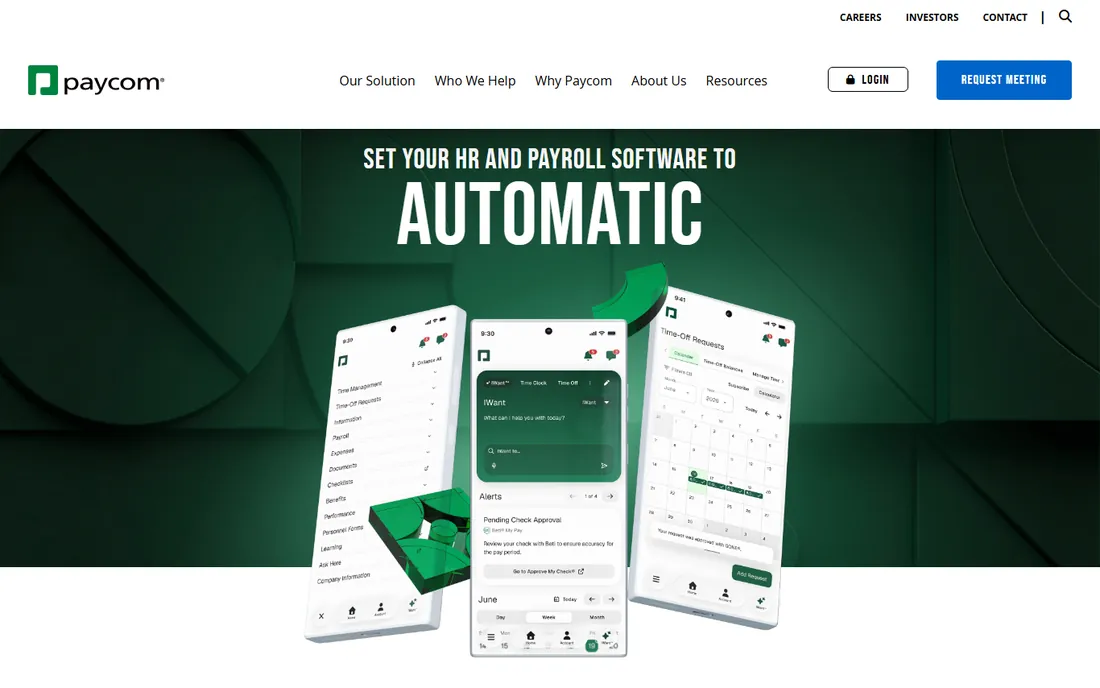
Paycom's single-database architecture means HR, payroll, time and talent share one record: no integrations, no reconciliation. The employee self-service, including the Beti payroll experience where employees verify their own checks, is genuinely innovative. Mid-market companies get enterprise-grade accuracy.
The aggressive sales reputation is well documented; negotiate carefully. Pricing is quote-based. For mid-size organizations wanting one system for HR and payroll with excellent self-service, Paycom's unified model delivers.
What we like- Single database from hire to retire
- Employee self-service is excellent
- Strong payroll accuracy
Watch out for- Sales tactics have a reputation
- Pricing is quote-based
- Innovation trails cloud natives
How we chose
We selected platforms with real workforce management depth: scheduling, time, attendance and labor compliance, not just HR with a time tab. We reviewed analyst coverage, vendor documentation and practitioner reviews, and verified each vendor's current status.
Implementation decides everything
Workforce management implementations fail more often than the software deserves. The pattern is consistent: underestimated data cleansing, insufficient change management, and go-live timed for the worst possible moment. Budget the implementation as seriously as the license: services, internal team time, and parallel running.
Choose the partner on reference calls with similar organizations, not on vendor recommendation. Clean your employee data before migration. And phase the rollout: payroll first or scheduling first, never everything at once. The vendors' best customers all describe the same thing: a disciplined implementation, not a magical product.
Frequently asked questions
What is workforce management software?
Software managing the hourly and salaried workforce lifecycle: scheduling, time and attendance, absence, labor forecasting, and often payroll and HR. It optimizes labor costs while maintaining compliance.
How much does workforce management software cost?
Enterprise platforms are quote-based, typically from tens of thousands to millions annually depending on employee count and modules. Mid-market options price per employee per month. Always budget implementation separately.
UKG vs Dayforce: which is better?
UKG for the deepest pure workforce management, especially complex scheduling and industry-specific needs. Dayforce for unified HR-plus-WFM with continuous payroll. Both are enterprise-grade; trial against your specific complexity.
Do small businesses need WFM software?
Most need scheduling and time tracking, covered well by simpler tools like Deputy or Homebase. Full WFM suites suit organizations with hundreds of employees or complex compliance.
What is the difference between HCM and WFM?
HCM covers the employee lifecycle: hiring, HR, talent, compensation. WFM covers the work itself: scheduling, time, attendance, labor optimization. The categories overlap increasingly as suites expand.
How long does implementation take?
Three to twelve months for mid-market, twelve to twenty-four for enterprise, depending on complexity, data quality and scope. Rushing is the most reliable way to inflate costs.
Sources we checked (10)
- https://www.ukg.com/
- https://www.workday.com/
- https://www.oracle.com/
- https://www.sap.com/index.html
- https://www.adp.com/
- https://www.dayforce.com/
- https://www.rippling.com/
- https://www.deel.com/
- https://www.infor.com/
- https://www.paycom.com/
Is your product missing or out of date?
We review this list regularly. Vendors can request a listing, send updated pricing or ask about featured placement.

Shihab Mia · Founder, Rankite
Shihab has spent more than a decade helping SaaS and e-commerce brands grow through search. He writes Rankite's software buying guides from pricing pages, documentation and public user reviews. More about Shihab.