How we make this list: we compare pricing pages, product documentation and public user reviews. Rankite is independent; if a vendor ever pays for a featured spot, that listing is clearly labeled Partner.
Key takeaways
- Coupa, SAP Ariba and Oracle Procurement Cloud dominate enterprise deals; all three are quote-based and expect six-figure annual contracts.
- Zip is the intake-orchestration specialist: it fixes the "who approves this purchase" mess without replacing your ERP.
- Ramp is the only one with a genuinely free tier ($0 per user per month), though its procurement module is a paid add-on to Plus or Enterprise plans.
- Precoro and Procurify target the mid-market with faster deployments (weeks, not months) and simpler pricing conversations.
- JAGGAER and Ivalua win complex sourcing: direct materials, manufacturing and heavily regulated industries.
Quick comparison
| Tool | Best for | Starting price | Free plan |
|---|
 Coupa Coupa | large enterprises unifying procurement, AP and payments | See website | See website |
 SAP Ariba SAP Ariba | SAP ERP customers and companies needing the largest supplier network | See website | See website |
 Oracle Procurement Cloud Oracle Procurement Cloud | companies running Oracle Fusion Cloud ERP | See website | See website |
 Precoro Precoro | mid-size companies that want procurement without an ERP project | See website | See website |
 Procurify Procurify | mid-market companies wanting intake-to-pay with spending cards | See website | See website |
 Zip Zip | fixing intake and approvals without replacing your ERP | See website | See website |
 Ramp Ramp | startups and SMBs that want spend management for free | $0 per user/month (Free plan) | Yes |
 Airbase Airbase | SMBs that want AP, cards, expenses and procurement in one system | See website | See website |
 JAGGAER JAGGAER | manufacturers and complex direct-materials sourcing | See website | See website |
 Ivalua Ivalua | enterprises that want a configurable source-to-pay platform | See website | See website |
Is your product missing or out of date?
We review this list regularly. Vendors can request a listing, send updated pricing or ask about featured placement.
Here is the blunt truth about procurement software: the wrong choice costs you twice. Once in the license, which for enterprise suites runs into six figures a year, and again in the implementation, which can take longer than the contract term you signed. The right choice, though, ends the chaos of rogue spending, spreadsheet POs and approval chains that take three weeks.
We compared the ten platforms buyers actually evaluate in 2026, from the enterprise suites (Coupa, SAP Ariba, Oracle) to the mid-market specialists (Precoro, Procurify), the intake-orchestration newcomer (Zip), the free-to-start fintechs (Ramp, Airbase) and the sourcing heavyweights (JAGGAER, Ivalua). Almost none of them publish prices, so where pricing is quote-based we say so instead of inventing numbers.
#1
Coupa
Best for: large enterprises unifying procurement, AP and payments
Visit coupa.com
Starting priceSee website
Free planSee website
Coupa is the default enterprise answer for a reason. It covers the whole spend lifecycle: intake, sourcing, contracts, POs, invoicing, payments and expenses, all feeding one analytics layer. The community data (Coupa claims $10 trillion in spend intelligence) powers benchmarks that tell you whether you are overpaying a supplier relative to peers. In 2026 the pitch is "agentic spend management," with AI agents handling intake routing and invoice exceptions.
The catch is scale and cost. Coupa does not publish prices; deals are custom, annual, and sized for the Fortune 500. Implementations run months and need real change management. Companies under a few hundred employees will pay for capability they never use. If you are a large enterprise standardizing global procurement, start here. If not, keep reading.
What we like- Deepest spend-intelligence dataset ($10T in community spend data)
- Full suite from intake to payments
- Strong AI agents in 2026
Watch out for- Quote-based pricing with enterprise minimums
- Implementation is a major project
- Can be overkill below 500 employees
#2
SAP Ariba
Best for: SAP ERP customers and companies needing the largest supplier network
Visit sap.com
Starting priceSee website
Free planSee website
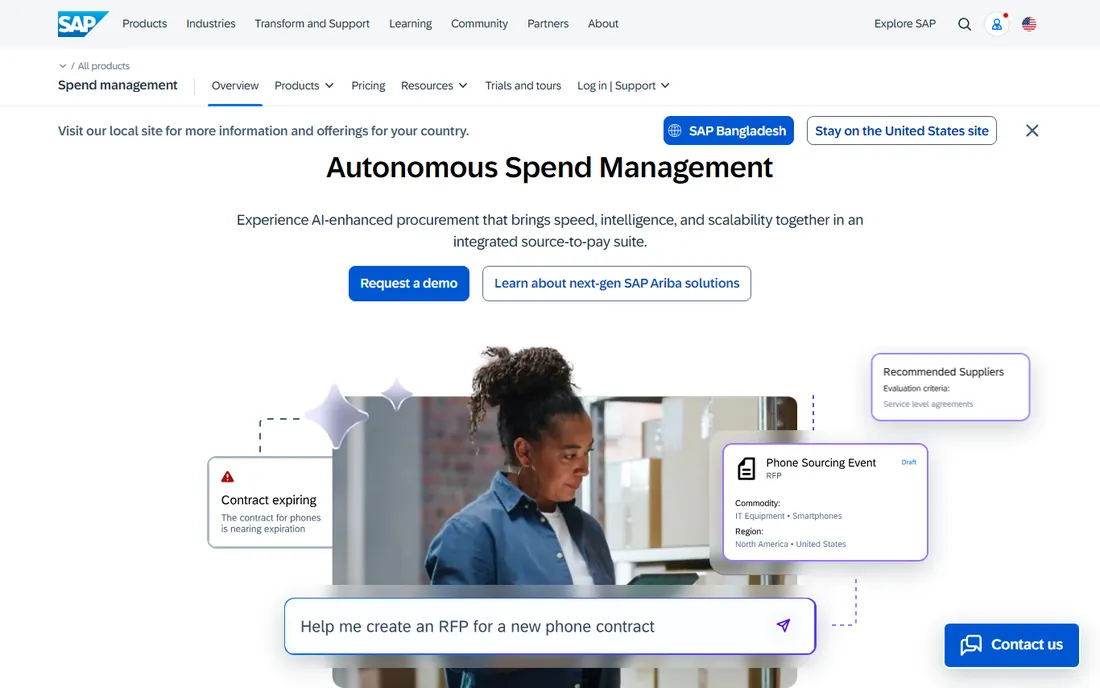
SAP Ariba is the incumbent. The Ariba Network is the largest B2B trading network in the world, which means your suppliers are probably already on it, and the integration with SAP S/4HANA makes it the path of least resistance for SAP shops. Sourcing, contracts, buying, invoicing and supplier management all live under SAP's spend management umbrella.
The trade-offs are classic SAP. Pricing is quote-based and enterprise-grade, the user experience lags newer rivals, and much of the value depends on already running SAP ERP. Non-SAP companies can use Ariba, but they often get more modern UX and faster rollouts from Coupa or Ivalua. For SAP-centric enterprises, though, Ariba remains the safe, strategic pick.
What we like- Ariba Network connects millions of suppliers
- Deep integration with SAP S/4HANA
- Proven at massive scale
Watch out for- Quote-based enterprise pricing
- Interface feels dated in places
- Best value only inside a SAP estate
#3
Oracle Procurement Cloud
Best for: companies running Oracle Fusion Cloud ERP
Visit oracle.com
Starting priceSee website
Free planSee website
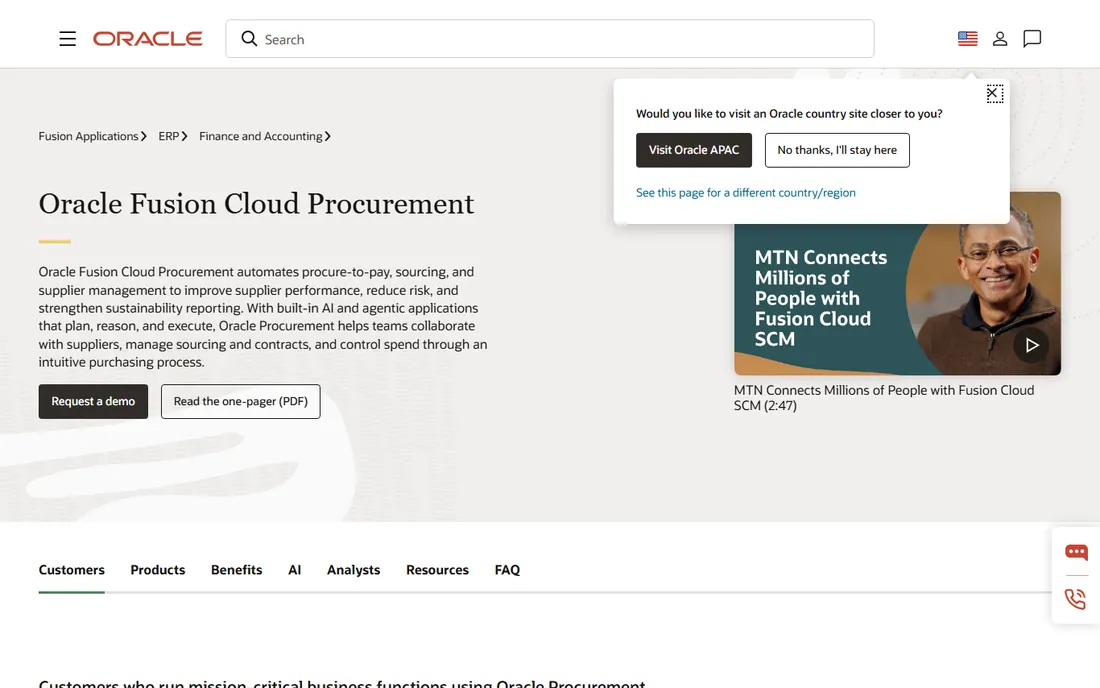
Oracle Fusion Cloud Procurement is the procurement arm of Oracle's ERP suite: requisitions, sourcing, contracts, supplier management and purchasing in one flow, with the Redwood interface and AI features (approval summaries, guided sourcing) layered on top. For companies already on Oracle Fusion, it is the obvious choice: one vendor, one data model, one contract.
Outside Oracle ERP, it is a harder sell. Pricing is quote-based, and the product's strengths (tight ERP integration, unified data) matter less when you run NetSuite's competitors or SAP. Implementation needs partners who know Oracle. If your finance team lives in Oracle Fusion, evaluate this first. Otherwise, the independent suites deserve a longer look.
What we like- Native to Oracle Fusion ERP and SCM
- Strong self-service procurement
- Built-in AI across sourcing and purchasing
Watch out for- Quote-based pricing
- Makes most sense inside an Oracle estate
- Implementation needs Oracle expertise
#4
Precoro
Best for: mid-size companies that want procurement without an ERP project
Visit precoro.com
Starting priceSee website
Free planSee website
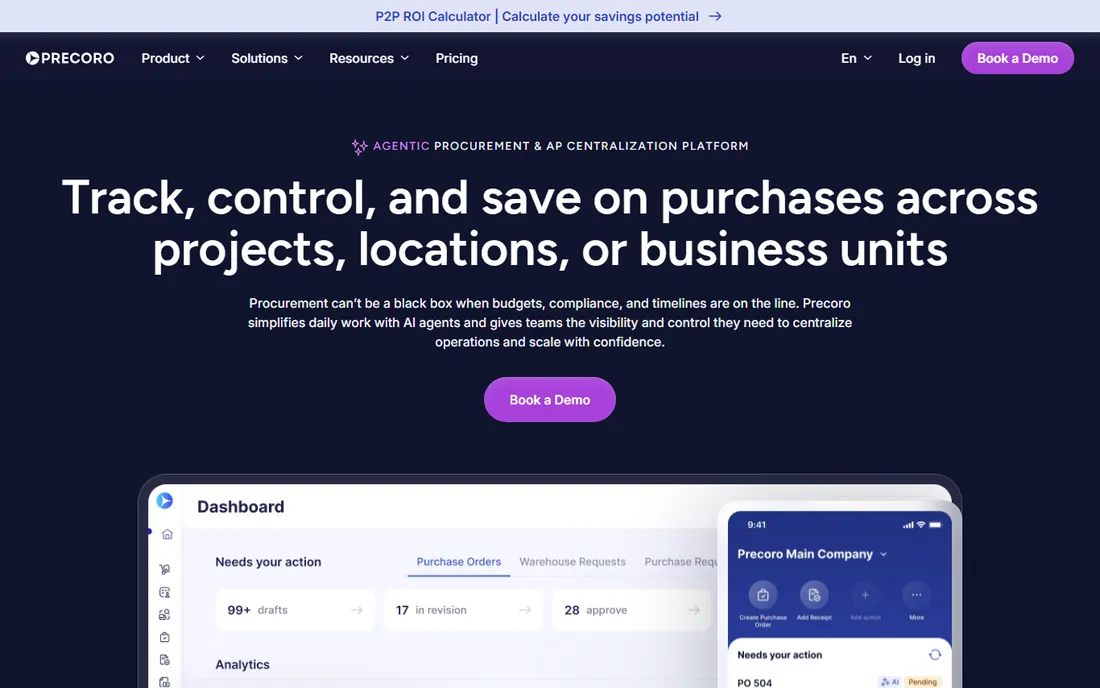
Precoro positions itself as procurement for companies that outgrew spreadsheets but are not ready for Coupa. It centralizes purchase requests, approvals, POs and receiving, with analytics that flag overspending and AI features that turn messages and quotes into structured requests. Integrations cover QuickBooks, Xero, NetSuite and Sage, which is exactly the stack its target customer runs.
The limits match the positioning. Strategic sourcing, complex direct materials and deep contract lifecycle features are thinner than in the enterprise suites. Pricing is not public (third-party directories suggest a monthly figure, but confirm with the vendor). For a 100 to 1,000-person company that needs controlled purchasing fast, Precoro is a strong fit; for a multinational, it is not.
What we like- Built for growing mid-size businesses, not enterprises
- Procurement analytics and AI crews in 2026
- Broad accounting integrations
Watch out for- Pricing is not published
- Less depth in strategic sourcing than the suites
- Smaller partner ecosystem
#5
Procurify
Best for: mid-market companies wanting intake-to-pay with spending cards
Visit procurify.com
Starting priceSee website
Free planSee website
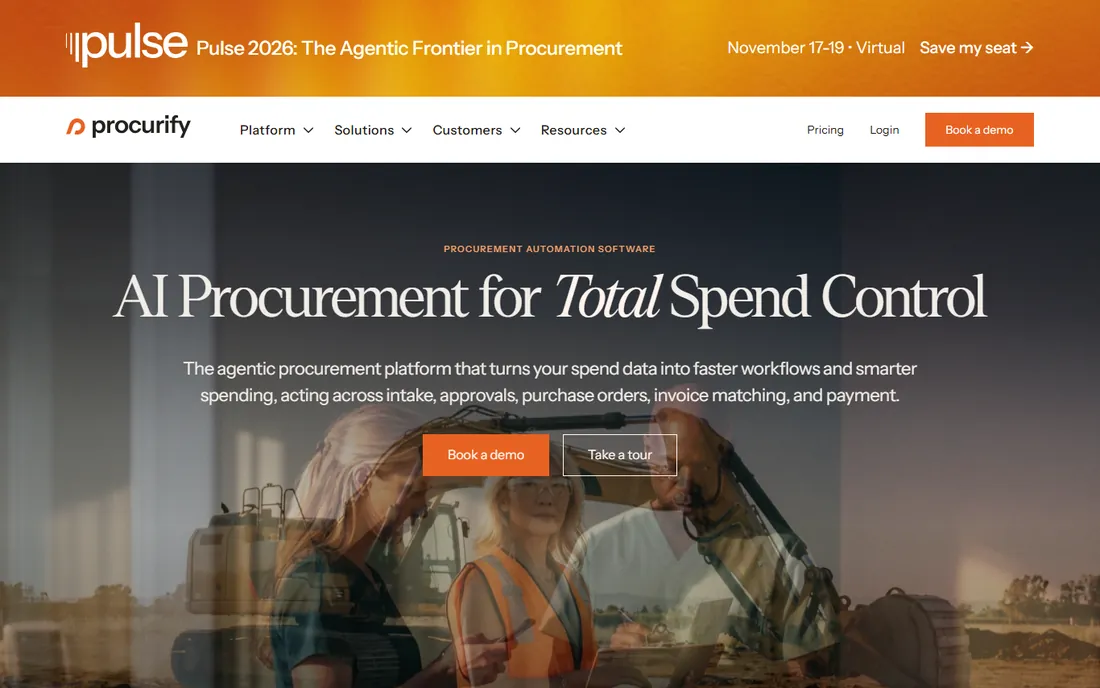
Procurify calls itself the agentic procurement platform for the mid-market, and the positioning is honest: it covers purchase requests, approvals, POs, invoicing, payments and spending cards for companies big enough to need controls but not big enough for an enterprise suite. Deployment is measured in weeks, integrations cover the mid-market ERP stack, and G2 ranks it highly for mid-market procure-to-pay.
The catch is the quote wall: no public pricing, so budgeting starts with a sales call. And while it handles indirect spend well, companies with complex manufacturing or direct-materials needs will outgrow it. For a growing company in healthcare, education or professional services, Procurify hits the sweet spot between spreadsheets and Coupa.
What we like- Full intake-to-pay including POs, invoicing, payments and cards
- Deploys in weeks
- Strong in healthcare, education and nonprofits
Watch out for- Fully quote-based pricing
- Mid-market focus means less enterprise depth
- Smaller community than Coupa
#6
Zip
Best for: fixing intake and approvals without replacing your ERP
Visit ziphq.com
Starting priceSee website
Free planSee website
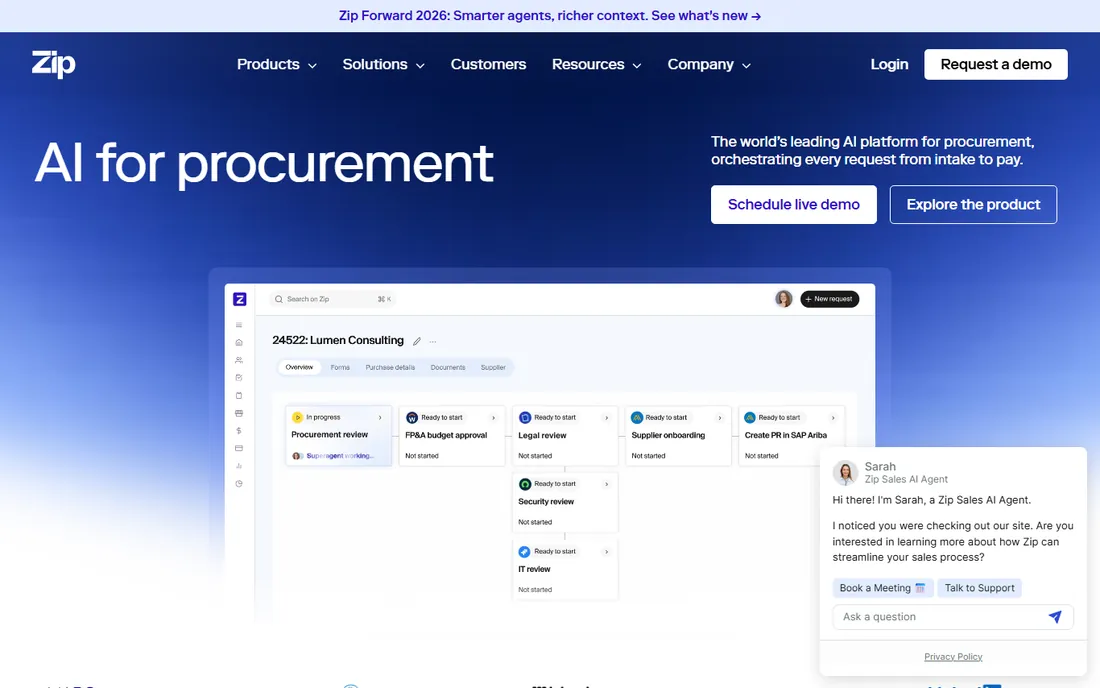
Zip solved one problem extremely well: the front door. Instead of employees emailing finance for every purchase, Zip gives them one intake form that routes approvals, checks policy, onboards vendors and creates the PO, then hands off to your ERP. The 2026 positioning adds AI agents across intake-to-pay and contract review. Customers include Anthropic, OpenAI and AMD, which tells you who buys it: fast-growing tech companies.
Zip is not a sourcing or contract suite, and it does not try to be. Pricing is quote-based and enterprise-oriented. The smart play many companies make is Zip for intake layered over their existing ERP or Coupa: fix the employee experience without a rip-and-replace. If your pain is approvals chaos rather than strategic sourcing, start here.
What we like- Best-in-class intake orchestration
- Employees actually like using it
- Layers over existing ERP and P2P systems
Watch out for- Quote-based enterprise pricing
- Not a full sourcing suite
- Newer vendor with a shorter track record
#7
Ramp
Best for: startups and SMBs that want spend management for free
Visit ramp.com
Starting price$0 per user/month (Free plan)
Free planYes
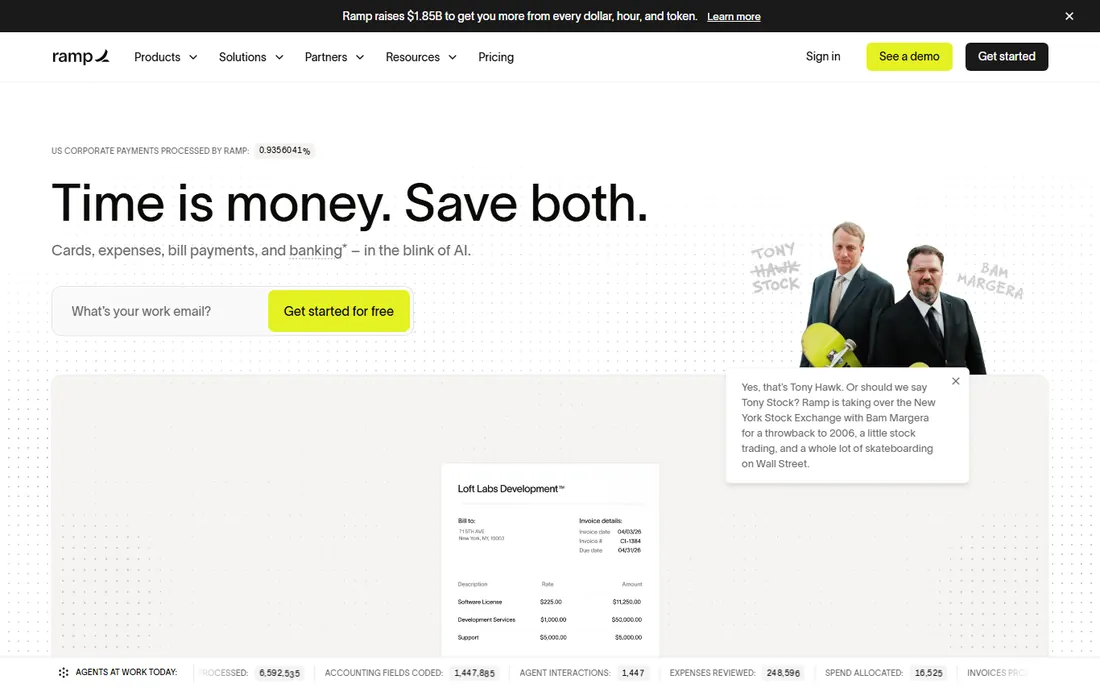
Ramp is the only tool here with a real free tier, and it is generous: $0 per user per month for corporate cards, travel and expense, AP automation and accounting integrations. The company makes money on card interchange, not software licenses. In 2026 it added a procurement add-on (intake workflows, vendor onboarding, PO management, three-way match) available on the $15 per user per month Plus plan and Enterprise.
The honest framing: Ramp is a finance automation platform with procurement features, not a procurement suite. There is no strategic sourcing, no supplier network, no complex contract lifecycle. But for a startup or SMB that needs controlled purchasing and hates per-seat software bills, the free tier plus the procurement add-on is the best value in this category by a wide margin.
What we like- Core platform is genuinely free ($0 per user per month)
- Unlimited cards
- Procurement add-on with intake, POs and three-way match
Watch out for- Procurement features require the paid add-on (Plus or Enterprise)
- Finance-automation focus, not a sourcing suite
- US-centric
#8
Airbase
Best for: SMBs that want AP, cards, expenses and procurement in one system
Visit airbase.com
Starting priceSee website
Free planSee website
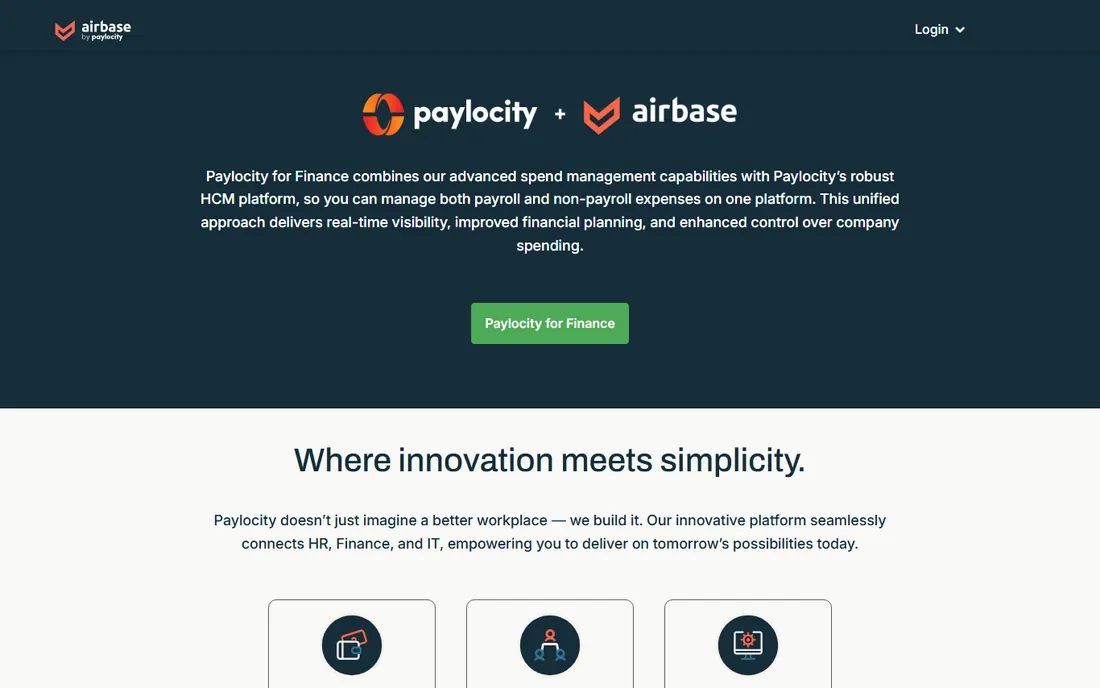
Airbase built the product many mid-size finance teams wanted: one system where a purchase request, a bill, a card transaction and a reimbursement all follow the same approval rules and sync to the GL in real time. Guided procurement keeps employees inside policy, and the accounting automation genuinely shortens month-end close. It targets small and mid-size companies that currently juggle Expensify, Bill.com and a card program.
Two things to check. Pricing is not public, so get a quote early. And Airbase was acquired by Paylocity, which means the long-term roadmap now serves a larger parent's strategy; ask direct questions before signing multi-year terms. For an SMB finance team that wants one throat to choke on spend, Airbase remains a strong option.
What we like- True all-in-one: guided procurement, AP automation, cards and reimbursements
- Consistent approval workflows
- Strong accounting automation
Watch out for- Pricing is not published
- Acquired by Paylocity, so watch the roadmap
- SMB focus means less enterprise sourcing depth
#9
JAGGAER
Best for: manufacturers and complex direct-materials sourcing
Visit jaggaer.com
Starting priceSee website
Free planSee website
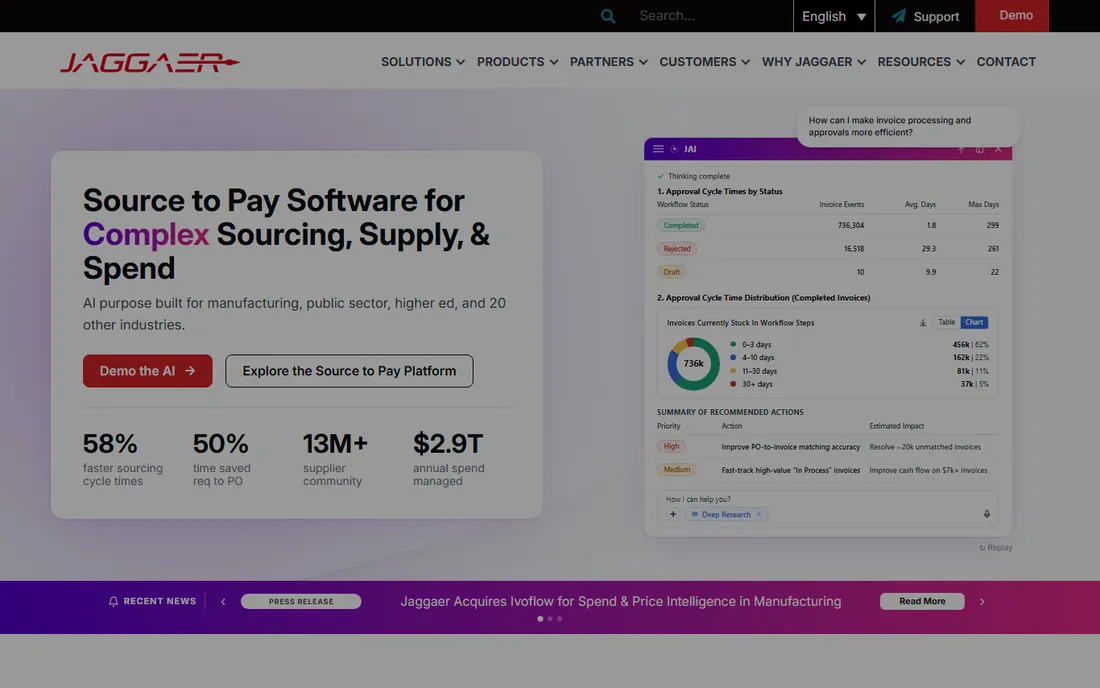
JAGGAER is the specialist the generalists call when sourcing gets hard. Direct materials, bills of materials, complex supplier collaboration, category management: this is where JAGGAER's 30-year history shows. It is strong in manufacturing, life sciences and higher education, and the 2026 platform adds JAI, an AI assistant for procurement teams. Analysts rate it a Leader for direct spend.
The trade is complexity. Implementations are consulting-heavy and measured in months, pricing is quote-based at enterprise levels, and the everyday buying experience is less slick than Zip or Ramp. Do not buy JAGGAER for office supplies; buy it when your supply chain involves engineered components, regulated suppliers or multi-tier collaboration.
What we like- Deepest direct-spend and category management capabilities
- Strong in manufacturing, pharma and higher education
- AI assistant (JAI) in 2026
Watch out for- Quote-based enterprise pricing
- Implementation is long and consulting-heavy
- Indirect-procurement UX lags simpler tools
#10
Ivalua
Best for: enterprises that want a configurable source-to-pay platform
Visit ivalua.com
Starting priceSee website
Free planSee website
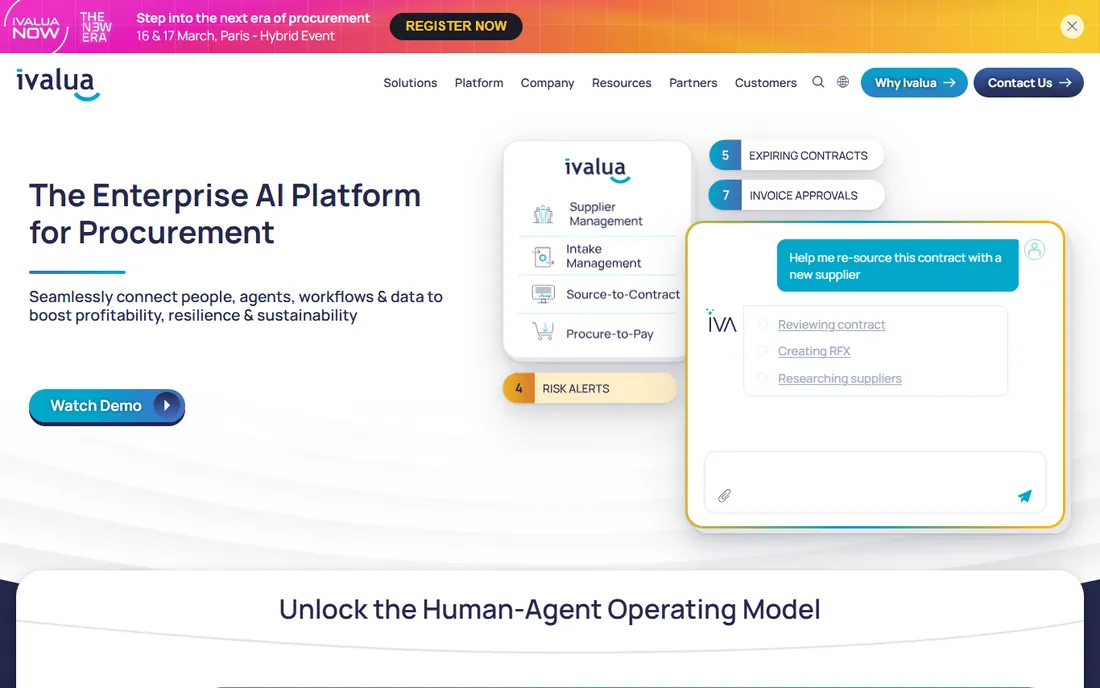
Ivalua's calling card is configurability: a single codebase that adapts to complex requirements without forks or heavy customization, which is why it claims the industry's best customer retention. It covers the full source-to-pay cycle for direct and indirect spend, and analysts consistently rank it a Leader. Over 500 major brands run on it.
The price of flexibility is process. Designing the configuration takes time and skilled consultants, and pricing is quote-based at enterprise levels. Ivalua is also historically stronger in Europe than in North America, though that gap is closing. For a large enterprise with unusual requirements that off-the-shelf suites cannot handle, Ivalua is often the last vendor standing.
What we like- Highly configurable without custom code
- 98%+ customer retention
- Strong across direct and indirect spend
Watch out for- Quote-based enterprise pricing
- Configuration flexibility means longer design phases
- Smaller North American presence than Coupa
Where procurement projects actually fail
The software is rarely the reason procurement projects fail. The reasons are boring: nobody mapped the approval matrix before configuring it, suppliers were never onboarded to the new process, and finance kept running the old spreadsheet in parallel "just in case." A successful rollout starts with process design, not vendor demos.
Second, count the true cost. License fees are the visible part; implementation services, integrations, supplier onboarding and training often match or exceed them in year one. Ask every vendor for a fixed-scope implementation quote and two reference customers in your industry and size band. If they cannot produce both, that tells you something.
Third, match the tool to your spend profile. Direct materials manufacturers need JAGGAER or Ivalua. Indirect-heavy services companies do well with Coupa, Precoro or Procurify. If the pain is intake chaos, Zip fixes it without a suite. And if you are under 200 people, start with Ramp's free tier before you spend a dollar on procurement software.
How we chose
We built the shortlist from G2 and Capterra procurement categories, analyst evaluations (Gartner, IDC, Spend Matters) and the vendors buyers actually invite to RFPs. Every product here is available today and fits procurement or spend management. We opened vendor homepages where possible to confirm names and URLs; where sites blocked automated access, we confirmed URLs from search results. Pricing is quote-based across most of this category, so we mark it "See website" rather than repeating third-party guesses. The one exception is Ramp, whose pricing page publishes its plans. We did not run trials or demos.
How to pick procurement software without overbuying
Start with company size and spend type, because they eliminate half the list immediately. Under 200 employees with mostly indirect spend: Ramp (free), Airbase or Precoro. Mid-market with growing complexity: Procurify, Precoro or Zip for intake. Enterprise with global operations: Coupa, SAP Ariba, Oracle or Ivalua. Manufacturing with direct materials: JAGGAER or Ivalua.
Then run a real pilot, not a scripted demo. Give two finalists the same ten purchase scenarios from your actual business and watch where each one struggles. Pay attention to the employee experience: the best procurement system is the one people actually use instead of working around.
Finally, negotiate the contract, not just the price. Cap annual increases, define what implementation success looks like in writing, confirm data export terms, and keep the initial term short enough that a bad fit does not become a three-year problem.
Frequently asked questions
What is procurement software?
Procurement software manages how a company buys things: purchase requests, approvals, purchase orders, supplier management, invoicing and payments. Basic tools handle intake and approvals (Zip, Ramp); full suites add sourcing, contracts and supplier networks (Coupa, SAP Ariba, Ivalua).
How much does procurement software cost?
Enterprise suites (Coupa, SAP Ariba, Oracle, JAGGAER, Ivalua) are quote-based and typically run into six figures annually for mid-size deployments. Mid-market tools (Precoro, Procurify, Airbase) cost less but still require a quote. Ramp is the exception: its core platform is free at $0 per user per month, with procurement as a paid add-on.
Coupa vs SAP Ariba: which is better?
Coupa generally wins on user experience, AI features and speed of innovation; SAP Ariba wins on supplier network size and integration if you already run SAP S/4HANA. SAP-centric enterprises usually pick Ariba; everyone else tends to shortlist Coupa first.
What is the best procurement software for small businesses?
Ramp, because the core platform is free and covers cards, expenses, bill pay and basic procurement workflows. Airbase and Precoro are the next step up when you need guided procurement with real approval controls. Enterprise suites are overkill under 200 employees.
How long does procurement software take to implement?
Ramp or Airbase can be live in days to weeks. Mid-market tools like Precoro and Procurify typically take weeks. Enterprise suites (Coupa, SAP Ariba, Oracle, JAGGAER, Ivalua) usually take three to nine months including process design, integrations and supplier onboarding.
Do I need procurement software if I already have an ERP?
Maybe not a full suite. Many companies add Zip for intake and approvals on top of their ERP, which fixes the employee experience without replacing anything. Consider a suite only when sourcing, supplier management or global compliance outgrows what the ERP does natively.
Sources we checked (11)
- https://www.coupa.com
- https://www.sap.com/products/spend-management.html
- https://www.oracle.com/erp/procurement
- https://precoro.com
- https://www.procurify.com
- https://ziphq.com
- https://ramp.com/
- https://ramp.com/pricing
- https://www.airbase.com
- https://www.jaggaer.com
- https://www.ivalua.com/
Is your product missing or out of date?
We review this list regularly. Vendors can request a listing, send updated pricing or ask about featured placement.

Shihab Mia · Founder, Rankite
Shihab has spent more than a decade helping SaaS and e-commerce brands grow through search. He writes Rankite's software buying guides from pricing pages, documentation and public user reviews. More about Shihab.