How we make this list: we compare pricing pages, product documentation and public user reviews. Rankite is independent; if a vendor ever pays for a featured spot, that listing is clearly labeled Partner.
Key takeaways
- "Vendor management" splits into two products: procurement suites that manage spend and contracts (Coupa, SAP Ariba, Gatekeeper) and risk platforms that monitor third-party exposure (Prevalent, Aravo, Venminder).
- Gatekeeper is the transparent middle: published plan tiers and unlimited users, built for mid-market teams managing hundreds of supplier contracts.
- Banks and healthcare systems live under specific examiner expectations: Venminder and Censinet are built around those regulated workflows.
- Almost nobody publishes pricing here, so the buying guide below matters more than the table: budget for implementation, not just the license.
Quick comparison
| Tool | Best for | Starting price | Free plan |
|---|
 Gatekeeper Gatekeeper | Mid-market teams managing vendor contracts and renewals | See website | No (free trial available) |
 Prevalent Prevalent | Third-party risk assessments at enterprise scale | See website | No |
 Aravo Aravo | Global enterprises managing third-party risk and compliance | See website | No |
 Coupa Coupa | Spend management with supplier risk built in | See website | No |
 SAP Ariba SAP Ariba | Enterprises already standardized on SAP | See website | No |
 ServiceNow Vendor Risk Management ServiceNow Vendor Risk Management | IT-centric vendor risk inside the ServiceNow platform | See website | No |
 Venminder Venminder | Banks and regulated industries managing examiner expectations | See website | No |
 Censinet Censinet | Healthcare organizations managing third-party and cyber risk | See website | No |
 LogicGate LogicGate | Teams that want to build their own vendor risk workflows | See website | No |
Is your product missing or out of date?
We review this list regularly. Vendors can request a listing, send updated pricing or ask about featured placement.
The best vendor management software
Ask five vendors what vendor management software does and you get five answers. The procurement suite says it manages spend and contracts. The risk platform says it monitors third-party exposure. The GRC vendor says it is a workflow you build yourself. They are all describing real products, and buying the wrong category is the most expensive mistake in this space. Nine platforms, sorted by which job they actually do.
Starting priceSee website
Free planNo (free trial available)

Gatekeeper answers the question mid-market procurement teams actually ask: what have we signed, with whom, and when does it renew. The platform centralizes contracts, vendors, spend and risk in one repository, with workflow automation for approvals and alerts that catch auto-renewals before they bite. Every plan includes unlimited users, which removes the seat-counting that plagues enterprise suites.
The pricing conversation is the catch. Gatekeeper does not publish numeric pricing on its own site; third-party estimates place plans from roughly $1,100 a month for Essentials up to custom enterprise tiers, with implementation adding a meaningful percentage. Treat those figures as directional and get a written quote. For legal, procurement and finance teams managing hundreds of supplier contracts, it remains the most approachable serious option.
What we like- Unlimited users on every plan with contract, vendor and spend data in one place
- Strong renewal and obligation tracking with automated alerts
- Dedicated supplier and employee portals
Watch out for- Pricing is quote-based with no public rate card
- Implementation fees are reported at 30 to 40 percent of the first-year subscription
Starting priceSee website
Free planNo
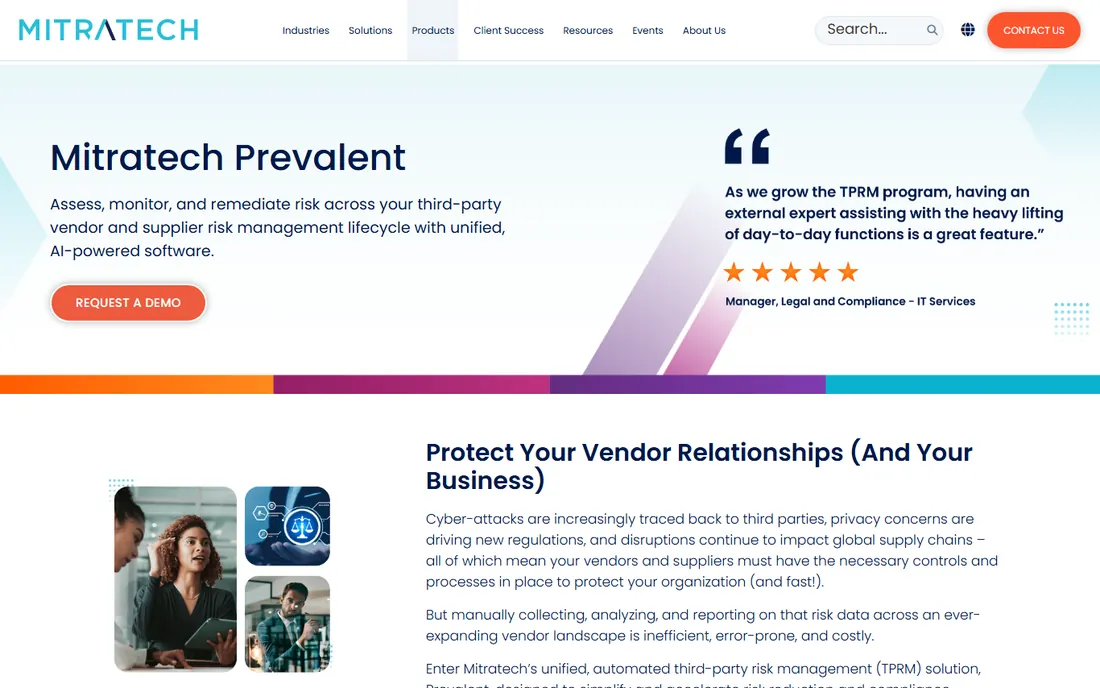
Prevalent is the risk side of vendor management: it evaluates, monitors and manages the risk your vendors carry. The platform combines standardized risk assessments with continuous monitoring, so a vendor's security posture, financial health and compliance status are tracked between annual reviews. Regulated companies use it to show examiners a defensible third-party risk program.
It is an enterprise product with enterprise pricing and an enterprise sales motion. Buyer data puts contracts commonly in the tens of thousands annually, climbing past $100,000 for large programs. Smaller companies will find it heavy. If your board asks about third-party risk rather than procurement efficiency, Prevalent belongs on the shortlist.
What we like- Purpose-built third-party risk assessments with a large standardized questionnaire library
- Continuous monitoring with threat intelligence feeds
- Strong reporting for examiner and board scrutiny
Watch out for- Quote-based enterprise pricing with total costs commonly reported in the five figures
- Assessment-heavy model needs dedicated staff to run well
#3
Aravo
Best for: Global enterprises managing third-party risk and compliance
Visit aravo.com
Starting priceSee website
Free planNo
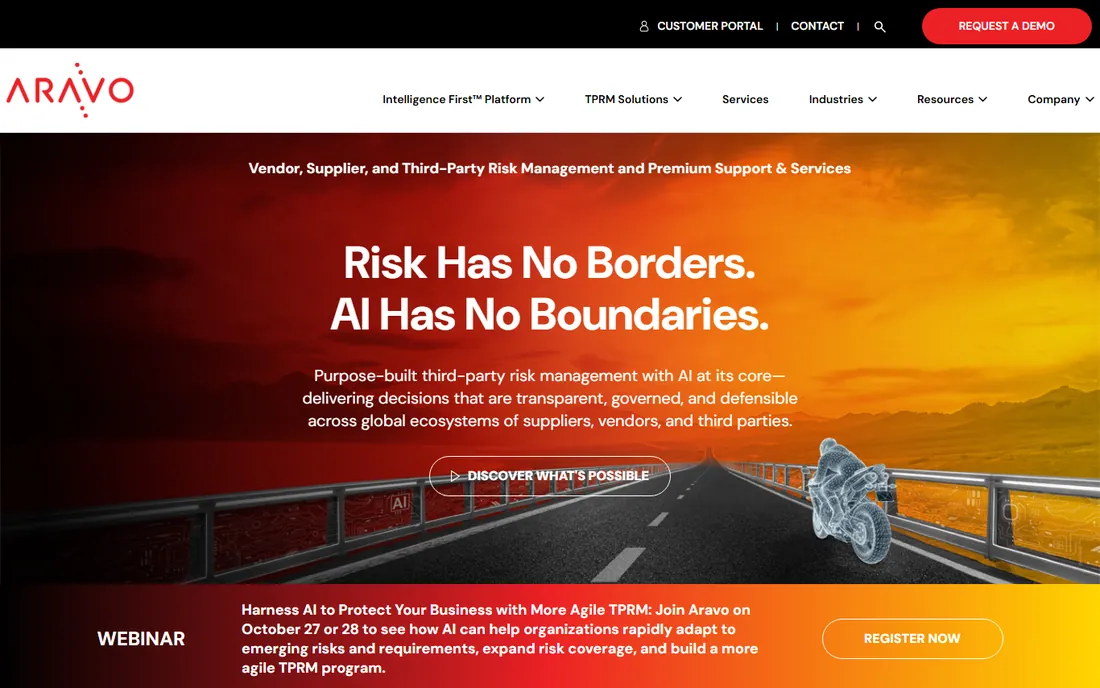
Aravo has managed third-party risk for global enterprises longer than most competitors have existed. The platform covers the full lifecycle: onboarding, due diligence, risk assessment, ongoing monitoring and performance management, across thousands of third parties. Companies with complex supply chains and multi-jurisdiction compliance needs keep it for the depth.
That depth comes with weight. Expect a long sales cycle, a substantial implementation, and pricing that requires real budget authority. Aravo is not a tool you adopt casually; it is a program you commit to. For Fortune-scale companies where third-party failure makes the news, the investment is proportionate.
What we like- Deep third-party risk, compliance and performance management in one platform
- Built for complex global supply chains and regulatory programs
- Long enterprise track record
Watch out for- Quote-based pricing with a heavyweight implementation
- Best suited to companies with mature risk functions and dedicated administrators
#4
Coupa
Best for: Spend management with supplier risk built in
Visit coupa.com
Starting priceSee website
Free planNo
Coupa approaches vendors from the money side. Its business spend management platform handles sourcing, procurement, invoicing and payments, with supplier onboarding, risk assessment and performance management woven through. The advantage is context: vendor decisions happen where the spend data already lives.
The price reflects the scope. Third-party guides place Coupa contracts from roughly $30,000 annually upward depending on modules and scale. Companies that only need vendor risk monitoring should look at Prevalent or Aravo instead of buying a spend platform for one module. Companies standardizing procurement should evaluate Coupa before anything else.
What we like- Unified business spend management covering procurement, invoicing, expenses and payments
- Supplier risk and performance data inside the spend workflow
- Massive customer community and benchmark data
Watch out for- Enterprise pricing commonly reported from $30,000 to $100,000-plus annually
- The platform is broad, so vendor management is one module among many
#5
SAP Ariba
Best for: Enterprises already standardized on SAP
Visit ariba.com
Starting priceSee website
Free planNo
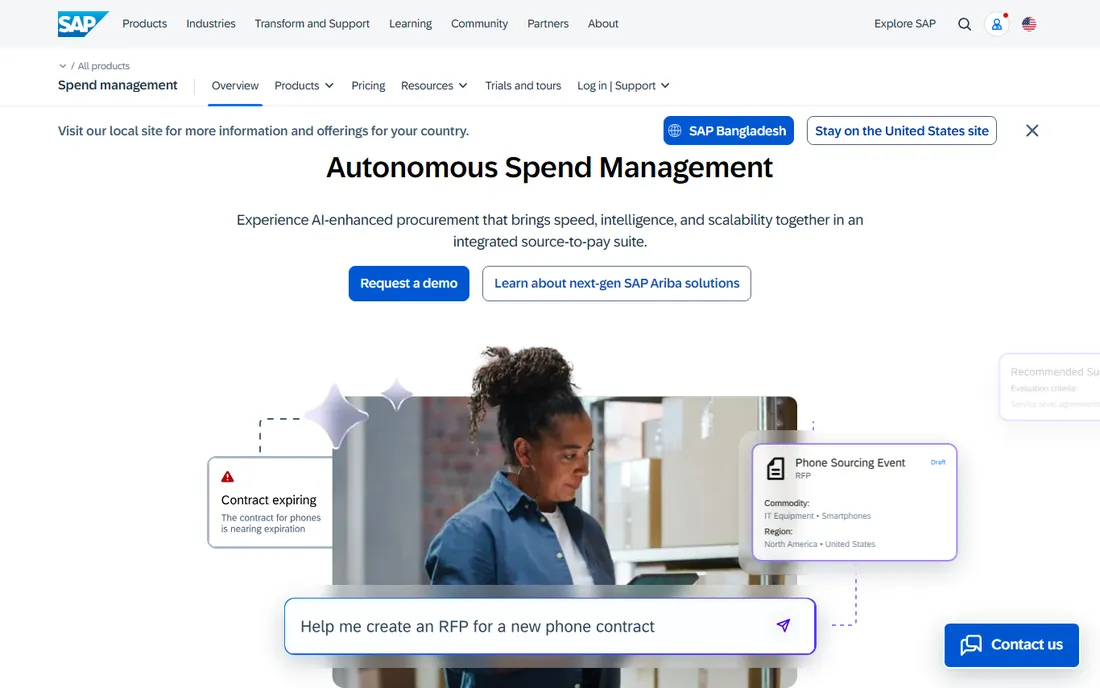
SAP Ariba is the procurement choice for the SAP world. Supplier management, sourcing, contracting and invoicing run inside the same ecosystem as the ERP, and the Ariba Network gives buyers access to an enormous supplier base. For global manufacturers and enterprises already on SAP, the integration value is decisive.
Outside SAP, the case is thin. Pricing is custom-quoted, implementations are long, and the platform assumes an SAP-shaped organization. Non-SAP companies get better value from Coupa or Gatekeeper. SAP shops should start here and validate the fit before entertaining alternatives.
What we like- Deepest integration with SAP ERP for source-to-pay
- The Ariba Network connects buyers with millions of suppliers
- End-to-end supplier lifecycle in one ecosystem
Watch out for- Makes little sense outside the SAP ecosystem
- Custom-quoted enterprise pricing with long implementations
#6
ServiceNow Vendor Risk Management
Best for: IT-centric vendor risk inside the ServiceNow platform
Visit servicenow.com
Starting priceSee website
Free planNo
ServiceNow's vendor risk management module earns its place on one condition: your company already runs ServiceNow. Inside that ecosystem, vendor risk assessments, remediation tasks and continuous monitoring ride the same workflows as IT service and security operations. The integration tax that other platforms charge in connectors and professional services largely disappears.
As a standalone purchase it makes no sense. Pricing is custom and enterprise-scale. IT-led organizations that standardized on ServiceNow should evaluate the VRM module before buying a separate risk platform; everyone else should look at Prevalent or LogicGate.
What we like- Native fit for companies running ServiceNow, with risk data flowing into IT workflows
- Strong automation for assessments and remediation
- Shared platform reduces integration work
Watch out for- Only sensible for existing ServiceNow customers
- Enterprise pricing scales with modules and users
#7
Venminder
Best for: Banks and regulated industries managing examiner expectations
Visit venminder.com
Starting priceSee website
Free planNo
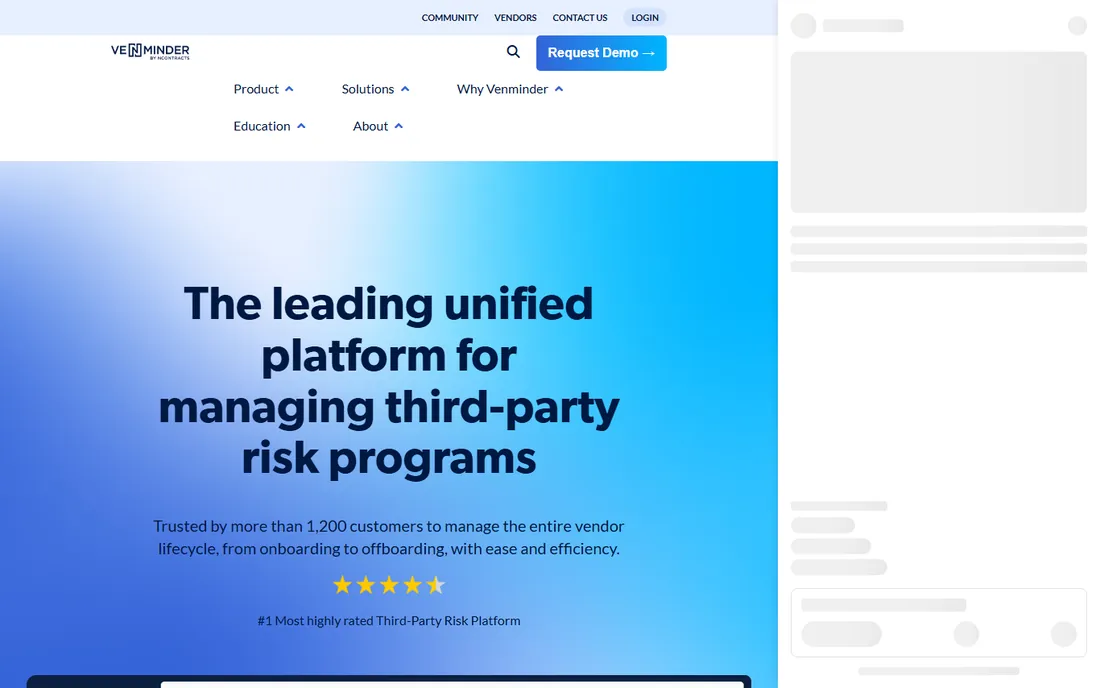
Venminder exists because bank examiners ask hard questions about third parties. The platform is built around the specific guidance regulators issue: risk assessments, due diligence documentation, ongoing monitoring and board reporting, all structured the way examiners expect to see them. Managed services can run assessments for teams without dedicated staff.
That specialization is the whole pitch and the whole limitation. Unregulated companies pay for regulatory machinery they do not need. Financial institutions, and any company whose customers include banks, should put Venminder on the shortlist and ask for reference customers under similar examiner scrutiny.
What we like- Built around regulatory guidance for financial institutions, including OCC and FDIC expectations
- Combines software with managed assessment services
- Strong contract and document management
Watch out for- Quote-based pricing with no public tiers
- The regulatory focus is overkill for unregulated industries
#8
Censinet
Best for: Healthcare organizations managing third-party and cyber risk
Visit censinet.com
Starting priceSee website
Free planNo
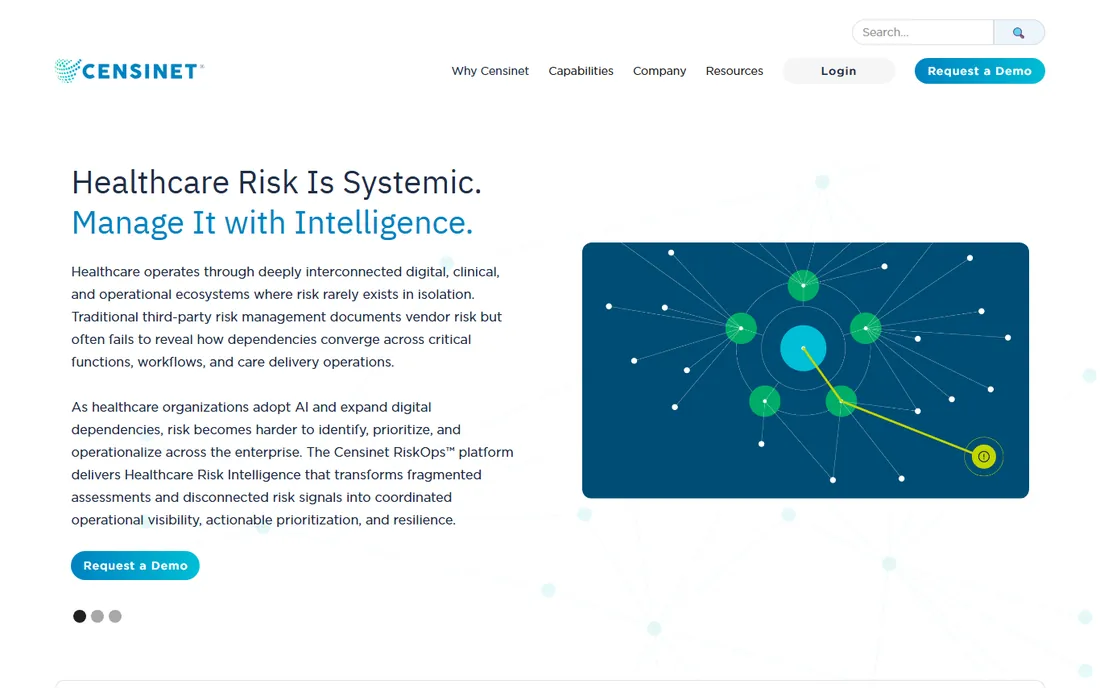
Censinet does for healthcare what Venminder does for banking: it speaks the industry's regulatory language natively. The platform manages third-party and cybersecurity risk for hospitals, health systems and payers, with assessments aligned to healthcare frameworks. Its network approach lets organizations reuse vendor assessments completed by peers, which cuts the industry's notorious questionnaire fatigue.
The focus is narrow by design. If you are not in healthcare, stop here. If you run a health system juggling hundreds of business associates and device vendors, Censinet's shared assessment network is a genuine efficiency gain over every vendor answering the same questionnaire separately.
What we like- Purpose-built for healthcare with HIPAA-aligned risk assessments
- Network model lets providers share completed vendor assessments
- Strong fit for hospital and payer procurement teams
Watch out for- Healthcare-specific, so other industries should look elsewhere
- Quote-based pricing with an enterprise sales motion
#9
LogicGate
Best for: Teams that want to build their own vendor risk workflows
Visit logicgate.com
Starting priceSee website
Free planNo
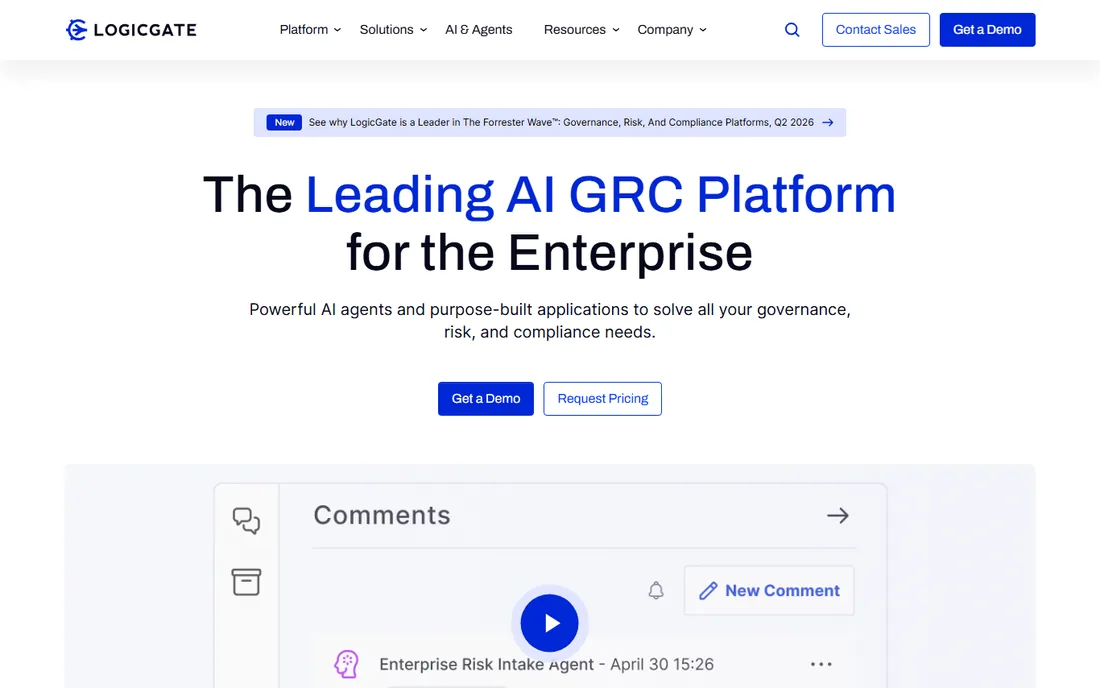
LogicGate's Risk Cloud appears here as the configurable alternative to the purpose-built risk platforms. Instead of adopting Prevalent's assessment model or Aravo's enterprise framework, teams build their own vendor onboarding, due diligence and monitoring workflows with a no-code builder. For companies whose vendor risk process does not match any vendor's template, that flexibility matters.
The trade is depth versus control. Dedicated platforms ship healthcare questionnaires, banking examiner reports and threat intelligence out of the box; LogicGate ships the tools to build equivalents. Reviewers also flag reporting as the weak spot. Choose it when your process is unusual and your team is capable; choose the specialists when you want the industry's answers pre-loaded.
What we like- Drag-and-drop builder lets risk teams design vendor workflows without IT
- Flexible enough for assessments, onboarding and ongoing monitoring
- Faster to value than enterprise suites
Watch out for- Quote-based pricing with no public tiers
- Reporting depth lags the dedicated risk platforms
How we chose
We built this list from vendor documentation, 2026 procurement and risk software comparisons, and review profiles, checked in October 2026. A tool made the cut only if it is actively sold today and serves a real vendor management job: procurement and contract lifecycle, third-party risk, or regulated industry compliance. No vendor on this list publishes numeric pricing on its own site, so every starting price reads See website rather than a third-party estimate presented as fact. We did not run hands-on trials. The trade-offs reflect consistent reviewer feedback and the documented structure of each vendor's sales model.
Buying for procurement vs buying for risk
Name the buyer before the vendor. If procurement owns the purchase, the job is spend visibility, contract renewals and supplier performance: shortlist Gatekeeper, Coupa or SAP Ariba. If risk, compliance or security owns it, the job is assessments, monitoring and examiner-ready reporting: shortlist Prevalent, Aravo, Venminder or Censinet. If both claim ownership, and they will, decide which problem hurts more this year and buy for that one; the platforms overlap at the edges but optimize for different masters.
Then count your vendors. Under 100 vendors with straightforward contracts, Gatekeeper or LogicGate will serve you well. Past 500 vendors with regulatory scrutiny, you need Prevalent, Aravo or an industry specialist. Between those poles, the deciding factor is usually who does the work: platforms with managed services (Venminder, Prevalent) suit thin teams, while configurable platforms (LogicGate) suit teams with process expertise but no headcount for enterprise administration.
The implementation fee nobody lists
In this category the license quote is the opening number, not the total. Third-party analyses of Gatekeeper report implementation at 30 to 40 percent of the first-year subscription. Enterprise risk platforms commonly need dedicated administrators, and several vendors sell managed assessment services as effectively mandatory add-ons. Before signing anything, ask for a written statement of work: hours, owner names, data migration scope and a go-live date. Ask which tasks require the vendor's consultants versus your staff, and what happens to the timeline if your team is slow. Then ask for two reference customers at your vendor count who went live in the last year, and call them. The vendors with nothing to hide will hand over the numbers.
Frequently asked questions
What is vendor management software?
Software that helps companies manage their relationships with third-party suppliers. Procurement-oriented platforms handle contracts, renewals, spend and supplier performance. Risk-oriented platforms handle due diligence, security assessments, ongoing monitoring and compliance reporting. Some companies need one side; regulated industries usually need both.
How much does vendor management software cost?
Vendors in this category do not publish pricing. Third-party estimates place mid-market platforms like Gatekeeper from roughly $1,100 a month and enterprise risk platforms from tens of thousands annually, with implementation commonly adding 30 to 40 percent in year one. Treat every figure as negotiable and get the full first-year cost, including services, in writing.
What is the difference between vendor management and third-party risk management?
Vendor management covers the commercial relationship: contracts, renewals, spend and performance. Third-party risk management covers the exposure: security posture, financial health, compliance and operational resilience. Procurement teams buy the first; risk and security teams buy the second. Platforms like Gatekeeper lean commercial, Prevalent and Aravo lean risk.
Do small companies need vendor management software?
Most do not need an enterprise platform. Under 50 vendors, a contract repository with renewal alerts, which Gatekeeper's entry tier or even a well-run shared drive provides, is usually enough. The case for dedicated software arrives with vendor count, regulatory scrutiny or painful renewal surprises.
How long does implementation take?
Mid-market platforms like Gatekeeper or LogicGate typically go live in one to three months. Enterprise suites like Coupa, SAP Ariba or Aravo commonly take three to nine months including data migration and workflow design. Ask for a written timeline tied to your vendor count before signing.
Can one platform handle both procurement and risk?
Partially. Coupa covers spend plus supplier risk; ServiceNow covers IT workflows plus vendor risk. But the deepest procurement tools are thin on risk monitoring, and the deepest risk platforms are thin on spend analytics. Companies with serious needs on both sides usually run a procurement platform and a risk platform with an integration between them.
Sources we checked (7)
- https://bindlegal.com/resources/best-software/vendor-performance-management-software/
- https://www.spendesk.com/blog/best-procurement-software/
- https://technologymatch.com/blog/best-vendor-performance-management-tools-for-it-leaders
- https://www.trustradius.com/products/gatekeeper/pricing
- https://comparisons.financesonline.com/gatekeeper-vs-manageengine-adaudit-plus-vs-vrealize-configuration-manager
- https://wonnda.com/magazine/supplier-management-software/
- https://www.getapp.ca/software/101929/gatekeeper
Is your product missing or out of date?
We review this list regularly. Vendors can request a listing, send updated pricing or ask about featured placement.

Shihab Mia · Founder, Rankite
Shihab has spent more than a decade helping SaaS and e-commerce brands grow through search. He writes Rankite's software buying guides from pricing pages, documentation and public user reviews. More about Shihab.