How we make this list: we compare pricing pages, product documentation and public user reviews. Ratings come from G2, Capterra or Trustpilot, with the date we checked them.
Key takeaways
- Statsig itself is not listed here, since this article covers alternatives to it: feature flag and experimentation platforms that combine flags, experiments, and analytics.
- LaunchDarkly wins when feature flags are the primary use case, while Statsig wins when experimentation is primary with flags as a nice-to-have, so the deciding factor is your main job.
- PostHog and GrowthBook suit startups that want flags plus analytics or experimentation without enterprise prices, with free tiers and open-source options.
- Flagsmith, ConfigCat, and Unleash give smaller teams a clear starting point for flagging alone, with free tiers and simpler pricing than enterprise platforms.
- Experimentation is not the same as flagging, so teams that run frequent A/B tests should shortlist experimentation-first tools ahead of flag-only tools.
Quick comparison
Is your product missing or out of date?
We review this list regularly. Vendors can request a listing, send updated pricing or ask about featured placement.
The best Statsig alternatives
Starting price$10 per seat per month
Free planYes
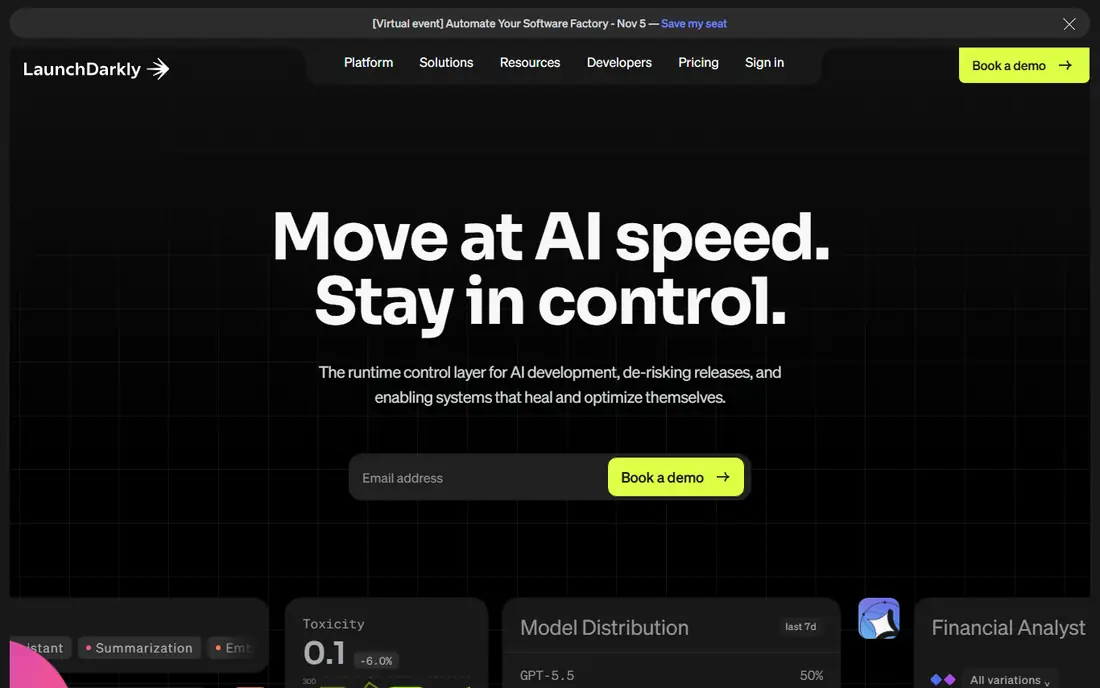
LaunchDarkly is primarily a feature flag management platform that has added experimentation features, not the other way around, making it the best pick when controlled feature rollouts are the core need with experimentation layered on top. Its flag management is best-in-class, with strong SDKs across every major language and framework, excellent targeting rules and segment management, and support for server-side and mobile experimentation. The free Developer plan covers basic flagging, with a 14-day trial for paid tiers, and Starter pricing from $10 per month per seat, though experimentation requires enterprise tiers, with budgets of $2,000 to $10,000 or more per month for a real program.
Experimentation is an add-on rather than the core product, and its stat engine is less sophisticated than Optimizely or Statsig, so pure experimentation teams should look elsewhere. Pricing also escalates quickly as connections and audience size grow. For teams where engineering controls feature releases and wants to layer experiments onto deployment workflow, LaunchDarkly is the best flag-first pick, and its governance suits large engineering organizations.
What we like- Best-in-class flag management
- 40 plus SDKs
- Governed high-volume releases
- 100,000 experimentation MAU included
Watch out for- Experimentation is an add-on, not core
- Stat engine less sophisticated than Statsig or Optimizely
- Pricing escalates with scale
Starting priceSee website
Free planYes

Optimizely Feature Experimentation suits rigorous stats and governance at scale, with sequential, Bayesian, and frequentist analysis methods, plus 12 SDKs and an Agent microservice for edge deployments. Its free Rollouts plan covers one experiment at a time, letting teams test flagging and basic experimentation without cost, while paid pricing is by monthly active users on request. Governance features suit large organizations with compliance and approval requirements, and its stats rigor is trusted for high-stakes experiments where false positives carry real cost.
Cost is the main barrier: recent reviews cite Optimizely as expensive, with cost a major factor in considering alternatives, and several reviewers mention switching to Statsig due to pricing and value satisfaction. For teams that prioritize statistical rigor and governance over price, Optimizely is the best pick, while budget-conscious teams should compare GrowthBook or PostHog first.
What we like- Rigorous stats with sequential, Bayesian, and frequentist methods
- Governance at scale
- Free Rollouts plan
Watch out for- Expensive for many users
- Cost is a major factor in switching
- Pricing on request by MAU

#3PostHog
Best for: Flags plus analytics4.5/5 on
G2 (1,053 reviews, checked Oct 2026)
Visit posthog.com
Starting priceFree
Free planYes
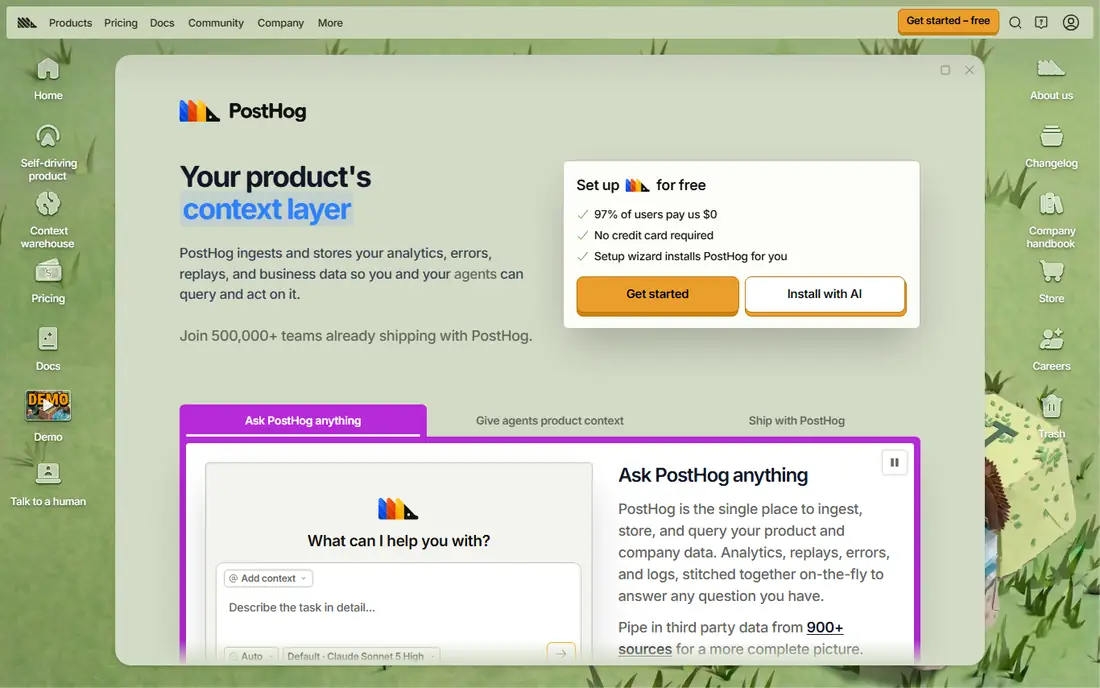
PostHog suits startups wanting flags, analytics, and session replay together, with 1 million flag requests per month free and usage-based pricing beyond that, plus open-source code that teams can self-host. Its experimentation supports Bayesian or frequentist analysis, and its product analytics depth helps teams connect flag outcomes to user behavior without a separate analytics tool. That combination makes PostHog the best pick for small businesses that want one platform for flags, analytics, and experimentation.
SDK coverage is smaller than LaunchDarkly, with 9 server SDKs offering local evaluation, and metric-based auto-rollback is not documented, so teams needing automated rollback should verify current features. For startups and small teams that want flags plus analytics in one open-source-friendly platform, PostHog is the best value pick, and its free tier covers early-stage use without cost.
What we like- 1 million flag requests per month free
- Open source
- Flags plus analytics plus replay together
- Bayesian or frequentist experiments
Watch out for- Smaller SDK coverage than LaunchDarkly
- Auto-rollback not documented
- Analytics depth varies by plan

#4GrowthBook
Best for: Flags plus experimentation4.6/5 on
G2 (26 reviews, checked Oct 2026)
Visit growthbook.io
Starting price$20 per user per month
Free planYes
GrowthBook combines feature flags with experimentation in one tool, suiting teams that run frequent A/B tests and want both jobs without separate platforms. Pricing starts at $20 per user per month, with a free tier for smaller teams, and its warehouse-native analysis lets teams run experiments against their own data warehouse rather than duplicating data into a vendor system. That architecture appeals to data-conscious teams and to startups that want experimentation depth without Statsig per-project pricing.
The ecosystem is smaller than LaunchDarkly, and enterprise features need higher tiers, while full warehouse-native value requires a data warehouse setup that small teams may lack. For teams that run frequent experiments and want flags plus experimentation with open-source flexibility, GrowthBook is the best experimentation-first pick, and its pricing is clearer than per-project or per-seat enterprise models.
What we like- Flags plus experimentation in one tool
- Open-source option
- Warehouse-native analysis
- Good for frequent A/B tests
Watch out for- Smaller ecosystem than LaunchDarkly
- Enterprise features need higher tiers
- Setup needs data warehouse for full value
Starting price$45 per month
Free planYes
Flagsmith gives open-source teams a clear starting point for flagging, with free tiers, simpler pricing than enterprise platforms, and self-hosting for teams with strict data control or compliance needs. Paid plans start at $45 per month, covering larger teams and additional features, while the open-source core covers flag creation, targeting, and rollout without vendor lock-in. That combination suits teams that prioritize code ownership and data control over built-in experimentation.
Experimentation depth trails GrowthBook and Statsig, so teams running frequent A/B tests should pair Flagsmith with a separate experimentation tool or choose an experimentation-first platform. Analytics depth is also smaller than PostHog or Statsig. For open-source teams that want reliable flagging with self-hosting and simple pricing, Flagsmith is the best pick, and its $45 entry is the lowest paid flagging price on this list.
What we like- Open-source code
- Free tier for small teams
- Simple flagging
- Self-hosting option for data control
Watch out for- Experimentation depth trails GrowthBook and Statsig
- Enterprise features need paid tiers
- Smaller analytics depth

#6ConfigCat
Best for: Simple reliable flagging4.7/5 on
G2 (45 reviews, checked Oct 2026)
Visit configcat.com
Starting price$110 per month
Free planYes
ConfigCat offers simple, reliable flagging with a free tier for small teams and paid plans starting at $110 per month, suiting teams that want flagging without experimentation complexity or enterprise overhead. Its SDK integration is easy across major languages, and its pricing is predictable compared with metered event or per-seat enterprise models, making budgeting straightforward for small and mid-sized teams. Reliability and simplicity are its core strengths, with uptime and flag evaluation speed prioritized over feature breadth.
Entry price at $110 per month exceeds Flagsmith $45, and experimentation is limited compared with GrowthBook, PostHog, or Statsig, so experiment-heavy teams should look elsewhere. Analytics features are also fewer than analytics-first platforms. For teams that want simple, reliable flagging with predictable pricing and no experimentation overhead, ConfigCat is the best pick, and its free tier covers evaluation and small projects.
What we like- Simple and reliable flagging
- Free tier for small teams
- Easy SDK integration
- Predictable pricing
Watch out for- $110 per month entry is higher than Flagsmith
- Experimentation limited
- Fewer analytics features

#7Unleash
Best for: Self-hosted enterprise flags4.7/5 on
G2 (137 reviews, checked Oct 2026)
Visit getunleash.io
Starting priceSee website
Free planYes
Unleash offers self-hosted enterprise flagging with open-source code, giving teams with strict data control or compliance needs full control over where flag data lives and how it is processed. Its enterprise features cover governance, approvals, and audit trails for large engineering organizations, with a free tier for smaller teams and open-source deployment for self-hosting. That control matters for regulated industries and for teams that cannot send flag evaluation data to vendor clouds.
Enterprise pricing is on request, and self-hosting needs operations effort for updates, backups, and scaling, which smaller teams may lack. Experimentation depth also trails Statsig and GrowthBook. For enterprises that need self-hosted flagging with governance and data control, Unleash is the best pick, and its open-source foundation avoids vendor lock-in for long-term deployments.
What we like- Open-source and self-hosted
- Enterprise flagging with governance
- Data control for compliance
- Free tier
Watch out for- Pricing on request for enterprise
- Self-hosting needs operations effort
- Experimentation less deep than Statsig
Starting priceSee website
Free planYes
Harness Feature Management and Experimentation, or FME, suits teams already on Harness CI/CD, integrating flagging and experimentation directly into deployment pipelines with guardrails and warehouse-native analysis. Features include sequential testing, guardrails that protect metrics during rollouts, and metric-based auto-rollback included rather than as a paid add-on, plus SDKs across Java, Go, .NET, Python, Ruby, PHP, Node.js, Elixir, Flutter, and more. That pipeline integration makes flagging part of deployment rather than a separate tool.
Pricing is on request, and the best value comes inside the Harness ecosystem, so teams not using Harness CI/CD gain less from FME. For Harness customers who want flags and experimentation tied to their deployment workflow with built-in rollback, Harness FME is the best pick, and its free plan covers evaluation before committing.
What we like- Free plan available
- Sequential testing with guardrails
- Warehouse-native analysis
- Metric-based auto-rollback included
Watch out for- Pricing on request
- Best value inside Harness ecosystem
- SDK coverage varies by language
How we chose
We compared tools on flag management depth, experimentation rigor, SDK coverage, pricing model transparency, open-source availability, and auto-rollback support, weighting whether experimentation or flagging is the primary job. We favored tools with published pricing where available, and we marked Optimizely, Unleash, and Harness FME as See website where pricing is on request rather than guessing a figure. Prices come from vendor pages and current guides, and they vary by seats, connections, events, or monthly active users, so verify pricing at your real scale. We did not test any tool hands-on, and we did not list Statsig itself as one of its own alternatives.
Buying guide
Start from your primary job. If feature flags are primary, choose LaunchDarkly for governance or Flagsmith, ConfigCat, or Unleash for simpler or open-source flagging. If experimentation is primary, choose GrowthBook or PostHog for experimentation-first value, or Optimizely for rigorous stats at scale. If you already use Harness CI/CD, evaluate Harness FME first, and if you already use Amplitude analytics, consider Amplitude Feature Experimentation for its 2 million events per month free tier.
Before committing, check five things: whether your stack has a solid SDK for your main language, since a flag system without one slows every release, whether experimentation stats methods match your rigor needs, whether auto-rollback is included or a paid add-on, whether pricing is per seat, per project, per event, or per monthly active user, and what your real scale costs under that model. Start with SDK coverage, pilot on one service first, and expand only when flag evaluation and experiment results prove reliable in production.
Frequently asked questions
What is the best Statsig alternative for feature flags?
LaunchDarkly is the best flag-first alternative, with best-in-class flag management and 40 plus SDKs. Flagsmith, ConfigCat, and Unleash offer simpler or open-source flagging at lower cost for teams that do not need enterprise governance.
Which Statsig alternative is best for experimentation?
GrowthBook is the best experimentation-first alternative for most teams, with flags plus experimentation and warehouse-native analysis. Optimizely suits rigorous stats at scale, while PostHog suits startups wanting flags plus analytics together.
Is there a free Statsig alternative?
Yes. PostHog offers 1 million flag requests per month free, LaunchDarkly offers a free Developer plan, Optimizely offers a free Rollouts plan, and Flagsmith, ConfigCat, GrowthBook, Unleash, and Harness FME all offer free tiers or open-source options.
What is the difference between feature flags and experimentation?
Feature flags control which users see a feature, enabling safe rollouts and rollbacks, while experimentation measures which variant performs better using statistical methods. Flags enable experiments, but experimentation adds measurement, analysis, and decision-making on top of flagging.
How is Statsig pricing structured?
Statsig offers a free Developer plan with 2 million events per month, metered events pricing beyond that, and Pro at $150 per month per project, with feature flags free forever at any volume in some descriptions. Per-project pricing means a team with 3 apps pays $450 per month base before event overages.
Should small teams use enterprise flag platforms?
Usually not. Small teams gain more from PostHog, GrowthBook, Flagsmith, or ConfigCat, which offer free tiers and simpler pricing, than from enterprise platforms requiring annual contracts and complex pricing. Move to enterprise tools when governance, scale, or compliance needs demand them.
Sources we checked (0)
Is your product missing or out of date?
We review this list regularly. Vendors can request a listing, send updated pricing or ask about featured placement.

Shihab Mia · Founder, Rankite
Shihab has 5+ years in B2B and SaaS SEO. He writes Rankite's software buying guides from pricing pages, documentation and public user reviews. More about Shihab.
 LaunchDarkly
 Optimizely Feature Experimentation
 Flagsmith
 Harness FME