How we make this list: we compare pricing pages, product documentation and public user reviews. Ratings come from G2, Capterra or Trustpilot, with the date we checked them.
Key takeaways
- Codacy leads on easy setup, with automated code reviews and quality gates that teams adopt quickly.
- CodeClimate leads on maintainability tracking, with technical debt and velocity insights alongside quality checks.
- Snyk Code leads on security-first scanning, pairing code quality with vulnerability detection developers already trust.
- Checkmarx, Veracode, and Coverity lead on enterprise application security, with deep SAST coverage for regulated teams.
- DeepSource and CodeScene suit teams that want focused quality checks, code health insights, and autofixes.
- SonarQube itself is NOT listed here, since this article covers alternatives to it. Teams replacing SonarQube should check language support, self-hosting options, and CI integration before choosing.
Quick comparison
| Tool | Best for | Starting price | Free plan |
|---|
 Codacy | Easy setup | See website | Free plan |
 CodeClimate | Maintainability tracking | See website | Free plan |
 Snyk Code | Security-first scanning | See website | Free plan |
 Checkmarx | Enterprise SAST | See website | Free trial |
 Veracode | Enterprise security | See website | Free trial |
 Coverity | Deep static analysis | See website | Free trial |
 DeepSource | Focused quality checks | See website | Free plan |
 CodeScene | Code health insights | See website | Free trial |
Is your product missing or out of date?
We review this list regularly. Vendors can request a listing, send updated pricing or ask about featured placement.
The best sonarqube alternatives
SonarQube is the standard self-hosted code quality and security platform, but teams look for alternatives for reasons ranging from setup complexity and pricing to language coverage and cloud preferences. The eight tools below cover automated code review, maintainability tracking, security scanning, and code health analysis, and the right pick depends on whether your priority is quality, security, ease of setup, or enterprise compliance.
How we chose
We started from the code quality and security tools teams actually use as SonarQube replacements in 2026, drawing on vendor pages, developer guides, and engineering comparisons. We favored tools with CI integration, quality gates, and language support matching real world codebases, and we excluded SonarQube itself, since this article is about alternatives. Prices vary by lines of code, developers, and plan, so where a figure is not confirmed on a vendor page, we use "See website" and flag the gap.
Buying guide
Start with your primary need: quality or security. Quality-first teams should shortlist Codacy, CodeClimate, DeepSource, and CodeScene, which focus on maintainability, code smells, and technical debt. Security-first teams should shortlist Snyk Code, Checkmarx, Veracode, and Coverity, which focus on vulnerabilities and compliance. Many teams need both, so check whether one tool covers both or whether pairing is needed.
Next, check language and framework support. A tool that covers your main languages deeply beats a tool that covers many languages shallowly, so test it on your actual repositories. Then check deployment: self-hosted teams replacing SonarQube may want Coverity or Checkmarx on-premises options, while cloud-first teams suit Codacy, DeepSource, and Snyk Code.
Then test CI integration and developer experience. Quality gates should block bad merges without slowing developers, pull request comments should be clear and actionable, and false positive rates should stay low. Run a trial on a real repository for two full weeks before committing, since marketing demos hide noise and friction. Finally, check pricing models: per-developer, per-line-of-code, and per-project models scale very differently as teams grow.
Open source versus commercial deserves a direct decision too. Open source analyzers cost nothing and offer full control, but they need self-hosting, tuning, and maintenance that consume engineering time. Commercial tools charge per developer or per line of code, yet they handle hosting, updates, and rule maintenance for you. Small teams with tight budgets and strong DevOps skills may prefer open source, while larger teams usually save money overall with commercial tools once maintenance time is counted honestly.
One more factor matters for migration: history and baselines. Moving from SonarQube means losing historical quality trends unless you export or recreate baselines, so plan a transition period where both tools run in parallel. That overlap catches configuration gaps and lets teams compare findings before fully switching.
Common mistakes to avoid
The most common mistake is choosing on feature lists instead of trial results. Every tool claims broad language support and low false positives, but real world repositories reveal the truth. Trial on your largest, messiest production repository, not a clean demo project, since that is where quality tools earn their keep.
Another mistake is treating security findings as purely a security team problem. Developers fix code fastest when findings reach them in pull requests with clear explanations and suggested fixes, rather than in separate reports weeks later. Integrate security scanning into the same pull request workflow as quality checks, assign ownership for each finding, and track fix rates, since unowned findings linger indefinitely no matter how good the scanner is.
The second mistake is enabling every rule at once. Maximum strictness produces alert fatigue, developers start ignoring findings, and quality gates get disabled. Start with high-value rules, fix the backlog gradually, and tighten gates over months. The third mistake is ignoring developer workflow: a tool that slows pull requests or floods comments will be resisted no matter how good its analysis, so prioritize clear, actionable feedback.
Frequently asked questions
Why replace SonarQube?
Common reasons include setup and maintenance burden, pricing at scale, language coverage gaps, and preference for cloud-hosted tools. Some teams also want stronger security scanning or simpler developer workflows than SonarQube provides.
Can these tools self-host like SonarQube?
Some can. Coverity and Checkmarx offer on-premises deployment for enterprise teams, while Codacy, DeepSource, and Snyk Code are primarily cloud-hosted. Check deployment options if self-hosting is a hard requirement.
Which alternative is easiest to set up?
Codacy leads on easy setup, with automated reviews that work within minutes on connected repositories. DeepSource also sets up quickly, while enterprise SAST tools need more configuration.
Do these tools replace security scanners?
Quality tools and security scanners overlap but differ. Snyk Code, Checkmarx, Veracode, and Coverity provide security scanning, while Codacy and CodeClimate focus mainly on quality. Teams with strict security needs should pick a security-first tool.
Which alternative is best for open source projects?
Codacy, DeepSource, and Snyk Code all offer free tiers for open source projects, which suits public repositories with limited budgets. Check each free tier's limits on private repositories, since those differ and may push mixed open and closed source teams toward paid plans.
How do I migrate from SonarQube?
Run the new tool alongside SonarQube for a transition period, compare findings, recreate quality gates, and export historical data where possible. Migrate team by team rather than all at once to catch configuration gaps early.
Sources
- Vendor pages for Codacy, CodeClimate, Snyk Code, Checkmarx, Veracode, Coverity, DeepSource, and CodeScene
- Third-party 2026 comparisons of code quality and static analysis tools
- Developer guides on quality gates, SAST, and SonarQube migration
Starting priceSee website
Free planFree plan
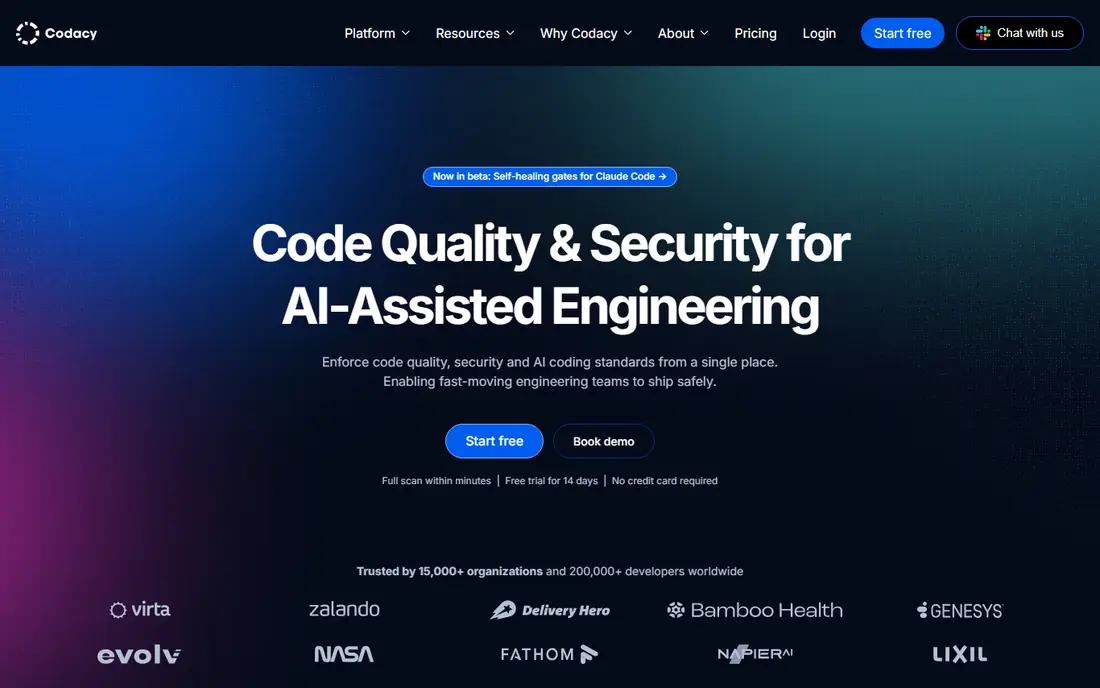
Codacy is the easy-setup pick, with automated code reviews that connect to repositories and start checking pull requests within minutes, plus quality gates that block merges failing standards. Its straightforward onboarding suits teams that want SonarQube-style checks without SonarQube-style maintenance.
Security depth trails Snyk Code, enterprise features cost more, and customization limits frustrate teams with complex rule needs. Codacy suits small and mid-size teams that want fast, automated code quality with minimal setup.
What we like- Fast setup
- Automated code reviews
- Quality gates
Watch out for- Security depth trails Snyk
- Enterprise features cost more
- Customization limits
Starting priceSee website
Free planFree plan

CodeClimate tracks maintainability with letter grades, technical debt estimates, and velocity insights that show how code health affects delivery speed. That engineering management view suits teams that want quality data for planning, not just pull request checks.
Security scanning is thinner than Snyk or Checkmarx, pricing scales with team size, and setup takes care for full value. CodeClimate suits engineering teams that want maintainability tracking plus management insights.
What we like- Maintainability grades
- Technical debt tracking
- Velocity insights
Watch out for- Security scanning is thinner
- Pricing scales with team
- Setup takes care
Starting priceSee website
Free planFree plan
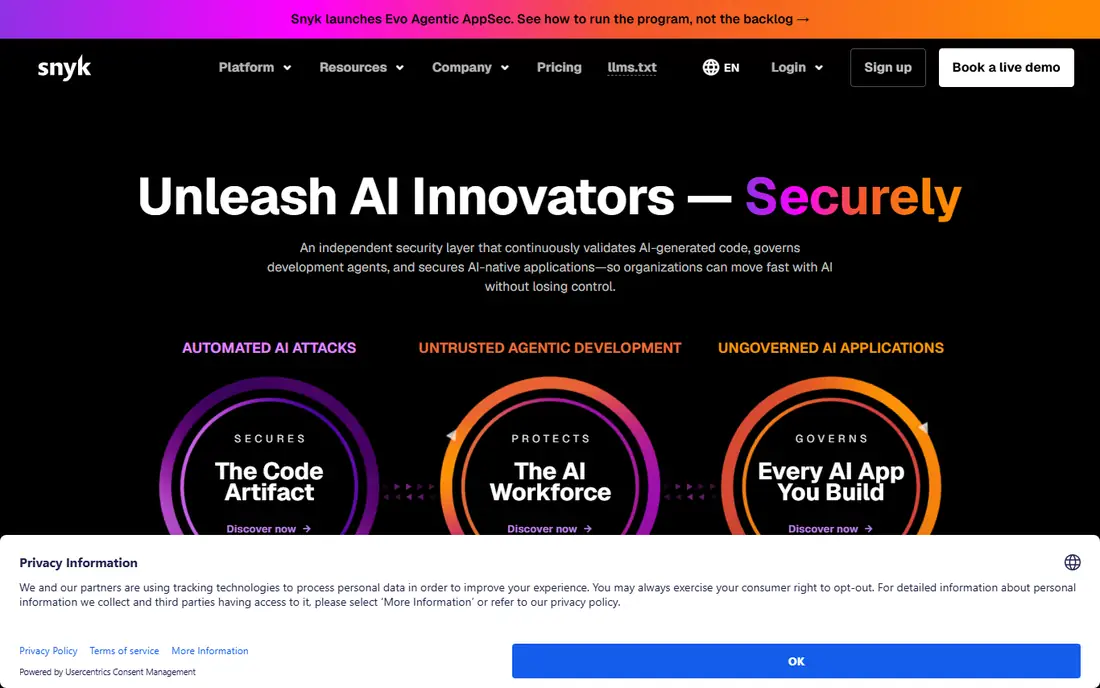
Snyk Code is the security-first pick, scanning code for vulnerabilities with developer-friendly fixes and integration with the wider Snyk ecosystem covering dependencies, containers, and infrastructure. Developers already using Snyk for dependencies gain a unified security view.
Quality rules are thinner than Codacy, pricing scales with developers, and enterprise features cost more. Snyk Code suits security-conscious teams that want vulnerability scanning with developer-friendly workflows.
What we like- Strong vulnerability detection
- Developer-friendly
- Integrates with Snyk ecosystem
Watch out for- Quality rules are thinner
- Pricing scales
- Enterprise features cost more
Starting priceSee website
Free planFree trial
Checkmarx is the enterprise SAST standard, with deep static analysis covering many languages, compliance reporting for regulated industries, and on-premises deployment for teams that cannot use cloud tools. Its depth suits banks, healthcare, and government teams with strict security requirements.
Pricing is expensive, setup is complex, and developer experience feels heavier than cloud rivals. Checkmarx suits enterprise teams that need deep SAST and compliance over simplicity.
What we like- Deep SAST coverage
- Enterprise compliance
- On-premises option
Watch out for- Expensive
- Setup is complex
- Developer experience is heavier
Starting priceSee website
Free planFree trial
Veracode offers broad application security testing, including static, dynamic, and software composition analysis, with compliance reporting for enterprise and regulated teams. Its mature platform handles large portfolios and complex security programs.
Pricing is expensive, the learning curve is real, and code quality features are secondary to security. Veracode suits enterprise security teams that want broad testing and compliance coverage.
What we like- Broad security testing
- Compliance reporting
- Mature platform
Watch out for- Expensive
- Learning curve
- Quality features are secondary
Starting priceSee website
Free planFree trial
Coverity, from Synopsys, is known for deep static analysis with low false positive rates, especially for C, C++, and Java codebases in embedded, automotive, and systems work. Its on-premises option suits teams with strict deployment requirements.
Pricing is expensive, setup is complex, and language focus is narrower than cloud rivals. Coverity suits systems and embedded teams that need deep analysis for C, C++, and Java with low noise.
What we like- Deep analysis for C, C++, and Java
- Low false positives
- On-premises option
Watch out for- Expensive
- Setup is complex
- Language focus is narrower
Starting priceSee website
Free planFree plan
DeepSource offers focused quality checks with autofix suggestions that repair common issues automatically, plus analyzers tuned per language for clear, actionable feedback. Its easy setup and autofixes save developer time on routine fixes.
Language coverage is narrower than Codacy, enterprise features are thinner, and security depth varies by language. DeepSource suits teams that want focused quality checks with autofixes and quick setup.
What we like- Autofix suggestions
- Focused analyzers
- Easy setup
Watch out for- Language coverage is narrower
- Enterprise features are thinner
- Security depth varies
Starting priceSee website
Free planFree trial
CodeScene analyzes code health, hotspots where bugs cluster, and team dynamics, helping managers prioritize technical debt where it hurts delivery most. Its hotspot analysis reveals risky files that simple quality grades miss.
Quality gates are thinner than Codacy, pricing is higher, and interpreting insights takes learning. CodeScene suits engineering leaders who want code health and technical debt prioritization beyond pull request checks.
What we like- Code health and hotspot analysis
- Team insights
- Technical debt prioritization
Watch out for- Quality gates are thinner
- Pricing is higher
- Learning curve for insights
Is your product missing or out of date?
We review this list regularly. Vendors can request a listing, send updated pricing or ask about featured placement.

Shihab Mia · Founder, Rankite
Shihab has 5+ years in B2B and SaaS SEO. He writes Rankite's software buying guides from pricing pages, documentation and public user reviews. More about Shihab.