How we make this list: we compare pricing pages, product documentation and public user reviews. Ratings come from G2, Capterra or Trustpilot, with the date we checked them.
Key takeaways
- Strapi, Directus, and Payload are the open source exits: self host them and the per seat and usage bills that push teams off Contentful largely disappear.
- Sanity matches Contentful's API first ambition with a real time, code defined content studio and a free tier developers love.
- Storyblok is the pick when editors, not developers, drive the switch: its visual editor shows the page while you edit it.
- Contentful's pricing scales with usage and seats; model your traffic and team size on each rival before the migration sales pitch convinces you.
Quick comparison
| Tool | Best for | Starting price | Free plan |
|---|
 Strapi | Open source, self hosted control | Free | Yes |
 Sanity | Developer defined content platforms | Free | Yes |
 Hygraph | GraphQL native federated content | See website | Yes |
 Storyblok | Visual editing for marketing teams | See website | Yes |
 Directus | CMS over your own database | Free | Yes |
 Payload | TypeScript native, code first CMS | Free | Yes |
 Ghost | Publishing and memberships | See website | No |
 Builder.io | Visual building on your stack | See website | Yes |
Is your product missing or out of date?
We review this list regularly. Vendors can request a listing, send updated pricing or ask about featured placement.
The best Contentful alternatives
#1Strapi
Best for: Open source, self hosted control4.5/5 on
G2 (204 reviews, checked Oct 2026)
Visit strapi.io
Starting priceFree
Free planYes
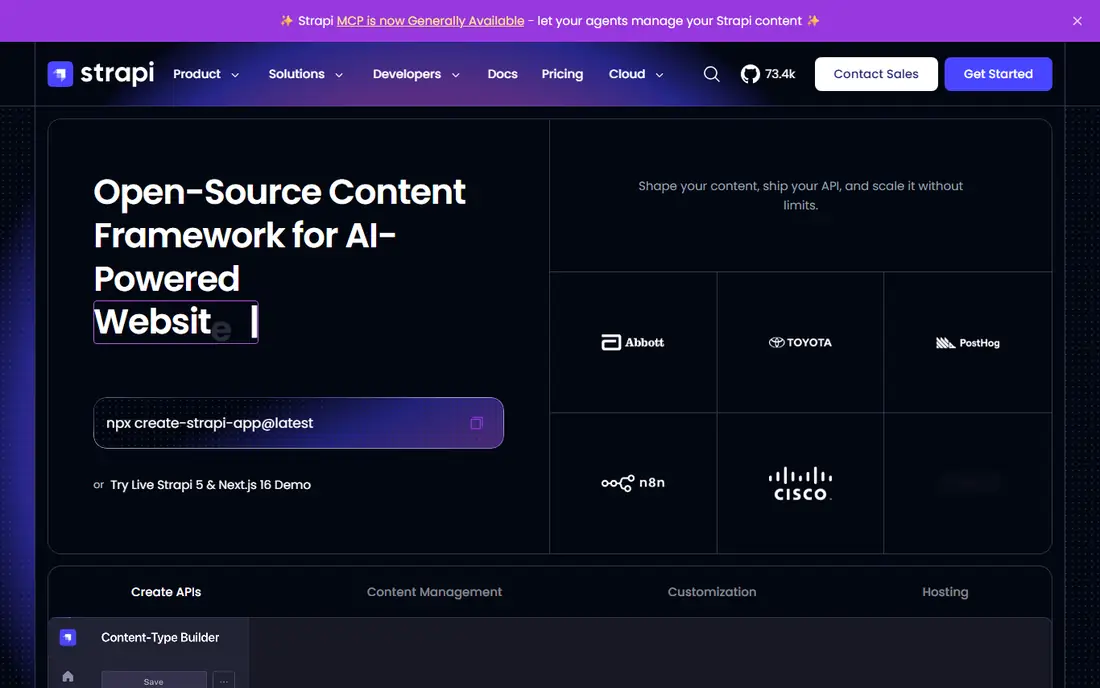
What we like- Strapi is the leading open source headless CMS: download it, model content in its admin panel, and serve REST or GraphQL from infrastructure you control, with the licence cost at zero and a hosted cloud option, from about 29 dollars a project a month, for teams that prefer not to run servers. Its plugin ecosystem, roles and permissions, and internationalization cover the Contentful checklist closely, and the self hosted model means traffic spikes grow your server bill modestly instead of re rating your CMS contract.
Watch out for- Self hosting is a job: updates, backups, scaling, and security become yours, and enterprise features such as advanced review workflows sit in paid tiers whether hosted or licensed. The editor experience targets administrators more than marketers. Very large content operations may miss Contentful's mature governance tooling.
#2Sanity
Best for: Developer defined content platforms4.7/5 on
G2 (926 reviews, checked Oct 2026)
Visit sanity.io
Starting priceFree
Free planYes
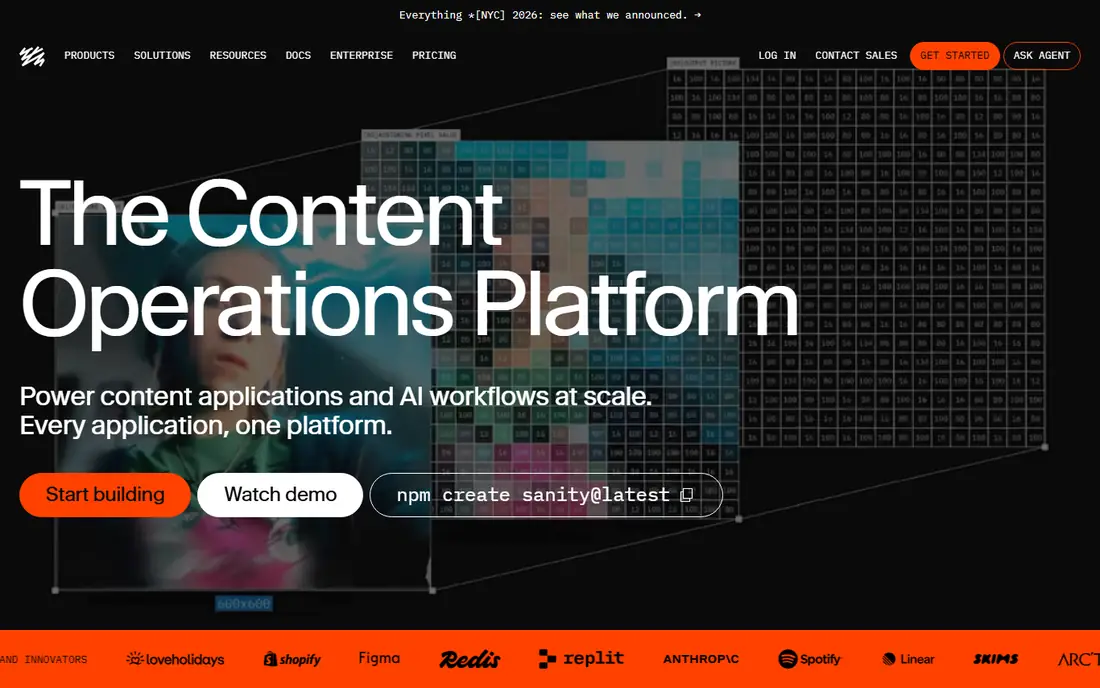
What we like- Sanity treats content as data on a platform: schemas defined in code, a Studio you customize in React, real time collaboration, and a query language, GROQ, more expressive than the usual REST filters. Its free tier is generous enough to run real projects, with usage based paid plans adding editors from about 15 dollars each a month. Developers consistently rate it the most enjoyable headless platform to build on, which matters when the CMS choice is really a hiring and retention choice for your front end team.
Watch out for- The code first philosophy means editors depend on developers for schema changes that Contentful's UI lets them attempt themselves. Costs scale with usage and documents in ways that need modelling for media heavy sites. Non technical teams evaluating it should have their developers in the room
- Its strengths are invisible in a sales demo aimed at marketers.
#3Hygraph
Best for: GraphQL native federated content4.4/5 on
G2 (735 reviews, checked Oct 2026)
Visit hygraph.com
Starting priceSee website
Free planYes
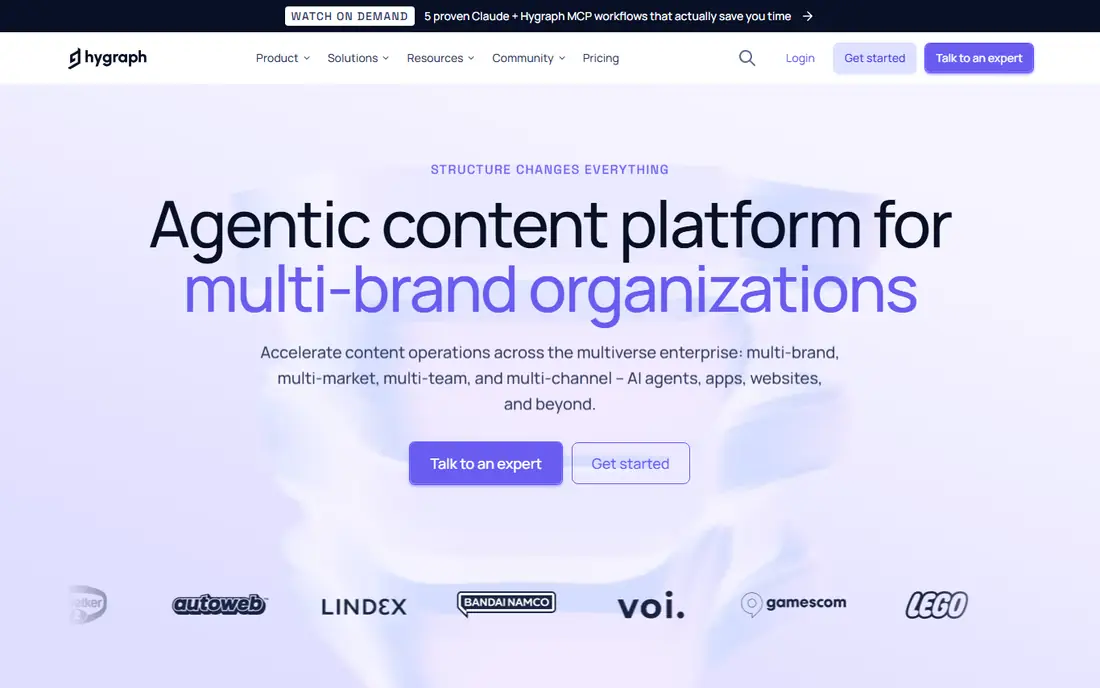
What we like- Hygraph, the platform formerly called GraphCMS, is the GraphQL native entry: schema, queries, and content federation that pulls fields from your commerce or PIM systems into one API call. Marketing and commerce teams with several back ends use it to present one content graph to every front end. A free developer tier supports evaluation and small projects, and its editorial interface is friendlier than the developer led rivals.
Watch out for- Published pricing for serious tiers is quote shaped, so budget holders must engage sales to learn their number, which this guide records as see website. GraphQL only is a genuine constraint for teams standardized on REST. The ecosystem and community are smaller than Strapi's or Sanity's, which shows up in examples and hiring.
#4Storyblok
Best for: Visual editing for marketing teams4.5/5 on
G2 (592 reviews, checked Oct 2026)
Visit storyblok.com
Starting priceSee website
Free planYes
What we like- Storyblok's signature is the visual editor: marketers edit components inside a live preview of the actual page, solving the complaint that ends most headless projects, that editors cannot see what they are doing. Underneath sits a proper component based headless architecture with APIs and good multi site support, and pricing tiers by project features rather than raw API calls have historically made bills predictable. A free entry tier covers small sites and trials.
Watch out for- Tier prices and feature gates have been restructured and are best confirmed on its current pricing page
- Enterprise workflow features sit high in the stack. The component model asks developers to build the block library editors assemble, so the visual freedom arrives after real front end investment. Very API heavy, non page use cases gain less from its editor advantage.
Starting priceFree
Free planYes
What we like- Directus takes a different bet: it wraps your existing SQL database, any of the major engines, in an instant API and a clean admin app, so content and application data live in a database you fully own. Self hosted it is free and open source, with a cloud tier for convenience, and it suits teams whose content is really product data, directories, or app back ends rather than articles. Data ownership arguments end here: export is a database dump, not an API negotiation.
Watch out for- It is a general data platform wearing CMS clothes, so editorial niceties, preview workflows, asset handling finesse, trail the purpose built rivals. You own the database means you own its scaling and backups too. Marketing teams evaluating it should be shown the actual editor early, because its data first feel delights engineers and can underwhelm editors.
Starting priceFree
Free planYes
What we like- Payload is the TypeScript generation's CMS: open source, code configured, built on modern React frameworks, with auth, file handling, and an admin panel generated from your config, self hosted free or deployed on its cloud. Version 3 folded it directly into Next.js projects, making the CMS part of the app rather than a separate system, which full stack teams find architecturally satisfying. For developer led teams leaving Contentful over cost and control simultaneously, Payload is the current favourite.
Watch out for- Code first means content model changes are deployments
- Editor self service is limited by design. The project's relative youth shows in a smaller plugin ecosystem and fewer long term enterprise references. Hosting it well is your platform team's responsibility, as with every self hosted entry here.
#7Ghost
Best for: Publishing and memberships4.0/5 on
G2 (40 reviews, checked Oct 2026)
Visit ghost.org
Starting priceSee website
Free planNo
What we like- Ghost answers a simpler question some Contentful users eventually ask: if the content is a publication, why are we running a headless platform at all? Ghost is a focused publishing system, editor, newsletters, paid memberships, and payments built in, open source to self host or run on Ghost Pro hosting. Writers and independent publications get a product designed for their exact job, with none of the schema modelling theatre. Its editor and membership tooling beat anything in this list at the publishing task specifically.
Watch out for- Ghost is not a general headless CMS for arbitrary content structures and multi channel apps
- Forcing it into that role recreates the mismatch in the other direction. There is no free hosted tier, and theme and integration ecosystems are publishing sized. Teams with genuine multi front end content needs should stay with the platforms above.
Starting priceSee website
Free planYes
What we like- Builder.io layers a visual builder over your existing stack: marketers drag and drop pages and sections built from your own components, while its content APIs and newer AI assisted tooling serve headless duties for landing pages and commerce content. Companies adopt it to free marketing from developer queues without replatforming the whole site. A free tier supports small scale evaluation, and its integrations cover the major front end frameworks and commerce platforms.
Watch out for- Builder is strongest as a visual layer for pages, less as the system of record for all content, so many adopters run it beside a CMS rather than instead of one. Pricing is tiered by features and usage and quoted per plan structure on its site. Governance across many page builders and brands requires the discipline any visual tool demands.
How we chose
We compared headless and content platforms on hosting model, pricing shape, editor experience, API style, and ecosystem maturity, since those decide satisfaction after the feature grids tie. We weighted the open source exits heavily, because cost and control drive most Contentful switches, and included Ghost deliberately as the reframe option for publications. Published prices are shown where vendors state them plainly; usage and quote shaped pricing is labelled rather than estimated.
How to choose the right Contentful alternative
Sort your switch by its true driver. If the bill is the problem and you have platform skills, Strapi, Directus, or Payload remove the per usage meter; budget the engineering honestly, a fraction of a developer's time against the contract you are leaving, and the exit usually pays. If editors are the problem, Storyblok's visual editing or Hygraph's friendlier interface should be trialled by the editors themselves, with real pages, before any contract discussion. If developers are the constituency, Sanity's studio and query model win trials on merit.
Run migration as a content project, not a software swap. Export the content model and inventory what exists, including the forgotten content types every CMS accumulates; rebuild the model leaner in the new platform rather than cloning the old one's archaeology. Migrate a representative section, one locale, one content type with media, and measure the editorial team's time on their ten commonest tasks in both systems. Only then commit the remaining content and the cutover date, keeping the old platform read only through launch. The goal is not identical features; it is the same publishing outcomes at a cost and experience the team prefers.
Frequently asked questions
Why do teams leave Contentful?
Mostly economics and ergonomics: usage and seat pricing that scales faster than the value editors perceive, and a form based editing experience that frustrates marketing teams who cannot preview pages. Control is the third driver; self hosted platforms answer data ownership and compliance questions a hosted contract cannot. Few teams leave over API capability, where Contentful remains strong.
Which alternative is cheapest at scale?
The self hosted open source platforms, Strapi, Directus, and Payload, replace licence scaling with infrastructure and maintenance you control, which for high traffic properties is usually far cheaper. Sanity's usage pricing can be economical at moderate scale. Cheap must be quoted honestly though: include the engineering time to run, patch, and back up the platform in the comparison, or the saving is an accounting illusion.
Can editors really preview pages in a headless CMS?
Yes, with the right platform and front end work. Storyblok builds visual editing into its core; Sanity and others support preview through studio configuration and front end integration. The catch is that preview is a feature your developers implement against the front end, not a switch the CMS flips alone, so scope it in the migration project explicitly.
Is migrating content out of Contentful difficult?
The content itself exports through Contentful's APIs and management tools in structured form, and every platform here imports JSON shaped data happily. The work is model translation, media migration, and rebuilding the front end queries, which is days to weeks for typical marketing sites. The discipline that matters is editorial: migrate the content you still publish proudly, and let the archive be an export file rather than a living burden.
Should we self host or stay hosted?
Hosted if content is a utility and your team is small; self host if traffic volume makes usage pricing punitive or data control is a hard requirement. The middle path is managed cloud tiers of open source platforms, which keep the exit door open while someone else patches the servers. Whichever you choose, confirm export rights and formats before signing, because the cost of leaving is set on the day you arrive.
Sources we checked (0)
Is your product missing or out of date?
We review this list regularly. Vendors can request a listing, send updated pricing or ask about featured placement.

Shihab Mia · Founder, Rankite
Shihab has 5+ years in B2B and SaaS SEO. He writes Rankite's software buying guides from pricing pages, documentation and public user reviews. More about Shihab.