How we make this list: we compare pricing pages, product documentation and public user reviews. Ratings come from G2, Capterra or Trustpilot, with the date we checked them.
Key takeaways
- Bright Data and Oxylabs are the enterprise answers: the largest pools and the most developed compliance programmes, at residential list prices around 8 and 6 dollars per GB.
- Decodo, formerly Smartproxy, is the value centre: from about 3.75 dollars per GB at small volumes, falling toward 2 dollars at scale, with self serve signup.
- IPRoyal and DataImpulse serve irregular workloads: non expiring traffic at 1 dollar per GB from DataImpulse, and long sticky sessions from IPRoyal.
- Use proxies only for legitimate work, and vet sourcing. Some networks in this industry have faced abuse reporting and even law enforcement action; providers with documented, consent based sourcing are the safe purchase.
Quick comparison
| Tool | Best for | Starting price | Free plan |
|---|
 Bright Data | Enterprise scale and compliance | $8 per GB | No |
 Oxylabs | Large data pipelines with SLAs | $6 per GB | No |
 Decodo | Value all rounder for growing teams | $3.75 per GB | No |
 IPRoyal | Long sessions and non expiring traffic | See website | No |
 Webshare | Developers prototyping on a free tier | $2.99 per month | Yes |
 Rayobyte | Buyers who lead with ethical sourcing | $3.50 per GB | No |
 DataImpulse | Budget pay as you go volume | $1 per GB | No |
 ProxyEmpire | Rollover bandwidth and mobile proxies | See website | No |
Is your product missing or out of date?
We review this list regularly. Vendors can request a listing, send updated pricing or ask about featured placement.
The best SOAX alternatives
#1Bright Data
Best for: Enterprise scale and compliance4.6/5 on
G2 (272 reviews, checked Oct 2026)
Visit brightdata.com
Starting price$8 per GB
Free planNo
What we like- The largest advertised pool in the industry, over 400 million addresses across 195 countries in its own reporting, with residential, mobile, ISP and datacenter products, targeting down to city and ASN level, and the most developed compliance operation in the field: strict know your customer checks for residential access, human review, abuse monitoring around the clock, and independently audited consent based sourcing through its SDK programme. Enterprises buy the audit trail as much as the addresses.
Watch out for- The 8 dollar per GB residential list price is the market's top, with promotional rates lower and volume plans from hundreds per month
- The platform's breadth makes it heavy for small jobs. The strict onboarding that compliance teams love slows everyone else down. Smaller buyers routinely find Decodo or IPRoyal covers their work for a third of the price.
#2Oxylabs
Best for: Large data pipelines with SLAs4.5/5 on
G2 (420 reviews, checked Oct 2026)
Visit oxylabs.io
Starting price$6 per GB
Free planNo
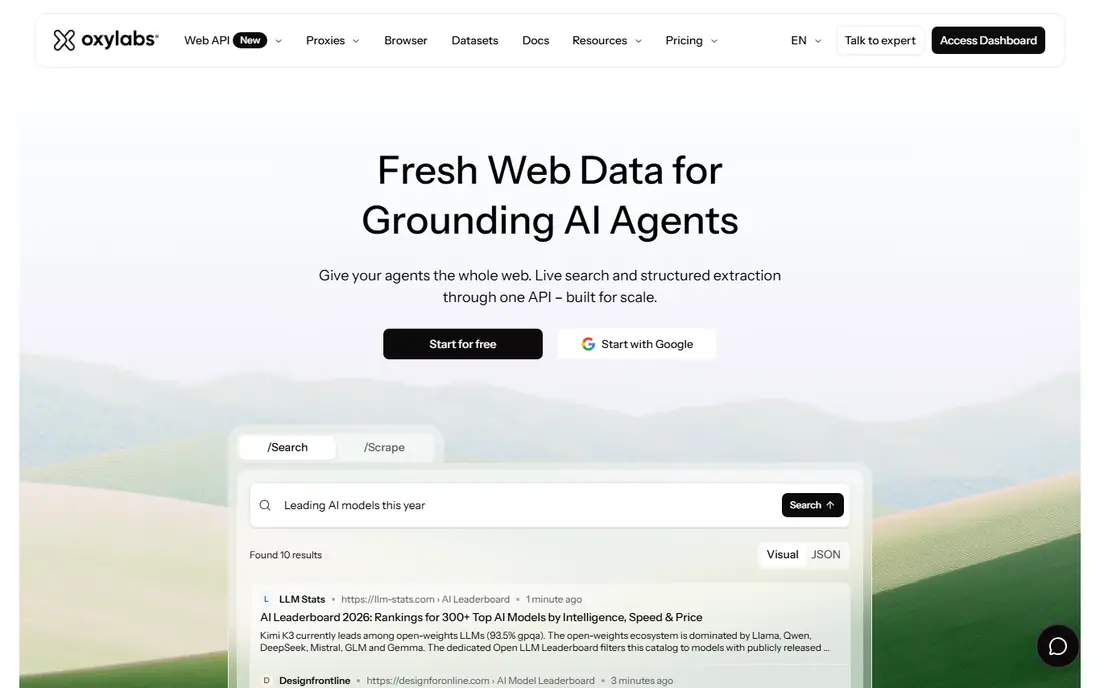
What we like- Oxylabs pairs a 175 million plus address pool with the enterprise wrapper: ISO certification, a public trust centre, account managers, SLAs and 24/7 expert support, plus bundled scraper APIs and web access tooling for teams that want one vendor. Entry residential plans start around 6 dollars per GB at the 5 GB tier, falling toward 2.50 at terabyte scale in current pricing reports. Its compliance content stresses informed, consenting sourcing, which procurement teams can actually review.
Watch out for- Premium positioning throughout: minimum spends and plan structures assume serious volume. Published detail on sourcing is thinner than Bright Data's audited programme, so compliance buyers should ask their own questions in writing. Self serve buyers get less of the platform's attention than the enterprise accounts it is built around.
#3Decodo
Best for: Value all rounder for growing teams4.6/5 on
G2 (763 reviews, checked Oct 2026)
Visit decodo.com
Starting price$3.75 per GB
Free planNo
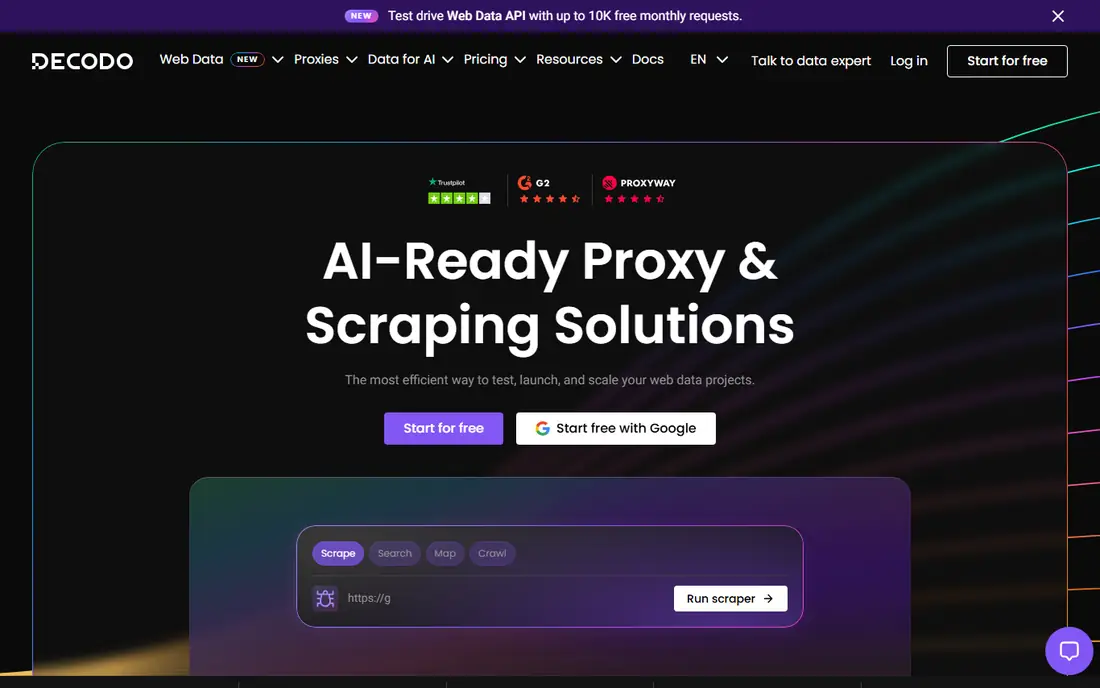
What we like- Decodo, the provider formerly known as Smartproxy, is the mainstream value pick: 115 million plus addresses, targeting to ZIP and ASN level, sessions from minutes to days, a three day free trial, and pricing from 3.75 dollars per GB at the 3 GB tier sliding toward 2 dollars at volume. It carries ISO 27001 certification, publishes its sourcing position, and signs you up without a sales call, which is why growth teams start here and often stay.
Watch out for- Enterprise compliance depth and support tiers sit below the top two. Promotional first period pricing means the renewal rate is the one to budget. Pool depth in smaller countries trails the giants, so niche geo requirements should be tested in the trial against your real targets.
#4IPRoyal
Best for: Long sessions and non expiring traffic4.7/5 on
G2 (1,071 reviews, checked Oct 2026)
Visit iproyal.com
Starting priceSee website
Free planNo
What we like- IPRoyal's signatures are session length and patience: sticky sessions up to seven days, and traffic that never expires, bought when you need it. It maintains a dedicated sourcing page describing how addresses are obtained, and offers residential, mobile, ISP and datacenter lines. List pricing at one GB runs about 7 dollars with pay as you go slightly higher, falling to 1.75 dollars per GB at very high volume, which is why the table marks its price cautiously. Your rate depends entirely on your volume band.
Watch out for- The two speed pricing confuses budgeting until you model your own usage. Pool size claims, 32 to 64 million across sources, sit well below the leaders, and enterprise compliance packaging is lighter. Support and tooling are built for practitioners rather than procurement departments.
#5Webshare
Best for: Developers prototyping on a free tier4.0/5 on
G2 (5 reviews, checked Oct 2026)
Visit webshare.io
Starting price$2.99 per month
Free planYes
What we like- Webshare is where developers prototype: a permanent free tier with 10 proxies and a gigabyte a month, datacenter plans from 2.99 dollars a month, and rotating residential priced per GB with promotional entry rates. The self serve dashboard and API are genuinely pleasant, and its compliance and sourcing pages are public. For testing a monitoring job before spending anything, nothing else on this list starts at zero.
Watch out for- Residential depth and success rates at difficult targets trail the premium pools, and its sourcing description, carefully selected partners, is vaguer than the audited programmes above. Enterprise features and support are correspondingly lighter. It is a developer tool that grew, not an enterprise platform that shrank.
Starting price$3.50 per GB
Free planNo
What we like- Rayobyte, formerly Blazing SEO, built its brand on sourcing transparency: a US company that publishes how it obtains addresses, favours ISP and datacenter supply it can document, and prices residential from 3.50 dollars per GB. Buyers whose legal teams lead the evaluation, and there are more of them every year, find a provider that answers sourcing questions directly. Its datacenter lines suit US heavy workloads.
Watch out for- Pool size is not disclosed in the same headline terms as rivals, and residential depth outside core markets is thinner. The product range is narrower, with less of the bundled scraping tooling Oxylabs and Bright Data sell. It wins evaluations on trust and loses some on raw scale.
#7DataImpulse
Best for: Budget pay as you go volume4.7/5 on
G2 (28 reviews, checked Oct 2026)
Visit dataimpulse.com
Starting price$1 per GB
Free planNo
What we like- DataImpulse strips the model to the floor: residential traffic at one dollar per GB, 0.80 at terabyte volume, pay as you go, no subscription and no expiry, across a claimed 90 million address pool in 195 countries. Batch jobs with uneven monthly volume, price monitoring across many small targets, research pulls, are its home ground. Signup is instant and the dashboard is simple.
Watch out for- At the price, expect the basics: targeting and session controls are present but less polished, compliance documentation is lighter than enterprise buyers require, and support depth matches the tariff. Verify success rates on your own targets in a small paid test before committing volume
- Cheap traffic that fails is the most expensive kind.
Starting priceSee website
Free planNo
What we like- ProxyEmpire's signature is rollover bandwidth: unused residential and mobile traffic carries forward instead of expiring at month end, across a claimed 30 million plus addresses in 170 plus countries, with mobile proxies billed on the same traffic model. Irregular enterprise workloads, campaign based checks, seasonal monitoring, waste less here than anywhere else on the list. A low cost trial lets you test real targets before a plan.
Watch out for- Effective per GB rates vary with plan and usage pattern, hence see website
- Model your own consumption. Pool and feature depth trail the leaders, and the compliance story needs the usual written questions. Brand recognition in procurement is low, which adds an internal selling step.
How we chose
SOAX itself is excluded because this article covers its alternatives. We selected residential and mobile proxy providers in active sale in October 2026 with published pricing and public statements about sourcing, deliberately weighting providers that document consent based supply and abuse controls; one prominent provider was excluded because its domains were seized by the FBI in July 2026 following abuse investigations, which is exactly the risk the sourcing test exists to catch. Pool sizes are vendor reported and not comparable in method. Prices are per GB residential figures from vendor pages and current comparisons in autumn 2026, with promotional rates flagged where they distort the list price. Nothing was hands on tested.
How to choose your SOAX alternative
Start with the sourcing questions, in writing, before any pricing discussion: how are addresses obtained, what consent do the owners give, what abuse monitoring runs, and what happens to accounts that misuse the network. Providers with audited, documented answers, Bright Data most fully, Oxylabs and Decodo with published programmes, Rayobyte by design, are the lower risk purchase for any company whose name sits above the work. The industry has seen networks shut down and domains seized over abuse; your data collection stopping mid quarter is the mild version of that risk.
Then model the traffic honestly. Price monitoring of public pages is small and steady, which suits Decodo or Webshare; high volume research pulls reward DataImpulse's flat dollar; irregular workloads reward IPRoyal's non expiring traffic or ProxyEmpire's rollover. Whatever you buy, keep the use legitimate: respect site terms and robots signals where they apply, stay within the law of the markets you collect from, never touch personal data you have no right to process, and keep your provider's acceptable use policy beside the project plan.
Frequently asked questions
What are proxies legitimately used for?
Checking your own prices, ads and content as customers in other regions see them; monitoring public competitor prices and availability; verifying that localised versions of your site and app work; search visibility checks by market; load and fraud pattern research; and academic and market research within the law. The common thread is observing public information or your own systems, not defeating access controls or collecting data you have no right to.
Why does IP sourcing matter?
Residential addresses come from real people's connections. Ethical providers obtain them with consent, typically through apps and SDKs that tell users plainly and share value with them. Networks built on murkier supply have faced abuse reporting, payment processor action and, in one 2026 case noted in our research, domain seizure by the FBI. Buying from a documented provider protects your company legally and keeps your collection running.
How much do residential proxies cost?
From one dollar per GB at DataImpulse to 8 dollars at Bright Data's residential list, with volume, sessions and targeting moving the real rate. Promotional first period prices are common, so budget at the renewal rate. Mobile proxies historically cost more per GB; some providers, SOAX among them, bill mobile at residential rates, which is worth checking if mobile traffic is your workload.
What is a sticky session?
A session that keeps the same exit address for a set period, minutes to days depending on the provider, instead of rotating on every request. Multi step checks, comparing a full customer journey as one visitor, need stickiness; bulk independent requests usually prefer rotation. Session length is one of the clearest differences between providers here, from minutes at some to seven days at IPRoyal.
Can a provider see what we do through their proxies?
Reputable providers log connection metadata for abuse prevention and legal compliance, which is another reason to keep usage legitimate and documented. Assume your traffic pattern is visible to the provider, keep credentials and personal data out of proxy workloads, and read the privacy terms before sending anything sensitive through any third party network.
Sources we checked (0)
Is your product missing or out of date?
We review this list regularly. Vendors can request a listing, send updated pricing or ask about featured placement.

Shihab Mia · Founder, Rankite
Shihab has 5+ years in B2B and SaaS SEO. He writes Rankite's software buying guides from pricing pages, documentation and public user reviews. More about Shihab.