How we make this list: we compare pricing pages, product documentation and public user reviews. Ratings come from G2, Capterra or Trustpilot, with the date we checked them.
Key takeaways
- Substack is the simplest Patreon alternative for writers who want paid newsletters, with subscriptions built in and no website to maintain.
- Ghost gives writers the most ownership, with a self-hosted or hosted site, memberships, and newsletters under their own brand.
- Ko-fi and Buy Me a Coffee suit writers who want tips and one-off support without a monthly membership commitment from readers.
- Memberful works well for writers who already have a website and want to add memberships without moving their content.
- Gumroad fits writers selling books, courses, and digital products directly, rather than running an ongoing subscription.
Quick comparison
| Tool | Best for | Starting price | Free plan |
|---|
 Substack | Paid newsletters for writers | See website | Yes |
 Ghost | Owned website with memberships | See website | Free trial |
 Ko-fi | Tips and memberships without high fees | See website | Yes |
 Buy Me a Coffee | Simple tips and memberships | See website | Yes |
 Memberful | Memberships on your own site | See website | Free trial |
 Gumroad | Direct sales of books and products | See website | Yes |
 Beehiiv | Newsletter growth and monetization | See website | Yes |
 Podia | Courses, memberships, and digital products | See website | Free trial |
 Medium | Built-in audience for essays | See website | Yes |
Is your product missing or out of date?
We review this list regularly. Vendors can request a listing, send updated pricing or ask about featured placement.
The best Patreon alternatives for writers
#1Substack
Best for: Paid newsletters for writers4.3/5 on
G2 (17 reviews, checked Oct 2026)
Visit substack.com
Starting priceSee website
Free planYes
Substack is the closest replacement for a Patreon membership feed, in newsletter form. Write a post, send it by email, and let readers subscribe for free or pay for extra posts. There is no website to build, no membership plugin to configure, and readers already understand how Substack works.
The trade-off is control and fees. Substack takes a percentage of paid subscriptions, and your publication lives on Substack's platform, even though you can export your email list. Substack fits best for essayists, journalists, and newsletter writers who want to start quickly and grow through Substack's own discovery features.
What we like- Free to start publishing and building a list
- Paid subscriptions built in, with no separate payment setup
- Built-in discovery through recommendations and Notes
Watch out for- Platform takes a share of paid subscriptions, plus payment processing fees
- Less design and website control than Ghost
#2Ghost
Best for: Owned website with memberships4.0/5 on
G2 (40 reviews, checked Oct 2026)
Visit ghost.org
Starting priceSee website
Free planFree trial
Ghost is the ownership option. Run your own publication website, offer free and paid memberships, send newsletters, and keep your brand front and center. Readers join your site, not a platform feed, and you control the design, domain, and data.
That control comes with responsibility. Even on a hosted Ghost plan, you manage themes, settings, and growth yourself, without Substack-style discovery. Ghost fits best for writers who already have an audience, want a professional publication site, and value owning their platform over a free start.
What we like- Full control over your site, brand, and email list
- Memberships and newsletters built in
- No platform share of subscription revenue on paid plans, apart from payment fees
Watch out for- Setup and maintenance take more work than Substack
- Hosted plans cost more than a free Substack start
Starting priceSee website
Free planYes
Ko-fi works well for writers whose readers want to support them without a monthly commitment. A reader can buy a coffee, which is a small tip, or join a monthly membership for extra posts. Writers can also sell digital products and take commissions from the same page.
Ko-fi does not bring an audience by itself, so you still need to drive readers from social media, newsletters, or your own site. Ko-fi fits best for poets, short story writers, and essayists who want flexible support options and a simple page to point readers to.
What we like- Tips and one-off support with low platform fees on some plans
- Memberships, shop, and commissions in one page
- Simple setup for writers without a website
Watch out for- Discovery is weaker than Substack or Medium
- Advanced features require a paid Gold plan
Starting priceSee website
Free planYes
Buy Me a Coffee is similar to Ko-fi, with a focus on simplicity. Create a page, share the link, and let readers tip you or join a membership. The model is easy to explain to readers, which helps for writers who do not want to teach a new platform to their audience.
For a full publication with archives, search, and newsletter delivery, Substack or Ghost will serve better. Buy Me a Coffee fits best for writers who want a low-friction support page, especially alongside a blog, newsletter, or social presence elsewhere.
What we like- Very simple setup for tips and memberships
- Supports posts, shop items, and memberships on one page
- Familiar model for readers who already use it
Watch out for- Platform fee applies to transactions
- Less suited to a full newsletter or publication website
#5Memberful
Best for: Memberships on your own site4.5/5 on
G2 (40 reviews, checked Oct 2026)
Visit memberful.com
Starting priceSee website
Free planFree trial
Memberful is for writers who do not want to move. If you already publish on WordPress or another site, Memberful adds paid memberships, member-only content, and payment handling without forcing you to rebuild on a new platform. That makes it a good Patreon replacement for established blogs.
The catch is that Memberful is a membership layer, not an audience source or a publishing tool. You still need content, traffic, and email delivery from elsewhere. Memberful fits best for writers with an existing site and audience who want membership revenue without platform lock-in.
What we like- Adds memberships to a website you already own
- Integrates with WordPress and other platforms
- Control over branding and member experience
Watch out for- Requires an existing website and audience
- Monthly cost plus payment fees, even at low volume
#6Gumroad
Best for: Direct sales of books and products4.2/5 on
G2 (16 reviews, checked Oct 2026)
Visit gumroad.com
Starting priceSee website
Free planYes
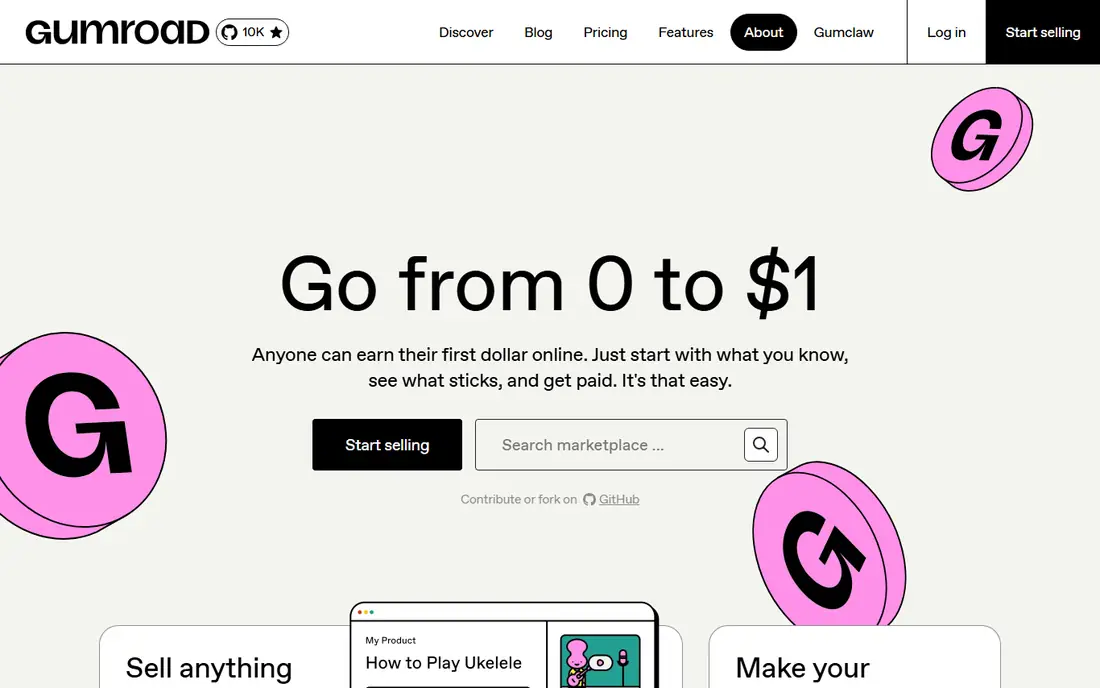
Gumroad suits writers who sell finished work rather than ongoing access. Publish an ebook, a short story collection, a course, or a template, set a price, and let Gumroad handle payment and delivery. The storefront is simple, and you can link to it from anywhere.
Gumroad is not a newsletter platform, and membership features are more limited than a dedicated membership tool. Gumroad fits best for authors and writers who sell books and digital products, and who want direct sales without building a full store.
What we like- Simple storefront for ebooks, courses, and digital files
- No monthly fee to start on the basic plan
- Built-in payment, delivery, and customer management
Watch out for- Transaction fees apply on sales
- Less suited to ongoing memberships than Substack or Ghost
#7Beehiiv
Best for: Newsletter growth and monetization4.5/5 on
G2 (40 reviews, checked Oct 2026)
Visit beehiiv.com
Starting priceSee website
Free planYes
Beehiiv is a newsletter platform with growth tools at its core. Referral programs, recommendation networks, and detailed analytics help a newsletter grow faster than a basic email tool. Paid subscriptions and ad options give writers more than one way to earn from the same list.
Beehiiv is less of a community membership platform than Patreon, and writers who want forums, tiers, and member-only feeds may prefer Ghost or Memberful. Beehiiv fits best for newsletter writers focused on list growth and monetization through subscriptions and ads.
What we like- Newsletter tools built for growth, including referrals and recommendations
- Paid subscriptions and ad network options
- Analytics focused on newsletter performance
Watch out for- Newsletter-first, so membership community features are thinner
- Paid plans needed for larger lists and advanced features
#8Podia
Best for: Courses, memberships, and digital products4.4/5 on
G2 (23 reviews, checked Oct 2026)
Visit podia.com
Starting priceSee website
Free planFree trial
Podia suits writers who teach as well as write. A writing coach, for example, can sell a course, run a membership community, and send email from one account, instead of stitching together three tools. The all-in-one approach saves time for creators with several income streams.
For a writer who only publishes essays, Podia may be more platform than needed. Podia fits best for writers and educators who sell courses and memberships alongside their writing, and who want one place to manage them.
What we like- Courses, memberships, downloads, and email in one platform
- No transaction fees on some paid plans
- Simple website and storefront included
Watch out for- Less newsletter depth than Substack or Beehiiv
- Monthly cost starts higher than a free tip page
Starting priceSee website
Free planYes
Medium is a different kind of alternative: instead of charging readers directly, you publish where readers already are. The Partner Program pays writers based on member engagement, and a good essay can reach far more readers than a new newsletter. For exposure, that is hard to match.
The downside is dependence. Medium controls distribution, design, and payment rules, and you do not own the email list in the same way as with Ghost or Substack. Medium fits best for essayists who want reach and discovery, and who treat it as one channel alongside a newsletter or site they own.
What we like- Large built-in audience for essays and stories
- Simple writing and publishing experience
- Partner Program can pay based on member reading time
Watch out for- Earnings depend on Medium's distribution and Partner Program rules
- Less control over branding, email list, and pricing than Ghost
How we chose
We checked vendor pricing pages, product documentation, and public reviews on G2, Capterra, and Reddit, and compared each tool on fees, subscription and tip models, newsletter features, audience ownership, and ease of setup. Tools were kept only if they are available today, support writers earning from their work, and offer a clear alternative to Patreon, not just a general social platform. Where fees varied by plan or transaction type, we marked pricing as See website instead of publishing a single figure.
We gave extra weight to email list ownership and fee transparency, since those are the two issues writers raise most often when leaving Patreon. A tool with a built-in audience scored well for discovery, but lower for ownership, and the write-ups reflect that trade-off.
How to choose a Patreon alternative for your writing
Your publishing habit decides the platform, not the other way around. Use the checks below to match the tool to how you actually write and earn.
Decide subscription, tips, or sales first
A newsletter writer needs subscriptions, a poet may do better with tips, and a novelist may do better with direct book sales. Pick the income model first, then the tool that supports it best. Trying to force a tip tool to run a full membership, or a sales tool to run a newsletter, creates extra work.
Check fees at your real income level
Compare platform fees, payment processing fees, and monthly costs at your current reader count, not at a hypothetical large audience. A free start with a percentage fee can cost more than a monthly plan once subscriptions grow. Run the numbers for 100, 500, and 1,000 paying readers before committing.
Protect your email list from day one
Export your subscriber list regularly, whatever platform you choose. An email list you own is the safety net if a platform changes fees, rules, or discovery. Ghost and Memberful give the most control here, while Substack and Beehiiv still allow exports.
Test with readers before you move fully
Announce the new platform, move a small group first, and check that payments, emails, and member-only posts work as expected. Keep the old Patreon page running during the test, so readers are not lost if something breaks. A clean migration matters more than a fast one.
Frequently asked questions
What is the best Patreon alternative for writers?
Substack is the simplest for paid newsletters, while Ghost is the best for writers who want to own their site and list. Ko-fi and Buy Me a Coffee suit tip-based support, and Gumroad suits direct book sales. The best choice depends on whether you publish newsletters, memberships, or finished books.
Is Substack free for writers?
Yes, to start. Substack does not charge a monthly fee to publish, but it takes a percentage of paid subscriptions, plus payment processing fees. Free newsletters cost nothing to run, which makes Substack a low-risk way to test paid subscriptions.
Can I move my Patreon audience to another platform?
You can invite patrons to follow you elsewhere, but you cannot automatically transfer Patreon memberships or payment details to a new platform. Plan a migration announcement, offer a clear signup link, and expect some drop-off. Exporting email addresses you already own helps a lot.
Do I need a website to earn as a writer online?
No. Substack, Ko-fi, Buy Me a Coffee, and Medium all work without a website of your own. A website helps for branding and ownership, especially with Ghost or Memberful, but it is not required to start earning.
How much do Patreon alternatives charge?
Fees vary widely. Some tools are free to start and take a percentage of each transaction, while others charge a monthly plan plus payment processing fees. Check the vendor pricing page for the exact plan you will use, and calculate total fees at your reader count before choosing.
Can I use more than one Patreon alternative?
Yes, and many writers do. A common setup is a newsletter on Substack or Beehiiv, a tip page on Ko-fi, and book sales on Gumroad. Keep the setup simple, and make sure readers know where to find your main work, so support does not split across too many places.
Sources we checked (9)
- https://substack.com/pricing
- https://ghost.org/pricing
- https://ko-fi.com/pricing
- https://www.buymeacoffee.com/pricing
- https://memberful.com/pricing
- https://gumroad.com/pricing
- https://beehiiv.com/pricing
- https://www.podia.com/pricing
- https://medium.com/pricing
Is your product missing or out of date?
We review this list regularly. Vendors can request a listing, send updated pricing or ask about featured placement.

Shihab Mia · Founder, Rankite
Shihab has 5+ years in B2B and SaaS SEO. He writes Rankite's software buying guides from pricing pages, documentation and public user reviews. More about Shihab.