How we make this list: we compare pricing pages, product documentation and public user reviews. Ratings come from G2, Capterra or Trustpilot, with the date we checked them.

Key takeaways
- Dreamwidth is the closest match to LiveJournal, with journals, reading pages, communities, and fine-grained privacy controls.
- Penzu is the best private diary, with encryption, unlimited free entries, and a Pro plan from $29.99 per year.
- Tumblr is the best social option, built around following, reblogging, and community interaction.
- WordPress.com is the best long-term home, with full ownership of content and followers plus room to grow.
- Substack is the best monetization option, letting writers own their mailing list and charge subscribers.
Quick comparison
Is your product missing or out of date?
We review this list regularly. Vendors can request a listing, send updated pricing or ask about featured placement.
The best LiveJournal alternatives
Starting priceFree
Free planYes
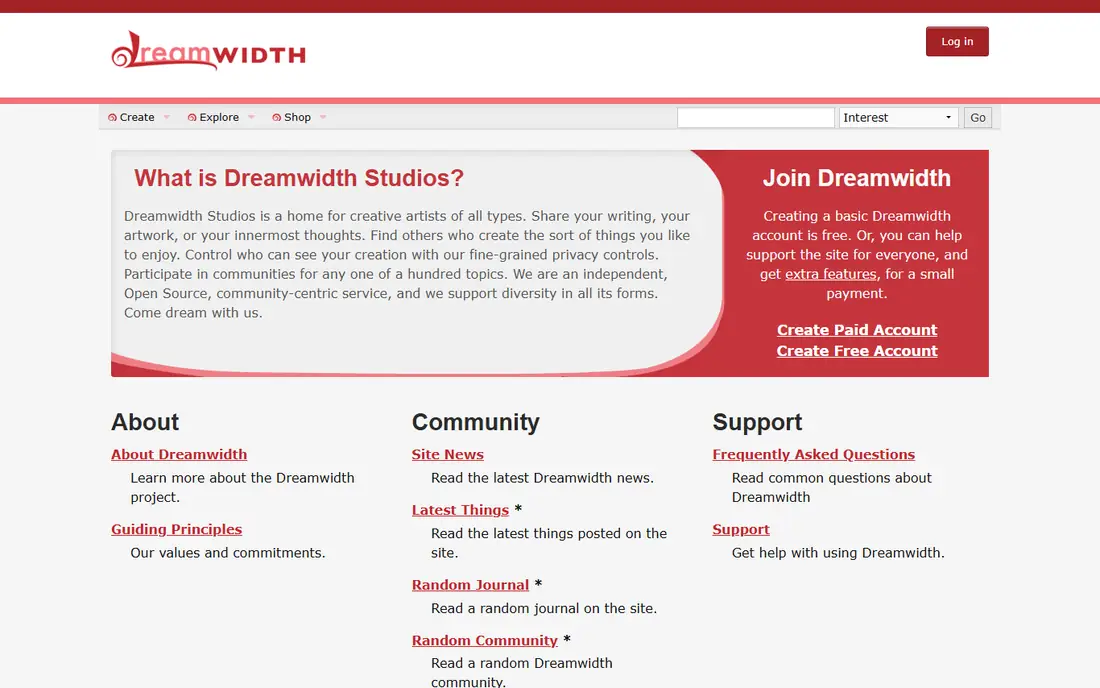
Dreamwidth is the closest thing to LiveJournal still running, because it was built by people who loved LiveJournal and wanted to keep its model alive. Its homepage describes a home for creative artists of all types, where you share writing, artwork, or innermost thoughts, find others who create what you like, and control who can see your work with fine-grained privacy controls. Communities cover hundreds of topics, and the reading page gathers posts from journals and communities you follow, just like the old friends page.
A basic account is free, and paid accounts add extra features while supporting the site for everyone. Dreamwidth is independent, open source, and community-centric, with an explicit commitment to diversity. The limit is scale: the user base is smaller than Tumblr or Medium, so discovery takes more effort. Pick Dreamwidth when the LiveJournal experience itself is what you miss, not just a place to publish.
What we like- Journals, reading pages, comments, and communities
- Fine-grained privacy controls
- Open source and community-run
Watch out for- Smaller user base than mainstream platforms
- Fewer business and website-building tools
Starting priceFree
Free planYes
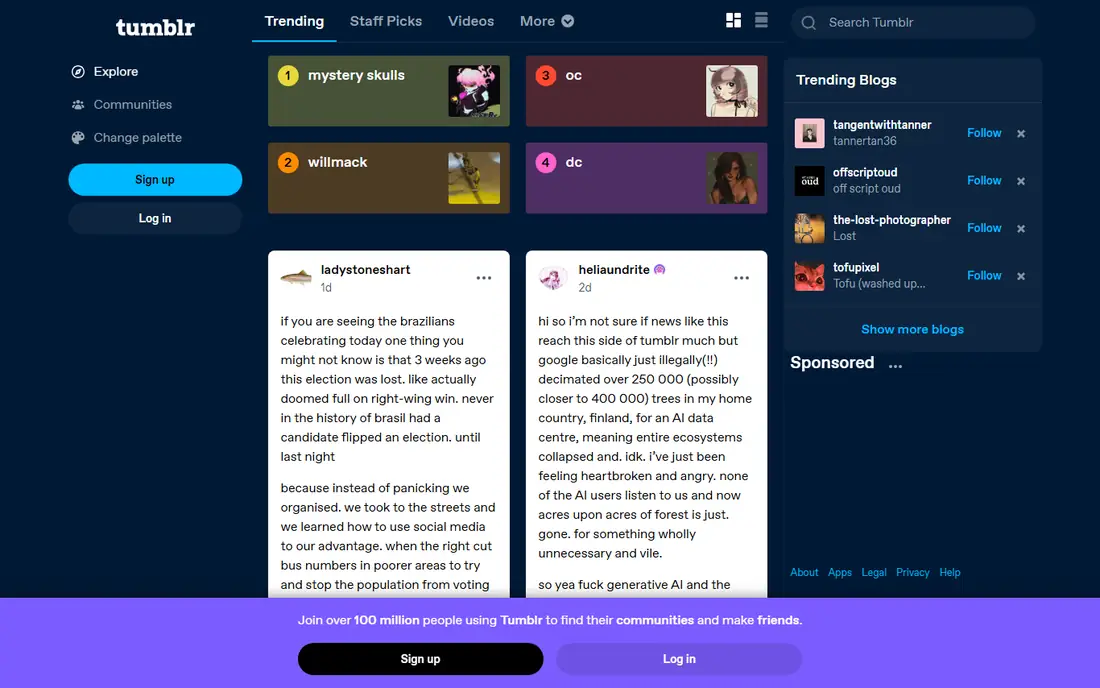
Tumblr is the social answer to LiveJournal. Its model runs on following blogs, reblogging posts, and building community through tags and shared interests, which matches the social side of LiveJournal better than any plain blogging platform. Visual, multimedia, and short-form posts thrive here, and the community is large enough that a new blog can find readers through tags and reblogs rather than search alone.
The homepage could not be fetched during research because the domain was blocked, so this listing rests on search evidence rather than a homepage open, and it was not retried. The other trade-off is control: Tumblr owns the platform and the rules, so a self-hosted site gives more freedom over design and data. Pick Tumblr when community interaction and discovery matter more than full ownership.
What we like- Following, reblogging, and community interaction
- Visual and multimedia posts
- Large existing community
Watch out for- Homepage fetch was blocked, kept on search evidence
- Less control than a self-hosted site
Starting priceSee website
Free planYes
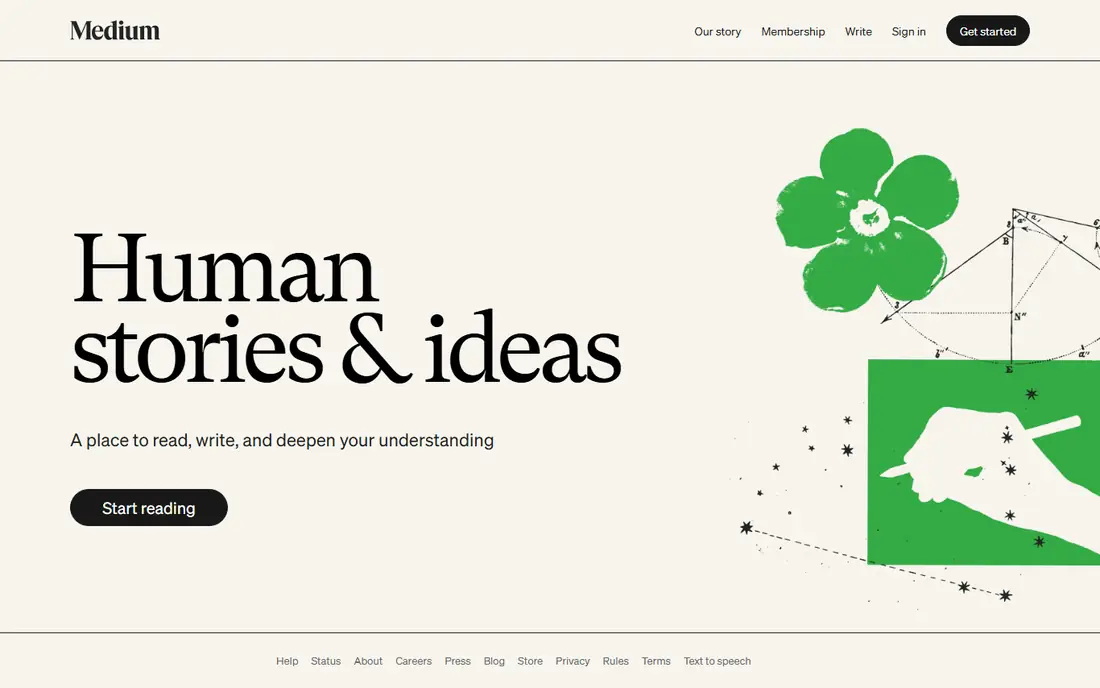
Medium is the pick for writers who want readers without building an audience from scratch. Its homepage calls itself a place to read, write, and deepen understanding, with human stories and ideas at the center. Publications give essays a built-in readership, and the Partner Program pays based on reading time, which suits essayists and journalists more than diarists.
The homepage extract gives little detail beyond that positioning, so the free writing experience is the best way to judge it. Medium is the opposite of a private journal: posts are public by design, and privacy controls are limited. Pick Medium when your writing is meant for an audience and you want distribution without running your own site.
What we like- Clean writing experience
- Built-in audience and publications
- SEO-friendly essays
Watch out for- Homepage extract is thin
- Monetization depends on the Partner Program
Starting priceFree
Free planYes
Blogger is the simplest free blog, and it has been running for decades. Its homepage promises a unique and beautiful blog that is easy and free, with templates, flexible layouts, and hundreds of background images. You can use a blogspot.com domain or buy a custom domain, connect Google AdSense to earn from ads, and read built-in analytics on where readers come from and which posts perform best.
Storage is generous: Blogger lets you safely store thousands of posts and photos with Google. The platform feels dated next to WordPress.com or Substack, and Google controls its direction, which is a real risk for a long-term home. Pick Blogger when you want a free, zero-maintenance blog and already live inside Google services.
What we like- Free with Google hosting
- Templates and custom domains
- AdSense monetization and built-in analytics
Watch out for- Dated design options
- Google controls the platform and its future

#5WordPress.com
Best for: Long-term ownership4.4/5 on
G2 (2,717 reviews, checked Oct 2026)
Visit wordpress.com
Starting priceFree
Free planYes
WordPress.com is the long-term home for writers who want to own their work. Its homepage promises that you grow your audience and keep full ownership of your content and followers, with unmetered bandwidth, managed hosting, security, and a global content delivery network on every plan. Themes and patterns give a one-of-a-kind design without code, and the platform scales from a personal journal to a publication.
The free plan covers the basics, but custom domains, extra storage, and advanced features need paid plans, and the enterprise tier starts at $25,000 per year for large organizations. WordPress.com lacks the community feel of Dreamwidth or Tumblr, since discovery runs on search and sharing rather than a friends page. Pick WordPress.com when ownership and longevity matter most, and you are building a home that should still exist in ten years.
What we like- Full ownership of content and followers
- Unmetered bandwidth on all plans
- Themes, domains, and growth tools
Watch out for- Free plan is limited
- Advanced features need paid plans
Starting priceFree
Free planYes
Substack turns a journal into a newsletter with an audience you own. Its homepage leads with making money doing the work you believe in, and stresses that you always own your intellectual property, mailing list, and subscriber payments, with full editorial control and no gatekeepers. Readers subscribe by email, discussions run under each post, and writers can charge from $5 to $50 per month per subscriber.
That ownership is the difference from Medium: if Substack disappeared, your mailing list goes with you. The limit is discovery, since growth depends on recommendations, cross-promotion, and consistent publishing rather than a built-in feed. Pick Substack when your writing has a clear audience and you want the option to charge for it, rather than a private diary or a social feed.
What we like- You own your mailing list and subscriber payments
- Full editorial control
- Discussion built in
Watch out for- Discovery depends on recommendations
- Paid growth takes time
Starting priceFree
Free planYes
Penzu is the private diary on this list, and the best pick for writing that is not meant for anyone else. Its homepage promises a private, fully customizable online journal, with unlimited entries on the free plan, mobile apps for iOS and Android, autosave as you type, custom covers and fonts, and reminders to keep a daily, weekly, or custom cadence. Privacy is the headline: double password protection and military-grade encryption keep entries in the Penzu Vault.
The free plan covers the basics, while Pro at $29.99 per year adds encryption locking, entry tagging, PDF export, writing prompts, and email posting, and Pro Plus at $49.99 per year adds versions, entry recovery, and premium support. Penzu has no real community, which is the point for a diary. Pick Penzu when privacy comes first and the journal is for you, not an audience.
What we like- Unlimited free entries
- Double password protection and military-grade encryption
- Mobile apps and reminders
Watch out for- Free plan lacks entry locking and PDF export
- Community features are minimal
Starting priceFree
Free planYes
Day One is the most polished journaling app on this list. Its homepage calls it the number one journaling app, free to use and better with the Gold plan, with Apple Editors Choice and Apple Design Award recognition. Entries hold photos, videos, drawings, and audio recordings alongside words, and the On This Day feature resurfaces memories from years past, which long-term journalers cite as their favorite part. The app runs on iPhone, Android, iPad, Mac, and Apple Watch, plus any browser.
The free plan covers basic journaling, while Gold adds the advanced features that long-term users rely on. Day One is a personal journal, not a community: there is no friends page or public feed. Pick Day One when your journal is multimedia, your habit is daily, and you want a beautiful app that makes looking back as rewarding as writing.
What we like- Award-winning design
- Photos, video, audio, and drawings in entries
- On This Day memories
Watch out for- Best experience is on Apple devices
- Advanced features need the Gold plan
How we chose
We compared platforms that cover LiveJournal ground: personal journals, community interaction, privacy controls, and long-form writing. Each vendor homepage was opened to confirm the product exists and the domain belongs to that product, except Tumblr, whose domain was blocked at fetch and is kept on search evidence without retry. Prices come from vendor homepages where stated, and See website is used where the homepage did not state a price. The list mixes community journals, public blogs, newsletters, and private diaries, because LiveJournal users split across all four needs when they move.
What to check before you pick
First, decide whether your writing is private, social, or public. Private writing belongs on Penzu or Day One. Social writing with community interaction belongs on Dreamwidth or Tumblr. Public writing with an audience belongs on Medium, Substack, Blogger, or WordPress.com. Trying to force one platform to serve all three needs is how journals end up abandoned.
Next, check the exit path. Dreamwidth, WordPress.com, and Substack all let you keep your content and, in Substack case, your mailing list. Platforms that lock content in or depend on a single company deserve a backup habit: export regularly, whatever you choose. Finally, test the writing experience for a week before committing, since the habit matters more than the feature list, and the best platform is the one you actually open every day.
Frequently asked questions
What is the closest LiveJournal alternative?
Dreamwidth is the closest match, with journals, reading pages, comments, communities, and fine-grained privacy controls built on the same model LiveJournal used. It is open source and community-run, with free basic accounts. The user base is smaller than mainstream platforms, so discovery takes more effort.
Is there a free LiveJournal alternative?
Yes, all eight tools on this list offer free plans. Dreamwidth, Tumblr, Blogger, and Penzu are free for basic use, while WordPress.com, Medium, Substack, and Day One offer free tiers with paid upgrades. Paid plans add features such as custom domains, encryption locking, and advanced analytics.
Which alternative is best for private journaling?
Penzu is the best private diary, with unlimited free entries, double password protection, and military-grade encryption. Day One is the best multimedia journal, with photos, video, and audio in entries plus On This Day memories. Neither has a public feed, which is the point for private writing.
Which alternative is best for building an audience?
Medium offers the fastest built-in audience through publications and the Partner Program. Substack offers the most ownership, since you keep your mailing list and subscriber payments. WordPress.com offers the most control over design and growth, with full ownership of content and followers.
Can I move my LiveJournal entries to another platform?
Yes, though the process varies. Dreamwidth offers the most direct import path because it shares LiveJournal roots and format. WordPress.com and Blogger support imports from common formats, while Penzu and Day One are better suited to starting fresh with private entries. Export your LiveJournal content first, then test the import on a trial account before committing.
Sources we checked (8)
- https://www.dreamwidth.org
- https://www.tumblr.com
- https://medium.com
- https://www.blogger.com
- https://wordpress.com
- https://substack.com
- https://www.penzu.com
- https://dayoneapp.com
Is your product missing or out of date?
We review this list regularly. Vendors can request a listing, send updated pricing or ask about featured placement.

Shihab Mia · Founder, Rankite
Shihab has 5+ years in B2B and SaaS SEO. He writes Rankite's software buying guides from pricing pages, documentation and public user reviews. More about Shihab.
 Dreamwidth
 Tumblr
 Medium
 Blogger
 Substack
 Penzu
 Day One