How we make this list: we compare pricing pages, product documentation and public user reviews. Ratings come from G2, Capterra or Trustpilot, with the date we checked them.
Key takeaways
- Khan Academy is the strongest free IXL alternative, with full courses and practice across math, reading and science at no cost.
- Prodigy and SplashLearn suit children who resist plain drill, since both hide practice inside games and rewards.
- DreamBox and Zearn offer the closest adaptive experience to IXL, adjusting difficulty as the child answers.
- DeltaMath fits older students who need focused math practice with instant feedback and no game layer.
- Families that want a full curriculum, not just practice, should look at Time4Learning or Beast Academy instead of a drill-only tool.
Quick comparison
| Tool | Best for | Starting price | Free plan |
|---|
 Khan Academy | Free full curriculum | $0 | Yes |
 Prodigy Math | Game-motivated learners | $9.95 per month | Yes |
 DreamBox | Adaptive K-8 math | $12.95 per month | No |
 SplashLearn | Young gamified learners | $7.99 per month | Free trial |
 Zearn | Classroom-style math | $0 | Yes |
 DeltaMath | Focused math practice | $9.95 per month | No |
 Beast Academy | Advanced young learners | $16 per month | Free trial |
 Time4Learning | Full homeschool curriculum | $39.95 per month | Free trial |
Is your product missing or out of date?
We review this list regularly. Vendors can request a listing, send updated pricing or ask about featured placement.
The best IXL alternatives
Starting price$0
Free planYes
Khan Academy is the first place most families look when IXL feels too repetitive or too costly, and for good reason. It is a nonprofit, so the full platform is free: video lessons, articles and practice exercises from early math through early college topics. A child can watch a short lesson, try problems right away, and move on only after showing mastery, which mirrors the skill-by-skill structure IXL users already know.
The trade-off is motivation. Khan Academy does not wrap practice in a fantasy world or shower children with virtual pets, so a reluctant learner may still drag through sessions. What it does offer is depth: teachers assign it widely, parents can track progress by skill, and the content keeps going well past elementary school. For a family that wants a no-cost replacement with real teaching behind the practice, nothing else on this list matches it.
What we like- Completely free
- Covers math, ELA, science and more
- Trusted by schools
Watch out for- Less game reward than Prodigy
- Practice feels more school-like
Starting price$9.95 per month
Free planYes
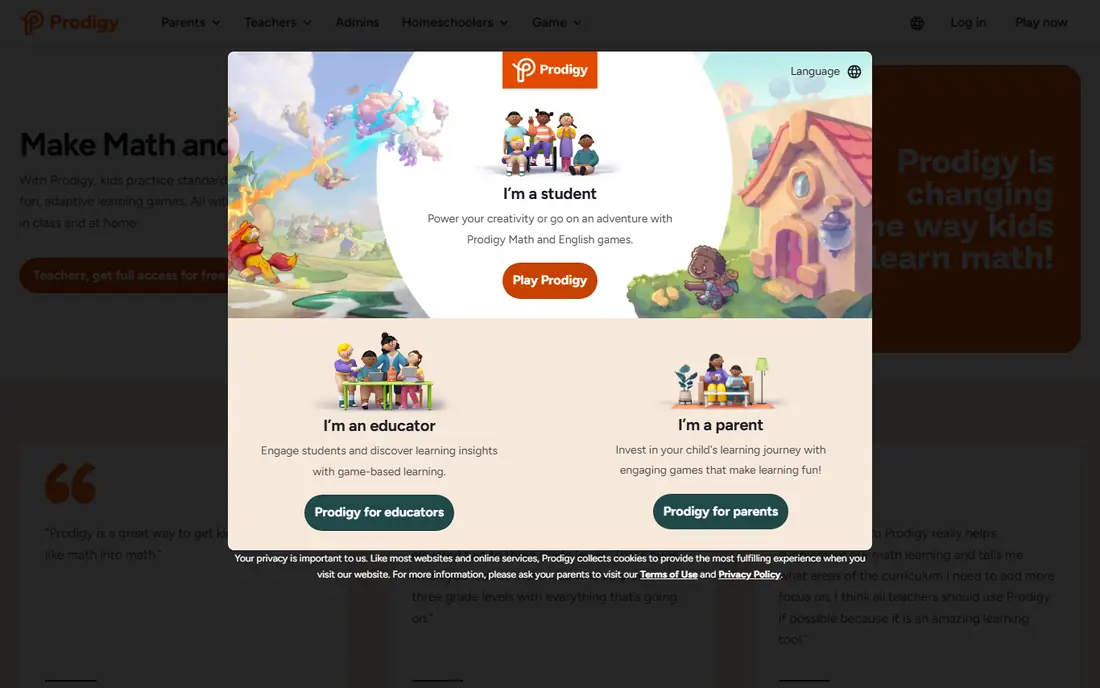
Prodigy turns math practice into a role-playing adventure where children battle monsters by answering questions correctly. That format is the whole point: children who groan at worksheets will often play Prodigy voluntarily, and the questions adapt to their level as they progress. The core educational content is free, which makes it easy to try before paying anything.
Paid membership starts near $9.95 per month, or about $4.91 per month billed annually for one subject, and adds extra game rewards, pets and areas rather than extra math content. Parents should know the free version includes frequent upgrade prompts, which some children find distracting. Used with a time limit, Prodigy is a strong motivator; used without limits, the game can matter more to the child than the practice.
What we like- Core game is free
- Adventure format keeps children playing
- Covers grades 1 to 8 math
Watch out for- Membership upsells appear often
- Game can distract from the math itself
Starting price$12.95 per month
Free planNo
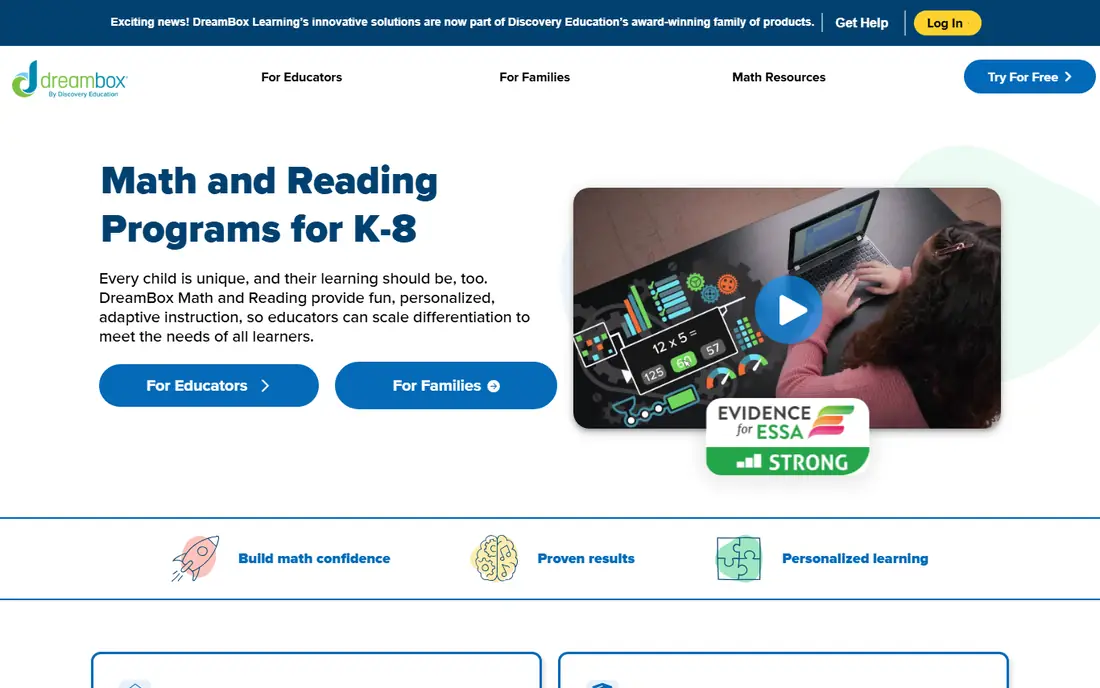
DreamBox is the closest adaptive match to IXL for math. Its lessons adjust in real time, not just between sessions, so a child who struggles gets simpler problems and extra scaffolding, while a child who flies ahead meets harder work sooner. The lessons look like games, with characters and storylines, but the math stays central rather than decorative.
Pricing for individuals starts near $12.95 per month or $99.95 per year, with a family plan near $19.95 per month or $149.95 per year for up to four children. There is no ongoing free tier, so families need a trial or a school account to test it first. DreamBox covers kindergarten through grade 8 math only, so families that also want reading practice will need a second tool.
What we like- Strong adaptive engine
- Game-like lessons
- Detailed parent reports
Watch out for- No ongoing free tier
- Math only, no ELA
Starting price$7.99 per month
Free planFree trial
SplashLearn targets younger children, from preK through grade 5, with colorful games that teach math and reading skills. Parents set up a learning path by grade, and children earn rewards as they finish activities. The design is gentler than Prodigy's adventure world, which suits early learners who might find a big game world overwhelming.
Prices run near $7.99 to $11.99 per month depending on plan and billing period. The main limit is range: once a child passes grade 5, SplashLearn has little left to offer, so families will need to move on to Khan Academy or DreamBox. For the early years, though, its mix of math and reading in one subscription is convenient and fairly priced.
What we like- Built for preK to grade 5
- Games and rewards
- Reading as well as math
Watch out for- Content thins out past grade 5
- Subscription needed for full access
Starting price$0
Free planYes
Zearn grew out of classroom teaching, and it shows. Each lesson pairs a short video with guided practice and independent work, following the same sequence many US classrooms use. Families can use it free, which makes it one of the best no-cost options after Khan Academy, and teachers can assign the same lessons they use at school.
The format is calmer than game-based tools. Children who need excitement may find Zearn plain, and it covers math only for kindergarten through grade 8. But for a child who needs steady, curriculum-aligned practice without upsells or ads, Zearn is hard to beat. Parents who want to mirror schoolwork at home should try it before paying for anything.
What we like- Free for families
- Follows classroom math closely
- Short video lessons
Watch out for- Math only, grades K to 8
- Less game reward than rivals
Starting price$9.95 per month
Free planNo
DeltaMath strips practice down to what older students need: problem sets, instant feedback and clear progress tracking. Teachers assign it widely in middle and high school, and the home version costs near $9.95 per month or $95 per year. There is no game world and no video lesson library, which is a feature for students who find games childish and just want to work through problems.
The range runs from grade 4 through grade 12, covering algebra, geometry and beyond, which makes it useful long after game-based tools run out. The downside is motivation: a student who needs encouragement will not find it here. Pair DeltaMath with a tutor or a video source if the student needs teaching as well as practice.
What we like- Instant feedback on every problem
- Strong for grades 4 to 12
- Teacher tools
Watch out for- No game layer
- No free tier for home use
Starting price$16 per month
Free planFree trial
Beast Academy is built for children who find regular math too easy. Its online program starts near $16 per month and uses comic-style guides plus deep, puzzle-like problems that push children to think rather than just compute. The target age is roughly 6 to 13, and the content rewards persistence and careful reasoning.
That difficulty is also its limit. A child who struggles with grade-level math will likely find Beast Academy frustrating, and it offers no reading or other subjects. For a strong student who is bored by IXL's drill format, though, it is one of the best options available, and many gifted programs recommend it. Try the trial first to judge whether the difficulty fits your child.
What we like- Rich problem solving for strong students
- Comic-style guides
- Ages 6 to 13
Watch out for- Too hard for struggling learners
- Math only
Starting price$39.95 per month
Free planFree trial
Time4Learning is a different kind of alternative: a complete online curriculum rather than a practice bank. For near $39.95 per month, families get lessons across subjects for preK through grade 12, with automated grading and parent dashboards. Homeschoolers use it as a main program, not a supplement, and it covers far more ground than IXL's skill practice.
The cost is the highest on this list, and the practice is less adaptive than IXL or DreamBox, since lessons follow a set sequence. Families that only want extra math practice will find it more than they need. Families that want one subscription to cover school at home, with records and grading included, will find the price easier to justify.
What we like- Full preK to 12 curriculum
- Automated grading
- Parent reporting
Watch out for- Priciest option here
- Practice is less adaptive than IXL
How we chose
We compared tools on grade range, subject coverage, teaching versus drill format, and published family pricing. We used vendor pricing pages and recent comparison guides for rates, and we favored tools that are still actively offered to families in the US. We did not claim hands-on testing. Instead we weighed how each tool teaches, how it motivates, what it costs per month, and where it stops being useful, so parents can match a tool to a child's age and attitude rather than buying on brand alone.
Picking the right fit for your child
Start with the child's attitude, not the feature list. A child who already likes math needs challenge, so Beast Academy or DeltaMath may fit better than another drill app. A child who resists practice needs motivation first, so Prodigy or SplashLearn may get more minutes of actual work done, even if the teaching is lighter.
Next, check the grade range honestly. Many tools look broad in marketing but thin out past grade 5 or grade 8, which leads to a second purchase a year later. Khan Academy and Time4Learning cover the widest ranges, while DreamBox, Zearn and SplashLearn are strongest in the elementary years. Finally, use free tiers and trials before paying: Khan Academy and Zearn cost nothing, and most paid tools offer a trial window. A week of real use tells you more than any review about whether your child will actually open the app.
Frequently asked questions
Is there a completely free IXL alternative?
Yes. Khan Academy is completely free and covers math, reading, science and more from kindergarten through early college. Zearn is also free for families for kindergarten through grade 8 math, and Prodigy's core game content is free with optional paid membership.
Which IXL alternative is best for a child who hates math?
Prodigy is usually the best first try, since its adventure game format motivates children who resist worksheets. SplashLearn is a gentler option for younger children. If games do not help, a tutor or a program with live teaching may work better than any practice app.
Does DreamBox replace IXL for school use?
DreamBox can replace IXL for math in kindergarten through grade 8, since both adapt to the child and report progress to adults. Schools should check that DreamBox matches their curriculum standards, and families that need reading practice will still need a second tool.
How much does IXL itself cost for comparison?
IXL family plans start near $9.95 per month for one subject or $79 per year, with higher prices for multi-subject bundles. Most alternatives on this list sit in a similar range, so the choice usually comes down to format and motivation rather than price alone.
Can I use more than one of these tools at once?
Yes, and many families do. A common mix is Khan Academy for teaching, plus one game tool for motivation and one adaptive tool for practice. Keep the total screen time reasonable and drop any tool the child stops using, since an unused subscription helps no one.
Sources we checked (8)
- https://www.khanacademy.org
- https://www.prodigygame.com/main-en/
- https://www.dreambox.com
- https://www.splashlearn.com
- https://www.zearn.org
- https://www.deltamath.com
- https://beastacademy.com
- https://www.time4learning.com
Is your product missing or out of date?
We review this list regularly. Vendors can request a listing, send updated pricing or ask about featured placement.

Shihab Mia · Founder, Rankite
Shihab has 5+ years in B2B and SaaS SEO. He writes Rankite's software buying guides from pricing pages, documentation and public user reviews. More about Shihab.