How we make this list: we compare pricing pages, product documentation and public user reviews. Ratings come from G2, Capterra or Trustpilot, with the date we checked them.
Key takeaways
- Merge and Kombo are the direct unified API swaps, covering HRIS, payroll and ATS data through one data model, with Merge publishing a 650 dollar monthly entry plan.
- Argyle, Pinwheel, Truv and Plaid solve the neighbouring job: worker permissioned income and employment data pulled from payroll accounts for lending and verification.
- Apideck and Nango suit teams that want more control, with Nango offering a free tier and a self hosted route for sensitive data.
- Employment data is among the most sensitive data a product can hold, so consent flows, retention rules and audit evidence matter as much as coverage counts.
Quick comparison
| Tool | Best for | Starting price | Free plan |
|---|
 Merge | Unified HRIS, ATS and payroll APIs | $650 per month | No |
 Argyle | Worker permissioned payroll data | See website | No |
 Pinwheel | Income verification and direct deposit switching | See website | No |
 Kombo | HR and payroll integrations with a Europe focus | See website | No |
 Apideck | Real time unified APIs across categories | $599 per month | No |
 Nango | Code first integrations you control | $50 per month | Yes |
 Truv | Employment and income verification for lenders | See website | No |
 Plaid | Employment verification inside a wider platform | See website | No |
Is your product missing or out of date?
We review this list regularly. Vendors can request a listing, send updated pricing or ask about featured placement.
The best Finch API alternatives
Starting price$650 per month
Free planNo
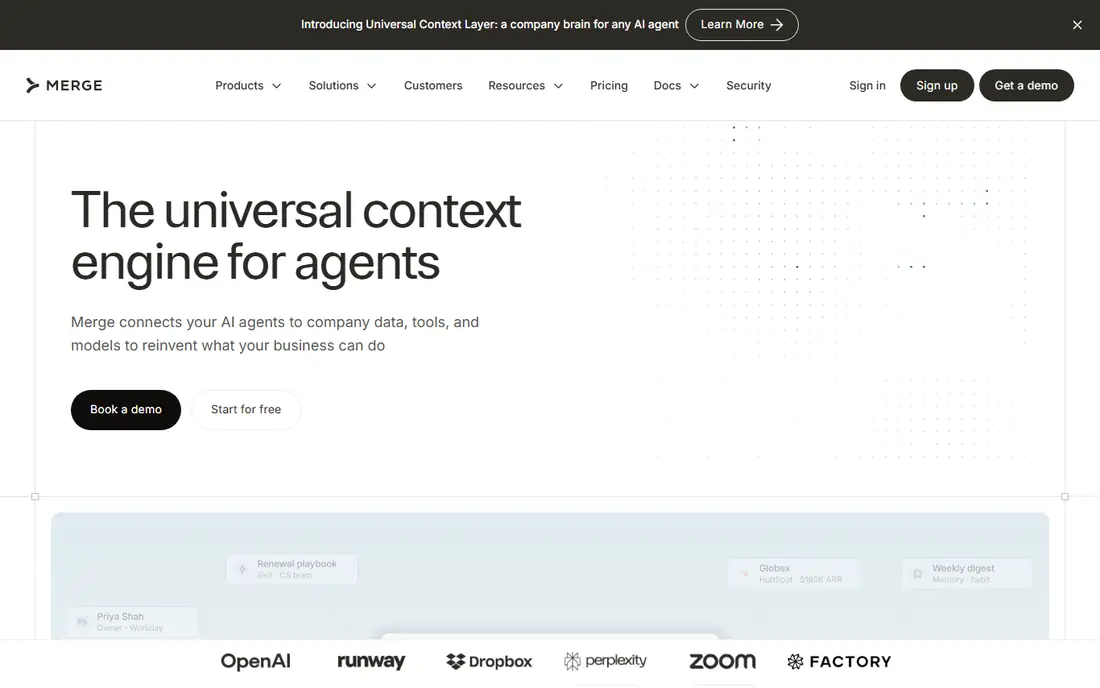
What we like- Merge is the broadest direct alternative: one set of data models for HRIS, payroll, ATS, accounting, CRM and more, so a product that starts with employment data can grow into neighbouring categories without a second vendor. The Launch plan is published at 650 dollars a month for up to 10 production linked accounts, with the first three accounts free, and higher tiers add field mapping and faster syncs. Its integration observability tooling, logs and issue detection are the most mature in this group, which matters when an employer connection breaks at 2 a.m.
Watch out for- The entry price is a platform fee, not a per connection rate, so a product with two employer customers pays the same as one with ten. Deep payroll write operations, such as deduction changes, are narrower than Finch's US payroll specialism, and key features are gated to Professional and Enterprise plans. If your whole product is US payroll depth, Merge is a wider and shallower tool than the one you are leaving.
Starting priceSee website
Free planNo
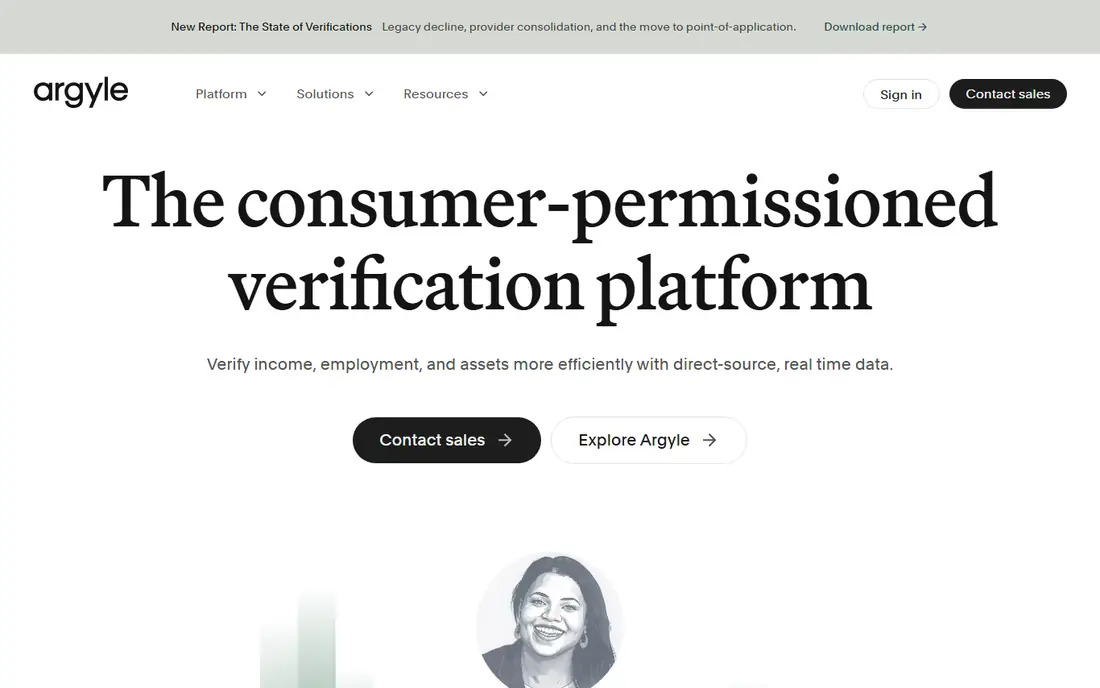
What we like- Argyle connects to the worker's own payroll account and returns income, employment, paystub and shift data in real time, which is the model lenders, earned wage access products and tenant screening tools actually need. Coverage spans the large payroll platforms and a long tail of employers, and the data arrives as documents and structured fields rather than a synced copy of an HR system. For verification use cases, this replaces document uploads and employer phone calls, which is a different and often better trade than an employer side integration.
Watch out for- Argyle is not a Finch replacement for employer authorised HRIS reads: if your customer is the employer and the data must come from their system of record, this is the wrong shape of product. Pricing is sales led and usage based, so we list see website. Coverage depends on payroll platforms allowing the connection, and workers who cannot find their employer in the list fall back to manual documents, which your product still has to handle.
Starting priceSee website
Free planNo

What we like- Pinwheel works in the same worker permissioned payroll space as Argyle, with two jobs it is known for: verifying income and employment for lenders, and switching a worker's direct deposit into a new account inside a bank or fintech app. The deposit switching flow is the differentiator: neobanks use it during onboarding because moving the paycheck is what turns a downloaded app into a primary account. It also offers earned wage access data for products that advance pay against shifts already worked.
Watch out for- As with Argyle, this is a neighbouring category rather than a unified HR API, and teams shopping for employer side integrations should look at Merge or Kombo instead. Pricing is not published, so budget talks start with sales. Payroll platform coverage, while broad, is not universal, and gig and very small employer payrolls are the usual gaps, so test your own user base's employers during evaluation.
#4
Kombo
Best for: HR and payroll integrations with a Europe focus
Visit kombo.dev
Starting priceSee website
Free planNo
What we like- Kombo is the unified API most often shortlisted against Finch by teams selling outside the US. It covers HRIS, ATS, payroll and learning systems with a data model reviewers rate highly, it supports creating employee records across dozens of HR systems, which several rivals cannot do, and its coverage of European payroll and HR tools is deeper than the US first vendors. Sync is close to real time on many integrations, and custom fields are handled on standard plans rather than held back for enterprise contracts.
Watch out for- Pricing is custom and demo led, so we list see website, and the evaluation takes longer than a self serve signup. Its US payroll depth, particularly deduction write back for benefits products, is not its home ground
- Finch remains the specialist there. Kombo is also a younger company than Merge, which some enterprise buyers weigh in procurement even when the product scores better on their own tests.
Starting price$599 per month
Free planNo
What we like- Apideck takes a different technical approach: instead of storing a synced copy of customer data, it passes requests through to the source system in real time, which means the data you read is current and Apideck holds less of it at rest. Pricing is published from 599 dollars a month, with HRIS plus ATS on the 1,299 dollar Scale plan. It covers accounting, CRM, file storage and commerce alongside HR, and its Vault product gives your customers a white label connection flow. For teams uneasy about a vendor warehousing their customers' payroll data, the pass through model is the selling point.
Watch out for- Real time reads inherit the source system's speed and downtime: a slow payroll platform makes your product slow, and there is no cached copy to fall back on. Field level controls and deeper features sit on the Scale plan and above, so the honest entry price for HR work is the higher figure. Payroll write depth is limited compared with Finch, so benefits products should test their exact write operations early.
Starting price$50 per month
Free planYes
What we like- Nango is the control option. It is an integration platform you can self host or run in your own cloud, with syncs defined in code, access to raw provider APIs when the unified model runs out, and a free tier covering the first connections before paid plans start at 50 dollars a month. For products handling payroll data under strict customer contracts, keeping the integration layer inside your own infrastructure answers security questionnaires that a hosted vendor cannot. It covers HRIS and payroll alongside CRM, accounting and other categories.
Watch out for- You own more of the work. Nango gives you the machinery, but your engineers build and maintain the sync logic per provider, which is the labour Merge and Kombo charge to remove. Its HR and payroll catalogue is smaller than the specialists', so check your exact provider list first. Teams without spare engineering time usually find the platform fee of a hosted rival cheaper than the salaries this route consumes.
#7
Truv
Best for: Employment and income verification for lenders
Visit truv.com
Starting priceSee website
Free planNo
What we like- Truv, formerly Citadel ID, is built for verification in lending and background screening: income, employment, assets and insurance checks through worker permissioned payroll connections, sold to mortgage, auto and personal lenders and to screening firms. Its reporting is shaped for underwriting decisions, with the consent and audit trail those decisions require. If the job is proving a borrower's job and pay to a regulated lender, Truv speaks that language more directly than a general data platform.
Watch out for- It is a verification product, not a general employment data API for product builders, so teams wanting raw HRIS data for their own features will find the shape wrong. Pricing is by quote and per report in ways that only make sense against lending volumes. Coverage centres on payroll platforms common in US lending, and employer systems outside that world are not its concern.
#8Plaid
Best for: Employment verification inside a wider platform4.2/5 on
G2 (50 reviews, checked Oct 2026)
Visit plaid.com
Starting priceSee website
Free planNo
What we like- Plaid's employment and income products, part of its Plaid Check line, let a lender verify a worker's employer, income and tenure through payroll connections, inside the same vendor relationship many fintechs already use for bank account data. The consent screen and connection flow are familiar to US consumers, which lifts completion rates in verification funnels. For a lender already on Plaid for assets and transactions, adding employment checks under one contract and one integration pattern is a real operational saving.
Watch out for- Employment is one product line in a banking data platform, not the company's focus, and payroll coverage and field depth trail the specialists in this list. Pricing is bundled and sales led, so we list see website. If employment data is your core input rather than one check among several, Argyle, Pinwheel or Truv will usually serve you better, and HRIS style employer data is not offered at all.
How we chose
We split this category the way buyers actually split it: employer authorised unified APIs for teams whose customer is the employer, and worker permissioned payroll platforms for teams whose user is the worker. Every entry is in active sale in October 2026, and we checked current pricing publications and comparison reporting for each one. We excluded Finch itself, excluded point to point integration agencies, and excluded general workflow tools that move HR data without a real API product. Prices hidden behind sales calls are listed as see website rather than repeated from directories.
How to choose the right Finch alternative
Decide whose permission your product runs on first. If your customer is an employer connecting their HR system, you are in unified API land: Merge for breadth and tooling, Kombo for Europe and HR depth, Apideck for real time pass through, Nango for control. If your user is a worker proving income, the shortlist is Argyle, Pinwheel, Truv and Plaid, and coverage of your users' actual payroll platforms decides it, so bring a list of your top fifty employers to the evaluation.
Then test the unglamorous parts. Ask how stale the data can be, what happens when a payroll provider changes its login flow over a weekend, and how deductions or fields your product needs are represented when the source system stores them oddly. Read the data processing agreement as if your largest customer will, because they will. Finally, price at your real connection count in year two, not your launch count: per connection and platform fee models cross over quickly as you grow.
Frequently asked questions
What is the difference between Finch and Argyle or Pinwheel?
Finch reads data from the employer's HR and payroll systems with the employer's authorisation, which suits products sold to employers, benefits platforms and HR tools. Argyle and Pinwheel read the worker's own payroll account with the worker's permission, which suits lending, verification and earned wage access. They solve adjacent problems, and many companies in this space end up needing one of each rather than swapping one for the other.
How much do Finch alternatives cost?
Published anchors in October 2026: Merge starts at 650 dollars a month as a platform fee, Apideck from 599 dollars a month, and Nango from 50 dollars a month after a free tier. The worker permissioned platforms and Kombo price by usage or by quote, so the honest answer is that cost depends on connection and report volume. Every vendor here will quote against your numbers, so bring them.
Which alternative is best for European payroll and HR systems?
Kombo is the usual shortlist answer, with deeper coverage of European HRIS and payroll tools than the US first vendors, and Merge also covers many European systems inside its HR category. Check your exact country and provider list during evaluation, because coverage claims in this category are counted differently by every vendor and a headline number hides the gaps that matter to your customers.
What compliance should I check before connecting payroll data?
At minimum: SOC 2 Type II reporting, a data processing agreement that names retention and deletion terms, and a consent flow that tells the worker or employer plainly what is shared. If the data informs credit, tenancy or hiring decisions, ask how the vendor supports your Fair Credit Reporting Act duties, and whether reports can be furnished in the form those duties require. Get answers in writing during procurement, because your customers' security reviews will ask you the same questions.
Can I replace Finch without rebuilding my integration?
Partly. The unified API vendors use similar resource shapes, so a move between Merge, Kombo and Finch is a mapping project rather than a rewrite, but field names, sync behaviour and error handling all differ, and assisted or long tail integrations never map cleanly. Budget engineering weeks, run both in parallel for a set of friendly customers, and compare the same employer's records field by field before you cut over.
Sources we checked (0)
Is your product missing or out of date?
We review this list regularly. Vendors can request a listing, send updated pricing or ask about featured placement.

Shihab Mia · Founder, Rankite
Shihab has 5+ years in B2B and SaaS SEO. He writes Rankite's software buying guides from pricing pages, documentation and public user reviews. More about Shihab.