How we make this list: we compare pricing pages, product documentation and public user reviews. Ratings come from G2, Capterra or Trustpilot, with the date we checked them.
Key takeaways
- ExtraHop Reveal(x) is known for deep packet inspection and encrypted traffic analysis across hybrid networks.
- Vectra AI leads on signal quality for teams drowning in alerts, while Corelight leads on open evidence and forensics.
- Darktrace suits teams that want self-learning detection with autonomous response, at enterprise cost.
- Plixer Scrutinizer is the budget-friendly flow analytics pick, starting around $10,000 per year by third-party guides.
Quick comparison
Is your product missing or out of date?
We review this list regularly. Vendors can request a listing, send updated pricing or ask about featured placement.
Starting priceSee website
Free planNo
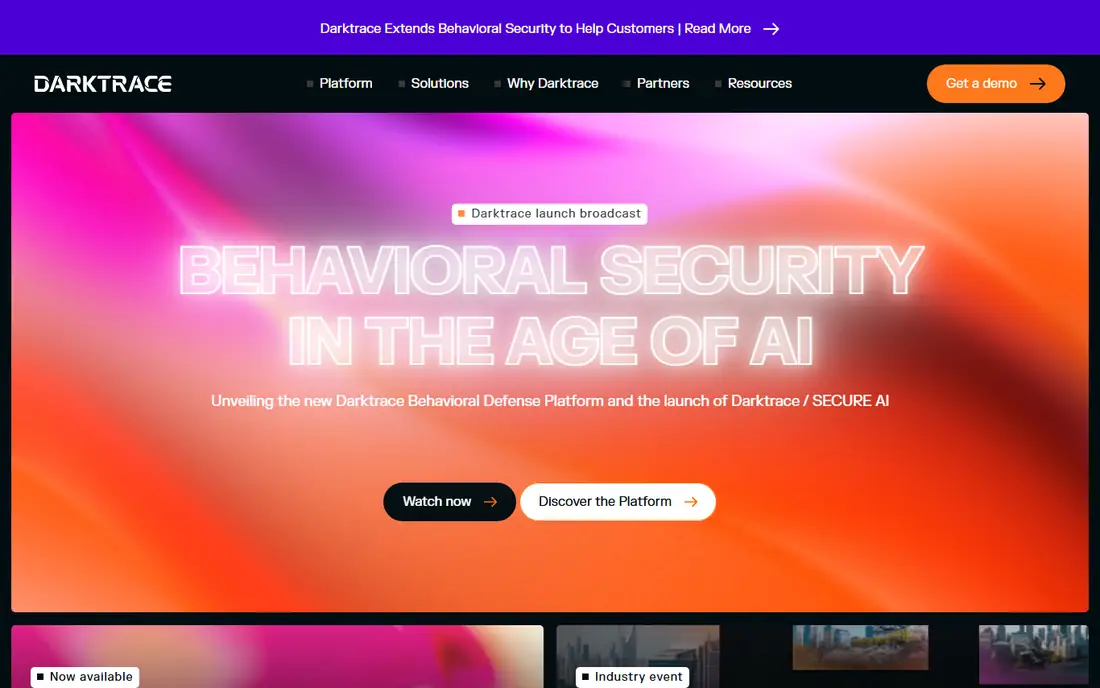
Darktrace builds a model of normal for your network and flags what breaks the pattern, rather than relying only on signatures of known attacks. That approach catches novel behavior, and its autonomous response can isolate a device or block a connection while analysts investigate. Large enterprises with complex networks get the most from it.
The cost is enterprise-grade in every sense: quote-based pricing, a tuning period while models learn, and staff to work the alerts it raises. Teams without a security operations center may struggle to use it well. If you run a large, complex estate and want AI-led detection with response built in, Darktrace is the reference point.
What we like- Self-learning AI models normal behavior per network
- Autonomous response can contain threats fast
- Strong enterprise install base
Watch out for- Quote-based enterprise pricing
- Models need tuning time
- Smaller teams may find it heavy to operate
Starting priceSee website
Free planNo

Vectra AI focuses on the problem every SOC complains about: too many alerts, too little signal. Its Attack Signal Intelligence scores and prioritizes detections, then maps them to attack progression so analysts see the story, not a pile of events. Coverage spans cloud, SaaS, and data center networks, which suits hybrid estates.
Vectra works best as part of a wider stack, feeding a SIEM or SOAR for response, so budget integration time. Pricing is quote-based and aimed at mid-to-large organizations. For teams whose analysts are buried in noise, Vectra's prioritization is the feature that pays for itself.
What we like- Attack Signal Intelligence prioritizes real attacks
- Maps attack progression across kill chain stages
- Cloud, SaaS, and data center coverage
Watch out for- Quote-based pricing
- Needs integration work with SIEM and SOAR tools
- Smaller estates may not need its depth
Starting priceSee website
Free planNo
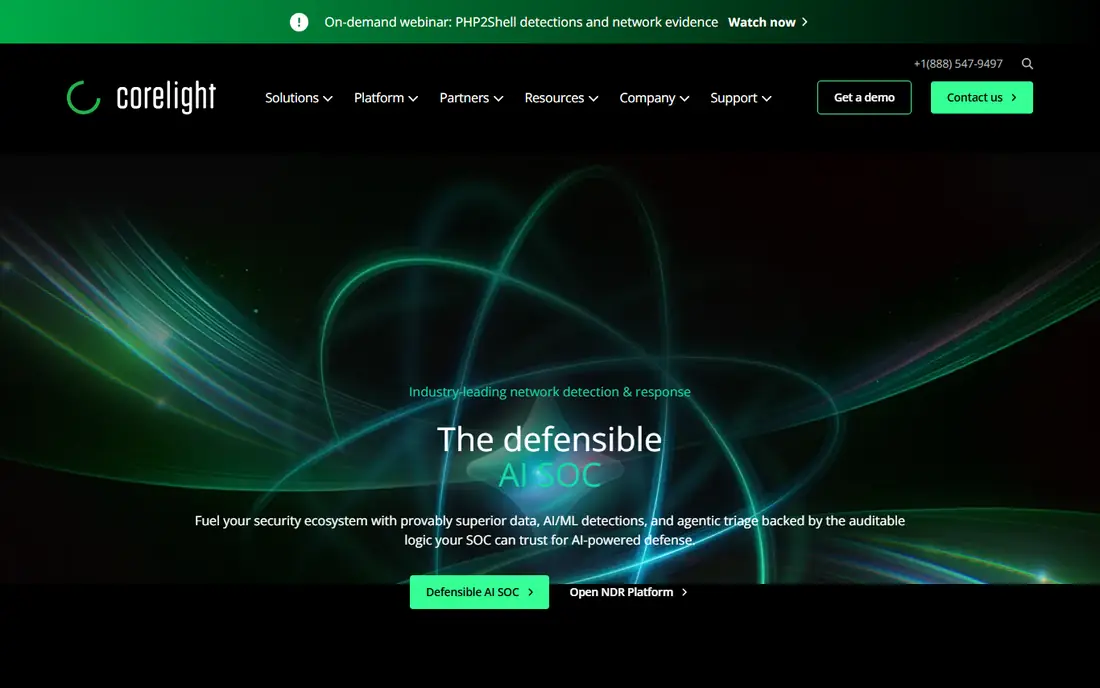
Corelight turns network traffic into structured evidence using Zeek, the open source network analysis framework. Analysts get detailed logs of connections, DNS, files, and protocols, which makes investigations and threat hunting far stronger than alert-only tools. Government and compliance-heavy buyers value the open evidence standard, since data is not locked in a vendor format.
That depth demands skill. Corelight hands you evidence, not verdicts, so your team needs analysts who can query and interpret it. It is less turnkey than Darktrace or Vectra. For forensics-led teams and organizations that must keep evidence in open formats, Corelight is the strongest pick here.
What we like- Built on open source Zeek
- Rich network evidence for investigations
- Strong government and compliance fit
Watch out for- Quote-based pricing
- Evidence depth needs skilled analysts
- Less turnkey than AI-led rivals

#4
Cisco Secure Network Analytics
Best for: Cisco-centric networks
Visit cisco.com
Starting priceSee website
Free planNo
Cisco Secure Network Analytics, formerly Stealthwatch, watches traffic across Cisco infrastructure and adds encrypted traffic analytics that can spot threats inside encrypted flows without full decryption. For organizations already standardized on Cisco switching and routing, it uses telemetry those devices already produce, which shortens deployment.
Outside a Cisco estate, the value drops and deployment gets harder. Pricing is quote-based and enterprise-aimed. If your network is Cisco from edge to core, this is the natural ExtraHop alternative; if it is mixed-vendor, a vendor-neutral tool will fit better.
What we like- Deep integration with Cisco switches and routers
- Strong encrypted traffic analytics
- Enterprise scale
Watch out for- Best value inside Cisco estates
- Quote-based pricing
- Deployment complexity on mixed-vendor networks
Starting priceSee website
Free planNo
Cortex XDR pulls endpoint, network, and cloud telemetry into one detection platform, so an attack that crosses layers shows up as one incident instead of three separate alerts. Palo Alto customers get the most from it, since firewall and endpoint data feed the same analytics, and automation can contain threats across layers.
The platform is broad, and broad rollouts take time, especially where Palo Alto is not already the standard. Pricing is quote-based. For teams already committed to Palo Alto, or teams that want one XDR platform rather than a standalone NDR tool, Cortex XDR is a strong consolidation play.
What we like- Combines endpoint, network, and cloud data in one platform
- Strong analytics and automation
- Large install base
Watch out for- Quote-based pricing
- Best inside Palo Alto estates
- Breadth can mean a long rollout
#6Arctic Wolf
Best for: Managed detection without new headcount4.7/5 on
G2 (280 reviews, checked Oct 2026)
Visit arcticwolf.com
Starting priceSee website
Free planNo
Arctic Wolf answers a staffing problem rather than a feature gap. Its managed security operations center monitors your network, triages alerts, and investigates incidents, so a team without dedicated analysts still gets expert coverage. That model suits mid-market companies that cannot hire a SOC but face the same threats as larger firms.
The trade is control. You rely on external analysts, and response runs through their process rather than your own console habits. Pricing is quote-based. If your constraint is headcount, not budget, Arctic Wolf turns detection into a service instead of another tool to staff.
What we like- Managed SOC monitors and investigates for you
- SOC-as-a-service model
- Good fit for teams without analysts
Watch out for- Quote-based pricing
- Less direct control than self-operated tools
- Managed model means shared analyst attention
Starting price$10,000 per year
Free planNo
Plixer Scrutinizer is the price-conscious pick in a category where most vendors hide pricing. Third-party guides put its starting price near $10,000 per year, which undercuts the enterprise NDR platforms by a wide margin. It analyzes flow data on-prem, giving mid-sized companies real network visibility without an enterprise contract.
Flow data cannot match full packet capture for forensic depth, and detection features are simpler than Darktrace or Vectra. For a mid-sized team that needs visibility, trending, and basic threat detection on a known budget, Scrutinizer is the honest value option.
What we like- Flow-based analytics at a mid-market price
- On-prem deployment
- Clear starting price by third-party guides
Watch out for- Flow data is thinner than full packet capture
- Enterprise features cost more
- Smaller detection depth than AI-led tools
Starting priceSee website
Free planNo
Stellar Cyber offers Open XDR on a single-license model, combining network detection with SIEM-style correlation and response in one platform. That consolidation appeals to teams that want fewer vendors and one bill, especially budget-conscious organizations that still need broad coverage.
The install base is smaller than the giants here, so reference customers in your exact industry may be fewer. Onboarding a broad platform also takes time. For teams that want XDR breadth without enterprise NDR pricing, Stellar Cyber is worth a pilot alongside Plixer.
What we like- Single-license Open XDR model
- Combines NDR with SIEM and response
- Suits budget-conscious teams
Watch out for- Quote-based pricing in practice
- Smaller install base than Palo Alto or Cisco
- Platform breadth needs onboarding time
How we chose
We compared network detection and response tools that do the same job as ExtraHop Reveal(x): watching network traffic, spotting attacks, and giving analysts evidence to act on. We weighed detection approach, forensic depth, deployment model, and managed options, and we checked vendor pages and 2026 NDR comparisons for current positioning. Tools that only do endpoint detection or only log management were left out. Prices that vendors do not publish are listed as See website.
Start with your team's shape. If you have analysts and want the best signal, shortlist Vectra AI and Darktrace. If you have analysts and want the best evidence, shortlist Corelight. If you have no analysts, shortlist Arctic Wolf or a managed service from another vendor. If your network is Cisco or Palo Alto standardized, the matching vendor tool will deploy fastest.
Trial on your own traffic, not a demo
NDR tools behave very differently on your traffic than in a vendor demo. Run a proof of concept on a real network segment for at least two weeks, and count alerts per day, false positives, and time to investigate one real incident. Check encrypted traffic handling carefully, since most modern traffic is encrypted and decryption policies vary. A tool that floods a small team with alerts is worse than no tool at all.
Price the whole program
Quote-based pricing hides the real cost, which includes sensors or collectors, data retention, and analyst time. Ask vendors for a written quote at your traffic volume and retention period, and ask what a managed option costs for comparison. Plixer's published starting price is useful as a floor, but compare it on detection depth, not price alone.
Frequently asked questions
What does NDR actually do?
Network detection and response tools watch network traffic for signs of attack, such as unusual connections, data exfiltration, or lateral movement between machines. They alert analysts and provide evidence, like connection logs and packet details, to investigate. They complement endpoint tools, which see what happens on a single machine but not the traffic between machines.
Do I need full packet capture?
Full packet capture gives the deepest forensics but costs more to store and process. Flow-based tools like Plixer give trends and anomalies at lower cost. Most teams start with flow plus targeted packet capture on critical segments, then expand capture where investigations repeatedly need it.
Can NDR see inside encrypted traffic?
Partly. Tools use metadata, traffic patterns, and in some cases decryption with proper key management to analyze encrypted flows. ExtraHop is known for encrypted traffic analysis, and Cisco and others offer similar features. No tool can inspect traffic it cannot decrypt or observe, so check exactly what each vendor claims for your traffic mix.
Is managed detection better than buying a tool?
Managed detection suits teams without analysts, since experts triage and investigate for you. Self-operated tools suit teams with analysts who want direct control and faster local response. Some vendors offer both, so you can start managed and move in-house later. Decide on staffing first, then on product.
How long does deployment take?
Flow-based tools can show value in days, while full NDR platforms with sensors across sites take weeks to months. Cloud and hybrid estates add collector placement work. Plan a phased rollout: one segment first, tune alerts, then expand, rather than lighting up the whole network at once. Keep a written record of tuning choices so the next analyst can follow your reasoning.
Sources we checked (8)
- https://darktrace.com
- https://www.vectra.ai
- https://corelight.com
- https://www.cisco.com
- https://www.paloaltonetworks.com
- https://arcticwolf.com
- https://www.plixer.com
- https://stellarcyber.ai
Is your product missing or out of date?
We review this list regularly. Vendors can request a listing, send updated pricing or ask about featured placement.

Shihab Mia · Founder, Rankite
Shihab has 5+ years in B2B and SaaS SEO. He writes Rankite's software buying guides from pricing pages, documentation and public user reviews. More about Shihab.
 Darktrace
 Vectra AI
 Corelight
 Palo Alto Cortex XDR
 Plixer Scrutinizer
 Stellar Cyber