How we make this list: we compare pricing pages, product documentation and public user reviews. Ratings come from G2, Capterra or Trustpilot, with the date we checked them.
Key takeaways
- ChargePoint is the safest large-network pick, with a huge driver base and roaming partners such as EVgo and FLO.
- EV Connect and ChargeLab suit operators that want hardware freedom, since both run chargers from many brands on one platform.
- Monta is the only option here with fully public per-socket pricing, starting near 5 euros per month for AC chargers.
- AMPECO and Driivz fit operators that need deep billing, roaming and white-label control at scale.
- Most enterprise platforms are quote-only, so budget on a per-charger monthly fee and confirm contract minimums before signing.
Quick comparison
| Tool | Best for | Starting price | Free plan |
|---|
 ChargePoint | Large public networks | See website | Free trial |
 EV Connect | Hardware-agnostic networks | See website | Free trial |
 ChargeLab | North American operators | See website | Free trial |
 AMPECO | White-label platforms | See website | Free trial |
 Monta | Transparent per-socket pricing | €5 per socket per month | Free trial |
 Driivz | Large-scale billing and roaming | See website | Free trial |
 AmpUp | Fleets and workplaces | See website | Free trial |
 GreenFlux | Revenue-focused operators | See website | Free trial |
Is your product missing or out of date?
We review this list regularly. Vendors can request a listing, send updated pricing or ask about featured placement.
The best EV01 alternatives
Starting priceSee website
Free planFree trial
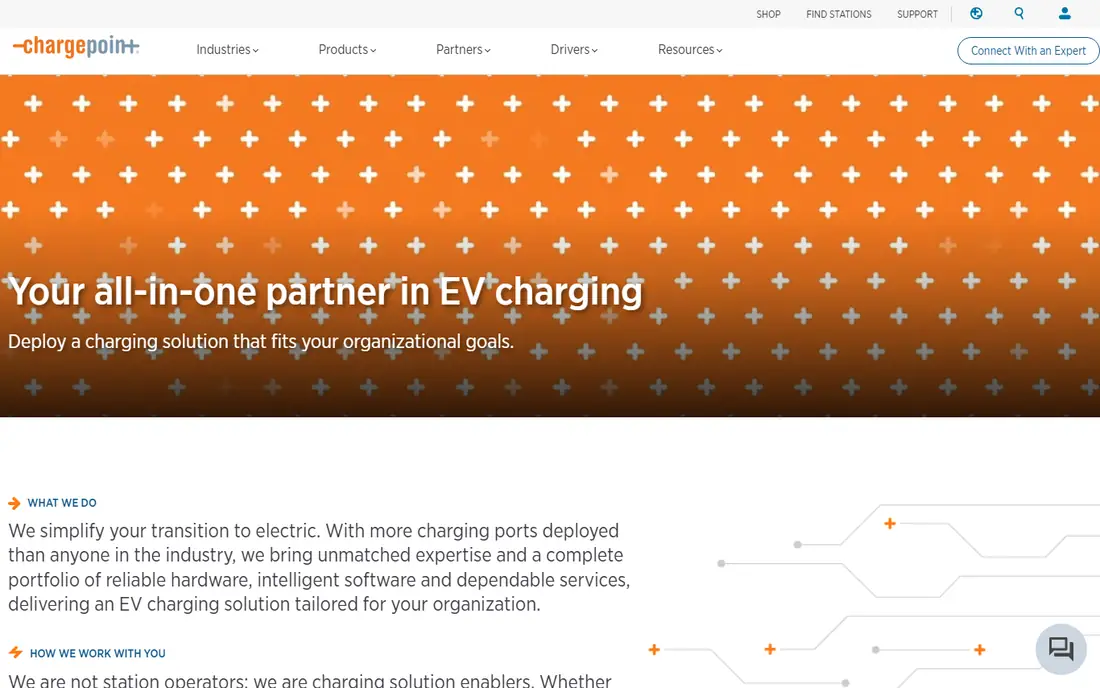
ChargePoint is the largest name in North American charging, and its driver network is the reason many site hosts pick it. Drivers already carry the app, stations appear in roaming with partners such as EVgo and FLO, and the platform covers home, workplace, fleet and public charging in one account. The company offers five cloud plan tiers, though it does not attach public prices to them.
Drivers pay a service fee on certain paid sessions, near $0.25 for AC and $0.49 for DC as an account holder, on top of whatever the station owner charges. Hosts should read the full fee schedule before launch, since guest fees run higher. For a public site that needs foot traffic from an existing driver base, ChargePoint's reach is hard to beat.
What we like- Huge driver network
- Roaming with EVgo and FLO
- Five cloud plan tiers
Watch out for- Quote-only enterprise pricing
- Service fees add to session prices
Starting priceSee website
Free planFree trial
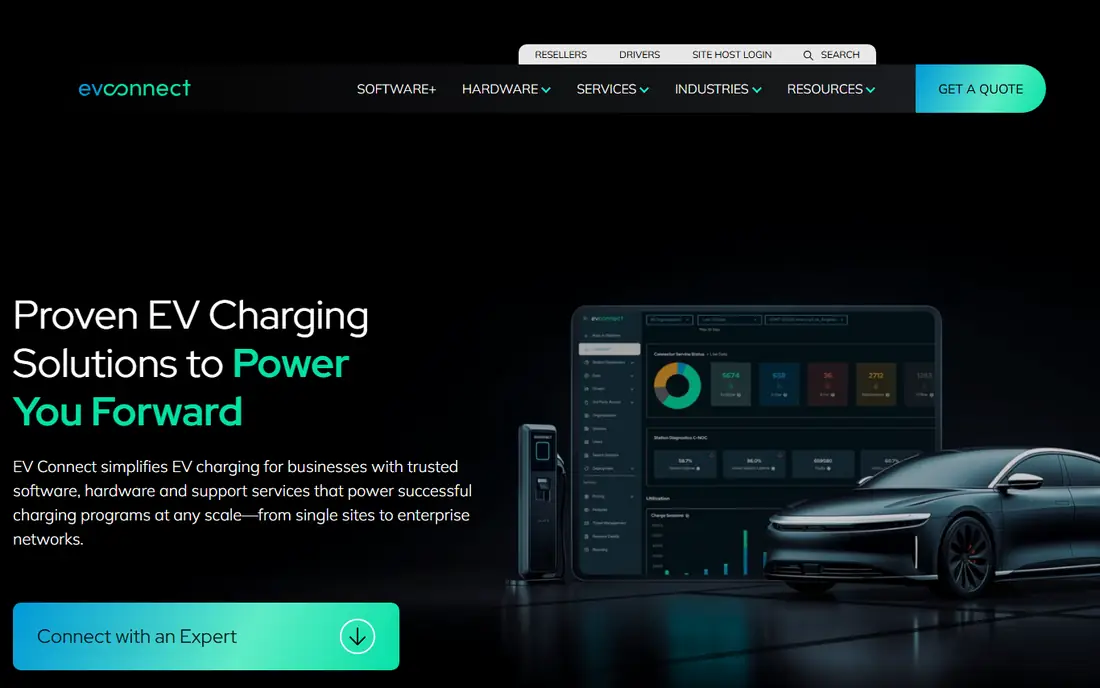
EV Connect is built for operators that do not want to standardize on one hardware brand. Its platform manages chargers from many manufacturers, with real-time status, pricing control and driver apps included. That flexibility matters for portfolios assembled over years, where different sites already run different hardware.
Pricing is quote-based, so expect a sales conversation tied to charger count and features. Support runs around the clock, which matters for public sites where a down charger loses revenue every hour. Operators that value hardware freedom and hands-on support over published pricing will find EV Connect a strong fit.
What we like- Runs many charger brands
- Real-time data and insights
- 24/7 support
Watch out for- Quote-only pricing
- Setup effort grows with site count
Starting priceSee website
Free planFree trial
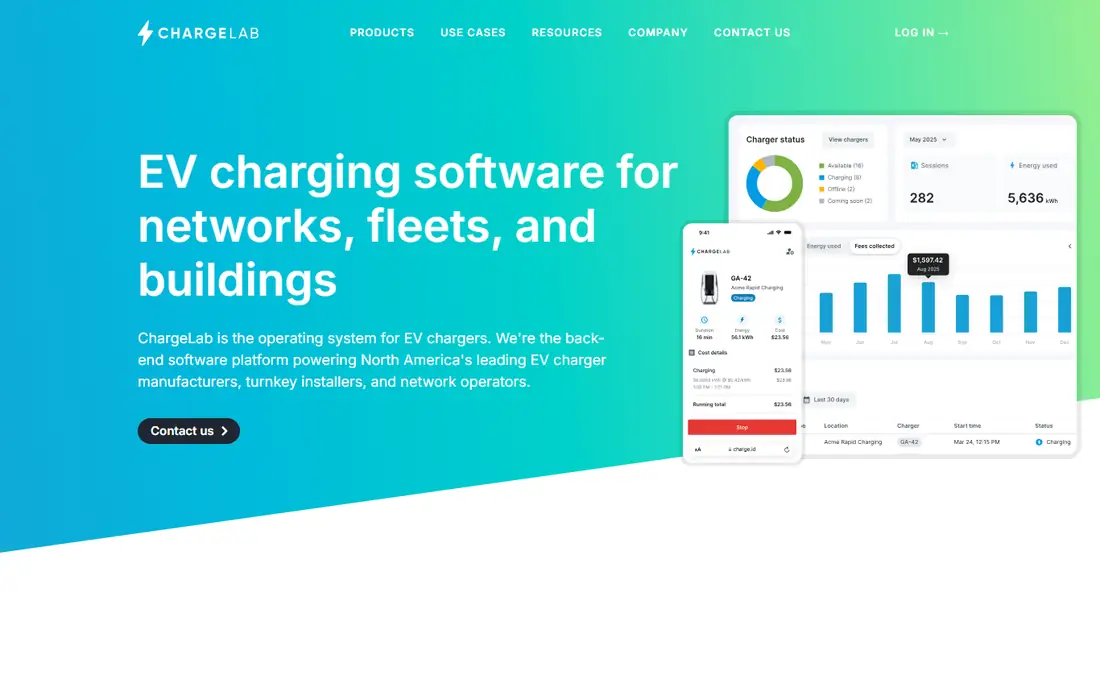
ChargeLab positions itself as the hardware-agnostic network platform for North America, competing directly with EV Connect on that point. Its dashboard covers commissioning, monitoring, pricing and driver payments, and it supports fleets as well as public sites. Operators that already own chargers from several brands can bring them onto one system without replacing hardware.
Like most rivals here, ChargeLab does not publish prices, so budgeting requires a quote. Its driver app reach is smaller than ChargePoint's, which matters less for fleets and workplaces and more for public sites chasing passing traffic. For a North American operator that owns its hardware mix, ChargeLab is a practical choice.
What we like- Hardware-agnostic in North America
- Clean operator dashboard
- Fleet support
Watch out for- Quote-only pricing
- Smaller driver app reach than ChargePoint
Starting priceSee website
Free planFree trial
AMPECO sells a complete charging platform that operators can brand as their own, from driver apps to billing and roaming. That white-label depth is why larger charge point operators and energy companies choose it: the end driver sees the operator's brand, not AMPECO's. Billing covers subscriptions, pay-as-you-go, roaming settlements and fleet accounts in one system.
Complexity is the trade-off. AMPECO is an enterprise platform, and smaller operators may find setup and configuration heavier than a simpler tool such as Monta. Pricing is quote-based. For an operator planning hundreds of chargers under its own brand, AMPECO's control is worth the effort.
What we like- Full white-label control
- Strong billing and roaming
- Global customer base
Watch out for- Quote-only pricing
- Enterprise-grade complexity
Starting price€5 per socket per month
Free planFree trial
Monta stands out in this market for one reason: it publishes its prices. The Advanced plan costs near 5 euros per socket per month for AC chargers and 8 euros for DC chargers, which makes budgeting simple for small and mid-size operators. Its driver app also helps roaming drivers find and pay at your chargers, which adds foot traffic without a separate roaming deal.
US buyers should confirm dollar pricing and North American support coverage, since Monta grew in Europe first. Its feature set is broad, covering site management, pricing, access control and payments. For an operator that wants to know the monthly cost before a sales call, Monta is the clearest option on this list.
What we like- Only fully public pricing here
- App drivers can find your chargers
- Roaming included
Watch out for- Euro pricing for US buyers
- Newer in North America than rivals
Starting priceSee website
Free planFree trial
Driivz is built for scale. Its platform manages billing, roaming, energy management and driver services for networks running thousands of chargers, and it is used by large operators and utilities. Energy management features help sites stay within grid limits, which matters as fast-charging sites grow and demand charges rise.
Small operators will likely find Driivz more platform than they need, and pricing is quote-based. For a utility, a national network or a fleet operator planning rapid growth, Driivz's billing depth and scale handling make it a serious contender. Confirm that your charger brands are supported before committing, since large platforms still vary by hardware.
What we like- Handles very large networks
- Strong billing engine
- Energy management tools
Watch out for- Quote-only pricing
- Aimed at large operators, not small sites
Starting priceSee website
Free planFree trial
AmpUp focuses on the sites where charging is a service for a known group: fleets, workplaces, apartments and campuses. Its platform covers access control, so only approved drivers use a charger, plus billing by department or vehicle and scheduling for shared chargers. That fits a depot or office garage better than a highway rest stop.
Pricing is quote-based, and AmpUp's public driver presence is smaller than ChargePoint's. For a fleet manager who needs to track energy per vehicle and control who charges when, AmpUp's feature set matches the job well. Public site hosts chasing passing drivers should weigh ChargePoint or Monta instead.
What we like- Good fleet and workplace features
- Driver app
- Access controls
Watch out for- Quote-only pricing
- Smaller public network presence
Starting priceSee website
Free planFree trial
GreenFlux is an eMobility platform that helps operators manage charging at scale, optimize revenue and extend network access from one system. Its pricing engine offers unusual flexibility, letting operators set tariffs by time, energy, session and customer group, which matters for sites that need to shape demand or serve mixed audiences.
Pricing is quote-based, and GreenFlux grew in Europe, so US buyers should confirm local support and hardware compatibility. For an operator whose main question is revenue per charger rather than just uptime, GreenFlux's pricing and optimization tools are a strong reason to include it in a shortlist.
What we like- Pricing flexibility
- Revenue optimization
- Single-platform operations
Watch out for- Quote-only pricing
- European roots, check US coverage
How we chose
We compared platforms on hardware freedom, billing depth, roaming reach, pricing transparency and fit for public, fleet and workplace sites. We used vendor pages and recent comparison guides for facts, and we favored platforms still actively sold to operators in 2026. We did not claim hands-on testing. Instead we weighed what each platform controls, from driver apps to tariffs, so operators can match a tool to their site type rather than buying on brand alone.
Questions to settle before you sign
Start with hardware. List every charger model you already own or plan to buy, and confirm each one is supported by the platform you shortlist. A platform that cannot talk to your hardware is useless no matter how good its dashboard looks, and replacing chargers to fit software is an expensive mistake.
Next, model the full monthly cost. Most platforms here charge per charger per month plus payment processing, and some add fees for roaming, support or premium features. Ask for a written quote at your exact charger count, and check contract minimums and term length. Finally, test the driver experience yourself: create an account, find a charger, start a session and read the receipt. If that flow confuses you, it will confuse your drivers too.
One more factor deserves attention: uptime obligations. Federal minimum standards for funded public chargers require greater than 97 percent uptime per port, which still allows roughly 11 days of downtime per port per year once dispatch and drive time are counted. Ask each vendor how it monitors uptime, how fast it dispatches repairs, and what reporting you get when a charger goes down. A platform with strong diagnostics and a clear repair workflow protects revenue far better than one that only reports outages after drivers complain. Keep the written answers from each vendor, since they become useful evidence if uptime disputes arise later.
Frequently asked questions
What does EV charging management software actually do?
It monitors chargers, sets prices, controls driver access, processes payments, handles roaming settlements and reports uptime and energy use. Without it, each charger is an isolated device with no billing, no remote diagnostics and no way for roaming drivers to pay.
How much does EV charging software cost?
Most enterprise platforms are quote-only, with industry guides placing typical SaaS fees near $50 to $500 per charger per month depending on scale and features. Monta publishes per-socket pricing near 5 euros per month for AC and 8 euros for DC, which is the clearest public benchmark here.
Do I need different software for fleets versus public charging?
Not always, but the features differ. Fleets need access control, per-vehicle energy tracking and depot scheduling, while public sites need roaming, driver apps and guest payment. Platforms such as AmpUp lean fleet, while ChargePoint and Monta lean public, so match the tool to your main site type.
Can one platform run chargers from different brands?
Yes, if the platform is hardware-agnostic. EV Connect, ChargeLab and AMPECO all support multiple charger brands through the OCPP protocol. Confirm your exact models are supported before signing, since support varies by brand and firmware version.
What is OCPP and why does it matter?
OCPP is the open protocol that lets chargers talk to management software from different vendors. A charger that supports OCPP can usually move between platforms, while a closed charger locks you to one vendor. Check OCPP support before buying hardware, not after.
Sources we checked (8)
- https://www.chargepoint.com
- https://www.evconnect.com
- https://www.chargelab.co
- https://www.ampeco.com
- https://monta.com
- https://driivz.com
- https://www.ampup.io
- https://www.greenflux.com
Is your product missing or out of date?
We review this list regularly. Vendors can request a listing, send updated pricing or ask about featured placement.

Shihab Mia · Founder, Rankite
Shihab has 5+ years in B2B and SaaS SEO. He writes Rankite's software buying guides from pricing pages, documentation and public user reviews. More about Shihab.