How we make this list: we compare pricing pages, product documentation and public user reviews. Ratings come from G2, Capterra or Trustpilot, with the date we checked them.
Key takeaways
- Cisco Umbrella rates 4.4 stars on G2 from 285 reviews, most popular with mid-market organizations, with comprehensive DNS-layer security and Cisco ecosystem integration.
- DNS filtering blocks malicious domains at the DNS lookup stage, but it is a strong first layer that works best alongside other controls, not a complete security stack.
- Cloudflare Gateway offers a free tier with paid plans around 7 dollars per user per month, while DNSFilter runs 1.15 to 3.00 dollars per license per month.
- Enterprise buyers should shortlist Zscaler, Prisma Access, and Netskope, while SMBs and MSPs should shortlist DNSFilter and Cloudflare Gateway.
Quick comparison
Is your product missing or out of date?
We review this list regularly. Vendors can request a listing, send updated pricing or ask about featured placement.
The best cisco umbrella alternatives

#1Zscaler Internet Access
Best for: Large enterprise SWG4.4/5 on
G2 (321 reviews, checked Oct 2026)
Visit zscaler.com
Starting priceSee website
Free planNo
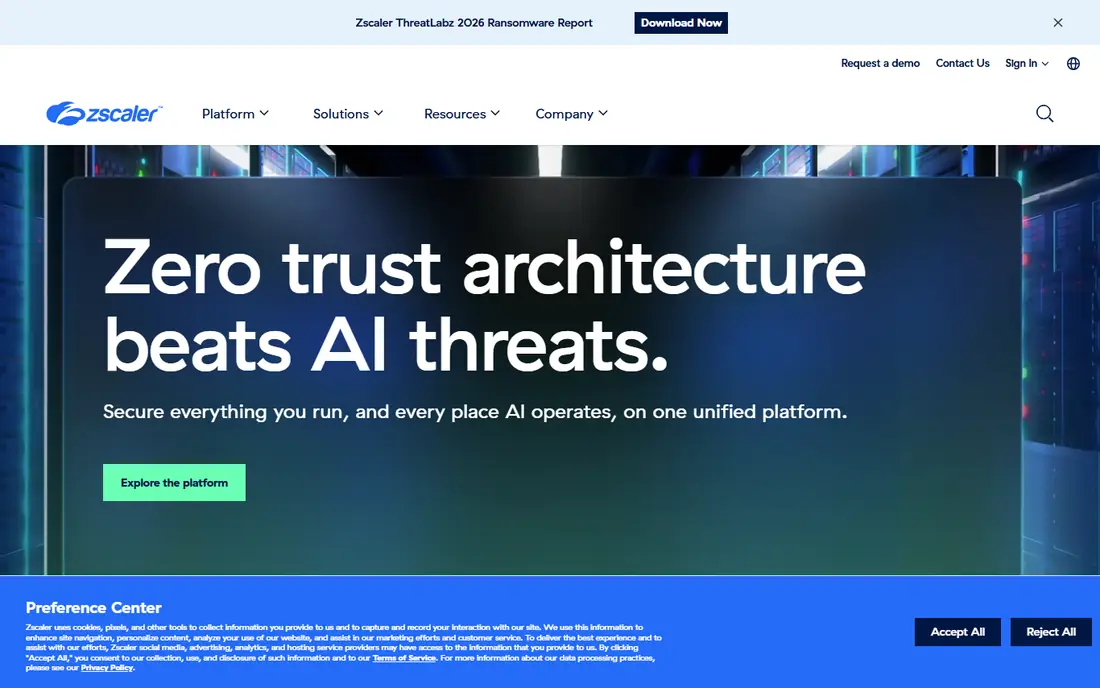
Zscaler Internet Access is the enterprise SWG for large-scale web protection and layered threat controls, built on the Zero Trust Exchange that sits inline on every connection and connects each user only to the application they are authorized to reach. The company reports securing more than 750 billion transactions a day, with over half of the Fortune 500 relying on it. The platform stretches beyond internet security into data protection and AI security, which suits large buyers consolidating vendors.
Pricing is quote-based with no public list price, and deployments typically involve multi-year contracts and professional services. Zscaler fits large distributed enterprises that want one platform for access, inspection, and data control, while smaller teams will find the buying process heavy.
What we like- Full SWG plus DNS
- Massive global cloud
- Deep encrypted traffic inspection
- Broadest platform breadth
Watch out for- Quote-based pricing
- Complex to configure and operate
- Multi-year contracts typical
Starting priceSee website
Free planNo
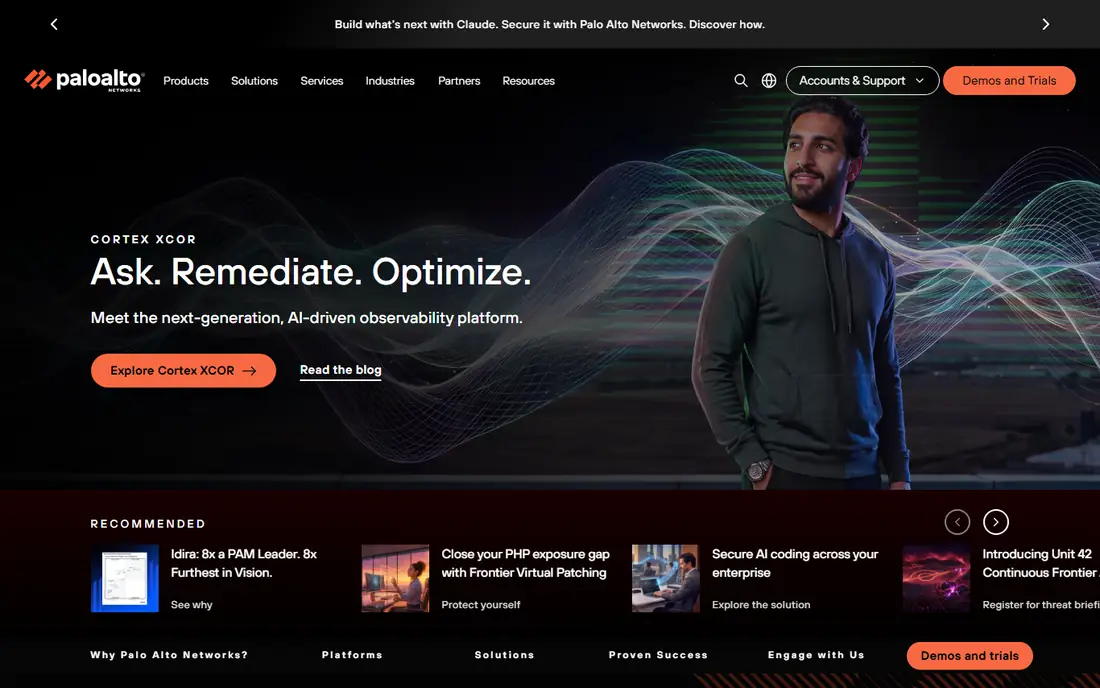
Palo Alto Prisma Access is the unified SASE platform with firewall inspection depth, covering web security, DNS security, and private access in one cloud-delivered service. It suits enterprises already on Palo Alto firewalls that want consistent policy from network to cloud, with deep inspection and threat intelligence. Prisma Access web filtering appears in secure web gateway comparisons alongside Zscaler and Netskope.
Pricing is quote-based and enterprise complexity is high. Prisma Access fits large enterprises that want unified SASE with firewall-grade inspection, rather than standalone DNS filtering alone.
What we like- Unified SASE
- Firewall inspection depth
- Palo Alto threat intelligence
- Broad enterprise platform
Watch out for- Quote-based pricing
- Enterprise complexity
- Sold inside wider platform for some features
Starting price$7 per user per month
Free planYes
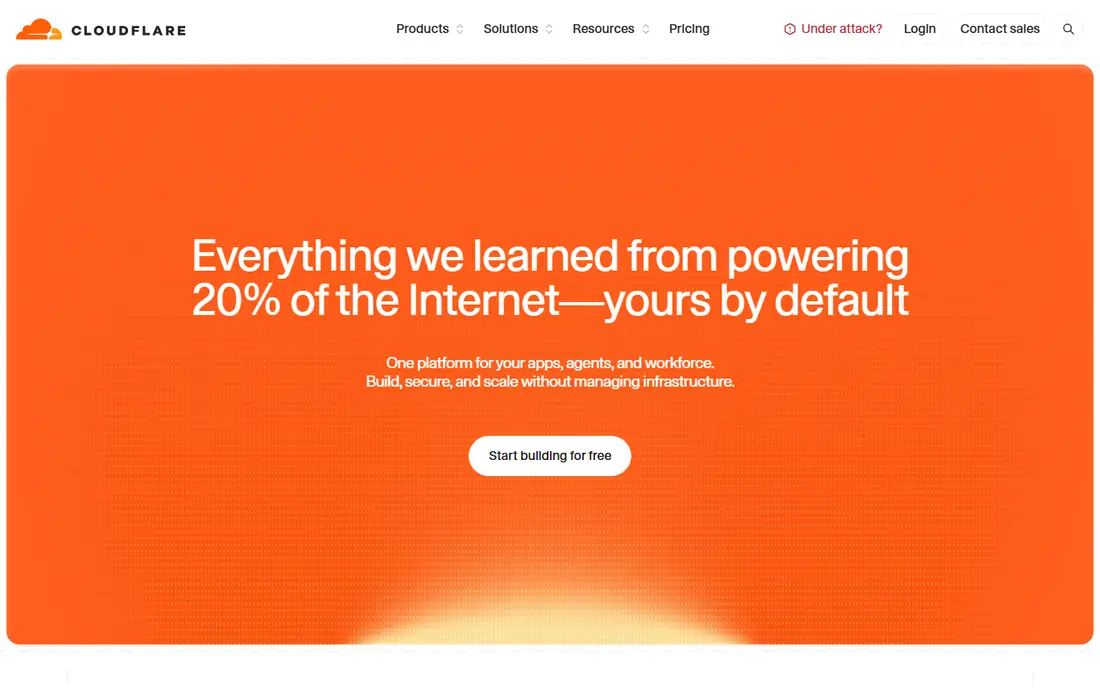
Cloudflare Gateway is the Zero Trust web gateway with global Anycast speed, strong DNS filtering with SSL inspection, and Zero Trust access tools on the Cloudflare global network. It offers a free tier, with paid plans starting around 7 dollars per user per month, and extra cost for advanced features such as SIEM integration and per-user reporting. Cloudflare One pricing at 7 dollars per user per month appears in zero trust platform comparisons.
The console combines many products, which can make initial setup confusing for new users, since multiple components need configuring. Cloudflare Gateway fits small teams, self-serve buyers, and mid-market organizations that want performance and scalability at a published price.
What we like- Global Anycast speed
- Free tier
- DNS filtering with SSL inspection
- Zero Trust access tools
Watch out for- Console combines many products
- Initial setup can confuse new users
- Advanced features cost extra
Starting priceSee website
Free planNo
Netskope is the cloud-first choice for companies that need SWG plus CASB plus DLP visibility, with SaaS visibility and data protection alongside web security. It suits cloud-first organizations where SaaS usage and data movement matter as much as web filtering, and its Next Gen SWG appears in secure web gateway comparisons. Data-aware SASE at scale is its positioning in zero trust comparisons.
Pricing is quote-based and some features sit inside the wider Netskope One platform. Netskope fits cloud-first enterprises that want web, SaaS, and data controls together, rather than DNS filtering alone.
What we like- SWG plus CASB plus DLP visibility
- Cloud-first design
- SaaS visibility
- Strong data protection
Watch out for- Quote-based pricing
- Some features sold inside wider platform
- Enterprise complexity
Starting priceSee website
Free planNo
Fortinet FortiSASE is the SASE offering with web filtering for Fortinet ecosystem buyers, extending FortiGate policy consistency to remote users and branch offices. It suits organizations already on Fortinet firewalls that want cloud-delivered web filtering without a second vendor policy model. Security Fabric integration covers endpoint, network, and cloud controls together.
Fortinet focus limits multi-vendor buyers, and standalone SWG depth trails Zscaler and Netskope. FortiSASE fits Fortinet shops that want SASE with consistent policy, rather than buyers seeking a best-of-breed standalone gateway.
What we like- Fortinet ecosystem integration
- Web filtering plus SASE
- FortiGate policy consistency
- Broad security fabric
Watch out for- Quote-based pricing
- Fortinet-centric
- Smaller standalone SWG focus
Starting priceSee website
Free planNo
Check Point Harmony SASE, formerly Perimeter 81, is the mid-market unified SASE platform covering internet access and private access with Check Point threat prevention. It suits mid-market teams that want unified SASE without enterprise buying complexity, combining web security, private access, and threat prevention in one platform. Perimeter 81 appears as the best overall SWG for modern teams needing simple deployment plus strong controls in one 2026 guide.
Pricing is quote-based and cloud footprint trails Zscaler. Harmony SASE fits mid-market organizations that want unified SASE with simple deployment, rather than large enterprises needing the deepest inspection stack.
What we like- Unified SASE
- Internet access plus private access
- Check Point threat prevention
- Mid-market fit
Watch out for- Quote-based pricing
- Enterprise feature depth varies
- Smaller cloud footprint than Zscaler

#7DNSFilter
Best for: SMB and MSP DNS filtering4.6/5 on
G2 (272 reviews, checked Oct 2026)
Visit dnsfilter.com
Starting price$1.15 per license per month
Free planNo
DNSFilter is the SMB and MSP DNS filtering platform with AI-driven threat detection, AI categorization, and fast DNS query speed, priced from 1.15 to 3.00 dollars per license per month in one comparison. It offers web filtering and malware blocking at a price far below enterprise SWG platforms, and it appears among the top three alternatives to Umbrella in G2 comparisons. The console is geared toward managed service providers, which suits MSP multi-tenant management.
Some users report more setup steps than expected, and web filtering depth trails full SWG inspection. DNSFilter fits SMBs and MSPs that want balance of cost and features, with AI categorization and fast DNS at a low per-license price.
What we like- AI-driven threat detection
- Fast DNS query speed
- 1.15 to 3.00 dollars per license
- MSP-friendly console
Watch out for- Console geared to MSPs
- Some users report more setup steps
- Web filtering depth trails full SWG
Starting priceSee website
Free planNo
Cato SSE is the converged SASE platform combining web security with networking on a global private backbone, covering internet access alongside SD-WAN and private access in one platform. It suits organizations that want network and security converged, rather than separate network and gateway vendors. Single-platform management simplifies policy across sites and remote users.
Pricing is quote-based and the combined network-plus-security scope may exceed DNS-filtering needs. Cato SSE fits organizations replacing both network and gateway vendors at once, rather than buyers seeking a lightweight DNS filter.
What we like- Converged SASE network
- Web security plus networking
- Global private backbone
- Single platform
Watch out for- Quote-based pricing
- Network-plus-security scope
- Smaller standalone SWG focus
How we chose
We compared these tools on filtering depth, threat detection, SSL inspection, CASB and DLP coverage, performance, deployment model, and pricing transparency, using secure web gateway and DNS filtering comparisons from 2026. Cisco Umbrella rates 4.4 stars from 285 reviews, with ease of setup at 8.3 and quality of support at 8.5, while reviewers note it can be expensive for smaller organizations. We flagged every case where pricing is quote-based, since most enterprise SWG vendors hide rates.
We also separated three buyer types. Solo and SMB buyers should shortlist DNSFilter and Cloudflare Gateway for published prices, mid-market buyers should shortlist Cloudflare Gateway and Harmony SASE, and enterprise buyers should shortlist Zscaler, Prisma Access, and Netskope. The right pick follows filtering depth needs and budget, not vendor size alone.
What to check before you switch DNS and web security
Decide whether DNS filtering alone is enough
DNS filtering blocks access to malicious or unwanted domains at the DNS lookup stage, and most modern platforms improve performance through optimized DNS resolution. It is a strong first layer but works best alongside other controls, since encrypted traffic, file downloads, and SaaS data movement need full SWG inspection, CASB, or DLP. Buyers who only need domain blocking should pick DNSFilter or Cloudflare Gateway, while buyers needing deep inspection should pick Zscaler, Prisma Access, or Netskope.
Check roaming, BYOD, and identity-based policy
DNS filtering can protect remote users through roaming clients or endpoint agents, and many platforms support BYOD environments depending on deployment model. Enterprise platforms offer identity-based policies, while simpler tools offer network-wide policies only. Confirm roaming client coverage, encrypted DNS protocol support, and per-user policy granularity before committing, since the biggest buyer mistake is ignoring reporting and policy flexibility.
Test reporting and performance on real traffic
Most modern platforms improve performance through optimized DNS resolution, but full SSL inspection adds latency that varies by vendor and region. Test reporting depth, per-user reporting costs, and SIEM integration pricing during evaluation, since Cloudflare charges extra for SIEM and per-user reporting. Run the gateway on real user traffic for one week before full rollout, and check latency by region.
Frequently asked questions
Is Cisco Umbrella still a good choice?
Yes. Cisco Umbrella remains a strong bundled approach combining DNS, SWG, and security ecosystem integrations, rated 4.4 stars from 285 reviews and most popular with mid-market organizations. Switching usually rests on price, standalone depth, or ecosystem fit rather than Umbrella disappearing.
What is the cheapest Cisco Umbrella alternative?
DNSFilter is cheapest at 1.15 to 3.00 dollars per license per month, followed by Cloudflare Gateway with a free tier and paid plans around 7 dollars per user per month. Both publish prices, while enterprise alternatives are quote-based, so SMBs should shortlist DNSFilter and Cloudflare first.
Does DNS filtering slow down the internet?
Most modern platforms improve performance due to optimized DNS resolution, so DNS filtering alone rarely slows browsing. Full SSL inspection in enterprise SWG platforms can add latency, which varies by vendor, region, and policy depth, so test on real traffic before rollout.
Can DNS filtering protect remote users?
Yes, through roaming clients or endpoint agents that enforce policy off-network. Confirm roaming coverage for your device types, since some platforms protect only on-network DNS while others cover roaming laptops and mobile devices fully.
Is DNS filtering enough for security?
No, not alone. DNS filtering is a strong first layer that blocks malicious domains at lookup, but it works best alongside endpoint protection, full SWG inspection, CASB, and DLP for complete coverage. Regulated industries should focus on compliance and auditability across the full stack, not DNS alone.
Sources we checked (13)
- https://www.zscaler.com
- https://www.paloaltonetworks.com
- https://www.cloudflare.com
- https://www.netskope.com
- https://www.fortinet.com
- https://www.checkpoint.com
- https://dnsfilter.com
- https://www.cato.com
- https://www.thetechbag.com/browse/network-security-sase/secure-web-dns
- https://www.privateproxyguide.com/best-secure-web-gateways/
- https://www.devopsschool.com/blog/top-10-dns-filtering-platforms-features-pros-cons-comparison/
- https://controld.com/blog/cisco-umbrella-alternatives/
- https://rankite.com/blog/best-zero-trust-platforms
Is your product missing or out of date?
We review this list regularly. Vendors can request a listing, send updated pricing or ask about featured placement.

Shihab Mia · Founder, Rankite
Shihab has 5+ years in B2B and SaaS SEO. He writes Rankite's software buying guides from pricing pages, documentation and public user reviews. More about Shihab.
 Palo Alto Prisma Access
 Cloudflare Gateway
 Netskope
 Fortinet FortiSASE
 Check Point Harmony SASE
 Cato SSE