How we make this list: we compare pricing pages, product documentation and public user reviews. Ratings come from G2, Capterra or Trustpilot, with the date we checked them.
Key takeaways
- Zero trust is an architecture, not a single product: the platforms here cover different layers, from private app access to identity and data protection.
- Cloudflare One is the only major platform with published self-serve pricing and a free tier, making it the easiest starting point for small teams.
- Zscaler, Palo Alto Prisma Access, and Netskope lead at enterprise scale, but their pricing is quote-based and their deployments need real planning.
- Twingate and NordLayer are the most approachable options for small and mid-sized teams that want to replace a VPN quickly.
- If your company already runs Microsoft 365 or Cisco infrastructure, the matching zero trust option usually integrates faster and costs less to operate.
Quick comparison
Is your product missing or out of date?
We review this list regularly. Vendors can request a listing, send updated pricing or ask about featured placement.

#1
Zscaler Zero Trust Exchange
Best for: Large enterprises replacing VPN
Visit zscaler.com
Starting priceSee website
Free planNo
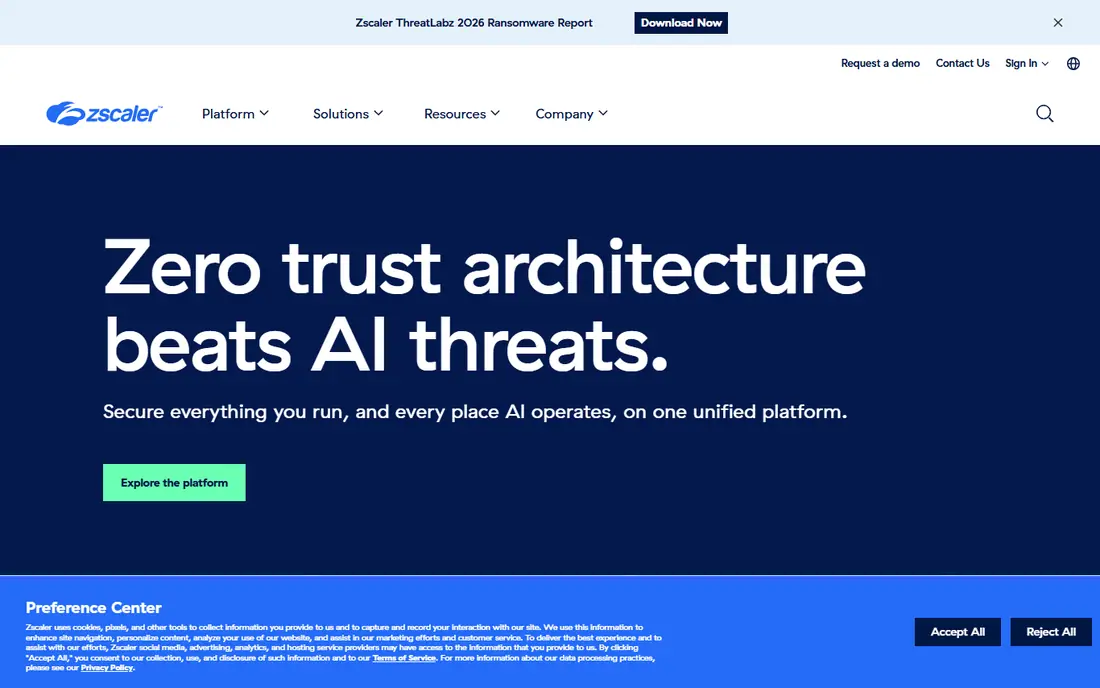
Zscaler built its name on the Zero Trust Exchange, a cloud platform that sits inline on every connection and connects each user only to the specific application they are authorized to reach, rather than putting them on the corporate network. The result is that private applications become invisible to unauthorized users, which shrinks the attack surface in a way a VPN cannot match. The company reports securing more than 750 billion transactions a day, and over half of the Fortune 500 rely on it.
The platform now stretches well beyond private app access into internet security, data protection, and AI security, which is a strength for large buyers consolidating vendors and a weakness for anyone who wants a simple tool. Pricing is quote-based, with third-party comparisons placing full bundles well above basic ZTNA-only rates, and deployments typically involve multi-year contracts and professional services. If you run a large, distributed enterprise and want one platform for access, inspection, and data control, Zscaler is the reference point. Smaller teams will find the buying process heavy.
What we like- Massive global cloud footprint
- Deep inspection of traffic including encrypted traffic
- Broadest platform breadth from access to data protection
Watch out for- Quote-based pricing with no public list price
- Complex to configure and operate
- Overkill for small teams
Starting price$7/user/month
Free planYes
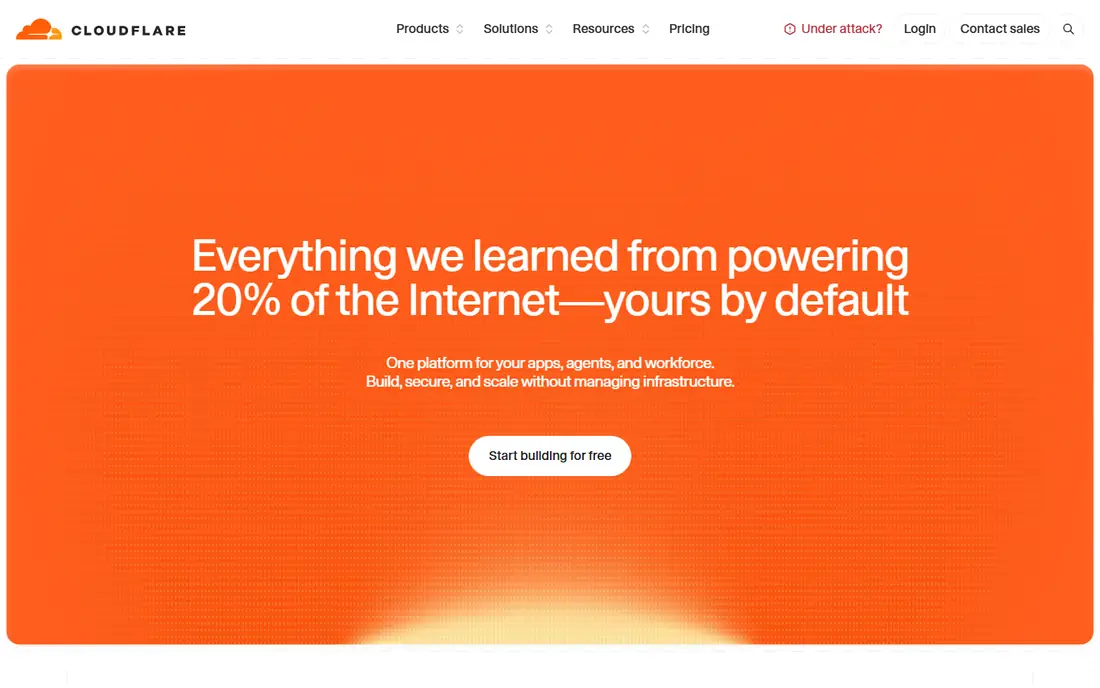
Cloudflare One is the easiest zero trust platform to start using, and that is a deliberate strategy. Its free tier covers up to 50 users, and the pay-as-you-go tier is published at $7 per user per month, which makes budgeting possible without a sales call, something almost no enterprise competitor offers. Access, the zero trust access product, sits on the same global network that already runs in more than 335 cities, so performance is rarely a complaint.
The trade-off is depth at the top end. Cloudflare's data loss prevention, CASB, and advanced threat features are strongest in its contract tiers, and very large enterprises with complex compliance needs may still prefer Zscaler or Palo Alto. For startups, agencies, and mid-sized companies that want to retire a VPN this quarter without a six-month procurement cycle, Cloudflare One is the obvious first evaluation.
What we like- Free tier for up to 50 users
- Published pay-as-you-go pricing
- Huge global network close to users
Watch out for- Advanced data protection features sit in higher contract tiers
- Enterprise support requires a contract plan
Starting priceSee website
Free planNo
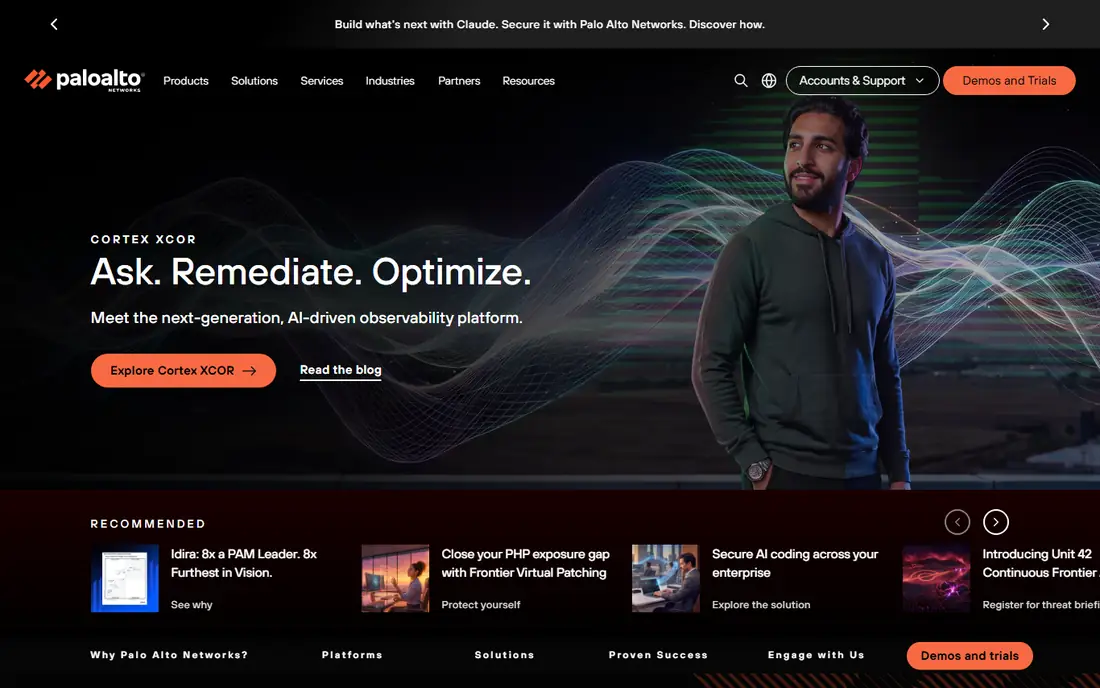
Prisma Access combines zero trust network access with cloud-delivered firewall inspection, drawing on the same Content-ID inspection engine used in Palo Alto's physical firewalls. That gives it unusually deep visibility into traffic, including strong data loss prevention, and it is a natural choice for organizations that already write Palo Alto security rules and do not want a second policy language. Palo Alto reports blocking tens of billions of inline attacks per day across its platforms.
The honest catch is buying and operating it. There is no public list price, licensing is frequently described as complex, and the platform rewards teams that already know Palo Alto's ecosystem. Organizations without that background face a steeper learning curve than with Cloudflare or Twingate. If your network team already runs Palo Alto firewalls, Prisma Access extends that investment cleanly. If not, budget time for training and a sales-led evaluation.
What we like- Next-generation firewall inspection in the cloud
- Deep threat intelligence
- Strong fit for existing Palo Alto customers
Watch out for- No published pricing
- Licensing complexity flagged by analysts
- Heavier deployment than cloud-native rivals

#4Twingate
Best for: Fast VPN replacement for small teams4.6/5 on
G2 (83 reviews, checked Oct 2026)
Visit twingate.com
Starting price$5/user/month
Free planYes
Twingate replaces legacy VPNs with identity-based access that deploys in minutes and needs no firewall changes. Users connect directly to the specific resource they are authorized for, rather than joining a network segment, and administrators manage access from a single console with a single policy engine. The free starter tier covers small teams, and paid plans start from $5 per user per month according to third-party comparisons.
What Twingate gives up is breadth. It does not try to be a full SASE platform with deep web inspection and CASB, and teams that need those controls will pair it with other tools or choose a broader suite. For development teams, agencies, and small companies whose main problem is "our VPN is slow and gives everyone too much access," Twingate is the fastest fix on this list, and its resource-level controls are genuinely granular rather than marketing-level.
What we like- Free starter tier
- Deploys in minutes with no firewall changes
- Direct-to-resource connections avoid VPN bottlenecks
Watch out for- Smaller feature set than full SASE suites
- Advanced controls sit in higher tiers
Starting priceSee website
Free planNo

Netskope One unifies secure access, AI security, and data security around its Zero Trust Engine, with one client covering web, cloud, and private applications and one console for policy management. Its heritage in CASB and data loss prevention shows: if your main worry is sensitive data moving into SaaS apps or AI tools, Netskope's context-aware controls are among the strongest here. The NewEdge network is a private backbone built for performance, and the platform is recognized as a leader in recent analyst evaluations of SASE and SSE.
Like Zscaler and Palo Alto, Netskope does not publish list pricing, and buying involves an enterprise sales cycle with module-based licensing. That makes early budgeting harder, and the platform's breadth means onboarding takes longer than a point ZTNA tool. For mid-sized to large organizations that want data protection woven into access control rather than bolted on afterward, Netskope is a top-tier candidate.
What we like- Strong data security and CASB heritage
- Single client for web, cloud, and private apps
- Private NewEdge network backbone
Watch out for- Quote-based pricing
- Enterprise sales cycle
- Platform breadth takes time to learn
Starting price$8/user/month
Free planNo
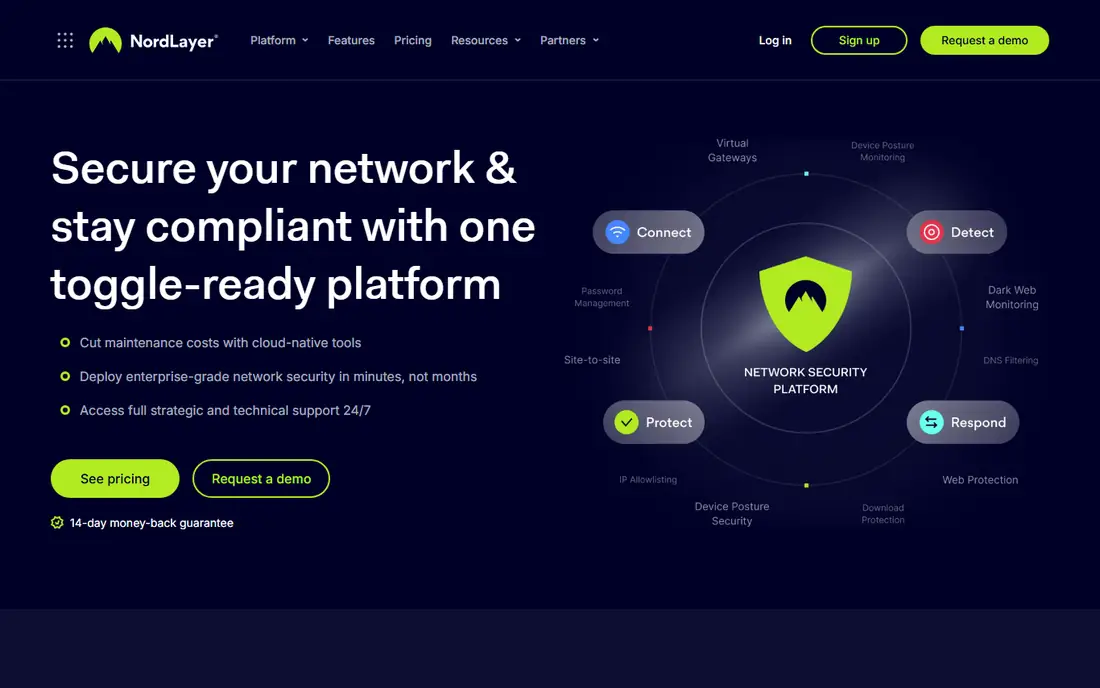
NordLayer positions itself as enterprise-grade network security made simple, and the product reflects that. Its cloud-native platform combines secure access with threat prevention, including malicious site blocking, download protection, and dark web breach monitoring, all managed through toggles rather than complex policy projects. Paid plans start from $8 per user per month in third-party comparisons, and a 14-day money-back guarantee lowers the risk of trying it.
The limitation is scale and depth. NordLayer is not built to replace a full enterprise SASE deployment with advanced data controls, and there is no free tier for evaluation beyond the guarantee window. For companies roughly in the 10 to 500 employee range that need solid zero trust access plus sensible threat prevention without hiring a dedicated network security team, it hits a practical middle ground between consumer VPN tools and enterprise platforms.
What we like- Toggle-ready setup with minimal maintenance
- Built-in threat prevention and breach monitoring
- 14-day money-back guarantee
Watch out for- No free tier
- Less suited to very large or highly regulated enterprises
Starting price$6/user/month
Free planNo
Microsoft Entra is the identity layer of Microsoft's zero trust story, covering identity and access management, conditional access, and, through Entra Private Access and Global Secure Access, private application access. For organizations already standardized on Microsoft 365, Entra is often already partially paid for, and its conditional access policies are the most widely deployed in the industry. Standalone pricing starts from $6 per user per month in third-party comparisons, and some capabilities are included with Microsoft 365 plans.
The honest weakness is that Entra's network access capabilities are newer than those of Zscaler or Cloudflare, and teams wanting the deepest private-access feature set may find gaps. Entra also makes the most sense inside a Microsoft-centric environment; outside one, its advantage fades. If your users, devices, and apps already live in Microsoft's ecosystem, Entra is usually the lowest-friction zero trust foundation available.
What we like- Deep integration with Microsoft 365 and Azure
- Conditional access is mature and widely understood
- Included in some Microsoft 365 plans
Watch out for- Zero trust network access features are newer and less complete than pure-play ZTNA vendors
- Best value requires Microsoft licensing
Starting priceSee website
Free planNo
Cisco Secure Access is Cisco's cloud-delivered zero trust offering, combining private application access with secure web gateway controls and tying into Cisco's broader networking and security portfolio, including Duo for multi-factor authentication. For organizations that already run Cisco switches, routers, and firewalls, the integration story is compelling: access policy and network policy can be managed with a consistent model, and Cisco's support organization is deep.
The drawbacks mirror those of other incumbent vendors. Pricing is quote-based, the product line has been rebranded and repackaged more than once, which can confuse buyers comparing older reviews, and there is no self-serve free tier for quick evaluation. Teams without a Cisco footprint get less of the integration benefit and may prefer a simpler platform. Inside a Cisco shop, though, Secure Access is the path of least resistance to zero trust.
What we like- Strong fit for Cisco networking customers
- Combines ZTNA with secure web gateway
- Global scale and mature support
Watch out for- Quote-based pricing
- Product naming and packaging have shifted over time
- Less self-serve than cloud-native rivals
Starting priceSee website
Free planNo
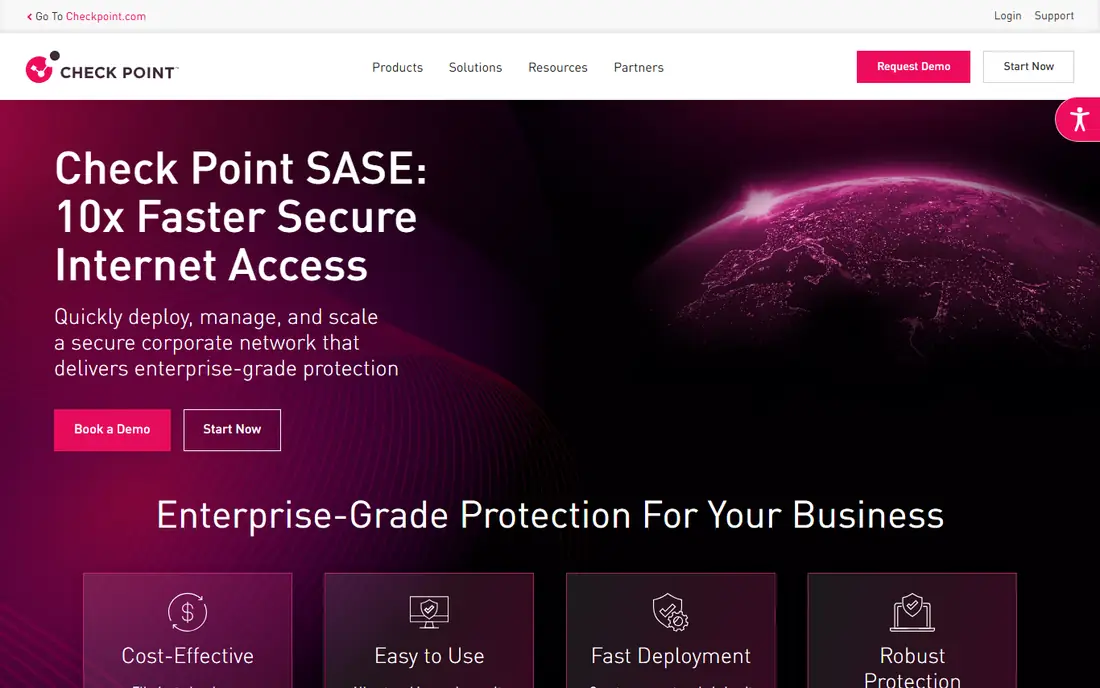
Perimeter 81 built its reputation on radical simplicity: a cloud network security platform that replaces hardware with a global private backbone, letting teams create a network, bring it online, and onboard users quickly. It now sits within Check Point's SASE lineup, and the product covers zero trust network access, secure web gateway, and CASB with AI-powered data protection, all managed from one place. The company reports more than 5,000 customers secured.
The main caveat for buyers is the branding transition. Older reviews and comparisons refer to Perimeter 81, while current pages present Check Point SASE, so confirming exactly which package you are quoted requires care. Pricing is quote-based rather than published. For mid-market companies that want a unified SASE platform without enterprise-suite complexity, and that value fast deployment, it remains a strong contender, especially against heavier rivals.
What we like- Unified SASE with ZTNA, web gateway, and CASB in one console
- Fast deployment with no hardware
- Global private backbone
Watch out for- Now sold under Check Point SASE branding, which complicates product research
- Quote-based pricing
How we chose
We treated zero trust as a layered architecture rather than a single product category, so we compared platforms on private application access, identity integration, web and data inspection, deployment effort, and pricing transparency. We drew on vendor documentation and pricing pages, analyst evaluations, and public reviews on G2, Capterra, and Reddit, and we favored platforms with a clear, current product rather than a rebranded bundle with no live offering.
Every homepage listed here was opened and confirmed to load and belong to that vendor. Where a vendor does not publish pricing, we wrote "See website" instead of repeating an unverified estimate as fact. Prices that are published, such as Cloudflare's, are quoted from the vendor's pricing model as reflected in current comparisons.
The market splits roughly into three groups, and knowing which group you belong to narrows the field fast.
Start with your existing stack
If you run Microsoft 365, Entra is the natural identity foundation, and if you run Cisco or Palo Alto networks, their matching platforms integrate most cleanly. Switching stacks for a zero trust purchase alone rarely pays off, since integration effort and retraining usually cost more than any per-seat saving. Greenfield teams without an incumbent should favor the self-serve options, Cloudflare One and Twingate, for speed.
Decide how much platform you need
Some teams only need to replace a VPN: private app access with identity checks. Twingate and NordLayer cover that well. Others need web inspection, data loss prevention, and SaaS governance too, which pushes toward Zscaler, Netskope, Prisma Access, or Perimeter 81. Buying a full SASE suite for a VPN problem wastes money and adds operational burden, while buying a point ZTNA tool for a data protection problem leaves the real risk untouched.
Test performance and user experience early
Zero trust platforms sit in the path of every connection, so latency and client reliability matter as much as security features. Run a pilot with your actual remote users, including people on slow home connections and in other regions, before committing to a multi-year contract. Check how the client behaves on unmanaged or contractor devices, since that is where many deployments stumble.
Budget beyond the per-seat price
Quote-based enterprise platforms often bundle modules differently, so compare like-for-like: ZTNA only versus full SSE or SASE bundles, and confirm whether data protection, CASB, and support are included or extra. Ask about minimum seat counts, contract length, and professional services, since those can double the first-year cost. Published pricing from Cloudflare and Twingate makes this comparison easier, and it is a useful benchmark even when you end up choosing a quote-based vendor.
Frequently asked questions
What is zero trust, in plain terms?
Zero trust means no user or device is trusted by default, even inside the office network. Every access request is verified against identity, device health, and policy before reaching a specific application, instead of granting broad network access once someone connects. It replaces the old idea of a trusted inside and an untrusted outside.
Is zero trust the same as replacing my VPN?
Replacing a VPN is usually the first step, but it is not the whole program. VPN replacement covers private application access, while full zero trust also includes identity controls, device checks, web and data inspection, and monitoring. Many teams start with access and add the other layers over time.
Do I need a full SASE platform?
Not necessarily. Small and mid-sized teams often do well with a focused ZTNA tool plus their existing identity provider. A full SASE platform makes sense when you also need web gateway inspection, data loss prevention, and branch networking from one vendor, or when consolidating several security tools is itself a goal.
How long does deployment take?
Cloud-native tools like Twingate and Cloudflare One can be running for a pilot group in days. Enterprise platforms like Zscaler, Netskope, and Prisma Access typically take weeks to months for full rollout, depending on application count, identity integration, and policy complexity. Budget time for policy design, not just installation.
Can zero trust work for contractors and third parties?
Yes, and this is one of its strengths. Because access is granted per application rather than per network, you can give a contractor access to one internal tool without exposing the rest of your environment. Look for platforms with easy guest onboarding and time-limited access policies.
What happens if the zero trust platform goes down?
Most platforms are cloud services with global redundancy, but an outage can block access to private apps, so check the vendor's uptime record and failover design. Some platforms offer local breakouts or cached policies that keep already-connected sessions working. Ask about this explicitly during evaluation, since it is rarely prominent in marketing material.
Sources we checked (11)
- https://www.zscaler.com
- https://www.cloudflare.com
- https://www.paloaltonetworks.com
- https://www.twingate.com
- https://www.netskope.com
- https://nordlayer.com
- https://www.microsoft.com
- https://www.cisco.com
- https://www.perimeter81.com
- https://expertinsights.com/network-security/the-top-zero-trust-network-access-solutions
- https://tech-insider.org/zscaler-vs-netskope-vs-cloudflare-one-sase-2026/
Is your product missing or out of date?
We review this list regularly. Vendors can request a listing, send updated pricing or ask about featured placement.

Shihab Mia · Founder, Rankite
Shihab has 5+ years in B2B and SaaS SEO. He writes Rankite's software buying guides from pricing pages, documentation and public user reviews. More about Shihab.
 Cloudflare One
 Palo Alto Prisma Access
 Netskope One
 NordLayer
 Microsoft Entra
 Cisco Secure Access
 Perimeter 81 (Check Point SASE)