How we make this list: we compare pricing pages, product documentation and public user reviews. Ratings come from G2, Capterra or Trustpilot, with the date we checked them.
Key takeaways
- Snyk suits developer-led fixing with a free tier and Team from $25 per month per developer, while Trivy suits free scanning in every pipeline as open source.
- Anchore Grype and Syft suit SBOM-first scanning pipelines with free open source tools, while Wiz suits exposure-ranked cloud graphs on quote pricing.
- Sysdig suits in-use vulnerability filtering for runtime context, while JFrog Xray suits Artifactory shops with artifact-native gates.
- Docker Scout suits Docker-workflow teams with a free tier, while Sigstore suits free cryptographic signing for artifacts.
- The target eliminates CVEs upstream with hardened images, while these alternatives detect, prioritize, or sign: pick elimination, detection, or signing based on your weakest surface.
Quick comparison
| Tool | Best for | Starting price | Free plan |
|---|
 Snyk | Developer-led fixing | Free | Yes |
 Trivy | Free scanning in every pipeline | Free | Yes |
 Anchore Grype and Syft | SBOM-first scanning | Free | Yes |
 Wiz | Exposure-ranked cloud graphs | See website | No |
 Sysdig | In-use vulnerability filtering | See website | No |
 JFrog Xray | Artifactory shops, artifact gates | See website | No |
 Docker Scout | Docker-workflow teams | Free | Yes |
 Sigstore | Free cryptographic signing | Free | Yes |
Is your product missing or out of date?
We review this list regularly. Vendors can request a listing, send updated pricing or ask about featured placement.
The best Chainguard competitors and alternatives
Starting priceFree
Free planYes
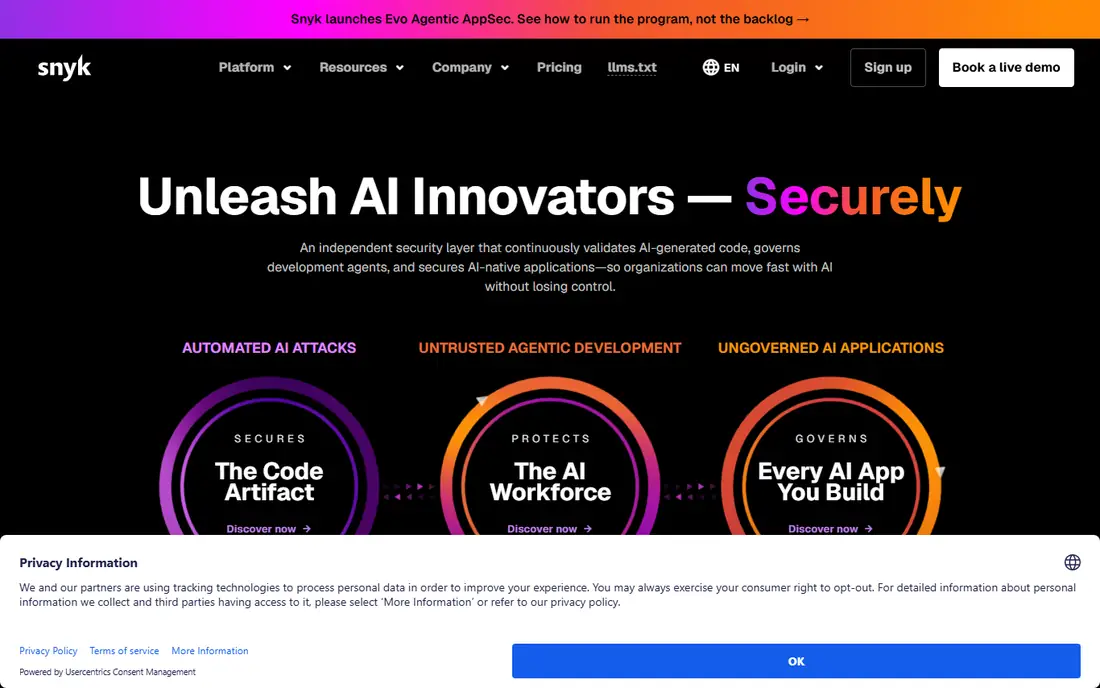
Snyk is the developer-led fixing pick, remaining the developer-friendly standard for finding and fixing vulnerable dependencies, with base-image upgrade advice that shrinks CVE counts and a free tier. Team pricing starts from $25 per month per contributing developer in one Rankite guide, and Snyk rates 4.5 out of 5 on G2 with 135 reviews. Snyk suits developers who want security inside their workflow, not a separate security console.
The trade off is workflow fit against scale cost. Snyk fixes inside developer workflows best, but reviewers cite pricing as a pain point at scale. Snyk fits teams that want developer-led fixing with upgrade advice.
What we like- Developer-friendly standard for finding and fixing vulnerable dependencies
- Base-image upgrade advice that shrinks CVE counts
- Free tier
- Team from $25 per month per contributing developer
- 4.5 out of 5 on G2 with 135 reviews
Watch out for- Pricing becomes a pain point at scale in reviews
- Per-dev billing adds up for large teams
- Runtime context trails Sysdig and Wiz
- Signing is partial, not native
Starting priceFree
Free planYes
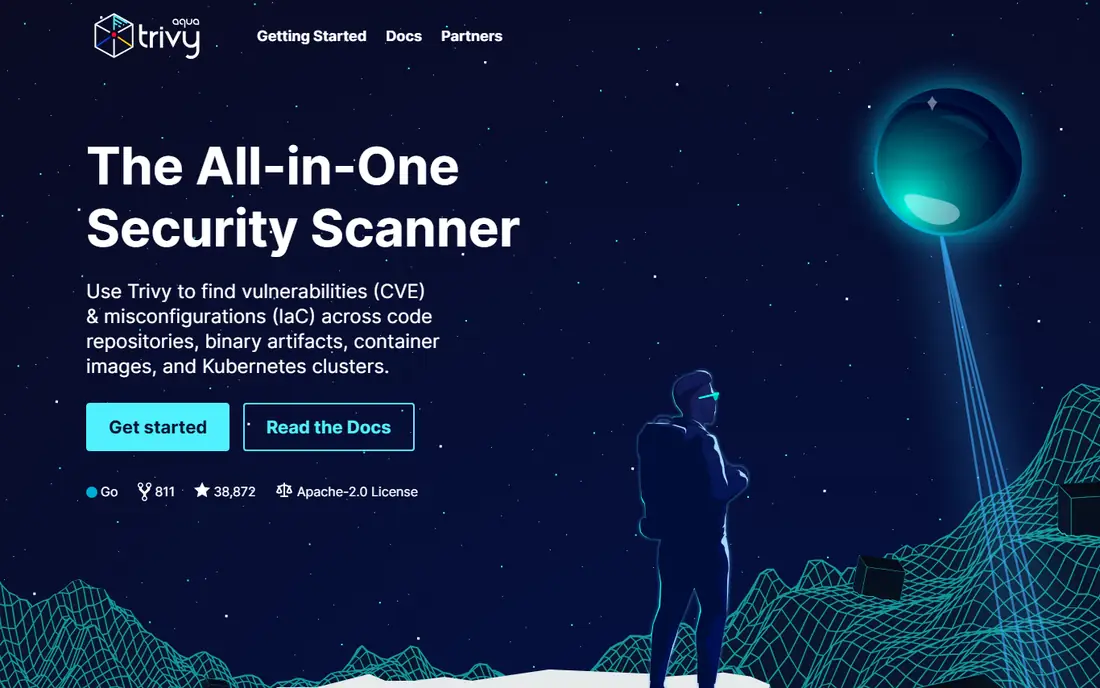
Trivy is the free scanning pick, the most-deployed open source scanner for images, infrastructure as code, and dependencies, with CI-native scanning, SBOM support, and policy packs on the Aqua platform. One guide calls Trivy the scan nobody has an excuse to skip, since it is free, everywhere, and fast. Trivy suits every pipeline as the open source floor before paid context layers.
The trade off is ubiquity against prioritization. Trivy scans everything free, but prioritization needs an upper layer. Trivy fits teams that standardize free scanning in CI this week.
What we like- Most-deployed open source scanner for images, IaC, and dependencies
- CI-native
- SBOM support
- Policy packs on the Aqua platform
- Free everywhere and fast
- 4.6 out of 5 in one editor rating
Watch out for- Prioritization needs an upper layer
- Aqua platform tiers are paid
- Runtime context comes via Aqua, not Trivy alone
- Enterprise policy needs the platform
Starting priceFree
Free planYes
Anchore Grype and Syft are the SBOM-first pick, with Syft generating SBOMs and Grype scanning them as one vendor open source pair, plus Anchore Enterprise adding policy and support. They suit SBOM-centric scanning pipelines and teams that ship to enterprise or government buyers, where SBOMs are increasingly demanded. The open source engine is free, while enterprise pricing is quote only.
The trade off is SBOM depth against enterprise gating. Grype and Syft handle SBOMs natively, but policy sits behind the paid tier. Anchore fits teams that need SBOM management and compliance.
What we like- SBOM-native pair: Syft generates SBOMs, Grype scans them
- Open source credibility
- Registry integrations
- Policy in Anchore Enterprise
- 4.4 out of 5 in one editor rating
- Free open source engine
Watch out for- Enterprise features gate up
- Enterprise pricing is quote only
- Runtime context is absent in one table
- Policy needs the paid enterprise tier
#4Wiz
Best for: Exposure-ranked cloud graphs4.7/5 on
G2 (863 reviews, checked Oct 2026)
Visit wiz.io
Starting priceSee website
Free planNo
Wiz is the exposure graph pick, ranking container images by exposure across the cloud graph, with comprehensive cloud security coverage and a 4.7 out of 5 rating on G2 with 844 reviews. It suits cloud estates that need to know which vulnerable images are actually exposed, not just which have CVEs. Pricing is quote only, so this guide lists it as See website.
The trade off is exposure context against quote pricing. Wiz prioritizes by exposure best, but pricing requires a sales process. Wiz fits enterprise cloud estates that need graph exposure.
What we like- Cloud graph with exposure-ranked images
- Comprehensive cloud security coverage
- 4.7 out of 5 on G2 with 844 reviews
- Graph exposure context
- Good for cloud estates
- Top alternative in one G2 comparison
Watch out for- Quote only
- Enterprise price for smaller teams
- Base image elimination is not its model
- Smaller teams may not need a full cloud graph
Starting priceSee website
Free planNo
Sysdig is the runtime context pick, filtering vulnerabilities by whether they are actually in use at runtime, which cuts triage volume when CVE counts drown teams. Pricing is tiered per workload in one guide, and Sysdig rates 4.5 out of 5 in one editor rating. Sysdig suits teams whose core problem is triage volume, not detection gaps.
The trade off is triage precision against per-workload cost. Sysdig filters by in-use status best, but per-workload billing adds up. Sysdig fits teams that need runtime-linked scanning.
What we like- Runtime context with in-use vulnerability filtering
- Best runtime-context pick in one guide
- Tiered pricing per workload
- 4.5 out of 5 in one editor rating
- Good for triage volume
Watch out for- Tiered and quote pricing
- Per-workload billing adds up at scale
- Developer workflow trails Snyk
- Signing is not its focus
Starting priceSee website
Free planNo
JFrog Xray is the Artifactory pick, gating artifacts where developers push, with Artifactory unity, SBOM support, and signing support for artifact-native enforcement. Pricing is tiered, with $950 per month for Enterprise X in one report and security packages extra, so this guide lists it as See website. Xray suits Artifactory shops that want security scanning at the registry.
The trade off is registry fit against platform lock-in. Xray gates artifacts natively, but value concentrates in Artifactory estates. JFrog Xray fits Artifactory shops adding security scanning.
What we like- Artifact-native gates where developers push
- Artifactory unity
- SBOM support
- Signing support
- Registry-native enforcement
- $950 per month Enterprise X in one report, with security packages extra
Watch out for- Tiered pricing
- Best value only for Artifactory shops
- Free trial only, no free tier in most reports
- Platform lock-in for non-Artifactory teams
Starting priceFree
Free planYes
Docker Scout is the Docker workflow pick, offering Desktop and Hub-native analysis with a free tier plus per-repo tiers and SBOM support for Docker-centric teams. It suits teams whose workflow already centers on Docker, since analysis lives where developers build and push. Docker Scout rates 4.1 out of 5 in one editor rating.
The trade off is workflow fit against repo billing. Docker Scout fits Docker workflows natively, but per-repo billing adds up. Docker Scout fits Docker-workflow teams that want native analysis.
What we like- Docker-workflow fit with Desktop and Hub-native analysis
- Free tier plus per-repo tiers
- SBOM support
- Best workflow-native pick in one guide
- Good for Docker-centric teams
Watch out for- Docker-centric value only
- Per-repo billing adds up for many repos
- 4.1 out of 5 in one editor rating
- Enterprise policy trails Aqua and Anchore
Starting priceFree
Free planYes
Sigstore is the free signing pick, giving every team free cryptographic signing for artifacts, with SLSA provenance support and no vendor lock-in. It suits teams that need to sign what they ship, since contracts increasingly demand SLSA evidence as a build output. Sigstore complements scanners: it proves artifacts came from a trusted build, while scanners find vulnerabilities inside them.
The trade off is signing depth against scanning gaps. Sigstore signs free, but it does not scan, so pair it with Trivy or Grype. Sigstore fits teams that need free cryptographic signing for everyone.
What we like- Free cryptographic signing for artifacts
- Open source
- Good for SLSA provenance
- Free for everyone
- Complements scanners with signing
- No vendor lock-in
Watch out for- Signing only, not scanning
- Needs a scanner alongside
- SLSA evidence setup takes thought
- No paid support tier in the open source project
How we chose
We compared 2026 container scanning and supply chain comparisons, recording free, tiered, and quote pricing separately, since the open source floor is free while enterprise platforms quote. We favored tools with distinct strengths, developer fixing, free scanning, SBOM-first scanning, exposure graphs, runtime filtering, artifact gates, Docker workflows, and free signing, and we listed Wiz, Sysdig, and JFrog Xray as See website because their pricing is tiered or quote based. We weighed detection, prioritization, and signing separately, since no single tool leads on all three, and we excluded the target itself.
How to choose a Chainguard competitor or alternative
Start with your weakest surface: dependencies should shortlist Snyk, pipelines should shortlist scanners with CI gates, artifacts and provenance should shortlist JFrog Xray, Anchore, and Sigstore, and base images should shortlist elimination pilots. Next, standardize the free floor: put Trivy or Grype in CI this week, since both are free and done. Then add context when volume drowns triage: Sysdig for in-use filtering or Wiz for exposure graphs. Finally, sign what you ship with Sigstore, and treat SLSA evidence as a build output contracts will soon demand. A stack that covers your weakest surface, your free floor, your context layer, and your signing will secure the supply chain without paying for detection you already get free.
Frequently asked questions
What is the best Chainguard alternative overall?
Snyk suits developer fixing, Trivy suits free scanning, Anchore suits SBOMs, and Wiz suits exposure graphs, so the best pick depends on your weakest surface.
Is there a free Chainguard alternative?
Trivy, Grype and Syft, and Sigstore are free open source tools, while Snyk and Docker Scout offer free tiers.
Why do supply chain prices vary so much?
The open source floor is free, developer tools bill per developer, and enterprise platforms bill per workload or quote, so totals depend on estate size.
Does scanning replace hardened images?
No. Scanning finds vulnerabilities, while hardened images eliminate them upstream; the best stack combines both where migration fits.
What is SLSA provenance?
SLSA provenance is evidence that an artifact came from a trusted build process, and contracts increasingly demand it as a build output.
Should small teams buy enterprise supply chain platforms?
No. Small teams should standardize Trivy or Grype in CI free, add Snyk or Docker Scout free tiers, and sign with Sigstore before paying for enterprise platforms.
Sources we checked (0)
Is your product missing or out of date?
We review this list regularly. Vendors can request a listing, send updated pricing or ask about featured placement.

Shihab Mia · Founder, Rankite
Shihab has 5+ years in B2B and SaaS SEO. He writes Rankite's software buying guides from pricing pages, documentation and public user reviews. More about Shihab.